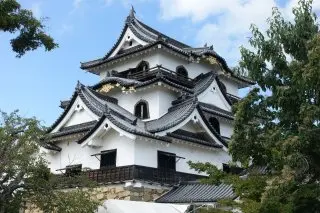
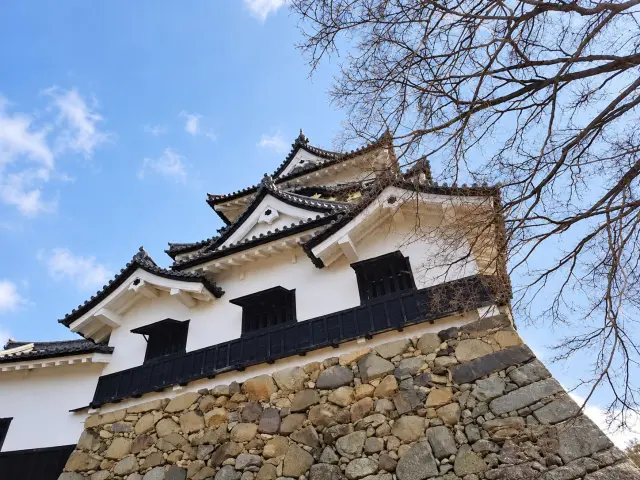
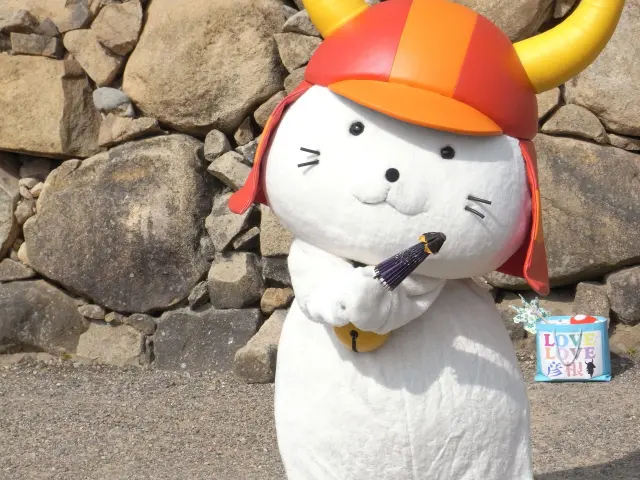
I actually had only two goals for this visit to Hikone Castle: Hikonyan and the legendary staircase that's nearly 90 degrees steep. To make the schedule go more smoothly, we specifically came in the morning, hoping to catch Hikonyan's 11:00 performance. Hikone Castle itself is a National Treasure of Japan. Construction began in 1604 and took about 20 years to complete. The castle, once ruled by the Ii family as feudal lords, still retains much of its historic appearance. I originally didn't have many expectations for the castle itself, but once I went inside, even just walking from the entrance toward the castle grounds made me realize that it was actually quite large. There's a fair distance from the entrance to the castle keep.
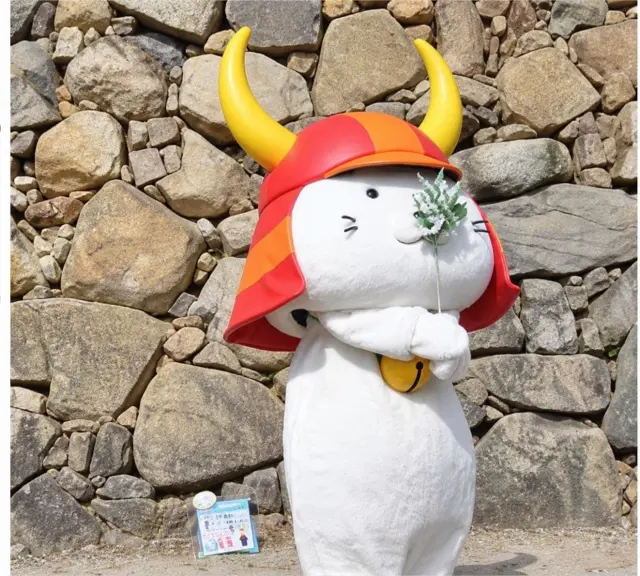
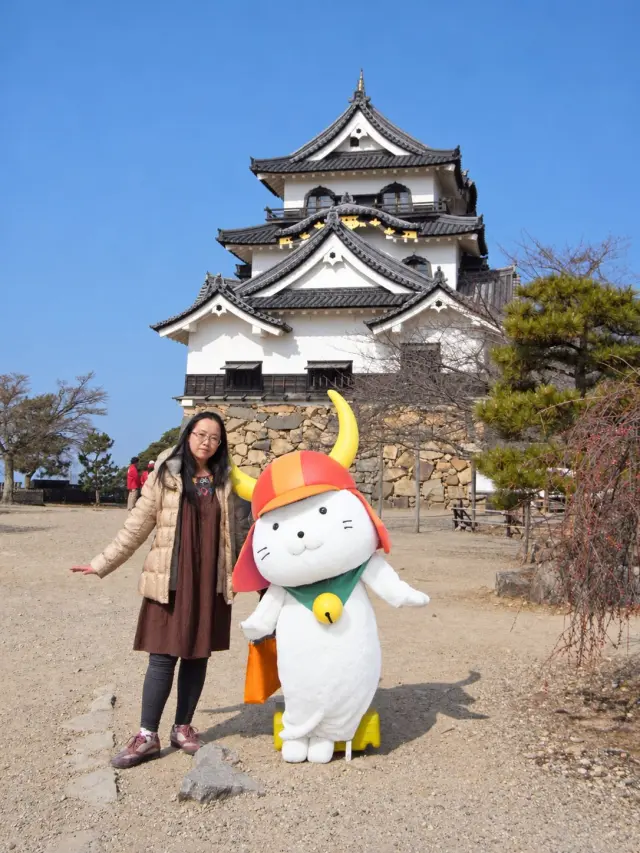
The path into the castle grounds is actually pretty steep, but once I climbed up and looked down, the whole view suddenly gave me a strange sense of traveling through time, as if I had really stepped into the castle grounds of the past. Then it was time to wait for the staff to lead Hikonyan out to meet everyone. All I can say is that as soon as Hikonyan appeared, everyone there instantly went wild! Hikonyan was already adorable, and the staff member in the costume kept acting cute, so I couldn't stop taking pictures. I was snapping away almost the entire time.
The only unfortunate thing was that we couldn't take pictures directly with Hikonyan that day. We could only take photos from a distance or pose with the nearby signboard. Still, I was already very satisfied just to see Hikonyan in person.
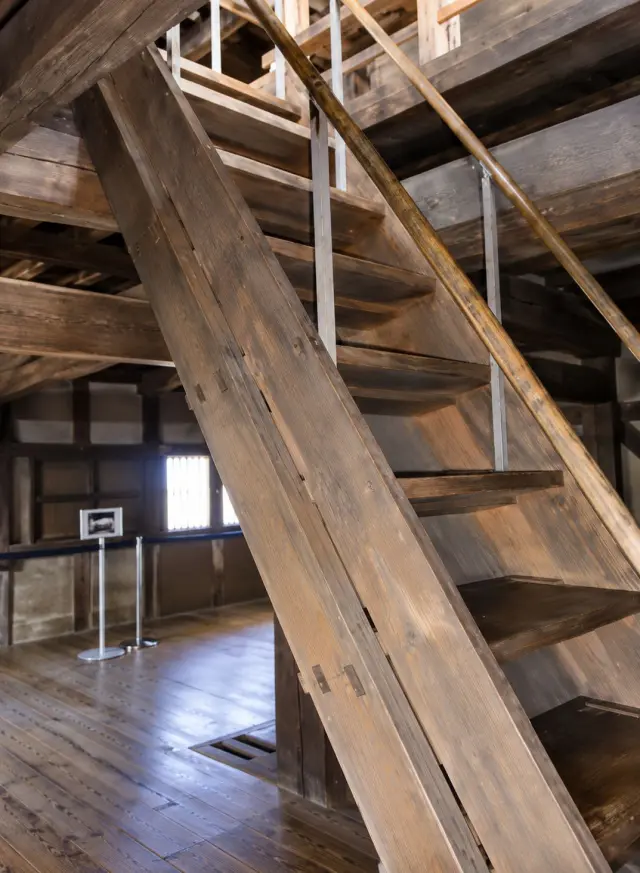
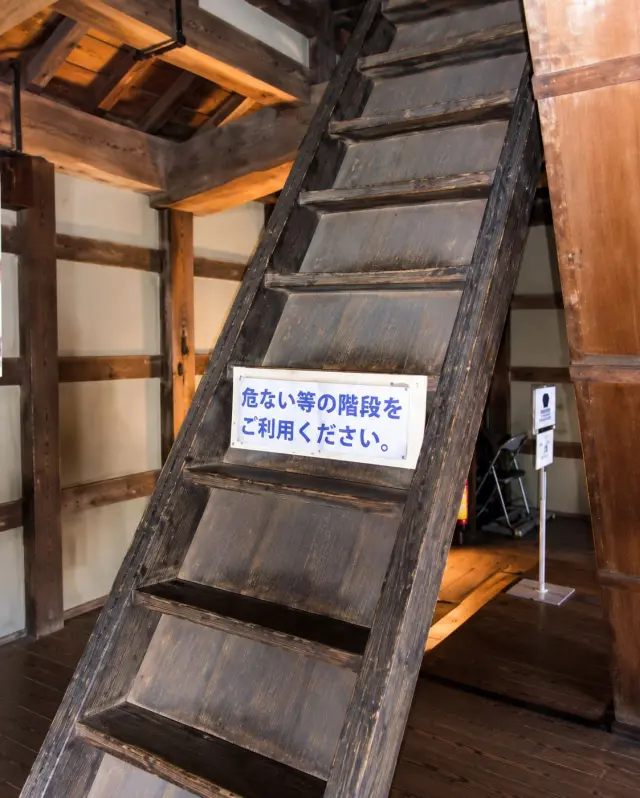
After seeing Hikonyan, it was time to take on the extremely steep staircase leading up to the castle keep. Hikone Castle has an original three-story compound-style keep, and the stairs inside have an incline of around 60 to 62 degrees. Even before reaching the legendary staircase, the other stairs inside the castle were already very steep. When I finally saw the staircase leading to the very top, it honestly looked even more extreme than I'd imagined. There was just a rope beside it serving as a handrail, with staff at the top and bottom watching out for visitors' safety. I felt like I was basically crawling up on all fours.
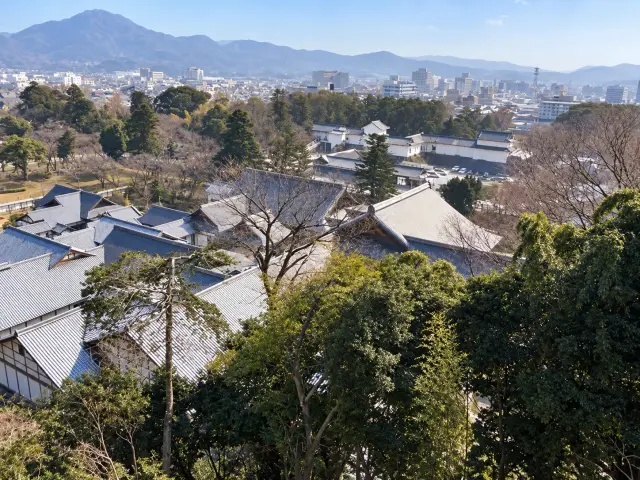
After climbing to the top of the keep, the view outside was truly beautiful. Apparently, you can see Lake Biwa when the weather is clear. Unfortunately, although the weather was pretty good that day, there were still some clouds, so Lake Biwa wasn't very clear. Still, being able to look out over the surrounding scenery from that height made me feel that the difficult climb hadn't been for nothing.
But the real challenge wasn't over yet. Climbing up the stairs was already painful, but going down was a different kind of torture. I kept feeling like I might tumble down at any moment, and at one point I even thought rolling down might be faster! But that was just a thought. I still clung desperately to the rope and slowly made my way down one step at a time. I have no idea what position I was in as I went down anymore. I only remember trying very hard to make it down alive.
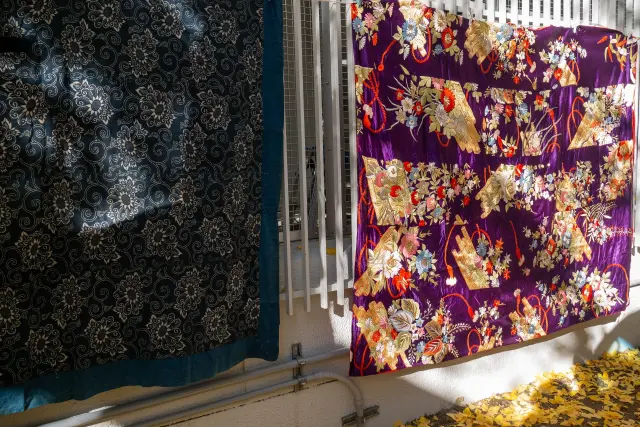
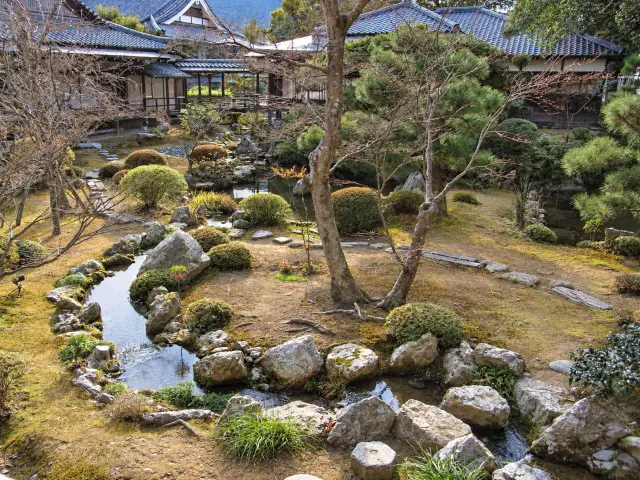
Besides the castle keep, there's also Genkyuen Garden, a daimyo garden next to Hikone Castle. Unfortunately, because it was winter, the garden scenery was rather plain. However, we unexpectedly came across a Japanese couple taking wedding photos. The bride was wearing an iro-uchikake wedding kimono and looked truly beautiful, which added another pleasant surprise to the trip.