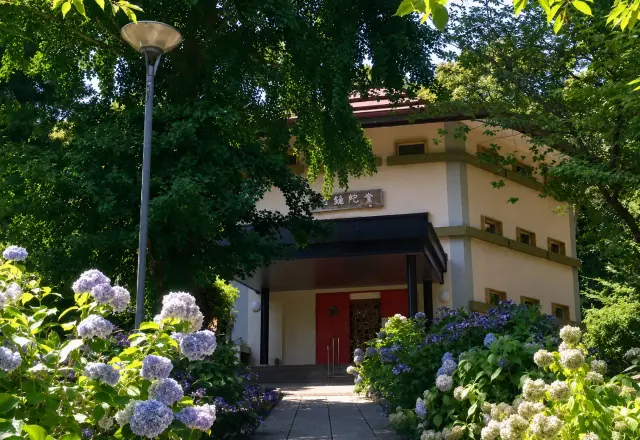
It's about a 4-minute drive from JR Usu Station. I originally thought we'd just stop by since it was on the way, but this Zenkoji Temple tucked away in the forest unexpectedly became a very special stop on this trip.
Zenkoji Temple has a very long history. It was founded in 826, and during the Edo period it was one of the “Three Official Temples of Ezo.” The entire temple complex has also been designated a National Historic Site.
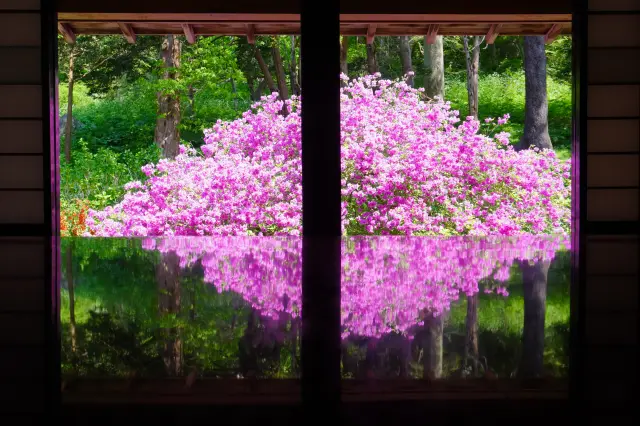
After looking it up, I learned that it's also known as the “Temple of Flowers,” with cherry blossoms in spring, hydrangeas in summer, and seasonal flowers such as azaleas and peonies in fall.
We came during the wrong season this time, but that makes me look forward even more to seeing Zenkoji Temple in bloom next time.
Usu Zenkoji Temple | Review by 楊雅雯
Other Reviews by 楊雅雯
-
Kumagawa Juku
Mackerels and other seafood from Wakasa Bay came to this post town on its way to Kyoto. The road was called Saba Kaido (Mackerel Highway) or Wakasa Kaido, which connected Obama and Wakasa Town by the Wakasa Bay, Kumagawa Juku, over Shiga, through Ohara and Yase to Kyoto.
Our next stop was Kumagawa-juku on the Saba Kaido. Mackerel from Wakasa Bay was very popular with people in Kyoto, so large quantities were transported to Kyoto along the Wakasa Kaido. As the Saba Kaido flourished, Kumagawa-juku gradually developed into a bustling post town. Today, the townscape from the Edo to Showa periods has been preserved, and the area is designated as an Important Preservation District for Groups of Traditional Buildings. Although it's in a remote location and doesn't get many visitors, nearly every old house has a strong old-fashioned charm. It's very pleasant to stroll around, and it really feels like traveling back in time. It's definitely worth a visit!
-
-
Kehi Jingu Shrine
Constructed in the year 702, this shrine is known as the “Hokurokudou Shochinshu, Echizen Kuniichinomiya” (The Shrine guardian the Hokuriku region). Another shrine within the grounds, the “Tsunuga Shrine” is known as the place that inspired the name of the “Tsuruga” region. Locals adore it by calling it “Kei-san” (short for Kehi).
Kehi Jingu Shrine is a famous ancient shrine in Tsuruga, Fukui Prefecture, and the ichinomiya of the former Echizen Province. Since ancient times, it has been known as the “Guardian Shrine of the Hokuriku Region.” This time, I took a taxi from JR Tsuruga Station, and it was quite convenient. The overall atmosphere is solemn and peaceful, and you feel a special sense of calm as soon as you enter the grounds. It is also said to be a spiritual power spot, and many people come specifically to worship and pray for safety and good luck. What impressed me most was the towering vermilion torii gate, which has a commanding presence. It is well worth visiting in person to experience the charm of this ancient shrine.
-
-
Rainbow Line Summit Park
Mikata Five Lakes (Mikatagoko), a nationally designated scenic spot known as the Five-Colored Lakes for the different hues of its five connected lakes. This park sits along the 11.24 km Rainbow Line, a refreshing drive where you can take in those spectacular views from your car window.
Rainbow Line Summit Park is really worth visiting! It takes about 3 minutes by cable car to reach the summit of Mount Baijodake. I recommend trying the single-seat chairlift—you can skip the line and enjoy the mountain breeze all the way up, which is both thrilling and fun. There are five observation decks at the summit, offering 360-degree views of the magnificent Mikata Five Lakes and the Sea of Japan. When the weather is nice, the scenery is so beautiful you won't want to leave. Although the park isn't very large, it also has a teahouse, café, shrine, and a free sky footbath where you can soak your feet while enjoying the view. It takes about an hour to explore at a leisurely pace, or two hours is just right if you want to have coffee or something to eat!
-