
![[Complete Meiji Jingu Shrine Travel Guide] Highlights, History, and Practical Info](https://static.gltjp.com/glt/data/article/11000/10443/20250426_103959_580bb120_w1920.webp)
[Complete Meiji Jingu Shrine Travel Guide] Highlights, History, and Practical Info
Meiji Jingu is one of Tokyo’s top spiritual spots, and it’s also known as Japan’s most-visited shrine for New Year’s first shrine visit (hatsumode).
It’s surrounded by rich greenery that feels far from the city, with plenty of highlights along the way.
This article focuses on what makes Meiji Jingu special, what to see, and what to know to enjoy your visit.
What is Meiji Jingu Like?
Meiji Jingu in Shibuya, Tokyo, is one of the city’s top spiritual spots, and it draws Japan’s largest number of hatsumode visitors every year.
Founded in 1920, it enshrines Emperor Meiji and Empress Shoken.
It’s especially known for blessings for relationships, love, and matchmaking, but visitors also pray for family safety, business success, and good fortune in general.
Within the expansive grounds, you’ll find the main shrine buildings, the Treasure Museum (an Important Cultural Property), and the Meiji Jingu Museum, which showcases items closely connected to the enshrined deities, plus more highlights throughout.
Another major appeal is the seasonal scenery, with beautiful nature often called a “city oasis.”
It’s a sacred space that makes you forget you’re in central Tokyo, perfect for a calm, refreshing break.

How Meiji Jingu Began
Meiji Jingu began with a strong public wish to honor Emperor Meiji and Empress Shoken.
Emperor Meiji helped shape modern Japan, and after his death in 1912, people called for a shrine to enshrine his spirit and pay respect for generations.
After Empress Shoken passed away in 1914, plans moved forward in earnest to build a shrine for both.
With donations and support from across Japan, Yoyogi, a place closely associated with them, was chosen, and Meiji Jingu was founded in 1920.
Since then, it has been cherished as a place to pray for world peace and the prosperity of the nation.
How to Get to Meiji Jingu
Located in central Tokyo, Meiji Jingu is easy to reach, with five nearby stations.
There are three entrances, each with its own nearest station, as follows.
Each is about a 3–5 minute walk from the station, but you’ll need an additional 10 minutes or so on foot to reach the main shrine.
| Entrance | Nearest station |
|---|---|
| Harajuku Entrance |
,JR “Harajuku” Station ,Tokyo Metro Chiyoda Line,Fukutoshin Line “Meiji-jingumae <harajuku>” Station</harajuku> |
| Yoyogi Entrance |
,JR “Yoyogi” Station,Toei Oedo Line “Yoyogi” Station ,Tokyo Metro Fukutoshin Line “Kita-sando” Station |
| Sangubashi Entrance | ,Odakyu Odawara Line “Sangubashi” Station |
Your route will vary by entrance, but the Harajuku Entrance is recommended because it leads to the South Approach, where you can enjoy several highlights as you walk.
We’ve also summarized how to get to each nearest station from Tokyo Station below, so use it as a reference.
Access from Tokyo Station to Each Nearest Station
| Nearest station | How to get there | Travel time |
|---|---|---|
| Harajuku Station | Take the JR Yamanote Line (outer loop) from JR “Tokyo” Station and get off at “Harajuku” Station | Approx. 30 min |
|
Meiji-jingumae <harajuku> Station</harajuku> |
1. Take the Tokyo Metro Marunouchi Line from “Tokyo” Station to “Kokkai-gijidomae” Station 2. Transfer to the Tokyo Metro Chiyoda Line and get off at “Meiji-Jingumae <Harajuku>” Station |
Approx. 20 min |
| Yoyogi Station |
1. Take the JR Chuo Line Rapid from JR “Tokyo” Station to “Yotsuya” Station 2. Transfer and get off at “Yoyogi” Station |
Approx. 20 min |
| Kita-sando Station |
1. Take the Tokyo Metro Marunouchi Line from “Tokyo” Station to “Shinjuku-sanchome” Station 2. Transfer to the Tokyo Metro Fukutoshin Line and get off at “Kita-sando” Station |
Approx. 30 min |
| Sangubashi Station |
1. Take the JR Chuo Line Rapid from JR “Tokyo” Station to “Shinjuku” Station, then walk to the Odakyu Line 2. Take the Odakyu Odawara Line and get off at “Sangubashi” Station |
Approx. 30 min |
Admission and Visiting Hours at Meiji Jingu
Admission to Meiji Jingu is free, but the Meiji Jingu Inner Garden, Meiji Jingu Museum, and the Treasure Museum require a fee.
The grounds open at sunrise and close at sunset, so visiting hours vary by month.
Approximate opening and closing times by month are as follows.
- January
- 6:40 〜 16:20
- February
- 6:20 〜 16:50
- March
- 5:40 〜 17:20
- April
- 5:10 〜 17:50
- May
- 5:00 〜 18:10
- June
- 5:00 〜 18:30
- July
- 5:00 〜 18:20
- August
- 5:00 〜 18:00
- September
- 5:20 〜 17:20
- October
- 5:40 〜 16:40
- November
- 6:10 〜 16:10
- December
- 6:40 〜 16:00
Meiji Jingu Through the Seasons
If you’re visiting Meiji Jingu, it’s worth enjoying what makes that season special.
From cherry blossoms and fresh greenery in spring, to irises in summer, autumn foliage, and hatsumode in winter, Meiji Jingu offers scenery where nature and Japanese culture meet beautifully year-round.
Keeping the season in mind can help you make even a short visit feel truly memorable.
Spring at Meiji Jingu: Fresh Greenery and Seasonal Blooms
In spring, Meiji Jingu feels calm and beautiful, wrapped in new leaves and flowers.
Fresh buds appear along the South and North Approaches, and around 10 varieties of cherry blossoms bloom across the grounds.
There aren’t enough trees to call it a major cherry-blossom spot, but the blossoms you do find are striking.

Summer at Meiji Jingu: Irises in Full Bloom
For summer at Meiji Jingu, one of the signature highlights is the Meiji Jingu Inner Garden, where approx. 150 varieties and 1,500 iris plants bloom.
If you visit around peak season in mid-June, don’t miss the flowers at their best.
Summer is also a great time for rituals and festivals, with more chances to experience traditional Japanese culture.

Autumn at Meiji Jingu: Surrounded by Fall Colors
Autumn at Meiji Jingu is all about atmospheric scenery in vivid fall colors.
In the vast forest, ginkgo and Japanese maple trees turn bright, welcoming visitors with seasonal beauty.
In particular, the view of the pond and foliage in the Inner Garden is stunning.
On November 3, the Meiji Festival is also held to honor Emperor Meiji, offering a rare chance to see traditional ceremonies.

Winter at Meiji Jingu: New Year’s Crowds and Hatsumode
From January 1 to January 3, the shrine is decorated for the season and becomes lively with hatsumode visitors.
If you’re in Tokyo over the holidays, it’s a great chance to experience Japan’s New Year atmosphere. Hatsumode at Meiji Jingu can be a memorable part of your trip.
Snow rarely accumulates in Tokyo, but if you’re lucky enough to catch snowfall, you may see Meiji Jingu in a beautifully mystical winter scene.

10 Must-See Highlights and Spiritual Spots at Meiji Jingu
Meiji Jingu is known as one of Tokyo’s top spiritual spots, with many places throughout the grounds associated with different blessings.
Its buildings and facilities also reflect deep gratitude and respect for Emperor Meiji and Empress Shoken, and you can feel the weight of history and faith as you explore.
Here are 10 must-see highlights and spiritual spots to focus on during your visit.
1. Otorii (Second Torii Gate)
The Otorii (Second Torii Gate) of Meiji Jingu stands where the South and North Approaches meet, a massive wooden gate with an unforgettable presence.
Made from Taiwanese cypress said to be over 1,500 years old, it measures 12 m tall with a 17 m top beam, making it the largest wooden Myojin-style torii in Japan.
Its dignified, graceful form clearly marks the entrance to the sacred grounds and gently settles the mind as you approach.
The center is considered seichu (the path of the gods), so walk along the side of the approach and pass beside the center of the torii.

2. Main Shrine
Designated an Important Cultural Property, Meiji Jingu’s main shrine is built in the traditional sangensha-nagare-zukuri style, a common layout for main shrine halls.
The cypress-bark roof and zelkova wood surfaces blend beautifully, while the refined carvings and bold curves give the architecture a distinctly shrine-like elegance.
The worship area is spacious, letting you pray at a relaxed pace in a quiet, serene setting.

3. Sake Barrels (Hoken Sakadaru)
Hoken sakadaru are special sake barrels offered to a shrine as a donation, expressing gratitude and prayers to the deities.
Based on the longstanding Japanese custom of offering sake at the altar, rows of stacked barrels line the South Approach.
They are donated by brewers from across Japan.
Across the way, you’ll also see wine barrels presented from France, reflecting Emperor Meiji’s role in embracing Western culture and his well-known fondness for wine.
It’s a unique scene that blends Japanese and Western traditions.

4. Meoto Kusu (Married Camphor Trees)
Standing solidly before the worship hall, Meoto Kusu (the Married Camphor Trees) is a sacred tree known as a symbol of matchmaking and a happy marriage.
Donated in 1920 when Meiji Jingu was founded, the name comes from the two camphor trees growing side by side in harmony.
Nurtured under the protection of the enshrined deities, they have grown together for over 100 years and now reach approx. 17 m tall.
Beyond their stately presence, the way their branches spread as if leaning toward each other creates a warm impression, and many visitors stop here to pray.
It’s also famous as a spiritual spot for love and family well-being.
As it is a sacred tree, please do not touch it.

5. Meiji Jingu Inner Garden
The Meiji Jingu Inner Garden is a strolling-style Japanese garden on the south side of the main shrine grounds.
Originally owned by a powerful samurai family in the Edo period, it was later renovated in 1903 at Emperor Meiji’s request so Empress Shoken, who was in poor health, could take walks for exercise.
Unlike many manicured gardens, it features very few pruned trees, letting you stroll through vibrant, natural scenery at an easy pace.
Covering approx. 83,000㎡, it’s remarkably green for central Tokyo and offers seasonal views year-round.
Highlights include the Iris Field (Shobuda), the elegant Kakun-tei pavilion, and Minamiike Pond, where reflections of greenery create a calming scene.
Admission requires a 500-yen maintenance donation. Note that garden hours differ from the shrine gate hours.

6. Kiyomasa’s Well
Kiyomasa’s Well (Kiyomasa no Ido) is a famous spring within the Inner Garden, said to have been dug by the Edo-period warlord Kato Kiyomasa.
The circular well is about 1.2 m across and edged with mossy stones. With an average flow of 60 liters per minute, the clear spring water never dries up, even in winter.
Long believed to have a purifying power, it once became a trending “power spot,” with people saying even setting it as a smartphone wallpaper could boost your luck.
It’s especially associated with improved finances, and many visitors come to Meiji Jingu specifically for this spot.

7. Treasure Museum
Located in the northern part of the grounds, the Treasure Museum (Homotsuden) is an Important Cultural Property that conveys the history and tradition of Meiji Jingu.
It was built in 1921 to store and display items connected to Emperor Meiji and Empress Shoken.
The azekura-style raised-floor design, co-designed by renowned architect Ito Chuta, is a landmark of early reinforced-concrete architecture in Japan.
It once displayed items such as stationery, books, and furnishings, but these are now preserved and exhibited at the Meiji Jingu Museum mentioned above.
Even today, the building’s dignified presence remains, offering a close feel of imperial culture and history.
*Open for a limited time with paid admission. Check details on the official website.

8. Turtle Stone (Kameishi)
The Turtle Stone (Kameishi) is a natural stone quietly resting by the shore of the North Pond, in front of the Treasure Museum.
As the name suggests, its distinctive shape looks like a turtle peeking out over the water’s surface.
Its rugged, time-carved texture and gentle curves create an impression reminiscent of a turtle’s shell.
Turtles are also symbols of longevity and prosperity, so this spot is loved as a lucky power spot said to bring various blessings, such as career luck and better finances.
Anyone can touch the Turtle Stone, so consider stopping by before or after your visit to “receive” a little energy.

9. Sazareishi (Pebble Rock)
Sazareishi, near the Treasure Museum, is a popular power spot and is designated a Natural Monument.
Sazareishi refers to small stones that, over many years, become bound together by limestone and form a larger rock, believed to be auspicious and purifying.
Meiji Jingu’s sazareishi has a rough, natural surface and has not been shaped by human hands.
The “sazareishi” mentioned in Japan’s national anthem, “Kimigayo,” is said to be this very stone at Meiji Jingu.

10. Meiji Jingu Museum
Quietly set along Meiji Jingu’s tree-lined approach, the Meiji Jingu Museum opened in 2019 as part of the shrine’s 100th anniversary projects.
It preserves and exhibits items connected to Emperor Meiji and Empress Shoken, the enshrined deities of Meiji Jingu.
Designed by Kengo Kuma, it features a gently sloping roof that blends beautifully with the shrine’s lush forest setting.

Forest Terrace Meiji Jingu: A Great Stop During Your Visit
Forest Terrace Meiji Jingu is a great place to stop by during your visit.
Next to the Meiji Jingu Museum, Forest Terrace Meiji Jingu is a multi-purpose complex.
Its refined modern design, infused with the shrine’s history, offers a comfortable break for visitors.
Inside, you’ll find an event hall and wedding venue, plus a cafe, restaurant, and shops.
It’s ideal for a quick rest between sightseeing and prayer, or for picking up souvenirs.
1. CAFÉ “Mori no Terrace”
CAFÉ “Mori no Terrace” is just a short walk from the west exit of Harajuku Station, with a gentle look featuring wood materials and a welcoming deck.
Inside, you’ll find a relaxing space filled with the warmth and scent of natural wood.
Counters and furniture made from dead trees from Meiji Jingu’s grounds are also a highlight, showcasing each wood’s unique character.
Large glass windows let in natural light and offer views where seasonal nature and torii gates create a beautiful scene.
The menu includes a range of drinks and light bites, but the recommended pick is the “Meiji no Yamacha Latte,” made with Yamabancha grown using ancient farming methods. It’s creamy with a subtle sweetness.

NOODLE & RICE BOWL
“NOODLE & RICE BOWL” is an open, casual food corner where you can take a break during your walk or shrine visit.
The bright, calm interior features wood accents throughout, with about 50 seats available.
Whether you’re alone or with friends and family, it’s easy to drop in like a cafe.
The menu offers a wide lineup, including noodles and rice bowls such as sansai soba/udon and a seafood kakiage rice bowl, plus takeout-friendly snacks.
Recommended choices include the “Ebi Tempura Soba” made with carefully selected buckwheat flour and topped with two shrimp tempura, and the hearty “Beef Curry Rice” simmered with plenty of beef and onions.

Gift Shop “Mori”
Gift Shop “Mori” sells many items connected to Meiji Jingu, with a focus on traditional crafts and Japanese-style goods that capture classic Japanese taste.
Another plus is the wide lineup, including original designs you can only buy here.
Stop by and you’ll likely find the perfect souvenir for your visit, or a great gift.

5 Quick Facts to Enjoy Meiji Jingu More
These quick facts may seem small, but each has roots in Japanese history and traditional culture.
Knowing the background can make your visit and walk around the grounds feel even more meaningful.
1. An Artificial Forest? How Meiji Jingu’s Rich Woods Were Created
The forest across Meiji Jingu’s grounds, full of seasonal nature, is also called the “Eternal Forest.”
The area was once barren, but as plans progressed to build a sacred forest to protect the shrine and honor Emperor Meiji and Empress Shoken, experts created a detailed long-term design to cultivate a natural woodland in the heart of Tokyo, looking 100 years ahead.
They selected primarily evergreen broadleaf trees such as oak, camphor, and zelkova.
About 100,000 trees were donated from across Japan, and more than 110,000 young volunteers took part. The forest was completed in 1920, the same year the shrine was founded.
Left to natural succession, the forest has grown for about a century into a surprisingly rich ecosystem, creating a clean, calming space that makes you forget you’re in the city.

2. The Meaning of the Shrine Crests You’ll See at Meiji Jingu
Meiji Jingu uses a rare crest design featuring both chrysanthemum and paulownia motifs.
The chrysanthemum became closely associated with the imperial family after Emperor Go-Toba favored it in the early Kamakura period (1185–1333), and it eventually became a symbol passed down through generations.
The meaning differs by the number of petals: the 16-petal chrysanthemum is the official imperial crest, and many similar crests can be seen on Meiji Jingu buildings.
This was possible because there were no restrictions at the time of construction. Today, out of respect for the imperial family, the shrine uses a 12-petal chrysanthemum alongside the 5-3 paulownia as its official emblem.
The paulownia, meanwhile, has served as a state-like symbol and has been adopted as a crest of the Japanese government from the Meiji era to today.
The chrysanthemum represents a more “private” aspect, while the paulownia carries a more “public” meaning, making this dual design especially fitting for a shrine dedicated to Emperor Meiji and Empress Shoken, who embody both.

3. Are There Heart Shapes All Over Meiji Jingu?
If you look closely at the buildings at Meiji Jingu, you’ll notice heart shapes on door fittings and on decorative roof elements (kegyo).
These are actually called inome, a traditional Japanese motif inspired by a wild boar’s eye, and they’re considered auspicious designs for protection against evil and fire.
They were commonly used on shrines and temples and also symbolize guarding sacred spaces.
Because they look like hearts, they’ve quietly become popular as a symbol of happiness and a “love luck” power spot.
Don’t just walk past, pay attention to the architectural details and you’ll enjoy the visit even more.

4. Why a “Right Angle” Turn Is 88 Degrees, Not 90
On the approach from the Otorii toward the main shrine, you’ll come to a box-shaped bend called a masugata, which looks like a right-angled turn.
It appears to be 90 degrees, but it’s intentionally set at 88 degrees.
The number 88 is considered lucky in Japan, linked to the auspicious “spreading” shape of the number 8, and it’s popular as a subtle power spot said to bring good fortune.
It also softens the rigid feel of a straight line and creates a gentler flow for visitors, helping maintain a sense of reverence as you enter the sacred space.
It’s fun to walk the path while thinking about the meaning behind the angle.

5. You Might See a Traditional Shinto Wedding Ceremony
A Shinto wedding ceremony (shinzen kekkonshiki) is a traditional Japanese wedding held at a shrine or sacred hall.
It’s a solemn ritual where the couple makes vows before the deities, and it’s known for the sight of the bride and groom in traditional attire walking through the grounds with shrine maidens and priests.
Meiji Jingu also hosts Shinto weddings, and for many Japanese people, having a ceremony at such a prestigious shrine is a special experience.
If you’re lucky during your visit, you may see a bride in a white shiromuku kimono and a groom in haori and hakama walking along the approach.
It’s a rare moment to feel Japanese tradition up close, so if you see it, please watch quietly and respectfully.

Pick Up an Omamori Charm as a Meiji Jingu Souvenir
At Meiji Jingu, omamori charms are available at the Nagadono to support visitors’ wishes.
Options include mamori-fuda imbued with blessings for protection from misfortune and good fortune, kachimamori for overcoming challenges, and nishikimamori to protect happiness, among many others.
One especially recommended charm is the “Koda-ma” wooden bell charm for good luck.
Made from sacred trees within the grounds, it features the gentle warmth of wood and a soft sound that feels soothing just to hold.
Each one differs in color, grain, and tone, so no two are the same, which adds to its special feel.
Why not pick up a one-of-a-kind good-luck charm that quietly lifts your fortune?

Meiji Jingu Goshuin: A Travel Memory You Can Take Home
A goshuin is a stamp and calligraphy inscription given as proof of worship at a shrine or temple.
Meiji Jingu’s goshuin features calm brushwork reading “Meiji Jingu,” along with red stamps of the imperial chrysanthemum (12-petal) and the 5-3 paulownia, a simple yet dignified design.
Dates are also written using koki, Japan’s imperial calendar counted from the enthronement of Emperor Jimmu, reflecting Meiji Jingu’s deep ties to the imperial family.
Like omamori, it’s generally available at the Nagadono, though the location may change by season, so check the official website in advance.
It’s proper etiquette to receive a goshuin after worship, so be sure not to go there before visiting the main shrine.
How to Receive a Goshuin at Meiji Jingu
- Receive a pre-written goshuin (500 yen offering fee)
- Buy a Meiji Jingu goshuin book that includes a goshuin (from 1,500 yen)

Shrine Visiting Etiquette to Know Before Going to Meiji Jingu
Before visiting Meiji Jingu, it’s worth knowing basic shrine etiquette so you can be respectful to the deities.
There are set customs, such as cleansing your hands and mouth at the temizuya and how to pray properly.
For details, refer to the article below.

3 Top Sightseeing Spots Near Meiji Jingu
As you’ve seen, Meiji Jingu is packed with highlights.
There’s plenty to enjoy just by walking around as you visit the shrine, but there are also many popular spots nearby. Here are three especially famous places.
Each offers beautiful nature and scenery on par with Meiji Jingu, so consider visiting them together.
1. Meiji Jingu Gaien
Meiji Jingu Gaien (Outer Garden) was established in 1926. Centered around the Meiji Memorial Picture Gallery, it offers sports facilities such as Meiji Jingu Baseball Stadium, along with seasonal nature.
Its approx. 300 m ginkgo-lined avenue from Aoyama-dori to the gallery is especially famous. In autumn it becomes a tunnel of gold, and in spring, about 400 cherry trees bloom, with the blossoms around the gallery particularly impressive.

2. Yoyogi Park
Yoyogi Park spans 544,711.27㎡ and offers a rich landscape of water and greenery that’s hard to believe is in central Tokyo.
The park is divided by a road into a north-side wooded area and a south-side open area with facilities such as an outdoor stage and sports grounds.
In spring, about 800 cherry trees reach peak bloom, and the area around the fountain pond on the south side of the Central Plaza is a popular spot for hanami.

3. Takeshita Street
A shopping street about 350 m long running from Harajuku Station toward Meiji-dori.
It’s packed with stores selling distinctive fashion items you won’t easily find elsewhere, and it’s watched worldwide as a trendsetting hub.
Every day it’s crowded, especially with young people, and from 11:00 a.m. to 6:00 p.m., when it’s busiest, the street becomes pedestrian-only.

3 Popular Restaurants Near Meiji Jingu
Here are three restaurants we recommend for lunch or dinner when visiting Meiji Jingu.
To make it easy to choose for different situations and budgets, we picked popular spots that vary in location, cuisine type, and style.
Use these as a guide, and enjoy a great meal near the nearest station or at the place that catches your eye.
1. SOBAHOUSE Konjiki Hototogisu
Near Tokyo Metro “Shinjuku-gyoenmae” Station, with the garden of Shinjuku Gyoen right in front, this ramen shop stands out for its refined interior and calm atmosphere.
Using no chemical seasonings, it serves ramen that draws out natural flavors, made with over 60 ingredients.

2. Aquarium Dining Shinjuku Lime
Enjoy creative cuisine under the glow of aquarium tanks.
Large tanks throughout the restaurant create an atmosphere like dining underwater.
A relaxing spot serving fusion dishes that blend Indonesian cuisine with European touches.

3. HACHIYA
Stylish yet open thanks to large glass windows, this cafe features an original wave-motif wall design in a modern Japanese style.
The menu focuses on HACHIYA’s original sencha and hojicha teas, plus carefully whisked drinks made one cup at a time, including sencha latte, hojicha latte, and matcha latte.

3 Recommended Shopping Spots Near Meiji Jingu
Another great thing about the Meiji Jingu area is how many shopping spots are nearby.
Here are three major shopping destinations within walking distance of the shrine.
You’re likely to find Japan’s latest trends and unique items, so try stopping by before or after your visit.
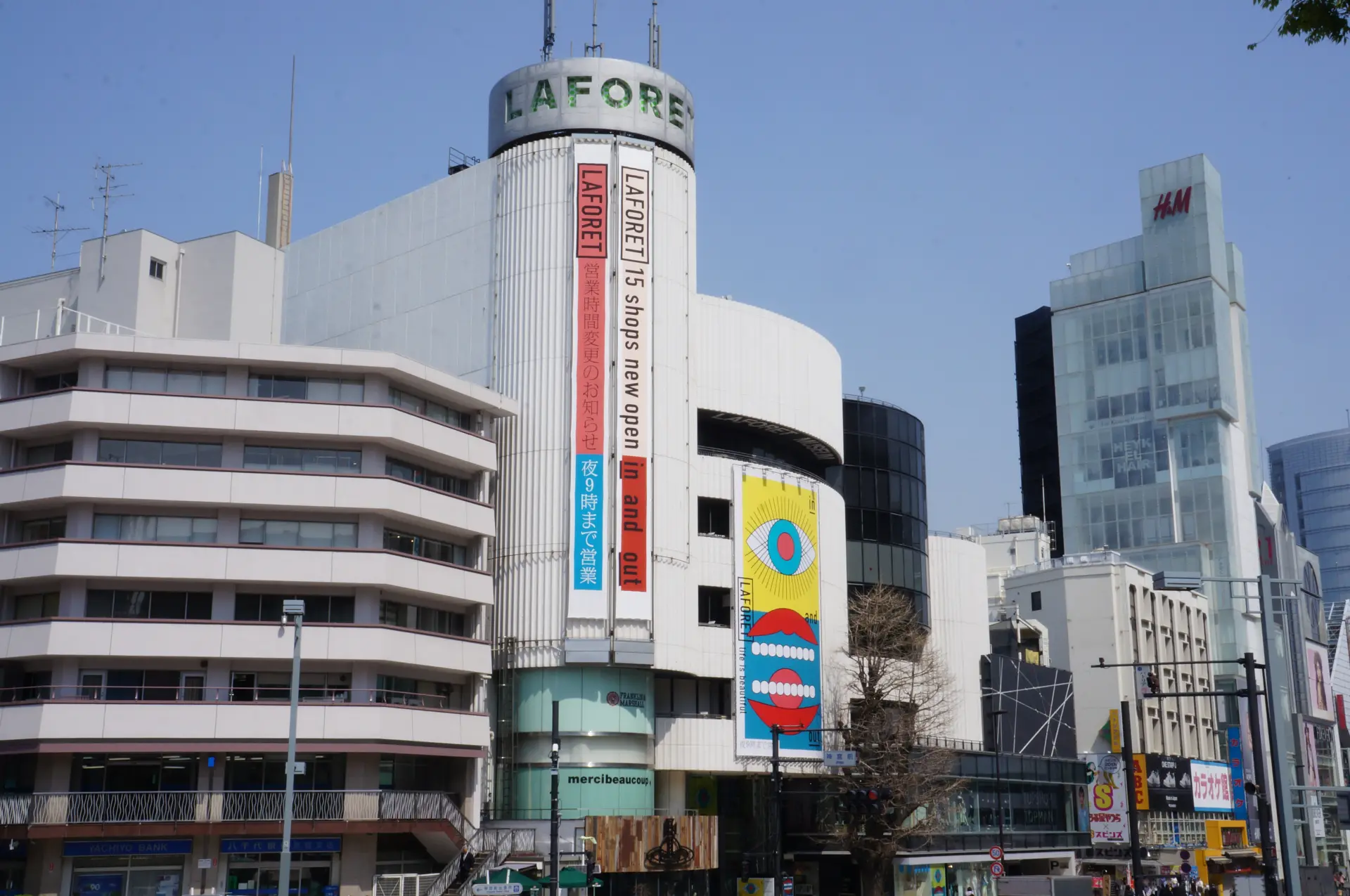
1. Laforet Harajuku
A Harajuku icon opened in 1978. As more young people drawn to fashion, art, and music gathered here, Laforet helped establish the area as a center for the latest fashion trends.
From B1.5F to 5F, it’s lined with standout shops selling fashion, goods, and accessories fit for a trendsetting district.
2. Tokyu Plaza Omotesando “Omokado”
A commercial facility in the heart of the Omotesando,Harajuku area, featuring popular brands from Japan and abroad.
From B1F to 5F are shopping floors lined with distinctive stores selling fashion, goods, and accessories.
It’s also well-known for its strong selection of cosmetics shops.

3. Q Plaza Harajuku
Q Plaza Harajuku is a landmark in the Omotesando,Harajuku area, with a colorful exterior that’s easy to spot from a distance. It’s a mixed-use building from B1F to 11F.
Along with many restaurants and cafes, it also includes select shops, services, and wedding-related venues.

FAQ about Meiji Jingu
Q
Who is enshrined at Meiji Jingu?
A
Emperor Meiji, who helped lay the foundation of modern Japan, and his consort, Empress Shoken.
Q
What blessings is Meiji Jingu known for?
A
It’s said to offer many blessings, including love, matchmaking, business success, and passing exams.
Q
How much time do I need to visit Meiji Jingu?
A
It depends on your style and goals, but for worship alone, plan for about 30 minutes. If you want to stroll around the grounds, allow around 2 hours.
Wrap-up
We’ve covered the appeal of Meiji Jingu, focusing on its highlights and spiritual spots.
It’s a place where you can feel Japan’s traditions, history, and natural beauty, so use this guide and take time not only to pray, but also to stroll through the grounds.
If you’re planning Tokyo sightseeing, also check out the article below for a comprehensive list of must-visit spots and shopping areas.