

21 Must-Visit Spots You Can’t Miss When Sightseeing in Fukuoka
Fukuoka has a wide range of draws, from nationally famous local cuisine to nature, history, and culture.
If you’re coming all the way, you’ll likely want to indulge in the food, connect with the history, and fully enjoy both city strolls and the outdoors.
This article dives into everything from travel basics like Fukuoka’s climate and access to can’t-miss popular attractions, local specialties, and seasonal festivals and events.
Keep reading and you’re sure to discover the perfect way to enjoy Fukuoka for your travel style—and plan a trip you’ll be genuinely happy with.
What is Fukuoka Like?
Fukuoka Prefecture offers a variety of attractions, including nature, history and culture, and outstanding food.
In Fukuoka City—one of Kyushu’s leading urban centers—you’ll find clusters of shopping and entertainment facilities, yatai food stalls, and more, drawing crowds of visitors day after day.
Beyond that, there are distinct areas like Kitakyushu City, known for retro port-town vibes and places to enjoy history and culture, and Itoshima City, a nature-rich resort area surrounded by mountains—each offering a different way to explore depending on where you go.
With Fukuoka Airport—one of Japan’s busiest by number of flights—and Hakata Station, served by the Tokaido/Sanyo Shinkansen and the Kyushu Shinkansen, Fukuoka also serves as a key gateway and base for traveling around Kyushu.

When is the best season to visit Fukuoka?
With both rich natural scenery—ocean and mountains—and a city full of the latest trends, Fukuoka is enjoyable any time of year.
If you want to make the most of the outdoors, April–May and September–November are recommended for their lower rainfall and comfortable temperatures.
What to wear in Fukuoka by season
- Spring (March–May): A light jacket or cardigan
- Summer (June–August): Lightweight clothing, short sleeves
- Fall (September–November): A light jacket or coat
- Winter (December–February): A coat, thick sweater, or jacket
How do you get to Fukuoka?
Fukuoka is accessible by Shinkansen from major cities, but flying is recommended when you consider travel time.
Approx. travel times to Fukuoka Airport from Tokyo, Osaka, and Nagoya are as follows.
- Access from Tokyo (Haneda Airport)
- Approx. 1 hour 50 minutes by plane
- Access from Chiba (Narita Airport)
- Approx. 2 hours 5 minutes by plane
- Access from Osaka (Kansai International Airport)
- Approx. 1 hour 10 minutes by plane
- Access from Nagoya (Chubu Centrair International Airport)
- Approx. 1 hour 30 minutes by plane
From Fukuoka Airport, it’s Approx. 10 minutes by subway to central Fukuoka (Hakata/Tenjin). Easy access from the airport is another big plus.
Main transportation options for sightseeing in Fukuoka
Transportation generally falls into two categories depending on your destination and how far you plan to travel.
Within Fukuoka City, the three subway lines—Kuko Line, Hakozaki Line, and Nanakuma Line—are useful, and for places that are harder to reach by subway or on foot, Nishitetsu buses are recommended.
For travel outside Fukuoka City, use Nishitetsu trains and JR Kyushu.
For more details and value passes, please also refer to the articles below.
Carefully Selected for First-Time Visitors: 21 Fukuoka Sightseeing Spots
Fukuoka’s appeal isn’t just great access and amazing food. Another highlight is how compactly its attractions are packed together—places to enjoy nature, history and culture, and the latest technology and trends.
There are plenty of places to see, but here we’ve narrowed it down to the spots we especially recommend you visit.
Use this list to help plan your Fukuoka itinerary.
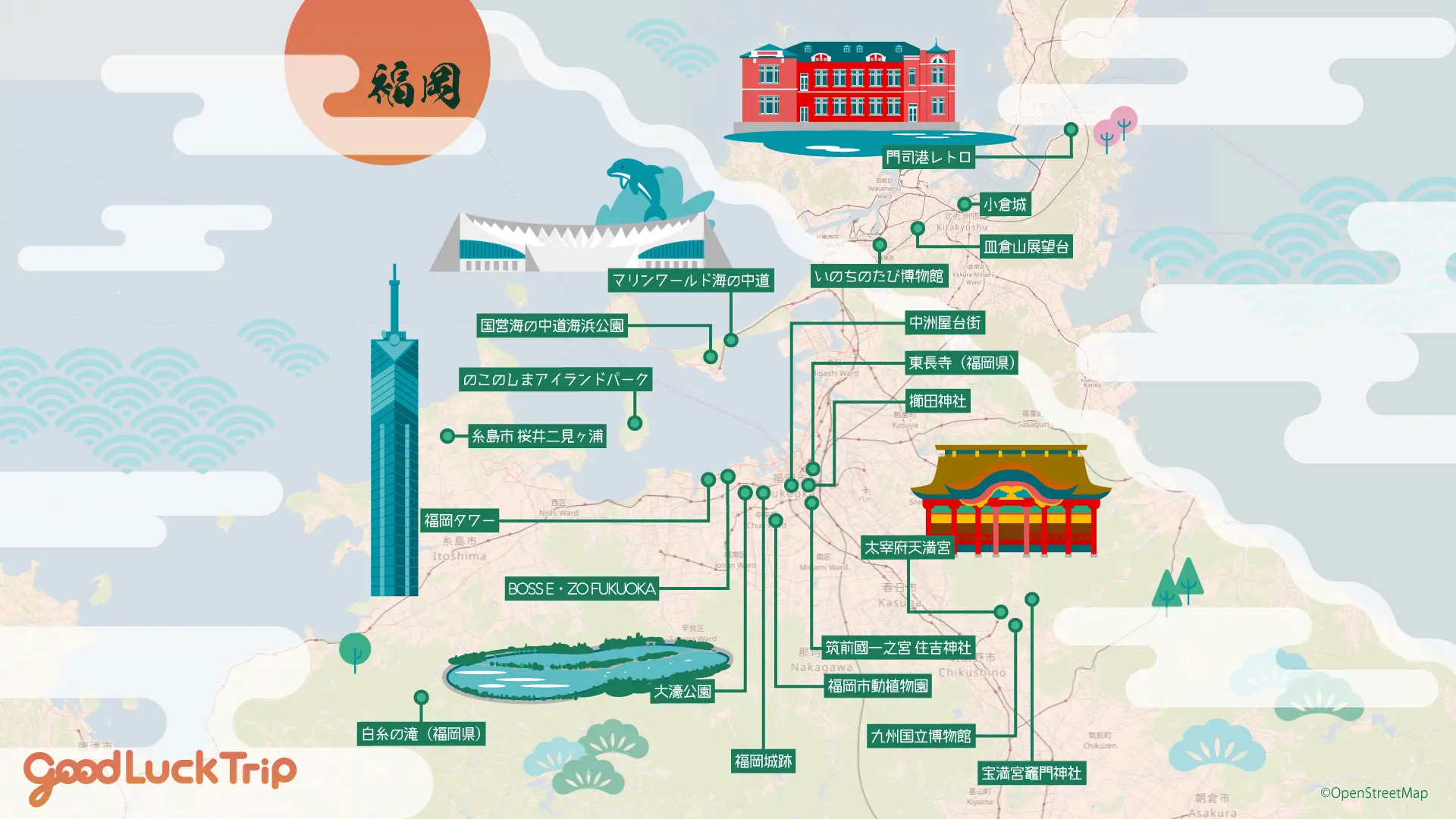
1. BOSS E・ZO FUKUOKA
BOSS E・ZO FUKUOKA opened in July 2020 next to PayPay Dome.
From the first floor to the rooftop, the entire building is filled with a wide range of entertainment options.
Don’t miss teamLab Forest Fukuoka - SBI Securities, a permanent museum by the art collective teamLab that blends cutting-edge digital visuals with smartphone interaction, or V-World AREA Credit Agricole, featuring virtual content you can experience with all five senses.

2. Fukuoka Tower
A landmark of Fukuoka City built as a monument for the Asia-Pacific Exposition (commonly known as Yokatopia) held in 1989.
Standing 234 m tall, its top-floor observation deck offers a 360-degree panoramic view over the city.
With the concept “Enjoy the sky of Fukuoka and play with the scenery,” visitors can step into an extraordinary “Sky World” using virtual reality (VR) and augmented reality (AR) technologies.
VR binoculars add to the fun—making you feel like you’re flying or bringing UFOs and robots right into view.

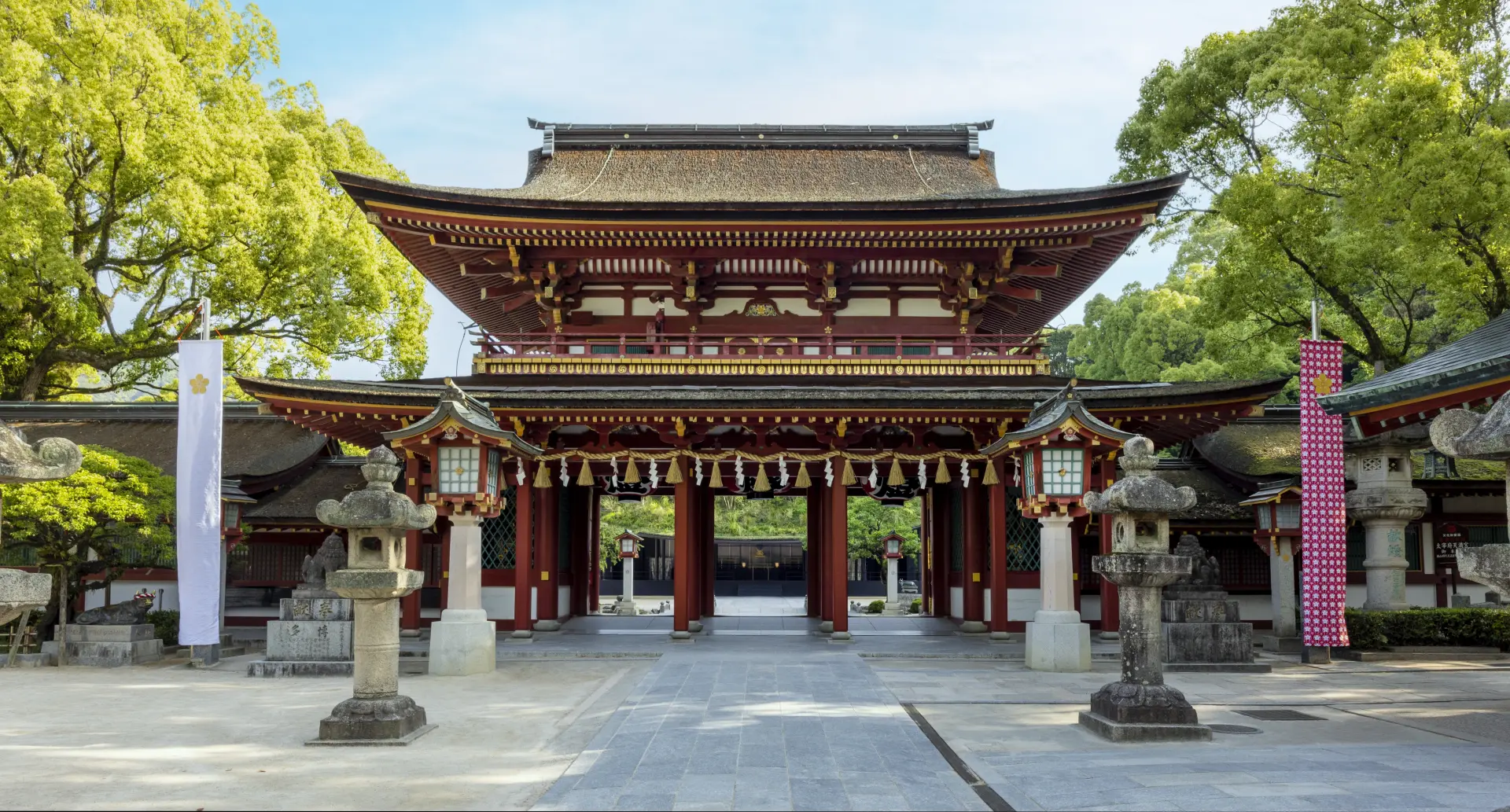
3. Dazaifu Tenmangu Shrine
The head shrine of approximately 10,000 Tenmangu shrines across Japan, dedicated to Tenjin-sama (Sugawara no Michizane).
Though innocent, Sugawara no Michizane was exiled from Kyoto to Dazaifu due to political maneuvering and later died here. The main shrine building was constructed over his grave, and for over 1,100 years the site has been carefully protected as a sacred place of Tenjin worship.
Within the spacious grounds, there are plenty of highlights, including the sacred ox statues, Taiko Bridge, the Treasure House, and the Dazaifu Tenmangu Art Program.
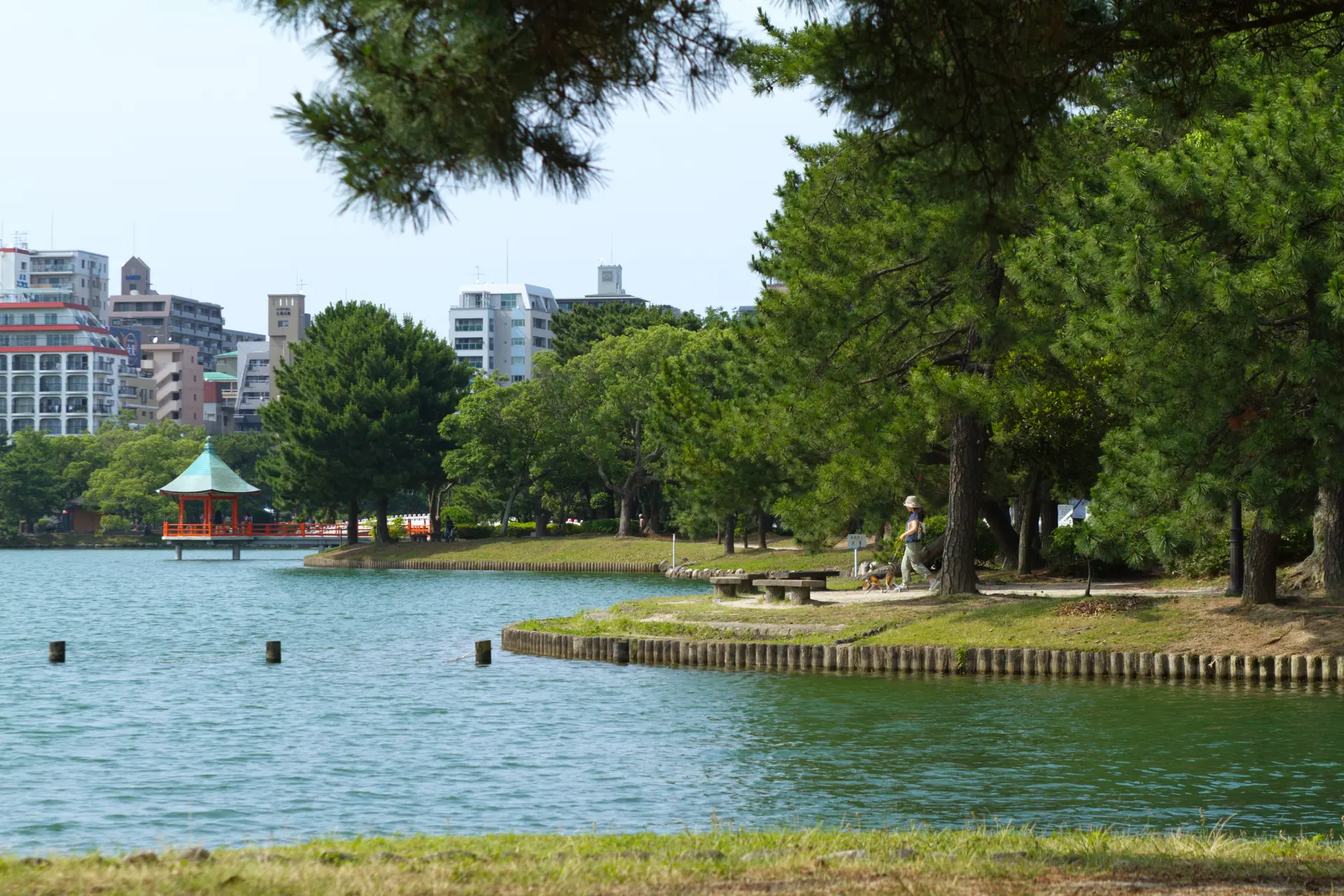
4. Ohori Park
Ohori Park is beloved as a relaxing oasis for locals, with lush nature centered around a large pond—despite being in the heart of Fukuoka City, just two stops from Tenjin Station.
Covering over half of the park’s total 39.8 hectares, the pond was once used as the outer moat when Kuroda Nagamasa built Fukuoka Castle.
Four bridges connect the small islands known as Naka-no-shima scattered across the center of the pond, allowing you to cross over the water.
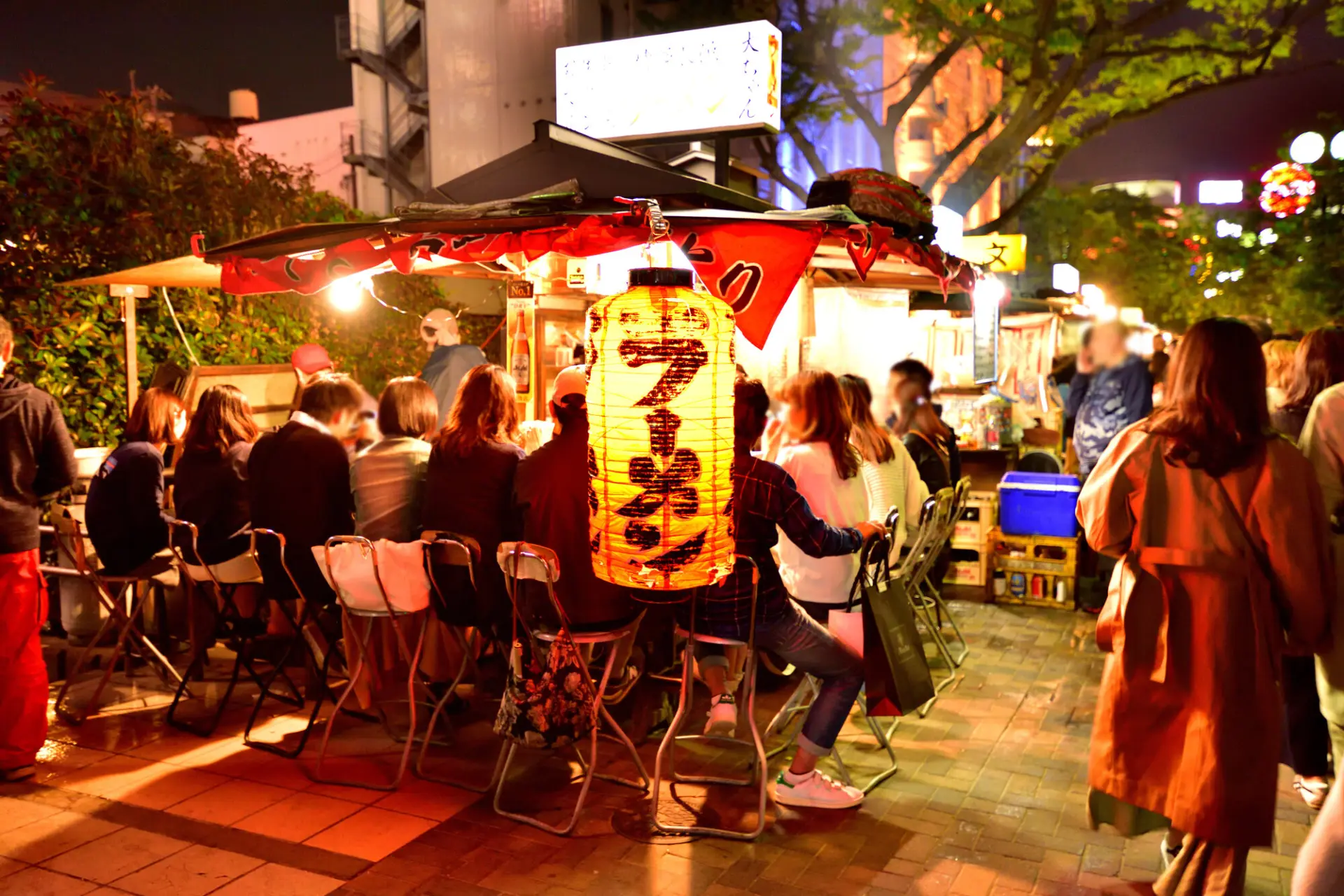
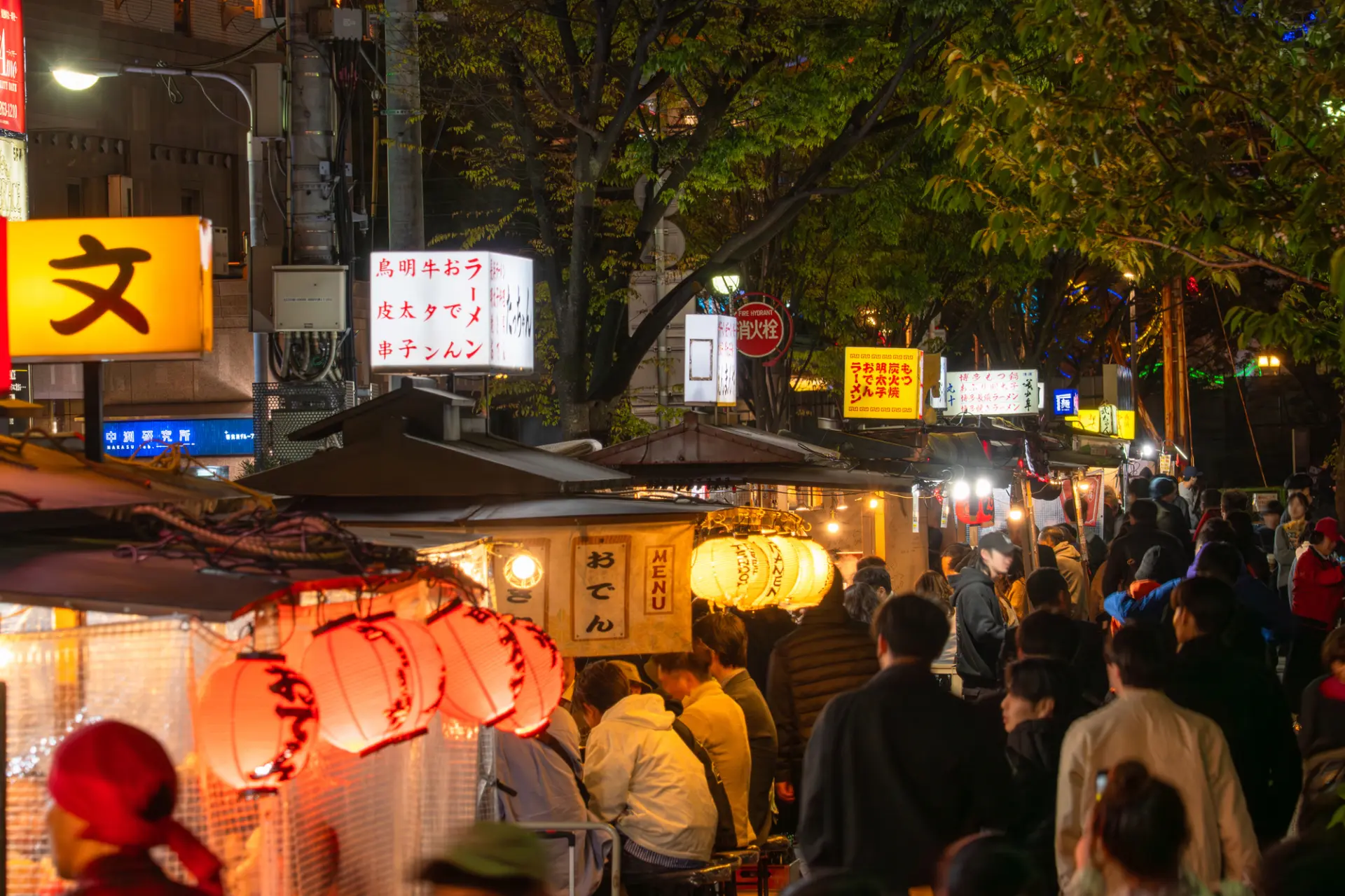
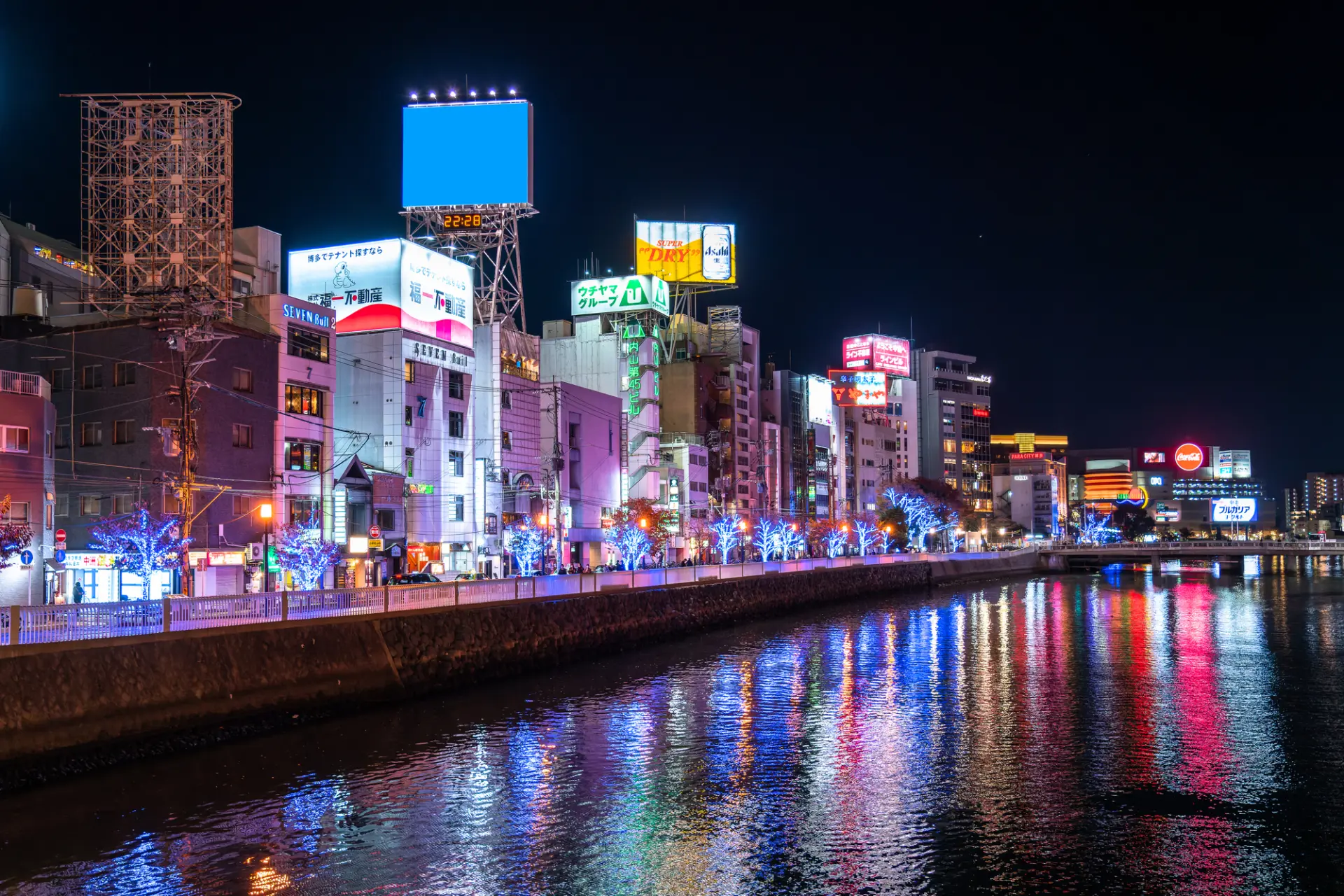
5. Nakasu Yatai Street
Even in gourmet-loving Hakata, Nakasu Yatai Street is where you can dive into the deepest food-stall experience—enjoying ramen, skewers, oden, and more with a drink.
Neon lights shimmer on the surface of the Nakagawa River that runs through Nakasu, Kyushu’s premier nightlife district, and the long row of yatai along the river is an unforgettable sight. Even just walking through, you can feel the area’s energy in full.
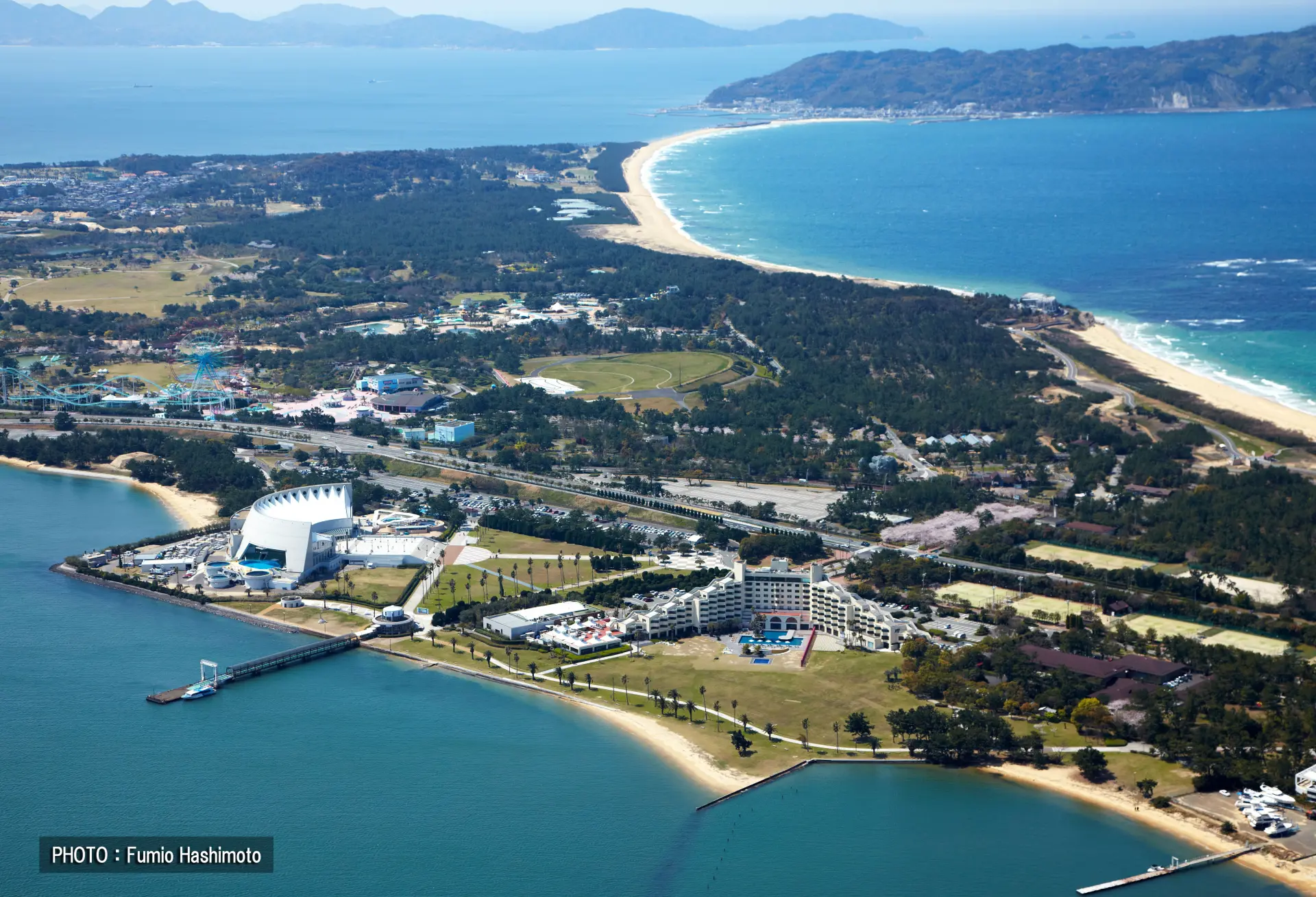
6. Uminonakamichi Seaside Park
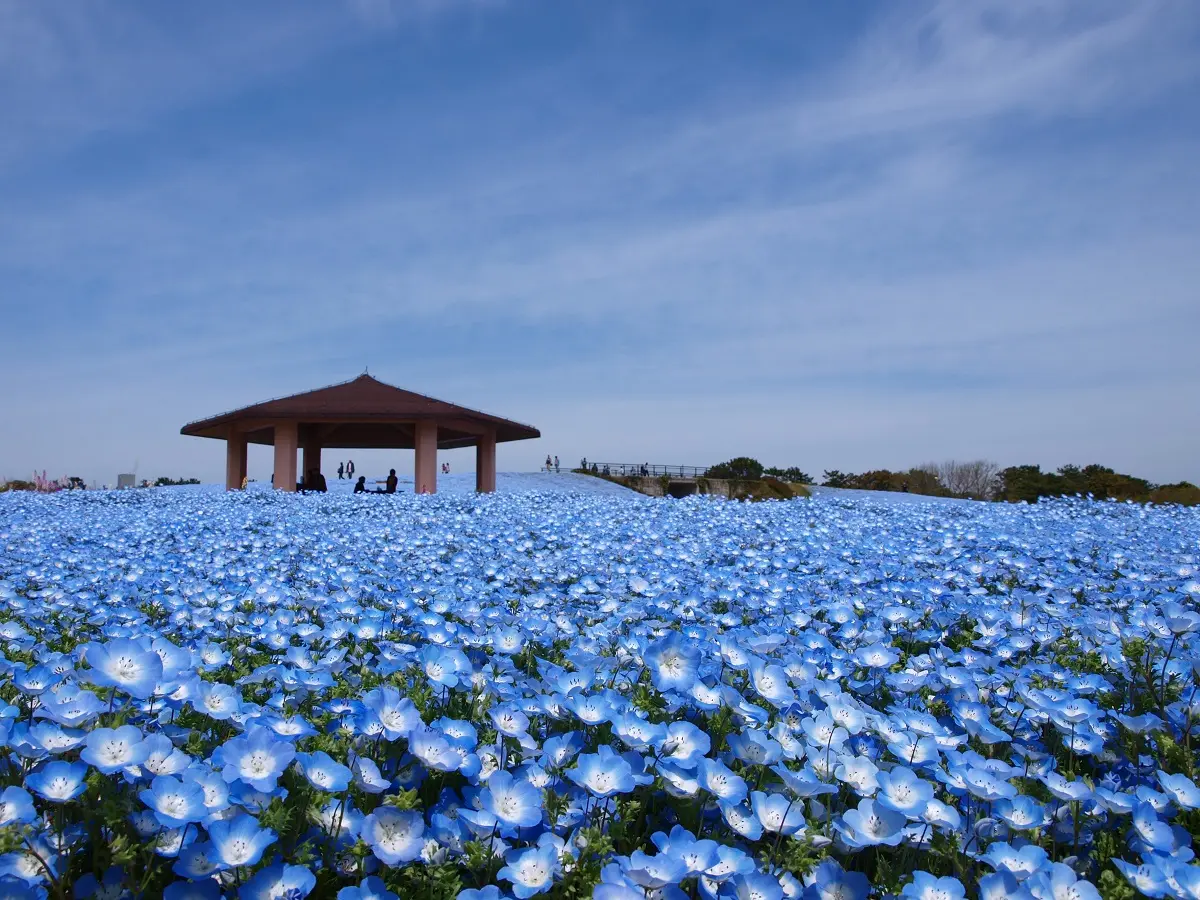
A national government park in Fukuoka City’s Higashi Ward. The vast, nature-rich grounds cover around 350 hectares and are surrounded by the sea, with seasonal flowers blooming year-round. With playground equipment even toddlers can enjoy and Animal Forest where you can interact with animals, it’s especially popular with families.
In summer, the Sunshine Pool—featuring six pools, including water slides and a kids’ pool—is a huge hit.
There’s also a sprawling 24-hectare lawn area, perfect for a laid-back weekend picnic.
7. Marine World Uminonakamichi
Opened in 1989, Marine World Uminonakamichi is an aquarium themed around “the seas of Kyushu,” with approximately 350 species and 30,000 individual animals on display.
The seas around Kyushu are recreated more realistically, making it easier to observe animals in settings closer to their natural habitats.
Another major draw is its lineup of shows and programs, led by the popular dolphin and sea lion show, plus the Open Sea Large Tank Show and otter feeding time.

8. Sarakurayama Observation Deck
A panoramic observation deck with sweeping views over Kitakyushu City.
To reach the deck at the summit (622 m above sea level), take the cable car and transfer to the slope car.
Through the all-glass windows, you can enjoy spectacular scenery that shifts moment by moment throughout the day.
Below the deck spreads Kitakyushu’s night view, recognized—along with Nagasaki and Sapporo—as one of Japan’s “New Three Great Night View Cities.”

9. Mojiko Retro
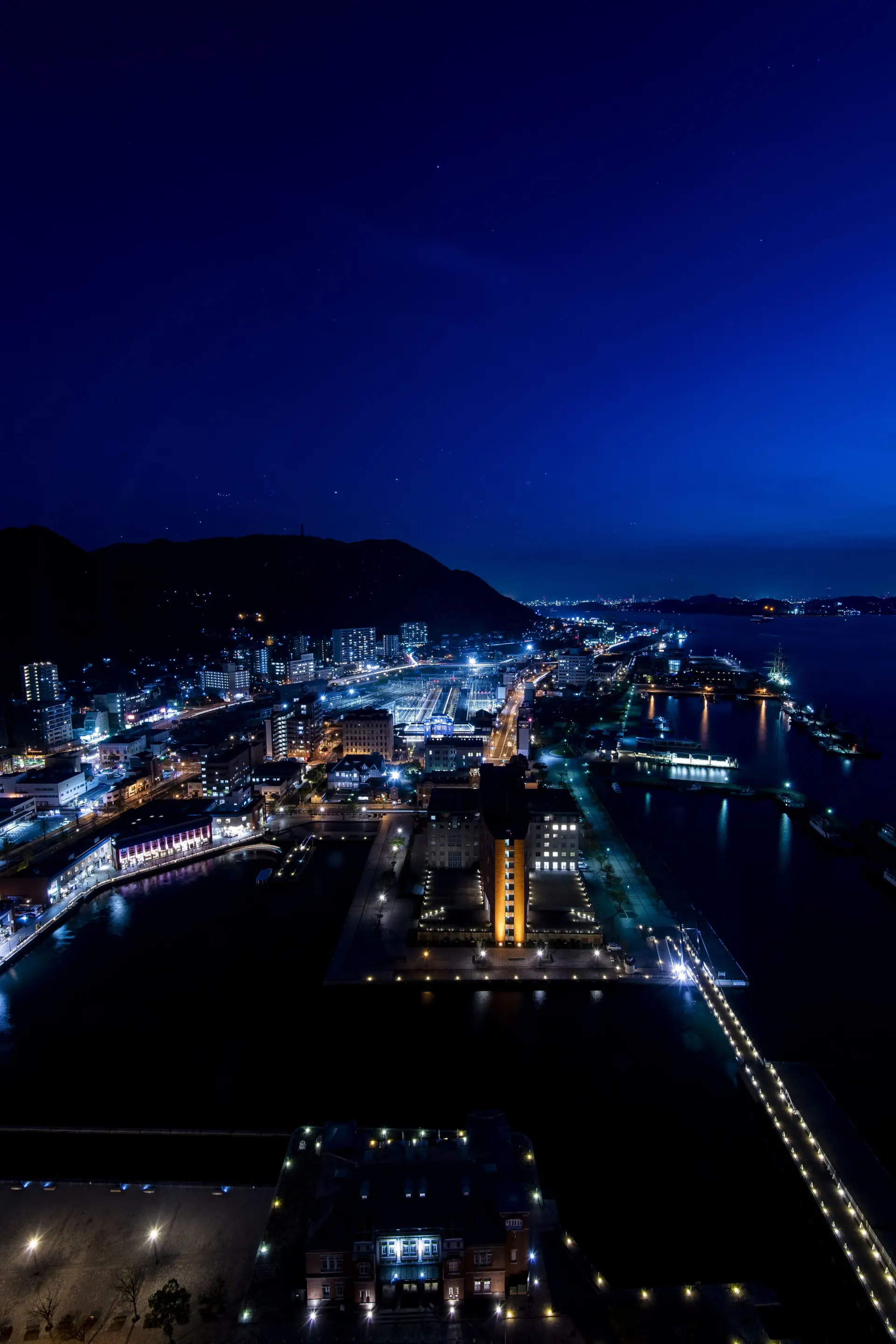
Mojiko opened as a port in the early Meiji era and flourished as an international trading hub. Many atmospheric buildings built from the Meiji period through the early Showa period still remain, making it fun to explore on foot.
Kitakyushu is recognized as one of Japan’s “New Three Great Night View Cities,” and the view from Mojiko Retro Observation Room is especially impressive.
From late November to around mid-March (dates may vary by year), the town also hosts Mojiko Retro Roman Lanterns, lighting up the area and creating a magical winter port atmosphere.
10. Fukuoka Castle Ruins
Built by the father-and-son duo Kuroda Yoshitaka (Kanbei) and Nagamasa over seven years starting in 1601. It’s known as the castle of the Kuroda clan, rulers of the Fukuoka Domain throughout the Edo period, and is also called “Maizuru Castle.”
Often said to be among the largest castles in Kyushu, it is believed to have had large, medium, and small tenshudai (main keep bases) and 47 turrets.
An area of 480,000 square meters centered on the Honmaru, Ninomaru, and Sannomaru is designated a National Historic Site.
What remains today includes the Important Cultural Property Tamon Yagura, the prefecture-designated (supposed) Shiomi Yagura, Shimonohashi Gate, the former Mori Tahei residence nagayamon gate, and the city-designated Najima Gate. The large tenshudai now serves as an observation point.

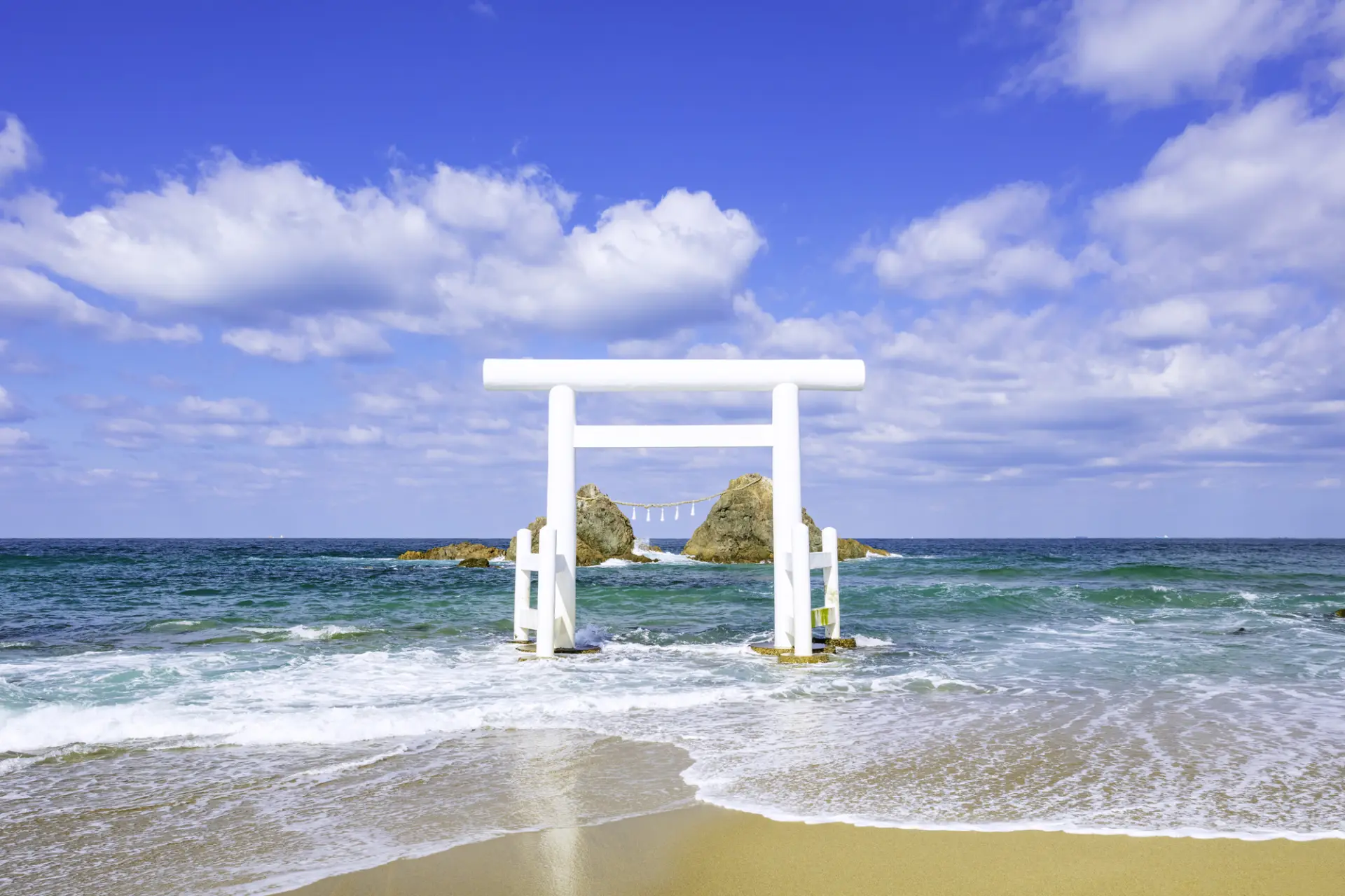
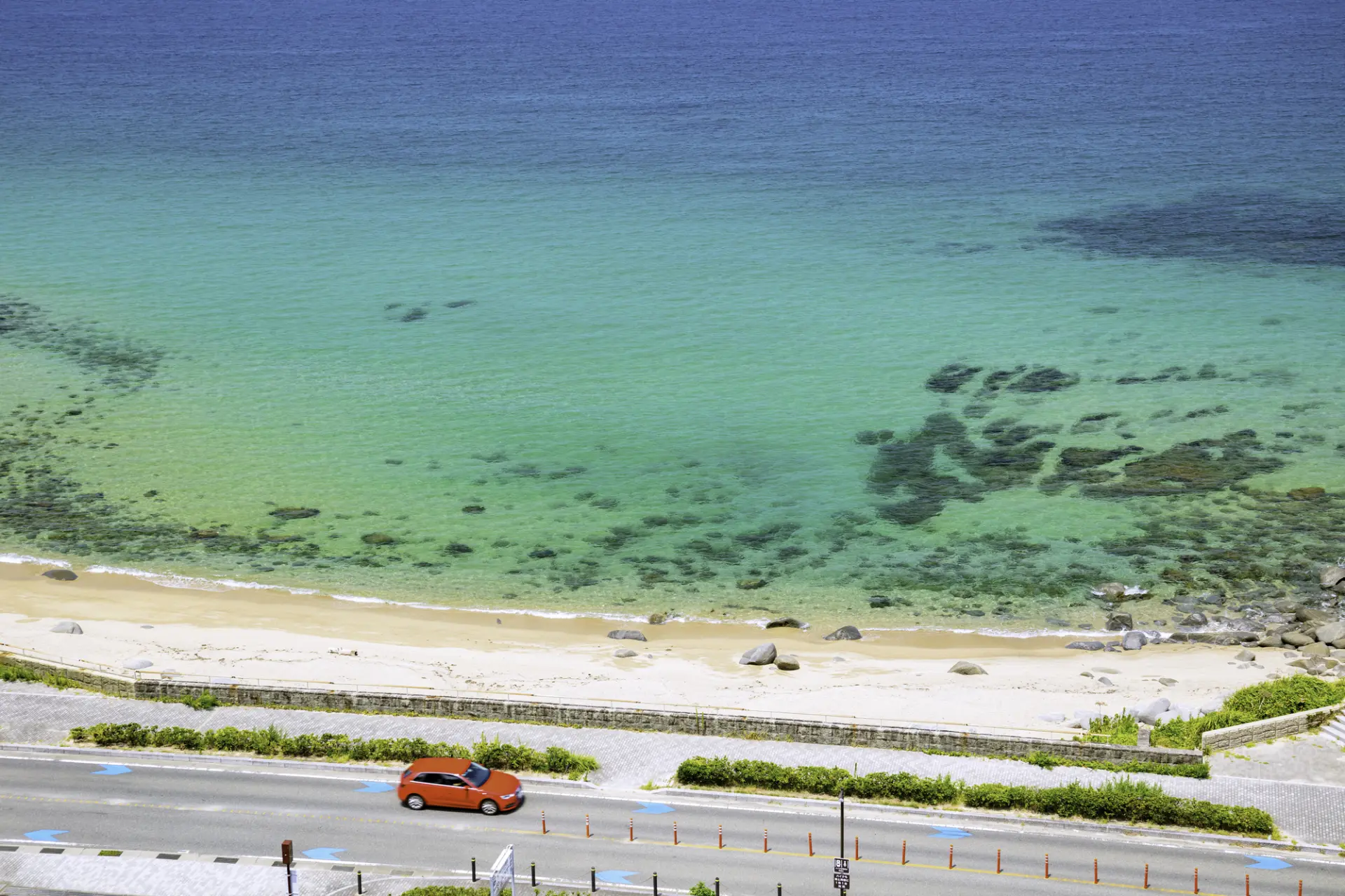
11. Sakurai Futamigaura, Itoshima City
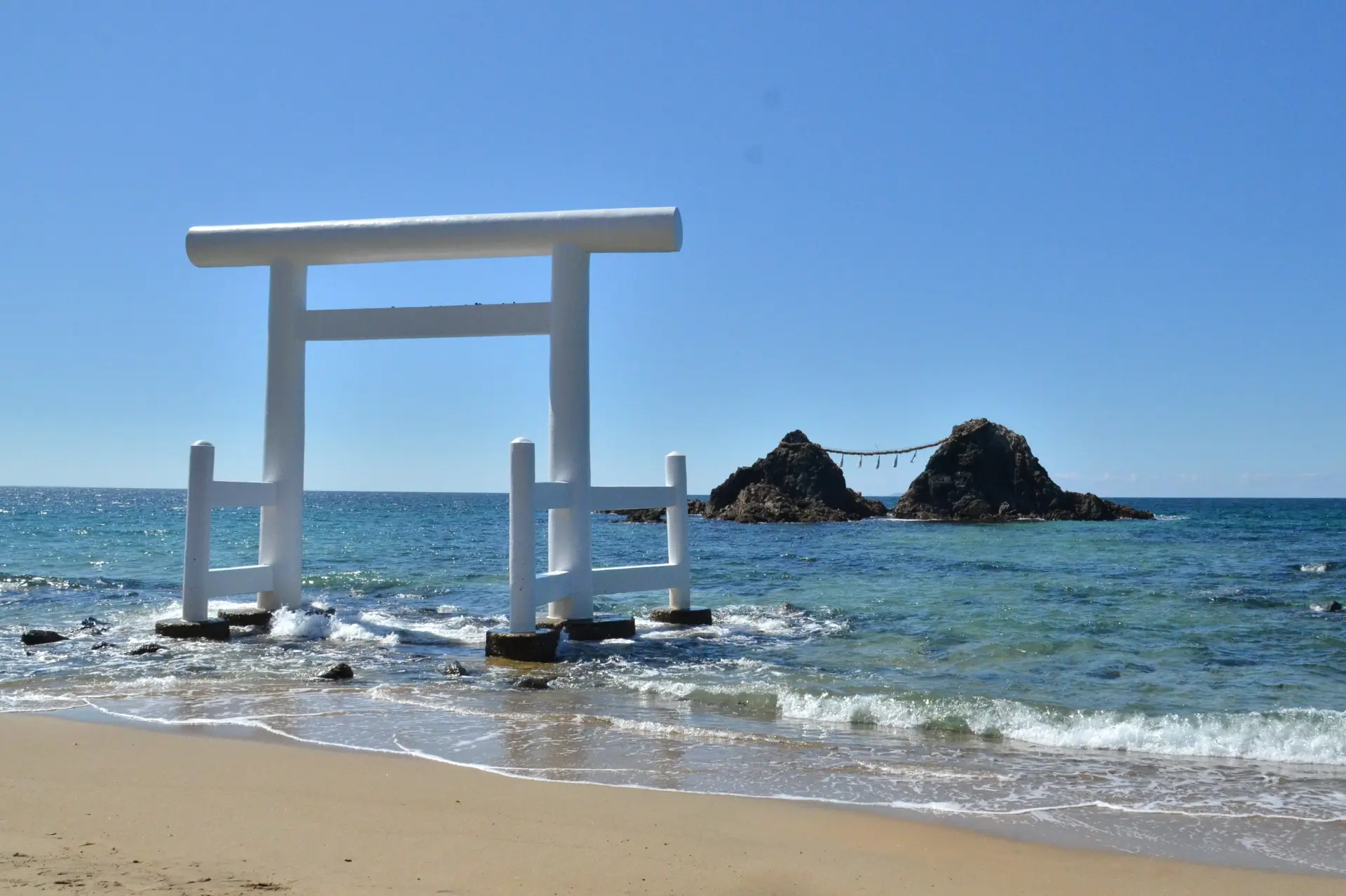
Located in northern Itoshima City, Sakurai Futamigaura overlooks the Genkai Sea.
It’s one of Fukuoka’s signature scenic spots, selected as one of Japan’s “100 Best Beaches,” and a must-stop when driving around Itoshima.
Futamigaura is popular for photography, with changing expressions by season—from calm spring waters to rough winter waves.
Its sunsets are so beautiful they’ve been chosen as one of Japan’s “100 Best Sunsets,” and the peak time is around the summer solstice, when you can see the sun set between the Meoto Iwa (Wedded Rocks), drawing the largest crowds of the year.
12. Kyushu National Museum
Dazaifu, where the museum is located, was an important hub in ancient Japanese history and a place that governed the Kyushu region, with active exchange with the wider world.
With that background, the museum opened in 2005 as Japan’s fourth national museum under the unique concept of “viewing the formation of Japanese culture from the perspective of Asian history.”
The centerpiece is the vast Cultural Exchange Exhibition Gallery on the fourth floor, which introduces the history of cultural exchange between Japan and countries across Asia and Europe.

13. Homangu Kamado Shrine
Kamado Shrine has a history of over 1,350 years. It enshrines Tamayori-hime-no-mikoto and has long been worshiped as a deity of matchmaking.
It has also been revered as a deity for protection from misfortune and warding off bad directions.
Located at the foot of Mt. Homan, it’s also known for seasonal scenery, with cherry blossoms in spring and fall foliage in autumn.
Today it’s said to be a sacred site for Demon Slayer: Kimetsu no Yaiba, and many fans visit on anime pilgrimages.

14. Tochoji Temple
Tochoji Temple in Hakata Ward, Fukuoka City, is a Shingon Buddhist temple said to have been founded by the famed monk Kukai (Kobo Daishi) upon his return from studying in Tang China.
Its official name is Tocho Mitsuji, named by Kukai with the hope that “esoteric Buddhism will be passed down in the East for a long time.”
A major highlight is the wooden Great Buddha known as the “Fukuoka Daibutsu.”
At 10.8 meters tall—symbolizing the 108 earthly desires—it’s among the largest wooden seated Buddha statues in Japan.

15. Kushida Shrine
Regarded as Hakata’s guardian shrine and said to have been founded in the Nara period, it’s affectionately known to locals as “Okushida-san.”
It’s the shrine where the Hakata Gion Yamakasa festival—held every July and signaling the start of summer in Hakata—is dedicated. In the grounds, you can view the impressive decorative floats year-round (except in June).
The grounds also include the Hakata History Museum, where you can see valuable historical materials related to Hakata, such as a vermilion-seal document left by Toyotomi Hideyoshi and old masks used in Muromachi-period matsubayashi performances. Nearby, you’ll also find places like the Hakata Machiya Folk Museum, where you can experience the nostalgic atmosphere of old Hakata.

16. Fukuoka City Zoological and Botanical Garden
A zoo and botanical garden located within Minami Park, set on hilly terrain in Fukuoka City. The zoo area is in the central part of the park and the botanical garden is in the southern part, connected by an overpass for easy movement between them.
The zoo is divided into the North Garden, South Garden, and the Asian Tropical Valley area. About 100 animal species are kept and exhibited, including southern white rhinos, giraffes, and Asiatic black bears in the North Garden; red pandas, lions, tigers, hippos, and a penguin area that opened in January 2022 in the South Garden; and orangutans, leopards, and Asian small-clawed otters in Asian Tropical Valley.

17. Chikuzen Province’s Ichinomiya: Sumiyoshi Shrine
There are 2,129 shrines across Japan that enshrine the Sumiyoshi deity, and this shrine is said to be the first. Its enshrined deities appear in the Kojiki, and it has a history of over 1,800 years as a Shikinai Myojin Taisha and as the ichinomiya (highest-ranking shrine) of Chikuzen Province.
Revered as deities of seafaring and stars who emerged from the sea, and as purification deities who cleanse body and mind, the shrine is associated with many blessings. It also has deep ties to sumo, and before the autumn Grand Sumo Kyushu Tournament, the Japan Sumo Association holds a yokozuna dedication ring-entering ceremony here.

18. Nokonoshima Island Park
Nokonoshima is a small island in Hakata Bay with a 12 km circumference. It’s an easy-to-reach resort island—just a 10-minute boat ride from the Meinohama Ferry Terminal in Nishi Ward, Fukuoka City—and attracts many people looking to relax.
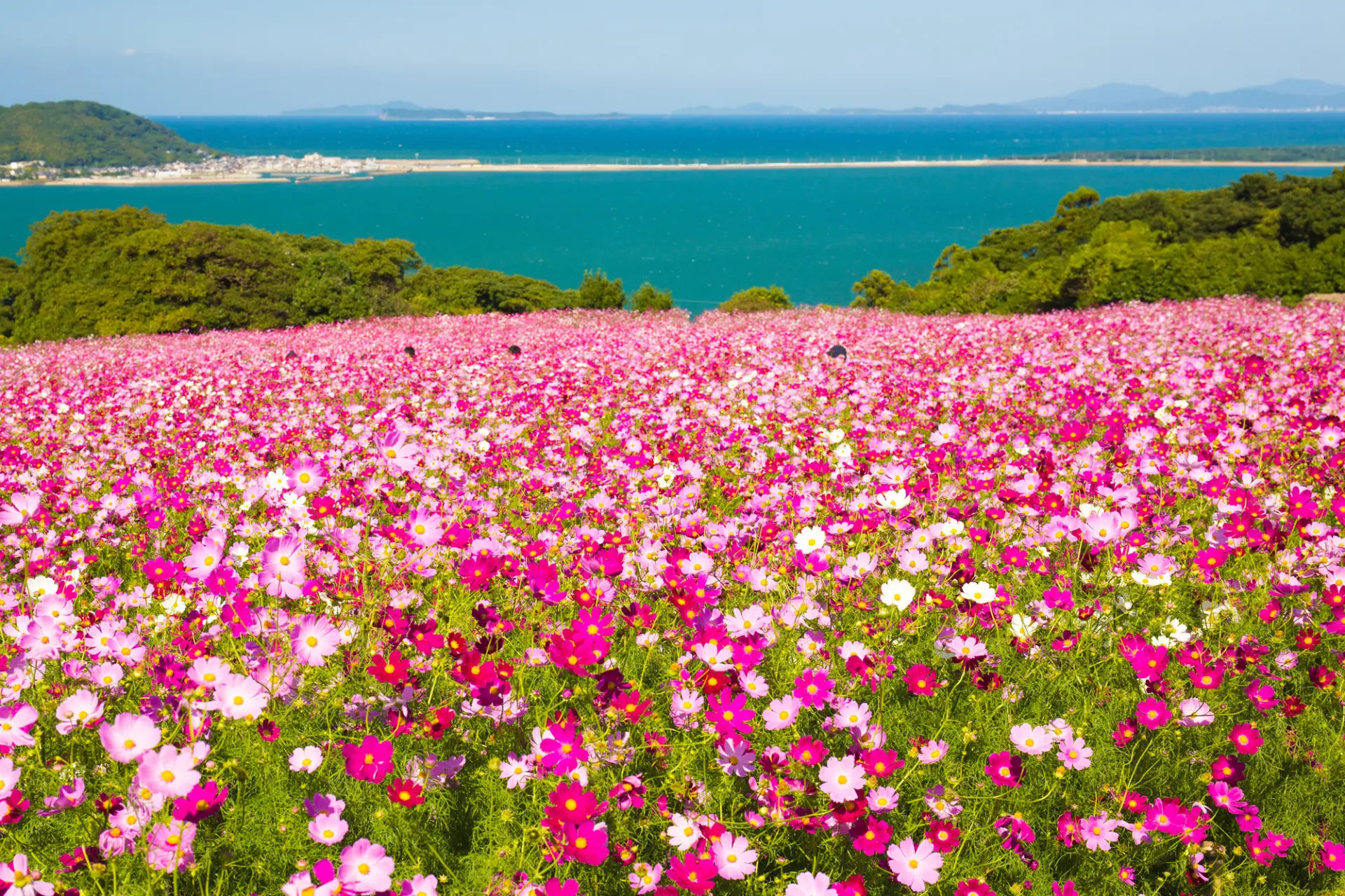
The main destination is Nokonoshima Island Park. Spanning 150,000 square meters, the park features flower fields that create beautiful seasonal scenery—nanohana in spring, sunflowers in summer, cosmos in autumn, and daffodils in winter. Beyond the flowers, you can also look out over the blue waters of Hakata Bay, creating a striking contrast.

19. Itoshima
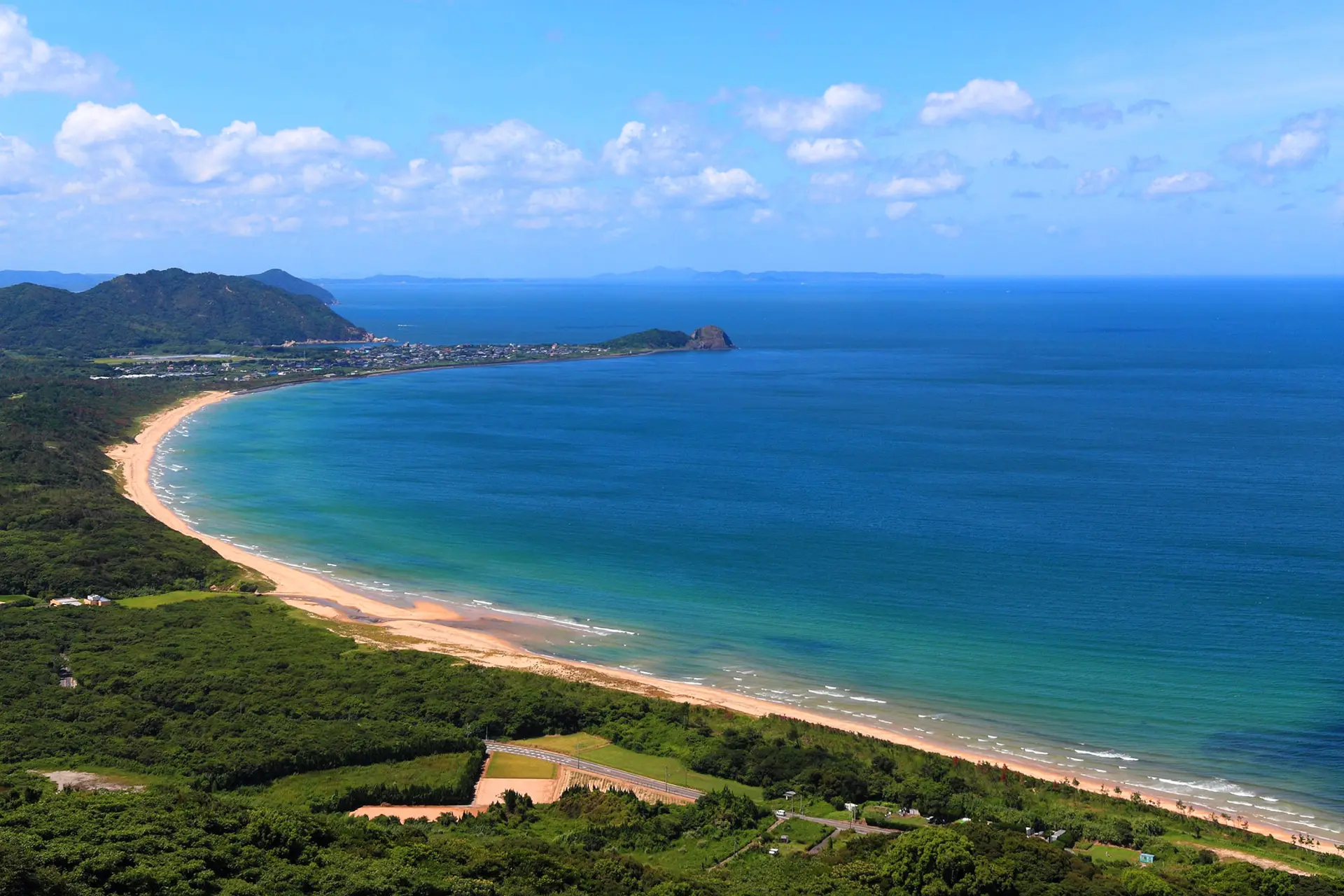
Itoshima is a resort area loved by Fukuoka locals, reachable in around 30 minutes by car from Fukuoka Airport or Hakata Station. A classic plan is a drive along the coast, known for surfing spots, with plenty of stylish restaurants and shops along the way.
For first-time visitors, a drive along Prefectural Route 54 is especially recommended. After passing Fukuoka City Seaside Fishing Park, you’ll spot the large sign for Zauo Itoshima Main Store, a restaurant known for seafood dishes.
On the beach in front of the restaurant, there’s a palm-tree swing that’s popular for its Instagram-worthy photos.
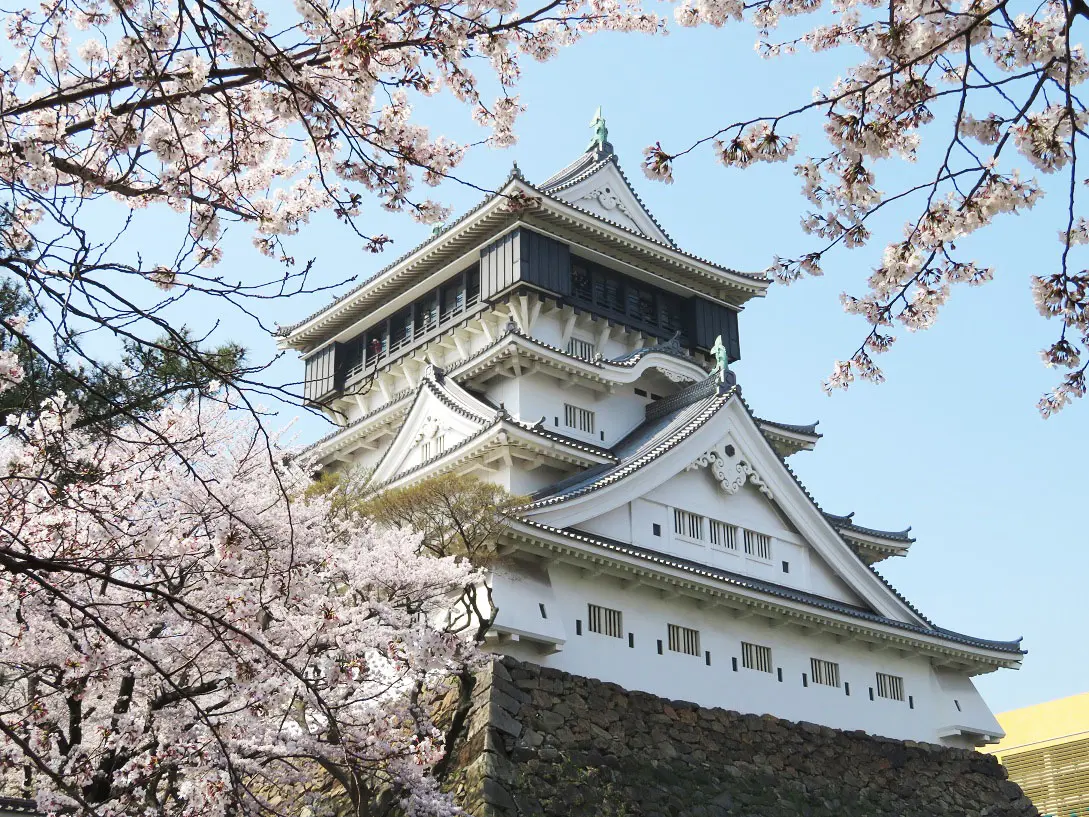
20. Kokura Castle
Built over seven years starting in 1602 by Hosokawa Tadaoki, who entered the region for his achievements in the Battle of Sekigahara.
It later became the residence of the Ogasawara clan, but in 1866 it burned down, leaving only its stone walls. After the war, the castle tower was reconstructed at the strong request of local residents.
Inside the castle tower, a powerful theater on the first floor offers a way to learn about roughly 400 years of history, when the area thrived as a gateway connecting Honshu and Kyushu.
The second floor displays materials related to the domain lords.
The third floor introduces the mysterious lives of Miyamoto Musashi and Sasaki Kojiro, associated with the Battle of Ganryujima in the Kanmon Straits.
21. Museum of Natural and Human History, Kitakyushu
One of western Japan’s largest comprehensive museums of natural history and human history, presenting “a journey of life” through exhibits explaining the evolution of life and the history of people on a grand scale.
Centered around a main street called the Earth Mall and Culture Mall, a series of galleries continues on, letting you enjoy large-scale exhibits with a feel like strolling through a huge shopping mall.
In the Earth Mall, you’ll find skeleton specimens such as a Diplodocus measuring Approx. 35 meters long and a Tyrannosaurus—sure to leave you in awe of their size.

6 Things to Do in Fukuoka
From here, we’ll introduce six things you’ll want to include in your itinerary when sightseeing in Fukuoka.
Use these ideas and you’ll not only be able to plan without hesitation—you’ll also get to enjoy Fukuoka’s appeal to the fullest.
1. Taste “Fukuoka food,” including Hakata ramen, motsunabe, and mentaiko
When you visit Fukuoka, you’ll want to try its famous local specialties known across Japan.
Signature dishes like Hakata ramen, motsunabe, and mentaiko are appealing enough to be a travel goal in themselves, and even on a short trip they make it easy to feel the essence of Fukuoka.
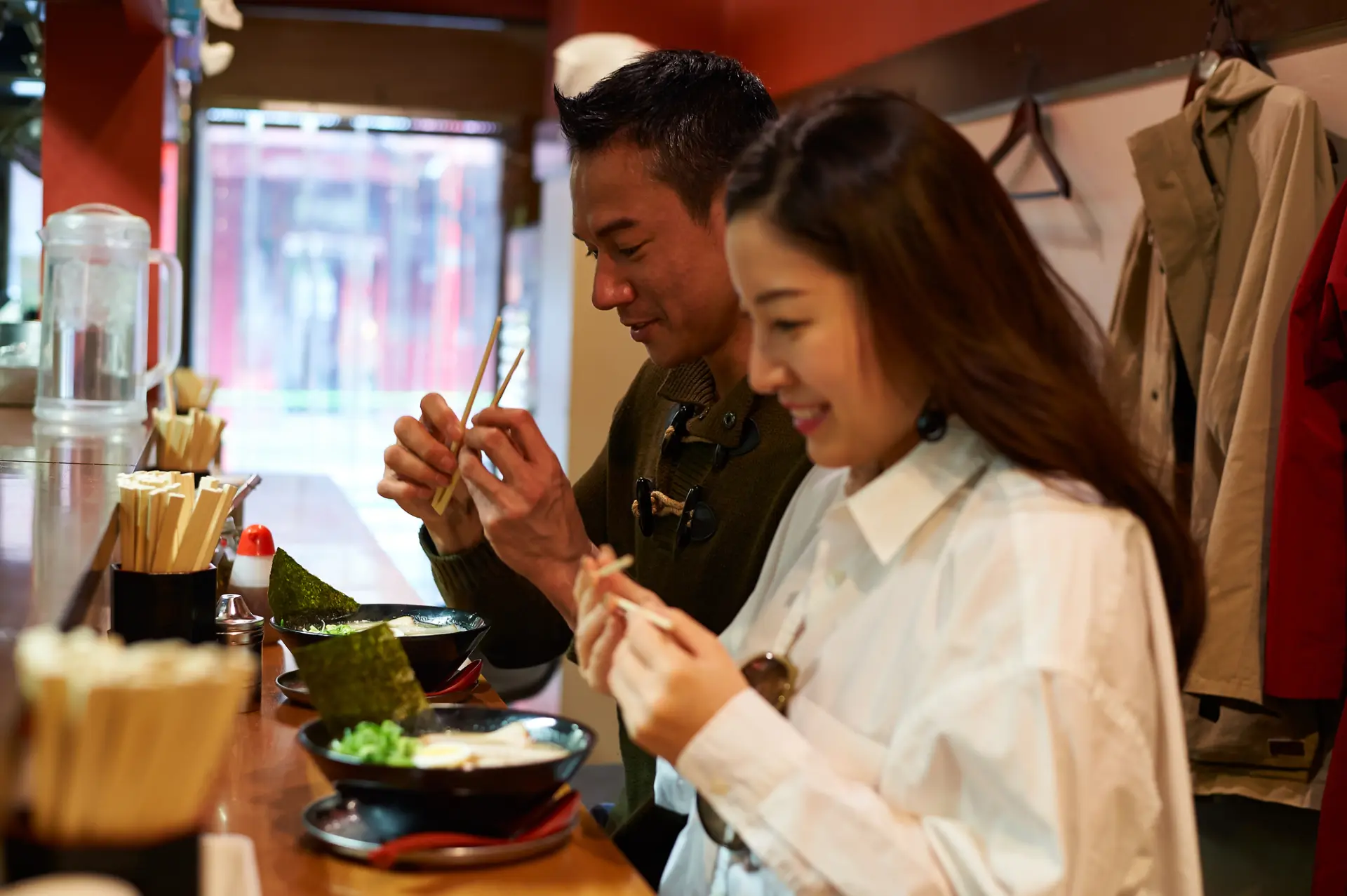
Hakata ramen is known for its rich tonkotsu (pork bone) broth and straight, thin noodles.
Even within tonkotsu ramen, there are different styles such as Kurume ramen and Nagahama ramen—trying a few and comparing is also recommended.
Motsunabe is a signature hot pot featuring beef or pork offal with garlic chives and cabbage.
It’s especially popular in colder seasons, but it’s also enjoyed year-round as a classic local favorite.
Mentaiko can be enjoyed on its own, paired with rice or pasta, or taken home as a souvenir—there are plenty of ways to enjoy it.
All of these specialties are widely available around Fukuoka City, making them easy to fit between sightseeing stops.
2. Experience the atmosphere and food that only yatai can offer
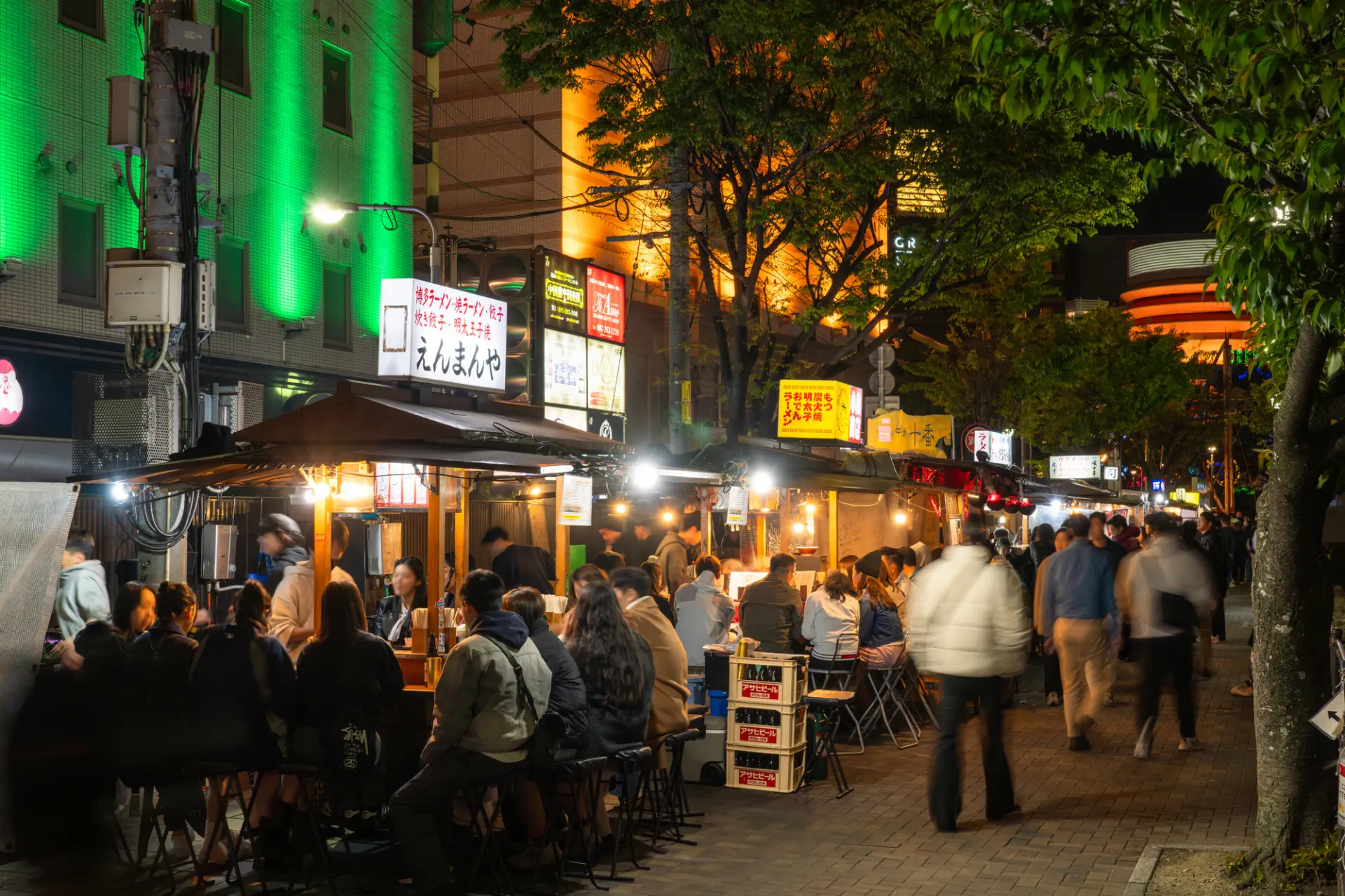
To enjoy Fukuoka’s food culture, yatai street stalls are essential.
Beloved as places where you can casually enjoy dishes like Hakata ramen and oden, yatai offer a chance to experience everyday Fukuoka through food.
In the Tenjin and Nakasu areas especially, stalls start lining up as evening approaches, naturally drawing both locals and visitors.
Ramen, yaki ramen, oden, gyoza, and other Fukuoka favorites can be enjoyed in a relaxed, no-frills setting.
Each yatai has its own menu and vibe, and part of the fun is hopping between a few to find your favorite.
With the owner and other customers close by, the time spent chatting while you eat is itself a uniquely yatai experience.
3. Visit Dazaifu Tenmangu Shrine
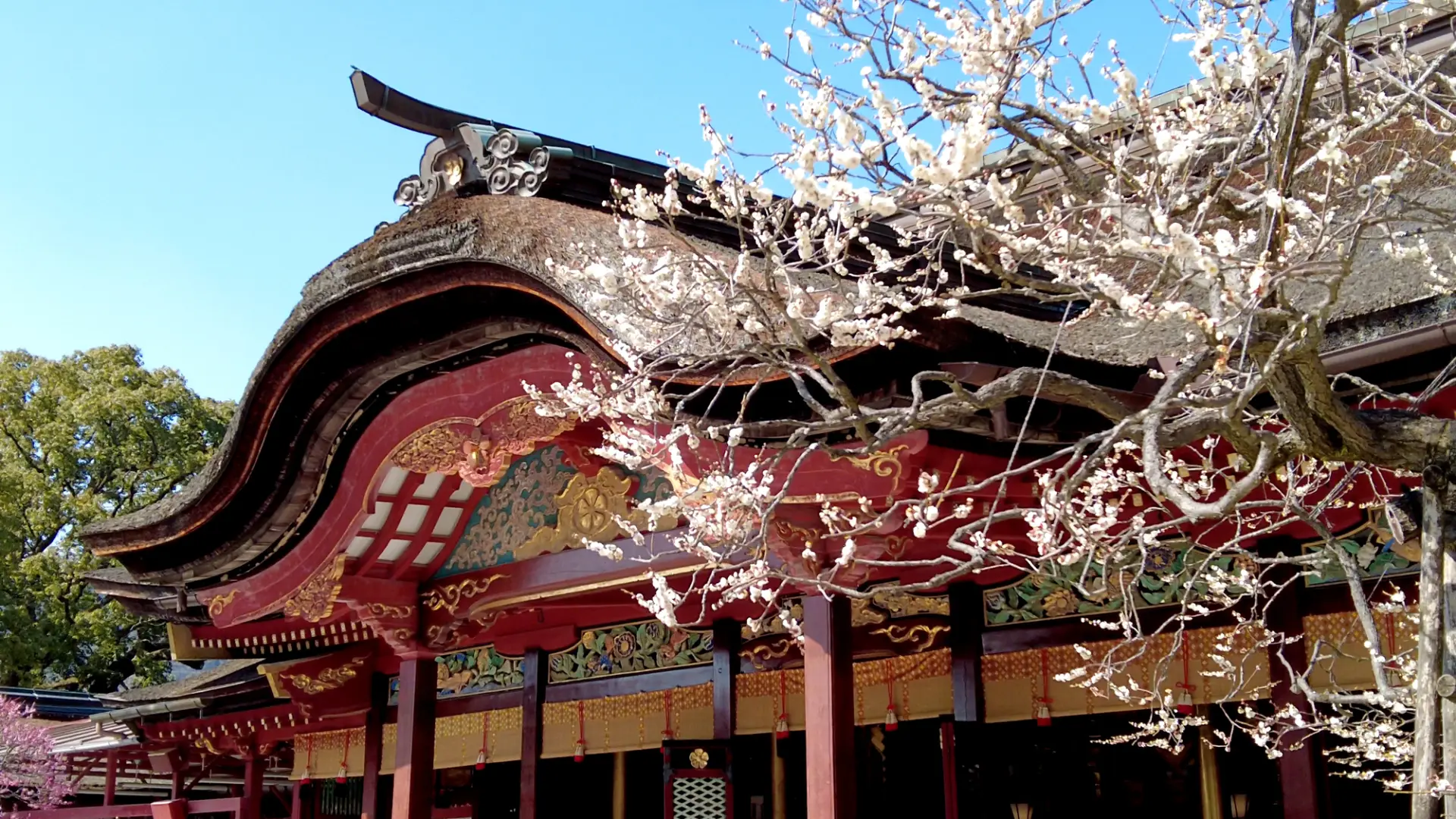
One classic spot you shouldn’t miss in Fukuoka is Dazaifu Tenmangu Shrine.
Known as a shrine to the deity of learning, it’s a historic Fukuoka landmark that draws many worshippers from Japan and abroad.
From the main shrine building to seasonal natural scenery, highlights throughout the grounds let you feel its long history.
It’s also famous for plum blossoms, with especially beautiful views from late January through early March.
Along the approach, souvenir shops and eateries line the way, and it’s a treat to stroll while trying the local specialty umegatamochi.
It’s also easily accessible by train from central Fukuoka and can be enjoyed in around half a day.
It’s a great choice for first-time visitors, as well as for those who want to combine it with food and city walks.
4. Enjoy scenic cafes and a coastal drive in the Itoshima area
Blessed with both ocean and mountains, Itoshima is a popular area that’s easy to add to your itinerary—reachable within an hour from central Fukuoka.
The north features a beautiful coastline, the south is lined with mountains, and between them you’ll find peaceful rural scenery.
That variety of landscapes is part of what makes Itoshima so appealing.
Along the coast, cafes and restaurants take advantage of the setting, letting you enjoy a meal or coffee break in open, airy spaces.
Another plus is the abundance of local specialties made with regional ingredients, like madai sea bream, live squid sashimi, Itoshima beef, and Amaou strawberries.
On a nice day, simply spending time while looking out at the sea offers a calm break from everyday life.
It’s especially recommended for travelers who want to enjoy nature and scenery, or who prefer a relaxed trip.
5. Enjoy island time on Nokonoshima
Nokonoshima, reached by ferry from Meinohama Ferry Terminal in Nishi Ward, Fukuoka City, is a nearby island that’s easy to enjoy on a day trip.
From the Hakata or Tenjin areas, it takes around 40–50 minutes by bus to reach the ferry terminal, but the ferry ride itself is short at Approx. 10 minutes, so the overall travel burden is light.
On the island, calm scenery surrounded by sea and greenery makes it a relaxing place to stroll and slow down.
At Nokonoshima Island Park in particular, you can enjoy seasonal flowers with sweeping views of Hakata Bay, fully capturing the island’s open, refreshing feel.
While it takes a bit of time to get there, Nokonoshima’s charm is the different atmosphere from central Fukuoka.
It’s recommended for travelers who want to ease the pace and relax in nature, or who want to experience an island getaway in a short amount of time.
6. Try kakauchi in Kitakyushu
If you want to experience Fukuoka’s drinking culture more deeply, look to the kakauchi tradition long enjoyed in Kitakyushu.
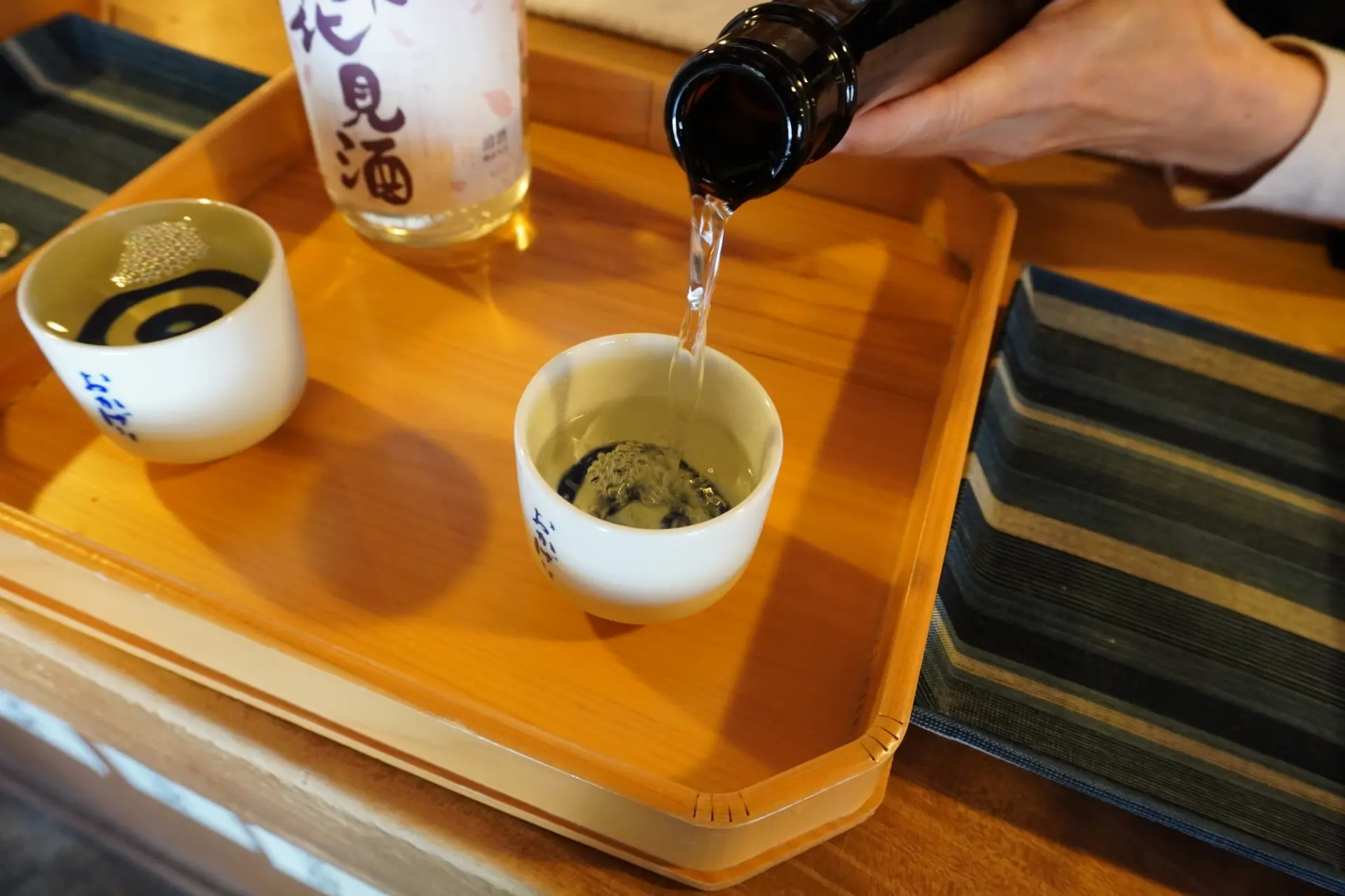
Kakauchi is a style of drinking where you enjoy alcohol in a corner of a liquor store—a unique, everyday local drinking culture.
Kitakyushu is said to be the birthplace of kakauchi.
It originally began as a habit of factory workers stopping by after work for a quick drink, and the style has since spread nationwide.
Even today, liquor stores where you can enjoy classic kakauchi are scattered across the city, offering a down-to-earth atmosphere that hasn’t been overly commercialized for tourism.
Inside, you can casually enjoy sake and shochu starting from a single glass at reasonable prices.
The time spent chatting naturally with the shop owner and regulars while enjoying drinks and snacks is a truly local Kitakyushu experience.
It’s a great option for travelers who want to explore Fukuoka’s alcohol culture in a way that’s different from standard local food and yatai—and for those who want to see the city from a more local perspective.
5 Spots in Fukuoka for Special Experiences
With so many attractions, Fukuoka also offers plenty of places for special experiences.
What follows are hidden gems that haven’t become standard tourist stops yet.
We hope you’ll create memorable moments by experiencing Fukuoka’s unique culture and nature.
1. Kawachi Wisteria Garden
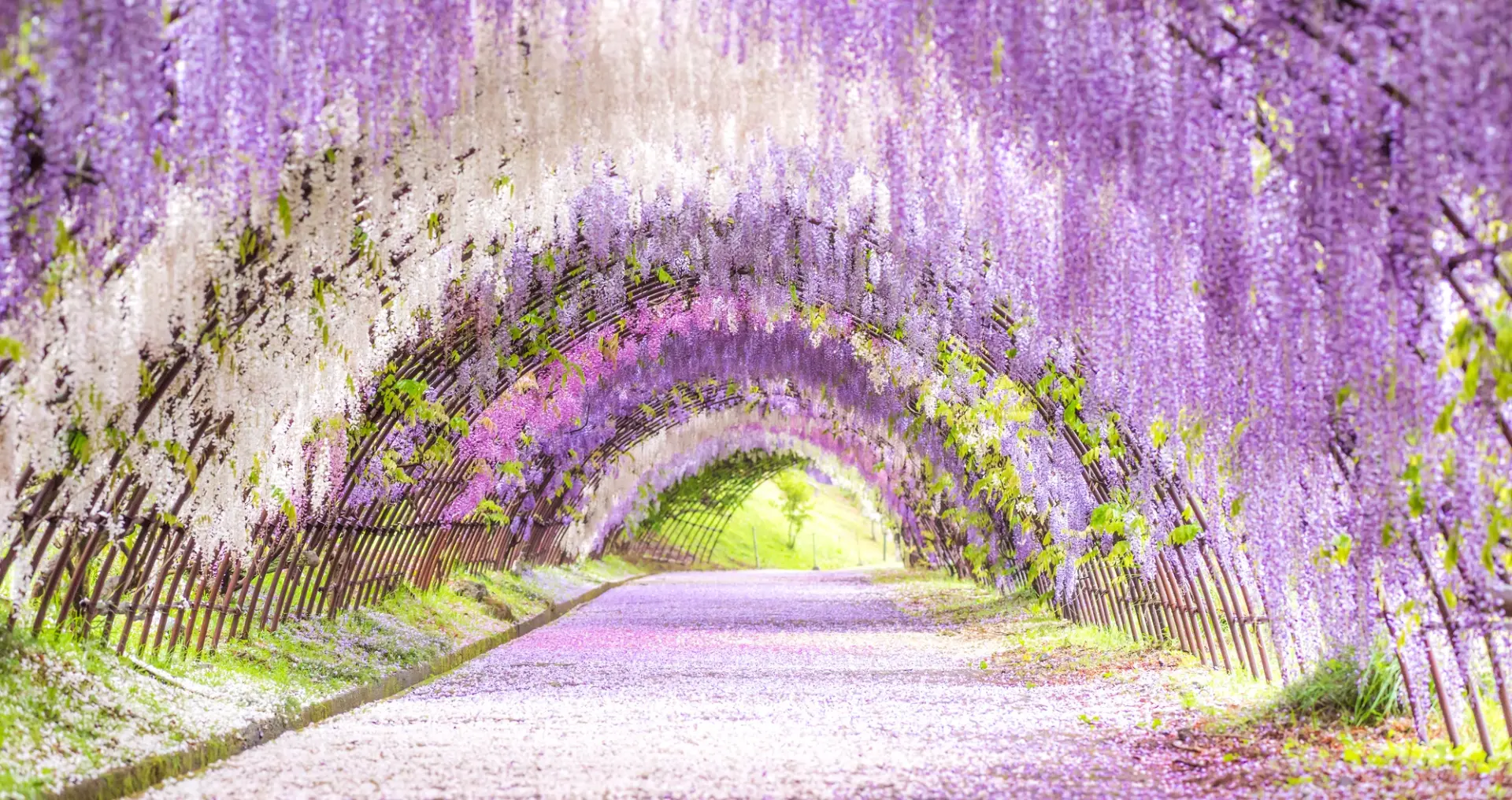
A wisteria garden where blooms typically reach their peak from late April to early May across a 3,000-tsubo property.
The garden cultivates 22 varieties of wisteria in rich colors including white, blue-purple, and pink. The two wisteria tunnels—80 meters and 110 meters long—are especially breathtaking and unforgettable.
Starting around mid-November, the 700 maple trees surrounding the trellises also turn color, making it popular as a fall foliage spot.
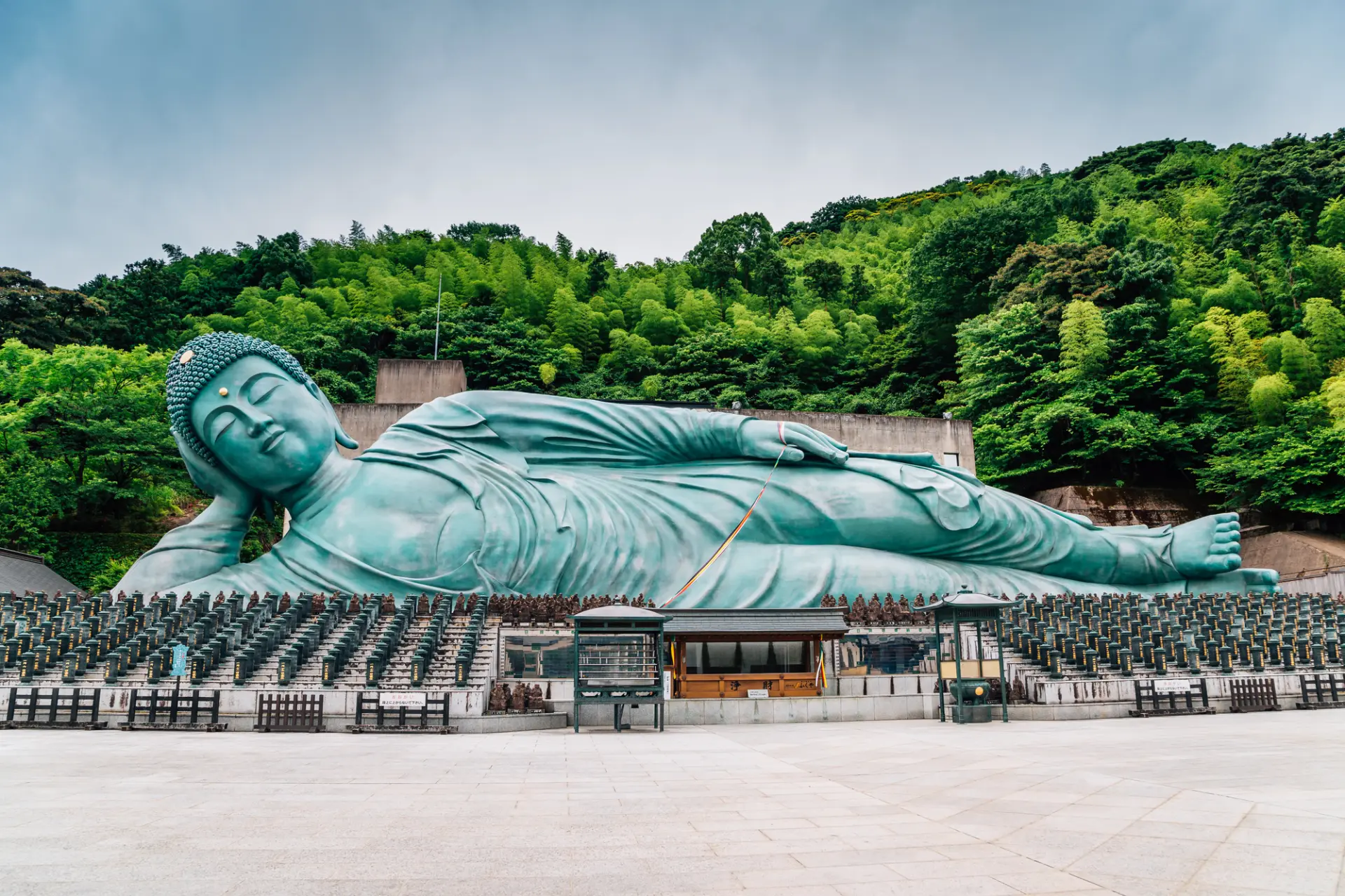
2. Nanzoin Temple
Nanzoin, located in Sasaguri Town in Kasuya District, Fukuoka Prefecture, is known as the head temple of the Sasaguri Shikoku Pilgrimage. It’s also a popular power spot that draws many worshippers throughout the year.
The biggest highlight is the Reclining Buddha statue, measuring 41 meters long and 11 meters high. It’s among the largest bronze reclining Buddha statues in the world.
On the soles of the feet, you can see patterns engraved to symbolize Buddhist teachings and worldview, viewable up close.
The grounds also feature the Seven Lucky Gods Tunnel and Nakamise Street, where you can shop for original Nanzoin sweets and incense—making it enjoyable not only for worship, but also for strolling.
3. Yanagawa River Cruise
Yanagawa, located in southern Fukuoka Prefecture, is known as a “water town,” with Edo-period canals crisscrossing the city like a web. The top experience here is a river cruise around town on a donkobune boat.
As you listen to the boatman’s commentary and songs, you can enjoy seasonal scenery and spend a relaxing time on the water.
Today, four companies operate river cruises. Each has boarding points within walking distance of Nishitetsu Yanagawa Station and will take you by donkobune to the city’s main sightseeing area.

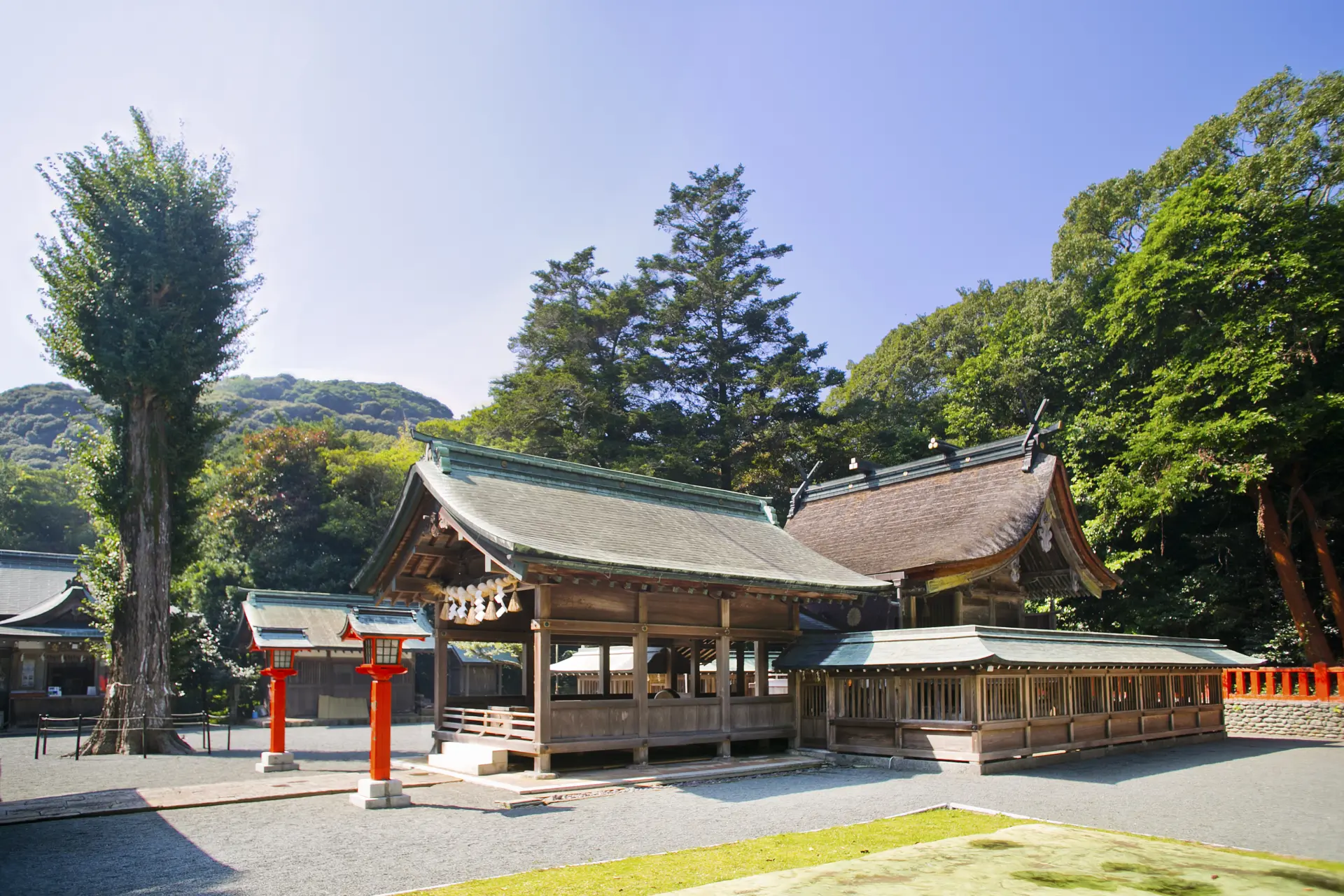
4. Munakata Taisha Shrine
One of Japan’s oldest shrines, appearing in Japanese mythology. The enshrined deities are the Munakata Three Goddesses, daughters of Amaterasu Omikami, the ancestral deity of the imperial line.
It is the head shrine of approximately 6,200 Munakata Shrines, Itsukushima Shrines, and other shrines across Japan that enshrine the Munakata Three Goddesses.
Long revered for overseeing imperial prosperity and national protection, it is now widely worshiped as the highest deity of all “paths,” including safety for sea travel and roads, life pursuits, the arts, health, and more.
5. Hiraodai Quasi-National Park
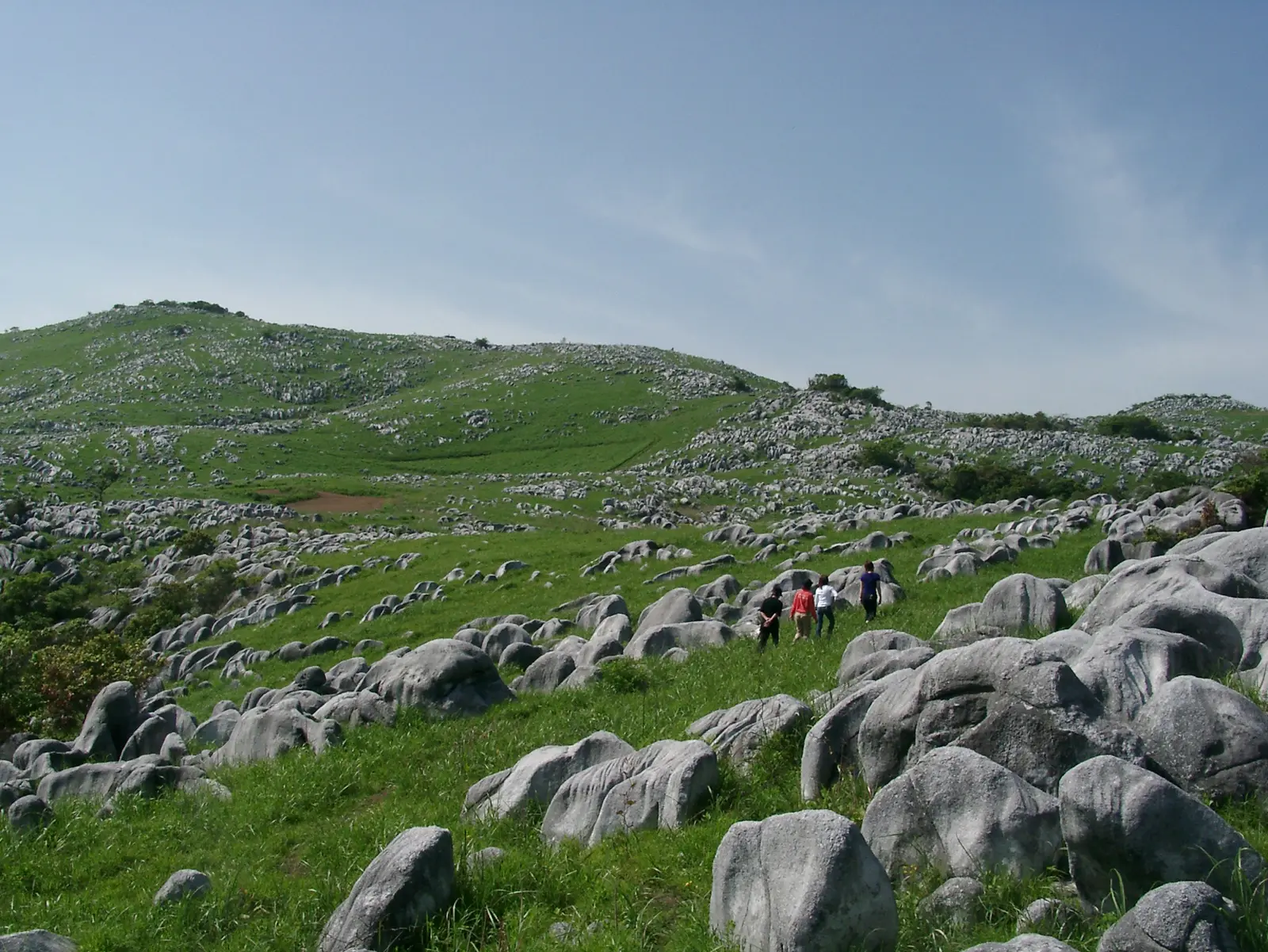
A natural park counted among Japan’s three great karst regions. This karst plateau stretches at an elevation of 350–600 meters, about 6 km north to south and 2 km east to west, with limestone formations scattered across the landscape like a flock of sheep.
The limestone at Hiraodai is said to have originated from the remains of marine organisms (such as coral and fusulinids) in seas near the equator around 340 million years ago, later becoming limestone and moving to present-day Hiraodai due to shifts in the Earth’s crust.
Over time, it was dissolved and eroded by rainwater and other forces, forming the karst terrain.
In addition to trekking courses dotted with limestone, you can also explore caves such as limestone caverns.
7 Popular Restaurants to Visit for the Best Fukuoka Food
When talking about Fukuoka food, you can’t skip long-established flavors and beloved local favorites.
From tonkotsu ramen and motsunabe to udon, you’ll find the city’s signature dishes—popular with both visitors and locals alike.
Here are seven especially popular restaurants in Fukuoka, carefully selected.
1. Hakata Ikkousha (Main Store)
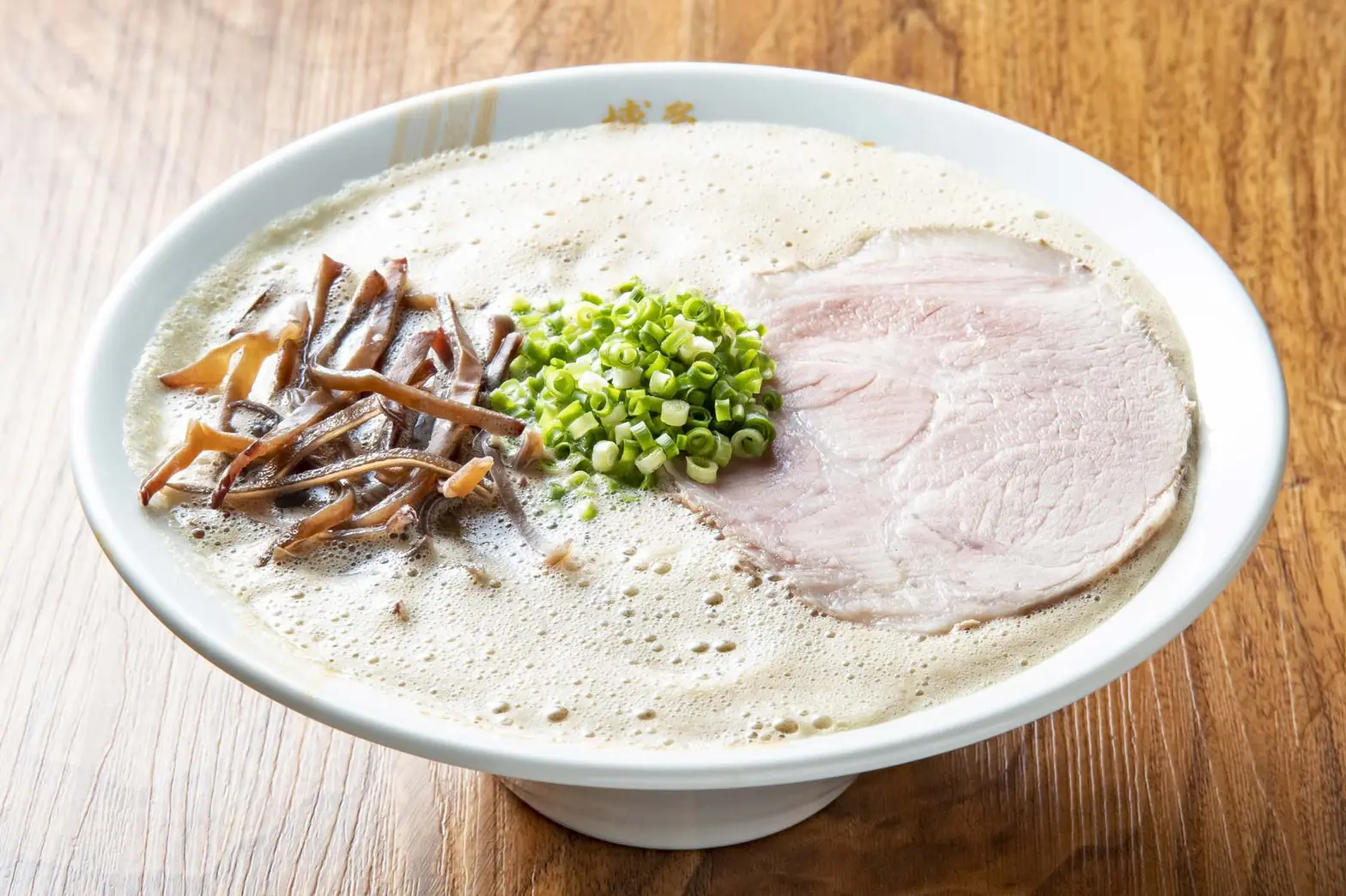
Among the many Hakata tonkotsu ramen shops, Hakata Ikkousha is one of the most popular.
This is the flagship main store of Ikkousha, which operates five distinct brands, and it’s located right near JR Hakata Station.
Its biggest signature is the famous frothy “original bubble-style” soup.
The secret behind the fine, creamy foam is the shop’s unique “aged, continuing simmer” method.
By adding fresh broth to mature broth in a hagama pot and simmering while stirring, they create fat bubbles said to bring out the rich sweetness and umami of pork bones.
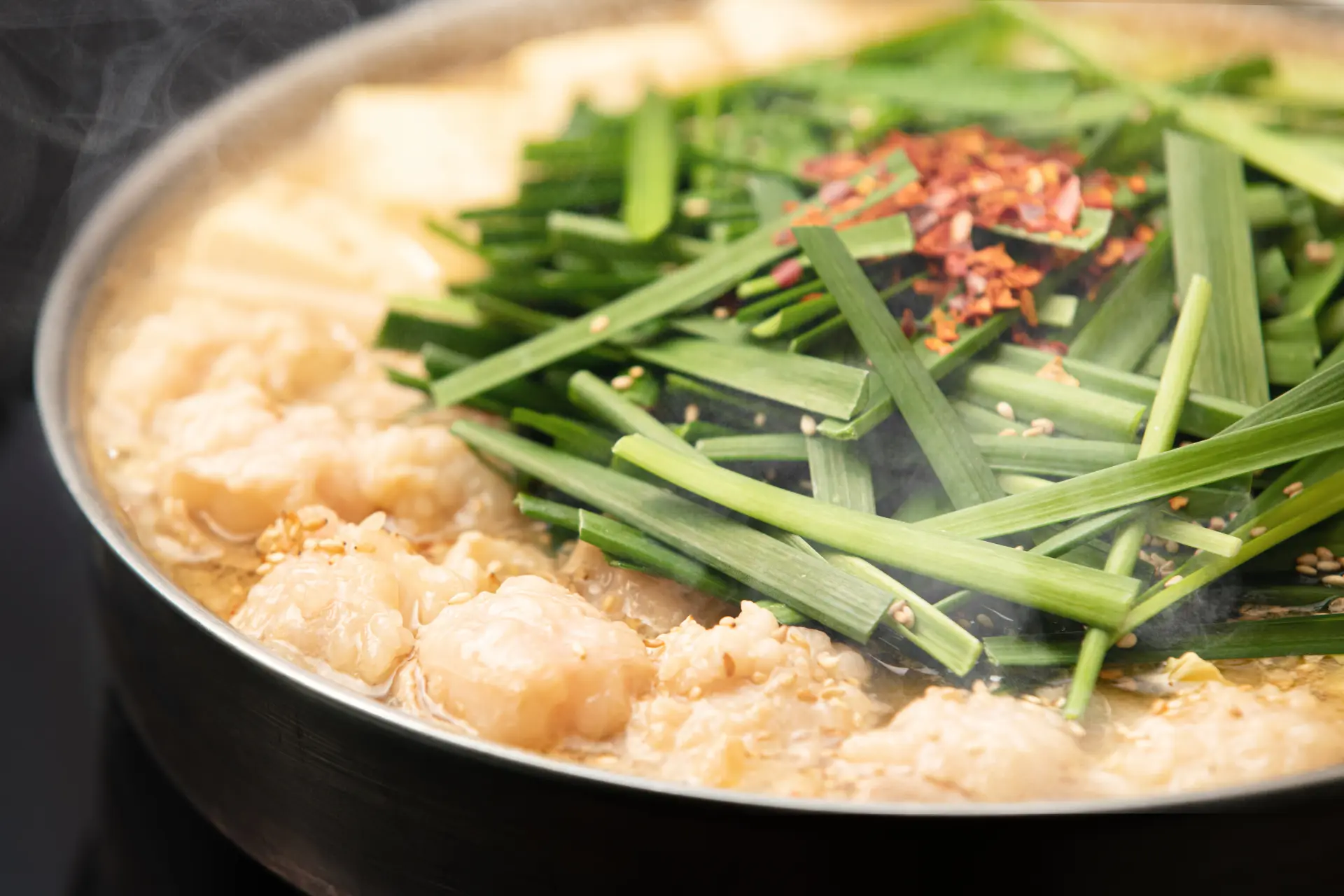
2. Hakata Motsunabe Yamanaka (Main Store)
Founded in 1984, it’s a leading name in Hakata motsunabe. The main store is housed in an authentic storehouse-style building, decorated with antiques and modern furnishings for a nostalgic, classic atmosphere.
In this refined, timeless setting, you can relax and savor their signature motsunabe.
Their original “miso flavor,” developed through trial and error, became an instant hit—an innovative deliciousness that overturned the then-standard image of soy-sauce-based motsunabe when the restaurant first opened.
3. Ganso Hakata Mentaiju (Nishinakasu)
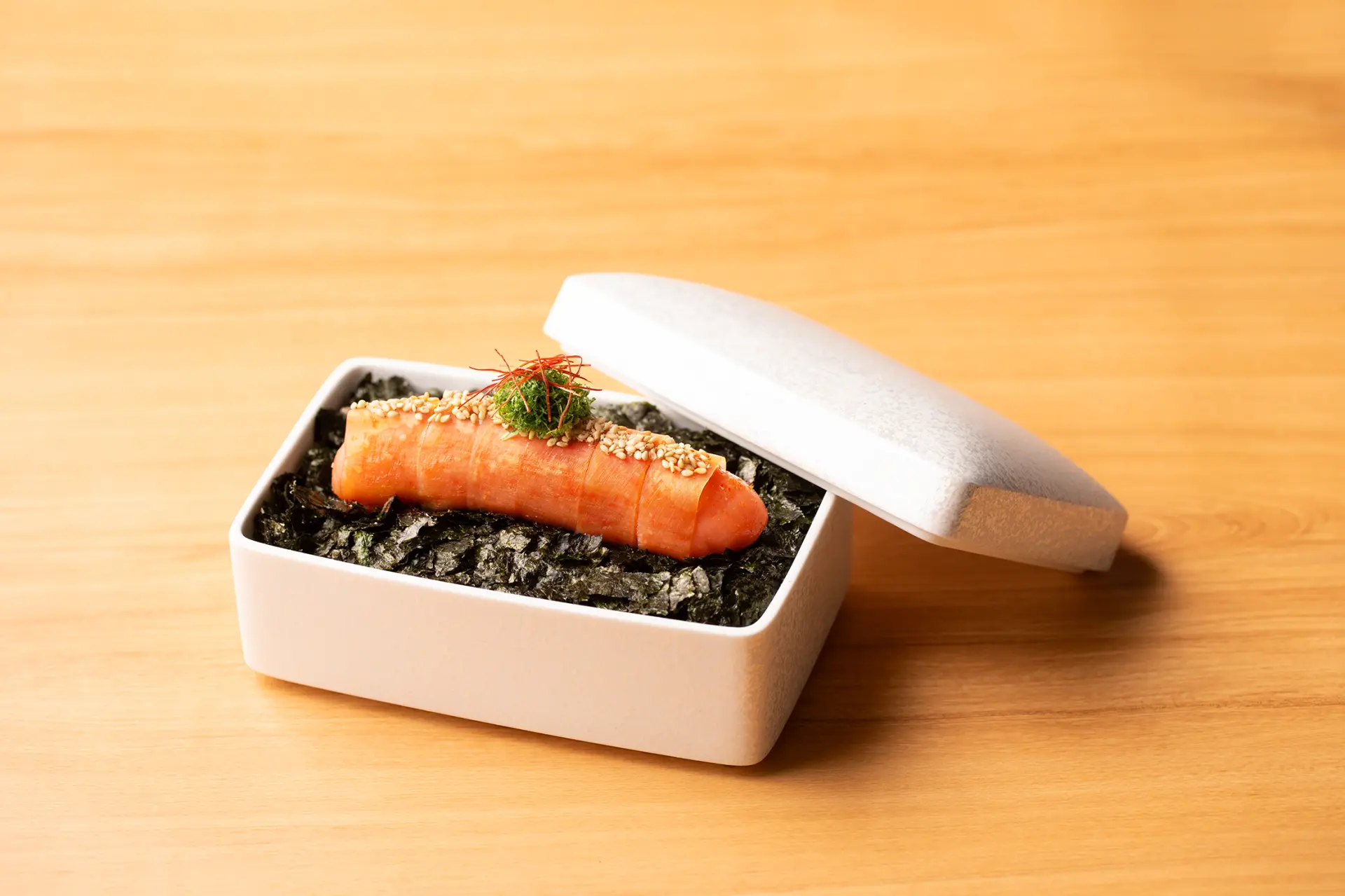
A mentaiko specialty restaurant in the Nishinakasu area, known as a gathering place for gourmets and lined with renowned restaurants in Hakata.
It’s often considered the original specialty shop to serve Fukuoka’s famous mentaiko—traditionally sold as a souvenir—as a proper meal.
The signature dish is the mentaiju, featured in the restaurant’s name: a whole piece of kelp-wrapped mentaiko, carefully marinated over time, placed atop rice layered with nori.
The house-made sauce—offered in four spice levels—enhances the mentaiko’s flavor even further.
Sesame, shiso leaves, and thin chili threads add color on top. You’ll also want to notice the special Arita-yaki jubako box finished with silver leaf.
4. Kamakiri Udon
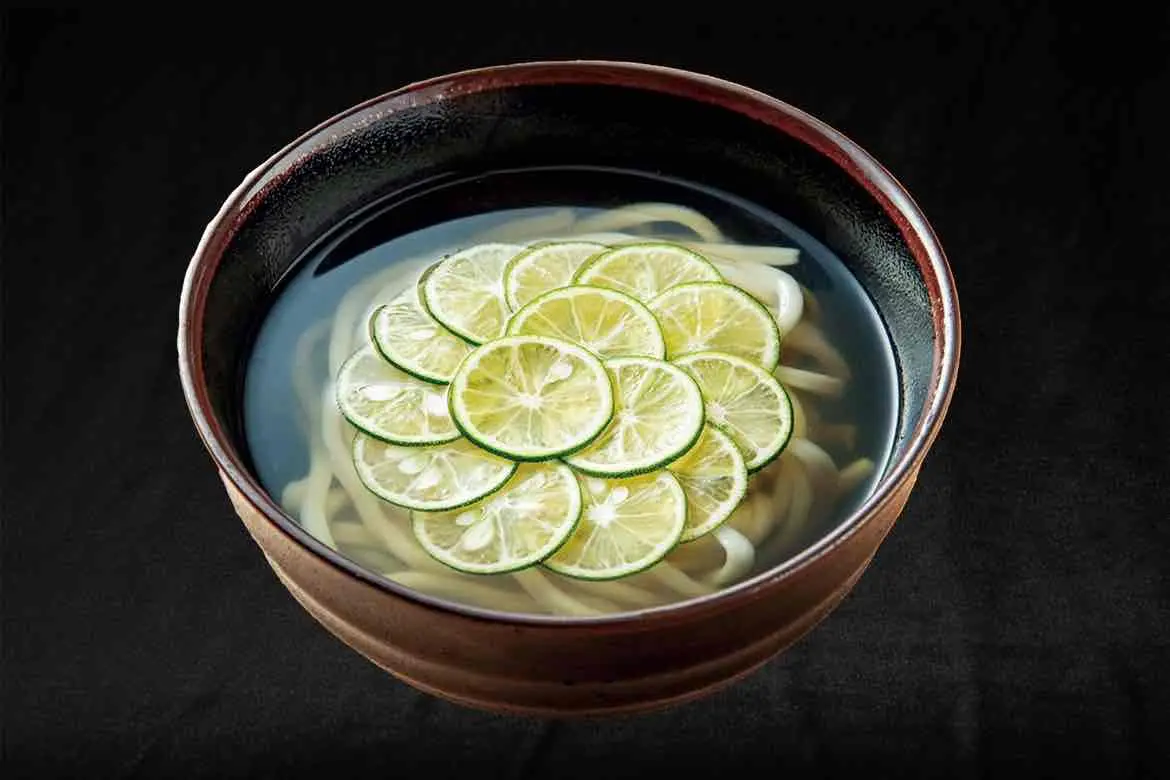
A popular udon shop in Fukuoka that has earned a Michelin Plate.
It opened in 2013 as the second location of Niwaka-ya Chosuke, known as a pioneer of the “udon izakaya” style—finishing a night out with udon.
The house-made noodles are produced in an on-site noodle room and are known for a chewy, springy bite, made with wheat from Itoshima, Fukuoka Prefecture.
The dashi also shows careful attention to ingredients, using selected kombu and bonito flakes.
From Fukuoka’s classic burdock tempura udon to mentaiko kama-tama and kimchi, the menu features 20+ options—from staples to seasonal items! You can also add toppings like wakame, egg, or tororo kombu.
In hot summer weather, the shop’s signature chilled sudachi-kake udon is recommended. You’ll also want to try their donburi dishes made with their carefully crafted dashi.
5. Toriden Hakata (Main Store)
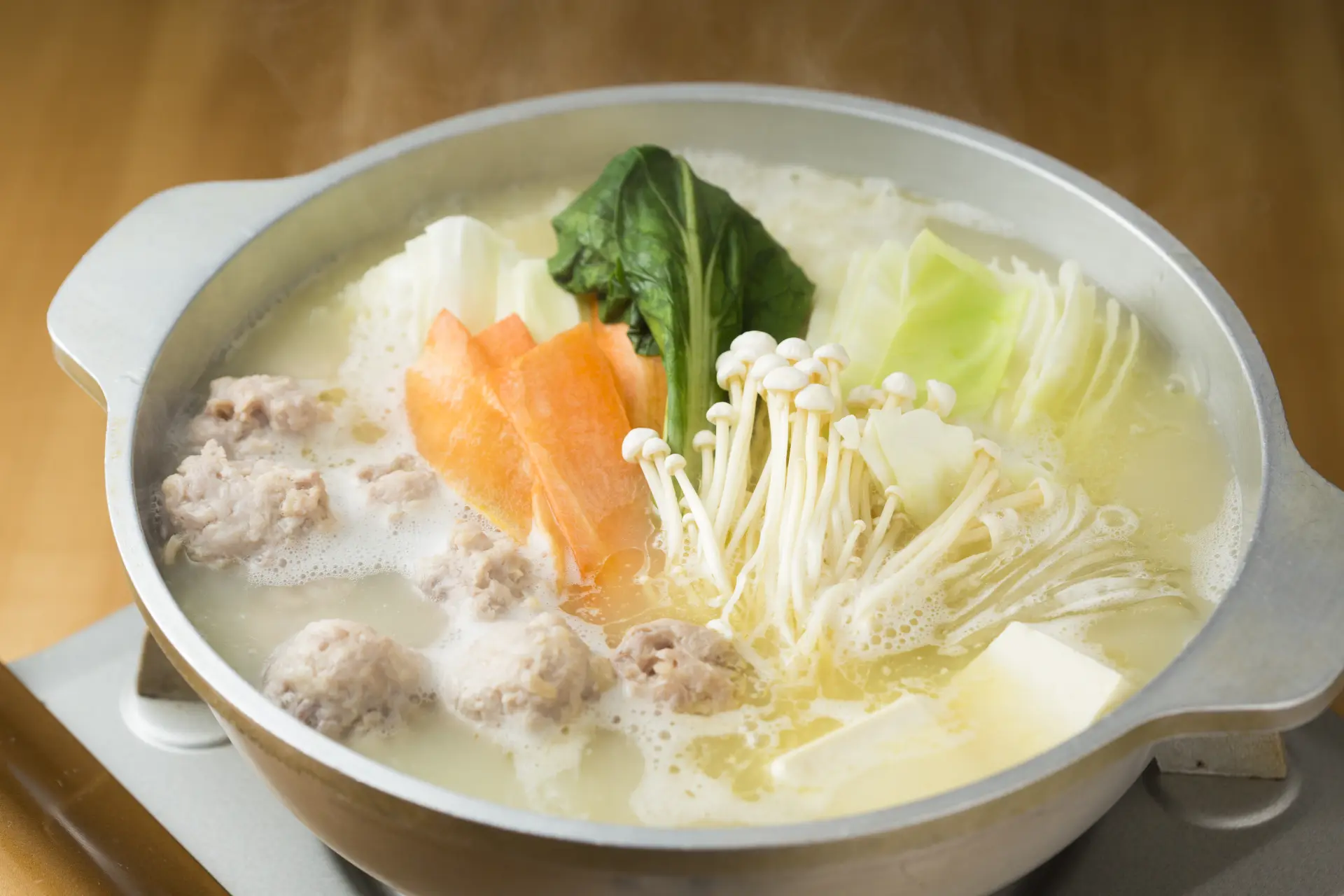
Toriden Hakata (Main Store), located in Hakata—Fukuoka’s central district—serves mizutaki, a traditional hot pot dish associated with Hakata’s Gion Yamakasa festival.
Once the pot arrives, staff begin cooking right in front of you. First, you start simply with the broth. Simmered for six hours using only water and whole Kyushu-raised chickens, the soup is packed with the pure umami of chicken, filling your mouth with deep flavor.
Next, you enjoy plump bone-in chicken along with thigh and breast meat, paired with Hakata green onion shabu—Toriden style.
6. Hakata Gion Tetsunabe
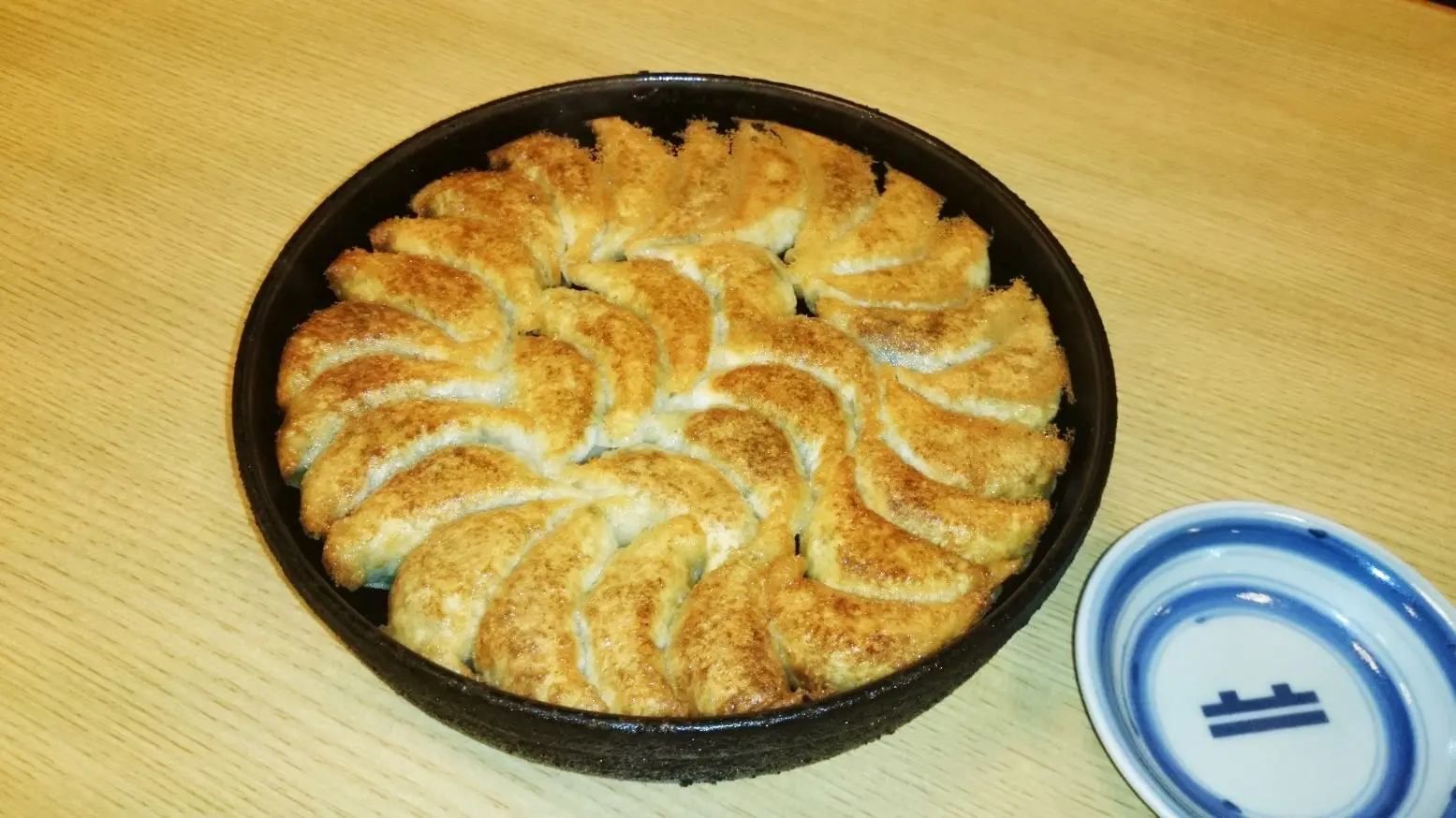
A popular spot for Fukuoka’s signature “tetsunabe gyoza,” said to have originated from Hakata yatai stalls.
It’s known as an original-style shop for the “round tetsunabe gyoza” presentation—small dumplings arranged in concentric circles in a sizzling hot iron pan and evenly grilled.
The crispy, fragrant sear and the juicy meat juices that burst out when you bite are sure to become addictive. With a bold kick yet a lighter taste highlighted by the aroma of garlic chives, it’s said that 2–3 portions can be eaten easily.
7. Torikawaya
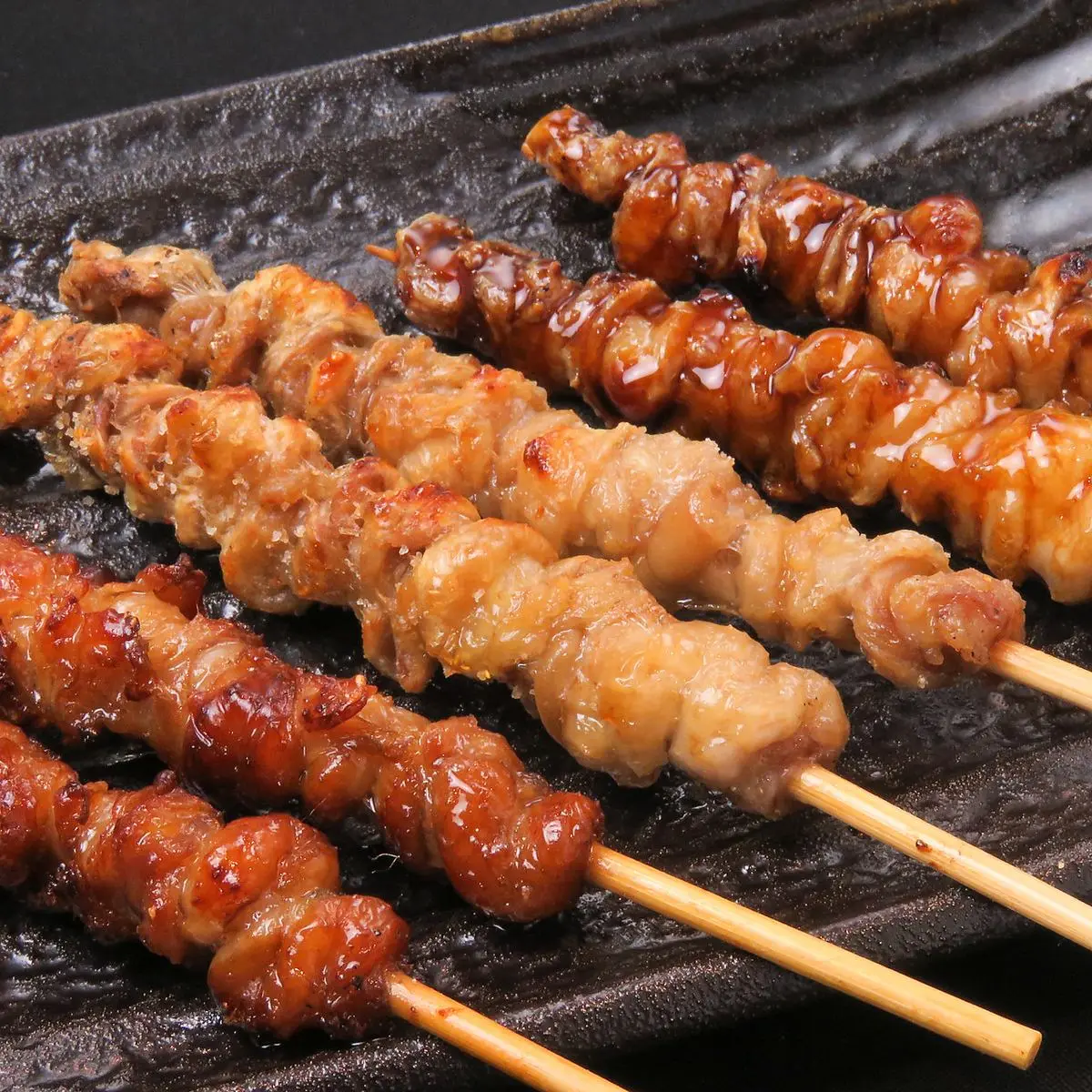
Torikawaya is a yakitori restaurant famous for Hakata’s signature torikawa (grilled chicken skin), which is hugely popular.
With easy access from the nearest station, it’s loved by both locals and visitors.
The torikawa—chicken skin tightly wrapped into spirals for a fragrant look—has a signature texture: crispy on the outside and juicy inside.
It’s grilled while rendering out fat, and it’s said you can keep eating skewer after skewer.
With three seasoning options—salt, tare sauce, and soy sauce—try comparing to find your favorite.
Beyond torikawa, you can also order other chicken parts like hearts and seseri (neck meat), plus vegetable skewers.

5 Classic Fukuoka Shopping Spots That Fit Easily into Your Itinerary
Fukuoka’s shopping spots are concentrated mainly within Fukuoka City, especially around the Hakata area.
Here are five classic shopping destinations that are easy to drop by between sightseeing stops.
1. Canal City Hakata
A large complex spanning Approx. 43,500 square meters, bringing together a shopping mall, movie theater, theater venue, amusements, and two hotels. Its symbol is the Approx. 180-meter canal running through the center of a colorful cluster of buildings.
Beyond shopping and entertainment, one of Canal City Hakata’s defining features is that it’s fun simply to be there.

2. JR Hakata City
A large commercial complex and one of Kyushu’s biggest station buildings, directly connected to JR Hakata Station. It comprises Amu Plaza Hakata and Hakata Hankyu on the west (Hakata Exit) side, and Hakata Deitos and Amuest on the east (Chikushi Exit) side.
Amu Plaza Hakata houses 200+ shops, including Tokyu Hands, plus shopping zones with the latest brands and City Dining Kuuten, one of Japan’s largest restaurant zones.

3. Tenjin Underground Mall
Tenjin is a major downtown area in Chuo Ward, Fukuoka City. Tenjin Underground Mall is an underground shopping street stretching Approx. 600 meters beneath Watanabe-dori Avenue, running from Showa-dori in the north to Kokutai-doro in the south.
With Streets 1 through 12, it’s lined with around 150 shops including fashion, dining, lifestyle goods, and books.
It’s great for shopping and food, and it’s also convenient as a passageway: it connects directly to Tenjin Station and Tenjin-minami Station, and leads to Nishitetsu Fukuoka (Tenjin) Station and the Nishitetsu Tenjin Bus Center.

4. Bayside Place Hakata
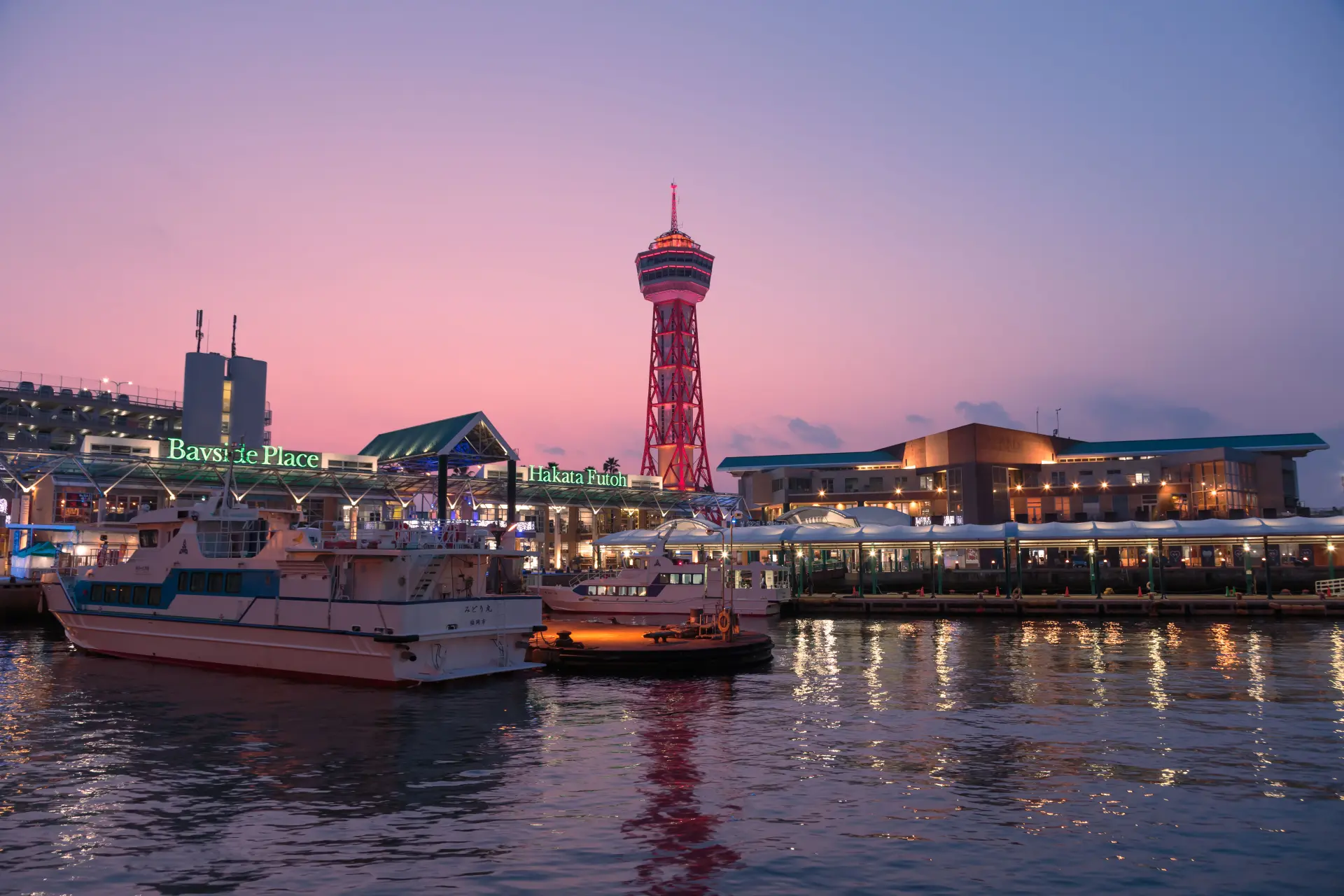
A harbor complex by Hakata Pier that combines an open seaside atmosphere with a variety of ways to spend your time.
Inside the spacious glass-walled building, you’ll find restaurants and cafes where you can dine with ocean views, a market selling fresh seafood and local vegetables, and a wide range of shops.
The biggest feature is its location. With a bayside breeze and the scent of the sea in the air, it’s a space that feels refreshing down to your core.
Inside, there’s a cylindrical giant tank called the Bayside Aquarium—Approx. 8 meters tall and 9 meters in diameter—where you can observe sea turtles and saltwater fish up close. Admission is free, so many families visit, and it’s enjoyable even on rainy days.
5. MARK IS Fukuoka Momochi
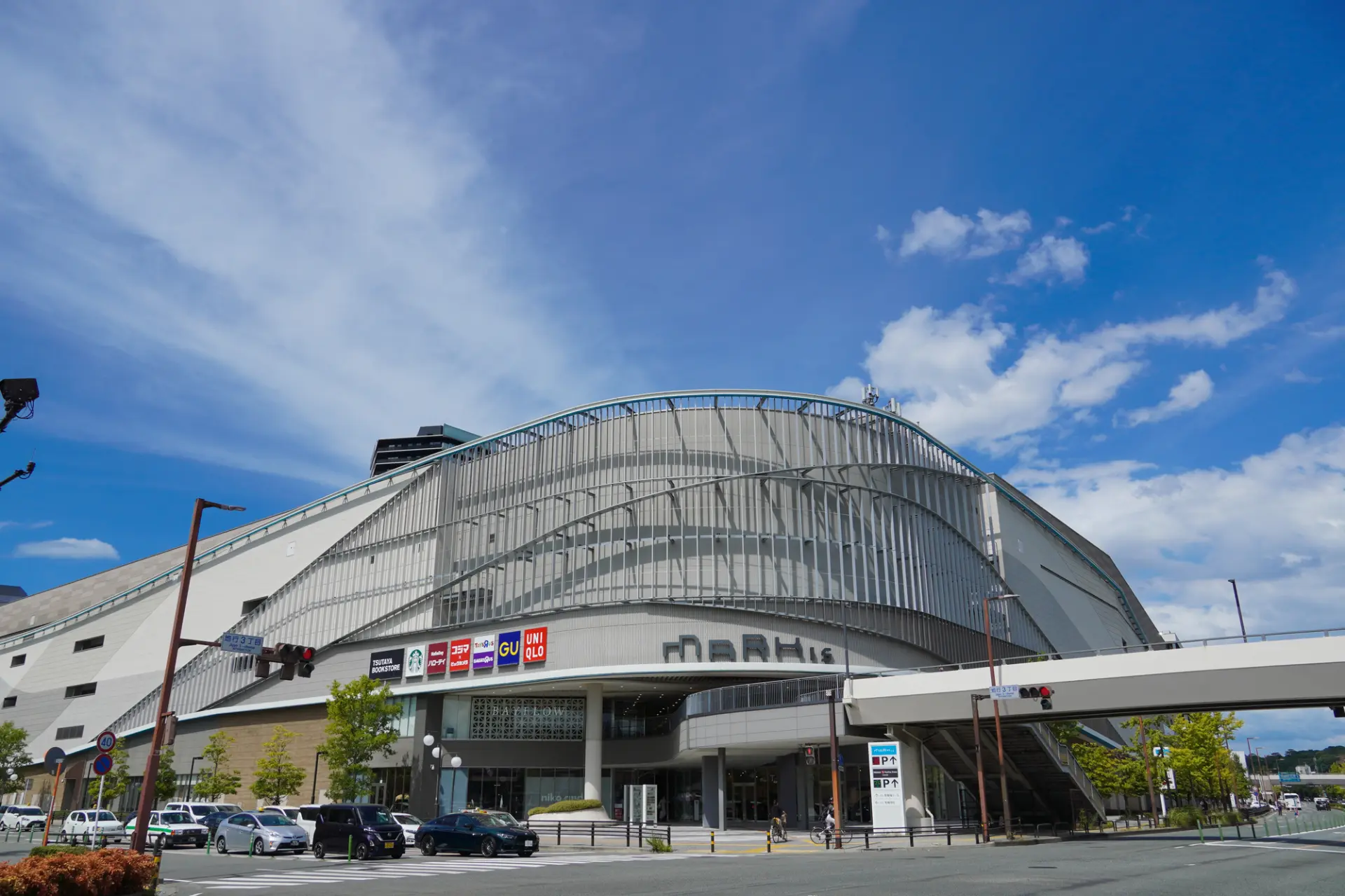
MARK IS Fukuoka Momochi is a large shopping complex next to Fukuoka PayPay Dome.
It has around 160 stores, centered on fashion, lifestyle goods, and cosmetics, with plenty of brand shops and specialty stores.
There are also lots of cafes and restaurants, making it another great place to enjoy Fukuoka food.
It also stands out for incorporating cutting-edge technology, such as cleaning robots and AI-based guidance systems.

5 Popular Places to Stay in Fukuoka for Convenience and a Quality Stay
Since it’s a special trip, choosing the right place to stay can make it even more fulfilling. Fukuoka offers a wide variety of accommodations, including hotels and ryokan.
Here, we’ve selected stays that are especially convenient and offer comfortable spaces along with excellent facilities and service. If you haven’t decided where to stay yet, consider these options.
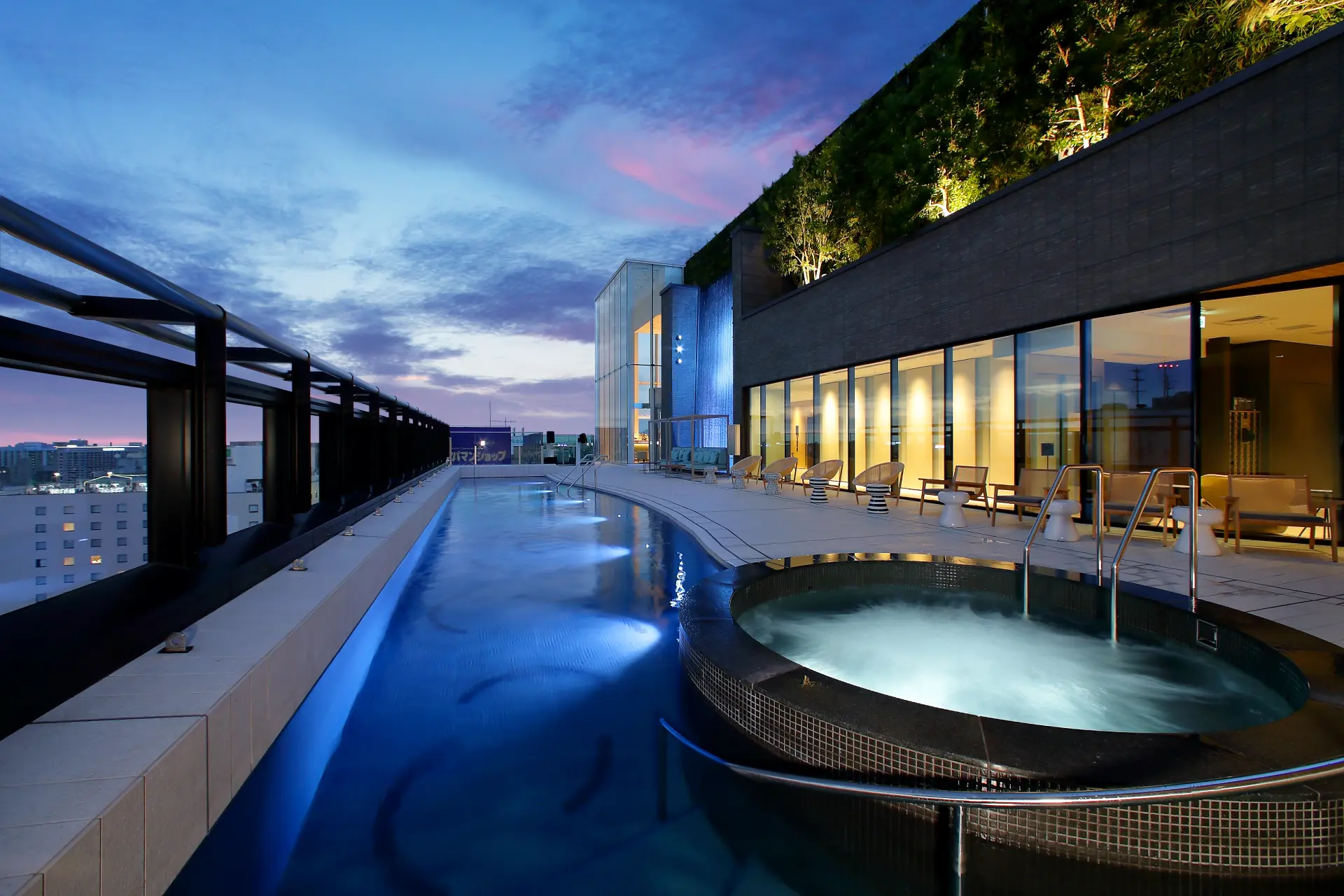
1. Miyako Hotel Hakata
A smart luxury hotel directly connected to Hakata Station, where you can enjoy a resort-like atmosphere in the city thanks to extensive facilities such as a rooftop spa and terrace rooms.
The top-floor spa area features a striking waterfall cascading from 8 meters high, along with a natural hot spring pool pumped from onsite, a jet bath, and a mini pool.
Relaxing poolside—by day with views over Fukuoka’s cityscape, and by night surrounded by dreamy illumination—truly feels like an urban resort.
2. Hotel Okura Fukuoka
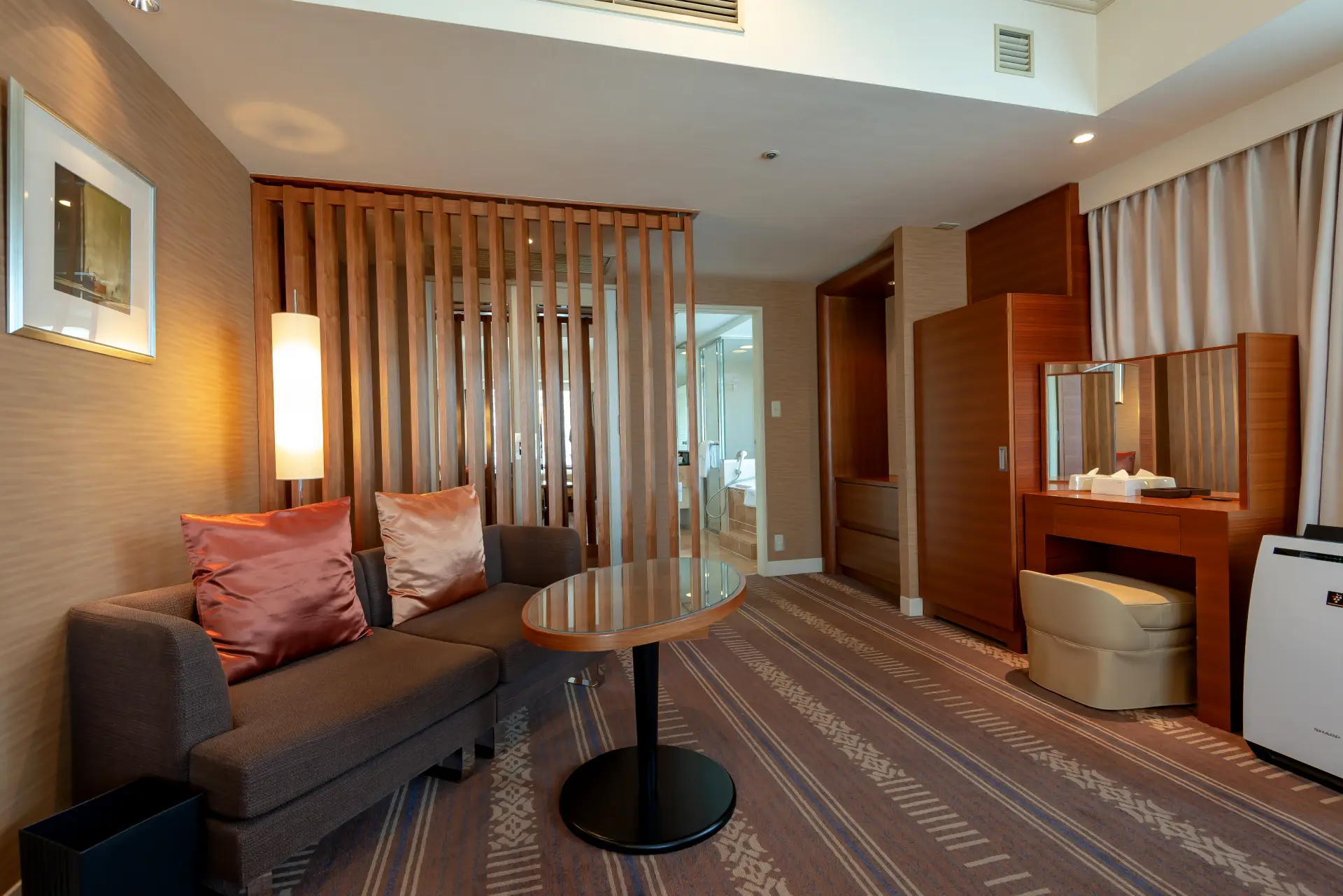
Located in Kawabata-machi, Hakata Ward, Hotel Okura Fukuoka is known for its excellent convenience as a sightseeing base.
It’s easily accessible—Approx. a 3-minute walk from Nakasu-Kawabata Subway Station—and makes it simple to get to both Tenjin and Nakasu.
The interior has a classic, calm ambiance, and even the lobby and shared spaces feel peaceful.
Guest rooms feature interiors that evoke Hakata traditions, making it easy to rest and unwind after a busy day of sightseeing.
With nine restaurants and bars onsite, you can enjoy authentic cuisine across a wide range of genres, including Japanese, teppanyaki, and Chinese.
3. Hotel Cultia Dazaifu
A distributed hotel with three buildings and 13 rooms, located in the temple town in front of Dazaifu Tenmangu Shrine.
It carefully restores historically valuable buildings that have remained in the town since the late Edo period, including a 130-year-old designated cultural property building.
It offers a special experience: staying in what used to be something you only “looked at”—the streetscape and cultural properties themselves.
The biggest appeal is being able to stay as if you’ve blended into Dazaifu’s shrine-front town.
As an exclusive cultural experience for guests, you can make a special nighttime visit to Dazaifu Tenmangu Shrine after the gates close, offering a deeper side of Dazaifu you won’t encounter in typical sightseeing.
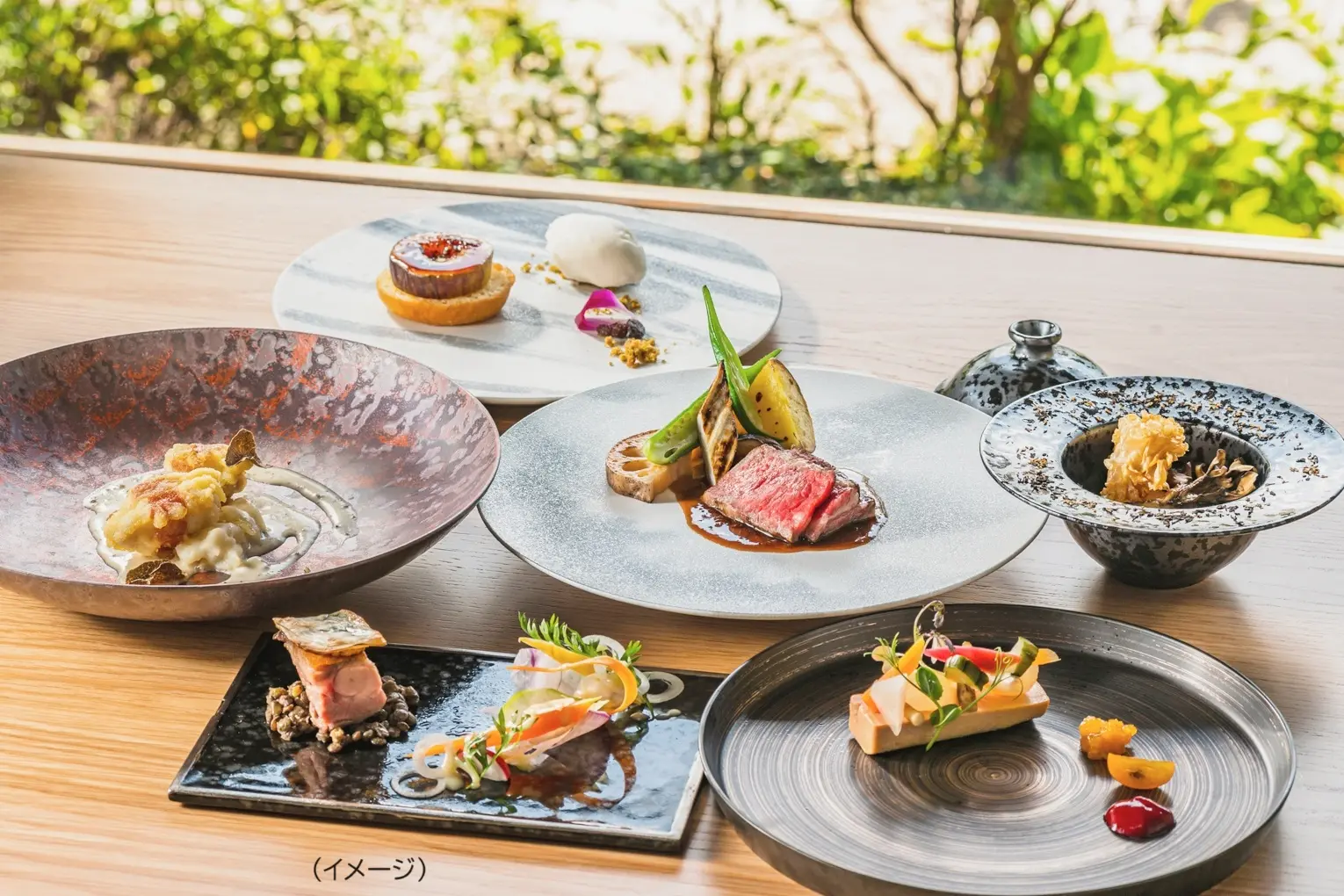
There’s also a French restaurant serving dishes that highlight local ingredients, another way to enjoy the area through food.
4. Nishitetsu Grand Hotel
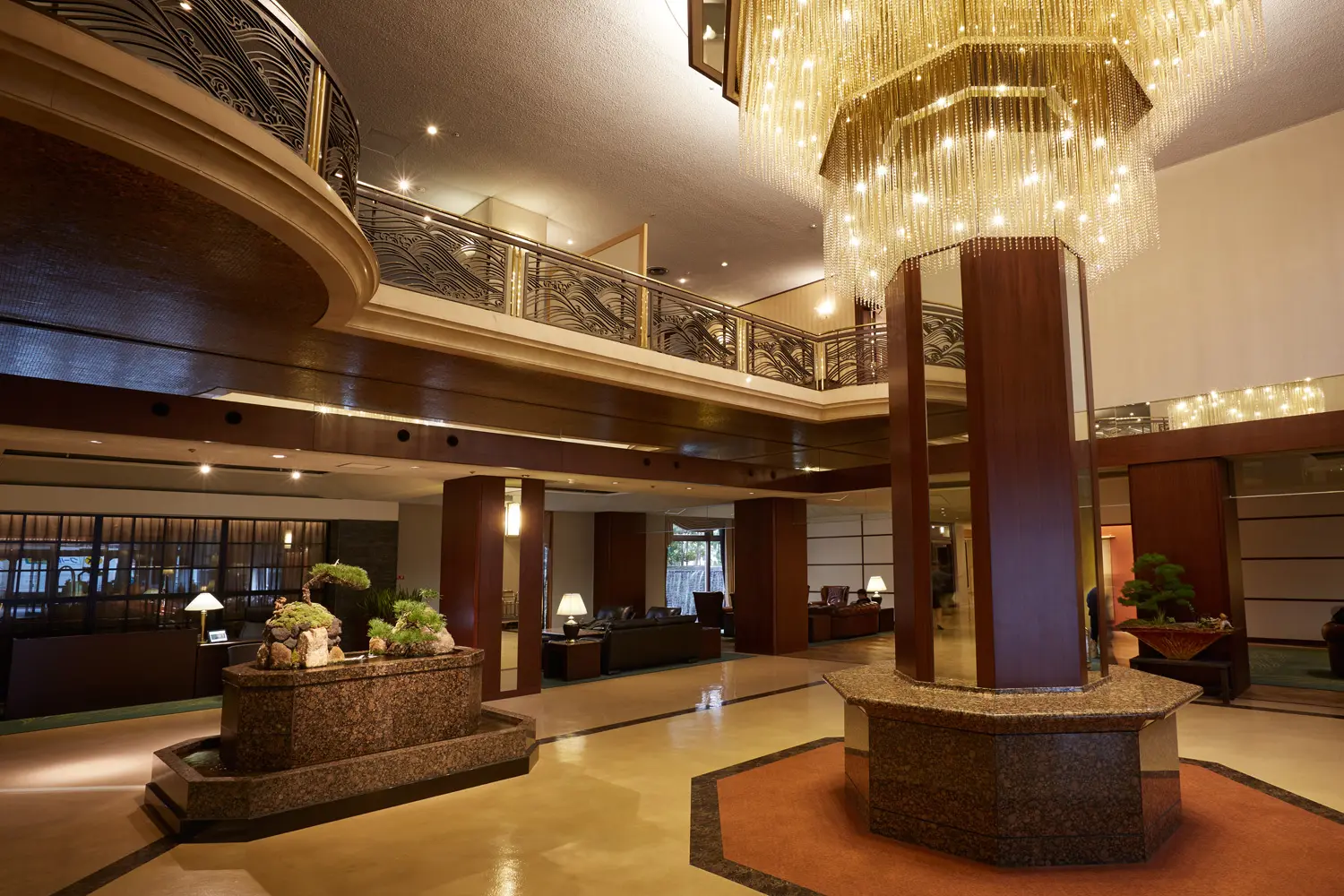
Founded in 1969, this is a long-established hotel that represents Fukuoka. It sits on a corner where Meiji-dori and Tenjin Nishi-dori intersect, with excellent access to Tenjin Subway Station. A doorman welcomes you at the entrance, and the hotel has an elegant, dignified atmosphere.
The guest rooms are quiet enough to forget you’re in the middle of the city, with a simple, chic feel.
It’s also known for its excellent restaurants and wide variety of cuisine.
5. The Ritz-Carlton, Fukuoka
A luxury hotel located Approx. a 5-minute walk from Tenjin Subway Station.
The 147 guest rooms and 20 suites feature a modern, refined design inspired by the character of Fukuoka.
Local traditional crafts such as bamboo weaving and Hakata-ori textiles are incorporated into the finishes and artwork, creating playful spaces that evoke Fukuoka’s history as a gateway for exchange with the Asian continent.
Rooms are located on floors 19 through 23, all with spacious layouts of 50 square meters or more.
Views come in three types: bay view, skyline view, and park view.
At the hotel’s bars and restaurants, you can enjoy dishes and drinks featuring plenty of local ingredients, including Japanese black wagyu raised on Iki Island pastures, seafood landed in the Genkai Sea, whiskey from one of Japan’s premier distilleries, and Kyushu-grown tea.
Not Sure What to Buy? 5 Classic Fukuoka Souvenirs
Fukuoka sweets are packed with “Fukuoka-ness,” with careful attention to local flavors and ingredients.
The taste of a sweet that brings back your travel memories is perfect not only for yourself, but also as a gift for someone else.
If you’re not sure what to choose, pick from these five classic Fukuoka souvenirs.
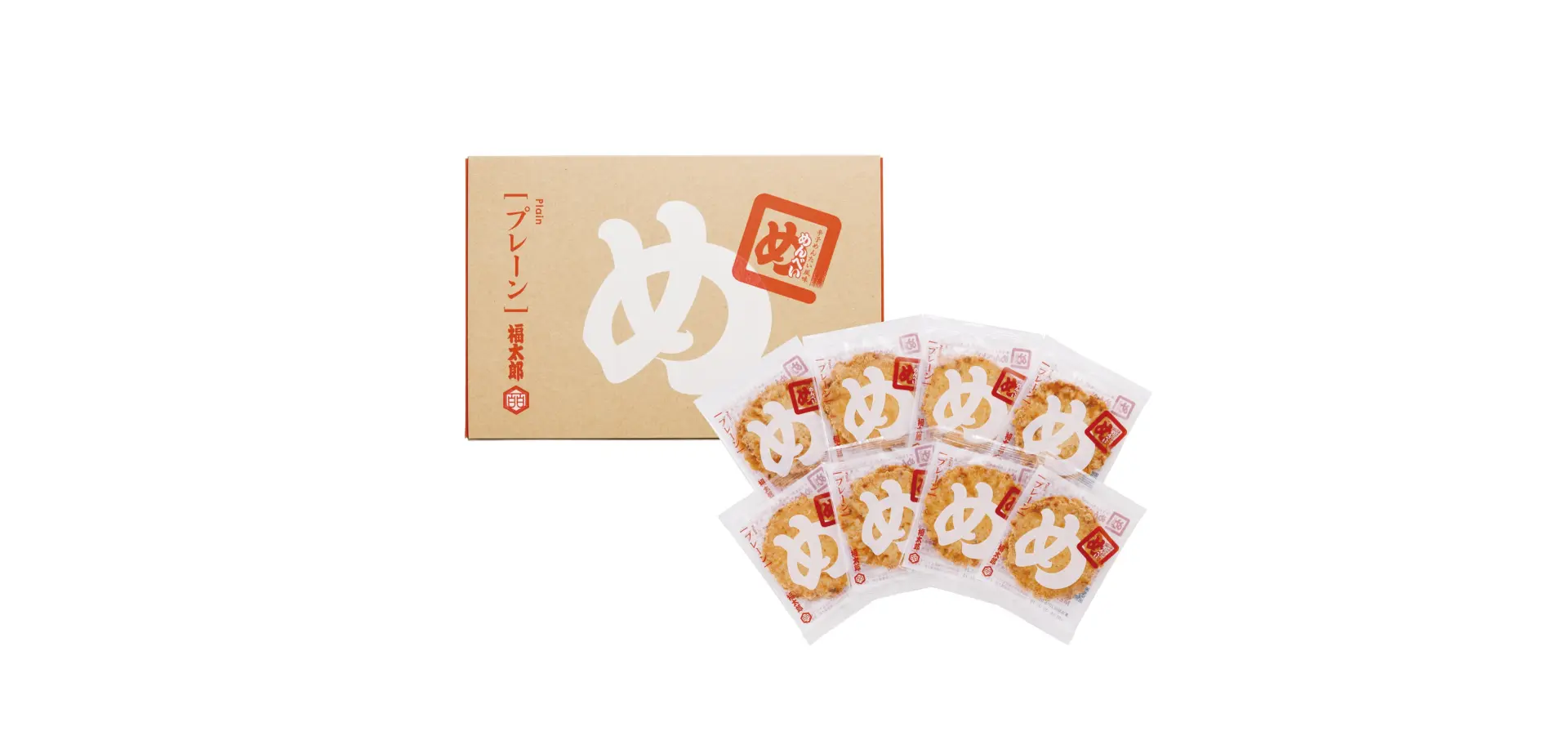
1. Fukuya “Karashi Mentaiko-Flavored Rice Crackers: Menbei”
Karashi mentaiko-flavored rice crackers, Menbei, are produced and sold by Fukutaro, known for Hakata’s famous mentaiko.
Kneaded with Fukutaro’s mentaiko, these crackers have a gently spicy kick that keeps you coming back. More than 20 years after their launch, they’ve become a classic Fukuoka souvenir and one of Fukutaro’s most popular products, standing alongside mentaiko itself.
Made with a carefully crafted mentaiko production method, the mentaiko is kneaded into the crackers using a proprietary technique, and the umami is concentrated with seafood like squid and octopus.
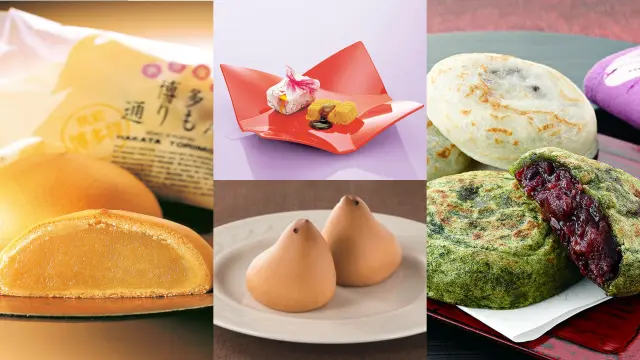
2. Meigetsudo “Hakata Torimon”
Hakata Dontaku is a festival held every year on May 3 and 4, when the city fills with crowds throughout the event.
In the Hakata dialect, people who dress in Dontaku costume and parade while playing shamisen, flutes, and drums are called torimon (“people passing by”)—and this is the origin of the Western-style Japanese confection Hakata Torimon.

3. Josuian “Tsukushi Mochi”
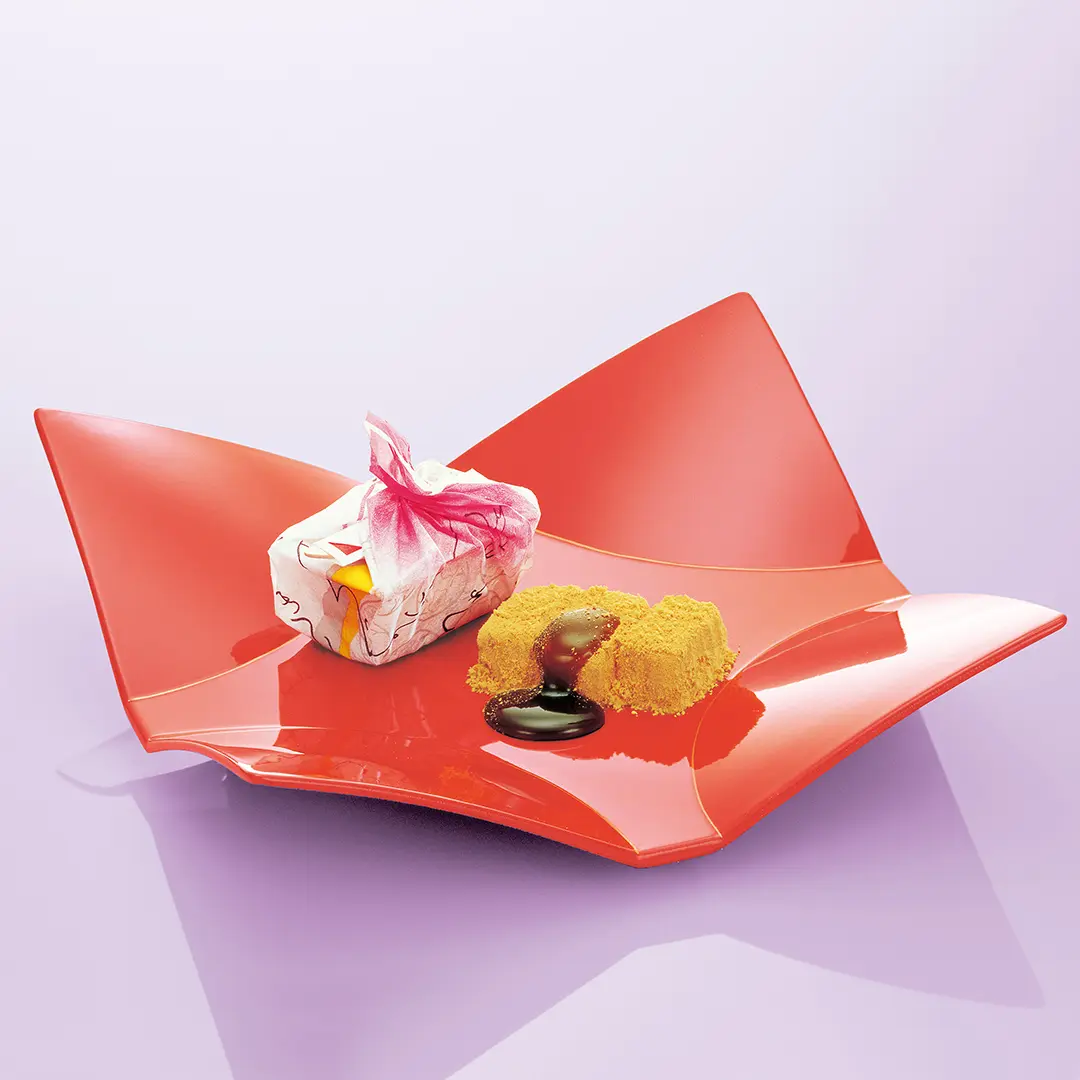
A traditional Japanese sweet made by kneading Hiyoku rice from the Chikushi Plain with carefully selected water, coating the mochi generously with golden kinako, and enjoying it with the included kuromitsu syrup using a toothpick. It sells over 12 million pieces per year.
The mochi is smooth yet pleasantly springy, and that moment when it softens in your mouth is irresistible.
The deep sweetness and roasted aroma come together in an elegant, lingering flavor that lets you savor the depth of wagashi.
With white-and-pink packaging that evokes lacquerware, it also feels upscale—making it a great gift.
Shelf life is Approx. 20 days. It’s available in sizes from 2 pieces up to 45 pieces, which makes it easy to choose based on your needs.
4. Hiyoko Honpo Yoshinodo “Meika Hiyoko”
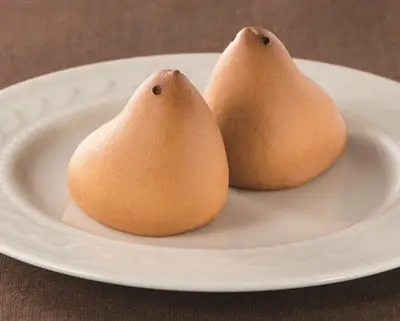
Born in Iizuka City, Fukuoka Prefecture in 1912, Hiyoko Honpo Yoshinodo’s Meika Hiyoko is a three-dimensional baked manju shaped like a chick.
Since its launch, each piece has been carefully formed by hand, and both its shape and flavor have remained largely unchanged for more than 100 years.
This adorable form—novel at the time—quickly became popular, and today it’s also beloved as a classic Tokyo souvenir.
Inside is plenty of kimian, made by combining Hokkaido-grown white kidney beans and egg yolk, spreading a gentle sweetness across your palate.
The skin is made with Kyushu-grown flour and baked moist with eggs and sugar syrup, giving it a pleasantly springy texture.
It’s also available in many variations, including the “Dai Hiyoko,” about five times the usual size, and the summer-season, Fukuoka-limited “Cha Hiyoko.”
5. Sugar Butter Sand Tree “Amaou Strawberry Butter”
Sugar Butter Sand Tree “Amaou Strawberry Butter” is a luxurious butter sandwich made with Fukuoka’s rare branded strawberries, Amaou, using 100% of the fruit.
Though available only in Hakata, it sold around 350,000 pieces in just one month, and its cute light-blue-based packaging is another highlight.
The cereal dough is thoroughly infused with the original strawberry butter and strawberry juice, filling your mouth with sweet-and-tangy, juicy strawberry aroma with every bite.
With a perfect balance of natural strawberry sweetness and acidity, rich butter flavor, and a crisp texture, its fruity, juicy taste is especially popular among strawberry lovers.
Its light mouthfeel pairs well with coffee or tea, making it a great choice for a special tea-time treat.

[By Season] Famous Festivals and Events in Fukuoka
Fukuoka hosts a wide variety of festivals and events throughout the year.
The ones introduced here are especially well-known and filled with local charm.
If your travel timing lines up, we hope you’ll join and experience them firsthand.
Events that let you feel the seasons alongside history and culture are sure to become lasting memories.
[Spring] Yame Kurogi Osafuji Festival
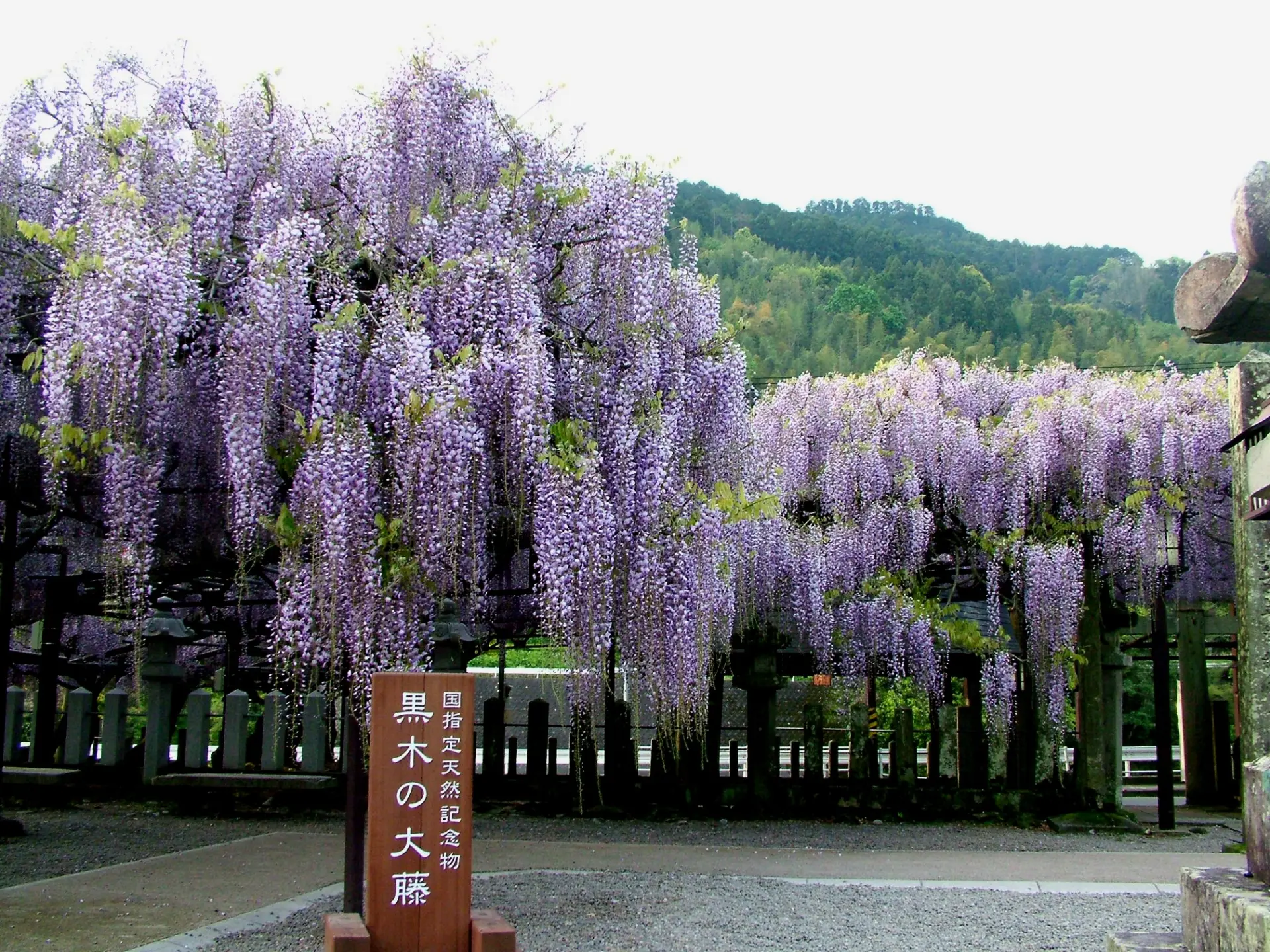
The Yame Kurogi Osafuji Festival is a spring festival held every year from mid- to late April at Susanoo Shrine in Kurogi Town, Yame City, Fukuoka Prefecture.
The Kurogi no Osafuji, a nationally designated Natural Monument estimated to be Approx. 630 years old, blooms with flower clusters over 1 meter long across a wisteria trellis of Approx. 3,000 square meters, showing different beauty by day and night.
During the festival, there are also events such as product fairs, free tea service, a stamp rally, and illuminations, letting you enjoy local culture and specialties.
The wisteria at night is a fantastical view that deeply moves visitors. It draws many travelers each year and has become a seasonal tradition that colors spring in the region.
[Summer] Hakata Gion Yamakasa
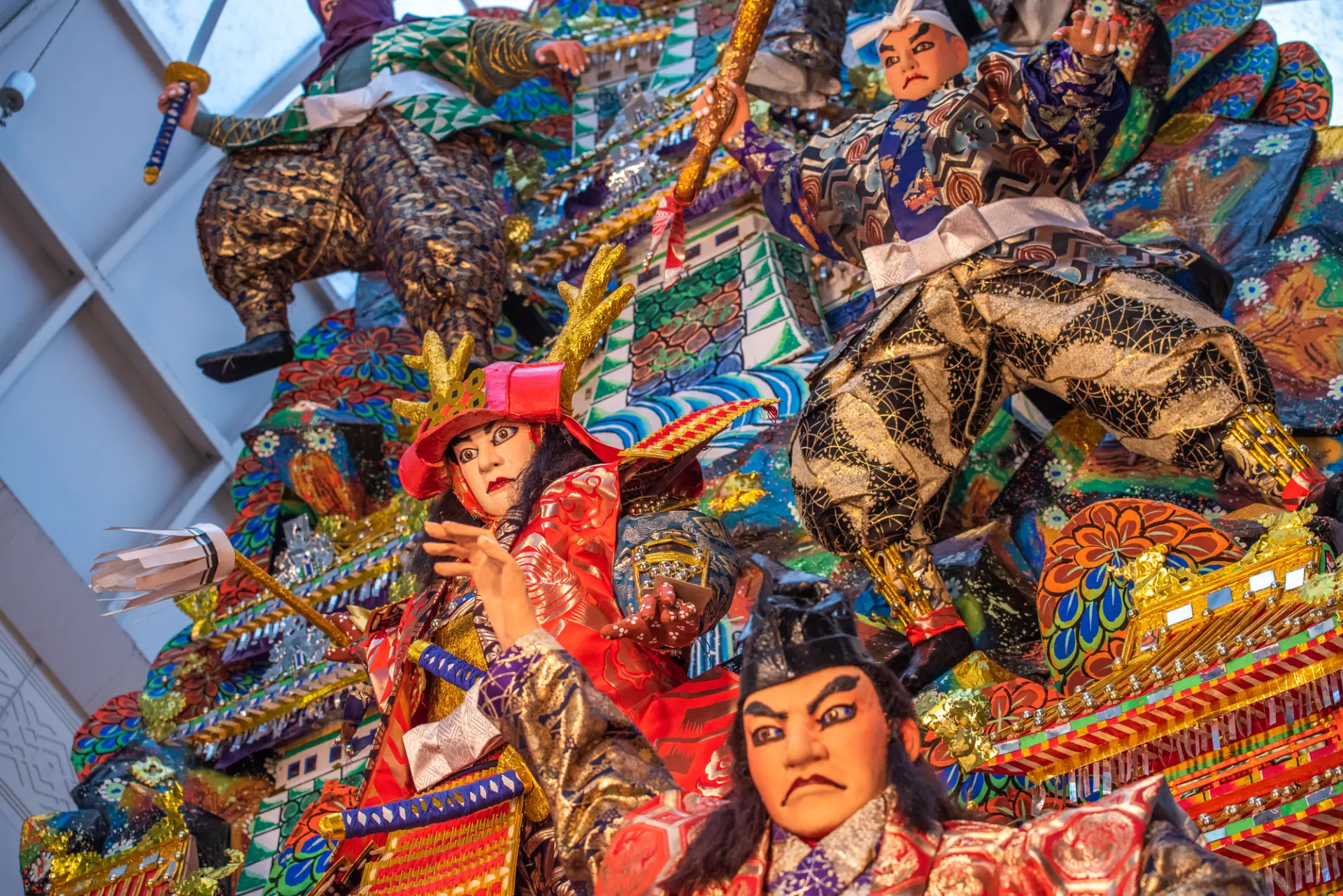
Hakata Gion Yamakasa is a traditional festival with over 700 years of history, held every July in Hakata Ward, Fukuoka City, as a dedication to Kushida Shrine.
The biggest highlight is Oiyamakasa, where men in fundoshi loincloths carry kakiyamakasa floats weighing over 1 ton and race through the streets of Hakata at full speed.
The festival runs from July 1 through 15, and Hakata is filled with excitement and energy.
Gorgeous decorative floats over 10 meters tall are also displayed around the city, leaving visitors in awe.
The festival is registered as a UNESCO Intangible Cultural Heritage and has been passed down as a source of pride for the region.
The men’s intensity and the citywide sense of unity create a thrilling, moving experience unlike any other.
[Fall] Hakozaki-gu Hojoe
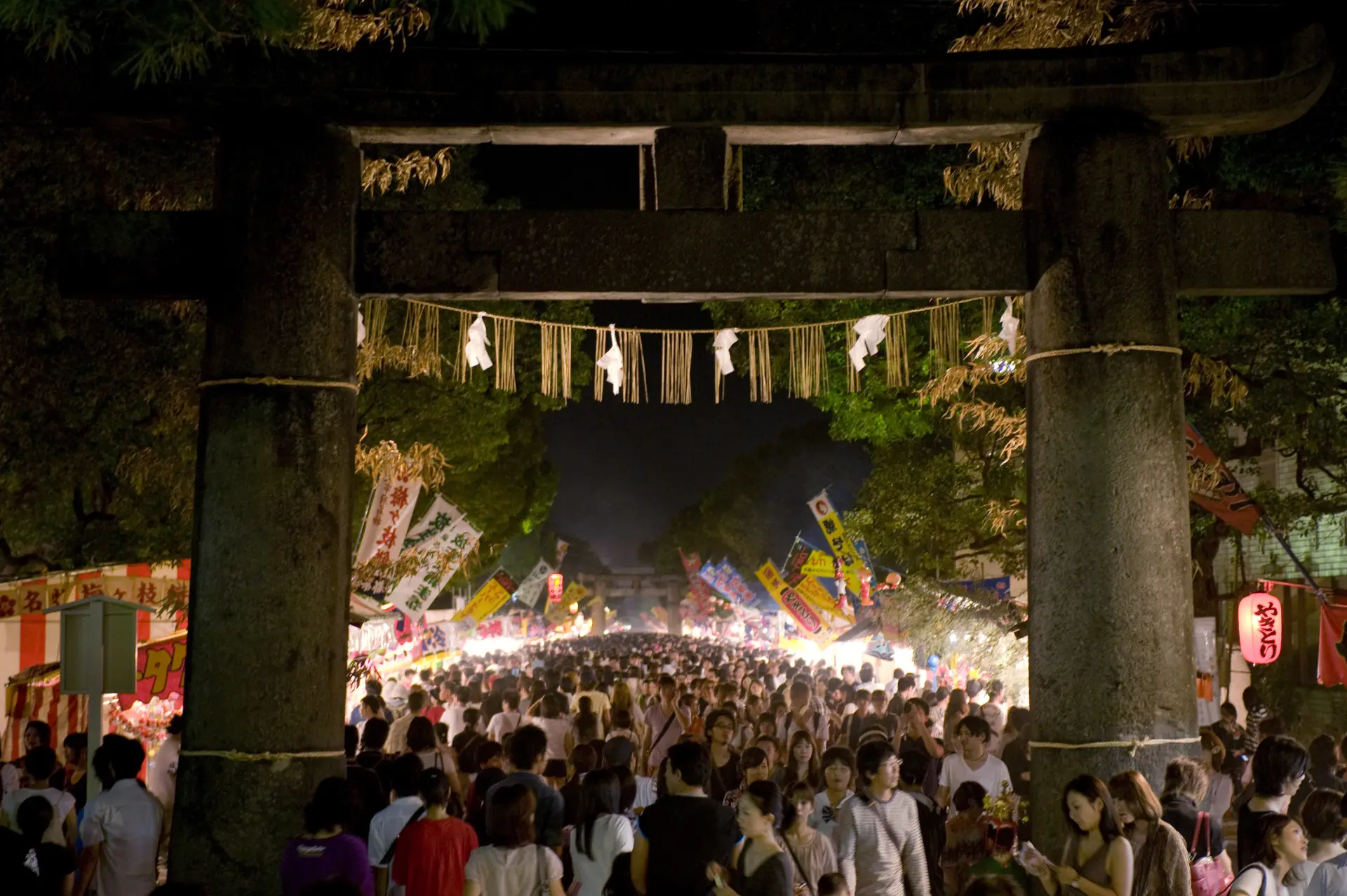
An annual fall festival counted among Hakata’s three major festivals alongside the spring Hakata Dontaku and summer Hakata Gion Yamakasa.
With over 1,100 years of history, it offers comfort to the spirits of all living things and expresses gratitude, while also praying for continued business success and household safety. Various Shinto rites are held over seven days and seven nights.
Once every two years, in odd-numbered years, the Goshinko (portable shrine procession)—designated as a Fukuoka City Intangible Folk Cultural Property—is held through the service of Approx. 500 parishioners.
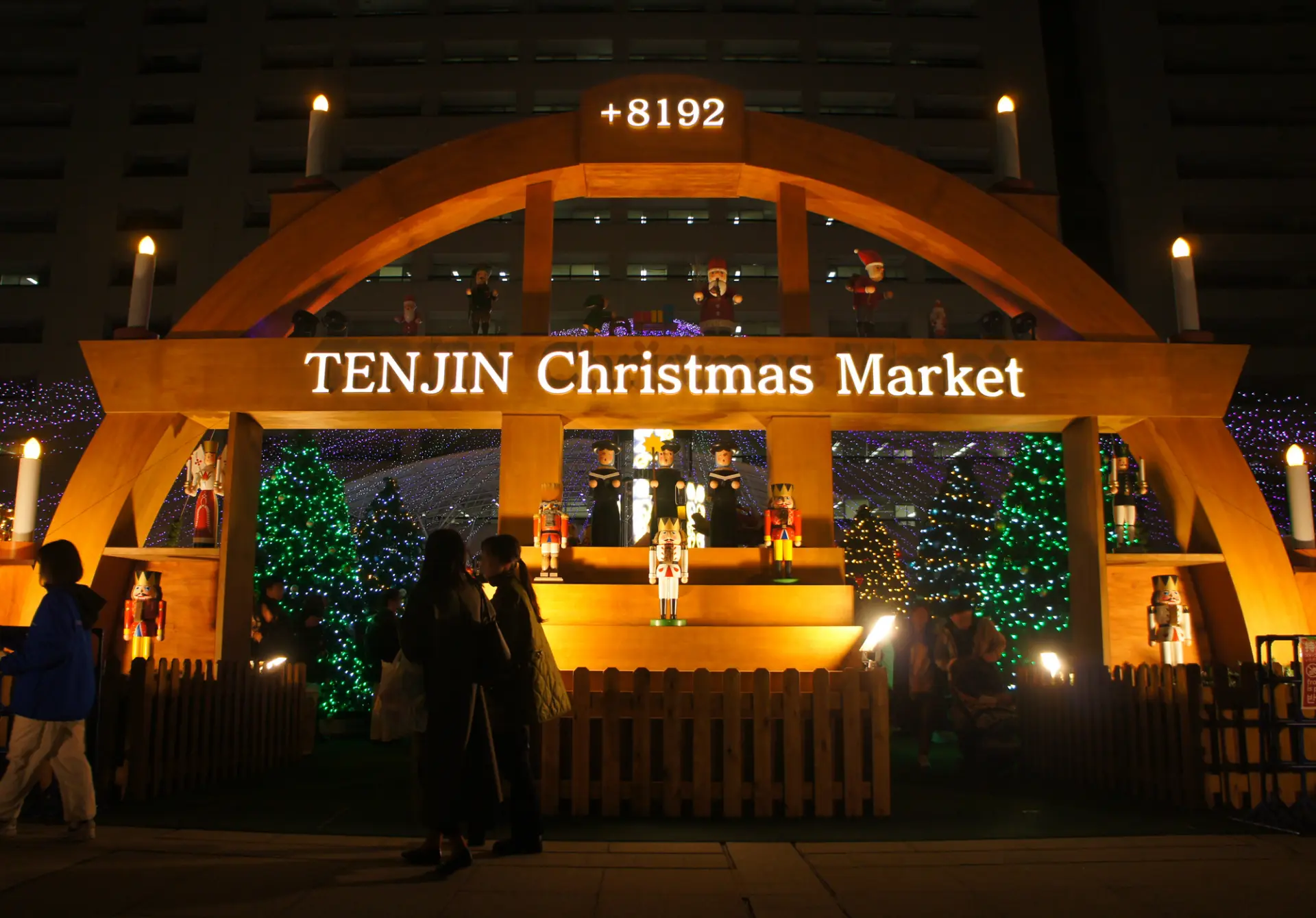
[Winter] Christmas Advent
A large illumination and Christmas market event held at 12 venues in Fukuoka City and Kitakyushu City.
Launched in 2013, it has drawn a cumulative Approx. 12 million visitors, becoming a signature winter tradition in Fukuoka.
With the theme “Five Senses Christmas,” the entire area is connected by bands of light, with art, food, and music as major highlights.
Alongside dazzling illuminations, there’s plenty to see, including the Fukuoka Classic Music Festival and KBC FESTA de SANTA, where around 130 Santa figures gather.
5 Things to Know Before Sightseeing in Fukuoka
Here are five points you’ll want to know to make the most of Fukuoka.
Please use them to avoid any regrets from lack of preparation.
1. Yatai may have lines, be full, or close on irregular days
Yatai, a Fukuoka nightlife staple, are very popular, and depending on the time and day, you may find lines or that stalls fill up early.
Weekends and peak travel seasons are especially crowded, and it’s not uncommon to be unable to get into the yatai you were aiming for right away.
Also keep in mind that yatai may close due to weather or the owner’s circumstances, so they aren’t necessarily open every day.
With that in mind, it’s best to visit with extra time and keep a flexible plan, such as having several options in mind.
Rather than a place to enjoy strictly “as planned,” yatai are more about enjoying chance encounters.
If you go with the mindset of casually dropping into an open stall, you’re more likely to have a truly Fukuoka-style evening.
2. If you’re walking around Nakasu, go earlier in the evening
Nakasu is one of Fukuoka’s top entertainment districts, packed with yatai and restaurants.
From late afternoon into the evening, many people come for dinner and yatai, creating an atmosphere that’s easy for tourists to enjoy on foot.
As the night gets later, however, the area’s nightlife side becomes stronger, and the overall feel can change dramatically depending on the time.
Later at night, you may see more solicitors, and quieter streets can feel less comfortable.
Especially late at night, solo walking for women requires extra caution.
If you’re visiting mainly for yatai or dining, it’s safer to go at a relatively early time, and if you’ll be out late, consider going with others for a more comfortable experience.
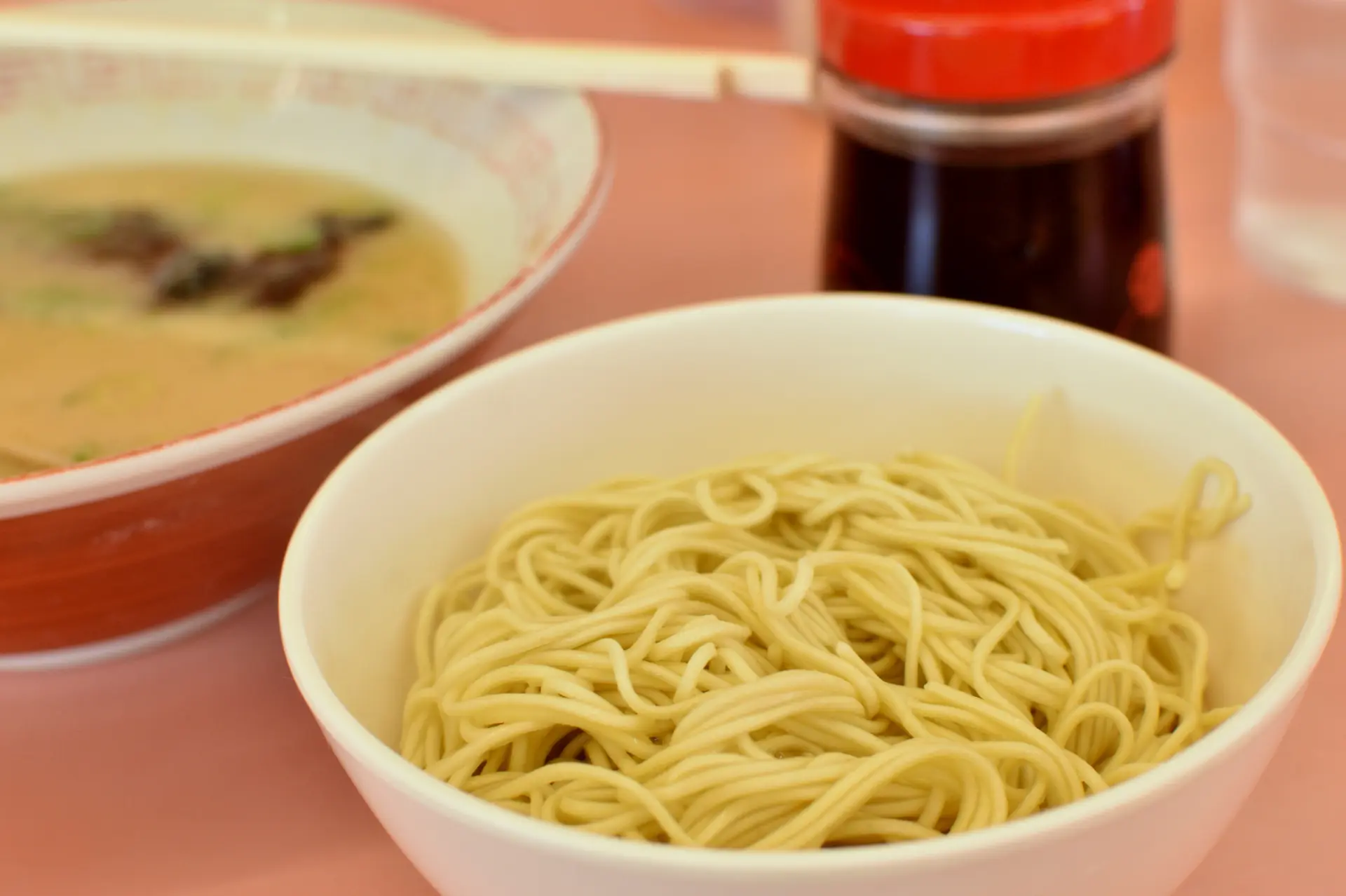
3. Many Hakata ramen shops assume you’ll order kaedama
Hakata ramen often comes with a slightly smaller portion of noodles, and many shops are set up with kaedama (an extra serving of noodles) in mind.
So if it’s your first time, you may feel the portion is small with just one bowl.
If you’re still hungry, try ordering kaedama.
Typically, you order kaedama while there’s still soup left—before you finish everything.
How to order varies by shop: you might hand over an order tag at your seat, tell staff verbally, or purchase an additional meal ticket.
If you’re unsure, check what others are doing or ask a staff member.
Since adding noodles can make the soup taste a bit lighter, it’s common to adjust flavor with table condiments or toppings as you continue eating.
Adding kaedama and customizing your bowl to your taste is part of the Hakata ramen experience.
4. Itoshima can be hard to get around without a car
In Itoshima, highlights are scattered along the coastline and in mountain areas, and the distance between spots can be significant.
Some locations are reachable by train or bus, but routes and frequency are often limited, and getting around can take time.
In particular, if you want to visit coastal cafes and scenic viewpoints, many places are difficult to reach using only public transportation.
If you want to cover multiple spots efficiently in a short time, renting a car gives you much more flexibility.
If you won’t be driving, it’s best to narrow down the area you’ll visit in advance, or build a plan around places you can enjoy near stations to avoid overextending yourself.
Knowing your transportation options ahead of time will make your Itoshima trip much more comfortable.
5. Uminonakamichi Seaside Park takes time to reach
Uminonakamichi Seaside Park, where Marine World Uminonakamichi is located, is a popular attraction where families can spend a full day having fun.
That said, it’s a good idea to note that it’s some distance from central Fukuoka and takes time to reach.
If you’re coming from the Hakata or Tenjin areas, you’ll need to transfer between trains and/or buses, and Approx. one hour one way is a general guideline.
Depending on the time and day, transfers and crowding can make it take even longer.
For that reason, it’s recommended to set aside at least half a day when visiting these spots.
By avoiding an overpacked schedule and planning with extra time—including transit—you can enjoy the day without pushing yourself, whether you’re traveling with kids or not.
FAQ about Fukuoka Sightseeing
Q
What are Fukuoka’s three major local specialties?
A
They’re often said to be Hakata ramen, mentaiko, and motsunabe.
Q
Are there hot springs in Fukuoka?
A
Yes—Harazuru Onsen, Futsukaichi Onsen, Funagoya Onsen, and Hakata Onsen.
Summary
From basics like climate and access to popular attractions, local food, and seasonal events, we’ve covered the key information you need to enjoy Fukuoka to the fullest.
Whether you want to explore on foot, focus on food, experience culture and history, or relax in nature, Fukuoka delivers on all kinds of travel goals.
As you read, you’ve probably started to picture your own perfect way to enjoy Fukuoka.
Now all that’s left is to plan your trip around that vision—and make your way to Fukuoka.
A rich, memorable experience is waiting for you.