

Travel Guide to Zuiganji, Tohoku’s Leading Zen Temple
Zuiganji is one of Tohoku’s finest Zen temples and is designated as a National Treasure.
Its simple Zen exterior and its lavish interior, where the hallmarks of Momoyama-period architecture and art remain, captivate everyone who visits.
Because it was rebuilt by the Sengoku warlord Date Masamune, you can sense his aesthetic sensibility throughout the temple.
To fully enjoy Zuiganji, a site of high historical and cultural value, read this article to understand its history and highlights.
What is Zuiganji Like?
Zuiganji is a Buddhist temple of the Myoshinji branch of the Rinzai school, located in Matsushima Town, Miyagi District, Miyagi Prefecture.
Matsushima Town sits in the central coastal area of the Tohoku region and faces Matsushima Bay.
Known for its nature-filled scenery—sea, rivers, and satoyama landscapes—it’s also counted as one of Japan’s Three Scenic Views. It’s designated as both a Special Place of Scenic Beauty and a Prefectural Natural Park.
The town is also known as a historic destination, with cultural heritage sites scattered throughout.
One of Matsushima’s most iconic National Treasures is Zuiganji.
Zuiganji is also famous as the family temple (where memorial services are held) of Date Masamune, the Sengoku warlord known as the “One-Eyed Dragon.”
While it has a simple exterior typical of a Zen temple, its design reveals the splendor of the Momoyama style throughout, captivating countless visitors.
The Main Hall and Kuri are designated as National Treasures, while the Onarimon Gate, Chumon Gate, and Taikohei Wall are designated as Important Cultural Properties—there’s plenty to see.
Zuiganji is a must-visit highlight for sightseeing in Matsushima.

The History and Origins of Zuiganji
Zuiganji is one of Tohoku’s leading Zen temples and a family temple closely associated with Date Masamune.
It’s said to have originated as Enpukuji, a Tendai Buddhist temple founded in the early 800s by Jikaku Daishi Ennin, who also oversaw Enryakuji Temple on Mount Hiei.
Today’s Zuiganji was completed in 1609 by Date Masamune after five years of construction.
Its official name is Matsushima Seiryuzan Zuigan Enpuku Zenji.
After the Battle of Sekigahara, Date Masamune actively built shrines and temples alongside the construction of Sendai Castle, creating places of spiritual support for his people. Zuiganji was built as part of that effort.
It’s also said that he decided to restore the temple following strong encouragement from the Zen monk Kosai Soitsu.
Kosai Soitsu was Date Masamune’s tutor and can be considered a benefactor who had advised him since childhood.
The Main Hall and Kuri, filled with Date Masamune’s devotion, have survived for 400 years without ever being damaged by fire and still stand today.
Access to Zuiganji
Here’s how to get from JR Sendai Station—often used for Miyagi sightseeing—to Zuiganji.
From JR Sendai Station, take the Senseki Line to JR Matsushimakaigan Station.
The ride takes around 40 minutes.
From Matsushimakaigan Station, it’s a 10-minute walk, so it’s relatively easy to reach.
As an alternative route, you can also take the Tohoku Main Line from JR Sendai Station to JR Matsushima Station.
This takes around 25 minutes, making it slightly shorter.
However, note that it’s a 20-minute walk from JR Matsushima Station.
Zuiganji Hours and Admission
Admission to Zuiganji is 700 yen for adults and 400 yen for children (elementary to junior high school students).
Hours vary by season, so please refer to the table below.
Hours
- January
- 8:30am–3:30pm
- February
- 8:30am–4:00pm
- March
- 8:30am–4:30pm
- April–September
- 8:30am–5:00pm
- October
- 8:30am–4:30pm
- November
- 8:30am–4:00pm
- December
- 8:30am–3:30pm
What’s the Best Season to Visit Zuiganji?
The best seasons to visit Zuiganji are spring and winter.
In spring, the Garyubai plum tree in front of the Main Hall is popular for its beautiful blooms.
It’s said to have been planted by Date Masamune himself, and the two trees—one red, one white—are truly worth seeing.
Plan your visit for its peak season, from late March to early April.
Winter is also not to be missed, when you can see Zuiganji blanketed in snow.
Take a stroll through the serene, solemn atmosphere created by snow-covered historic buildings and the surrounding natural scenery.


A Tour of National Treasures and Nationally Designated Important Cultural Properties: 5 Highlights of Zuiganji
Zuiganji is also well known as a valuable site that preserves the splendor of Momoyama-period architecture and art to this day.
The Main Hall was designated a National Treasure in 1953, followed by the Kuri in 1959.
Each room is decorated with paintings and carvings in different styles, and the ceilings vary as well.
Everyone is sure to be captivated by this temple that reflects Date Masamune’s aesthetic sense.
Here are the can’t-miss highlights within Zuiganji.
1. “Treasure Hall (Seiryuden),” featuring Approx. 30,000 valuable items on display
The Treasure Hall (Seiryuden) opened at its current location in 1974.
Later, in 1995, a new building was constructed to expand the former treasure hall’s scale.
The Treasure Hall (Seiryuden) is located across from the Kuri.
It displays valuable materials connected to Zuiganji and the Date clan, including Buddhist statues, Nirvana paintings, letters, sliding-door paintings from the Main Hall, portraits of successive Date-domain lords, tea bowls, ink calligraphy, and excavated artifacts.
The collection is said to number Approx. 30,000 items.
While rotating treasures on display, it also hosts special exhibitions.
With paid admission to Zuiganji, you can enter the Treasure Hall (Seiryuden) free of charge.
2. The “Main Hall,” known for its lavish Momoyama architecture and art
The Main Hall is built in the shoin-zukuri style, a samurai residence style centered around a study room (shoin).
It measures 38 m across the front, 24.2 m in depth, and 17.3 m in ridge height.
This large building consists of 10 rooms, including the Buddha Room and the Rakan Room.
In the Buddha Room, it enshrines a standing statue of Shokan’non Bosatsu (Holy Avalokiteshvara) as the principal image, along with Date Masamune’s mortuary tablet.
Each room has a theme based on its purpose, with paintings and carvings for decoration, and each ceiling is built differently.
Because it’s a precious structure that preserves the characteristics of brilliant Momoyama architecture and art, it was designated a National Treasure in 1953.

3. The “Kuri,” a National Treasure and one of Japan’s Three Great Kuri
The Kuri serves as the kitchen for a Zen Buddhist temple.
On top of its large irimoya-style roof is a smoke vent used to release smoke needed for cooking.
The existing Kuri is believed to have been built when Date Masamune revived the temple.
Because the Kuri is a practical building, it’s rare to see examples with decorative features.
However, Zuiganji’s Kuri features Momoyama-style arabesque carvings beneath the chidori-hafu gable at the front.
This, too, shows Date Masamune’s refined aesthetic sense.
With its distinctive architecture and high cultural value, it’s designated as a National Treasure and is also counted among “Japan’s Three Great Kuri.”

4. Godaido Hall, the oldest Momoyama-style architecture in Tohoku
Godaido Hall is a Buddhist hall built on a small island a short distance from Zuiganji.
In 807, Seii Taishogun Sakanoue no Tamuramaro built Bishamondo Hall when he visited during a campaign in Tohoku.
In 828, Jikaku Daishi Ennin enshrined statues of the Five Wisdom Kings, and it came to be called Godaido Hall.
The Godaido Hall that stands today was rebuilt by Date Masamune in 1604.
It’s considered the oldest Momoyama-style architecture in the Tohoku region and is also designated as a National Important Cultural Property.
Around the eaves of Godaido Hall, carvings of the 12 zodiac animals are arranged according to the compass directions, so by walking one full circle, you can view them all.

5. The “Cave Ruins,” evidence of its recognition as a sacred site
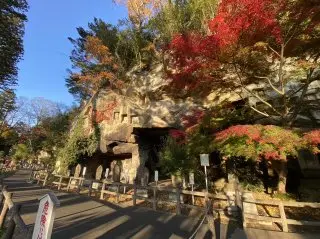
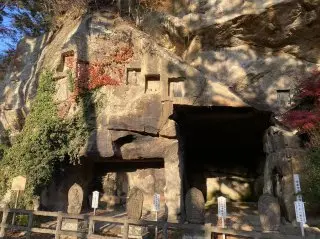
After passing through Zuiganji’s front gate, visitors proceed to the Cave Ruins.
Looking at the cave walls, you’ll find Buddhist statues placed in stone monuments and stone figures, showing that it was a place used for burial and memorial services.
This group of caves is said to have been carved during the Edo period, and the oldest memorial tower is for Sato Yoshinobu, a retainer believed to have committed junshi upon Date Masamune’s death in 1636.
Those memorialized also include people from outside Sendai.
This can be seen as proof that it was widely recognized as a sacred site.

3 Popular Tourist Spots Near Zuiganji
Because it’s closely associated with the Sengoku warlord Date Masamune, remnants tied to the Date clan are scattered throughout the area. Beyond that, you’ll also find many scenic spots rich in nature.
Along with enjoying Zuiganji, be sure to visit the nearby attractions as well.
1. Entsuin
Entsuin was built in 1647 as the family temple of Date Mitsumune, Date Masamune’s grandson.
Entsuin is known as a famous spot for fall colors, with the best time to visit from late October to mid-November.
In particular, its garden—centered on the Shinji Pond, created Approx. 350 years ago, and Mt. Fudaraku, said to be where Kannon Bosatsu resides—is among the most beautiful in Tohoku. It’s also illuminated at night, creating an even more magical atmosphere.
Visitors also enjoy the experience of making an original Buddhist rosary using natural stones and glass beads.

2. Michinoku Date Masamune Historical Museum
This museum introduces the life of Lord Date Masamune, the first domain lord, through 25 scenes using around 200 life-size wax figures.
In addition, excavations at Zuihoden—Masamune’s mausoleum, which was destroyed in the Sendai air raid of 1945—uncovered human remains.
Based on those findings, you can experience a reconstructed face of Masamune and a voice recreated by computer.
The “Armor Dressing Experience” (advance reservation required, additional fee required), where you can actually wear Masamune’s armor “Kuro-urushi Go-mai Do Gusoku,” made by craftsmen who produce armor for TV dramas and movies, is also popular.

3. Matsushima Fish Market
A tourist market located near the Matsushima coast along National Route 45. It’s operated by a company based in Kesennuma that owns large tuna fishing vessels.
In addition to its prized tuna, it sells over 1,500 types of seafood, including oysters, hoya (sea squirts), Kinkasan mackerel, and Kesennuma saury.
The first floor of the main building is a fresh seafood shopping area, always lively with tourists as well as many shoppers coming from Sendai City.

3 Recommended Places to Stay Near Zuiganji
Centered around the National Treasure Zuiganji, this area offers views of Matsushima—one of Japan’s Three Scenic Views—making it a great place to enjoy history and nature at the same time.
After visiting temples and touring the islands, you’ll want to unwind at a hotel near Matsushima.
Here are some places to stay that make for a comfortable, seamless trip.
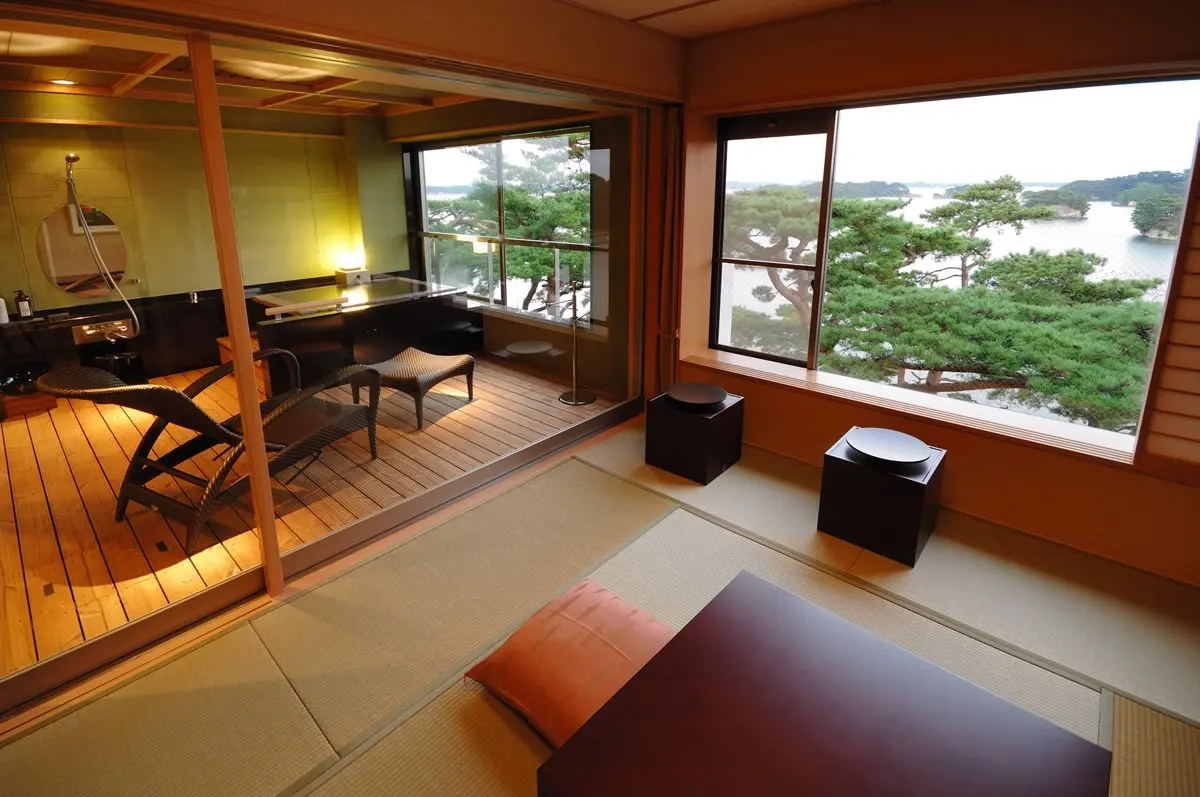
1. Matsushima Onsen Komatsukan Kofutei
A charming, well-regarded ryokan with panoramic views of the scenic beauty created by Approx. 260 islands.
From its calm guest rooms and open-air baths, you can relax while taking in majestic Matsushima, counted among Japan’s Three Scenic Views.
The “Taiko Tensenen Matsushima Onsen,” which wells up from ancient strata deep within the earth, is known for its gentle, smooth feel on the skin.
2. Hotel Matsushima Taikanso
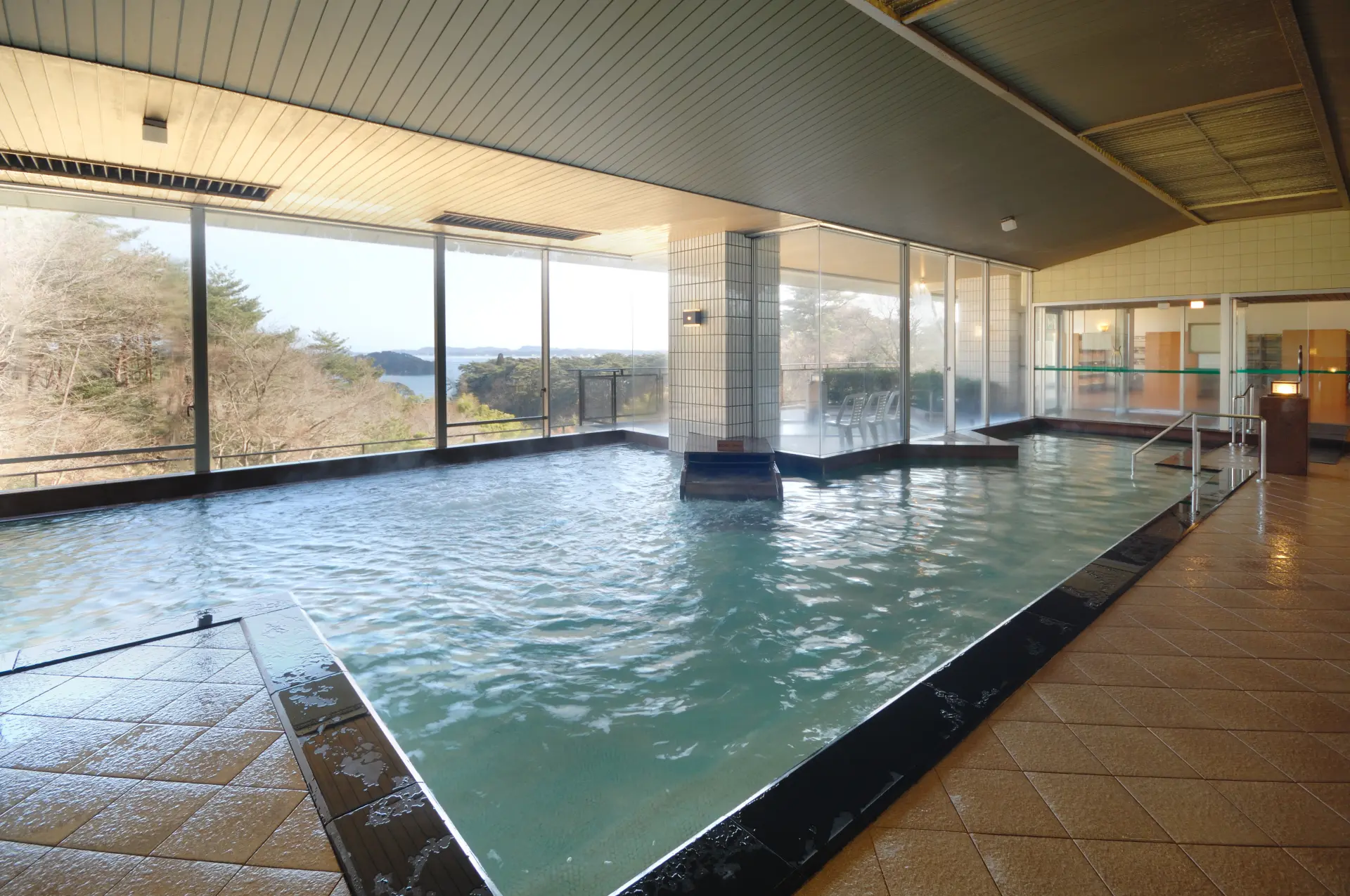
A resort hotel on a hill with sweeping views of the beautiful sea of Matsushima, one of Japan’s Three Scenic Views.
Many rooms face the bay, letting you enjoy Matsushima’s scenery—sunrise, sunset, and the dreamy view wrapped in mist—without leaving your room.
Room types include Japanese-style rooms, Western-style rooms, and Japanese-Western rooms, accommodating everyone from families and couples to group travelers.
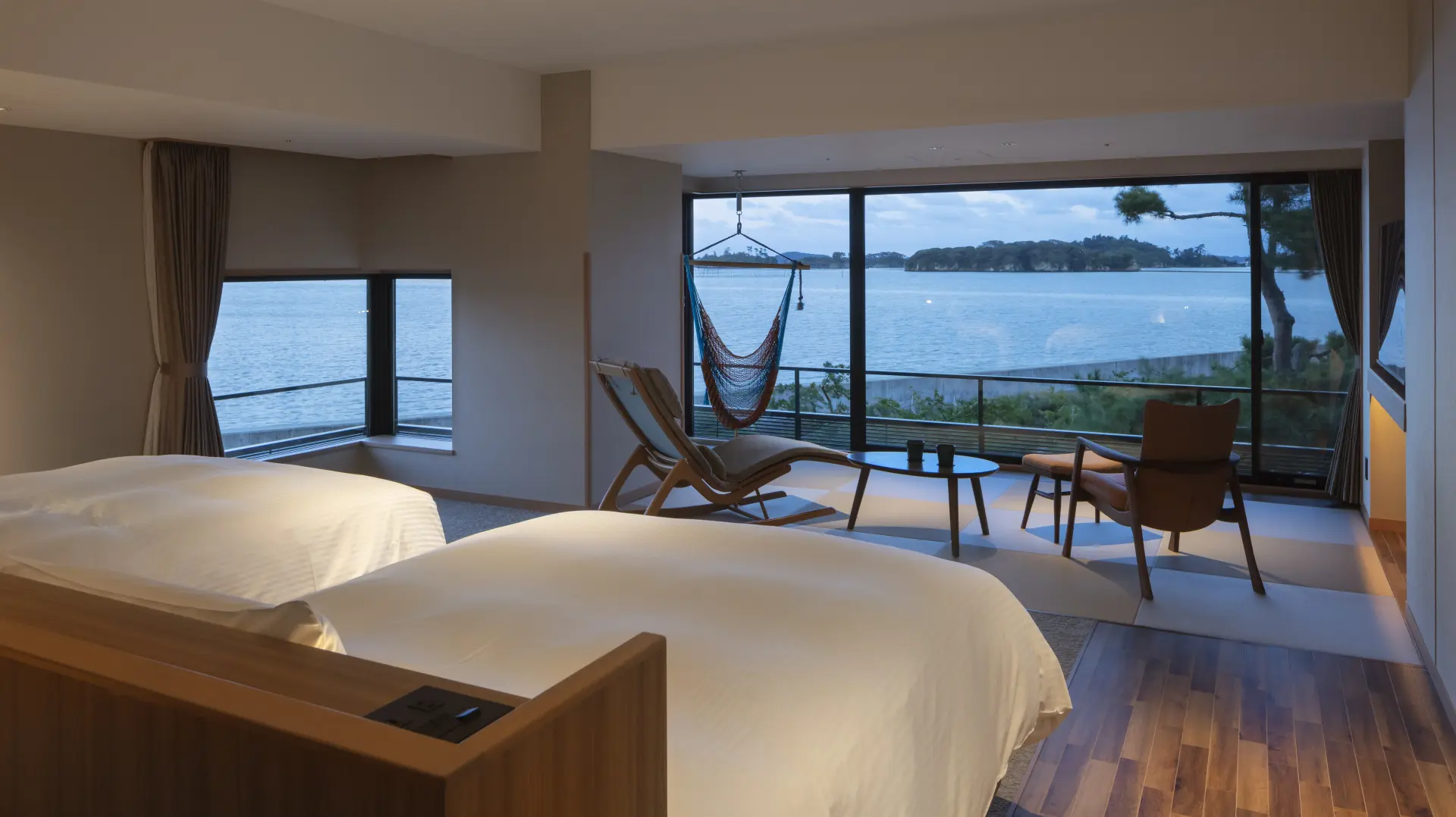
3. Matsushima Onsen Matsushima Ichinobo
A hot spring resort overlooking Matsushima, one of Japan’s Three Scenic Views.
It offers an all-inclusive plan that lets you use the restaurant, cafe, spa, and the on-site “Fujita Kyohei Glass Museum” for free, so you can relax without worrying about extra charges beyond your lodging rates.
Reviews of Zuiganji
3.86
Some reviews are AI-translated.
-
The temple's garden is also a highlight of Zuiganji. Each season brings a different kind of beauty. Walking through the garden, you can really feel the peaceful and harmonious atmosphere of Zen.
-
They say this was a masterpiece by Date Masamune. Both the trees and the architecture are incredibly detailed and impressive.
It's especially nice to visit together with Matsushima! -
This is the final resting place of Date Masamune. It's definitely worth taking your time to appreciate everything here.
FAQ about Zuiganji
Q
Who built Zuiganji?
A
It was founded by Jikaku Daishi and rebuilt by Date Masamune.
Q
What blessings can you receive at Zuiganji?
A
It’s said to bring blessings such as prosperity in business, a safe childbirth, traffic safety, and good fortune.
Q
Can you get a goshuin book at Zuiganji?
A
You can receive four types of hand-written goshuin.
Summary
We’ve covered the appeal and history of Zuiganji, one of Tohoku’s leading Zen temples, with many National Treasures and nationally designated Important Cultural Properties—what did you think?
Zuiganji is relatively easy to access and is in a convenient location to visit while sightseeing in Sendai or Miyagi, so be sure to add it to your itinerary.
There are also many great attractions around Zuiganji, so use the page below as a reference and explore Matsushima.