

Explore Stunning Natural Scenery and UNESCO World Heritage Sites: 13 Must-Visit Spots in Nikko
When you think of Nikko, many people picture the UNESCO World Heritage Site “Shrines and Temples of Nikko.”
But there’s much more to discover, from rich natural landscapes that change beautifully with the seasons to some of the Kanto region’s most popular hot spring areas—Nikko is packed with great places to visit.
Here, we’ve carefully selected and introduced Nikko’s best sightseeing spots, hot springs, and accommodations—far more than you can fully enjoy in just one day.
What is Nikko Like?
Located in northwestern Tochigi Prefecture, Nikko is filled with attractions, including Nikko National Park, known for its vast grounds, and the UNESCO World Heritage Site “Shrines and Temples of Nikko.”
With abundant nature as well as valuable historical and cultural heritage, it draws visitors from Japan and around the world.
In the highland and mountain region known as Oku-Nikko—centered around Kegon Falls and Senjogahara—you can enjoy beautiful scenery shaped by mountains, lakes, and valleys.
The landscapes of Oku-Nikko may make you feel like you’ve stepped into a remote, hidden paradise.
“Shrines and Temples of Nikko” is a UNESCO World Heritage listing that includes Nikko Toshogu Shrine and other shrines and temples in Nikko.
The lavish beauty of its 9 National Treasures and 94 Important Cultural Properties is truly breathtaking.
Nikko is also one of the Kanto region’s leading hot spring destinations, where you can enjoy a variety of onsen areas such as Okukinu Onsen, Oku-Nikko Yumoto Onsen, and Kinugawa Onsen.
Since there are more sights than you can cover in a single day, take your time and explore at a relaxed pace with a hot spring town as your base.

When is the best season to visit Nikko?
If you’re visiting Nikko, fall is especially recommended.
With many famous foliage spots, vivid autumn colors add an extra layer of beauty to Nikko’s attractions.
From central Nikko to the higher elevations of Oku-Nikko, the fall colors gradually spread across the area.
Seeing Nikko’s vast landscapes dyed in autumn hues is truly a seasonal highlight.
Since peak timing varies slightly by location, be sure to check the best viewing period before you go.
What to wear in Nikko by season
- Spring (March–May): A light jacket and a thin sweater
- Summer (June–August): Light clothing, short sleeves
- Fall (September–November): A light jacket or coat
- Winter (December–February): A coat, and a thick sweater or jacket
How do you get to Nikko?
Nikko is also easy to reach from major cities like Tokyo and Nagoya.
From Tokyo Station, take the Tohoku Shinkansen to Utsunomiya Station, then transfer to the JR Nikko Line to Nikko Station—Approx. 2 hours.
From Osaka or Nagoya, take the JR Tokaido Shinkansen to Tokyo Station, then follow the route described above.
Even from Osaka or Nagoya, you can arrive in Approx. 3.5 to 4 hours.
Main ways to get around while sightseeing in Nikko
Many of Nikko’s main attractions are not easily accessible by train.
Instead, the local bus network is extensive, so use route buses and taxis to get around.
Stunning Natural Scenery and Historic Architecture You Can’t Miss: 13 Recommended Spots in Nikko
Nikko is home to many unforgettable attractions, from dramatic natural scenery to historic buildings designated as UNESCO World Heritage Sites.
With so much to see, it’s easy to feel unsure where to start.
To help, here are carefully selected sights you won’t want to miss when visiting Nikko.
1. Nikko Toshogu Shrine
Nikko Toshogu Shrine is a shrine dedicated to Tokugawa Ieyasu, the first shogun of the Edo shogunate.
Often considered the centerpiece of a walk through the UNESCO World Heritage Site “Shrines and Temples of Nikko,” it features 55 magnificent buildings, including 8 National Treasures and 34 Important Cultural Properties.

2. Kegon Falls
Nikko is home to many waterfalls, but Kegon Falls is arguably the most famous.
It’s a spectacular waterfall where water from Lake Chuzenji plunges down a 97-meter cliff in one dramatic drop, offering both the raw power and natural beauty of the landscape.

3. Nikko Futarasan Shrine
Nikko Futarasan Shrine is a shrine that enshrines the sacred mountains of the Nikko mountain range, including Nikko’s three main peaks.
It is also known for blessings related to good fortune and matchmaking.
The beautiful vermilion-lacquered wooden bridge called Shinkyo Bridge, which marks the entrance to the Nikko area, is one of Futarasan Shrine’s structures.
It serves as a symbolic gateway to the UNESCO World Heritage Site “Shrines and Temples of Nikko.”

4. Lake Chuzenji
Lake Chuzenji is said to have been formed Approx. 20,000 years ago, when lava from an eruption of Mt. Nantai dammed a valley.
Located at an elevation of 1,269 meters above sea level, it is one of Japan’s highest-altitude lakes.
From its peaceful shoreline at the foot of Mt. Nantai, you can enjoy seasonal scenery throughout the year.

5. Yudaki Falls
Lake Yunoko is located at the foot of Mt. Nikko-Shirane, one of Japan’s 100 Famous Mountains.
At its southern end is Yudaki Falls, which is 70 meters tall and 110 meters long.
Along with Kegon Falls and Ryuzu Falls, it is considered one of Oku-Nikko’s three famous waterfalls.

6. Nikkozan Rinnoji Temple
Nikkozan Rinnoji Temple is a collective name for its halls, pagodas, and 15 sub-temples.
It is said to have begun when Shodo Shonin, the founder of Nikko, built Shihonryuji Temple.
The Sanbutsudo Hall is the largest wooden building in Nikko and enshrines three Buddhist statues: Senju Kannon, Amida Nyorai, and Bato Kannon.

7. Ryuzu Falls
Ryuzu Falls is located on the Yukawa River, which flows into Lake Chuzenji.
It cascades for 210 meters over lava formed by an eruption of Mt. Nantai, rushing down a tiered rocky slope about 10 meters wide.
It is said to have been named “Ryuzu” (Dragon’s Head) because near the basin, a large rock splits the flow in two, resembling a dragon’s head.

8. Tobu World Square
A theme park that recreates and displays famous buildings and historic sites from around the world at a 1:25 scale, under the theme “Let’s protect the world’s ruins and architectural culture.”
From 48 UNESCO World Heritage properties—including the Statue of Liberty, the Parthenon, and the Eiffel Tower—to famous structures like Tokyo Skytree and the White House, landmarks from 22 countries and regions are gathered here.

9. Shinkyo Bridge
The UNESCO World Heritage Site “Shrines and Temples of Nikko” in Nikko City, Tochigi Prefecture, consists of Futarasan Shrine, Toshogu Shrine, Rinnoji Temple, and the surrounding sites.
Shinkyo Bridge stands at its entrance. Also known as “Yamasuge no Jabashi” and “Mihashi,” it is one of the cultural properties that make up the UNESCO World Heritage listing.
It is also designated as an Important Cultural Property of Japan.

10. Ryuokyo Gorge
A gorge stretching Approx. 3 km between Kawaji Onsen—a small hot spring area along the river—and Kinugawa Onsen.
Long ago, Approx. 22 million years in the past, volcanic rock erupted from underwater volcanic activity and was gradually eroded by the flow of the Kinugawa River into the landscape seen today.

11. Edo Wonderland Nikko Edomura
A theme park called “Nikko Edomura” where you can experience the Edo period (1603–1868) in a realistic way.
Across its expansive grounds, you’ll find lifelike recreations of townscapes such as highways, post towns, merchant streets, a ninja village, and samurai residences.

12. Senjogahara
A vast marshland spanning 400 hectares within Nikko National Park.
It was once a lake, but volcanic sediment accumulated, aquatic plants grew on top, and in the cool climate the area became muddy, eventually forming a wetland.
The name comes from legend: it is said to be the battlefield where Mt. Akagi and Mt. Nantai transformed into a giant centipede and a giant snake, respectively, and fought over territory around Lake Chuzenji.

13. Irohazaka Winding Road
A 15.8 km scenic road connecting central Nikko and Lake Chuzenji.
It consists of “First Irohazaka” for downhill traffic only and “Second Irohazaka” for uphill traffic only. With 48 curves in total, it is said to have been named after the 48 characters of the traditional “Iroha” syllabary.

Treat Yourself: 3 Popular Restaurants in Nikko
As a major tourist destination, Nikko has many places to eat, and here we’ve selected some of the most popular options.
Each one offers excellent food, and the atmosphere—both outside and inside—is part of the appeal, making it easy to enjoy a truly special time.
If you’re sightseeing in Nikko, make sure to stop by the restaurants introduced below.
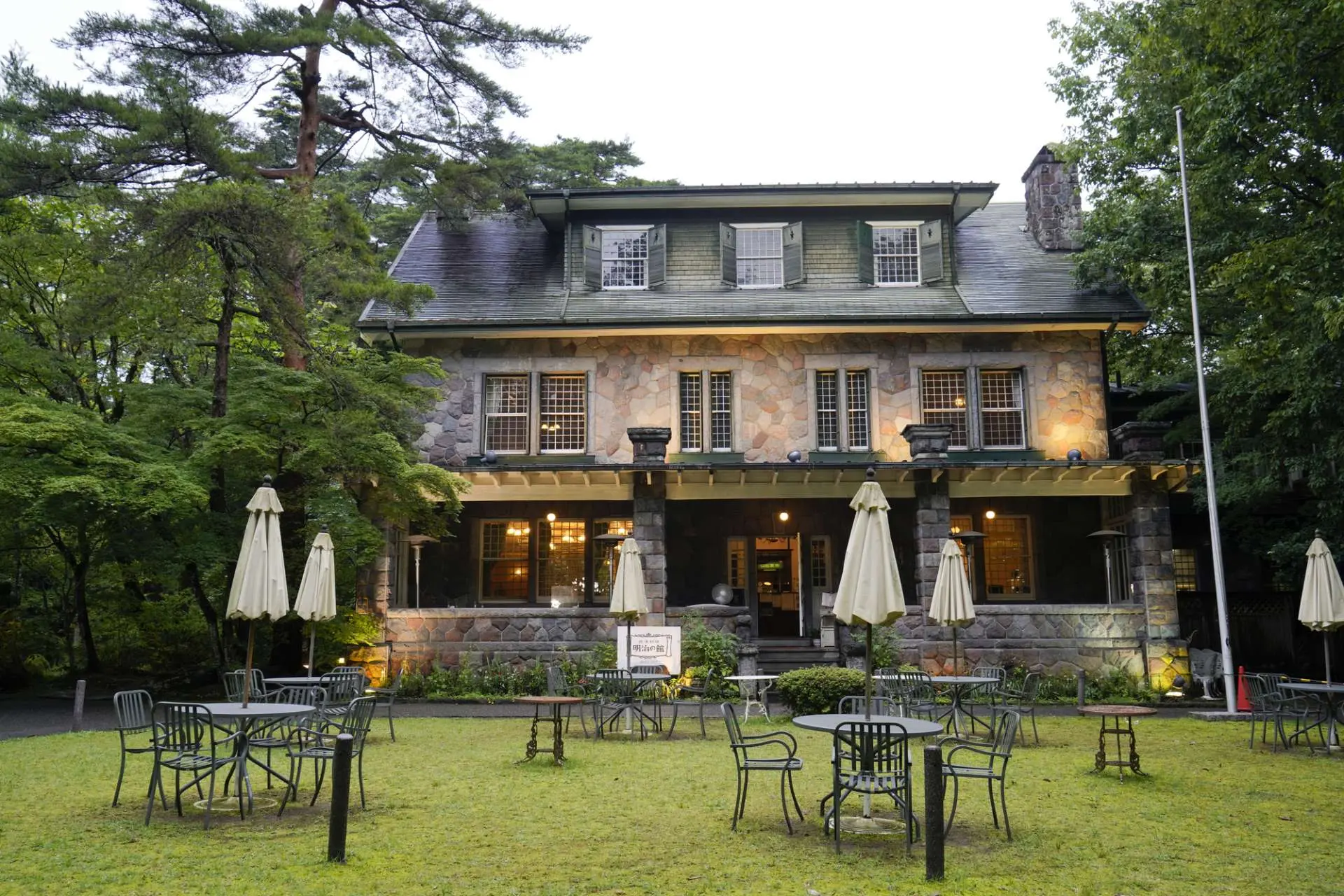
1. Meiji no Yakata
A stone Western-style mansion restaurant built in the Meiji era, located near the UNESCO World Heritage Site Nikko Toshogu Shrine.
The most popular dish is omurice: rich chicken rice flavored with ketchup, topped with fluffy, melty egg and paired with a carefully prepared demi-glace sauce.
2. Nikko Kanaya Hotel Main Dining Room
The restaurant of Nikko Kanaya Hotel, founded in 1873 and known as Japan’s oldest existing resort hotel.
It marked its 150th anniversary in 2023. When the main building was renovated into a three-story structure in 1936, the hotel lobby of the time was transformed into the Main Dining Room.
Decorations such as the column capital carvings and ornaments known as “Karyobinga” have been preserved from long ago, and in this classic atmosphere you can enjoy Kanaya Hotel’s traditional French cuisine.

3. Nikko Yuba Maki Zen - ZEN
A Japanese-modern spot in a renovated traditional house along the Nikko Kaido road near Nikko Toshogu Shrine.
The signature dish is Nikko yuba rolls, made by wrapping rice and local ingredients in Nikko yuba, a local specialty of Nikko City, Tochigi Prefecture. Young owner-chef Naoki Saito, trained in French and Japanese restaurants, selects ingredients with a keen eye—such as Mae-Nikko Kogen Wagyu, Tochigi Wagyu, and seasonal local vegetables—and pairs them with Nikko yuba.

2 Nikko Hot Spring Areas Perfect as a Base for Sightseeing
Nikko, one of the Kanto region’s leading hot spring destinations, offers not only onsen towns with classic charm but also areas known as the “last hidden hot springs of Kanto.”
After a day of sightseeing, relax and soothe your body in these renowned waters.
1. Kinugawa Onsen
Located in the upper reaches of the Kinugawa River in Nikko City, Kinugawa Onsen is one of the Kanto region’s most popular hot spring destinations.
Discovered during the Edo period when the area was under the control of Nikko’s shrines and temples, it was originally available only to feudal lords and monks returning from worship in Nikko. In the Meiji period it opened to the general public, and many ryokan and hotels were established along the Kinugawa Gorge. It developed into a large-scale hot spring resort visited by many travelers.

2. Okukinu Onsen
Okukinu Onsen is a hot spring area in the headwaters of the Kinugawa River in Kawamata, Nikko City. It is home to four onsen inns, each offering waters from different natural sources.
Because the route to the hot spring area was once not well developed, it was difficult to visit, and it is also known as the “last hidden hot springs of Kanto.”

Unwind at Historic, Long-Established Hotels and Ryokan: 3 Recommended Places to Stay in Nikko
Among Nikko’s many places to stay, here are two accommodations that can make your Nikko trip an even better experience.
You’ll likely do a lot of walking while sightseeing in Nikko, so choose a place that will help you properly rest and recover.
1. Nikko Kanaya Hotel
Founded in 1873, this long-established hotel is known as Japan’s oldest existing resort hotel.
Its Western-style exterior incorporates Japanese furnishings and design elements throughout, and the historic prewar building is registered as a Tangible Cultural Property of Japan.

2. Asaya Hotel
A long-established hotel founded in 1888 and known as the oldest hotel in Kinugawa Onsen, one of the Kanto region’s best-known hot spring towns.
In a luxurious space filled with tradition—such as the atrium entrance featuring a pipe organ—you can relax while enjoying the hot springs and a lavish buffet.

3. Kinugawa Onsen Hotel
Kinugawa Onsen is one of the Kanto region’s most popular hot spring areas, stretching across the upper reaches of the Kinugawa River in Nikko City, Tochigi Prefecture.
Along the nature-rich Kinugawa Gorge, many ryokan and hotels line the river, and among them Kinugawa Onsen Hotel is a long-established onsen inn especially popular for its delicious meals and a wide range of room plans.

FAQ about Nikko Sightseeing
Q
Where should I go to enjoy Nikko in a short amount of time?
A
The Oku-Nikko area, centered around Lake Chuzenji and Kegon Falls, is recommended.
Q
What is the Oku-Nikko area like?
A
Because it is at an elevation of at least 600 meters, it stays cool even in summer and feels like a secluded area with expansive, dramatic nature.
Q
When is the fall foliage season in Nikko?
A
It varies by location, but many spots are at their best from early October to late October.
Summary
With rich natural scenery and beautiful historic architecture, Nikko is packed with things to see and do.
In this article, we’ve introduced sightseeing spots, accommodations, and hot springs across Nikko.
If you venture a little farther from Nikko, you’ll also find places to enjoy theme parks and activities, so there are countless ways to explore Tochigi.
Use the article below, which features carefully selected attractions in Tochigi Prefecture, and consider visiting destinations beyond Nikko as well.