

12 Popular Things to Do in Shimonoseki: Beautiful Straits and Rich History
Shimonoseki is full of places where you can enjoy beautiful natural scenery along with history and culture.
It also attracts visitors with its food, especially seafood such as fugu, for which it boasts the highest catch volume in Japan.
Before sightseeing in Shimonoseki, use this article to get familiar with its many charms and popular attractions.
That way, you can make the most of everything the city has to offer.
What is Shimonoseki Like?
Shimonoseki is a city in Yamaguchi Prefecture, located at the westernmost tip of Honshu.
Surrounded by the sea on three sides, it is a place where you can enjoy beautiful natural scenery.
It is connected to Kitakyushu in Fukuoka Prefecture by the Kanmon Bridge and Kanmon Tunnel, making it possible to travel back and forth without using a boat while enjoying the beautiful views.
The Kanmon Tunnel, with a total length of Approx. 780 m, is a rare undersea tunnel for pedestrians even by global standards, and is also a sightseeing attraction.
Because the area was the setting for many events that became turning points in history, it is also home to many cultural heritage sites and historic buildings.
Another of Shimonoseki’s charms is the ingredients nurtured by its rich natural environment, with fugu, sea urchin, and squid being especially famous.
In addition to seafood, you can also enjoy local dishes such as kawara soba, made with green tea soba noodles, beef, shredded egg, and other toppings served on a heated roof tile.

What is the best season to visit Shimonoseki?
In Shimonoseki, you can enjoy seasonal scenery and ingredients at their peak throughout the year, so it is enjoyable no matter when you visit.
That means you can plan your trip based on your interests, such as spring for cherry blossoms or autumn for fall foliage.
Summer tends to be relatively hot and snow falls in winter, so spring and autumn are the most comfortable seasons for sightseeing.
What to wear in Shimonoseki by season
- Spring (March - May): Light jacket and thin sweater
- Summer (June - August): Light clothing, short sleeves
- Autumn (September - November): Light jacket, coat
- Winter (December - February): Coat, thick sweater or jacket
How do you get to Shimonoseki?
Although it is located at the westernmost tip of Honshu, Shimonoseki has good access from major cities.
It takes Approx. 30 minutes from Fukuoka by shinkansen, and Approx. 3 hours from Osaka if you use the shinkansen.
Even from Tokyo, the trip takes around 3 hours by plane.
If you are heading to Shimonoseki from Yamaguchi Ube Airport, the main air gateway to Yamaguchi Prefecture, it takes Approx. 1 hour 30 minutes by transferring trains.
Main ways to get around for sightseeing in Shimonoseki
The main way to get around Shimonoseki for sightseeing is by bus.
For shorter distances, rental bicycles are also recommended so you can enjoy the scenery at a relaxed pace.
Feeling the pleasant breeze as you casually stop by places that catch your eye may lead to new discoveries.
If you want to get around efficiently, a rental car is recommended.
12 Popular Attractions You Should Visit to Fully Enjoy Shimonoseki
Here is a carefully selected list of popular attractions where you can fully enjoy the charms of Shimonoseki.
In addition to spots with beautiful natural scenery, there are also markets and aquarium-style leisure spots where you can fully enjoy local specialty food, so there is plenty to see.
Visit the attractions below and enjoy Shimonoseki to the fullest while discovering its many different charms.
1. Tsunoshima Bridge
Tsunoshima Bridge opened in 2000.
Connecting the mainland side of Shimonoseki City in Yamaguchi Prefecture with the remote island of Tsunoshima, the bridge stretches 1,780 m and is one of the longest free bridges to a remote island in Japan.
Rather than connecting the mainland and Tsunoshima in a straight line, its gently curving form detours around Hatojima in the middle, creating a very beautiful silhouette.

2. Tsunoshima Lighthouse
This Western-style lighthouse stands at the northwestern tip of Tsunoshima, an island floating in the Sea of Japan. Designed by British engineer R. H. Brunton, the Approx. 30 m-tall lighthouse is also admired for its beautiful form that makes the most of the texture of granite.
It is known as one of the few lighthouses in Japan that visitors can climb. From the landing reached by climbing 117 steps of spiral stairs and ladders, you can enjoy a grand 360-degree view of the majestic Sea of Japan.

3. Karato Market
A fish market where not only professionals but also tourists can shop with ease.
In addition to Shimonoseki’s famous fugu, it is also well known as a market for sea bream and yellowtail, with fresh fish just caught by local fishermen on display. The weekend event Ikiiki Bakan Gai is also popular.
There are also eateries where you can enjoy fresh seafood on the spot, making it a great place to visit for breakfast or lunch.

4. Shimonoseki Marine Science Museum Kaikyokan
The aquarium offers a wide range of displays unique to Shimonoseki, including the Kanmon Strait tidal current tank that recreates the beautiful currents of the strait, as well as exhibits of pufferfish relatives such as tiger pufferfish and ocean sunfish, boasting the largest variety in the world.
Its distinctive and carefully designed events are also appealing, including dolphin and sea lion collaboration shows and performances featuring bubble rings made by finless porpoises.

5. Kaikyo Yume Tower
Since opening in July 1996, the 153 m-tall Kaikyo Yume Tower rising above the Kanmon Strait has been loved as a landmark of Shimonoseki.
A see-through elevator takes you up in 70 seconds to the 143 m-high observation room, one of the tallest in Japan.
Wrapped in a three-layer spherical glass structure, it offers a sweeping 360-degree panoramic view of the Seto Inland Sea, the Kanmon Strait, Ganryujima, Hibikinada (Sea of Japan), and even Kyushu on the opposite shore.

6. Kanmon Strait
This strait separates Shimonoseki City in Yamaguchi Prefecture and Kitakyushu City in Fukuoka Prefecture at the westernmost tip of Honshu, and is said to have formed Approx. 6,000 years ago.
It is said to have been named Kanmon Strait by combining the first characters of Bakan (Shimonoseki City) and Moji (Moji Ward, Kitakyushu City).
There are three ways to cross the Kanmon Strait by land: the Kanmon Bridge, the Kanmon Tunnel, or the JR line connected by an underground tunnel.
You can also cross the Kanmon Strait on foot via the Kanmon Pedestrian Tunnel.

7. Kanmon Bridge
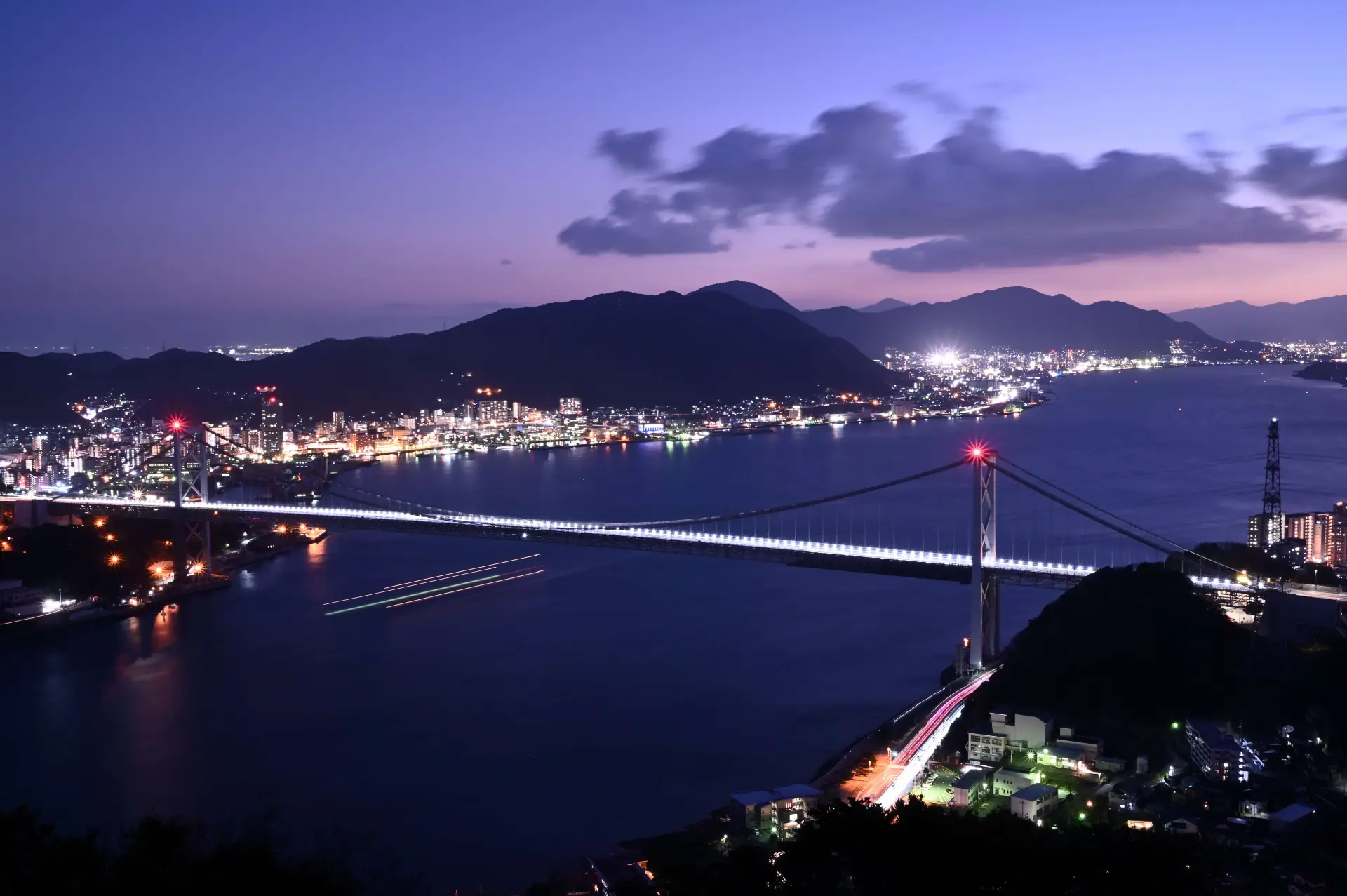
A suspension bridge opened in 1973, connecting Moji in Kitakyushu City, Fukuoka Prefecture, and Shimonoseki City, Yamaguchi Prefecture.
Spanning the Kanmon Strait, this 1,068-meter bridge was the longest in Asia at the time of its completion.
It is also known as a scenic spot, and the green-gray bridge blends beautifully into the surroundings. If you walk along the Mekari Kancho Promenade on the Mojiko side, you can look up at its विशाल bridge piers from close range.

8. Ganryujima
A small uninhabited island with a circumference of Approx. 1.6 km, floating in the Kanmon Strait of the Seto Inland Sea.
It is famous as the island where, in 1612, Miyamoto Musashi, known as an unparalleled master swordsman, dueled Sasaki Kojiro, who devised the famous Tsubame Gaeshi technique. Its official name is Funashima, but out of respect for the defeated warrior, it came to be called Ganryujima after Ganryu, the school of Sasaki Kojiro.

9. Akama Jingu Shrine
A shrine distinguished by its vermilion Suitenmon Gate, built in the image of the Dragon Palace. It enshrines Emperor Antoku, who drowned at just 8 years old after defeat in the Battle of Dan-no-ura. In addition, Amidaji Temple, the predecessor of Akama Jingu Shrine, was also the setting for the famous ghost story Mimi-nashi Hoichi.
Because it stands facing the sea, the shrine is known for blessings related to water, especially protection from water accidents and prosperity in water-related businesses.

10. Tsunoshima
A small island with a population of Approx. 700, floating in Hibikinada off northwestern Yamaguchi Prefecture.
The island is surrounded by highly transparent blue sea, creating the atmosphere of a tropical resort.
Another appeal is that it can be reached by land from Honshu via the 1,780 m-long Tsunoshima Bridge, known as a sacred destination for scenic drives.

11. Mimosusogawa Park
This former battlefield was the site of the Battle of Dan-no-ura, the final battle between the Genji and Heike clans, and today the seaside area has been developed as Mimosusogawa Park.
The sea stretching out in front of the park is the narrowest part of the Kanmon Strait, where tidal currents change rapidly, and you can see ships passing through the strait and the 1,068 m-long Kanmon Bridge connecting Honshu and Kyushu up close.

12. Hinoyama Park
Located at the summit of 268 m-high Mount Hino, this park is one of Yamaguchi Prefecture’s top scenic spots, with sweeping views of the Seto Inland Sea, the Sea of Japan, and the Kanmon Strait below.
Flowers bloom throughout the park in every season, with spring offering especially many highlights.
In April, cherry blossoms such as Somei Yoshino and Yamazakura bloom, and in May, Approx. 25,000 azaleas color the park.
3 Popular Restaurants in Shimonoseki
Shimonoseki is home to a wide variety of distinctive restaurants.
From among them, here is a carefully selected list of places that stand out not only for their carefully prepared dishes, but also for their atmosphere and views.
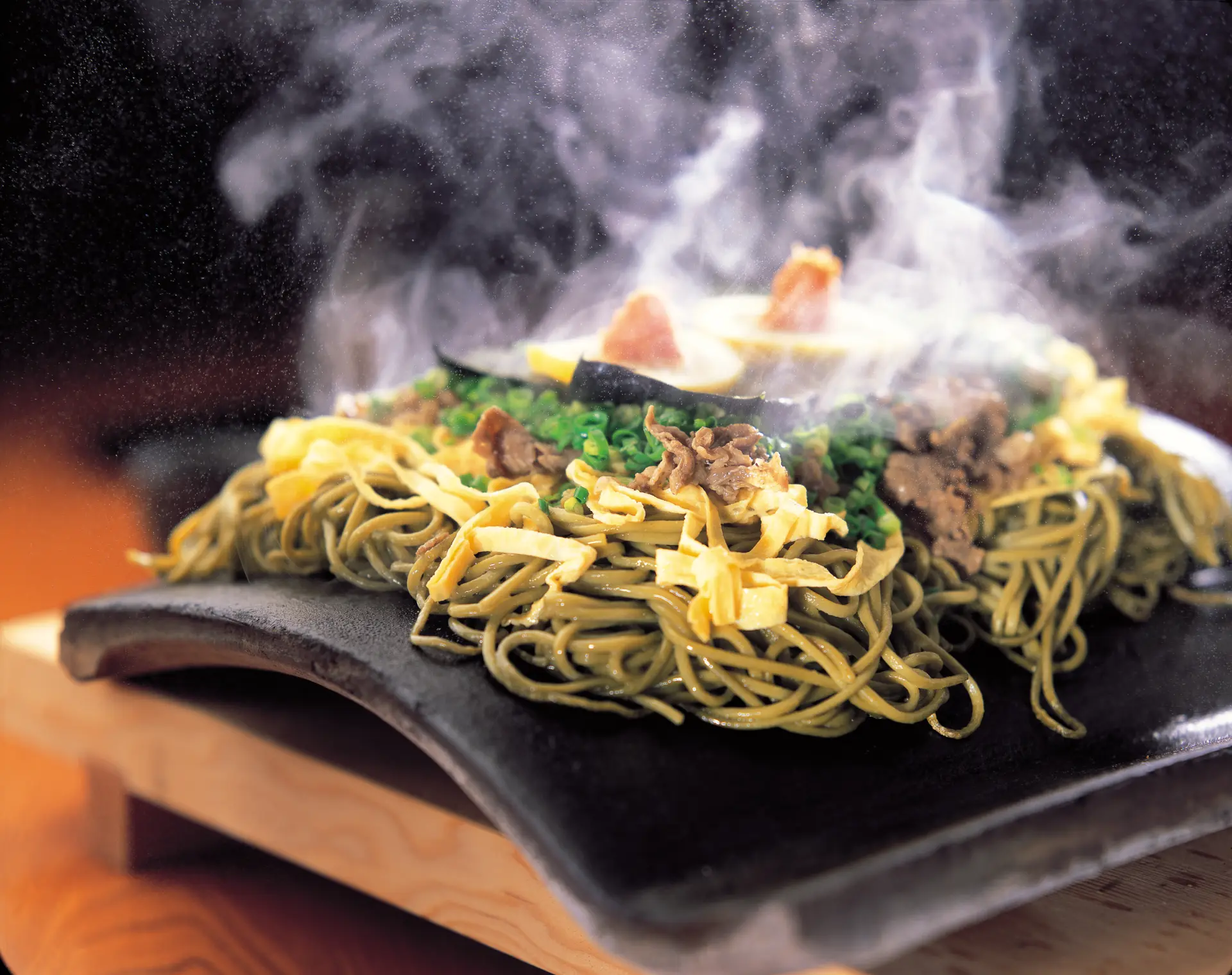
1. Ganso Kawara Soba Takase Kawatana Main Branch
A long-established restaurant known as the birthplace of kawara soba, a local dish of Yamaguchi Prefecture.
Kawara soba is soba topped with green tea noodles, beef, shredded egg, and more, served on a heated roof tile.
Inspired by a story that soldiers ate wild plants and meat cooked on roof tiles during breaks in the Seinan War, the dish came to be served at Takase and eventually became established as one of Yamaguchi’s local specialties.
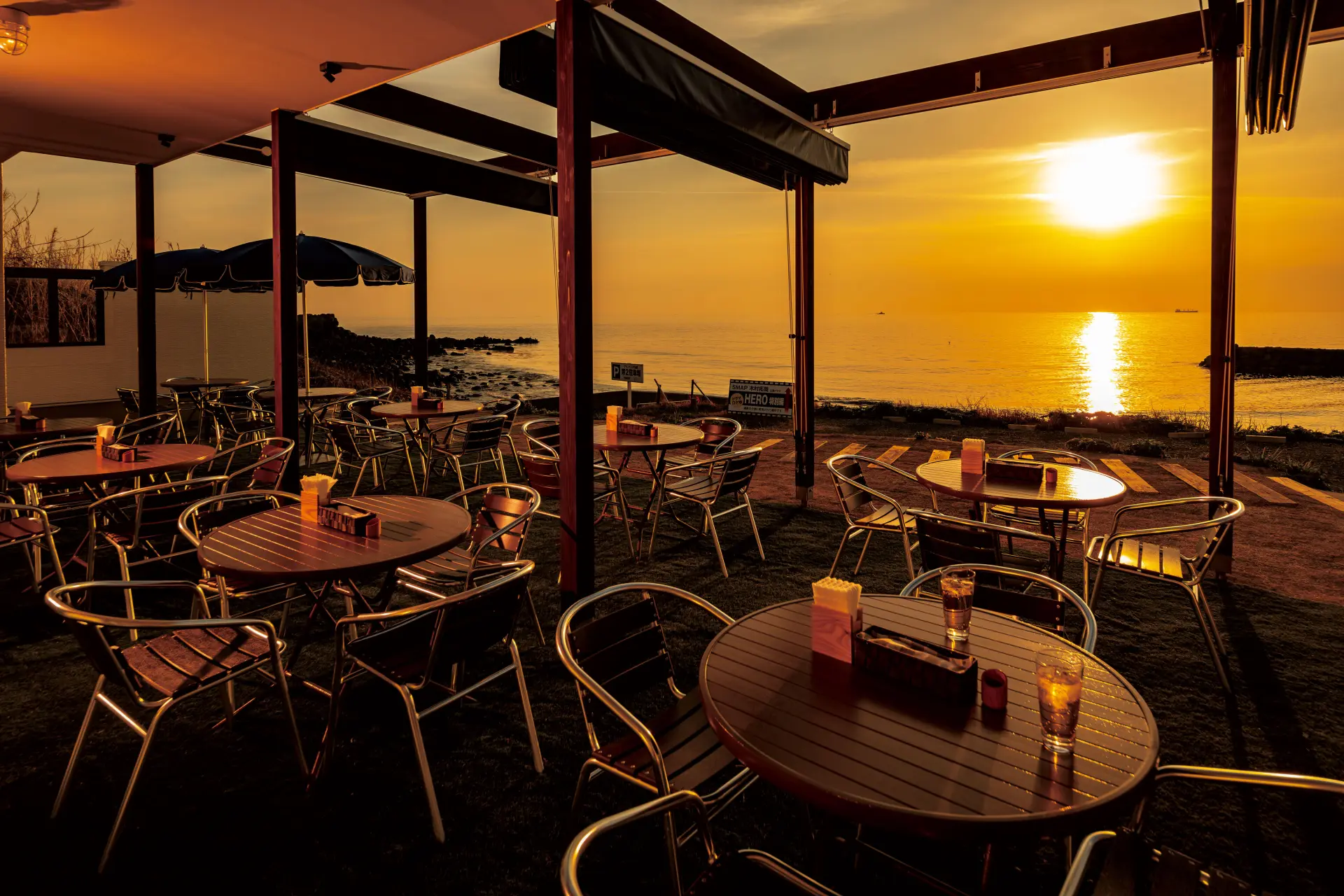
2. Granvista Tsunoshima
A restaurant near the historic Tsunoshima Lighthouse, which is designated as an Important Cultural Property of Japan, where you can enjoy a meal while looking out over spectacular sea views. It is especially well known for the beautiful sunset seen from its terrace seating.
The menu is wide-ranging, including Yamaguchi specialty kawara soba, seafood steamed with sake in cans known as gangan-yaki, seafood rice bowls, and Western dishes such as crab pasta and abalone risotto.
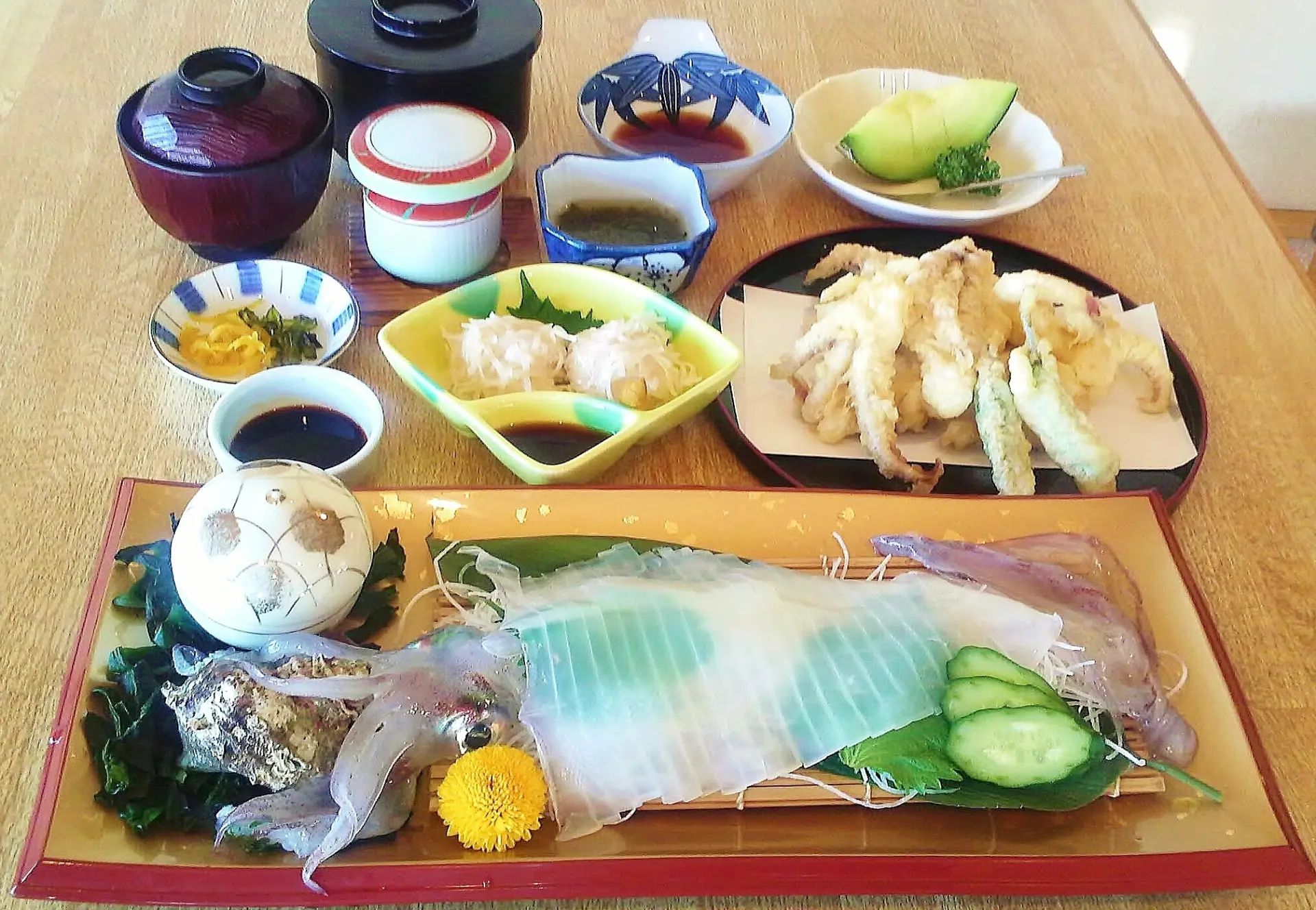
3. Washokudokoro Yumemisaki
Tsunoshima, located in the northwestern part of Shimonoseki City, Yamaguchi Prefecture, is crowded with visitors enjoying fishing, swimming, and camping.
Washokudokoro Yumemisaki is a place where you can enjoy gourmet dishes unique to an island surrounded by the sea on all sides.
A wide variety of rice bowls is available, including fugu, salmon & ikura, fresh sea urchin, and abalone, with yellowtail and hiramasa also appearing seasonally.
Enjoy Great Food and Souvenir Shopping! 2 Classic Shopping Spots in Shimonoseki
Shimonoseki is home to one of Yamaguchi Prefecture’s largest large-scale shopping complexes, with a huge number of stores and products.
It also has shopping spots that are perfect for choosing souvenirs such as local specialties.
The places introduced below also include restaurants, so you can enjoy not only shopping but also great food.
1. Sea Mall Shimonoseki
Sea Mall Shimonoseki, located in Shimonoseki City, is one of Yamaguchi Prefecture’s largest large-scale shopping complexes, made up of a department store, a specialty store area, and a variety of facilities.
The main feature of the complex is Daimaru Shimonoseki, a department store with 7 above-ground floors and 1 basement floor. In addition, you can enjoy shopping in the specialty store area with around 130 shops and at the supermarket.

2. Kamon Wharf
Kamon Wharf, in the Karato area of Shimonoseki Port, opened in 2002. This seaside mall is lined with restaurants serving Shimonoseki specialties such as fugu dishes, sushi, and seafood rice bowls made with seafood landed in the Kanmon area, as well as shops selling local specialties and souvenirs.
The fugu statue in front of Kamon Wharf has a hidden heart mark in its body pattern, making it a popular photo spot.

FAQ about Sightseeing in Shimonoseki
Q
Where should I go to enjoy Shimonoseki in a short amount of time?
The area around Shimonoseki Station is recommended, as it is easy to access and has a concentration of spots such as Kaikyo Yume Tower and Sea Mall Shimonoseki.
Q
How can I get from Shimonoseki to Kitakyushu, and how long does it take?
Moji Port in Kitakyushu is Approx. 30 minutes by train. Kokura is around 15 minutes by train.
Summary
This article has introduced the charms of Shimonoseki and some of its most popular sightseeing spots.
Be sure to enjoy its beautiful natural scenery, rich history and culture, and delicious food, especially its seafood.
After enjoying Shimonoseki, use the article below as a reference and explore other sightseeing areas in Yamaguchi Prefecture as well.
There are many destinations with charms different from those of Shimonoseki, and they are sure to make your trip even more memorable.