Savor Hiroshima-Style Okonomiyaki! A 2-Day, 1-Night Model Itinerary Exploring History and Food Culture
Hiroshima-style okonomiyaki is one of Hiroshima’s most iconic soul foods.
Deeply connected to the city’s postwar recovery, local culture, and everyday life, it offers a flavor unique to Hiroshima.
This model itinerary includes an okonomiyaki-making experience, visits to facilities where you can learn about the dish’s history, and stops at iconic Hiroshima attractions such as Hiroshima Peace Memorial Park and museums.
Set out on a fulfilling 2-day, 1-night journey that traces Hiroshima’s history and recovery through its food culture before ending the evening in a style that suits you.
The Appeal of Hiroshima-Style Okonomiyaki Rooted in Layered Cooking and Sauce Culture
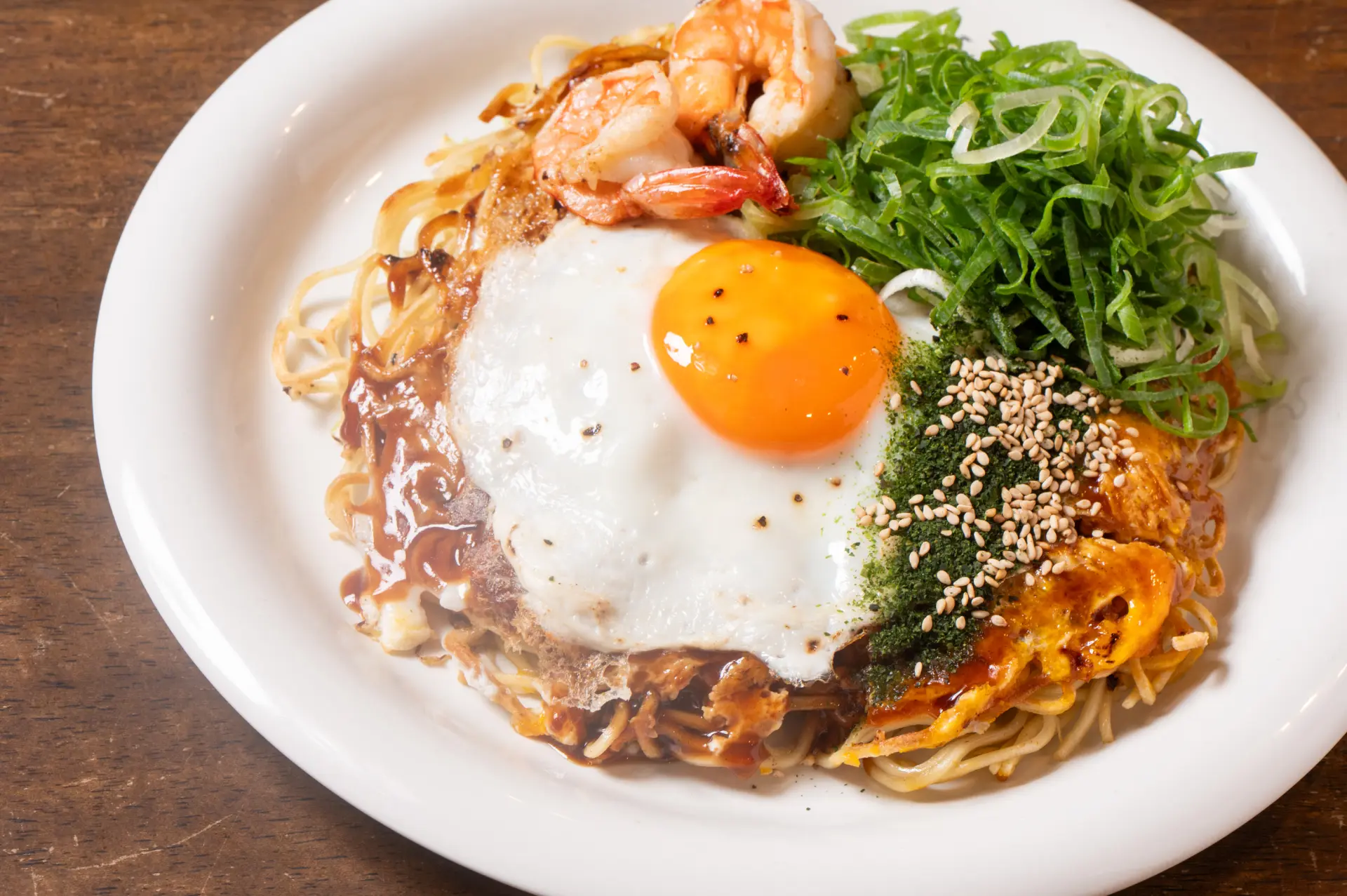
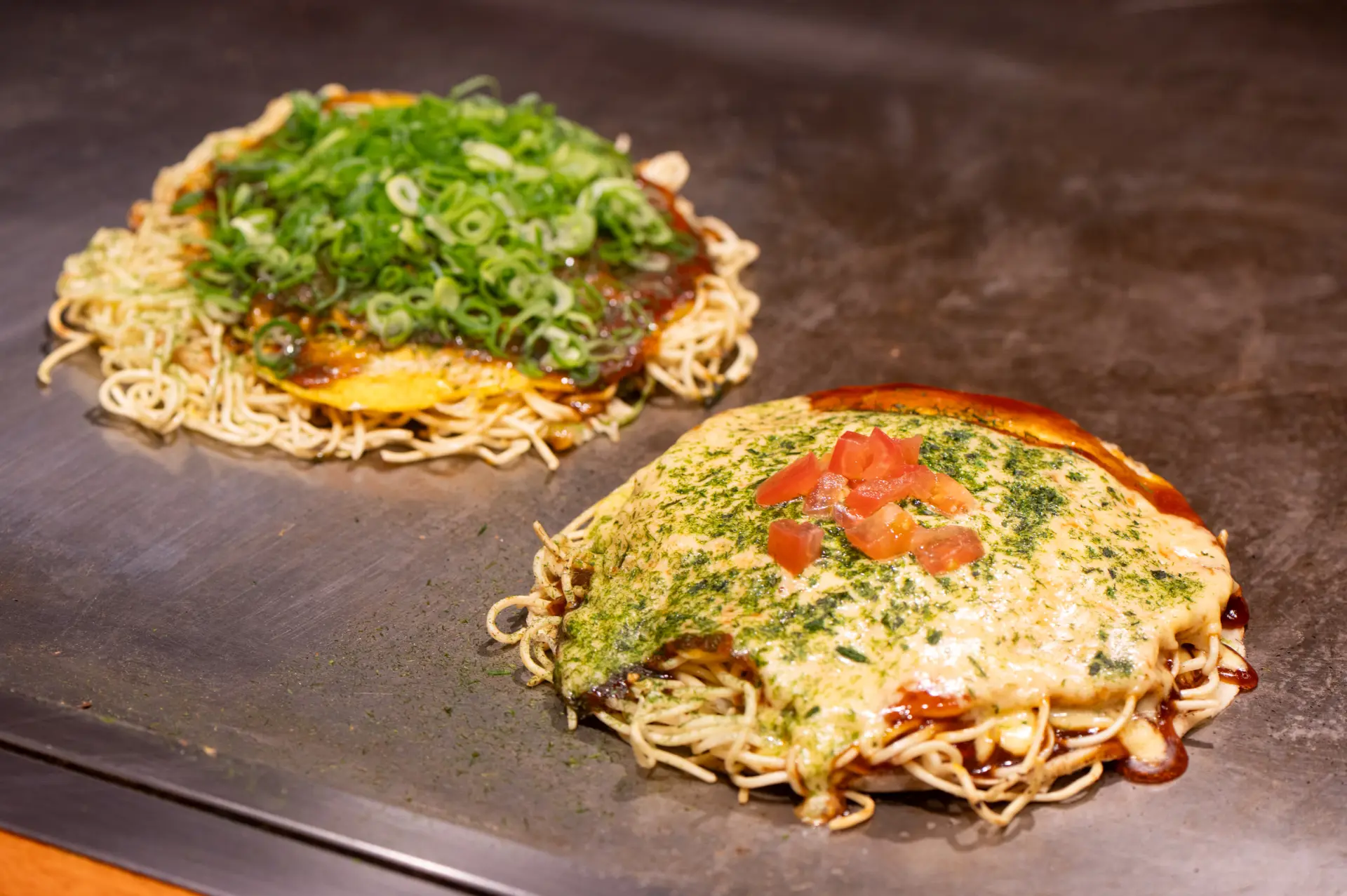
Hiroshima-style okonomiyaki is prepared using a layered cooking style, with the ingredients placed on top of the cooked batter rather than mixed into it.
The batter is spread thinly over a teppan (iron griddle), then topped with layers of cabbage, tempura bits, green onions, bean sprouts, pork, egg, and other ingredients before the entire stack is flipped and cooked.
One of its defining features is the addition of noodles.
Because the ingredients are not mixed together as they are in Kansai-style okonomiyaki, the sweetness of the cabbage and the natural flavors of the other ingredients remain distinct.
Many restaurants offer a choice of soba or udon noodles, and eating the okonomiyaki directly from the teppan with a spatula is another experience unique to Hiroshima.
This style of okonomiyaki spread mainly through street stalls after World War II and became firmly rooted in the community as an everyday meal made with readily available ingredients.
It pairs perfectly with a sweet, rich sauce, making it easy to understand why many locals have their own favorite restaurant.
Hiroshima-style okonomiyaki is an authentic soul food that has developed alongside the city’s history and the lives of its people.
A 2-Day, 1-Night Model Itinerary for Experiencing Hiroshima and Its Okonomiyaki Culture
Here is a special 2-day, 1-night model itinerary for exploring Hiroshima while experiencing its okonomiyaki culture.
Combining food, history, and hands-on experiences is sure to leave you with richer, more vivid memories of the journey.
Day 1: Experience Peace and Food Culture in Hiroshima City
The first day offers a chance to discover the appeal of Hiroshima-style okonomiyaki while learning about Hiroshima’s recovery and culture.
Visit Hiroshima Peace Memorial Park, take part in an okonomiyaki-making experience, and explore a garden and museum as you discover the history and rich culture unique to Hiroshima.
8:30 am|Learn about Hiroshima’s Recovery at Hiroshima Peace Memorial Park and Hiroshima Peace Memorial Museum
Begin your journey at places that will help you understand the city of Hiroshima.
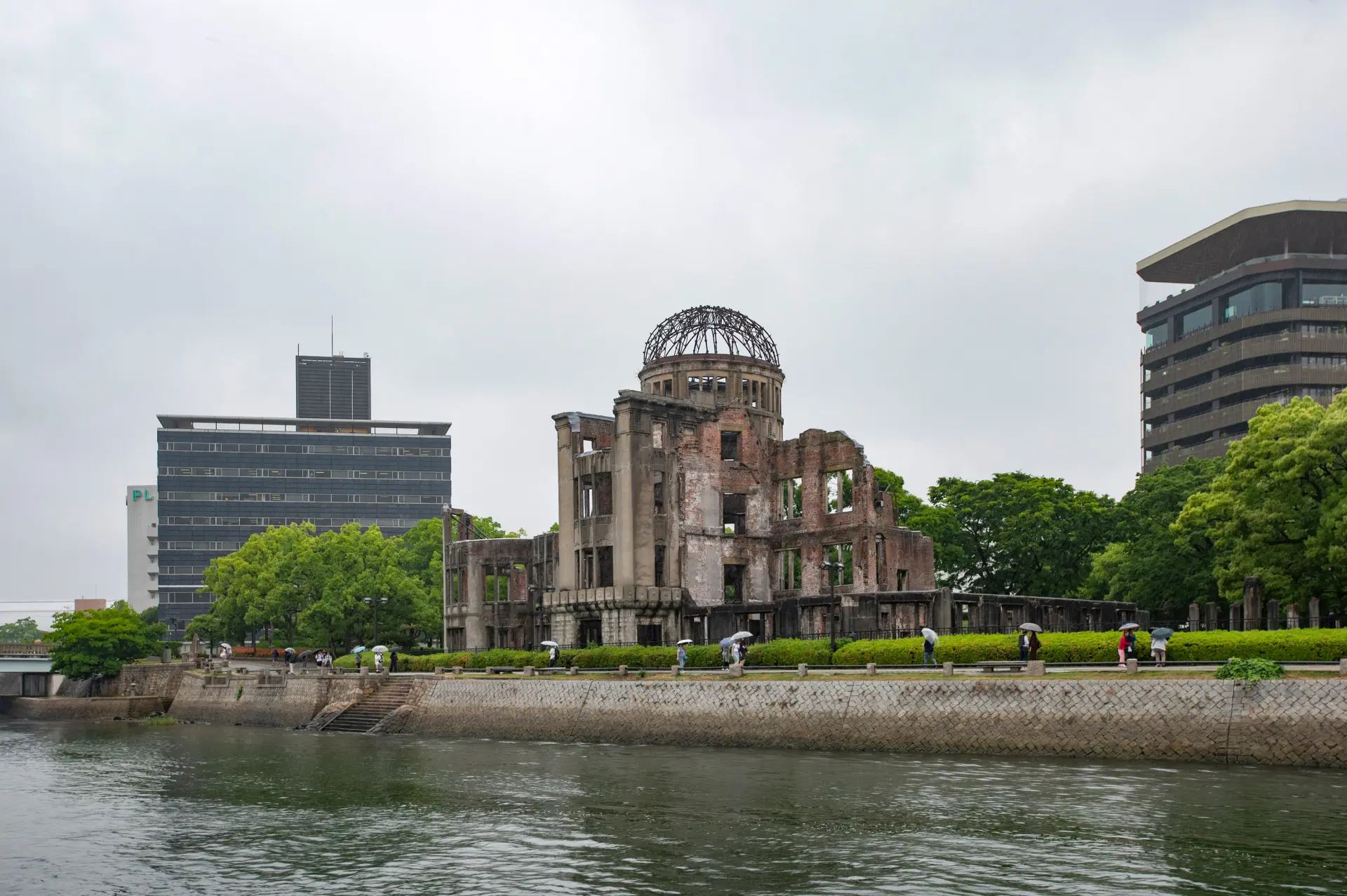
Hiroshima Peace Memorial Park was created to commemorate the victims of the atomic bombing and pray for lasting world peace.
Standing here, you can quietly yet unmistakably sense the history Hiroshima has lived through on its journey to the present day.
Hiroshima-style okonomiyaki is, in fact, inseparable from the history of the city.
Its roots lie in issen-yoshoku, a simple savory pancake made by cooking a thin layer of flour-and-water batter and topping it with green onions and shaved fish flakes.
Before the war, it was enjoyed as a snack for children, but during the postwar food shortages, flour supplied by the United States helped it spread as an affordable meal that ordinary people could eat to stave off hunger.
Street stalls eventually appeared, pork and noodles were added, and the dish evolved into the okonomiyaki enjoyed today.
Hiroshima-style okonomiyaki is also a taste of recovery that helped people regain a sense of everyday life amid the despair of the postwar period.
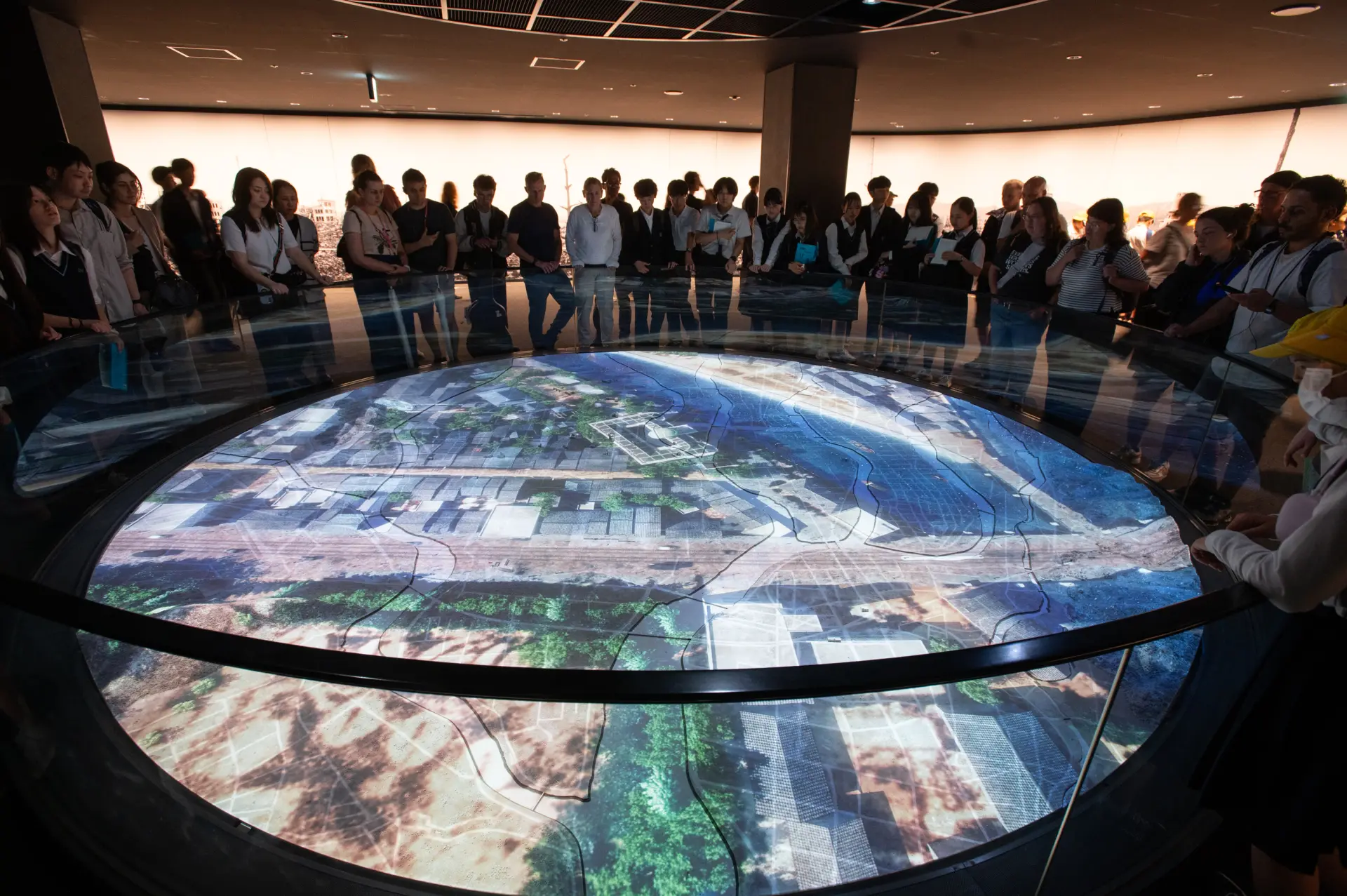
Hiroshima Peace Memorial Museum provides multilingual audio guides, so take time to experience Hiroshima’s history in depth before moving on.
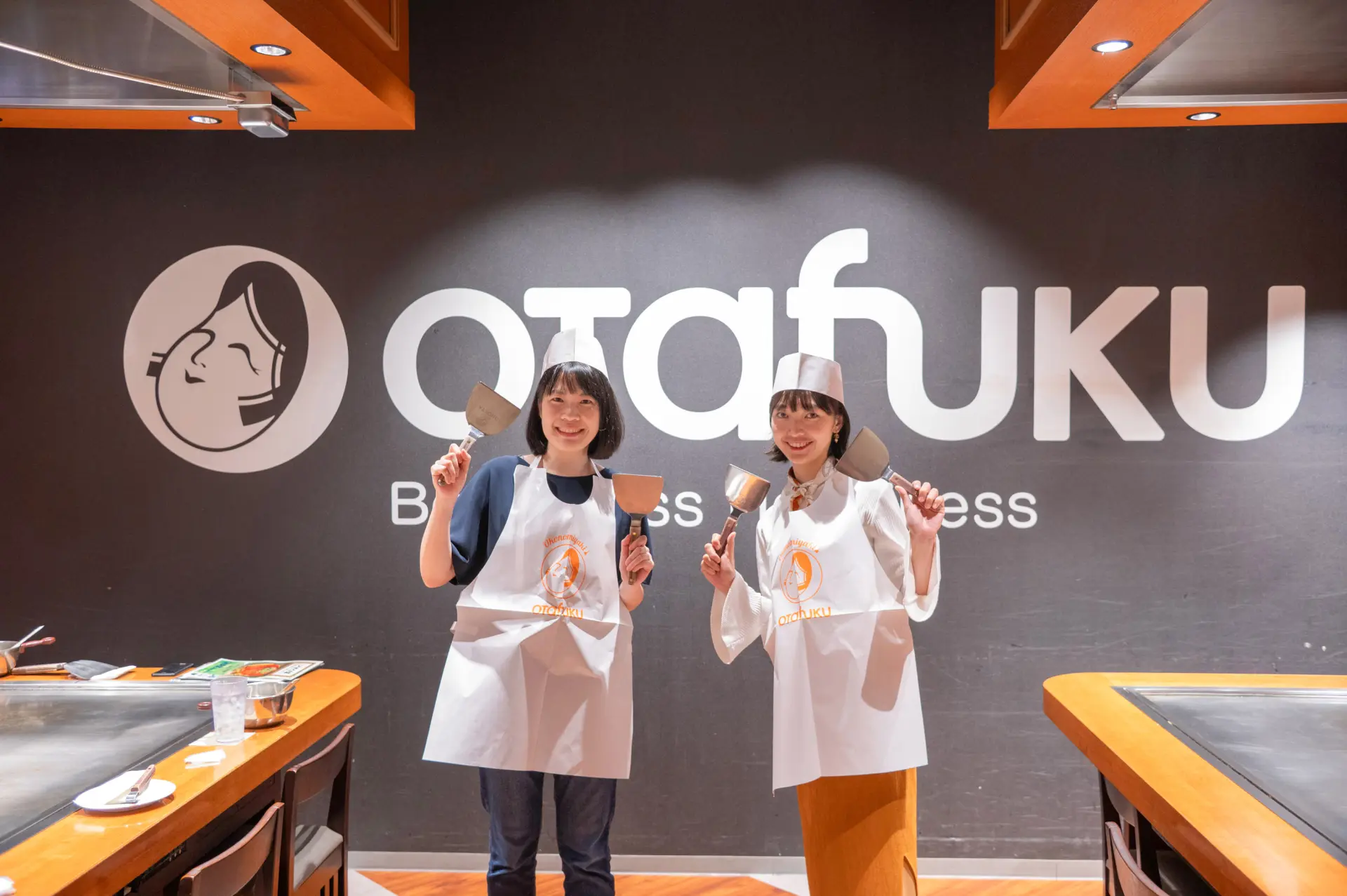
10:30 am|Make Hiroshima-Style Okonomiyaki at OKOSTA
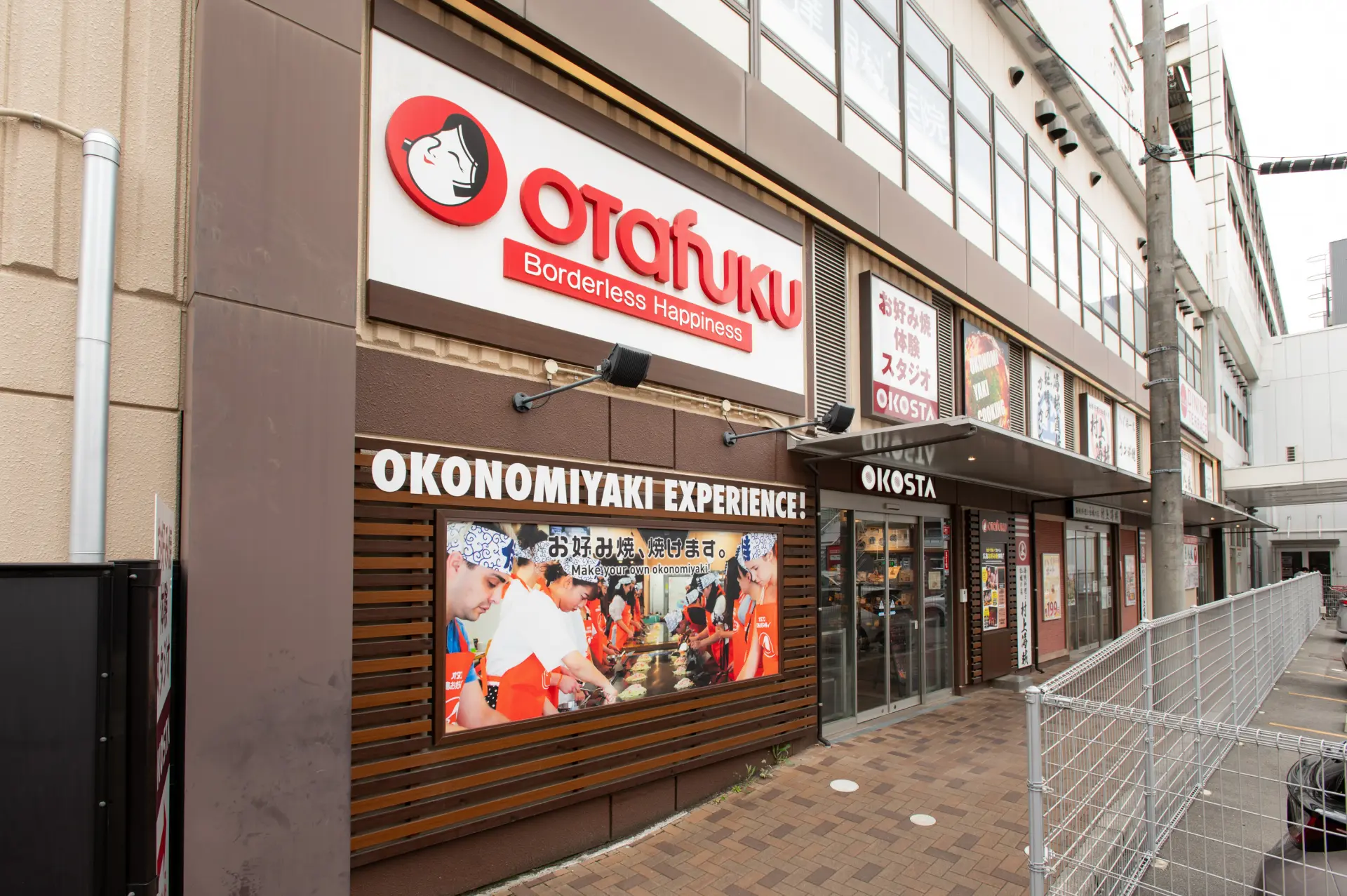
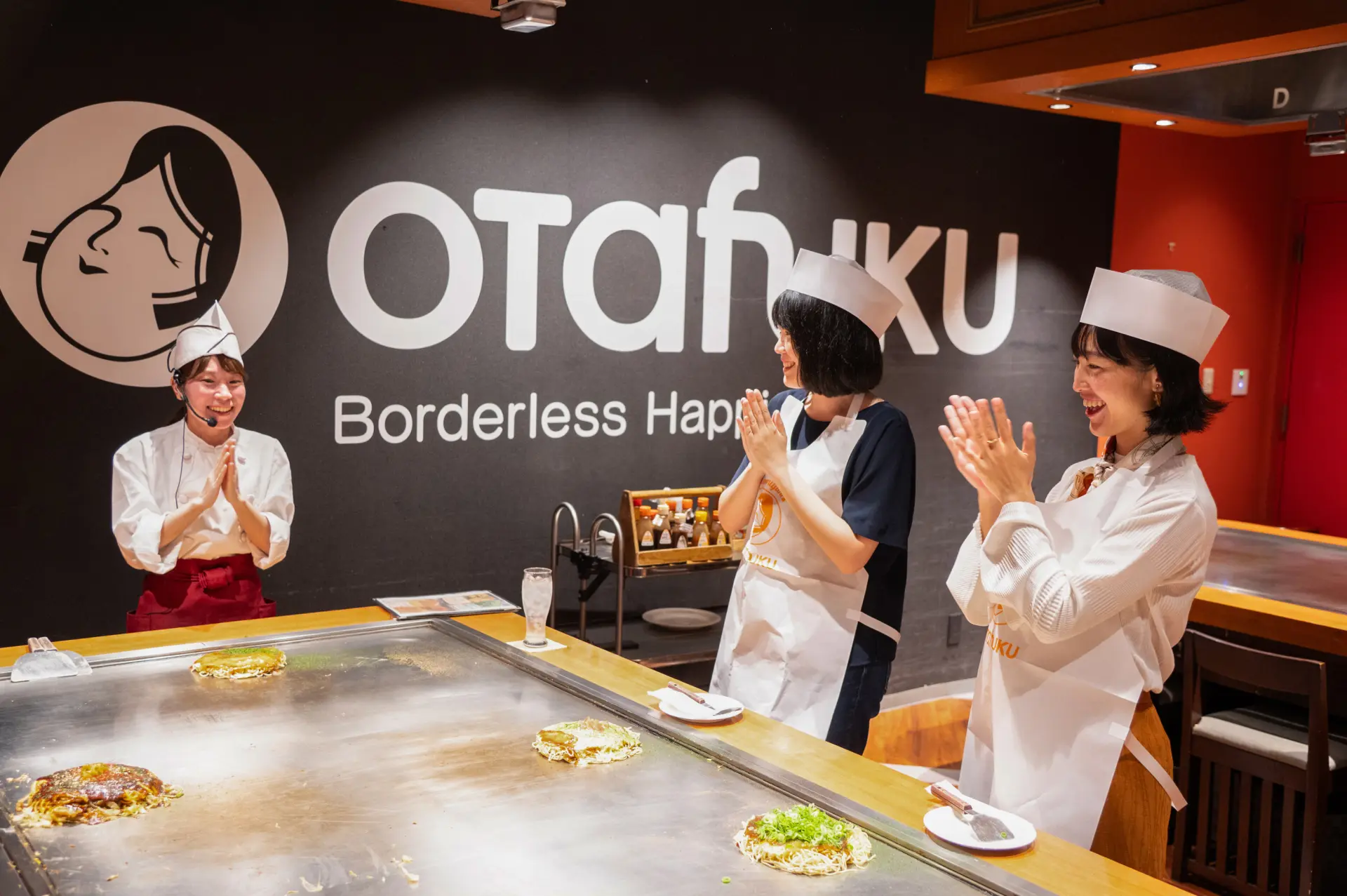
Your next destination is OKOSTA, a Hiroshima-style okonomiyaki experience studio operated by Otafuku Sauce Co., Ltd.
When visiting Hiroshima, be sure not only to eat Hiroshima-style okonomiyaki but also to try making it yourself.
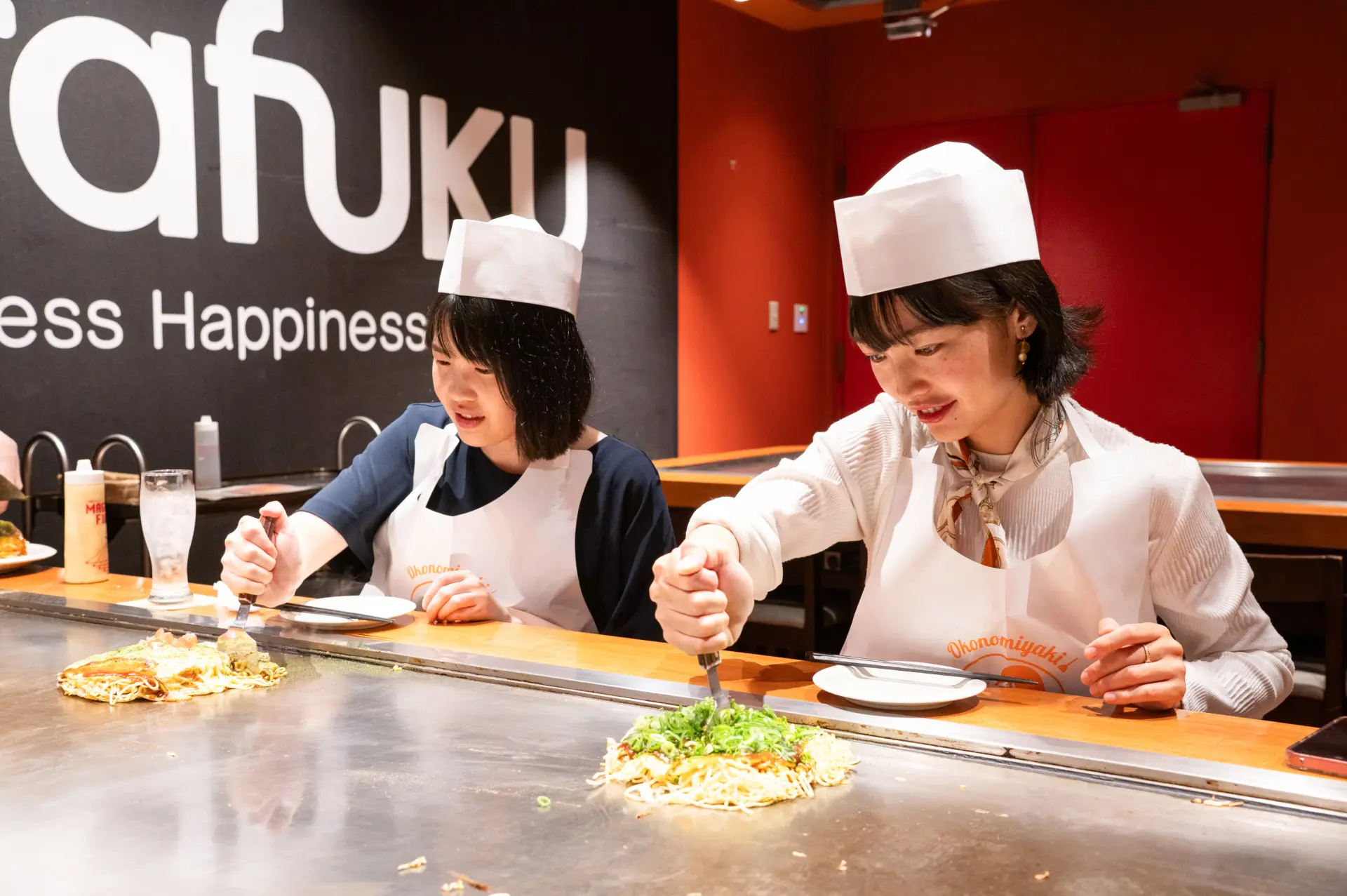
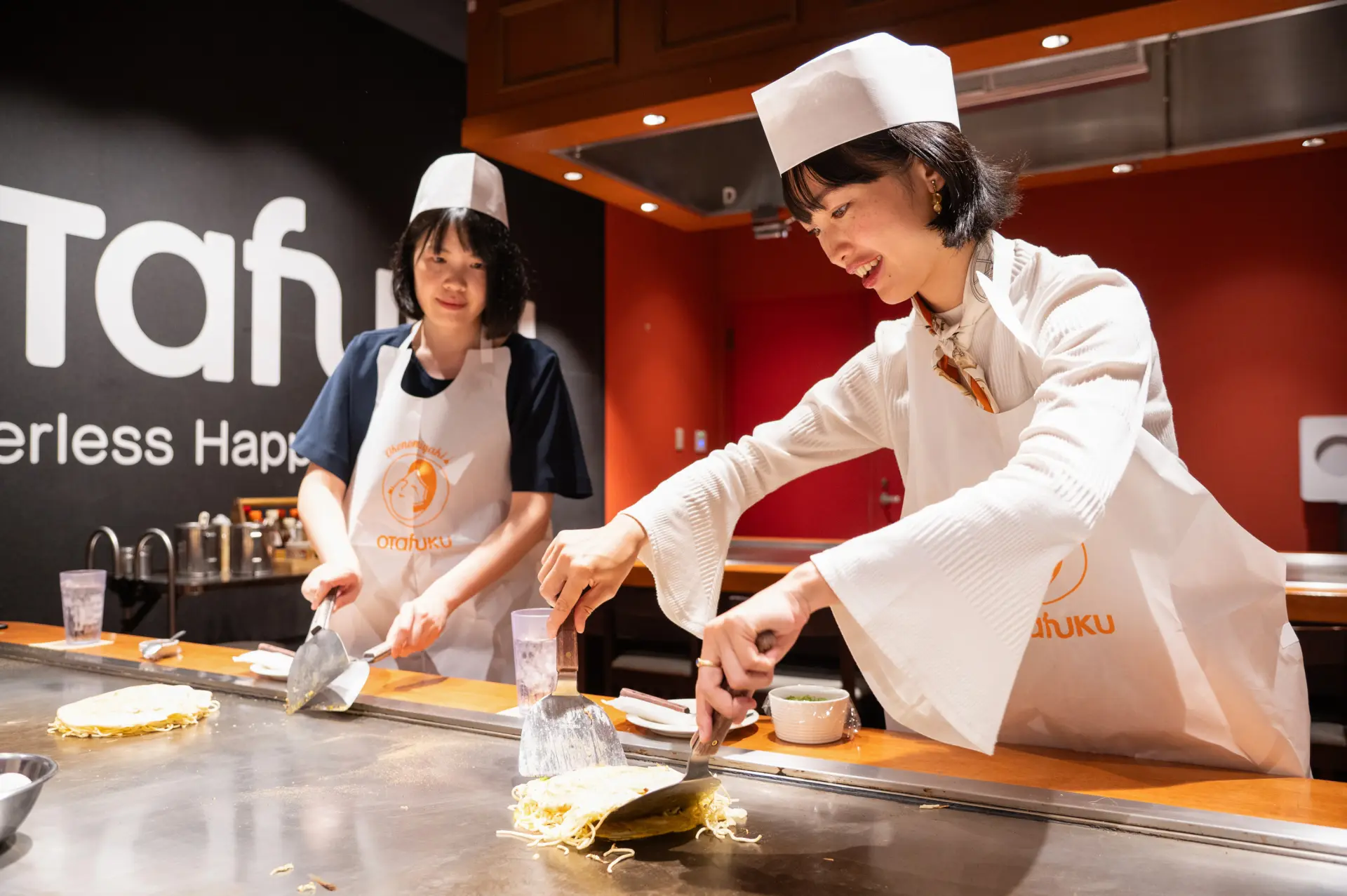
Standing in front of an authentic teppan, each participant prepares one okonomiyaki with guidance from professional staff.
You will learn professional techniques throughout the experience, including how to use the high- and low-heat areas of the teppan and how to cook cabbage to bring out its sweetness.
For the finishing touch, choose your favorite from around 10 varieties of okonomi sauce, including regional exclusives.
Hiroshima-style okonomiyaki that you have cooked yourself offers a special kind of satisfaction different from eating it at a restaurant.
The experience lasts approximately 90 minutes and is held three times a day, at 10:30 am, 1:00 pm, and 6:30 pm.
In addition to standard Hiroshima-style okonomiyaki, vegetarian, Muslim-friendly, and gluten-free menus are available to accommodate a wide range of needs.
Advance reservations are required, so remember to book through the official website before visiting.
Basic Information on OKOSTA at Hiroshima Station
- Japanese Name
- 広島駅 OKOSTA
- Address
- 1-2 Matsubara-cho, Minami-ku, Hiroshima City, Hiroshima
- Business hours
- 10:00 am - 8:30 pm
- Closed
- Open daily
- Access
- Approximately two minutes on foot from the North Exit of JR Hiroshima Station
- Official Website
- Official Website (English)
12:30 pm|Experience Hiroshima’s Enduring Culture of Hospitality at Shukkeien Garden
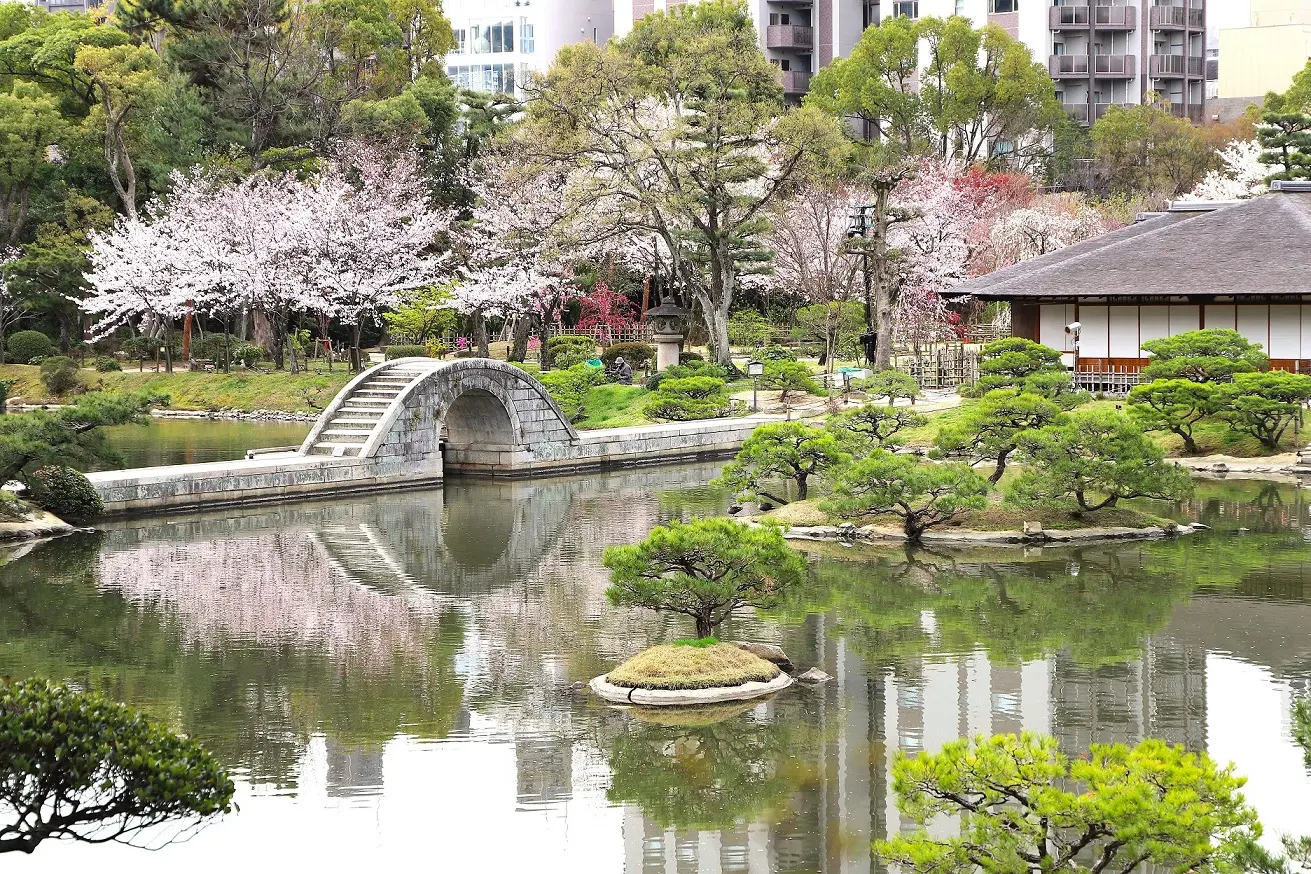
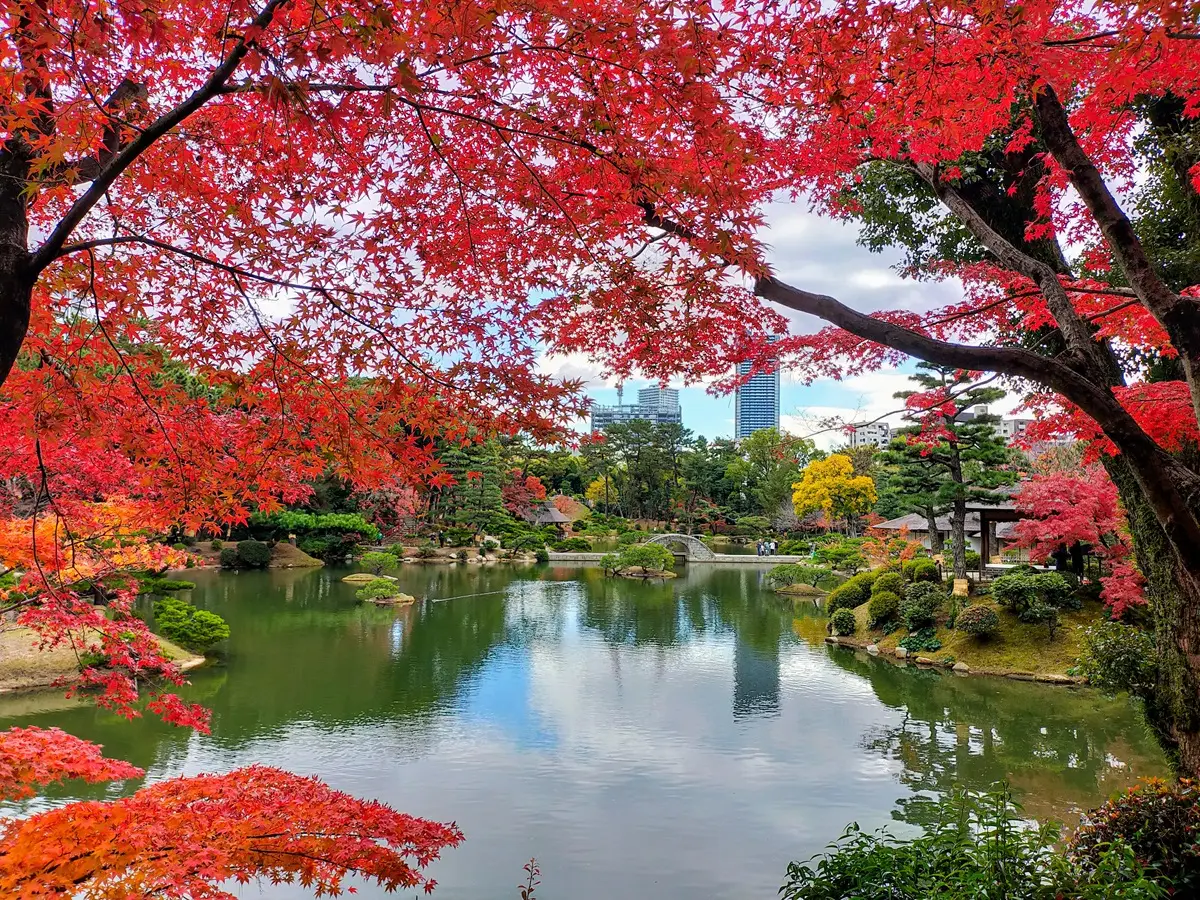
In the afternoon, head to Shukkeien Garden, a Japanese garden in the heart of the city.
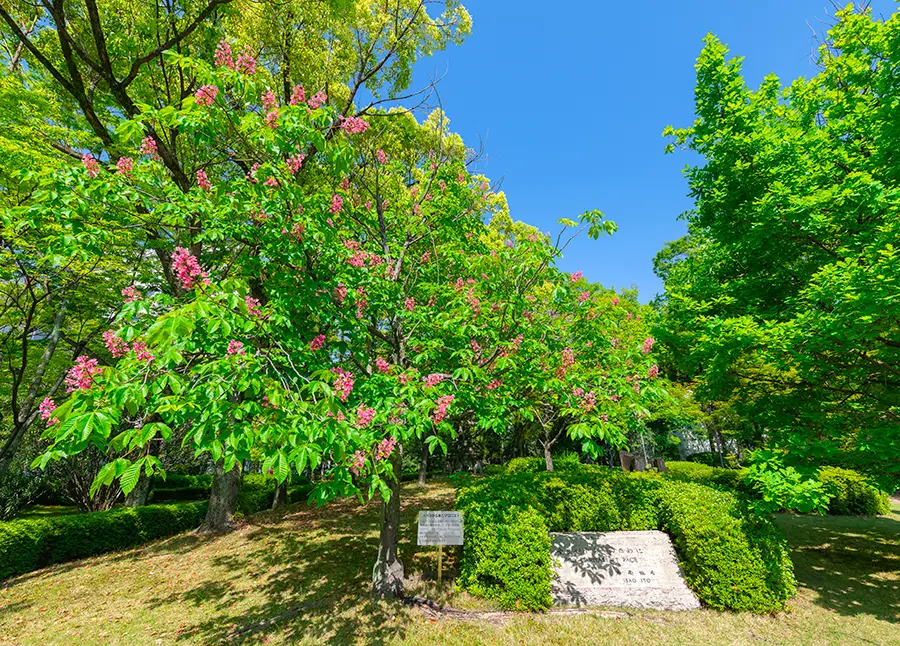
Dating back to the Edo period (1603-1868), Shukkeien Garden is an essential place for understanding Hiroshima’s history.
Created in 1620 as the garden of a villa belonging to the lord of the Hiroshima Domain, it is a strolling garden designed around a pond, with beautifully arranged bridges, teahouses, and greenery.
It is also a cherished place of relaxation for Hiroshima residents, offering seasonal scenery throughout the year.
Most of the garden was destroyed by the atomic bombing, but its buildings and trees were restored over a period of approximately 30 years.
Revived alongside Hiroshima’s postwar recovery, Shukkeien Garden has quietly watched over the city’s journey.
That spirit lives on in Hiroshima’s food, cityscape, and gardens, and can still be felt today in the city’s culture of hospitality, which warmly welcomes visitors.
2:00 pm|Explore Hiroshima’s Cultural Side at the Hiroshima Museum of Art
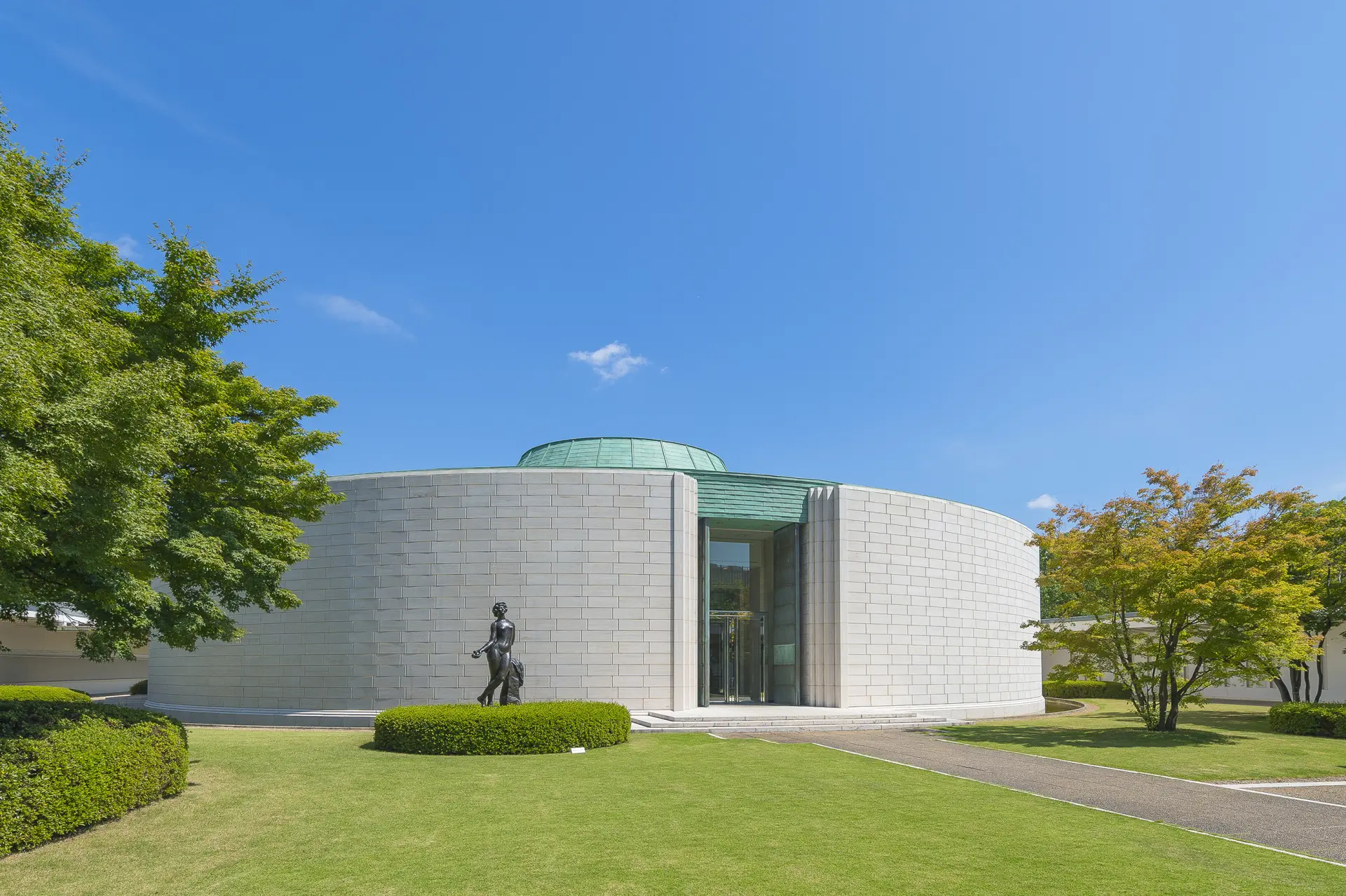
The next destination is the Hiroshima Museum of Art.
Located within walking distance of Hiroshima Peace Memorial Park and Hiroshima Castle, the museum was established as a project commemorating the 100th anniversary of Hiroshima Bank under the theme “For Love and Peace.”
Its collection includes modern French art, particularly Impressionist works by artists such as Monet, Renoir, and Van Gogh, as well as Western-style Japanese paintings and traditional Japanese paintings, with approximately 80 works from the collection on permanent display.
A variety of special exhibitions are also held several times a year.
Hiroshima has cultivated not only a rich food culture but also a vibrant arts scene.
There is profound significance in the presence of world-renowned masterpieces in Hiroshima, a city dedicated to peace.
Through these paintings, experience the present-day character of a city that has supported cultural development throughout its postwar recovery.
Basic Information on Hiroshima Museum of Art
- Japanese Name
- ひろしま美術館
- Address
- Inside Chuo Park, 3-2 Motomachi, Naka-ku, Hiroshima City, Hiroshima
- Business hours
- 9:00 am - 5:00 pm (Last admission: 4:30 pm)
- Closed
- Mondays (or the following weekday if Monday is a public holiday; closed during special exhibition periods), the year-end and New Year holidays, and exhibition changeover periods
- Access
- Approximately five minutes on foot from Kamiyacho-higashi tram stop
- Admission
- Varies by exhibition
- Official Website
- Official Website (English)
5:00 pm|Enjoy a Distinctive Okonomiyaki Dinner at Okonomiyaki Alley “/5 GOBUNNO”
Okonomiyaki spread as part of Hiroshima’s street-stall culture during the city’s postwar recovery, and today there are approximately 1,300 okonomiyaki restaurants throughout the prefecture.
After checking in to a hotel near Hiroshima Station, head out for an early dinner.
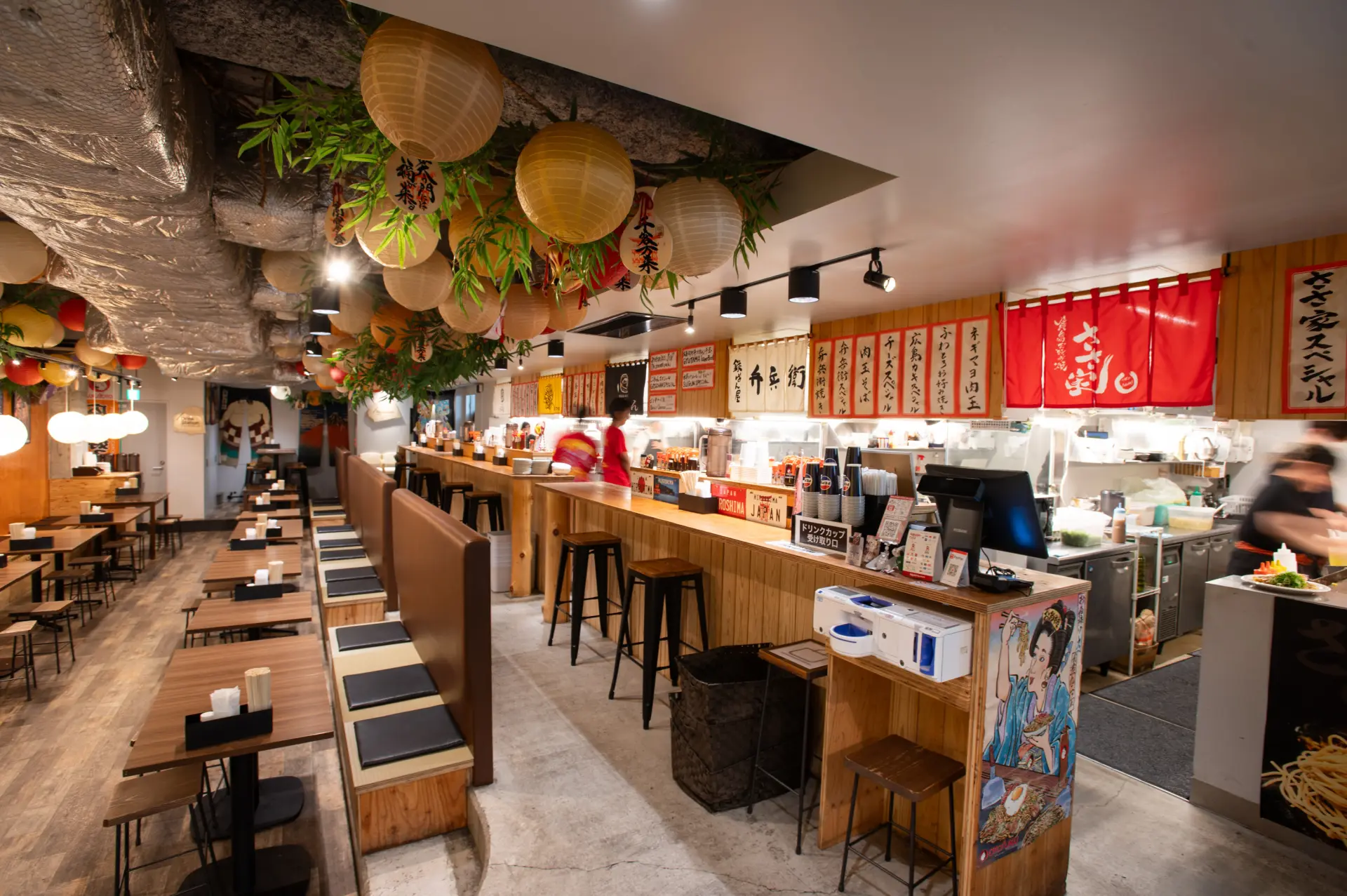
End your first day in Hiroshima by comparing okonomiyaki from five distinctive restaurants located in Okonomiyaki Alley “/5 GOBUNNO.”
The wide selection includes versions made with local oysters, koune (a cut of beef shoulder), or udon noodles.
Gluten-free, vegan, vegetarian, and halal-friendly options are available, along with smaller portions that are easy to finish, making the venue welcoming to visitors with a wide range of needs.
Reservations are not accepted, so allow plenty of time when visiting.
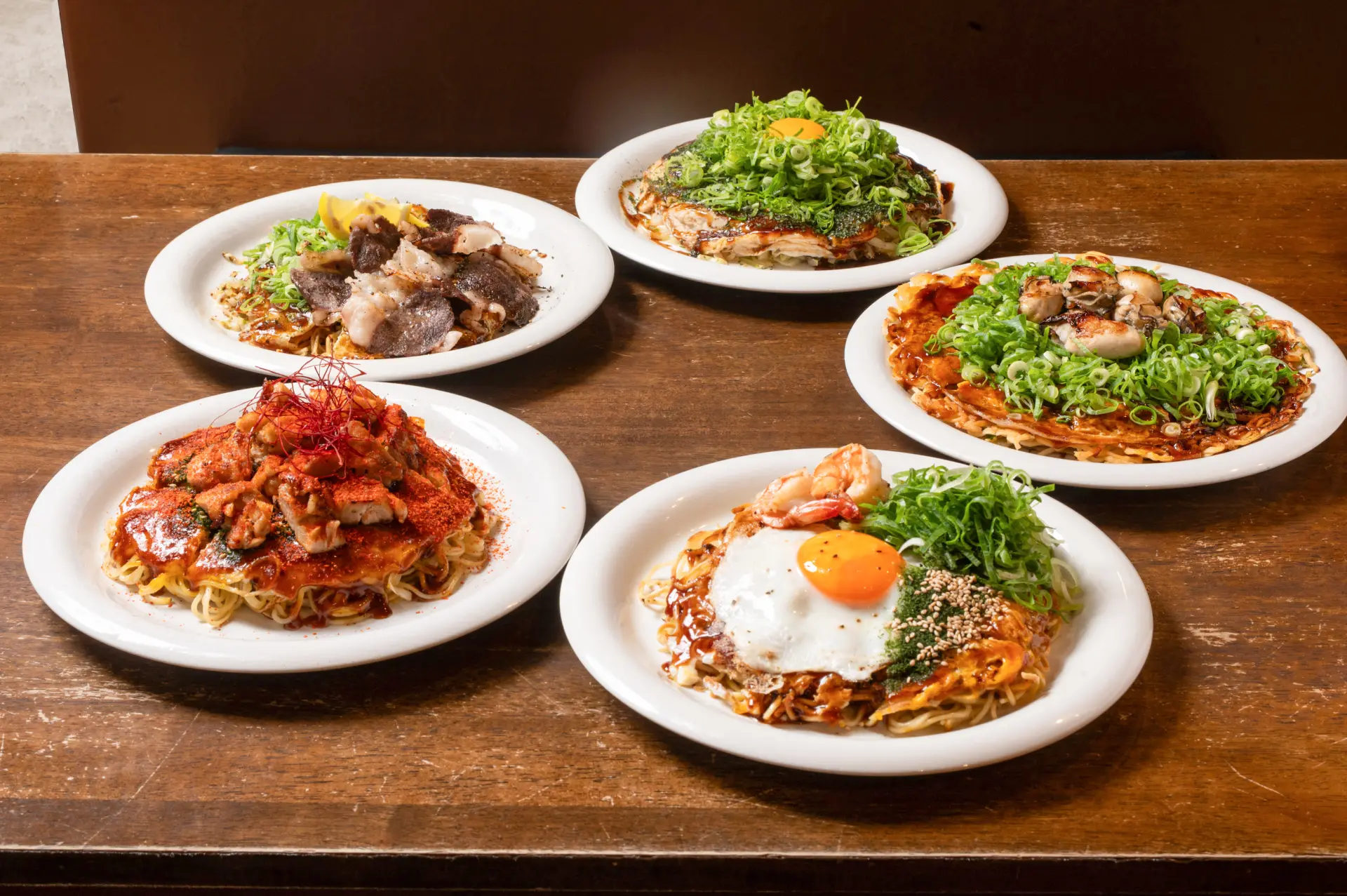
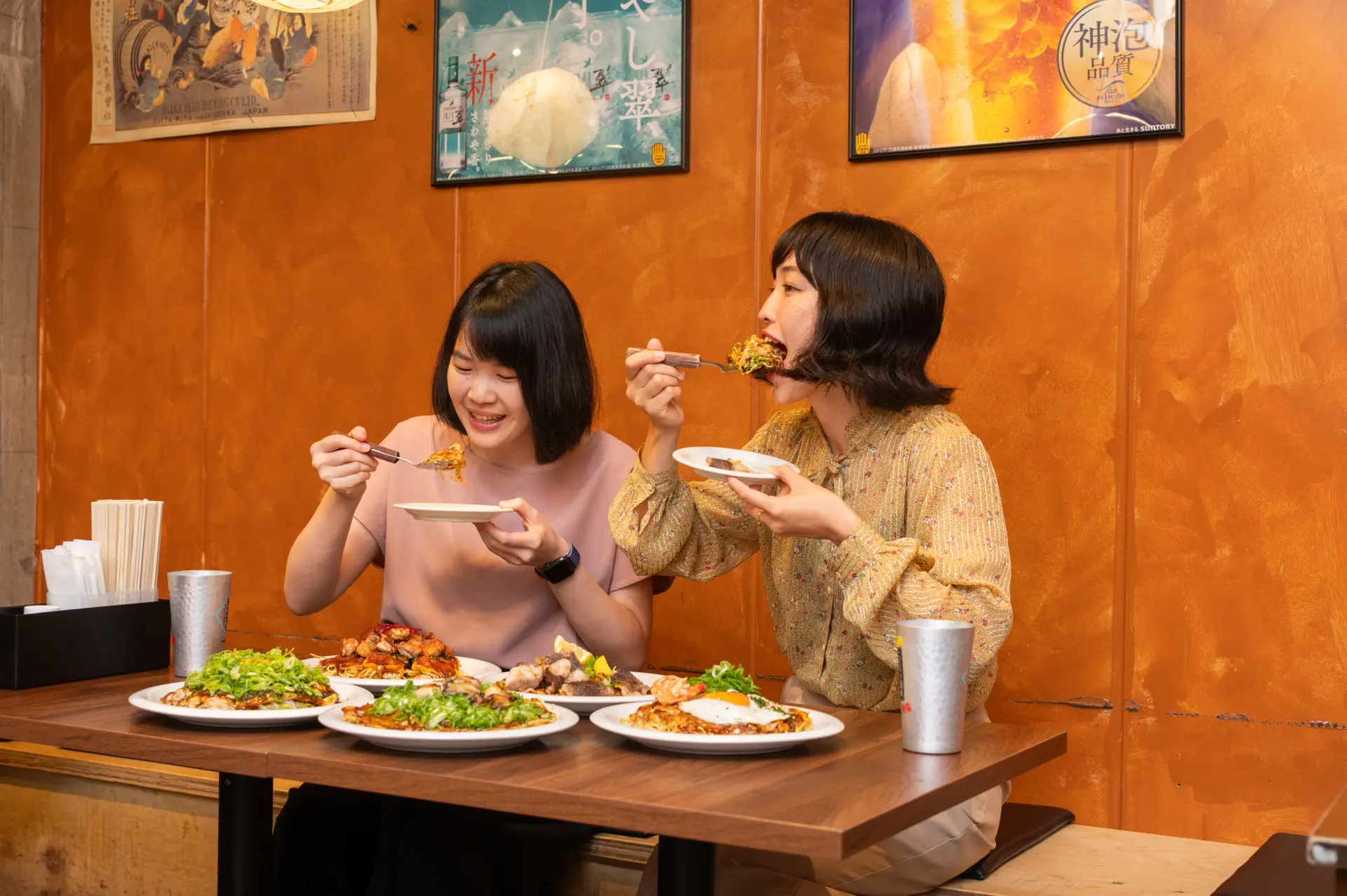
Starting from the back of the photo and moving clockwise are undo’s “KAMATAMA OKONOMIYAKI,” Teppanya Benbei’s “Hiroshima Oyster Special,” Sasaya’s “Sasaya Special,” Minato Shoten’s “Spicy Chicken Special,” and Gotchan’s “Beef Okonomiyaki with Hiroshima Specialty Koune.”
Enjoy the distinctive flavors of each restaurant while savoring Hiroshima’s famous local specialty, Hiroshima-style okonomiyaki.
Basic Information on Okonomiyaki Alley “/5 GOBUNNO”
- Japanese Name
- 広島お好み横丁「/5(ゴブンノ)」
- Address
- 1-7-21 Otemachi, Naka-ku, Hiroshima City, Hiroshima
- Business hours
- 11:00 am - 9:00 pm (Last order: 8:00 pm)
- Closed
- Open daily
- Access
- Approximately four minutes on foot from Kamiyacho-nishi tram stop on the Hiroshima Electric Railway
- Official Website
- Official Website (Japanese)
Day 2: Learn about Okonomiyaki Culture and Visit Miyajima, Home to a World Heritage Site
After deepening your understanding of okonomiyaki culture on the second day, travel to Miyajima, Hiroshima’s iconic World Heritage destination.
Take in spectacular scenery created by the sea and nature, wander through historic streets, and enjoy everything Hiroshima has to offer.
9:30 am|Learn the History of Hiroshima-Style Okonomiyaki at the Wood Egg Okonomiyaki Museum
Begin Day 2 at the Wood Egg Okonomiyaki Museum, a food culture museum operated by Otafuku Sauce Co., Ltd.
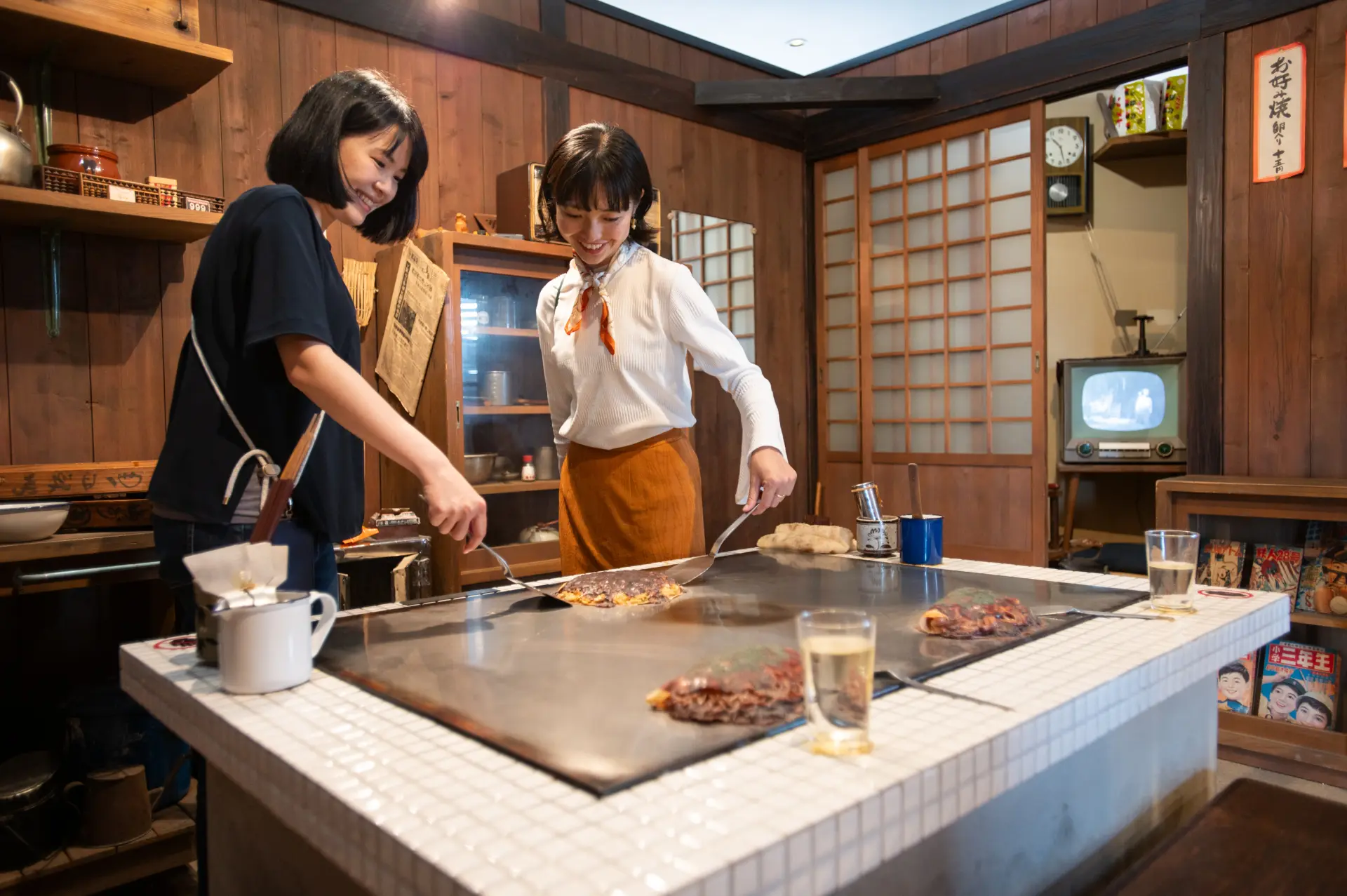
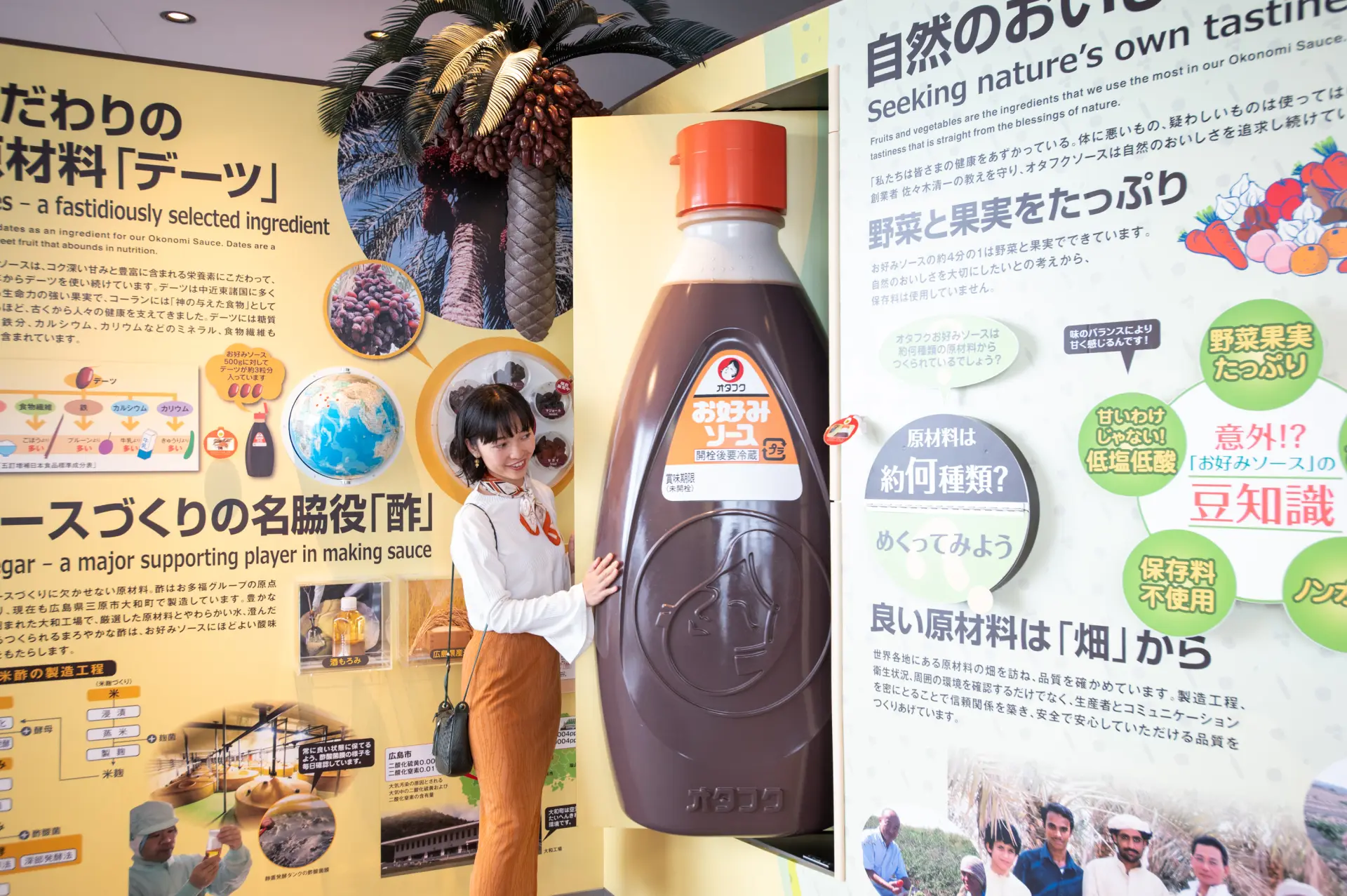
At the Okono Museum, which presents the history and culture of Hiroshima-style okonomiyaki and Otafuku Sauce, you can learn how this food culture originated and developed alongside the city of Hiroshima.
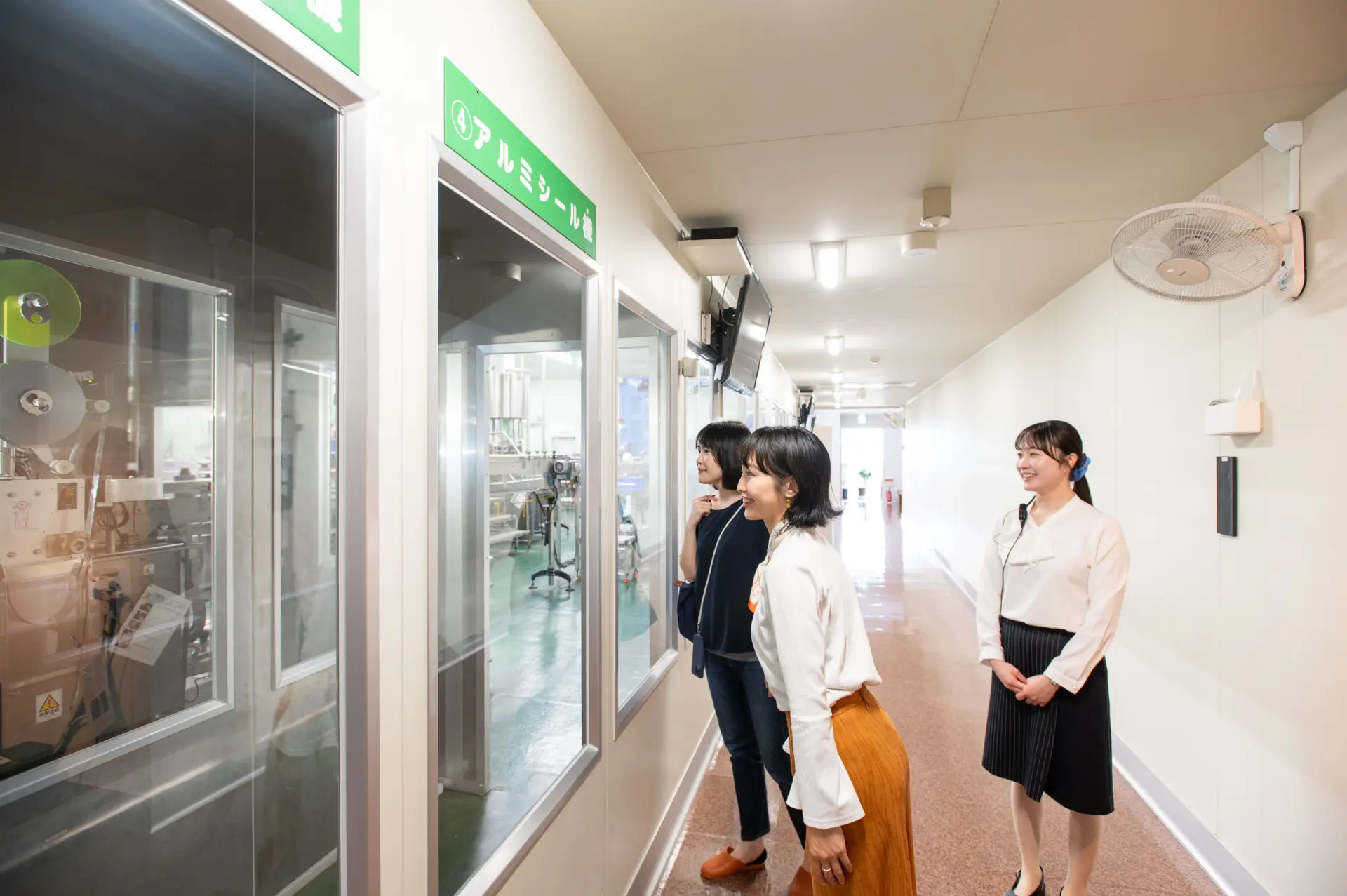
Do not miss the opportunity to observe the company’s meticulous sauce production process up close at the Otafuku Sauce Hiroshima Head Office Factory, located approximately five minutes away on foot.
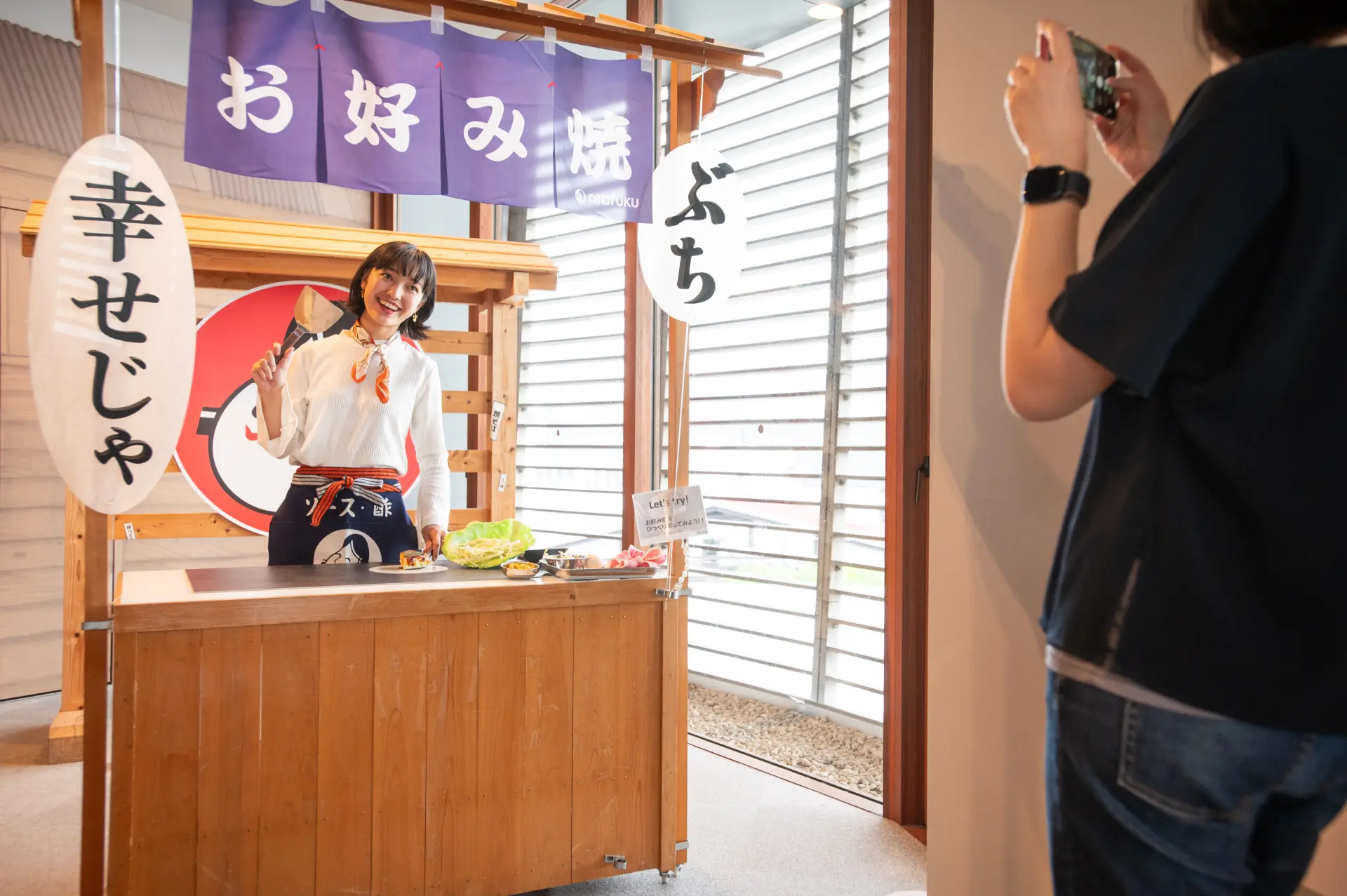
The museum also offers numerous photo spots that make visitors feel as though they have traveled back in time to Hiroshima during the Showa period.
The showroom, which is also popular with local residents, offers a wide range of Otafuku Sauce products, original merchandise, and exclusive items available only here, making it an ideal place to shop for souvenirs.
No reservation is required to explore the Okono Museum independently or enter the showroom.
Guided museum tours and factory tours require advance reservations, so check the official website before visiting.
Basic Information on Wood Egg Okonomiyaki Museum
- Japanese Name
- Wood Egg お好み焼館
- Address
- 7-4-5 Shoko Center, Nishi-ku, Hiroshima City, Hiroshima
- Business hours
- 9:00 am - 5:00 pm
- Closed
- Saturdays, Sundays, public holidays, the year-end and New Year holidays, Obon holidays, and October 1
- Access
- Approximately 50 minutes by Hiroshima Bus from JR Hiroshima Station, followed by approximately two minutes on foot from Shoko Center 7-chome bus stop
- Official Website
- Official Website (Japanese)
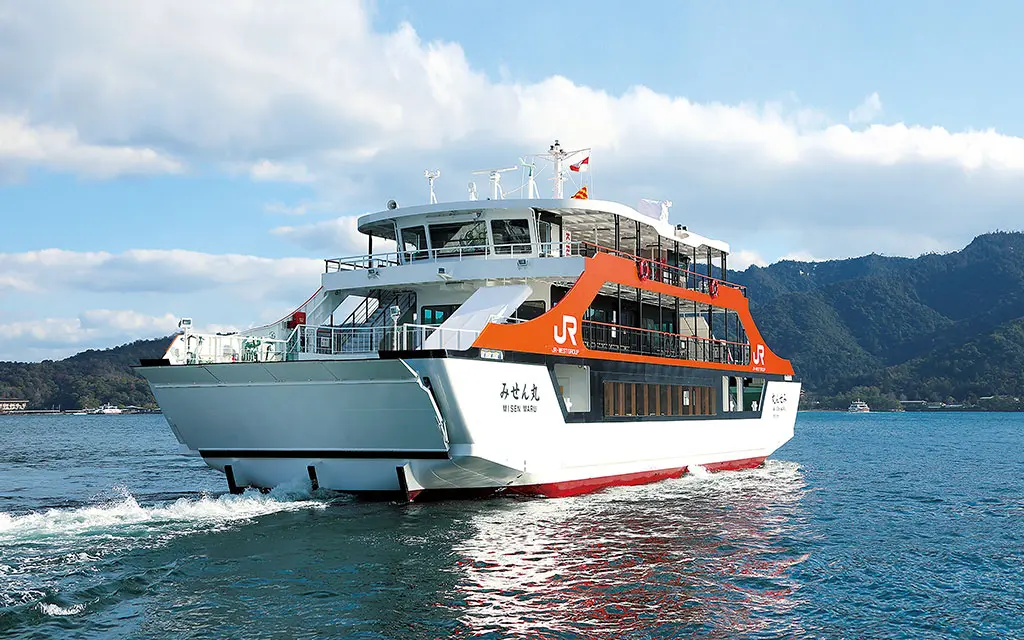
1:00 pm|Depart for Miyajima aboard the JR West Miyajima Ferry
After experiencing okonomiyaki culture, head to Miyajima, Hiroshima’s iconic World Heritage destination.
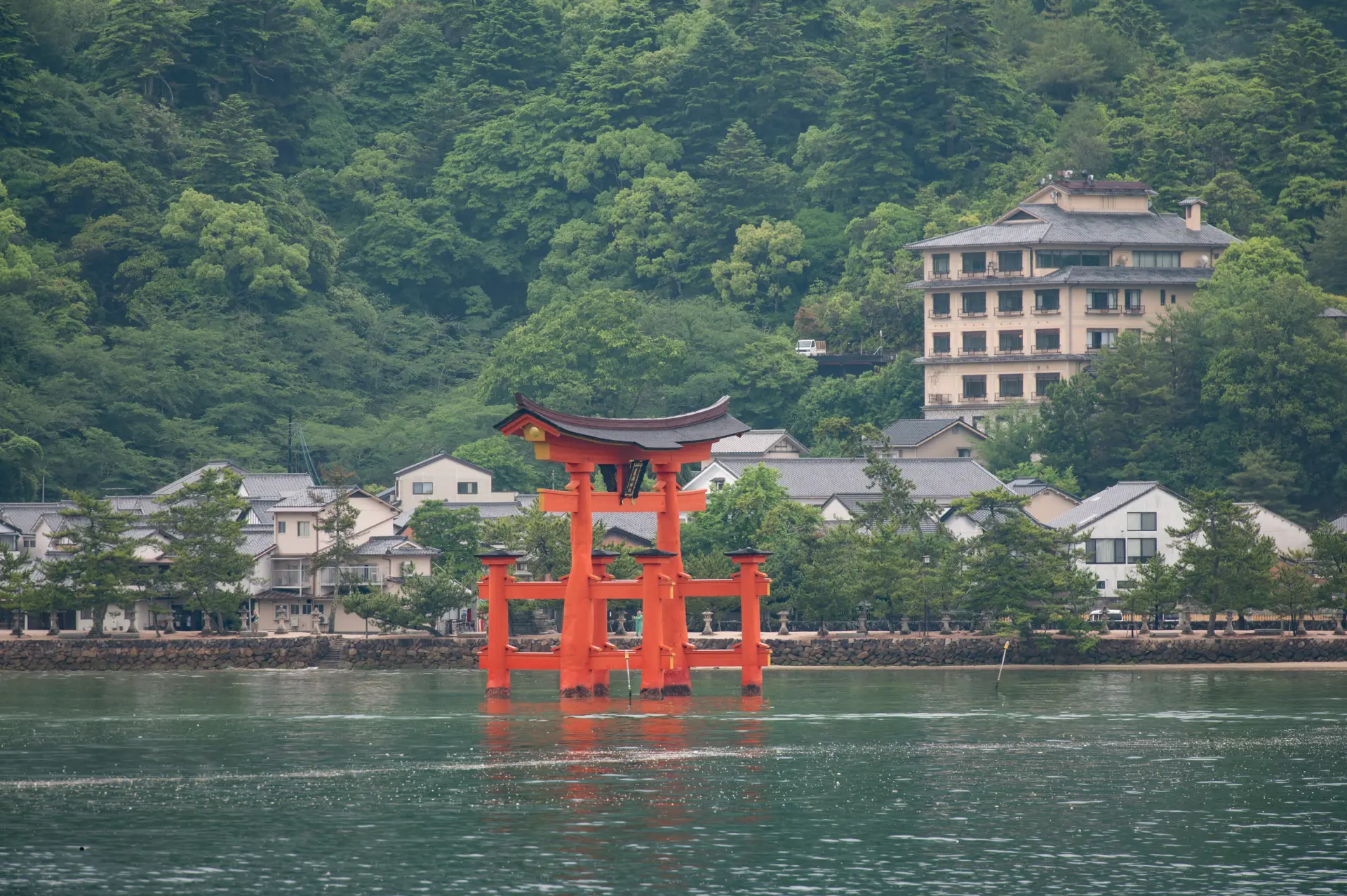
Located in the Seto Inland Sea, Miyajima is one of Japan’s Three Scenic Views and is known for the mystical sight of Itsukushima Shrine standing over the water.
From Inokuchi Station on the Hiroshima Electric Railway, approximately 10 minutes on foot from the Wood Egg Okonomiyaki Museum, the journey to Hiroden-miyajima-guchi Station takes approximately 25 minutes.
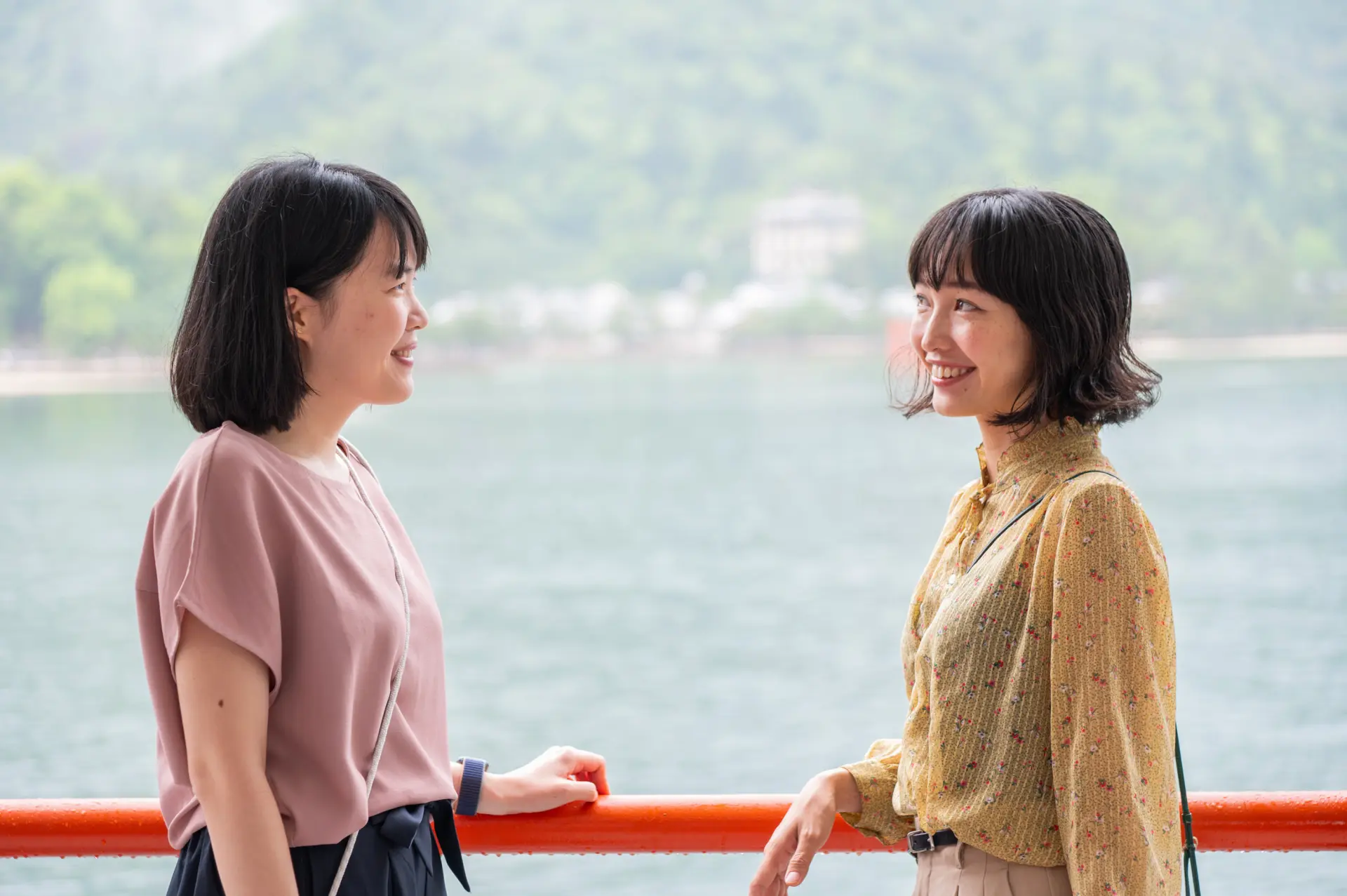
The ferry ride from JR Miyajimaguchi Pier to Miyajima takes approximately 10 minutes.
Watching the Great Torii Gate of Itsukushima Shrine and the townscape of Miyajima gradually come into view from the ferry is one of the pleasures of visiting the island.
Basic Information on JR West Miyajima Ferry
- Japanese Name
- JR西日本宮島フェリー
- Address
- 1-11-5 Miyajimaguchi, Hatsukaichi City, Hiroshima (Miyajimaguchi)
- One-Way Fare
- Adults: 200 yen; children: 100 yen. An additional Miyajima Visitor Tax of 100 yen is required when departing from Miyajimaguchi
- Access
-
1) Approximately six minutes on foot from JR Miyajimaguchi Station
2) Approximately one minute on foot from Hiroden-miyajima-guchi Station on the Hiroshima Electric Railway - Official Website
- Official Website (Japanese)
2:00 pm|Experience the History and Lively Atmosphere of Miyajima Omotesando Shopping Street
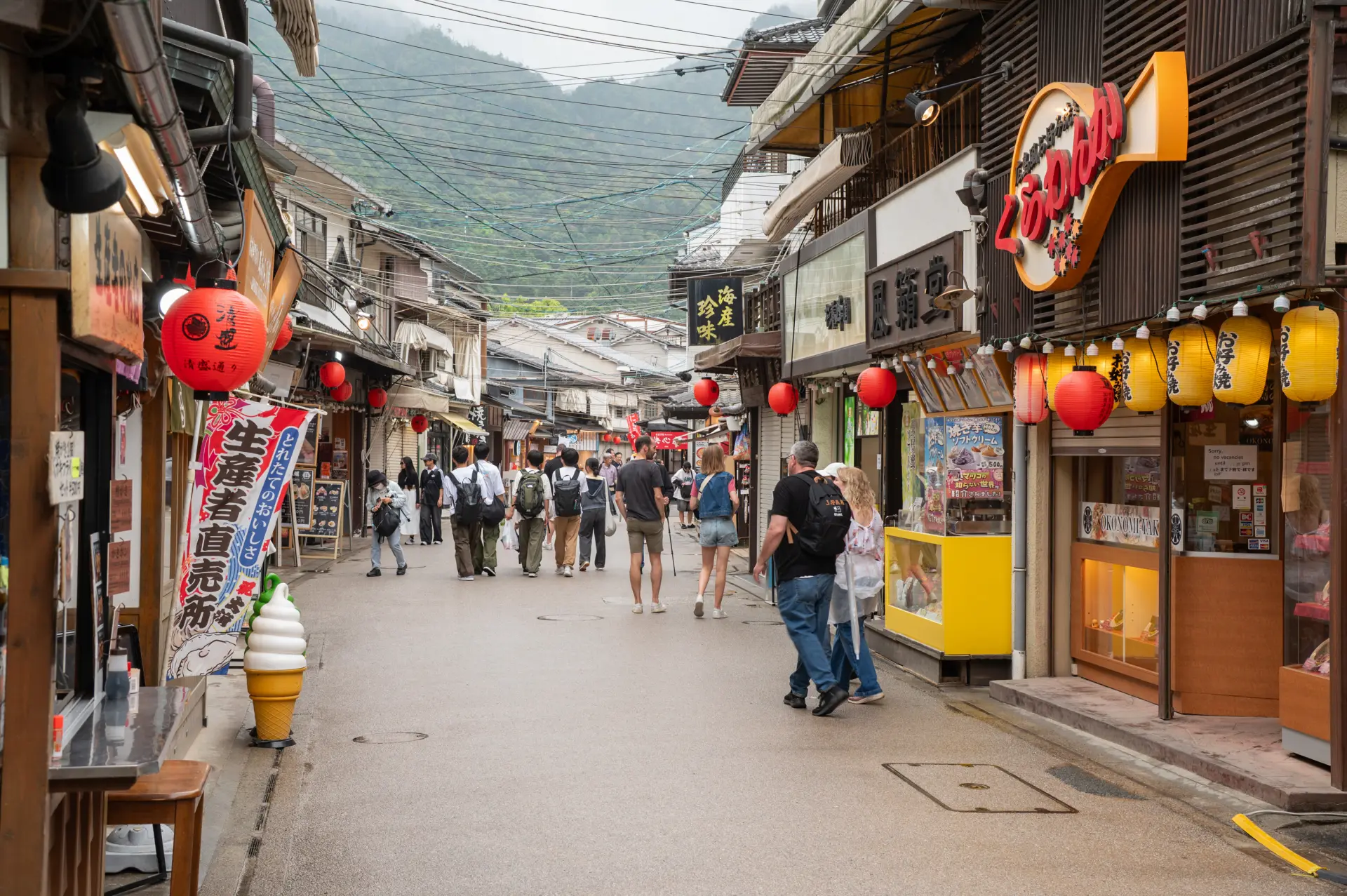
Miyajima Omotesando Shopping Street, which runs from the ferry terminal toward Itsukushima Shrine, is Miyajima’s main sightseeing street.
Souvenir shops and long-established businesses line the street, creating a lively and welcoming atmosphere unique to Miyajima.
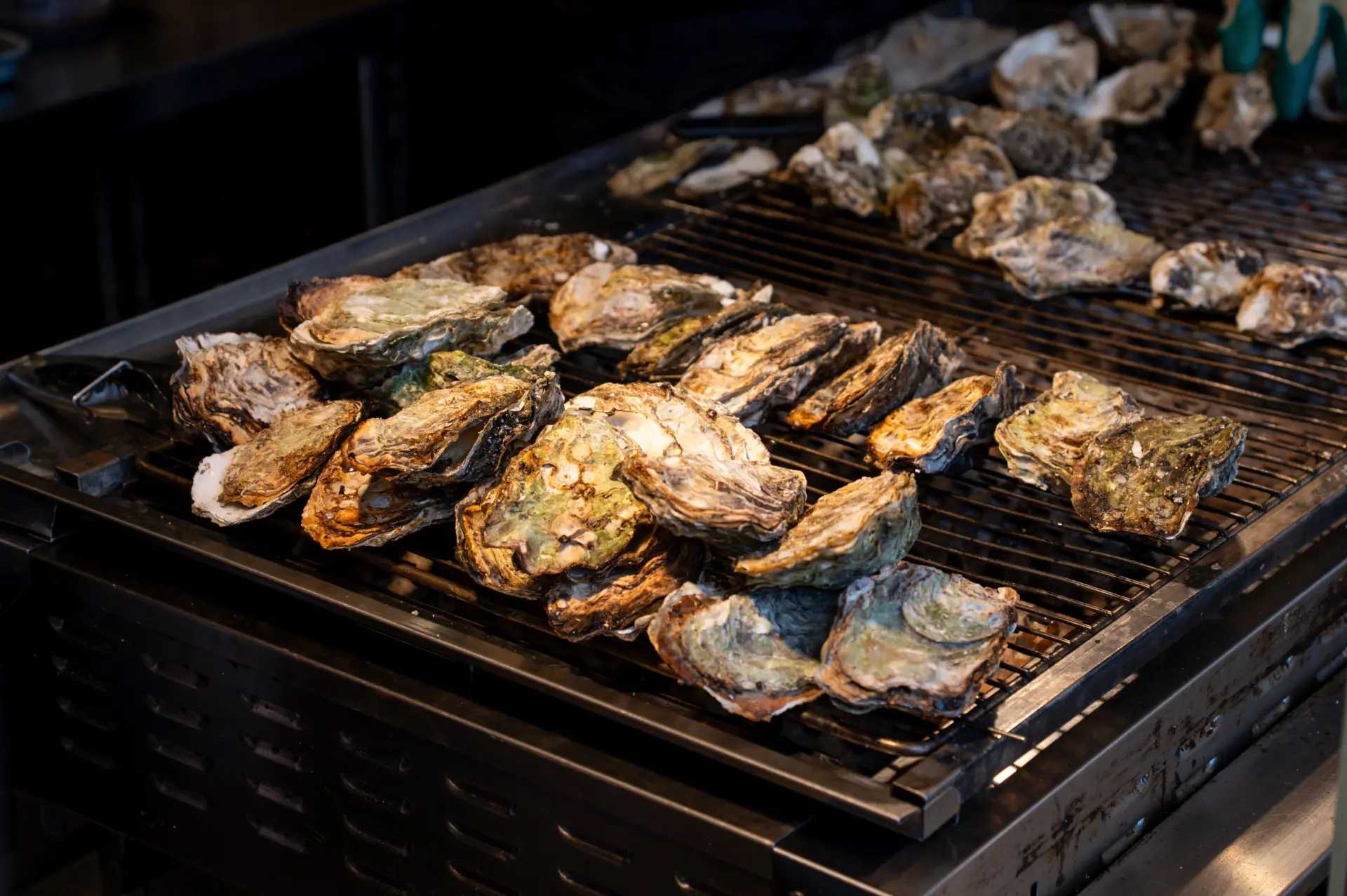
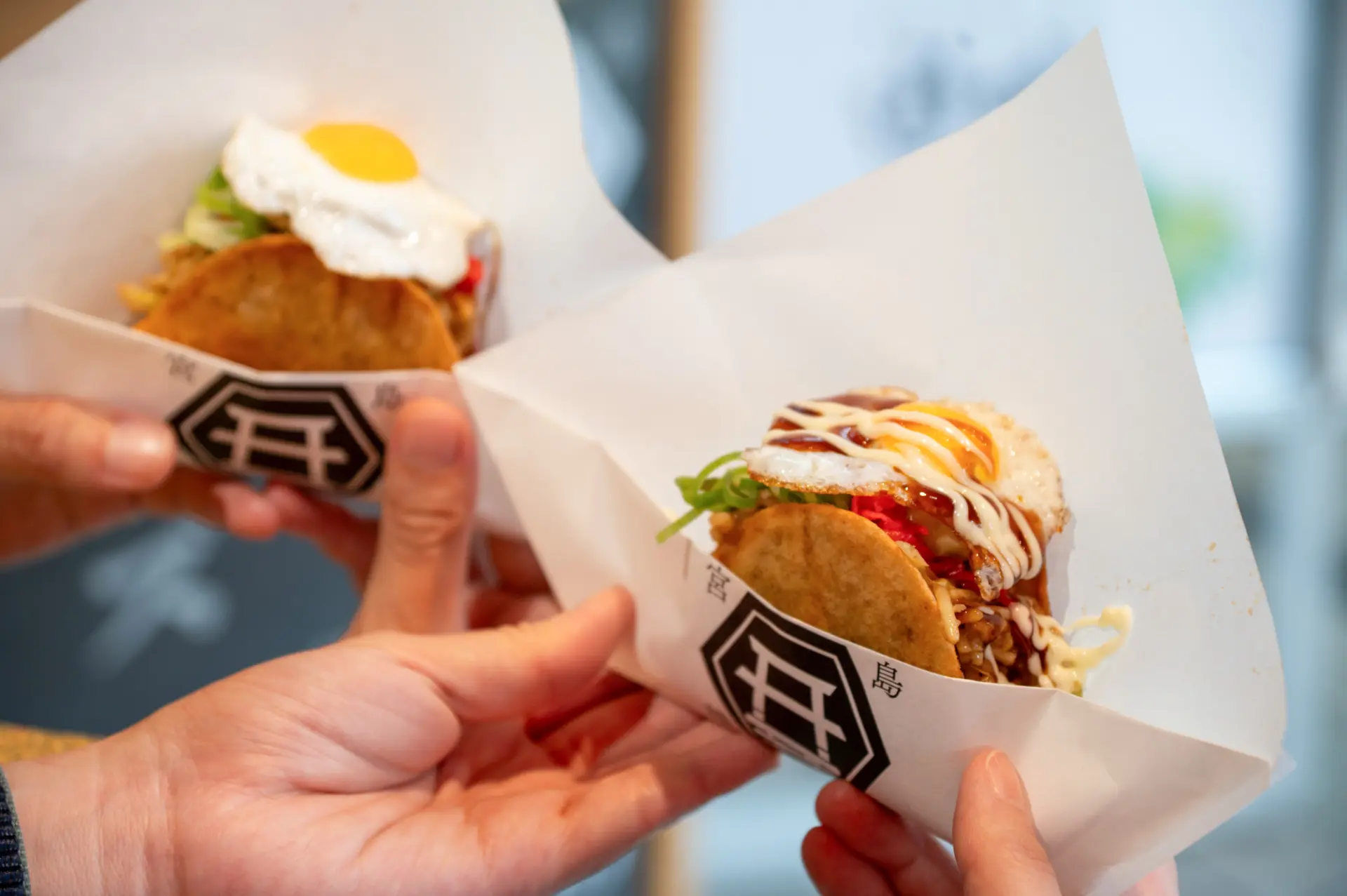
Many shops allow visitors to enjoy local specialties such as grilled oysters and Hiroshima-style okonomiyaki at storefront counters or benches, making this a street best explored at a leisurely pace.
Eating while walking is not permitted on Miyajima Omotesando Shopping Street, so enjoy your food at the storefront or in a designated dine-in area.
Basic Information on Miyajima Omotesando Shopping Street
- Japanese Name
- 宮島表参道商店街
- Address
- Miyajima-cho, Hatsukaichi City, Hiroshima
- Access
- Approximately five minutes on foot from Miyajima Pier
- Official Website
- Official Website (Japanese)
3:30 pm|Visit Itsukushima Shrine, a World Heritage Site Famous for Its Great Torii Gate Rising from the Sea
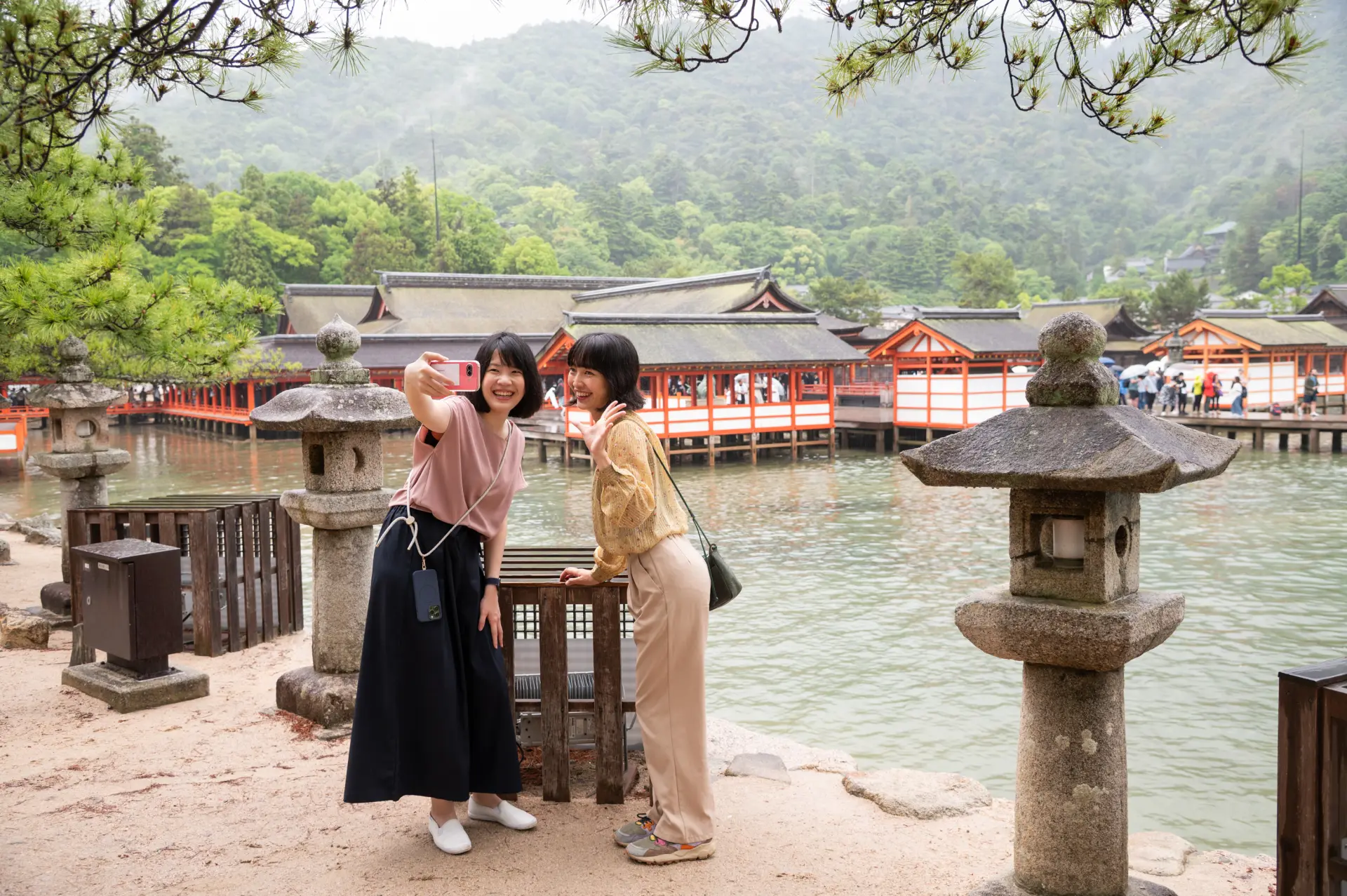
Itsukushima Shrine, a World Heritage Site, is an essential destination when visiting Miyajima.
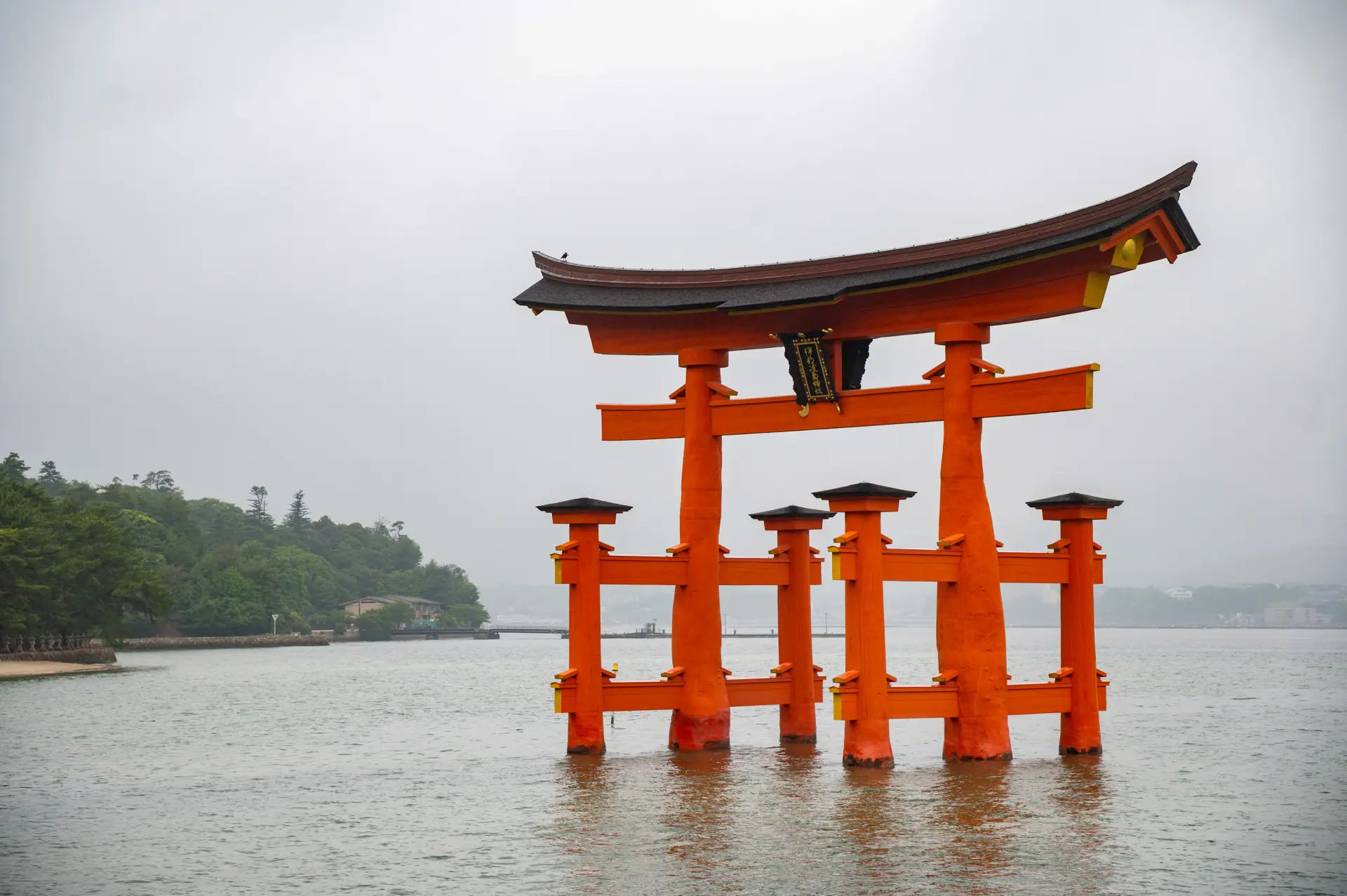
The blue sea, deep-green primeval forest, vermilion shrine buildings, and Great Torii Gate create a unique and breathtaking contrast found nowhere else.
At low tide, visitors can walk close to the Great Torii Gate, while at high tide, the shrine buildings appear to float on the sea like a mythical Dragon Palace.
The changing scenery created by the ebb and flow of the tides is another attraction unique to Itsukushima Shrine.
4:30 pm|Enjoy the Peaceful Side of Miyajima at Omoto Park
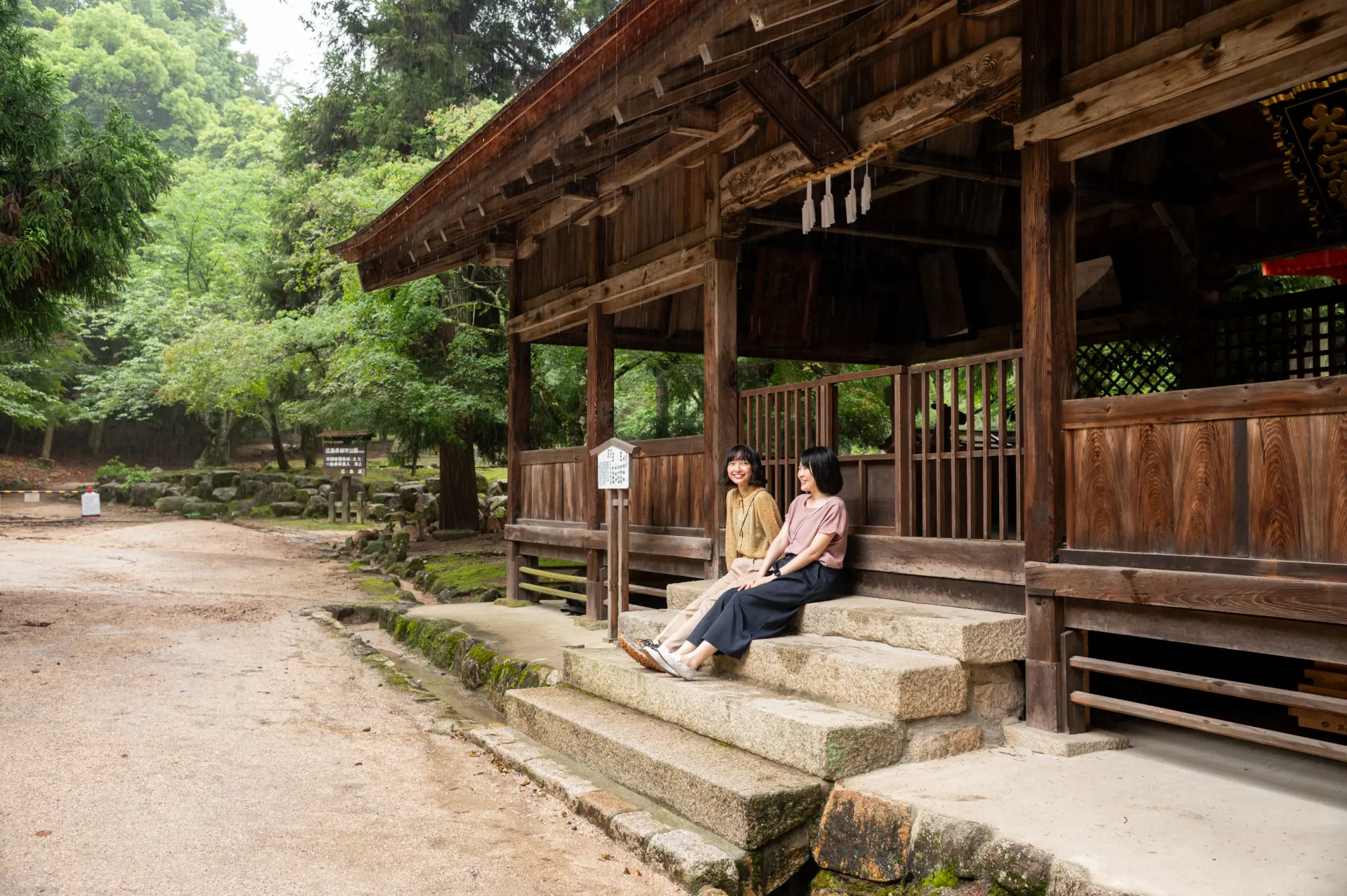
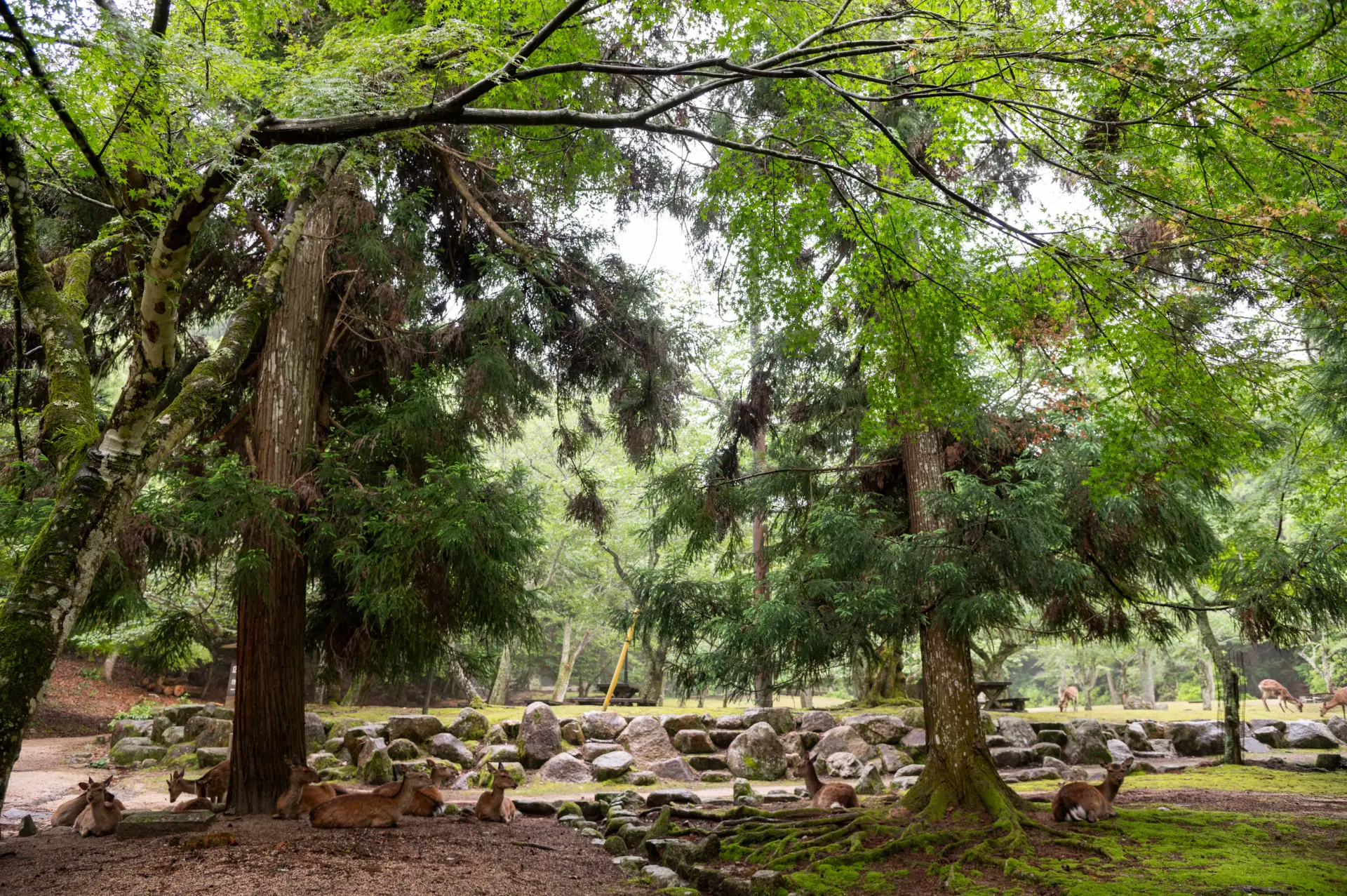
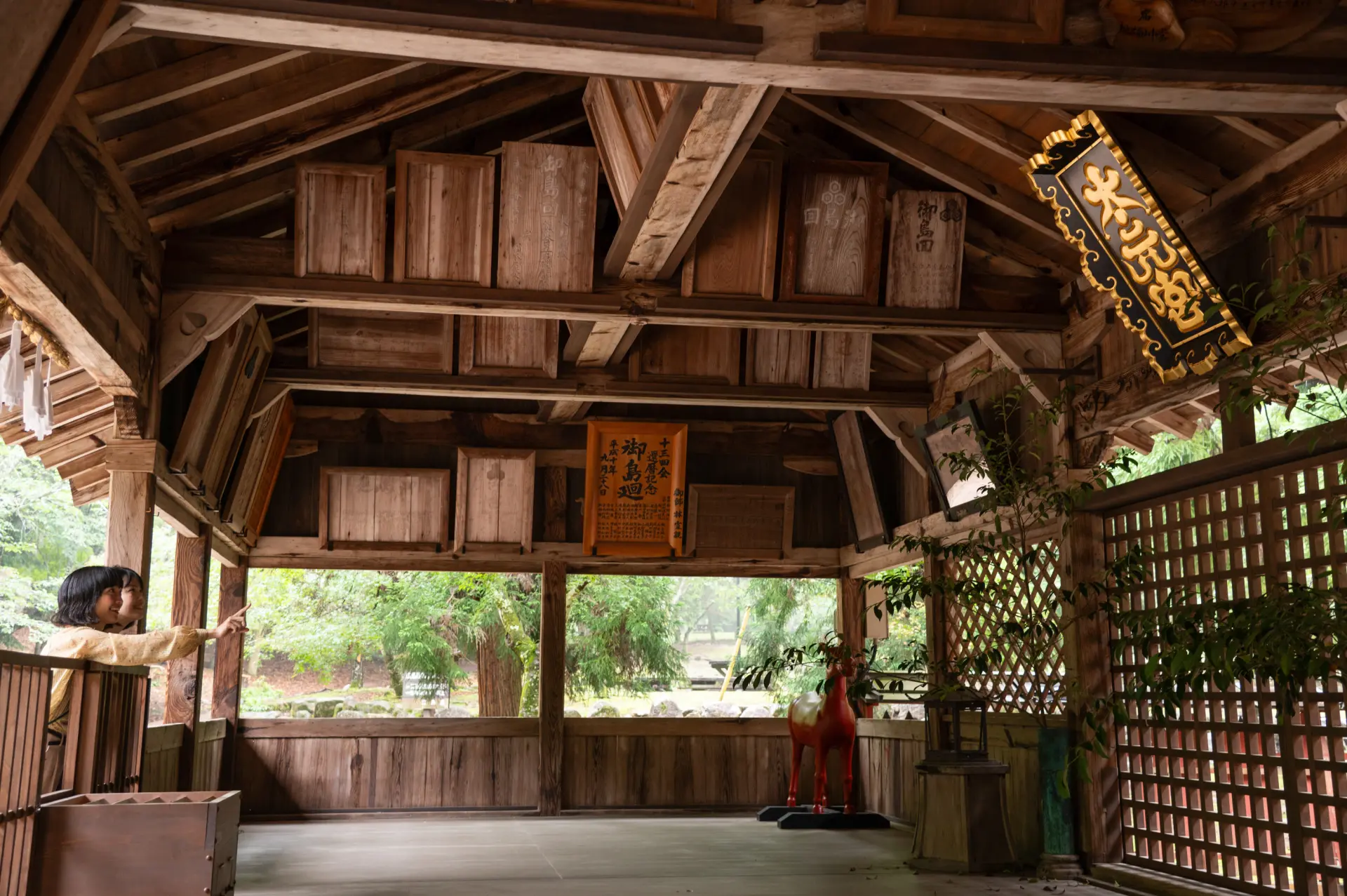
A walk of approximately 15 minutes from Itsukushima Shrine brings you to Omoto Park, a peaceful retreat away from the crowds.
With deer grazing leisurely and tranquil spaces surrounded by greenery, the park reveals a completely different side of Miyajima from its busy center.
It is also known for its cherry blossoms and autumn foliage, making it a pleasant place for a leisurely morning or evening stroll.
Spend a quiet moment taking a deep breath before bringing your journey to a close.
Basic Information on Omoto Park
- Japanese Name
- 大元公園
- Address
- Omoto, Miyajima-cho, Hatsukaichi City, Hiroshima
- Access
- Approximately 25 minutes on foot from Miyajima Pier
- Official Website
- Official Website (Japanese)
7:00 pm|Experience Classic Hiroshima Teppan Cuisine at Teppanya Benbei Otemachi Branch
Return to Hiroshima City and visit a classic Hiroshima-style okonomiyaki restaurant that is ideal for bringing your journey to a close.
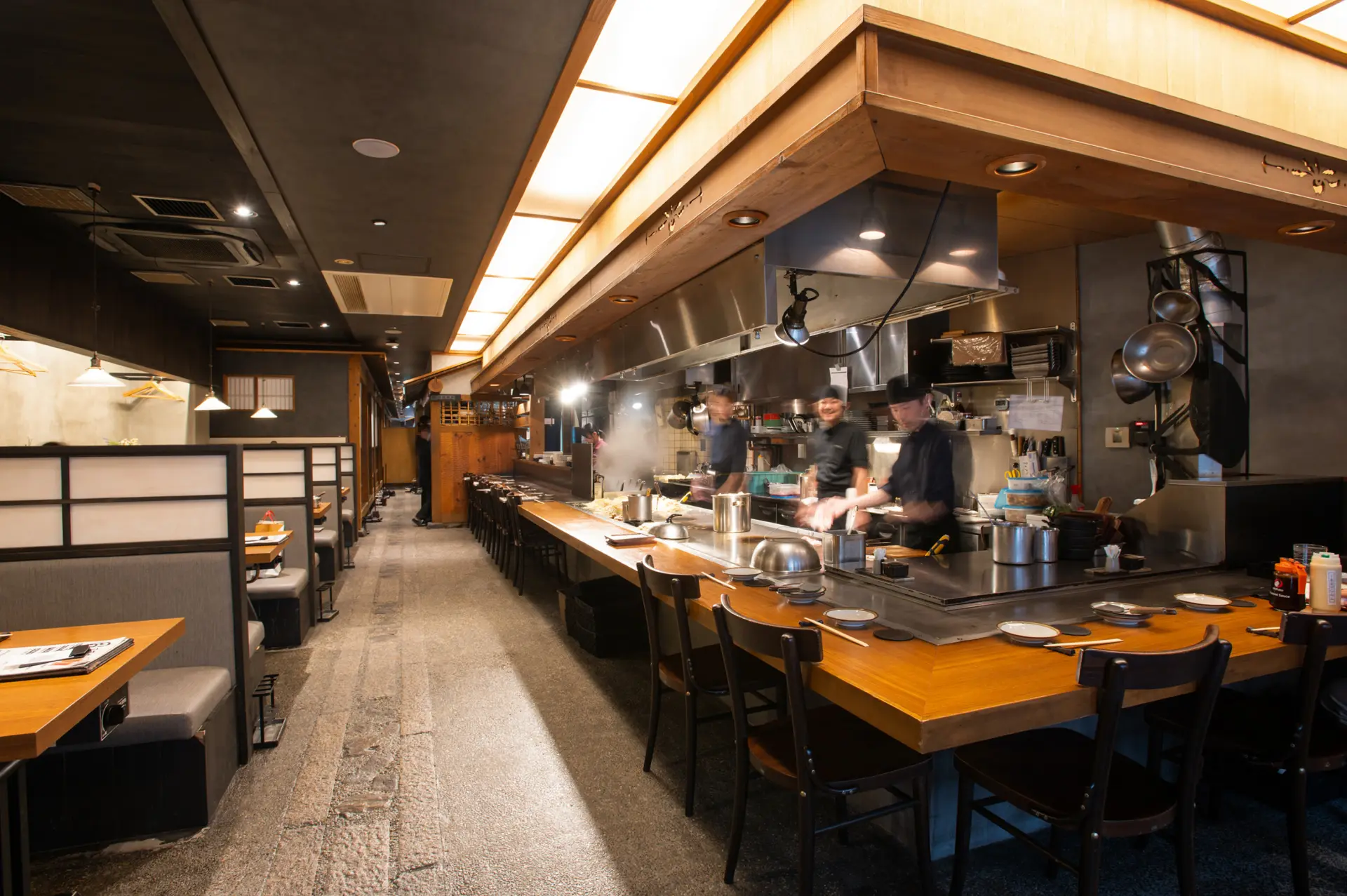
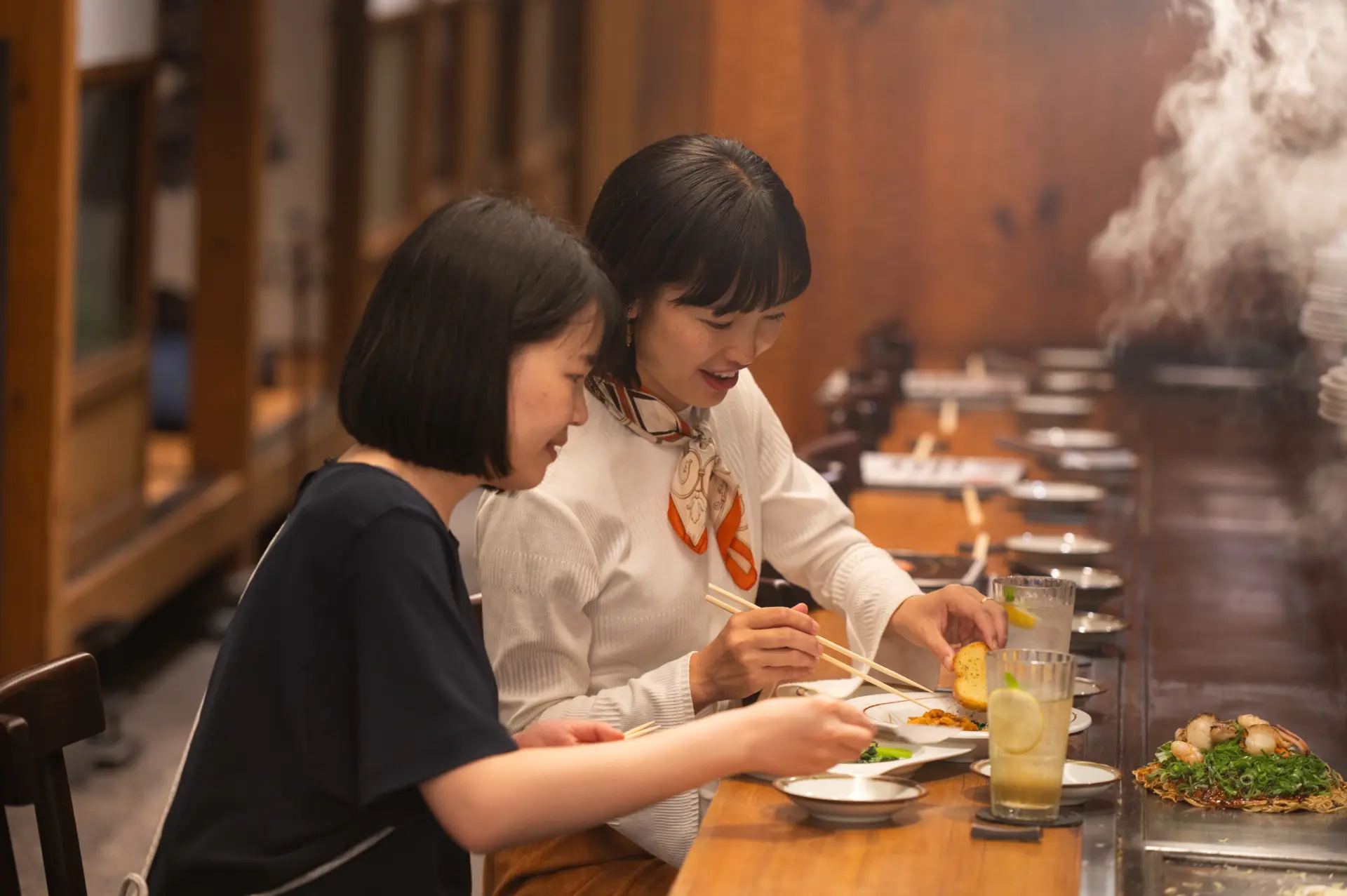
At Teppanya Benbei Otemachi Branch, you can enjoy your meal piping hot at tables equipped with built-in teppan griddles.
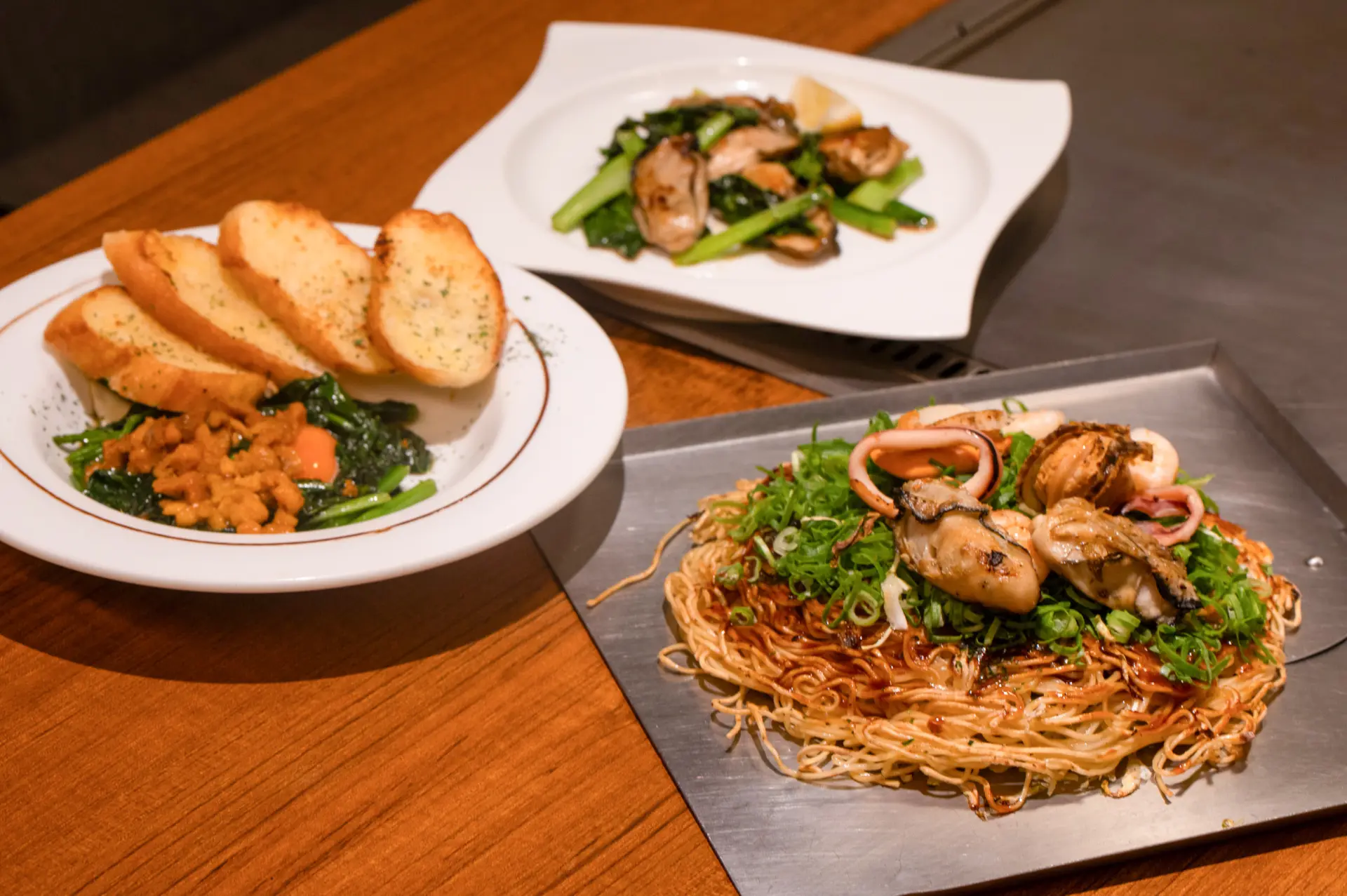
The extensive teppanyaki menu also offers Hiroshima specialties beyond okonomiyaki, including Hiroshima oysters sauteed in butter and stir-fried spinach with sea urchin.
Watching the grill masters prepare okonomiyaki amid clouds of steam on the other side of the counter creates an impressive and lively atmosphere that is enough to whet your appetite.
The reservation website supports multiple languages, making it easy for international visitors to book a table.
Basic Information on Teppanya Benbei Otemachi Branch
- Japanese Name
- 弁兵衛 大手町店
- Address
- 1F, 2-7-7 Otemachi, Naka-ku, Hiroshima City, Hiroshima
- Business hours
- Lunch: 11:30 am-2:30 pm (Last order: 2:00 pm); dinner: 5:00 pm-11:00 pm (Last order: 10:00 pm); Sunday and public holiday dinner: 5:00 pm-10:00 pm (Last order: 9:00 pm)
- Closed
- Open daily
- Access
- Approximately three minutes on foot from Hondori Station on the Astram Line
- Official Website
- Official Website (Japanese)
2-Day, 1-Night Hiroshima Sample Itinerary
Day 1: Experience Peace and Food Culture in Hiroshima City
- 8:30 am Learn about Hiroshima’s Recovery at Hiroshima Peace Memorial Park and Hiroshima Peace Memorial Museum
- 10:30 am Make Hiroshima-Style Okonomiyaki at OKOSTA
- 12:30 pm Experience Hiroshima’s Enduring Culture of Hospitality at Shukkeien Garden
- 2:00 pm Explore Hiroshima’s Cultural Side at the Hiroshima Museum of Art
- 5:00 pm Enjoy a Distinctive Okonomiyaki Dinner at Okonomiyaki Alley “/5 GOBUNNO”
Day 2: Learn about Okonomiyaki Culture and Visit Miyajima, Home to a World Heritage Site
- 9:30 am Learn the History of Hiroshima-Style Okonomiyaki at the Wood Egg Okonomiyaki Museum
- 1:00 pm Depart for Miyajima aboard the JR West Miyajima Ferry
- 2:00 pm Experience the History and Lively Atmosphere of Miyajima Omotesando Shopping Street
- 3:30 pm Visit Itsukushima Shrine, a World Heritage Site Famous for Its Great Torii Gate Rising from the Sea
- 4:30 pm Enjoy the Peaceful Side of Miyajima at Omoto Park
- 7:00 pm Experience Classic Hiroshima Teppan Cuisine at Teppanya Benbei Otemachi Branch
FAQ about Hiroshima-Style Okonomiyaki
Q
What is the difference between Hiroshima-style okonomiyaki and Kansai-style okonomiyaki?
Hiroshima-style okonomiyaki is characterized by a layered cooking style in which cabbage, noodles, and other ingredients are placed on top of the batter and cooked in layers. Kansai-style okonomiyaki, by contrast, is prepared by mixing the ingredients into the batter before cooking.
Q
Why did Hiroshima-style okonomiyaki become a local specialty?
It spread as a flour-based dish during the postwar food shortages and developed alongside Hiroshima’s street-stall culture, eventually becoming firmly established as the city’s representative soul food.
Q
Do I need a reservation for a Hiroshima-style okonomiyaki-making experience?
OKOSTA, which is featured in this article, requires advance reservations. Popular time slots may fill up early, so make a reservation as soon as your travel dates are confirmed.
Q
Which is better for Hiroshima-style okonomiyaki, soba or udon noodles?
Soba noodles are the standard choice. Many restaurants also offer udon noodles, so choose soba for a crispier texture or udon if you prefer a softer, chewier texture.
Summary
Born from postwar street stalls and developed alongside everyday life, this dish reflects the city of Hiroshima itself.
After spending 2 days and 1 night exploring Hiroshima’s history, making okonomiyaki yourself, learning about the depth of its food culture, and savoring dishes prepared by skilled chefs, you are sure to come away with a whole new appreciation for Hiroshima-style okonomiyaki.
Take home memories of Hiroshima along with the aroma of its sauce.