

The Complete Hiroshima Travel Guide to Read Before Your First Trip
Hiroshima Prefecture is home to two UNESCO World Heritage sites and magnificent natural scenery such as the Seto Inland Sea and the Chugoku Mountains.
It also preserves many charming old streetscapes where nature and history blend, giving visitors plenty of ways to enjoy the area.
It is also important not to forget that this was the first place in the world where an atomic bomb was used.
Experiencing both the devastation of the bombing and the value of peace is one of Hiroshima’s unique appeals.
This article comprehensively introduces the travel information you need, from transportation information and the charms of each area to sample itineraries.
Use this guide to fully enjoy the many sides of Hiroshima.
Hiroshima, Home to Two World Heritage Sites and Natural Beauty
Located in southwestern Japan, Hiroshima offers diverse natural scenery, with the Chugoku Mountains stretching across the north and the Seto Inland Sea along the south.
Among its highlights is the breathtaking beauty of the many islands, large and small, floating in the Seto Inland Sea.
The fresh daytime views are stunning, and the orange-tinted sunset scenery is equally atmospheric and beautiful.
Another thing to know before traveling to Hiroshima is that it is home to two UNESCO World Heritage sites.
One of them, Itsukushima Shrine, has a long history of Approx. 1,400 years.
The sight of its historic buildings, built in the architectural style of the Heian period (794–1185), appearing to float above the sea is truly magical.
Because it is located on Miyajima, one of Japan’s Three Scenic Views, you can also enjoy many other spectacular sights there.
The other UNESCO World Heritage site is the Atomic Bomb Dome.
Hiroshima was the first place in the world where an atomic bomb was dropped, and it later made a remarkable recovery.
Although it stood only Approx. 160m from the hypocenter, part of the building escaped complete collapse.
By preserving its bombed appearance as it was and passing it on to future generations, it conveys the importance of abolishing nuclear weapons and striving for world peace.
Being able to feel the history of the atomic bombing so directly is something unique to Hiroshima.

Hiroshima’s Average Temperatures and What to Wear
The southern coastal area facing the Seto Inland Sea has low rainfall and many sunny days.
In contrast, the northern mountainous area gets more precipitation, including snow.
Hiroshima City, the central city, is located on the coast, so the climate is mild, although rainfall is relatively high.
Hiroshima’s Average Monthly Temperatures
| - | January | February | March | April | May | June | July | August | September | October | November | December |
|---|---|---|---|---|---|---|---|---|---|---|---|---|
| Average Temperature (°C) | 5.4 | 6.2 | 9.5 | 14.8 | 19.6 | 23.2 | 27.2 | 28.5 | 24.7 | 18.8 | 12.9 | 7.5 |
What to Wear in Hiroshima by Season
- Spring (March - May): Light jacket and a lightweight sweater
- Summer (June - August): Light clothing, short sleeves
- Fall (September - November): Light jacket, coat
- Winter (December - February): Coat, thick sweater or jacket
Access to Hiroshima
From Tokyo, you can reach Hiroshima in Approx. 1 hour 30 minutes by plane.
By shinkansen, it takes Approx. 4 hours.
From Osaka, it takes Approx. 1 hour 30 minutes by shinkansen.
Since Hiroshima has Hiroshima Airport with international flights, it is also accessible directly from overseas.

Access from Hiroshima Airport to Major Stations
Here is how to get from Hiroshima Airport, the main gateway for international visitors to Hiroshima, to Hiroshima Station.
Hiroshima Station is the city’s main terminal station and a convenient base for getting around sightseeing spots.
- Route
-
1. Walk Approx. 4 minutes from Hiroshima Airport to the Hiroshima Airport bus stop, then board the Hiroshima Dentetsu Airport Limousine bus
2. Get off at the Hiroshima Station Shinkansen Entrance bus stop, then walk Approx. 6 minutes to arrive at Hiroshima Station - Travel Time
- Approx. 1 hour
Main Ways to Get Around Hiroshima
The main means of transportation for traveling around Hiroshima are buses and trains.
With plenty of routes and frequent service, you can likely explore Hiroshima using public transportation alone.
However, if you are heading to islands such as Miyajima, where the popular Itsukushima Shrine is located, you will need to use transportation such as ferries or high-speed boats.

Money-Saving Transportation Passes for Your Hiroshima Trip
From here, we will introduce transportation passes worth knowing about for those who want to keep travel costs in Hiroshima as low as possible.
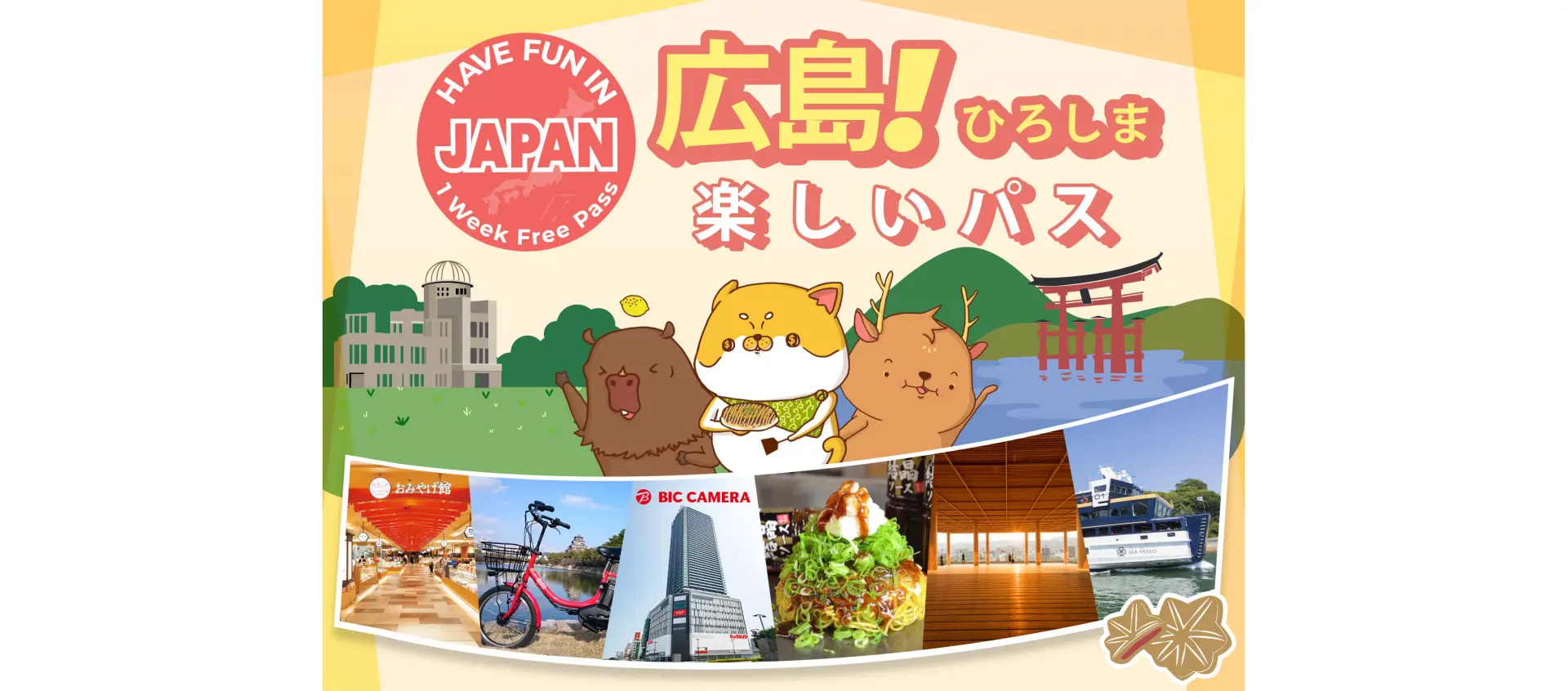
Fun Hiroshima Pass
If you are traveling in Hiroshima, using a sightseeing pass is recommended for convenient touring. It makes it easy to get around this area, which is packed with attractions.
The pass covers a wide range of facilities, including admission tickets and discount coupons for sightseeing spots such as Orizuru Tower, where you can enjoy panoramic views of Hiroshima City, as well as vouchers usable at a gourmet building filled with okonomiyaki restaurants, commercial facilities, and large electronics stores. You can choose and use three contents from among them.
It also includes a one-way cruise ferry ticket between Hiroshima Port and Kure Port, a discount coupon for a high-speed boat to Miyajima, a one-day pass for a share cycle service in central Hiroshima City, and discount coupons for a rental car near Hiroshima Station, so you can use it to match your travel plans.
The Highlights of 6 Areas to Know Before Traveling to Hiroshima
Because Hiroshima has so many sightseeing spots, it is best to narrow down the areas you want to visit in order to travel efficiently.
Use the highlights and attractions of the six areas introduced below to help plan your Hiroshima trip.
The Hiroshima City Area, Packed with Transportation Options and Tourist Spots
The Hiroshima City area is located in western to southwestern Hiroshima and is home to the UNESCO World Heritage site, the Atomic Bomb Dome.
It is also where Hiroshima Station, served by the shinkansen, is located, so it is often the starting point for a trip to Hiroshima.
In addition to the Atomic Bomb Dome, the area is filled with sightseeing spots such as the Hiroshima Peace Memorial Museum, which displays belongings of bombing victims and materials showing the tragedy, Shukkeien Garden, where you can enjoy beautiful scenery in every season, and Hiroshima Castle, which rises in the center of Hiroshima City.
Another welcome point is that the area has excellent public transportation, making it easy to get around.


Miyajima, One of Japan’s Leading Scenic Spots
To the south of the Hiroshima City area lies Miyajima, floating in the Seto Inland Sea.
You can reach it by ferry from Hiroshima City, and together with Itsukushima Shrine and Mt. Misen, it is registered as a UNESCO World Heritage site.
The scenery, where rich nature and shrines and temples blend together, is not only beautiful but also full of Japanese atmosphere.
Itsukushima Shrine, which appears to float on the sea at high tide, and its deep crimson torii gate standing over the water are especially beautiful and mystical.
Also not to be missed is the archipelago scenery of the Seto Inland Sea viewed from the observatory at the summit of Mt. Misen, which stands 525m above sea level.
There are many other highlights as well, including Momijidani Park, famous for autumn leaves, and Miyajima Misen Daisho-in Temple, the oldest temple on Miyajima.


The Aki Area, Where You Can Enjoy the History of a Naval Port City and Japanese Sake
In the Aki area, which stretches across southern Hiroshima, you can enjoy sightseeing in cities with beautiful coastlines and a history of thriving as naval ports.
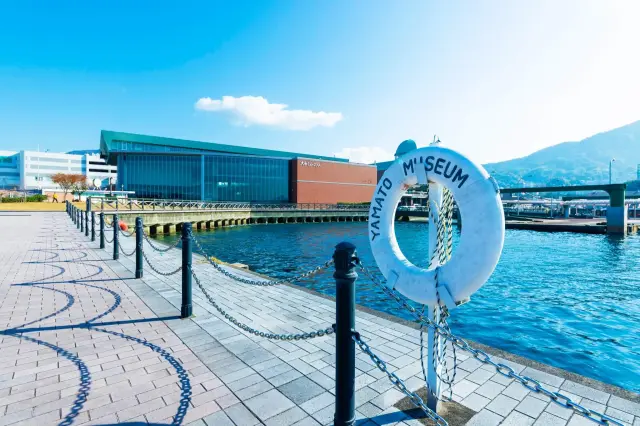
One especially popular spot is the Kure Maritime Museum, affectionately known as the Yamato Museum.
This museum introduces the history and shipbuilding technology of Kure City, which prospered as a naval port, and one of its main highlights is a giant 1/10-scale model of the battleship Yamato.
Be sure to also visit “JMSDF Kure Museum / Japan Maritime Self-Defense Force Kure Museum” and “Arei kara Sukojima,” where you can see submarines up close, something rare even in the world.
In summer, enjoy swimming at beaches such as Kenmin no Hama Kamagari, Bayside Beach Saka, and Human Beach Nagase.
If you like Japanese sake, Saijo Sakagura-dori in Saijo, Higashihiroshima City, is also recommended. Along with Nada in Hyogo Prefecture and Fushimi in Kyoto, it is known as one of Japan’s famous sake brewing areas. You can experience Saijo sake in many forms, including sake sweets.


The Bingo Area, Known for Beautiful Townscapes and Scenic Roads
Located in southeastern Hiroshima, the appeal of the Bingo area lies in its towns and roads with beautiful scenery.
Onomichi, where nature and retro streetscapes are in harmony, is perfect for strolling.
Visit temples and parks with spectacular views, along with spots where you can enjoy wandering through atmospheric streets.
Another highlight is the Setouchi Shimanami Kaido, a road of Approx. 60km connecting Onomichi and Imabari in Ehime.
It is famous as Japan’s first cycling route that crosses a strait, where you can enjoy cycling while taking in spectacular views of the Seto Inland Sea.
Also not to be missed is the townscape of Tomonoura, where houses from the Edo period (1603–1868) are still carefully preserved and create a deeply historic atmosphere.
It is valued as a scenic port town and has served as the setting for many films and anime works.


The Bihoku Area, Where You Can Encounter Spectacular Scenery Woven by Rich Forests and Mountains
The Bihoku area, located in northeastern Hiroshima, is rich in green forests and mountain ranges.
Because public transportation is inconvenient, a rental car is recommended if you plan to visit.
That said, this is exactly why the area is blessed with beautiful natural scenery, and Taishakukyo is especially popular as a sightseeing spot.
In this Approx. 18km-long gorge, you can enjoy seasonal scenery as well as a variety of landscapes including limestone caves and karst plateaus.
You can tell how special it is from the fact that it is one of Japan’s 100 Scenic Views and is also designated as a national Place of Scenic Beauty.
Another recommended sightseeing spot is the Koichi Yumoto Memorial Museum, affectionately known as the Miyoshi Mononoke Museum.
It is a rare museum even within Japan, introducing Japanese yokai through various types of exhibits.


The Geihoku Area, Where You Can Fully Enjoy Natural Scenery and Activities
The Geihoku area, known for beautiful mountain scenery, is located in northwestern Hiroshima.
The Approx. 16km-long Sandankyo Gorge, designated as a Special Place of Scenic Beauty, is an especially popular sightseeing spot.
While enjoying nature such as rivers and waterfalls, you can also take part in activities such as kayaking.
It is also famous as a spot for autumn leaves, so it welcomes many visitors especially in fall.
Michi-no-Eki Toyohira Donguri Village is another sightseeing spot worth recommending.
It is a roadside station equipped with hot springs and lodging facilities, and it also has sports facilities and parks.
Its appeal lies in the fact that people of all ages, including families with children, can enjoy it, making it feel more like a leisure facility than a roadside station. It is also perfect for buying souvenirs such as Hiroshima specialties.


How Many Days You Need to Enjoy Hiroshima
If you focus on the main sightseeing spots in Hiroshima City and Miyajima, you can fully enjoy the trip even in 2 days and 1 night.
However, if you also want to visit other areas, make sure to allow at least 2 nights.
If you have extra time, it is also recommended to extend your trip to neighboring Yamaguchi or Okayama.
Both Yamaguchi and Okayama offer spectacular views overlooking the Seto Inland Sea, mountains with scenery that changes through the seasons, and many spots where you can experience Japanese culture and history, making your trip to Japan even more fulfilling.


A 2-Day, 1-Night Model Course for Visiting Hiroshima’s Popular Tourist Spots
Here is a model course that takes you around Hiroshima’s popular sightseeing spots, centered on the prefecture’s two UNESCO World Heritage sites.
By following this model course, you can enjoy Hiroshima’s spectacular scenery and beautiful townscapes while also feeling the tragic history of the atomic bombing firsthand and gaining a deeper sense of the value of peace.
Day 1: Visit Miyajima’s Spectacular Views and Power Spots
Day 1 of this model course is all about enjoying Miyajima, one of Hiroshima’s most popular sightseeing areas.
Visit the power spots and scenic spots of Itsukushima Shrine and Daisho-in Temple, enjoy Hiroshima’s famous oysters for lunch, and take in spectacular views of the Seto Inland Sea from the highest point on Miyajima.
8:20am Start from JR Hiroshima Station
Day 1 begins at JR Hiroshima Station.
First, take the train to JR Miyajimaguchi Station, then board the JR West Miyajima Ferry.
After Approx. 20 minutes on the boat, you will arrive at Miyajima. From the ferry terminal, it is about a 10-minute walk to the first stop, Itsukushima Shrine.

9:30am Pray for a Safe Trip at Itsukushima Shrine
Itsukushima Shrine, said to have been founded in 593, enshrines the three female deities Ichikishimahime-no-Mikoto, Tagorihime-no-Mikoto, and Tagitsuhime-no-Mikoto.
It is famous for granting many blessings, and these three deities are worshiped as gods of the sea, transportation, fortune, and the arts.
Be sure to pray for a safe and pleasant journey.
And do not forget to admire the shrine buildings, designated as National Treasures and Important Cultural Properties, along with the great torii gate standing in the sea.

11:00am Pray for Protection from Misfortune at Daisho-in Temple
After visiting Itsukushima Shrine, head to Miyajima Misen Daisho-in Temple, located just a short walk away.
It is the oldest temple in Hiroshima Prefecture and on Miyajima, and its founding dates back to 806.
It is known as a power spot with many blessings, especially for protection from misfortune and good fortune, and is counted as one of Japan’s Three Great Temples for warding off bad luck and inviting good fortune.
You can also try experiences such as zazen meditation, sutra copying, Buddha image copying, and esoteric Buddhist meditation, so if you have time, take the opportunity to experience Japanese Buddhism.

12:00pm Enjoy a High-Quality Oyster Lunch at Kakiya
After praying for many blessings, head to Kakiya, a specialty oyster restaurant located in the center of Miyajima Omotesando Shopping Street leading to Itsukushima Shrine.
It uses Jigozen oysters, considered among the highest-quality oysters in Hiroshima. Because the restaurant is confident in the flavor of its oysters, they are served with simple seasoning.
The fresh oysters, shucked quickly after ordering and eaten alive (winter only), as well as the fried oysters, are exquisite.
Enjoy Hiroshima’s famous oysters for lunch.

2:20pm Take In Refreshing Spectacular Views at Mt. Misen Observatory
After lunch, head to the observatory at the summit of Mt. Misen, the highest mountain on Miyajima.
Take the Miyajima Ropeway up to the middle of the mountain, then walk for Approx. 40 minutes to reach the observatory.
From the observatory, you can look out over the many islands of the Seto Inland Sea, the torii gate of Itsukushima Shrine, Hiroshima City on the opposite shore, and the mountains of Shikoku.
At an elevation of Approx. 535m, the observatory offers an excellent sense of openness because nothing blocks the view.
There are also many huge and unusual rocks near the summit, so be sure to take a look.

4:10pm Enjoy Seasonal Scenery at Momijidani Park
After taking in the spectacular views from Mt. Misen Observatory, walk back to the Miyajima Ropeway station and ride down the mountain.
As soon as you get off at Momijidani Station, you will arrive at Momijidani Park.
It is one of Miyajima’s most famous autumn foliage spots, and during the peak season from around mid-November to late November each year, Approx. 700 maple trees in the park turn brilliant colors.
It is also known as a famous spot for fresh green maples, and from spring to summer, vibrant new greenery colors the park. The contrast between the vermilion Momiji Bridge and the rich greenery is also stunning.

5:30pm Relax with Nature and Hot Springs at Miyajima no Yado Iwaso
After enjoying a walk through Momijidani Park, head to Miyajima no Yado Iwaso located within the park.
At Miyajima no Yado Iwaso, your accommodation for the first day, you can choose from detached one-story hanare cottages built from the Taisho era to the Showa era, as well as the main building and the new building, depending on your preference.
There is also a rare hot spring for Miyajima, and you may even spot deer strolling through the forest from the open-air bath.
Relax to the sound of the stream, and at night enjoy the view of the primeval forest lit up beautifully.

Day 2: Learn About Tragic History and Beautiful Streets, and Feel the Value of Peace
On Day 2, visit places where you can learn about the tragic history of the atomic bombing, then stroll through Hiroshima’s beautiful cityscape.
By seeing buildings damaged by the bombing and materials that convey the devastation of the time, then walking through the beautiful city Hiroshima is proud of today, you will be able to feel the value of peace firsthand.
8:00am Start from Miyajima Pier
Day 2 begins at Miyajima Pier, the ferry terminal.
Take the ferry to JR Miyajimaguchi Station, then transfer to a train for JR Hiroshima Station.
From JR Hiroshima Station, take the streetcar and get off at Peace Memorial Park to reach the first stop of the second day.

9:30am Feel the Tragic History of the Atomic Bomb at the Atomic Bomb Dome
After arriving at Peace Memorial Park, head to the Atomic Bomb Dome, which was damaged only 160m from the hypocenter when the bomb was dropped.
The exposed steel framework and crumbling outer walls remain as they were at the time of the bombing, and at some point it came to be known as the Atomic Bomb Dome.
It is a precious building that conveys this tragic history to the present day.

9:40am Feel the Horror of the Atomic Bomb at the Hiroshima Peace Memorial Museum
After visiting the Atomic Bomb Dome, head to the Hiroshima Peace Memorial Museum, also located inside Peace Memorial Park.
It opened in 1955 with the aim of conveying the tragedy of the atomic bombing of Hiroshima to people around the world and contributing to the abolition of nuclear weapons and the realization of lasting world peace.
The main building displays belongings of bombing victims and photographs showing the devastation caused by the bomb.
The exhibits focusing on the damage suffered by each individual victim are especially striking.

10:30am Stroll Through Hiroshima Castle and Enjoy Beautiful Scenery and Japanese Culture
After looking around the Hiroshima Peace Memorial Museum, take a bus to Hiroshima Castle.
Located in the center of Hiroshima City, Hiroshima Castle is famous as a well-accessible sightseeing spot.
The castle tower houses exhibition rooms displaying Japanese swords, armor, and more. From the observatory on the top floor, you can enjoy views of Hiroshima’s cityscape.
There are also various other spots within the grounds, so enjoy sightseeing while strolling around.

11:40am Enjoy a Hiroshima Specialty at Okonomi-mura
After exploring Hiroshima Castle, head to Okonomi-mura, a building that houses as many as 23 okonomiyaki restaurants.
Try Hiroshima-style okonomiyaki here, a soul food beloved by Hiroshima locals.
From classic ingredients and seasonings to versions made with Hiroshima’s famous oysters, you can enjoy a wide variety of Hiroshima-style okonomiyaki.
Share with your group and try eating your way through several different shops.

2:15pm Stroll Through the Beautiful and Atmospheric Town of Tomonoura
After enjoying Hiroshima’s local specialties, head from the nearest bus stop to JR Hiroshima Station.
Take the JR Sanyo Shinkansen and get off at JR Fukuyama Station. Then transfer to a bus to arrive at Tomonoura.
Tomonoura prospered from old times as a “port of waiting tides,” where ships waited for favorable currents.
It was designated as one of Japan’s first national parks, and it offers peaceful scenery with Sensui Island and Benten Island floating in the Seto Inland Sea.
Take a stroll through this beautiful town, where photo spots and historic sites are scattered throughout.

4:00pm Explore Onomichi’s Popular Spot, Cat Alley
From Tomonoura, board a sightseeing boat, and after Approx. 1 hour on the water, you will arrive in Onomichi.
Onomichi prospered as one of the finest ports in the Seto Inland Sea, with many temples, shrines, gardens, and homes built into the limited living space between the Onomichi Channel and the three mountains of Onomichi.
Rich in historical and cultural resources, Onomichi City was designated as a Japan Heritage site in 2015.
While strolling through its historic retro streets, head to Cat Alley, a narrow lane of Approx. 200m that continues from Ushitora Shrine.
Enjoy encountering various cat-themed objects and many real cats, and stop by shops and museums as you walk.

6:00pm Wrap Up the Trip at Onomichi Ramen Ichibankan
After leaving Cat Alley, continue walking along Onomichi Kaigandori Street to Onomichi Ramen Specialty Shop Onomichi Ramen Ichibankan.
Enjoy the signature Onomichi ramen, known for its soy sauce-based soup topped with plenty of pork back fat and flat aged noodles.
If you choose the most popular kakuni ramen, you will get large pieces of braised pork, making it perfect for refueling after a long day of walking.

3 Local Foods You Must Try in Hiroshima
Centered on seafood nurtured by the Seto Inland Sea, Hiroshima is packed with tempting local food.
If you are traveling to Hiroshima, be sure to try the dishes introduced below.
1. Hiroshima-style Okonomiyaki
Hiroshima-style okonomiyaki is one of Hiroshima’s signature local foods.
Okonomiyaki is also known as a local specialty in Osaka, but Hiroshima-style okonomiyaki differs in its ingredients, cooking method, and sauce flavor.
Hiroshima-style okonomiyaki is made by placing ingredients such as cabbage, pork, and yakisoba on a thin spread-out flour batter and cooking it on a teppan, then adding a thinly cooked egg on top and steaming it all together.
The sweetness of the cabbage, the rich flavor of the pork, and the thick sweet-savory sauce are a perfect match.
Because it also contains yakisoba noodles, it is very filling.
Be sure to try this Hiroshima soul food.

2. Anagomeshi
Anagomeshi is a dish of rice cooked in broth and topped with grilled conger eel.
Kabayaki is a cooking method in which the eel is glazed and grilled while being brushed with a sauce made from soy sauce, mirin, and other seasonings, creating a rich sweetness and deep savory flavor.
Conger eel caught in the waters of Hiroshima is known for being rich in fat, flavorful, and tender.
Because these delicious conger eels are caught in abundance, anagomeshi is more common in Hiroshima, even though grilled eel is better known nationwide.
It is truly a local food unique to Hiroshima.

3. Oyster Dishes
Known as a major oyster-producing area, Hiroshima boasts the highest production volume in Japan.
Hiroshima oysters are rich in glycogen, a starch-like substance, which gives them a strong umami flavor, and they are known for their plump, thick flesh.
If you want to enjoy the oysters’ natural flavor, it is recommended to eat them raw with ponzu or soy sauce and a squeeze of sudachi citrus.
You will likely notice the aroma of the sea rising through your nose, followed by the rich umami of the oysters filling your mouth.
If they are grilled or steamed, you can enjoy a more concentrated oyster flavor different from eating them raw.
Be sure to try oysters prepared in a variety of ways.
Hiroshima oysters are said to be in season around December to January, so planning your trip for that time is also recommended.

Best Cherry Blossom Spots to Visit on a Spring Trip to Hiroshima
In Hiroshima, where historic buildings and beautiful nature exist in harmony, you can enjoy cherry blossoms in many different settings.
Peace Memorial Park, where you can view cherry blossoms along the river together with the Atomic Bomb Dome, and Hijiyama Park, where you can look out over Hiroshima City and the Seto Inland Sea through Somei Yoshino cherry blossoms, are especially famous hanami spots.
Ondo no Seto Park, where Approx. 2,300 cherry trees bloom in abundance, is also one of the spots you should visit during cherry blossom season.
The view from the Third Ondo Bridge, where the blue Seto Inland Sea, two red bridges, and white and pink cherry blossoms come together, is truly spectacular.
Please refer to the table below for Hiroshima’s usual cherry blossom flowering date, full bloom date, and best viewing period.
Note that these dates may vary depending on the year’s weather, temperatures, and the specific spot.
- Flowering Date
- March 25
- Full Bloom Date
- April 3
- Best Viewing Period for Cherry Blossoms
- April 3–April 9
Reference: Japan Meteorological Agency Cherry Blossom Bloom Status
Reference: Japan Meteorological Agency Cherry Blossom Full Bloom Status


Best Autumn Foliage Spots That Color Hiroshima in Fall
Hiroshima has many famous spots for autumn leaves, so if you are traveling in fall, be sure to include autumn foliage viewing in your plans.
One especially recommended spot is Shinryuko Lake in Taishakukyo.
With a circumference of Approx. 24km, Shinryuko Lake is surrounded by cliffs colored in many hues, and you can admire the powerful autumn foliage from a sightseeing boat.
If you want to experience a traditional Japanese atmosphere, Kosanji Museum (Kosanji Temple) is also recommended.
Enjoy strolling through the richly colored grounds, where temple buildings and autumn leaves create a beautiful harmony.
Momijidani Park on Miyajima, about a 5-minute walk from Itsukushima Shrine, is also one of Hiroshima’s famous autumn foliage spots.
At peak season, the grounds are dyed deep red, and as the season comes to an end, fallen leaves create a crimson carpet.
Many autumn foliage spots in Hiroshima are best from mid-October to early November.
However, please note that the best viewing period may vary depending on the year’s weather, temperatures, and the specific spot.


FAQ about Hiroshima Travel
Q
What is the recommended season for traveling to Hiroshima?
Fall is recommended because Hiroshima has many famous spots for autumn leaves.
Q
Which sightseeing areas in Hiroshima are recommended for a parent-child trip?
Hiroshima City and Miyajima, where many popular sightseeing spots are concentrated, are recommended because they require less time and effort for getting around.
Summary
In this article, we introduced the transportation information, local food specialties, the appeal of each area, and a model course you should know before traveling to Hiroshima.
Use the model course and the information in this article to plan your Hiroshima trip.
If you want to learn more about Hiroshima’s popular sightseeing spots, be sure to check out the article below as well.