
Hiroshima Fall Travel Guide: World Heritage Sites and Famous Gardens
A fall trip to Hiroshima offers a wide range of scenery and culture, from Miyajima, home to Itsukushima Shrine and Mount Misen, to Hiroshima Castle, Shukkeien Garden, and Saijo Sakagura-dori. Hiroshima is also known for the distinct attractions of each area, including islands in the Seto Inland Sea, historic streets, gardens, gorges, and hot springs.
Combined with local flavors such as oysters and sake, a fall journey between the sea, city, and mountains awaits.
How to Experience Hiroshima in Fall, Month by Month
Hiroshima’s fall progresses from the lingering heat of September to pleasant outdoor weather in October and colorful foliage across the prefecture in November. As the months pass, the experiences change as well, from visiting World Heritage sites and gardens to exploring sake breweries and fall foliage destinations.
Plan your trip around the season, combining the fall scenery of the Setouchi area, the city, and the mountains.
September: World Heritage Sites and Gardens Amid the Lingering Warmth of Summer
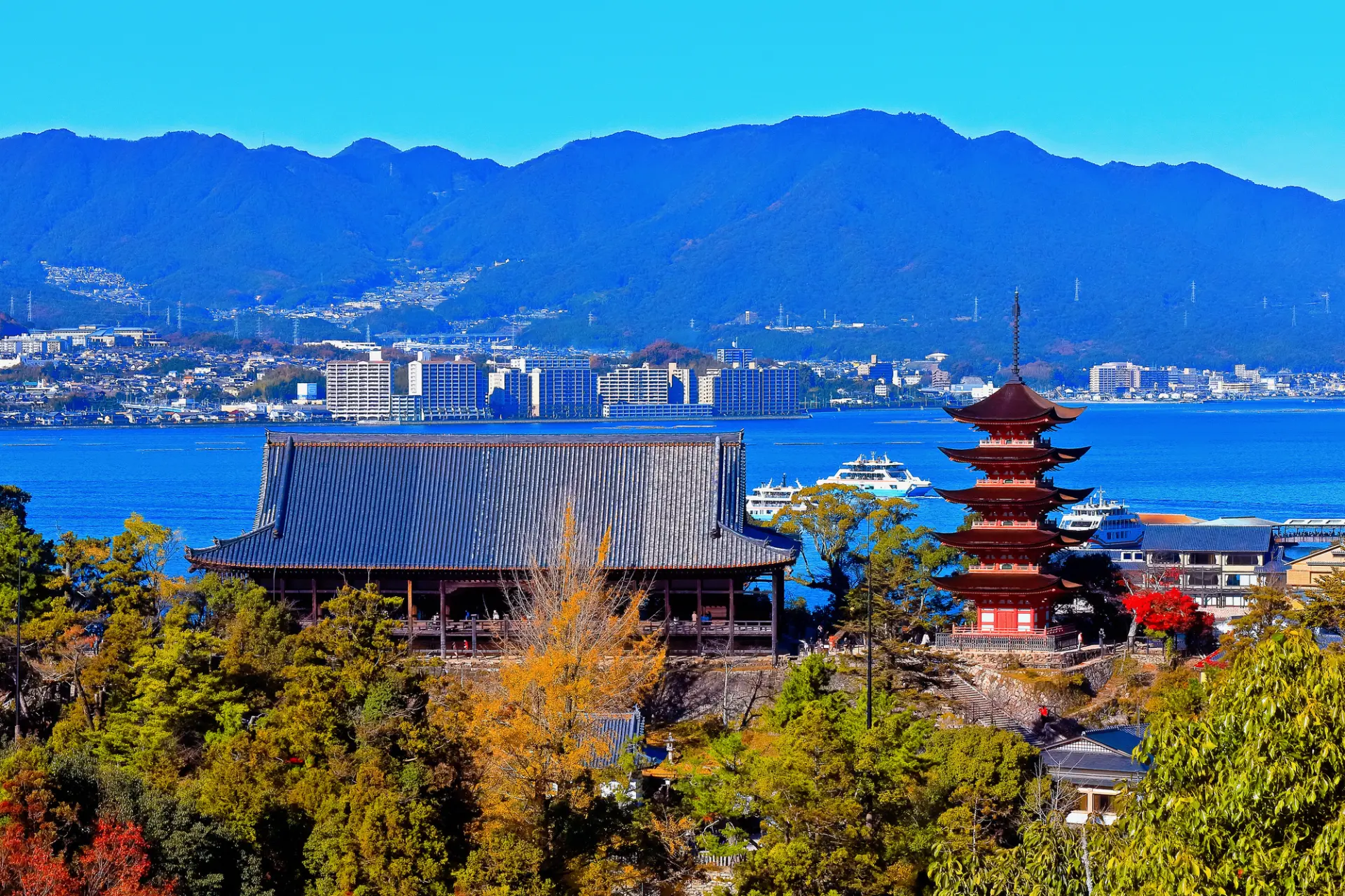
In September, while the weather is still warm, visit Itsukushima Shrine on Miyajima and take in views of the Seto Inland Sea from Mount Misen. In Hiroshima City, a trip to Hiroshima Castle and Shukkeien Garden, where walking paths wind around a central pond, offers both history and traditional garden scenery.
Mornings and evenings gradually become more comfortable, making this a convenient time to plan outdoor sightseeing between the city and the island.
October: Visit Sake Breweries and Gardens as Fall Deepens
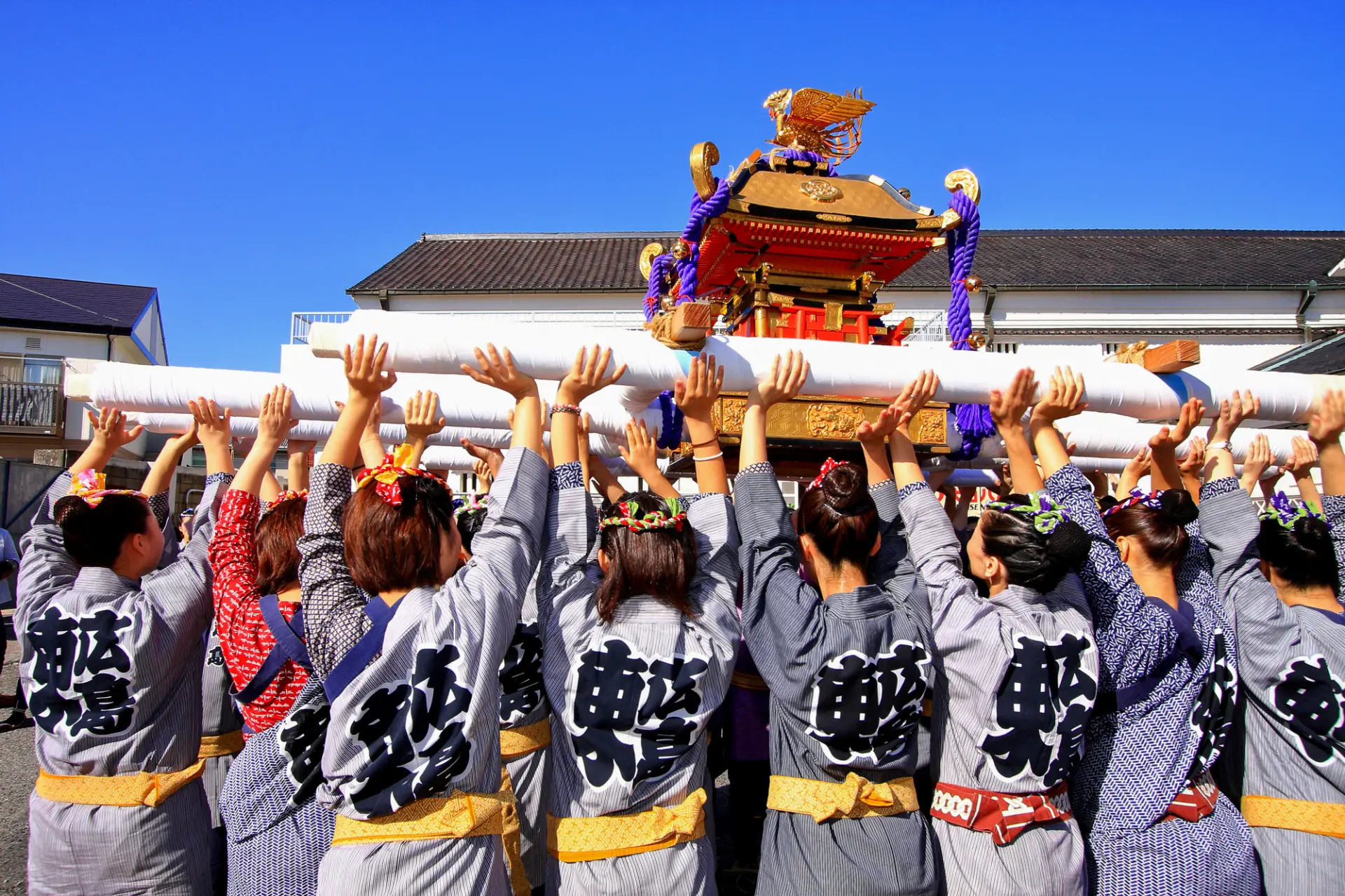
With increasingly pleasant walking weather, October is a good time to explore the sake breweries of Saijo in Higashihiroshima. Visit the breweries around JR Saijo Station and stroll through streets lined with red-brick chimneys, white walls, and distinctive diamond-patterned namako walls. The Sake Festival, which brings together sake from across Japan, is also held each October.
In Hiroshima City, consider strolling through Shukkeien Garden or traveling farther to Sankeien Garden, which depicts Hiroshima’s sea, mountains, and countryside.
- Name in Japanese
- 酒まつり
- Postal Code
- 739-0015
- Venue
- Main venue: Saijo Chuo Park (7 Saijosakaemachi, Higashihiroshima, Hiroshima)
- Phone
- 082-420-0330 (Sake Festival Executive Committee)
- Dates
- Saturday and Sunday of the three-day weekend in October every year; October 10 and 11, 2026
- Access
- 1-minute walk from Saijo Station on the JR Sanyo Main Line
- Official website
- Official website (Japanese)
November: Explore Miyajima and Other Destinations in Colorful Fall Foliage
In November, venture out in search of fall scenery at Momijidani Park, Mount Ima-Koyasan, and Taishakukyo Gorge. On Miyajima, around 700 maple trees change color, while Mount Ima-Koyasan draws visitors as one of the prefecture’s leading foliage destinations. Sankeien Garden also holds its Maple Festival from early to late November.
This is the season to explore Hiroshima’s changing colors across islands, rural hills, and gorges.
7 Popular Hiroshima Attractions to Visit in Fall
From Miyajima and its World Heritage site to historic castles and gardens, streets shaped by sake-brewing culture, and hot springs overlooking the Seto Inland Sea, a fall trip to Hiroshima offers a broad range of scenery and experiences. Venture beyond the city center to the islands and mountains and discover seven destinations, each with its own expression of fall.
1. Itsukushima Shrine (Hatsukaichi City)
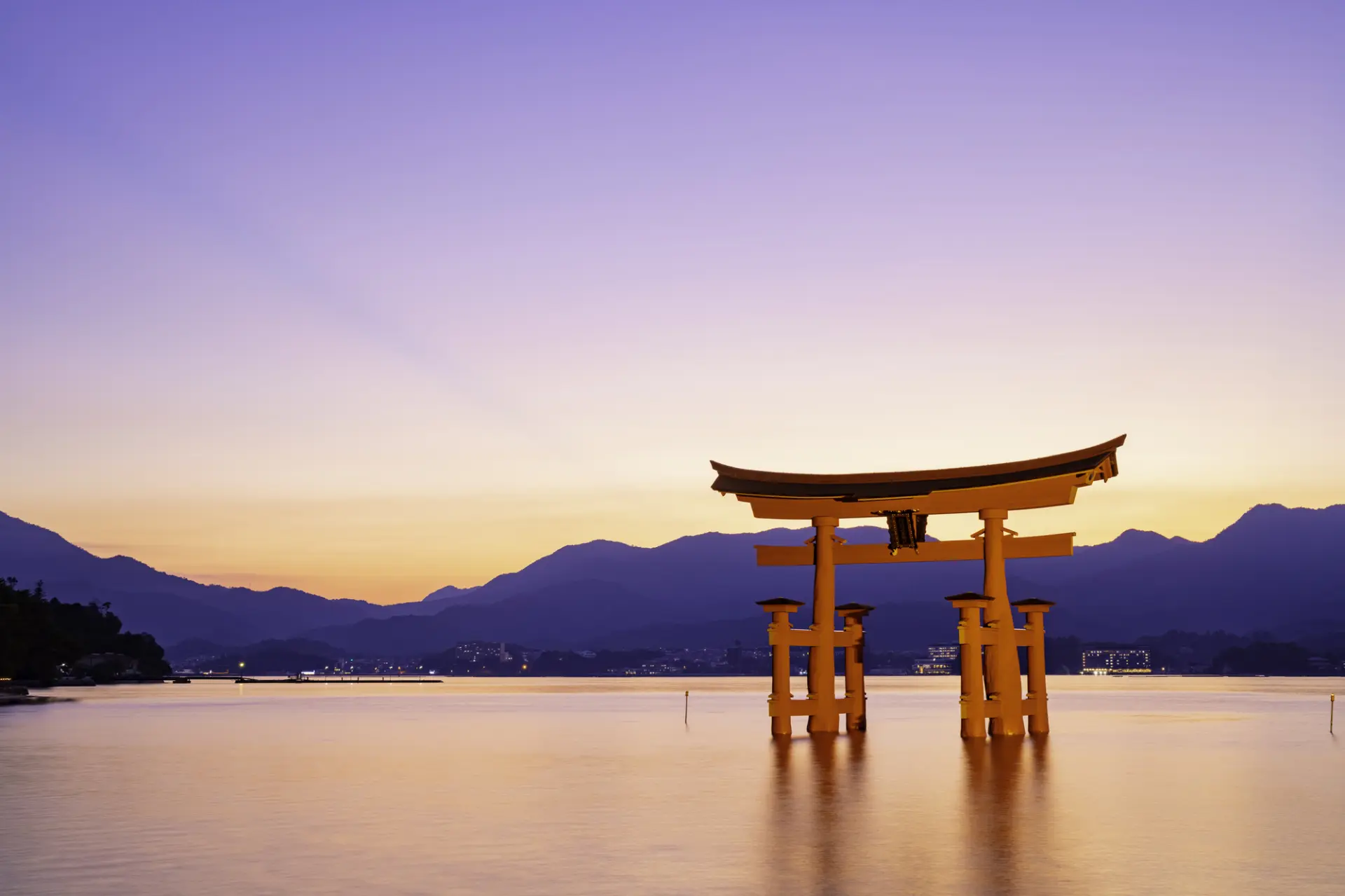
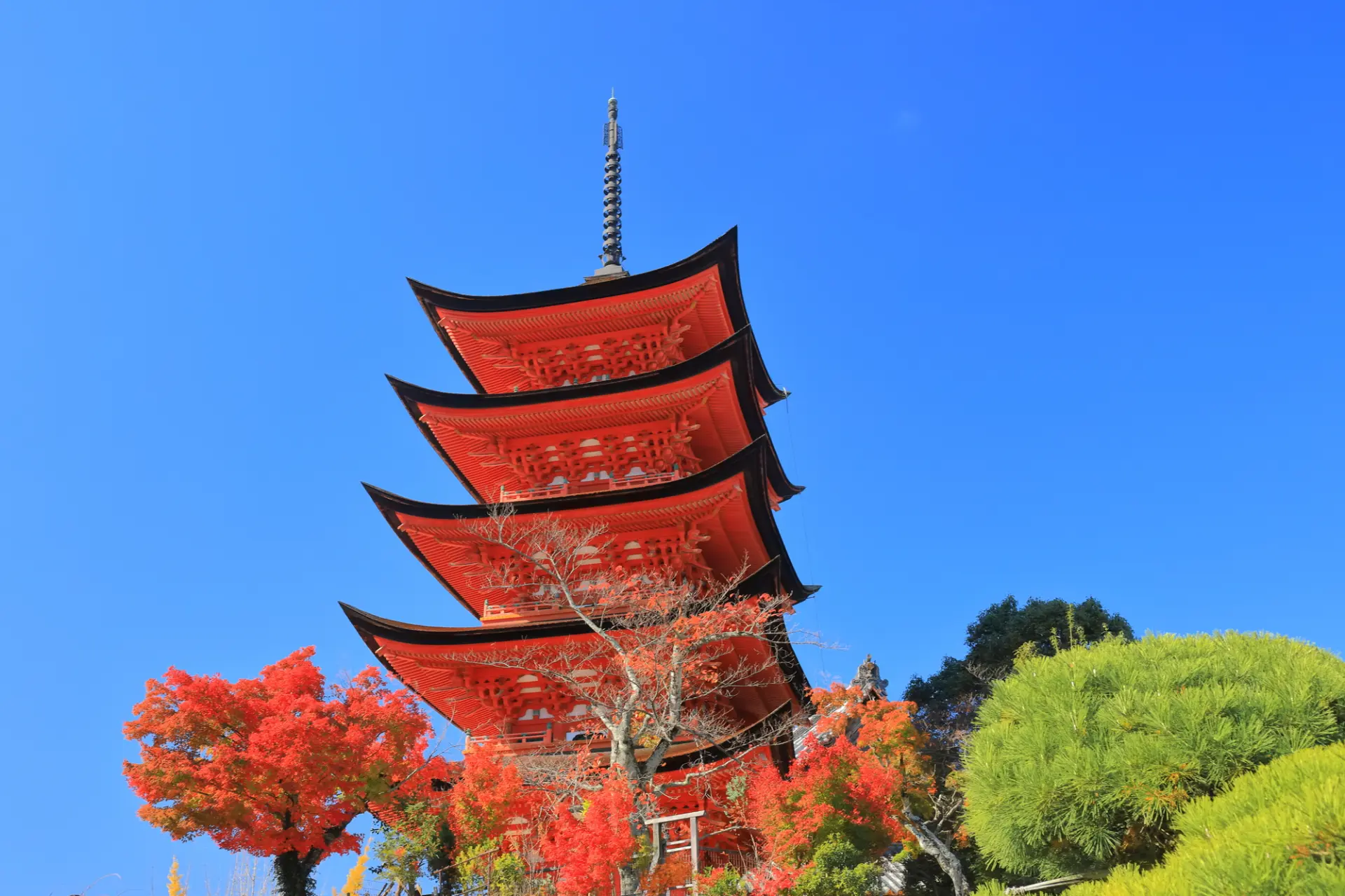
Itsukushima Shrine, one of Miyajima’s best-known landmarks, features vermilion shrine buildings and a great torii gate standing in the sea. Its National Treasure and Important Cultural Property buildings stand side by side, offering a glimpse into the shrine’s history and its worship of three goddesses associated with the sea, transportation, prosperity, and the arts.
The great torii gate in the sea completed its major Reiwa-era restoration in 2022 and once again displays its vivid vermilion color. It is also illuminated from around sunset until 11:00 p.m., creating an enchanting scene distinct from its daytime appearance. After visiting the shrine, stroll through Miyajima Omotesando Shopping Street for oysters and momiji manju cakes.
- Name in Japanese
- 嚴島神社
- Postal Code
- 739-0588
- Address
-
1-1 Miyajimacho, Hatsukaichi City, Hiroshima
Google Maps - Telephone
- 0829-44-2020
- Closed
- Open year-round
- Business Hours
-
January 1st 12 a.m.-6:30 p.m.
January 2nd – 3rd 6:30 a.m.-6:30 p.m.
January 4th – end of February 6:30 a.m.-5:30 p.m.
March 1st – October 14th 6:30 a.m.-6:00 p.m.
October 15th – November 30th 6:30 a.m.-5:30 p.m.
December 1st – December 31st 6:30 a.m.-5:00 p.m.
※Please see official website for details, as hours vary by season. - Admission
-
300 yen; high school students 200 yen; elementary and junior high school students 100 yen
※Please show any disability certificates or nursing certificates if applicable. - Access
- From JR Miyajimaguchi Station, walk to Miyajimaguchi Pier, taking the ferry to Miyajima Pier. From there, about a 15-minute walk.
- Official Website
- Official Website
2. Mount Misen (Hatsukaichi City)
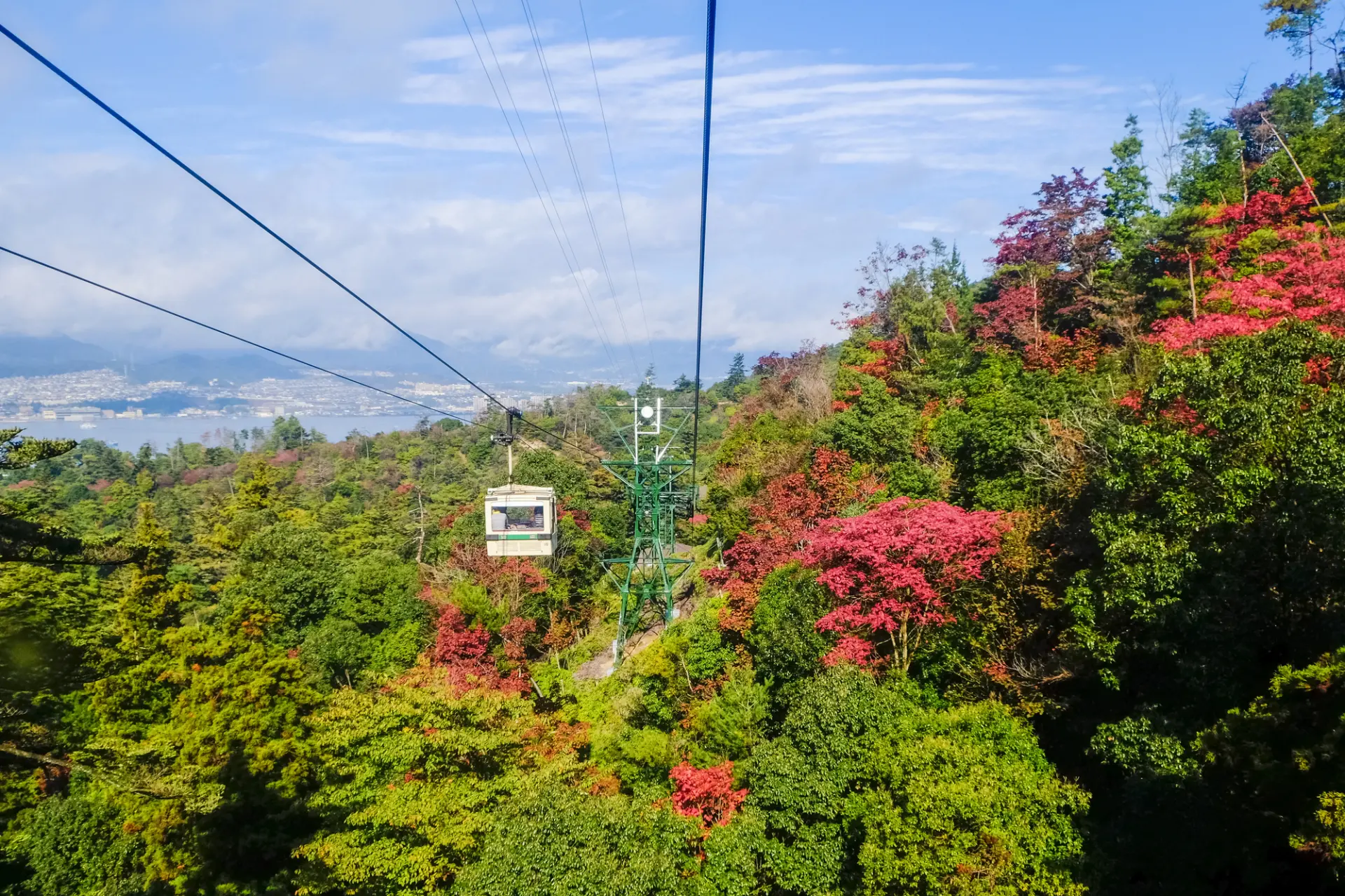
Rising near the center of Miyajima, this 1,755-foot sacred mountain has long been associated with mountain worship. To reach the summit, visitors can either hike for about 90 to 120 minutes or take the two connecting Miyajima Ropeway lines and then walk for about 30 minutes.
Along the way are sites such as Misen Hondo Hall, founded by Kobo Daishi, as well as the primeval forest of Mount Misen, which is registered as part of the World Heritage site. Massive and unusually shaped rocks are scattered near the summit. Panoramic views extend across the islands of the Seto Inland Sea, and on clear days, as far as the mountain ranges of Shikoku.
- Name in Japanese
- 弥山
- Postal Code
- 739-0588
- Address
-
Miyajimacho, Hatsukaichi City, Hiroshima
Google Maps - Telephone
- 0829-44-2011 (Miyajima Tourist Association)
- Closed
- Free to walk
- Business Hours
- Walk anytime
- Admission
- Free
- Access
- About 25 minutes walk from Miyajima Pier to Miyajima Ropeway Momijidani Station
- Official Website
- Official Website (English)
3. Hiroshima Castle (Hiroshima City)
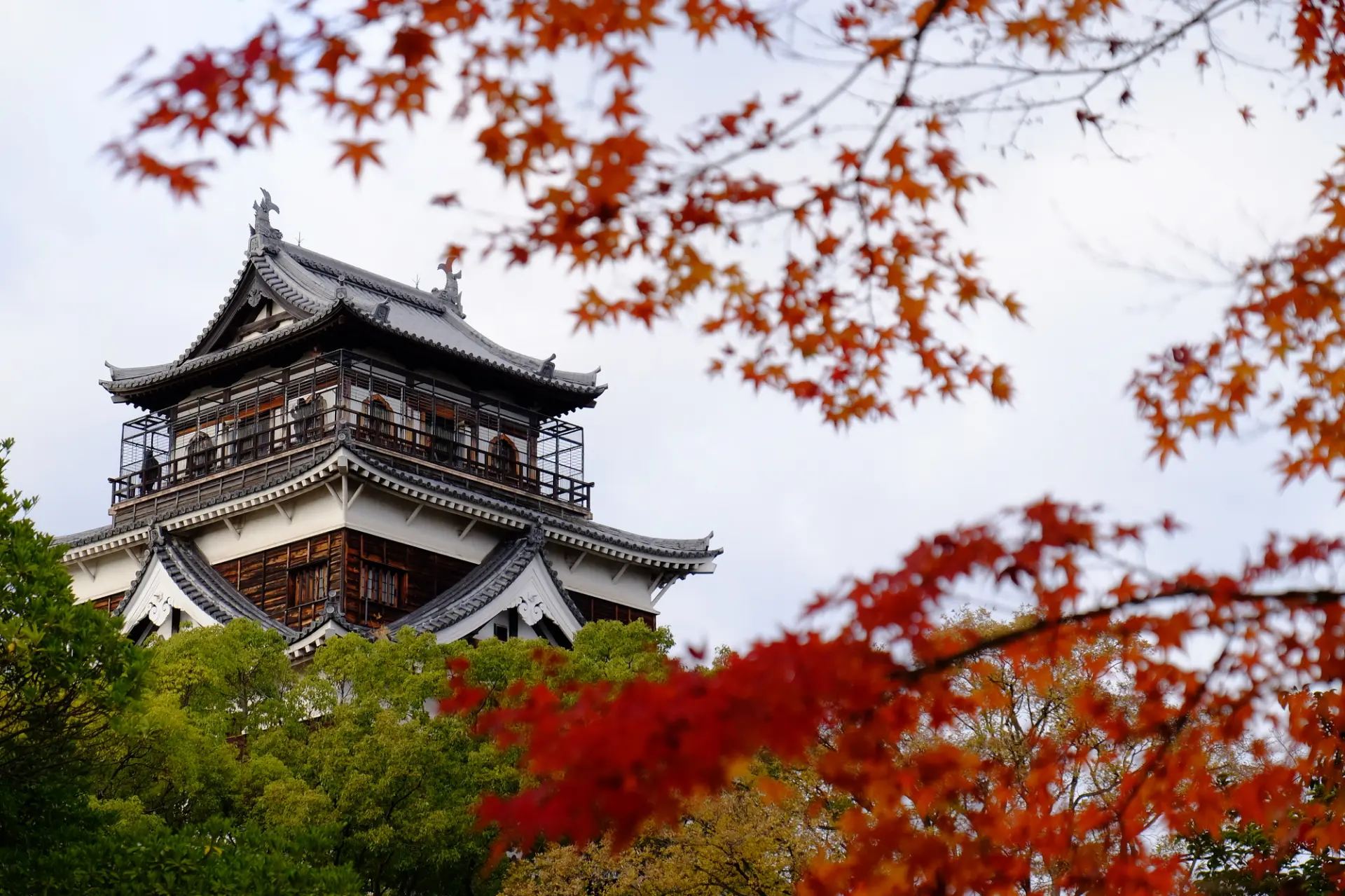
Located in central Hiroshima City, this castle was built by Mori Terumoto in 1589. Reconstructed structures from the 1990s, including the Omotegomon Gate, Hirayagura Turret, and Tamonyagura Turret, preserve a sense of the castle grounds as they once appeared. The current main keep closed on March 22, 2026, ending admission to its interior, but visitors can still view it from outside and explore the history of the castle.
The grounds also contain Hiroshima Gokoku Shrine and Hiroshima Castle Sannomaru. Sightseeing boats offer views from the water of stone walls bearing traces of the atomic bombing and trees that survived the bombing.
- Name in Japanese
- 広島城
- Postal Code
- 730-0011
- Address
-
21-1 Motomachi, Naka-ku, Hiroshima City, Hiroshima
Google Maps - Telephone
- 082-221-7512
- Admission
-
Adult 370 yen, senior (over 65) 180 yen, high school students 180 yen, under the age of junior highschool students free.
※ Senior members will be checked for age at the ticket counter. Please present an official government ID (driver’s license, health insurance card etc.) for age verification, or a Health and Medical Service Law for the Elderly (Rojin Hoken Ho) health handbook.
※ High school students include those who are enrolled in senior high school, latter years of secondary high school, or the high school stage of a special needs school as well as others who do not fit the criteria, that is people of ages 15 to 18, from the day after turning 15 years old until March 31 after the 18th birthday. - Closed
- End of the year (December 29-31) ※There will be temporary closures.
- Business Hours
-
March–November 9:00am - 6:00pm (Last admission 5:30pm)
December–February 9:00am - 5:00pm (last admission 4:30pm) - Access
-
1. Approx. 15 minutes on foot from Hiroshima Electric Railway Kamiya-Cho-Higashi Station.
2. Approx. 17 minutes on foot from JR Sanyo Main Line Shin-Hakushima Station via the Back Gate. Approx. 25 minutes on foot from Hiroshima Station. - Official Website
- Official Website (Japanese)
4. Shukkeien Garden (Hiroshima City)
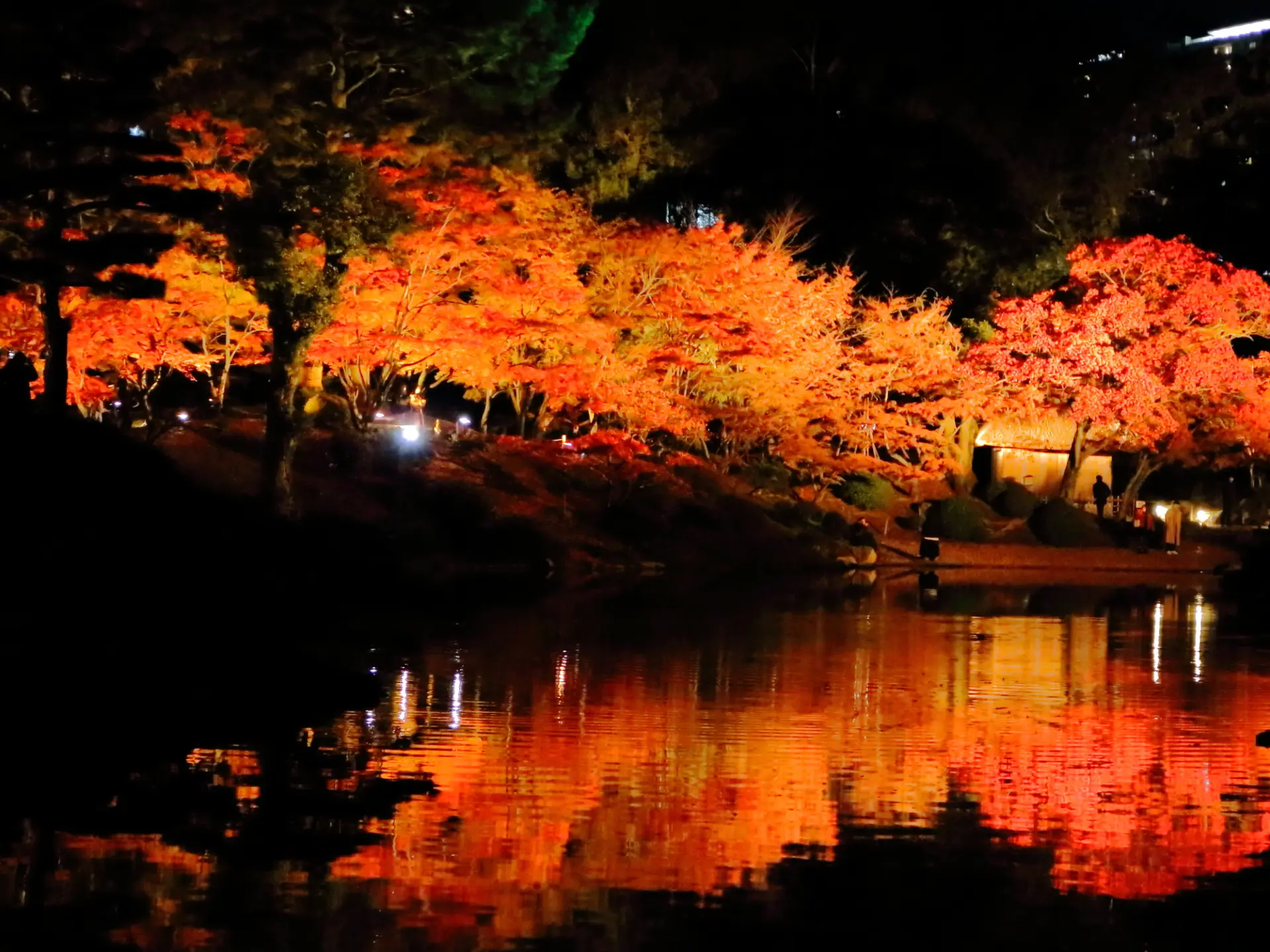
This historic strolling garden was first developed in 1620 by Asano Nagaakira, lord of the Hiroshima Domain. Following its paths takes visitors past teahouses, small pavilions, hills, streams, and islands arranged around a pond.
In the center of the garden, the islands known as Crane Island and Turtle Island float in Takueichi Pond as symbols of longevity. The pond contains brackish water, a mixture of fresh and salt water, and is home to wild birds that feed on fish. View the entire garden from Geikihō, a hill designed to resemble Mount Fuji, then make a full circuit of the paths surrounded by fall foliage.
- Name in Japanese
- 縮景園
- Postal Code
- 730-0014
- Address
-
2-11 Kaminoboricho, Naka-ku, Hiroshima City, Hiroshima
Google Maps - Telephone
- 082-221-3620
- Entrance fee
- adult 350 yen, University students (ID required) 150 yen, Free for high school students and younger, Free for guests over 65 years of age (ID required)
- Closed
- December 29-31
- Business Hours
-
March 16th - September 15th 9:00 am-6:00 pm (Last admission 5:30pm)
September 16th - March 15th 9:00 am-5:00 pm (Last admission 4:30pm) - Access
- Take the Hakushima Line streetcar and get off at Shukkeien-mae Station
- Official Website
- Official Website (Japanese)
5. Sankeien Garden (Mihara City)
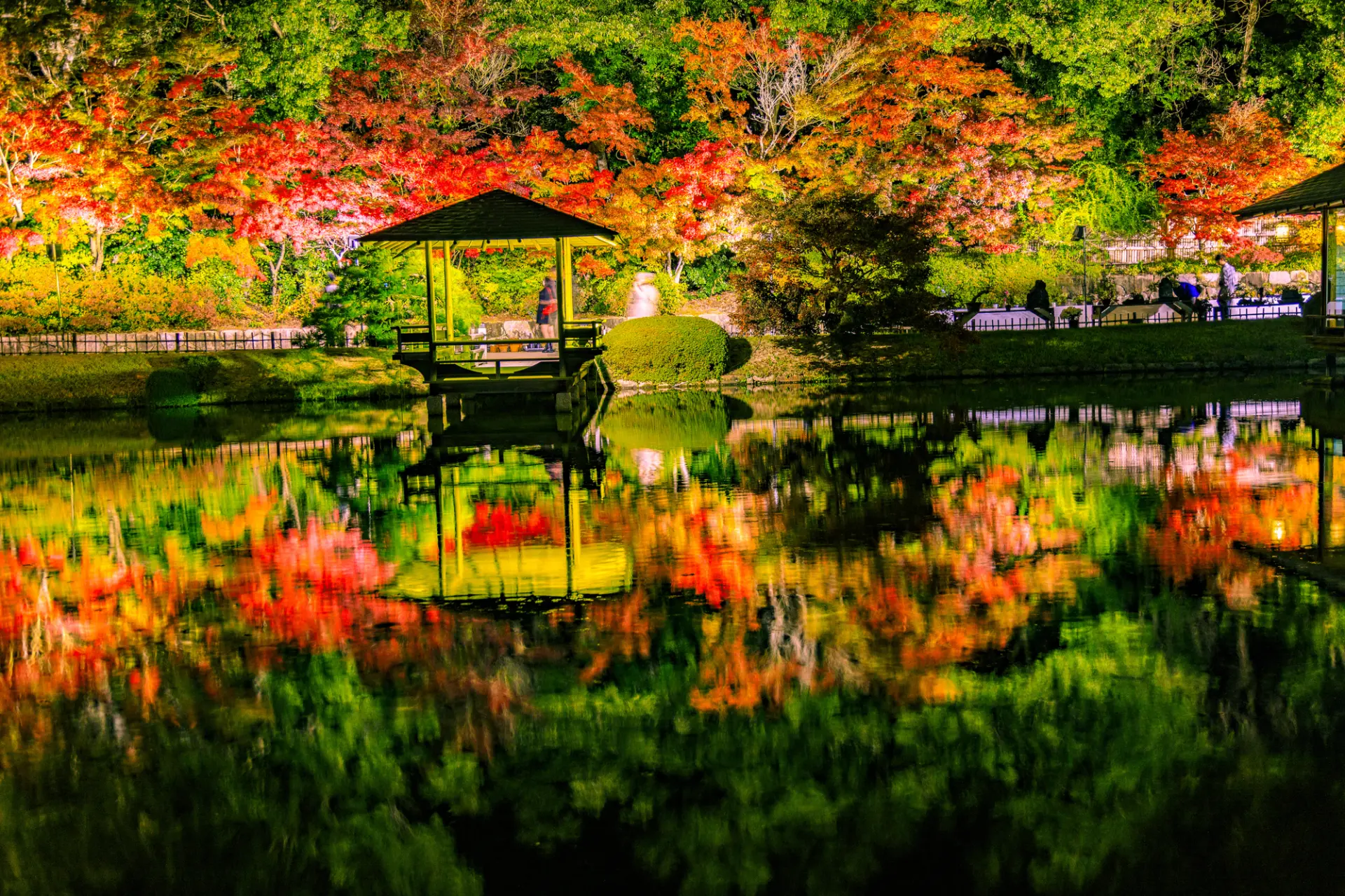
Located about a 5-minute walk from Hiroshima Airport, this Japanese garden covers approximately 15 acres. Its sea zone represents the Seto Inland Sea, its mountain zone features natural woodland and a three-tiered waterfall, and its rural zone includes bamboo and plum groves, allowing visitors to experience Hiroshima’s sea, mountains, and countryside in one place.
It is also known as one of Hiroshima’s leading fall foliage destinations. The Maple Festival is held from early to late November, when the colors are typically at their best. Its location about a 5-minute walk from Hiroshima Airport makes it easy to visit before or after a flight.
- Name in Japanese
- 三景園
- Postal Code
- 729-0416
- Address
-
64-24 Zennyuji, Hongo-cho, Mihara City, Hiroshima Prefecture
Google Maps - Phone
- 0848-86-9200
- Closed on
- December 29–31
- Hours
- April–September: 9:00 am–6:00 pm; October–March: 9:00 am–5:00 pm
- Admission
-
Adults: ¥390; elementary and junior high school students: ¥200 (elementary, junior high, and high school students accompanied by an adult are admitted free)
*Free for visitors age 65 and older with proof of age - Access
- 5-minute walk from Hiroshima Airport
- Credit Cards
- Accepted
- Official website
- Official website (Japanese)
6. Saijo Sakagura-dori (Higashihiroshima City)
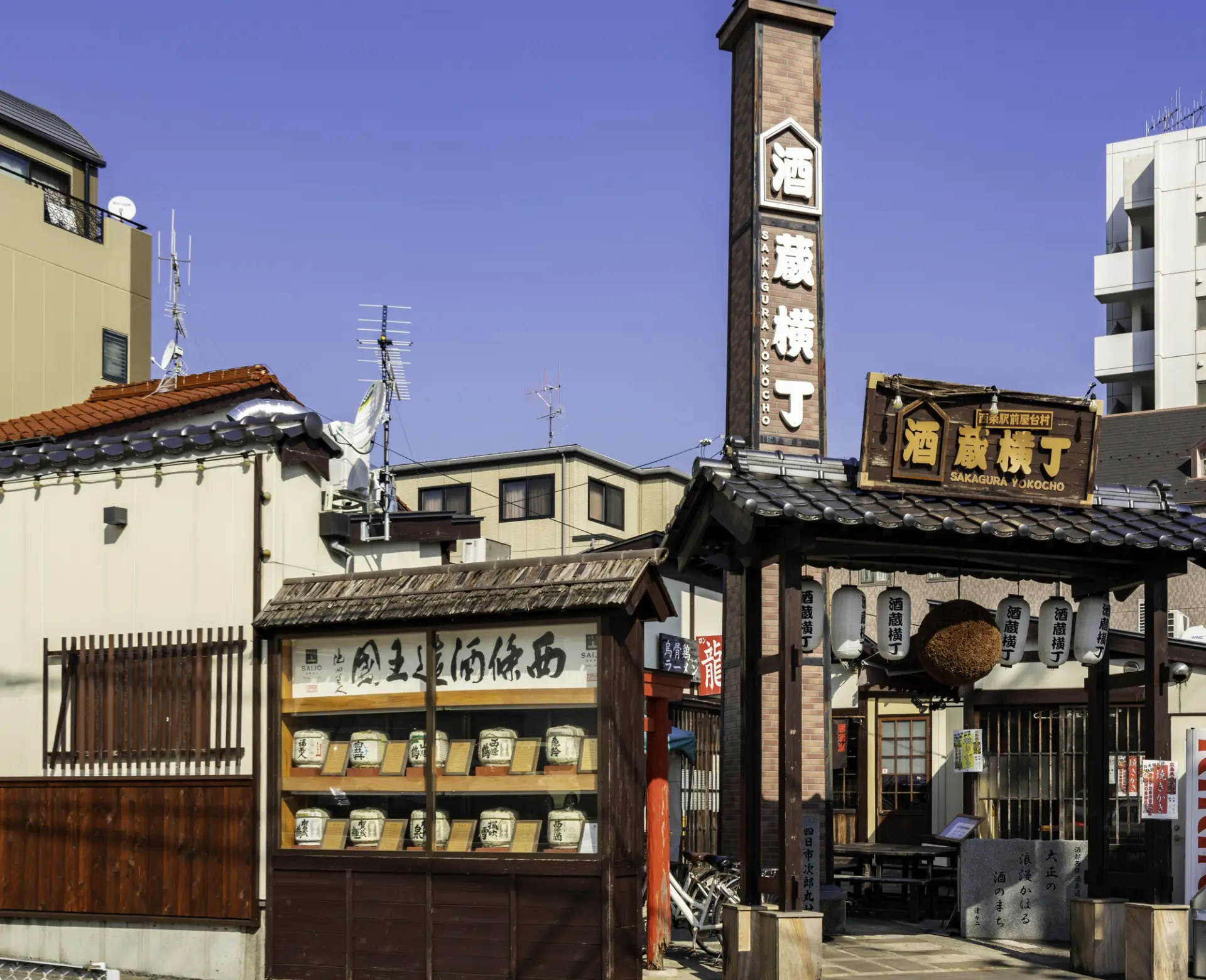
Saijo in Higashihiroshima is a historic sake-brewery district known as the “Sake Capital of Saijo.” It flourished as a post town during the Edo period and has long benefited from high-quality water, sake rice, and other conditions suited to brewing.
Seven sake breweries remain around JR Saijo Station today. Some have exhibition rooms and offer tastings and sales. Explore this sake-brewing town while stopping at cafés in renovated breweries and restaurants serving bishu nabe, a local sake hot pot.
- Name in Japanese
- 西条酒蔵通り
- Postal Code
- 739-0011
- Address
-
17 Saijohonmachi, Higashihiroshima City, Hiroshima
Google Maps - Telephone
- 082-421-2511 (Saijo Sakagura Dori Tourist Information Center)
- Closed
- Open every day
- Hours
- Walk anytime
- Admission
- Free
- Access
- Within a 5-minute walk from Saijo Station on the JR Sanyo Main Line
- Official Website
- Official Website (English)
7. Miyahama Onsen (Hatsukaichi City)
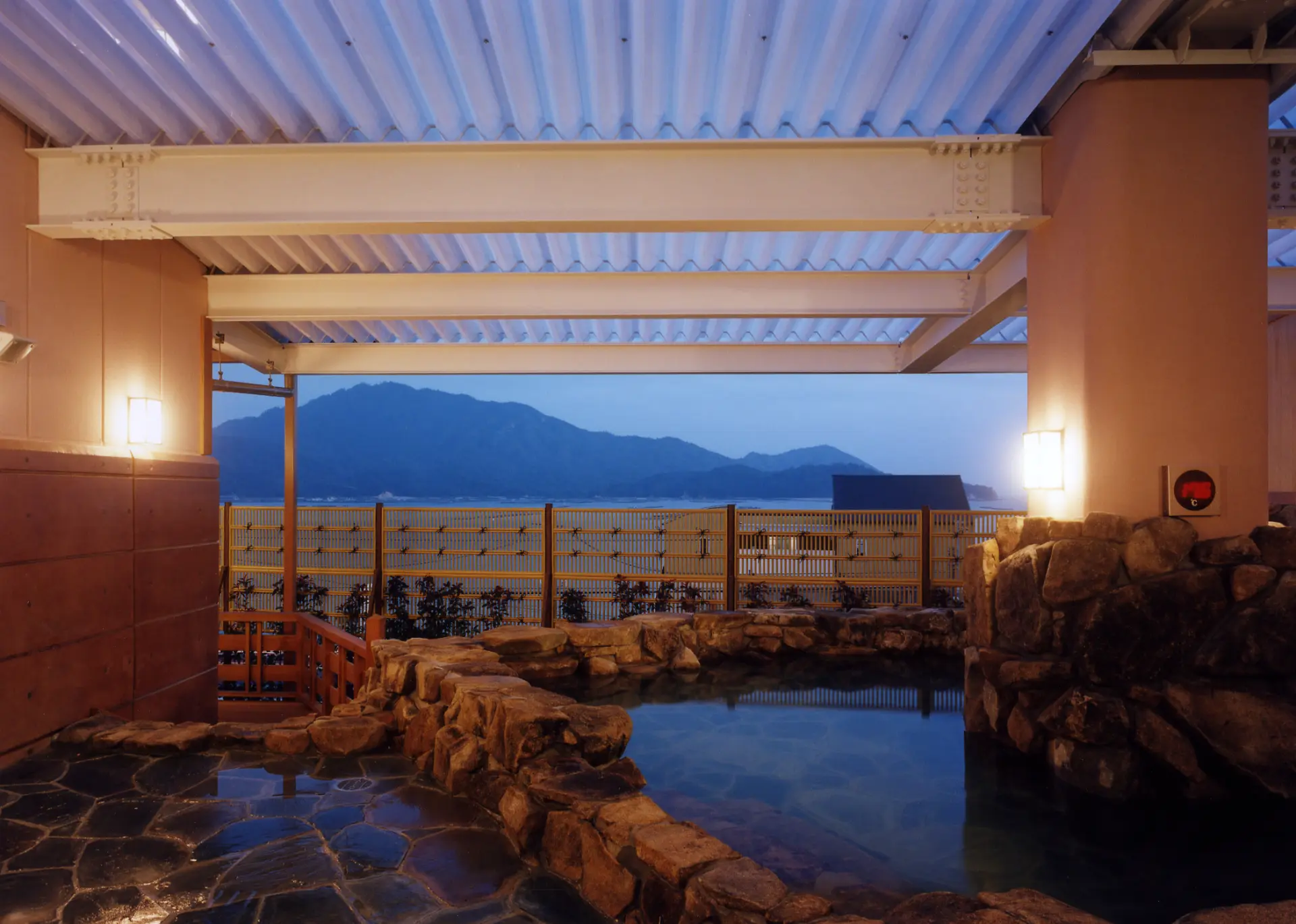
This natural hot spring resort opened in 1964 on the shore opposite the World Heritage island of Miyajima. Its tranquil views of the Seto Inland Sea and Ono Seto are a major attraction. At sunset, the sea and islands take on deep red hues, creating a peaceful atmosphere.
More than 10 properties are located throughout the area, ranging from long-established ryokan inns and pensions to modern accommodations and day-use hot spring facilities. Visitors can also dine on seafood such as oysters and conger eel. After soaking in the mildly alkaline, radon-rich waters, take a walk along the shore and watch the silhouettes of the islands at sunset.
- Name in Japanese
- 宮浜温泉
- Postal Code
- 739-0454
- Address
-
2-5-4 Miyahama Onsen, Hatsukaichi, Hiroshima Prefecture
Google Maps - Phone
- 0829-55-2255 (Yunoyado Miyahama Grand Hotel)
- Closed on
- Varies by facility
- Hours
- Varies by facility
- Admission
- Varies by facility
- Access
- About 5 minutes by car from JR Onoura Station
- Credit Cards
- Varies by facility
- Official website
- Official website (Japanese)
3 Fall Foliage Destinations in Hiroshima
Hiroshima offers a distinctive range of fall foliage destinations, including Momijidani Park on Miyajima, Mount Ima-Koyasan, where temples and shrines blend with colorful leaves, and Taishakukyo Gorge, known for its dramatic scenery. Considering their typical peak foliage periods, here are three places to visit in fall.
1. Momijidani Park (Hatsukaichi City)
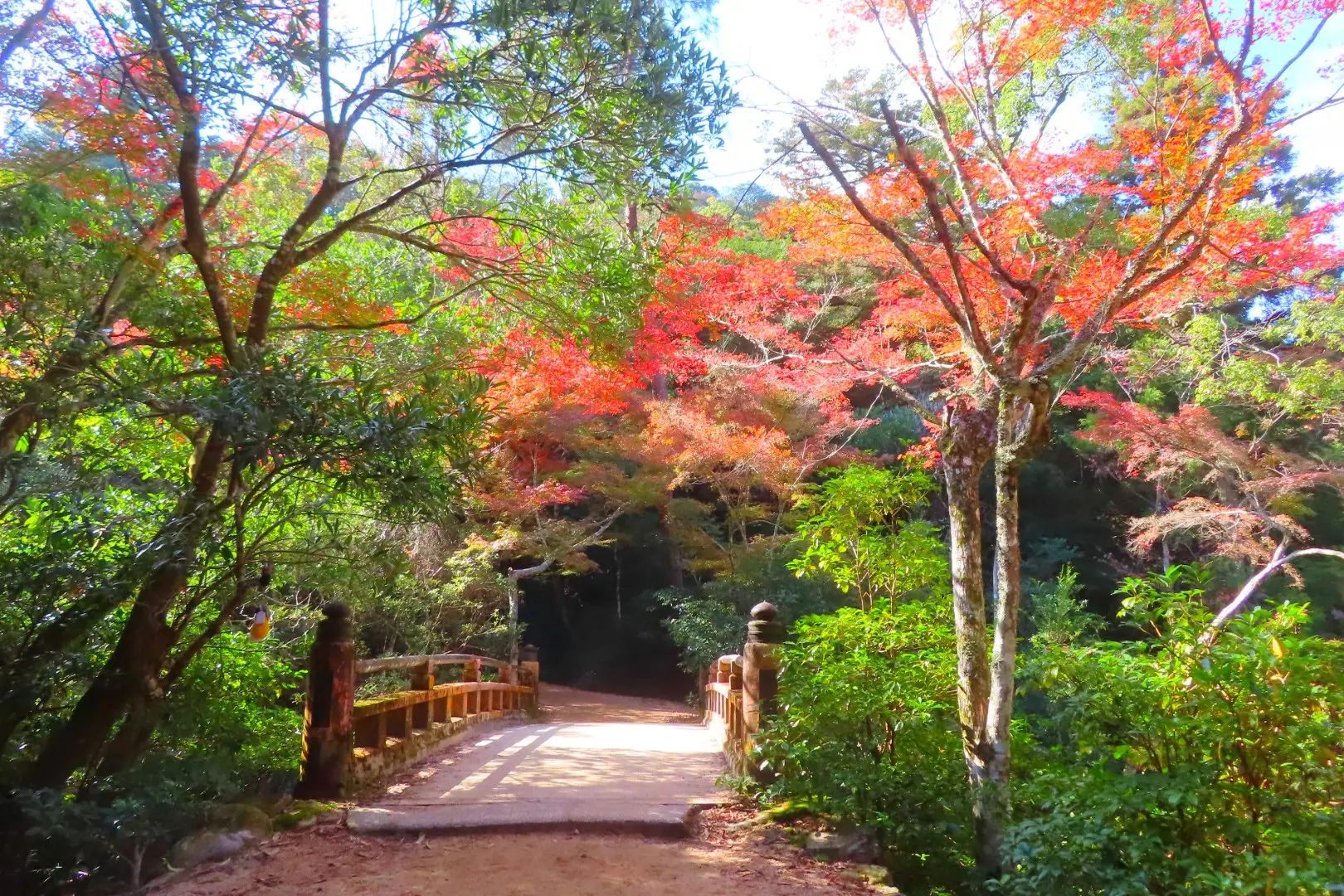
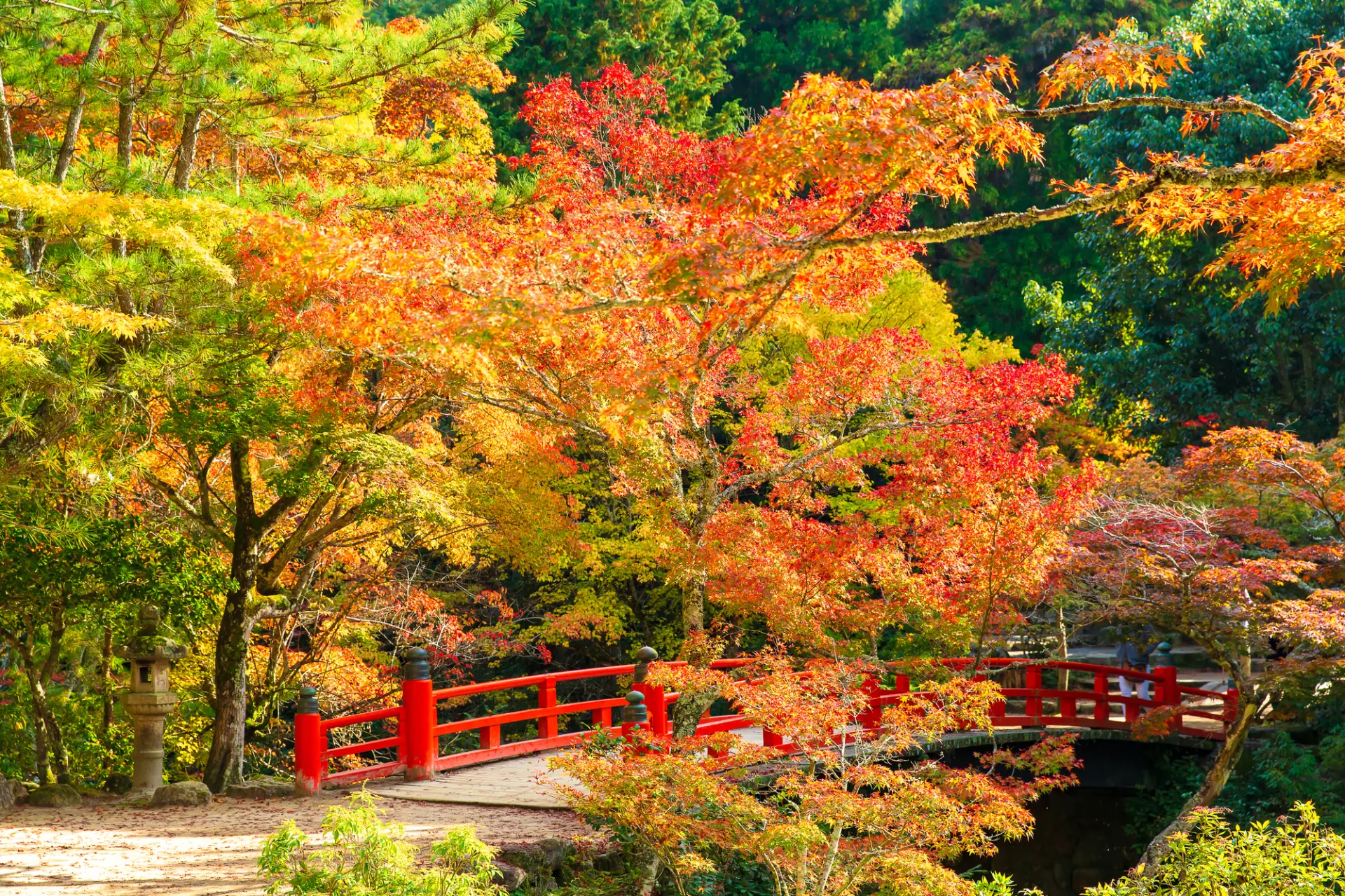
One of Miyajima’s best-known fall foliage destinations, this park features a variety of trees, including Japanese maples and large-leaved maples. During the typical foliage season from mid- to late November, around 700 maple trees throughout the park turn brilliant shades of fall color.
Highlights include Momiji Bridge, with its striking vermilion railings, and the clear waters of the Momijidani River. Hiroshima’s famous momiji manju cakes are also said to have been created during the Meiji period with this park as their inspiration. Stay to see the illuminated leaves after sunset and experience a side of Miyajima in fall that differs from the daytime scenery.
- Name in Japanese
- 紅葉谷公園
- Postal Code
- 739-0588
- Address
-
Miyajimacho, Hatsukaichi City, Hiroshima
Google Maps - Telephone
- 0829-44-2011(Miyajima Tourist Association)
- Closed
- Open every day
- Business Hours
- Walk anytime
- Admission
- Free
- Access
- About a 10-minute ride on the JR West Miyajima Ferry or the Miyajima Matsudai Kisen Ferry from JR Miyajimaguchi Station or Hiroshima Electric Railway Hirosima-Miyajimaguchi Station. Then, about a 15-minute walk from "Miyajima Sanbashi" (Miyajima Pier).
- Official Website
- Official Website (Japanese)
2. Mount Ima-Koyasan (Sera Town)
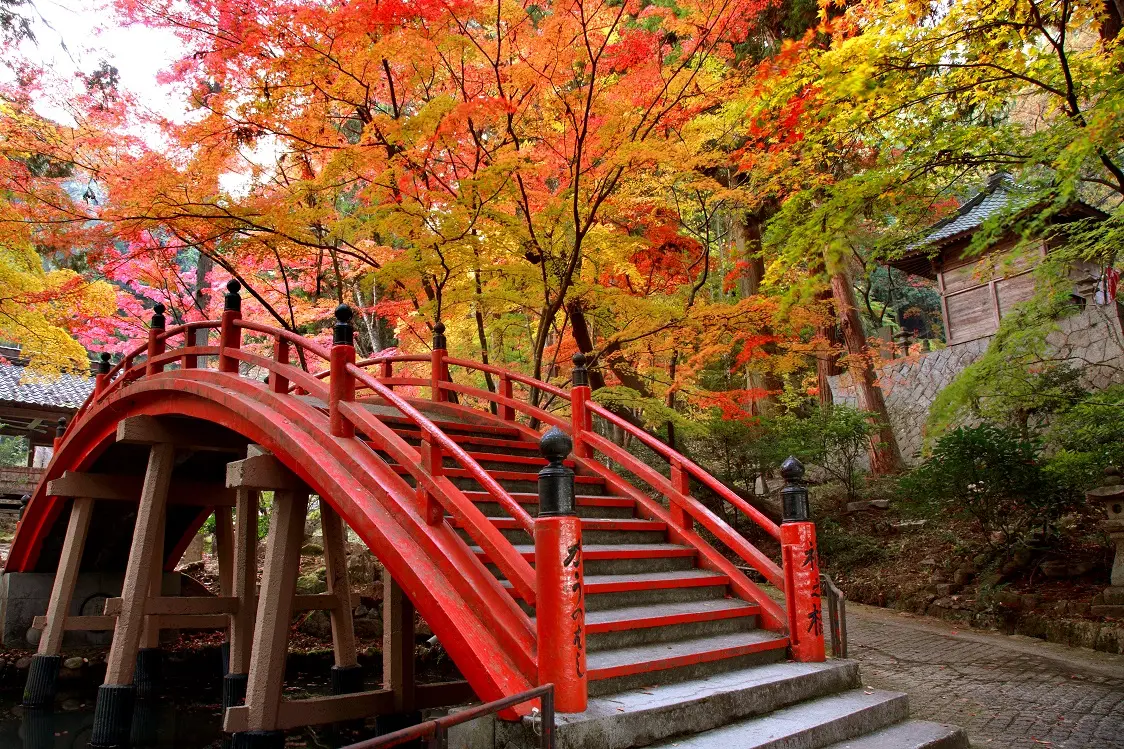
This sacred site of Shingon Esoteric Buddhism was founded by Kobo Daishi Kukai in 822 and has a history spanning 1,200 years. The grounds preserve historic sites centered around Ryugeji Temple, Kongoji Temple, and Niu Shrine, as well as a standing wooden statue of the Eleven-Headed Kannon and a lion head designated as Important Cultural Properties of Japan.
The area is also rich in nature, with cherry blossoms coloring the grounds in spring and fall foliage in autumn. The foliage is particularly well known as some of the finest in the prefecture. When it typically reaches its peak from early to mid-November, the site attracts many visitors, including photography enthusiasts.
- Name in Japanese
- 今高野山
- Postal Code
- 722-1123
- Address
-
Kozan, Seracho, Seragun, Hiroshima
Google Maps - Telephone
- 090-4190-0182 (Kōzan Historical Sites & Heritage Preservation Association)
- Access
- From JR Onomichi Station, take the Chūgoku Bus to "Kōzan Business Office" bus stop. It's about a 5-minute walk from there.
- Official Website
- Official Website (Japanese)
3. Taishakukyo Gorge (Shobara City)
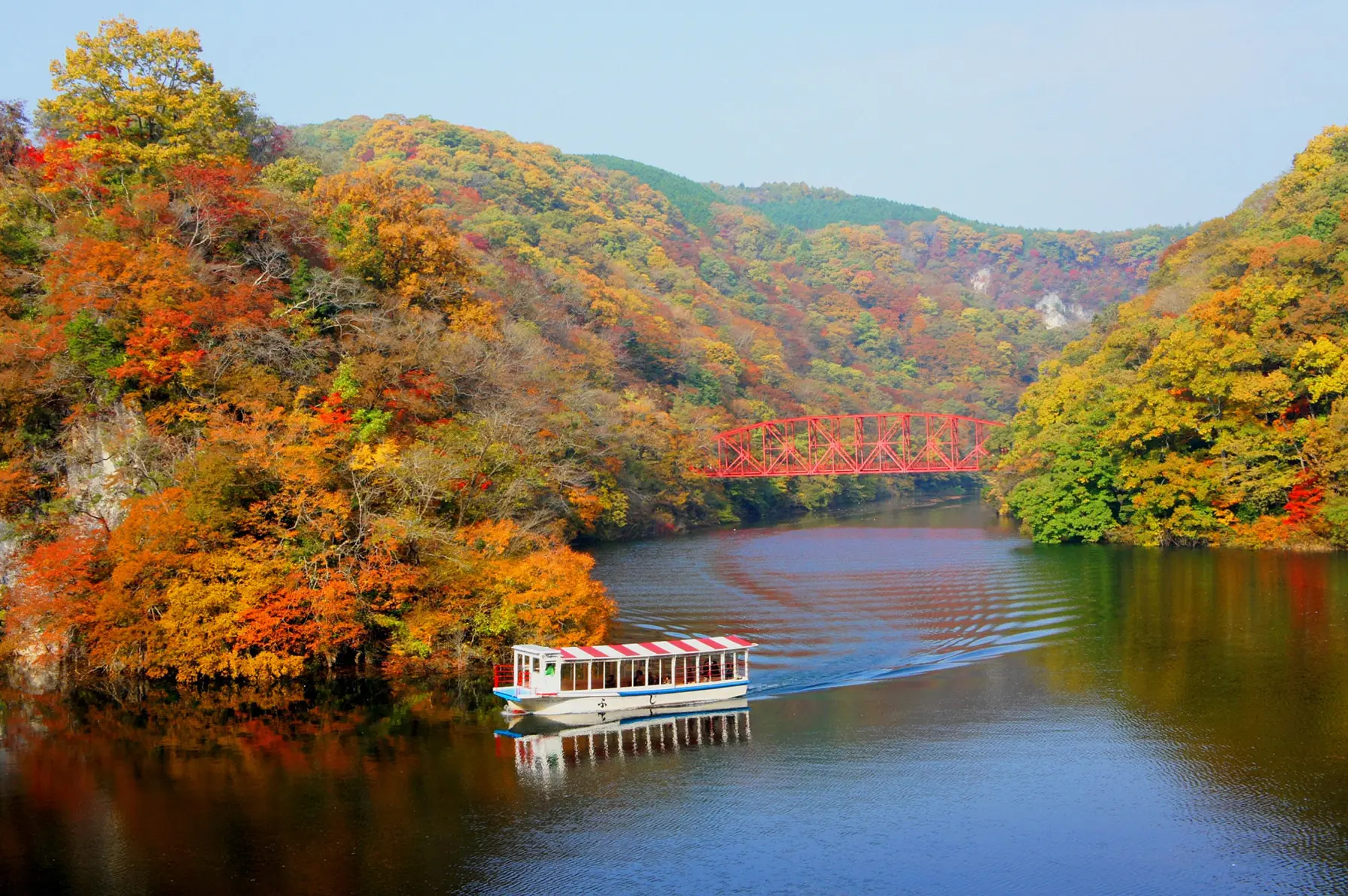
This vast, 11.2-mile gorge spans Shobara City and Jinsekikogen Town. In the Upper Taishaku area, visitors encounter varied natural scenery, including a karst plateau formed from limestone over many years, Hakuundo Cave, and the 26-foot-tall Oni-no-Karamon rock formation. One highlight is Onbashi, one of Japan’s largest natural limestone bridges, measuring 295 feet long and 131 feet high.
At Lake Shinryu, sightseeing boats and canoes offer views of cliffs and unusual rock formations from the water. In fall, experience the immense scale of the gorge surrounded by trees in a range of colors.
- Name in Japanese
- 帝釈峡
- Postal Code
- 729-3602(Taishaku Gorge Tourist Association)
- Address
-
Shobara City to Jinsekikogencho, Hiroshima
Google Maps - Telephone
- 0847-86-0611(Taishaku Gorge Tourist Association)
- Closed
- Free to walk
- Business Hours
- Walk anytime
- Admission
- Free
- Access
- About 20 minutes by taxi from JR Tojo Station. (to Kami-Taishaku area; time varies by area).
- Official Website
- Official Website (English)
5 Hiroshima Restaurants to Visit on a Fall Outing
Oysters, okonomiyaki, and sake are all important parts of a trip to Hiroshima. The local flavors vary by area, from oyster dishes and coffee on Miyajima to local sake and regional cuisine in Saijo, and teppan dishes and oyster bars in the city center.
Stop in between sightseeing destinations and savor a dish and drink distinctive to Hiroshima.
1. Kakiya (Hatsukaichi City)
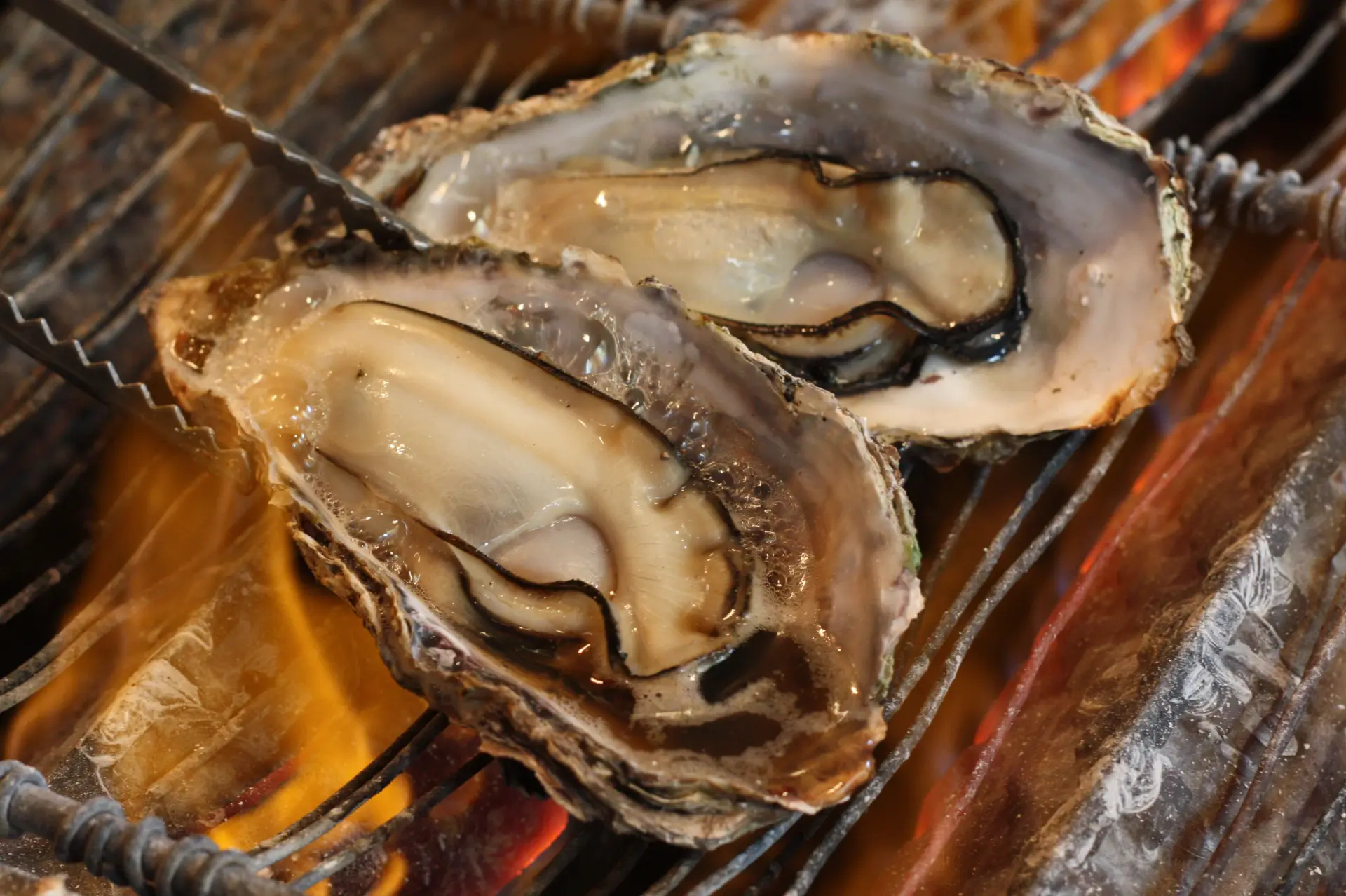
This oyster specialty restaurant is located in the heart of Miyajima Omotesando Shopping Street. It uses Jigozen oysters, considered among the highest-quality varieties of Hiroshima’s celebrated oysters. Guests can sample them prepared in many ways, including grilled, raw, and fried.
The signature grilled oysters are quickly cooked over intense heat and served without seasoning so that diners can appreciate their natural salinity. After exploring Miyajima, settle in with freshly grilled oysters.
- Name in Japanese
- 牡蠣屋
- Postal Code
- 739-0558
- Address
-
539 Miyajimacho, Hatsukaichi City, Hiroshima
Google Maps - Telephone
- 0829-44-2747
- Business Hours
-
10:00am - 6:00pm
※ Closed once sold out of oysters. - Closed
- Irregular holidays
- Budget
- 2,000 - 4,000 yen
- Access
- Get off at the JR Sanyo Main Line Miyajimaguchi Station. About 10 minutes aboard the Miyajima Ferry to Miyajima Sanbashi. About 7 minutes on foot from there.
- Credit Cards
- Not accepted
- Official Website
- Official Website (Japanese)
2. Itsuki Coffee Miyajima (Hatsukaichi City)
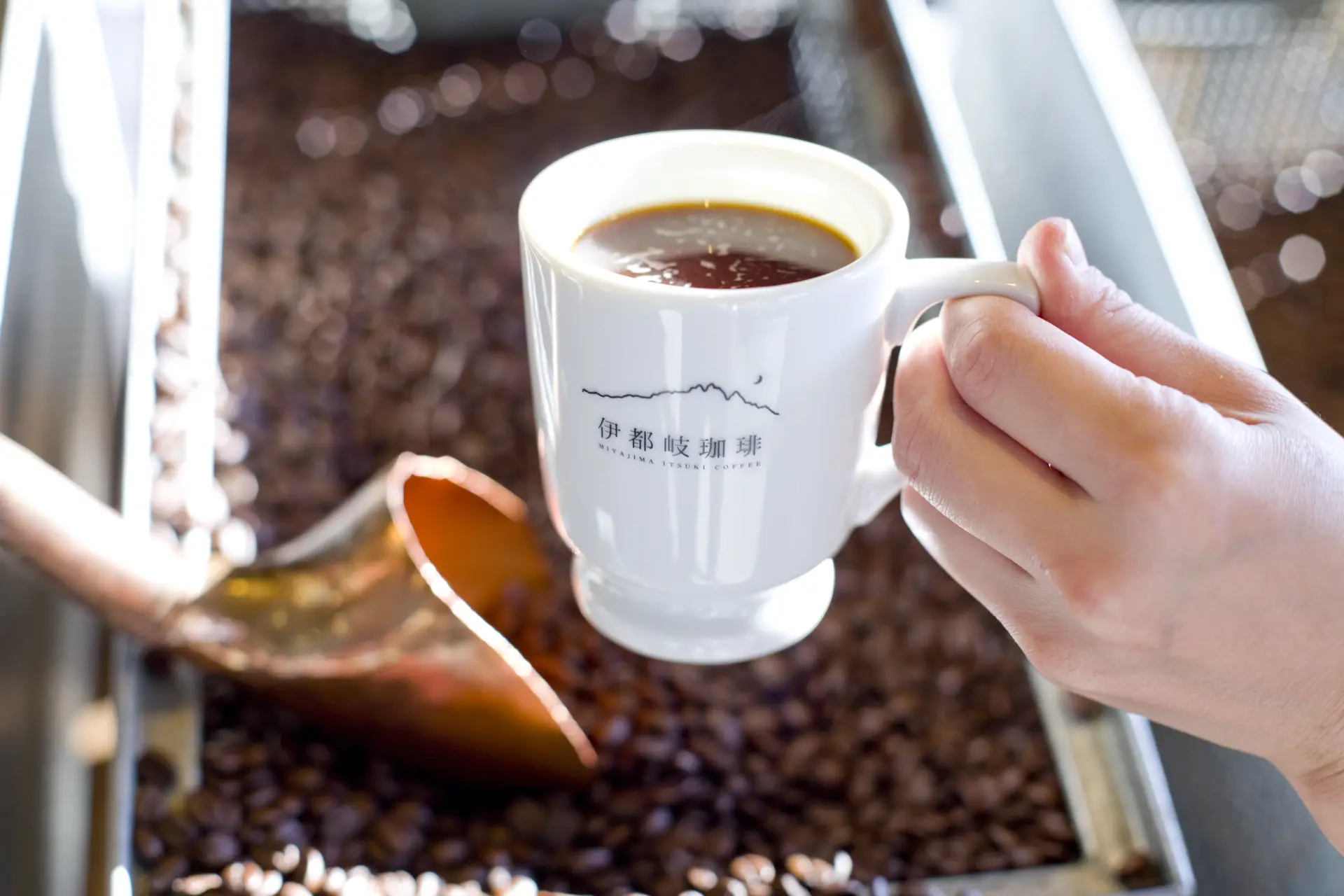
This specialty coffee shop on Miyajima is a casual, counter-service café offering high-quality coffee roasted in-house.
Freshness is a priority, and the owner roasts the beans every morning. In addition to drip coffee and espresso, the menu includes lemonade, soft-serve ice cream, and hot sandwiches. Located near the center of the island’s sightseeing area, it is an ideal place to stop between attractions.
- Name in Japanese
- 伊都岐珈琲 宮島
- Postal Code
- 739-0588
- Address
-
420 Miyajimacho, Hatsukaichi City, Hiroshima
Google Maps - Telephone
- 0829-44-0611
- Closed
- Open every day
- Business Hours
- 9:00am - 7:00pm
- Budget
- 500yen-
- Access
- About 9 minutes walk from Miyajima Pier.
- Credit Cards
- Not accepted
- Official Website
- Official Website (Japanese)
3. Kuradokoro TARU (Higashihiroshima City)
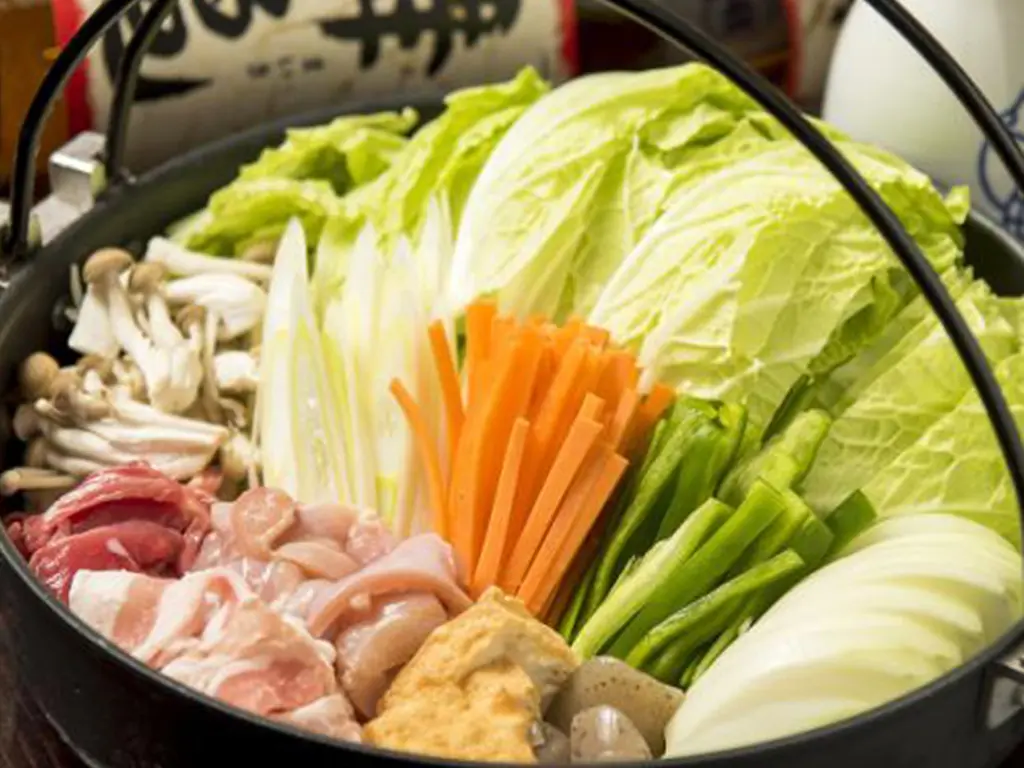
This casual Japanese pub serves local Saijo sake and regional cuisine. Its specialty is bishu nabe, a traditional Higashihiroshima hot pot. Made with Saijo sake and no added water, it has a simple flavor that brings out the natural taste of its ingredients.
Many dishes feature ingredients from Hiroshima Prefecture, including popular steamed and fried oysters from Akitsu prepared with local sake. The restaurant offers more than 30 local sake labels from 10 breweries, while sake barrels and posters decorate the interior. After exploring Saijo, take your time pairing regional dishes with local sake.
- Name in Japanese
- 蔵処 樽 - kuradokoro TARU-
- Postal Code
- 739-0015
- Address
-
7-48 Saijosakaemachi, Higashihiroshima City, Hiroshima
Google Maps - Telephone
- 082-430-7080
- Business Hours
- 11:30am - 2:00pm(Foods L.O.1:30pm/Drinks L.O.1:30pm), 5:00pm - 11:00pm(Foods L.O.10:00pm/Drinks L.O.10:00pm)
- Closed
- Mondays(or the following Tuesday if Monday is a national holiday)
- Budget
- Lunch 1,000yen〜/Dinner 3,000yen〜
- Access
- About 5 minutes walk from JR Sanyo Main Line’s Saijo Station.
- Credit Cards
- Accepted
- Official Website
- Official Website (English)
4. Okonomiyaki Micchan Sohonten Orizuru Tower (Hiroshima City)
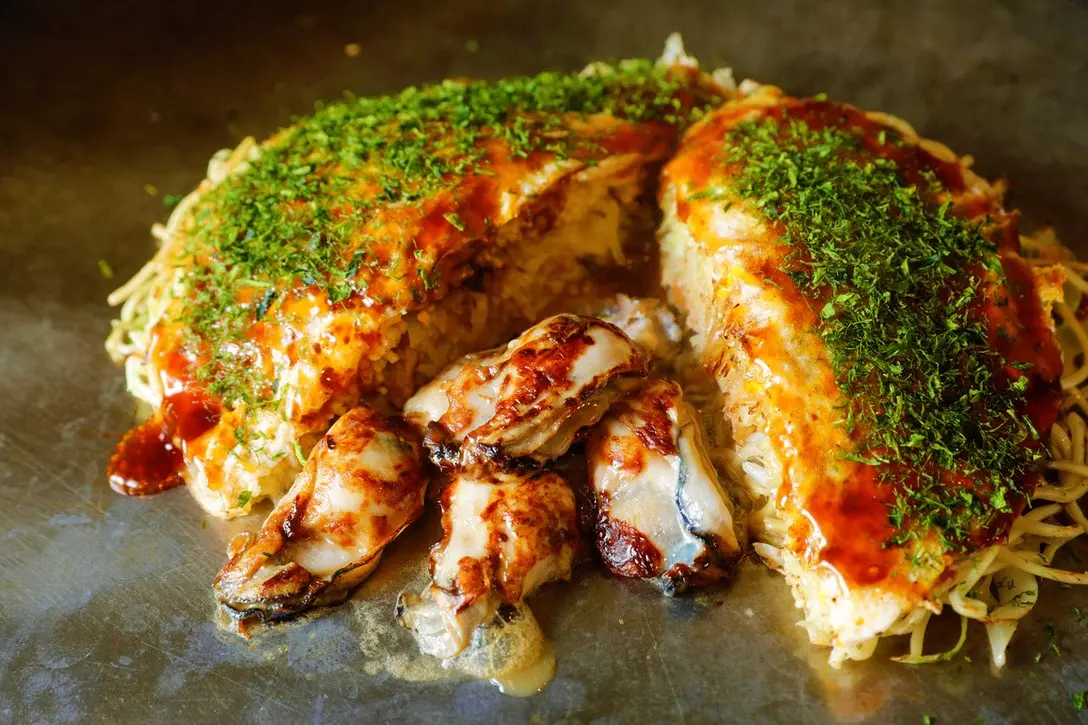
This location of the long-established Micchan Sohonten serves Hiroshima’s famous okonomiyaki. From the 26-foot teppan counter, diners can watch skilled chefs prepare each dish before their eyes.
A popular menu item is the soba okonomiyaki with pork, egg, and Hiroshima oysters. The aroma and texture of fresh noodles complement the rich flavor of the oysters. Teppan-grilled dishes made with conger eel, Hiroshima beef, and other ingredients are also available. Savor a distinctly Hiroshima meal, complete with the sounds and aromas of the hot griddle.
- Name in Japanese
- お好み焼みっちゃん総本店 おりづるタワー店
- Postal Code
- 739-0012
- Address
-
1-2-1 Otemachi, Naka-ku, Hiroshima City, Hiroshima
Google Maps - Telephone
- 082-541-5510
- Business Hours
- 11:00am - 9:00pm(last entrance 8:00pm)
- Closed
- Open every day
- Budget
- Lunch 2,000yen〜/Dinner 4,000yen〜
- Access
- Short walk from Hiroshima Electric Railway’s Genbaku Dome-Mae Station.
- Credit Cards
- Accepted
- Official Website
- Official Website (Japanese)
5. Oyster & Smoked BAR SANGO (Hiroshima City)
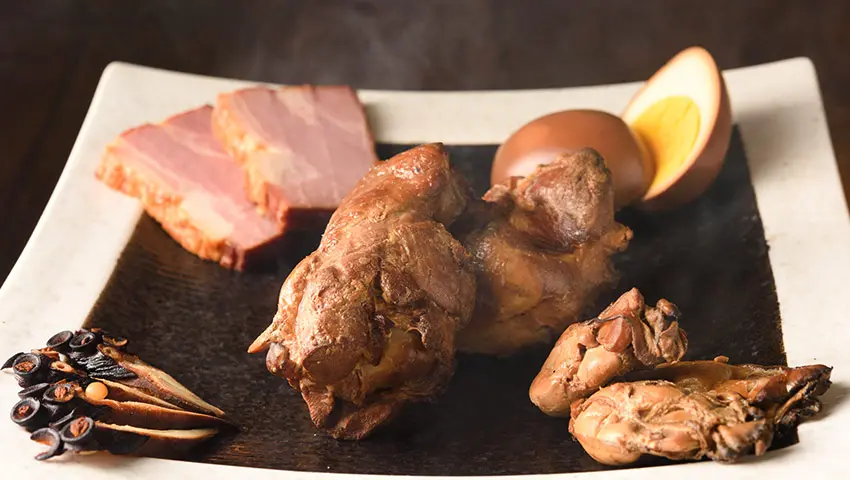
This authentic oyster bar is located in the Ekinishi area near the west exit of Hiroshima Station. It serves branded oysters from Hiroshima Prefecture and other parts of Japan, prepared raw, grilled, fried, or steamed. Along with its standard raw oyster platter, the menu includes house-smoked dishes and items made with kone, a rare cut of wagyu beef.
The first floor consists mainly of counter seating, creating a comfortable space for solo drinks or a casual date. About a 5-minute walk from JR Hiroshima Station, it is an easy place to visit. After a day of sightseeing, spend the evening over oysters and smoked dishes.
- Name in Japanese
- Oyster & Smoked BAR SANGO
- Postal Code
- 732-0821
- Address
-
13-27-1 Osugacho, Minami-ku, Hiroshima City, Hiroshima
Google Maps - Telephone
- 082-568-1577
- Business Hours
- 6:00pm - 0:00am(L.O.11:30pm)
- Closed
- Irregular holidays
- Budget
- 3,000yen〜
- Access
- About 5 minutes walk from JR any Line’s Hiroshima Station.
- Credit Cards
- Accepted
- Official Website
- Official Website (Japanese)
3 Convenient Hotels for Exploring Hiroshima in Fall
Will you stay on Miyajima and immerse yourself in island life, or use central Hiroshima City or the Hiroshima Station area as your base? On a fall trip to Hiroshima, choosing a hotel that suits the next day’s itinerary makes transportation easier to plan. Select the right stay for your trip from these three hotels, each distinguished by its views, rooms, and dining options.
1. Hotel Miyajima Villa (Hatsukaichi City)
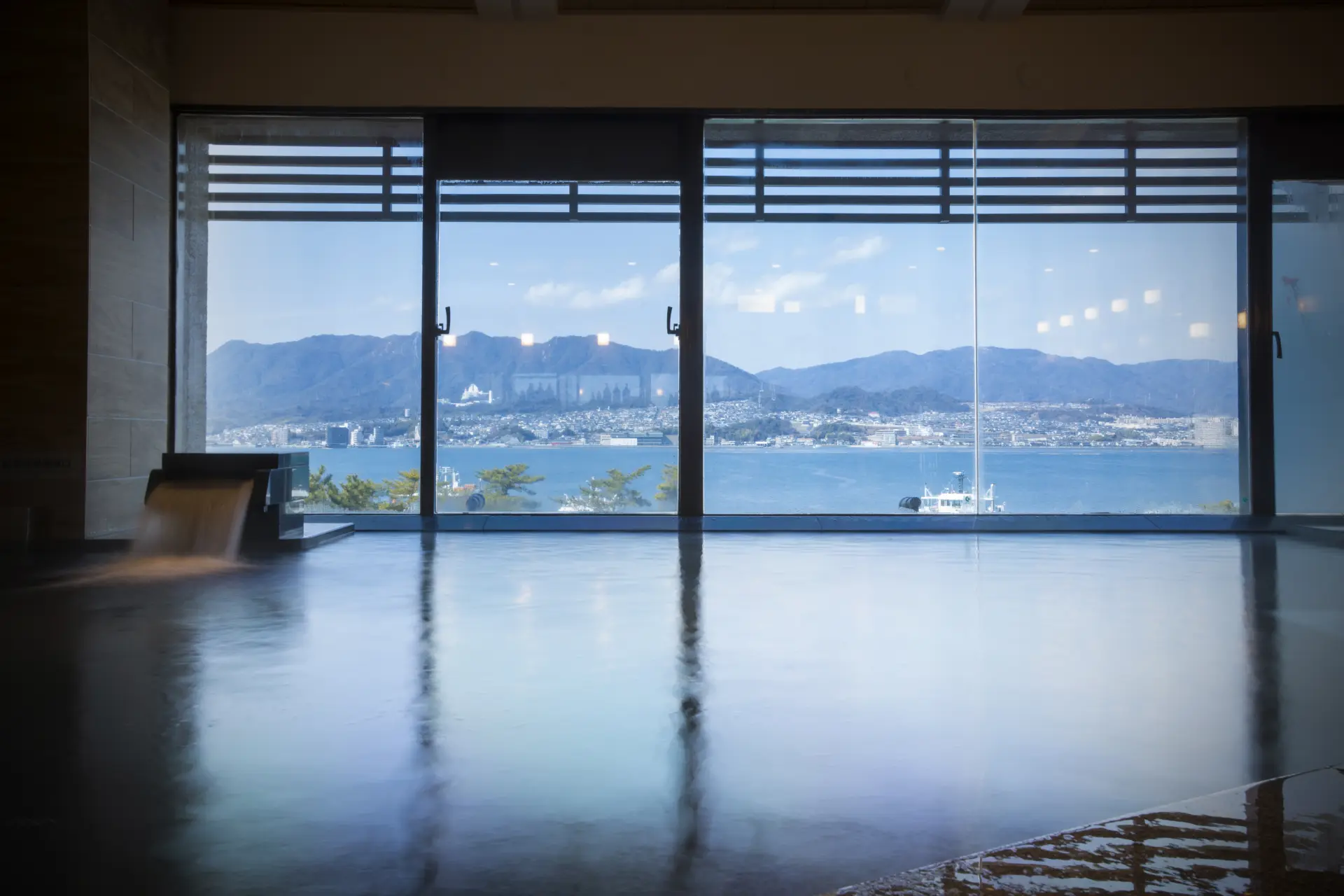
Located a 1-minute walk from Miyajima Pier, this modern Japanese-style hotel is produced by the ryokan inn Kinsuikan. Its refined rooms are available in three concepts inspired by Miyajima’s traditional townhouses, sea, and mountains.
Features vary by room and include ocean views, lofts, and bathrooms with views. The tatami-floored observation bath offers panoramic sunset views. Creative dishes made with local ingredients are served for dinner and breakfast, allowing guests to spend a relaxing evening on Miyajima with good food and a soothing bath.
- Name in Japanese
- ホテル宮島別荘
- Postal Code
- 739-0505
- Address
-
1165 Miyajimacho, Hatsukaichi City, Hiroshima
Google Maps - Telephone
- 0829-44-1180
- Check-in
- 3:00pm
- Check-out
- 11:00am
- Accommodation Fee
-
twin room (ocean side) with two meals: from 34,650 yen
junior suite (mountain side) with two meals: from 39,050 yen
(prices per person based on double occupancy, tax and service charge included) - Access
- About a 10 minutes ride on the JR West Miyajima Ferry from Miyajimaguchi port. Then, about 1 minute walk from Miyajima Ferry port.
- Credit Cards
- Accepted
- Official Website
- Official Website (English)
2. RIHGA Royal Hotel Hiroshima (Hiroshima City)
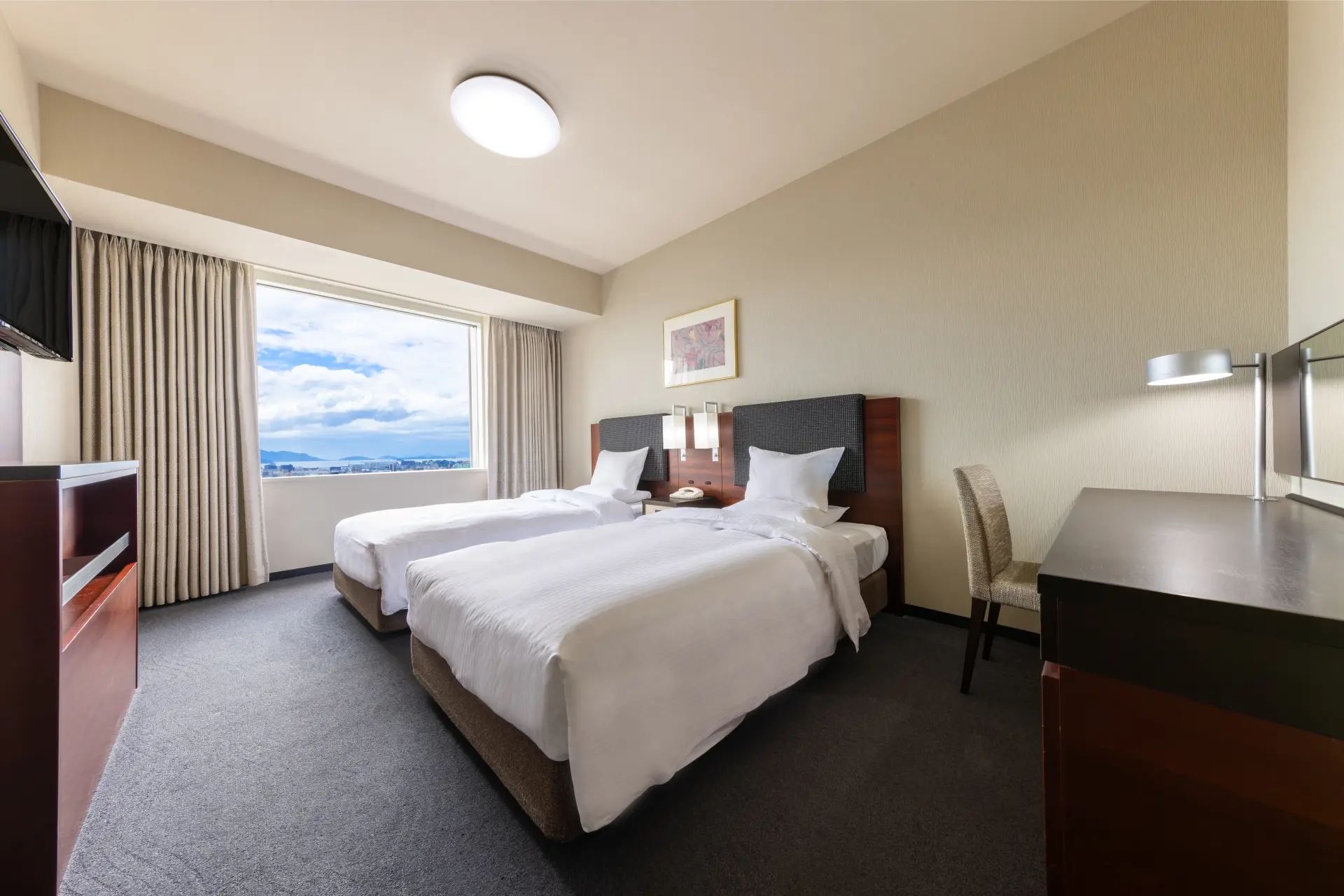
Located in the Kamiyacho area, this hotel makes a convenient base for sightseeing in Hiroshima City. Rooms occupy the 14th through 31st floors, with options ranging from standard to executive accommodations.
Upper-floor rooms offer views toward Hiroshima Castle and the Seto Inland Sea, providing an open outlook despite the hotel’s central location. After dining at one of the hotel’s varied restaurants, end the day by admiring Hiroshima’s nightscape from the upper floors.
- Name in Japanese
- リーガロイヤルホテル広島
- Postal Code
- 730-0011
- Address
-
6-78 Motomachi, Naka Ward, Hiroshima City, Hiroshima Prefecture
Google Maps - Phone
- 082-502-1121
- Check-in
- 3:00 p.m.
- Check-out
- 11:00 a.m.
- Rates
- Contact the hotel for details
- Access
-
1)3-minute walk from the Hiroden Kamiyacho-higashi or Kamiyacho-nishi streetcar stop
2)Take a limousine bus from Hiroshima Airport to Hiroshima Bus Center; the hotel is a short walk away
3)A short walk from Kencho-mae Station on the Astram Line - Credit Cards
- Accepted
- Official website
- Official website (Japanese)
3. Sheraton Grand Hiroshima Hotel (Hiroshima City)
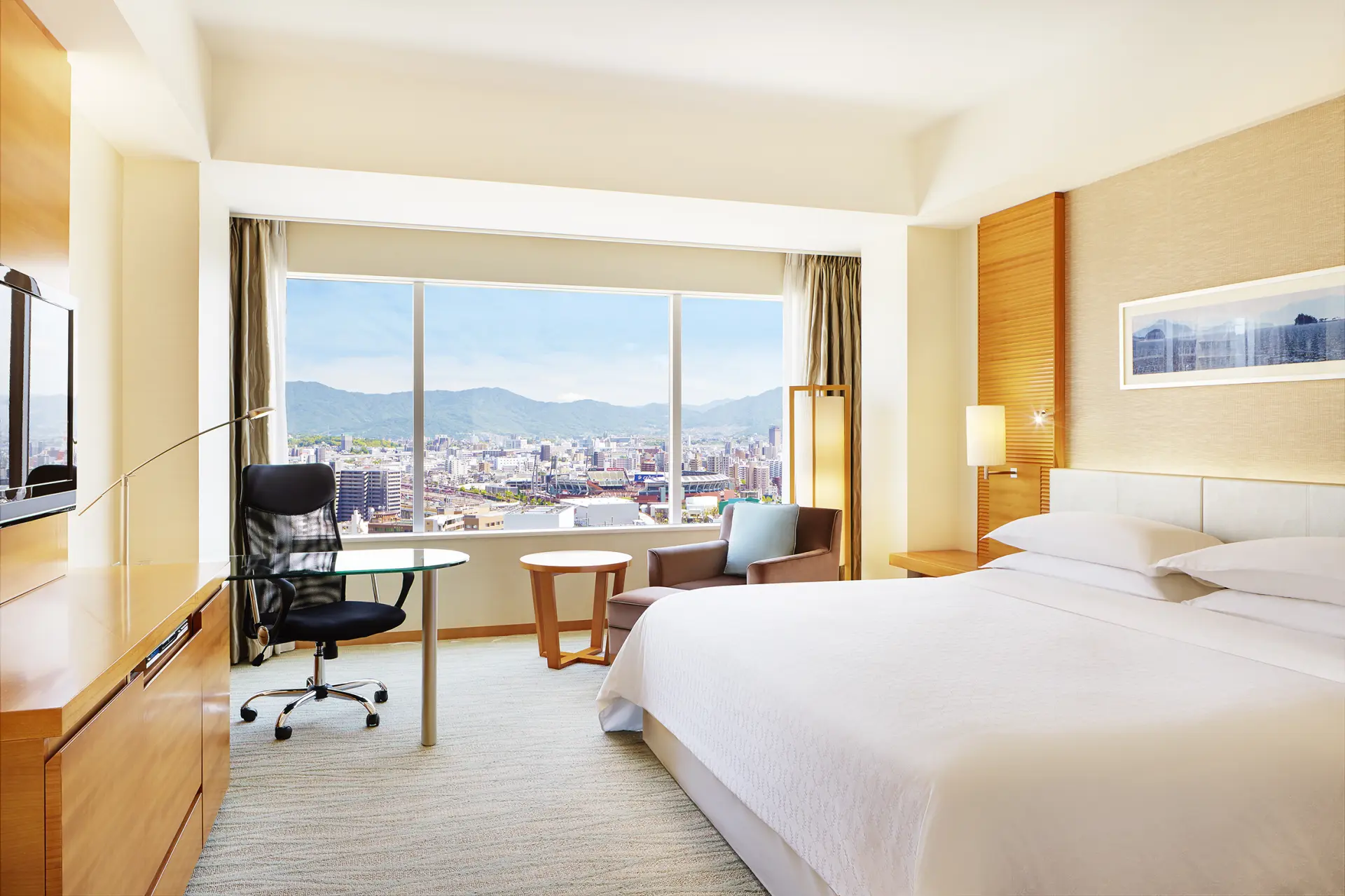
Directly connected to the Shinkansen exit of JR Hiroshima Station, this hotel is a 1-minute walk from the ticket gates. Its modern interior is unified by white and natural wood tones, and every guest room measures at least 377 square feet and features a signature Sheraton bed.
Large windows provide views over Hiroshima City, while the hotel also offers a Japanese restaurant, buffet restaurant, and café bar. With a pool and fitness facilities available, guests can spend a relaxing evening at the hotel after completing their journey for the day.
- Name in Japanese
- シェラトングランドホテル広島
- Postal Code
- 732-0053
- Address
-
12-1 Wakakusa-cho, Higashi-ku, Hiroshima City, Hiroshima Prefecture
Google Maps - Phone
- 082-262-7111
- Check-in
- 3:00 p.m.
- Check-out
- 12:00 p.m.
- Rates
- Rates vary by date; please inquire for details
- Access
-
1) A 1-minute walk from Hiroshima Station on the Hiroshima Electric Railway or the Shinkansen exit of JR Hiroshima Station
2) 45 minutes by limousine bus from Hiroshima Airport - Credit Cards
- Accepted
- Official website
- Official website (Japanese)
Recommended Fall Hiroshima Itinerary Featuring a World Heritage Site, Famous Gardens, and Sake Breweries
This two-day, one-night itinerary connects Miyajima, Hiroshima City, and Saijo, taking in a World Heritage site, gardens, and a historic sake-brewery district. Stay on Miyajima on the first night, then travel from Hiroshima City to Saijo and the Hiroshima Airport area on the second day. Moving from coastal scenery to a castle town and sake breweries, the route traces Hiroshima’s characteristic fall landscapes and culture.
- Day 1
- Hiroshima Station → Take the JR train and ferry to Miyajima → Visit Itsukushima Shrine → Have a lunch of seasonal oysters at Kakiya → Explore Miyajima Omotesando Shopping Street → Take the Miyajima Ropeway to Mount Misen → Take a break at Itsuki Coffee Miyajima → Stay at Hotel Miyajima Villa
- Day 2
- Miyajima → Take the ferry and JR train to Hiroshima City → Visit Hiroshima Castle → Stroll through Shukkeien Garden → Take the JR train to Saijo → Explore Saijo Sakagura-dori → Have lunch at Kuradokoro TARU → Take the airport bus from Saijo Station to Hiroshima Airport → Stroll through Sankeien Garden → Depart from Hiroshima Airport, or take the airport limousine bus to Hiroshima Station
Average Fall Temperatures in Hiroshima
Although September retains some of the summer heat, mornings and evenings gradually become more comfortable. By October, the weather is well suited to walking around the city, visiting Miyajima, and exploring gardens, making it easier to spend time outdoors. Mornings and evenings grow colder in November, ushering in a season for fall foliage, hot springs, sake-brewery tours, and other experiences associated with late fall.
| Month | September | October | November |
|---|---|---|---|
| Temperature | 76.5°F | 65.8°F | 55.2°F |
What to Wear for a Comfortable Fall Trip to Hiroshima
Many September days are warm enough for short sleeves, but a light outer layer is useful in the mornings, evenings, and air-conditioned indoor spaces. In October, long-sleeved shirts and lightweight sweaters become the main choices, while easy-to-layer clothing such as cardigans and light jackets comes in handy. Jackets or coats are needed more often in November, so bring an additional layer when visiting higher-elevation destinations such as Mount Misen and fall foliage sites.
Frequently Asked Questions About Visiting Hiroshima in Fall
Q
When is the best time to see fall foliage in Hiroshima Prefecture?
Fall foliage can typically be seen in Hiroshima Prefecture from late October through late November. The colors begin in the northern and mountainous areas of the prefecture. Mount Ima-Koyasan usually reaches its peak from early to mid-November, while Momijidani Park is typically at its best from mid- to late November. Fall foliage can also be seen at Sankeien Garden from early to late November.
Q
How many nights are recommended for a fall trip to Hiroshima?
A two-day, one-night itinerary can cover Miyajima, Hiroshima City, Saijo Sakagura-dori, and Sankeien Garden. If you would like to explore more of the prefecture at a slower pace, consider adding nights based on the areas you want to visit and the travel time between them.
Q
What local foods should I try in Hiroshima in fall?
Options include Hiroshima’s famous oyster dishes and okonomiyaki, as well as local Saijo sake and bishu nabe. Try oyster dishes on Miyajima, combine sake-brewery visits with local sake in Saijo, or choose okonomiyaki and oyster bars in Hiroshima City according to the area you are visiting.
Q
Do I need a car to explore Hiroshima in fall?
Miyajima, Hiroshima City, and Saijo Sakagura-dori can be explored using a combination of JR trains, ferries, and streetcars. The itinerary featured here also relies mainly on public transportation. If your plans include mountainous areas such as Taishakukyo Gorge, however, check transportation options to each destination in advance.
Summary
From Miyajima and its World Heritage site to a historic castle and garden, the living sake culture of Saijo, and gorges and sacred sites colored by fall foliage, Hiroshima’s scenery and experiences change from one area to another. As the season progresses from September to November, the range of travel options expands, making it possible to combine Setouchi seascapes and mountain foliage in a single trip.
The islands of Setouchi, historic gardens, towns shaped by sake culture, and mountains colored by fall leaves each offer different scenery and ways to spend your time. This variety is the appeal of a fall trip to Hiroshima.