
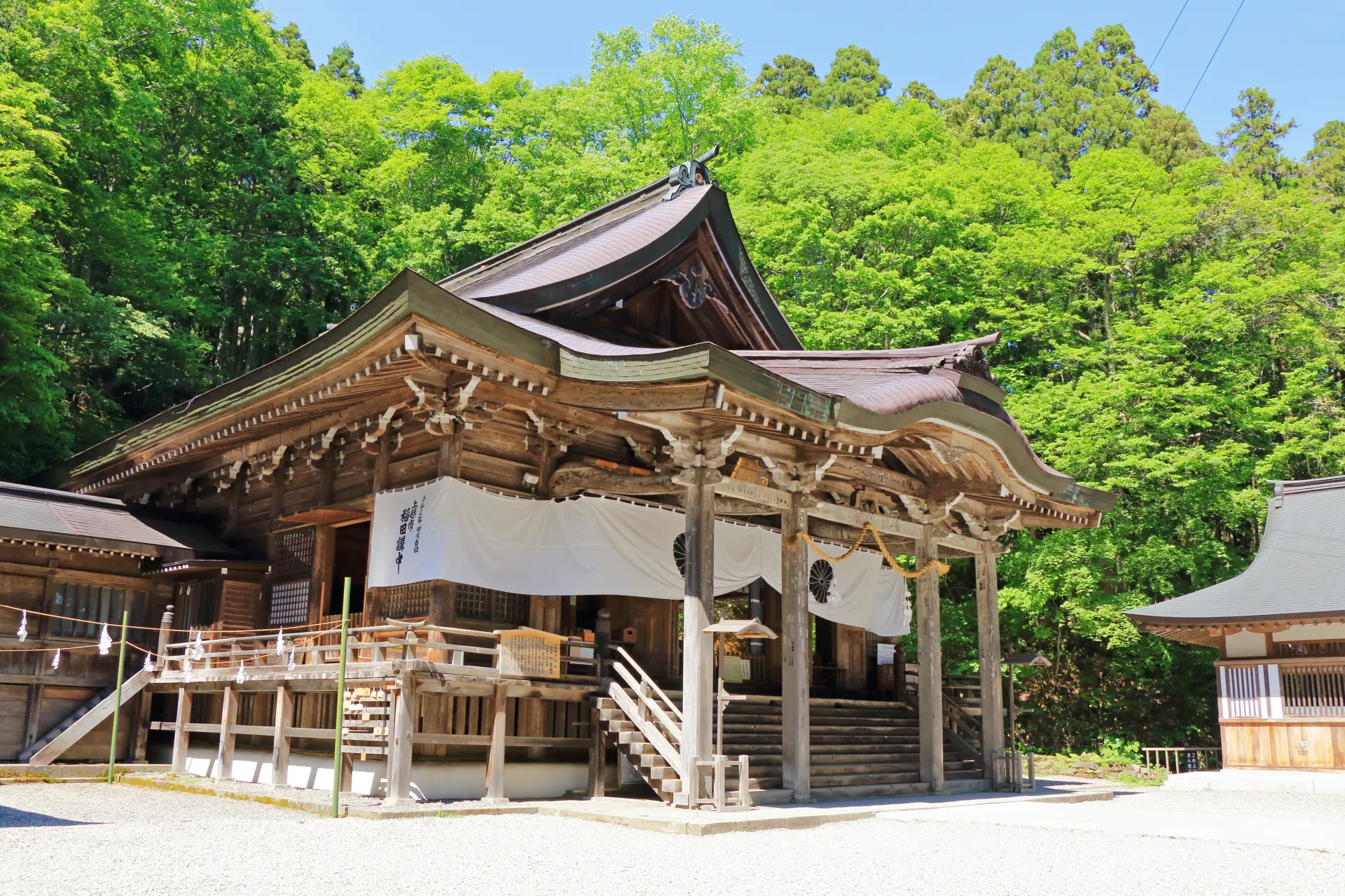
Togakushi Shrine Travel Guide: Tour Five Shrines with Over 2,000 Years of History and Mystical Cedar-Lined Paths
Togakushi Shrine stands at the foot of sacred Mount Togakushi in Nagano Prefecture.
With a history spanning over 2,000 years, this ancient shrine enshrines deities associated with the myth of the Opening of the Heavenly Rock Cave.
It comprises five shrines—Okusha, Chusha, Hokosha, Kuzuryusha, and Hinomikosha—each with its own blessings and attractions.
This article introduces Togakushi Shrine, highlights of each shrine, and a recommended route.
It is designed to help even first-time visitors make the most of their trip, so be sure to read to the end.
What Is Togakushi Shrine Like?
Togakushi Shrine, located at the foot of sacred Mount Togakushi in northwestern Nagano City, is said to have a history spanning more than 2,000 years.
It is associated with the Japanese myth of the Opening of the Heavenly Rock Cave. According to tradition, the shrine began with the enshrinement of Amenotajikarao-no-Mikoto, the deity who drew Amaterasu Omikami out of the cave.
It comprises five shrines—Okusha, Chusha, Hokosha, Kuzuryusha, and Hinomikosha—and has long attracted worshipers as a sacred site for mountain worship and Shugendo asceticism.
Each shrine enshrines different deities, and visiting all five as both a pilgrimage and sightseeing experience is one of the distinctive ways to explore Togakushi Shrine.
The lush natural surroundings are another attraction, with highlights including the cedar-lined, approximately 2-kilometer approach to Okusha and Chusha's three cedar trees, which are over 800 years old.
It is also one of Nagano's leading spiritual sites, drawing visitors seeking blessings such as good fortune and the fulfillment of wishes.
- Name in Japanese
- 戸隠神社
- Postal Code
- 381-4101
- Address
-
3506 Togakushi Chusha, Nagano City, Nagano (Chusha)
Google Maps - Tel
- 026-254-2001 (Chusha)
- Closed
- Open every day (Hokosha, Okusha and Kuzuryuusha are closed in winter)
- Hours
- Free to visit anytime (Hours vary depending on different halls)
- Admission
- Free
- Directions
-
1) from JR Hokuriku Shinkansen, Nagano Station, ride the Alpico Bus bound for Togakushi-Kogen via Loop Bridge for an hour. Get off at Togakushi Chusha Mae and walk for 1min.
2) from Joshinetsu Expressway, Nagano Interchange, drive for 1 hour and 5 min to Chusha.
3) from Joshinetsu Expressway, Shinano Interchange, drive for 30 min to Chusha. - Credit Cards
- Not accepted
- Official Website
- Official Website (Japanese)
History of Togakushi Shrine
Togakushi Shrine is closely connected to Mount Togakushi, itself an object of worship. According to one account of its traditions and origins, Okusha may have been founded as early as 210 BC.
However, the name Togakushi first appeared in historical records during the Heian period (794–1185), when the mountain was already revered as a sacred center of esoteric Buddhism.
During the Muromachi period (1336–1573), the Togakushizan Kenkoji Ryuki chronicle linked Togakushi to the Japanese myth of the Heavenly Rock Cave.
Against this background, the deities involved in opening the cave and Kuzuryu Okami, long worshiped as the guardian deity of the Togakushi region, came to be passed down as the deities of Togakushi.
During the Edo period (1603–1868), Tokugawa Ieyasu granted the shrine an estate assessed at 1,000 koku, allowing it to flourish under the protection of the shogunate.
In 1868, the order separating Shinto and Buddhism forced the entire Togakushi religious complex to transition from Togakushizan Kenkoji Temple to Togakushi Shrine.
Togakushi's centuries-old faith has been passed down through today's five shrines.
How to Get to Togakushi Shrine
Here is how to reach Togakushi Shrine by public transportation and by car.
Choose the option that best suits your travel plans.
Access by Train and Bus
The nearest station to Togakushi Shrine is JR Nagano Station.
Direct trains are available via the Hokuriku Shinkansen from Tokyo and Kanazawa, and limited express trains from Nagoya.
From Nagano Station, take a bus from Platform 7 at the Zenkoji Exit.
Because only a limited number of buses operate each day, check the timetable and plan both your outbound and return trips in advance.
If you are short on time, consider taking a taxi.
Approximate travel times and the nearest bus stops for each shrine are listed below.
| Shrine | Nearest Bus Stop | Approximate Time from Nagano Station |
|---|---|---|
| Hokosha | Togakushi Hokosha | About 1 hour 10 minutes |
| Hinomikosha | Togakushi Hokosha | About 1 hour 10 minutes; about a 15-minute walk from Hokosha |
| Chusha | Togakushi Chusha | About 1 hour 20 minutes |
| Okusha and Kuzuryusha | Togakushi Okusha Iriguchi | About 1 hour plus an approximately 40-minute walk |
Access by Car and Parking at Each Shrine
There are no train lines near Togakushi Shrine, and bus service is limited, so renting a car is another option.
The drive takes about 1 hour from the Nagano Interchange on the Joshin-Etsu Expressway. Since the route includes mountain roads and many curves, allow plenty of time.
| Shrine | Access | Parking |
|---|---|---|
| Okusha and Kuzuryusha | About 1 hour from Nagano Interchange | About 150 spaces (paid) |
| Chusha | About 5 minutes from the entrance to the Okusha approach | About 165 spaces (some free) |
| Hokosha | About 5 minutes from Chusha | About 20 spaces (free) |
| Hinomikosha | About 3 minutes from Chusha | Several spaces (free); generally, use parking near Chusha or Hokosha |
Highlights of Togakushi Shrine's Five Shrines
Here are the highlights of each of Togakushi Shrine's five shrines.
Each has its own character, from the enshrined deities and their blessings to the architecture and surrounding nature.
Visiting all five will give you a deeper sense of Togakushi's history and faith.
Learn about their distinctive features before setting out on your visit.
Okusha, Surrounded by a Sacred Atmosphere
Okusha is the principal shrine of Togakushi Shrine.
It enshrines Amenotajikarao-no-Mikoto and is known for blessings such as good fortune, the fulfillment of wishes, abundant harvests, and victory in sports.
One of Okusha's highlights is not only the shrine itself but also the 40-minute approach each way.
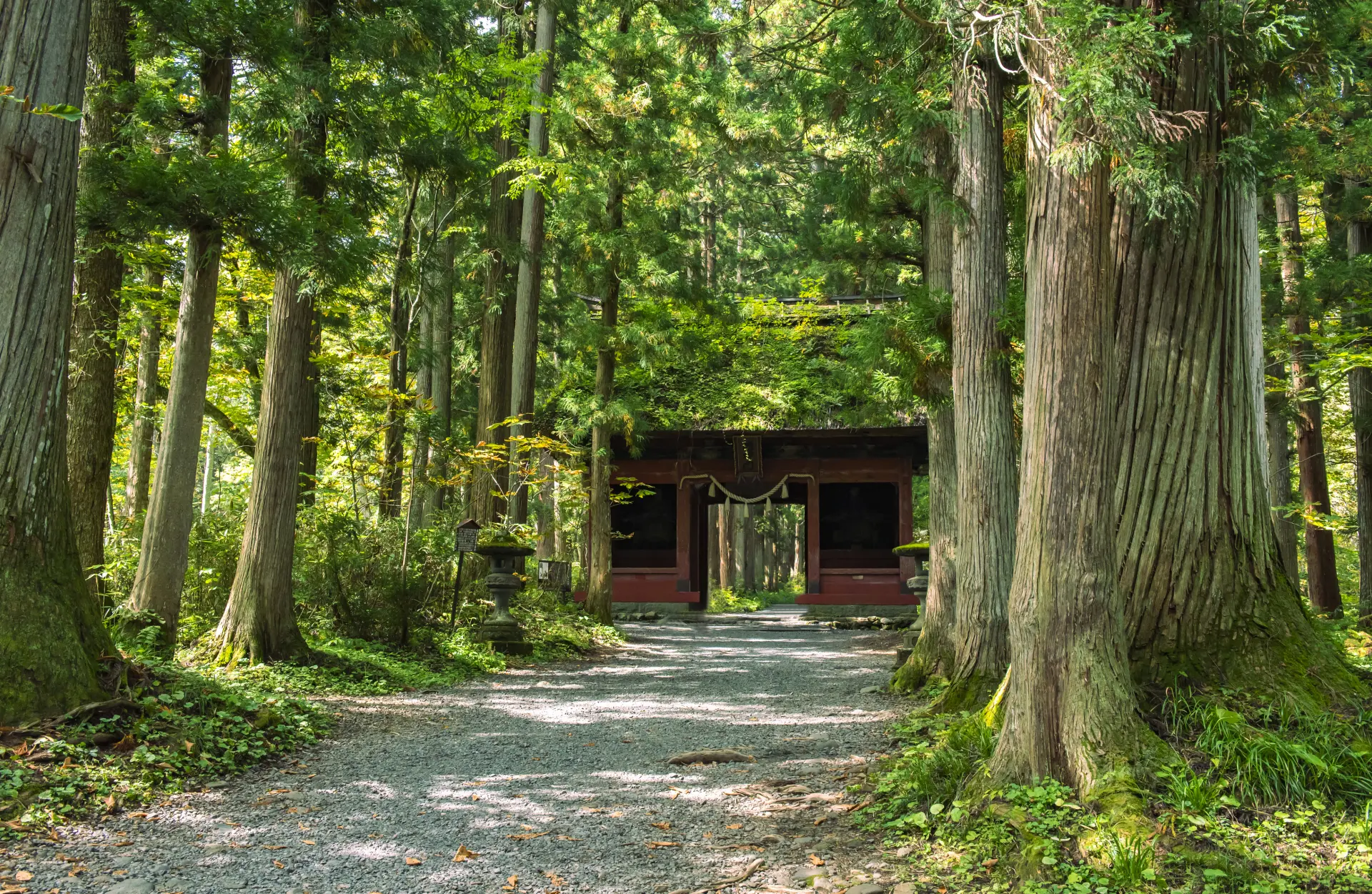
After walking approximately 2 kilometers from the entrance, you will reach the red, thatched-roof Zuishinmon Gate. Beyond it, a majestic avenue of cedar trees over 400 years old continues for about 500 meters.
Walking along the approach through lush nature and silence lets you appreciate the gradual passage into sacred ground.
After climbing the stone steps at the end, the sight of Okusha is made all the more moving by the journey to reach it.
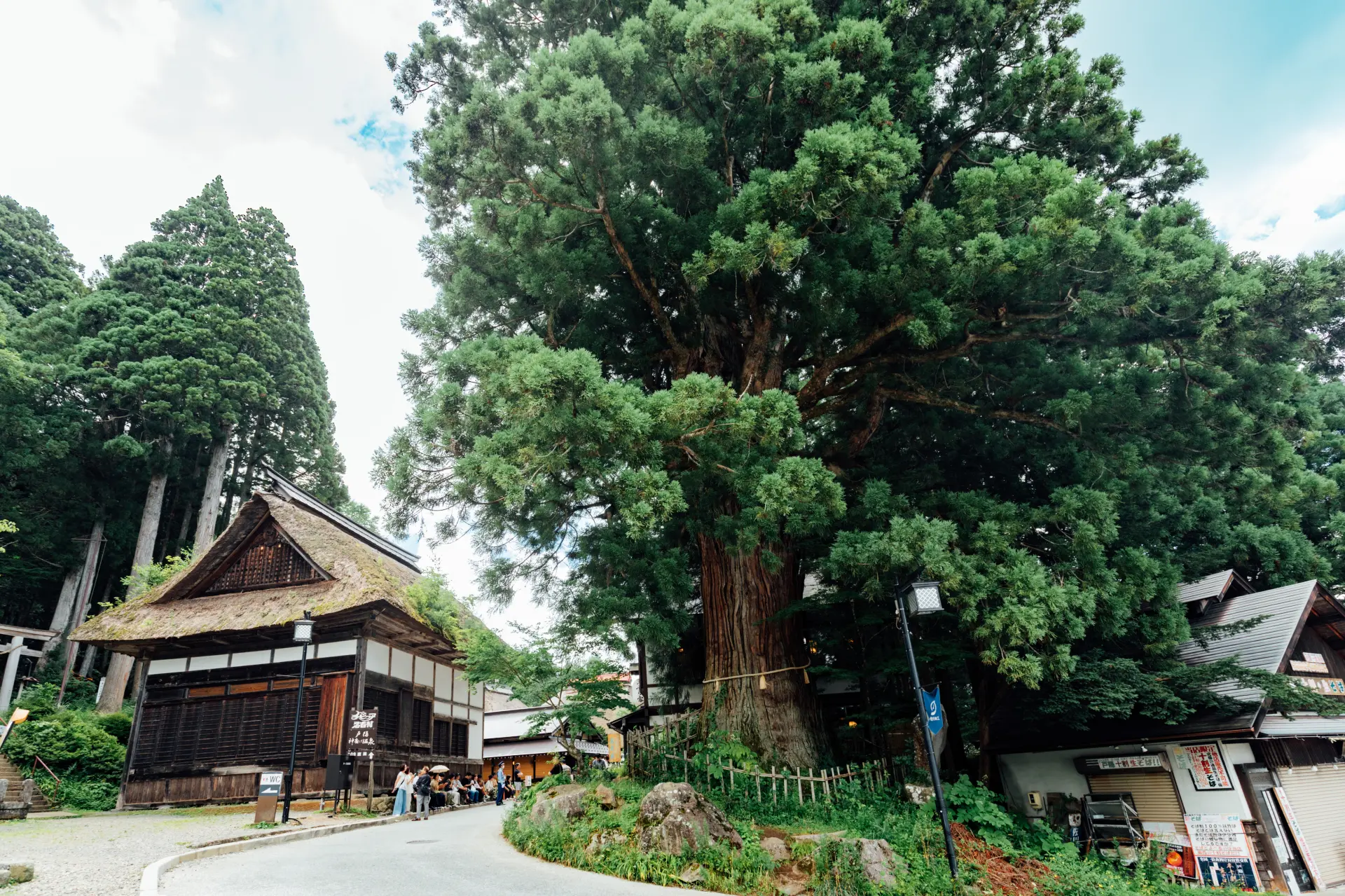
Chusha and Its Three 800-Year-Old Cedar Trees
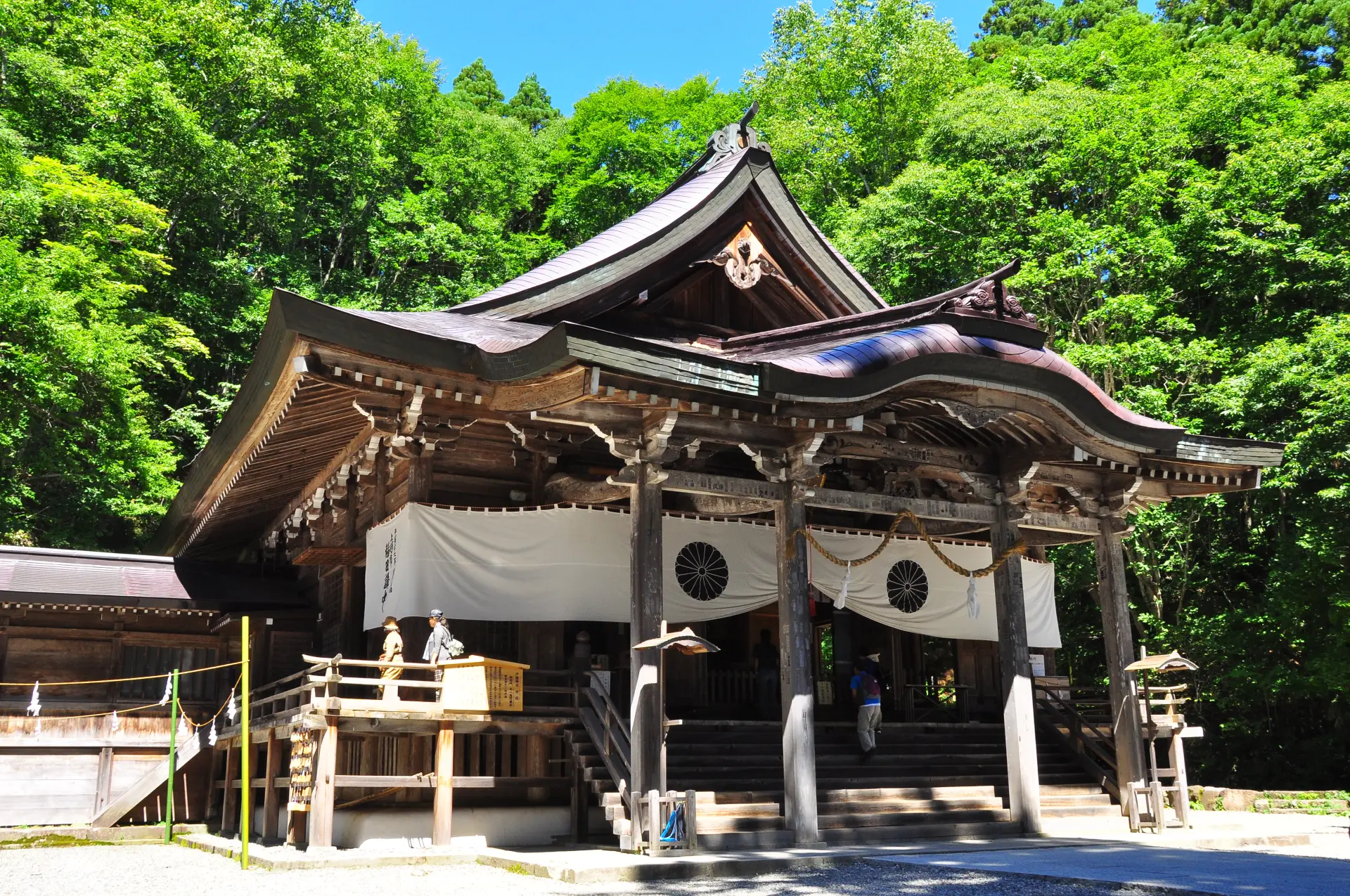
Chusha serves as the central point of the five-shrine pilgrimage.
It enshrines Amenoyagokoro-Omokane-no-Mikoto, the deity of wisdom, and is widely worshiped for blessings such as academic success, prosperity in business, good fortune, protection from misfortune, and family safety.
The grounds are home to the striking Three Cedars, which are over 800 years old, as well as a sacred tree over 700 years old.
These ancient giants have endured for centuries and watched over Togakushi, commanding enough presence to make visitors stop in their tracks.
Another highlight is the dragon painting on the shrine's ceiling.
Created by Kawanabe Kyosai, an artist active from the closing years of the Edo period into the Meiji era, it was digitally restored in 2003.
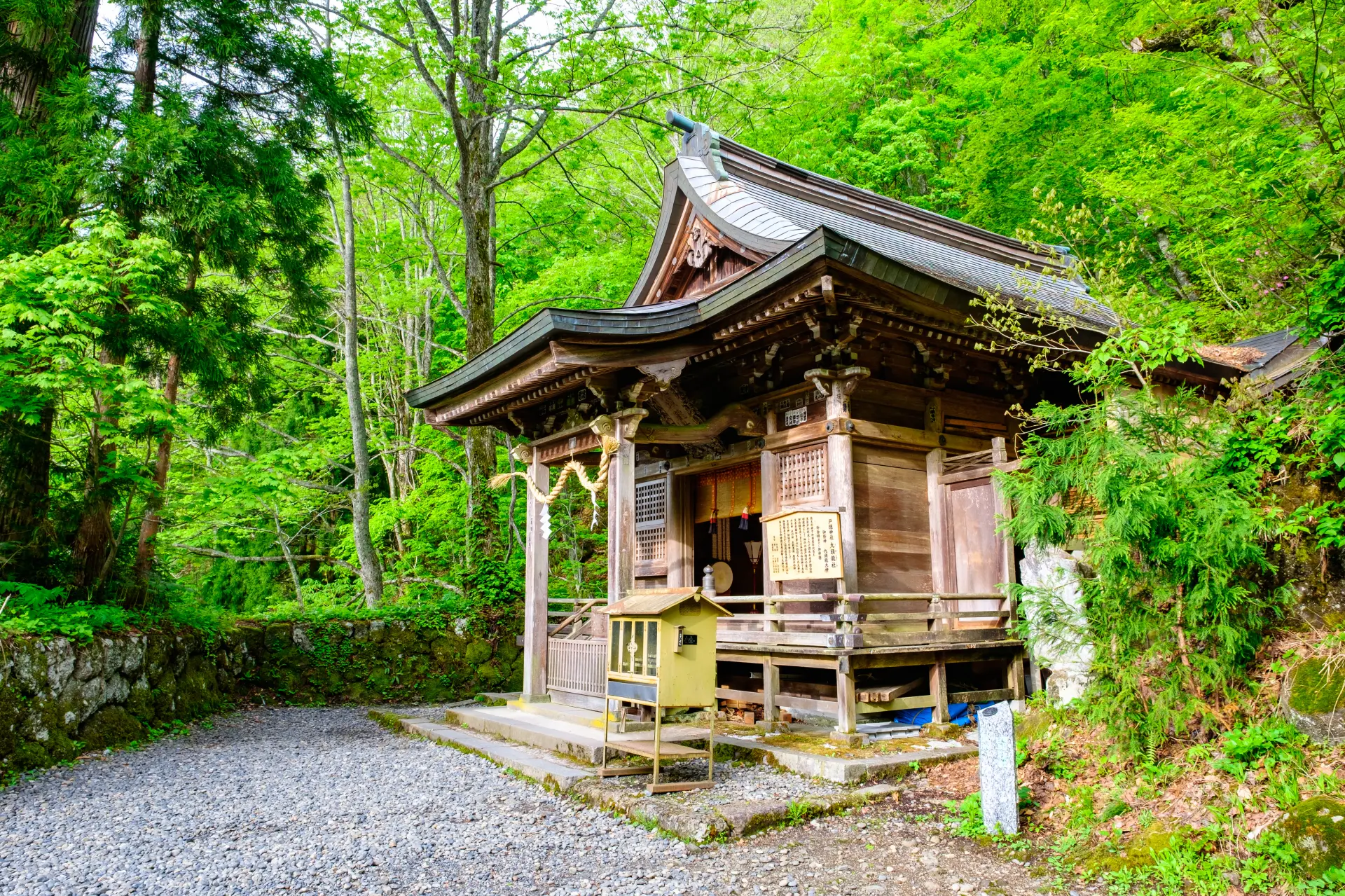
Kuzuryusha Along the Okusha Approach
Kuzuryusha stands next to Okusha.
Although its founding date is unknown, it is believed to have the longest history of the five shrines.
It enshrines Kuzuryu Okami, the guardian deity of the Togakushi region.
This dragon deity governs water, the source of life, and has long been worshiped as a deity of rainmaking, matchmaking, and even toothaches.
The quietly elegant shrine building has a character distinct from Okusha.
By walking the cedar-lined approach and worshiping amid its nature and history, you can glimpse the faith that has endured here since ancient times.
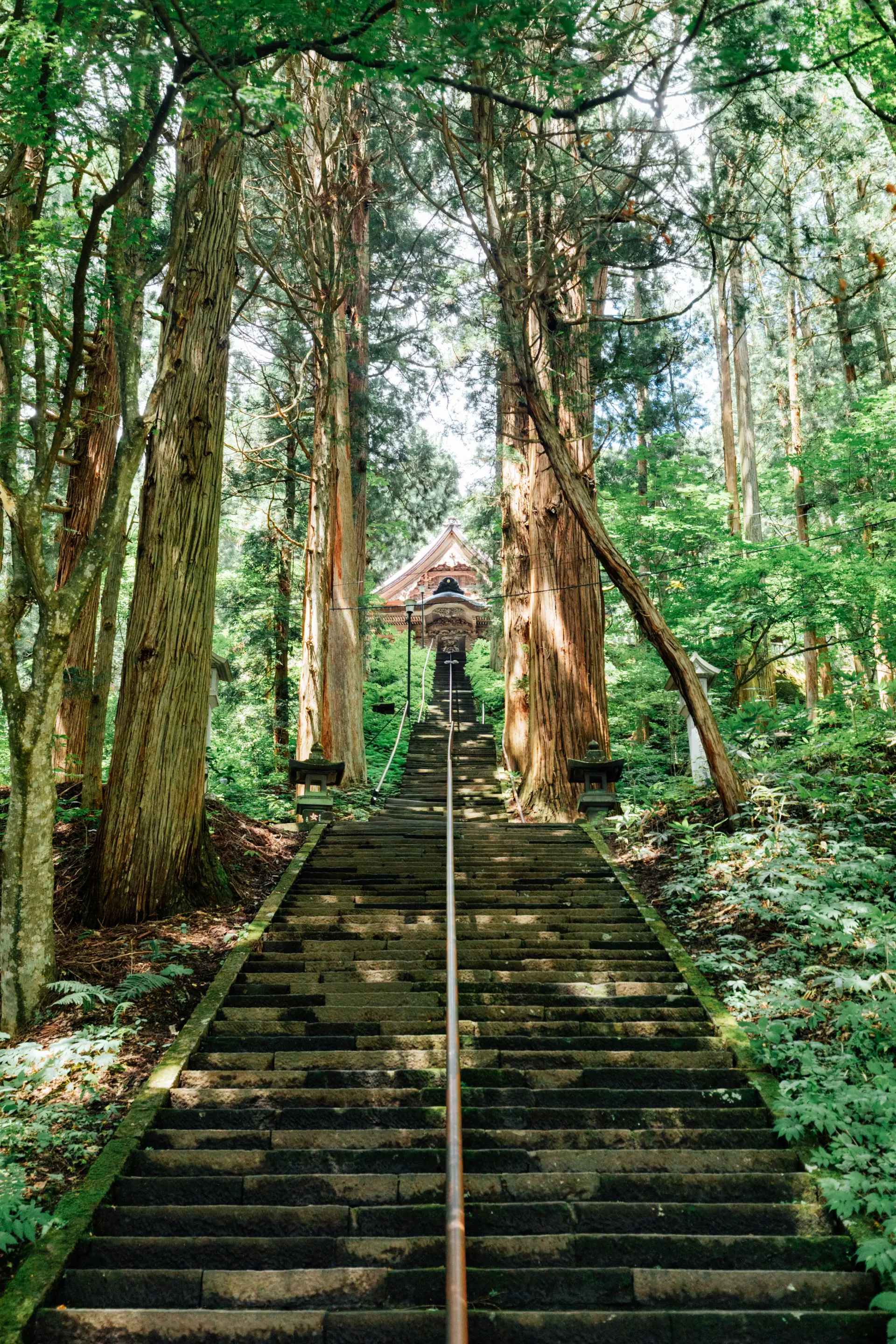
Hokosha, a Spiritual Site for Good Fortune
Hokosha serves as a gateway to Togakushi.
It enshrines Ame-no-Uwaharu-no-Mikoto, a child deity of Amenoyagokoro-Omokane-no-Mikoto, and is worshiped for blessings related to pioneering and learning, the arts, safe childbirth, and the protection of women and children.
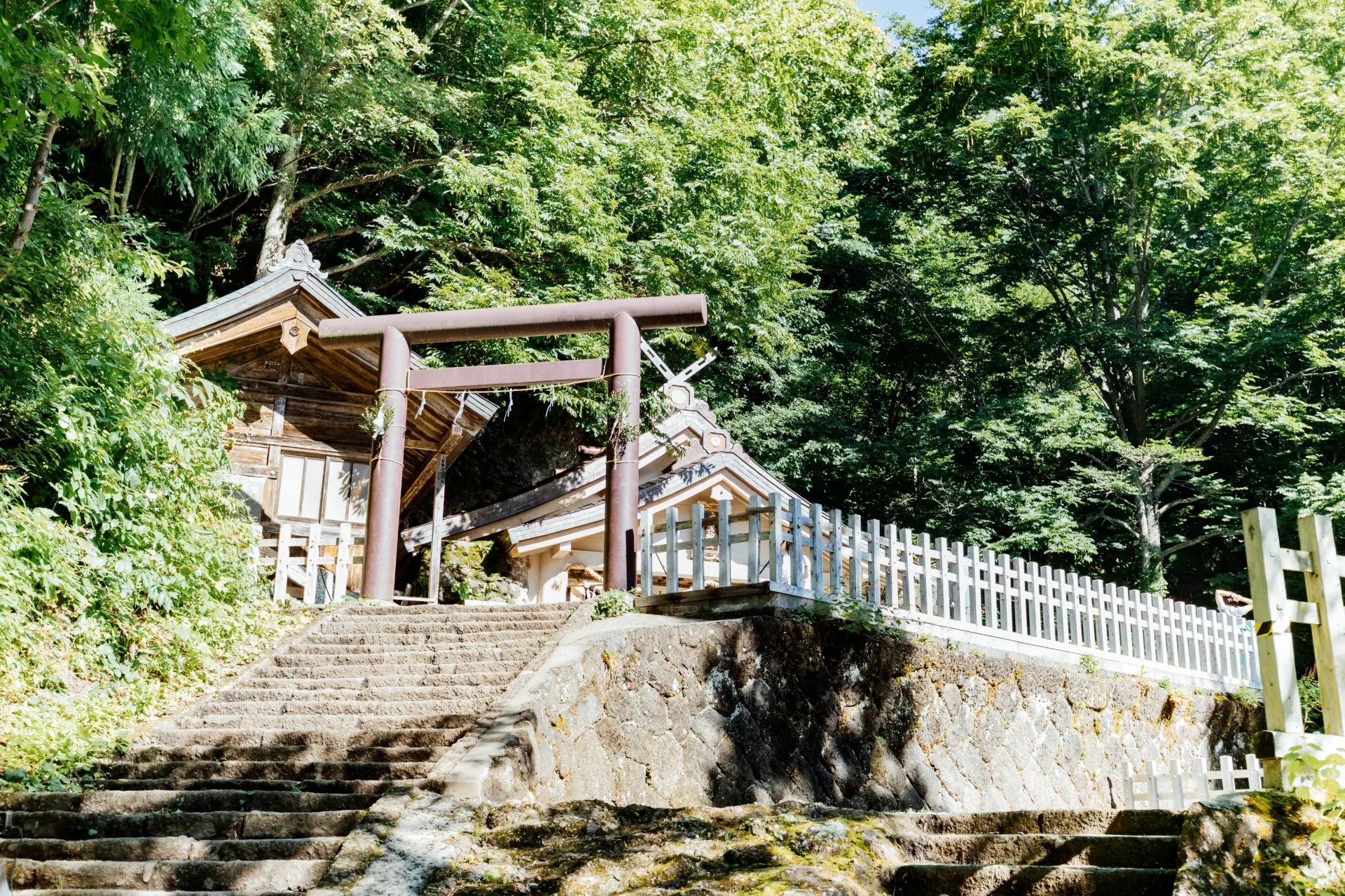
A major highlight is the approximately 270 stone steps leading to the shrine building.
At the top of the steps, surrounded by towering cedars, the imposing shrine building appears, preserving traces of the era when Shinto and Buddhism were intertwined.
The current building dates to 1861, and its ornate designs by shrine carpenter Kitamura Kiyomatsu and others draw the eye.
Climb at your own pace and take breaks while admiring the cedars rising on both sides.
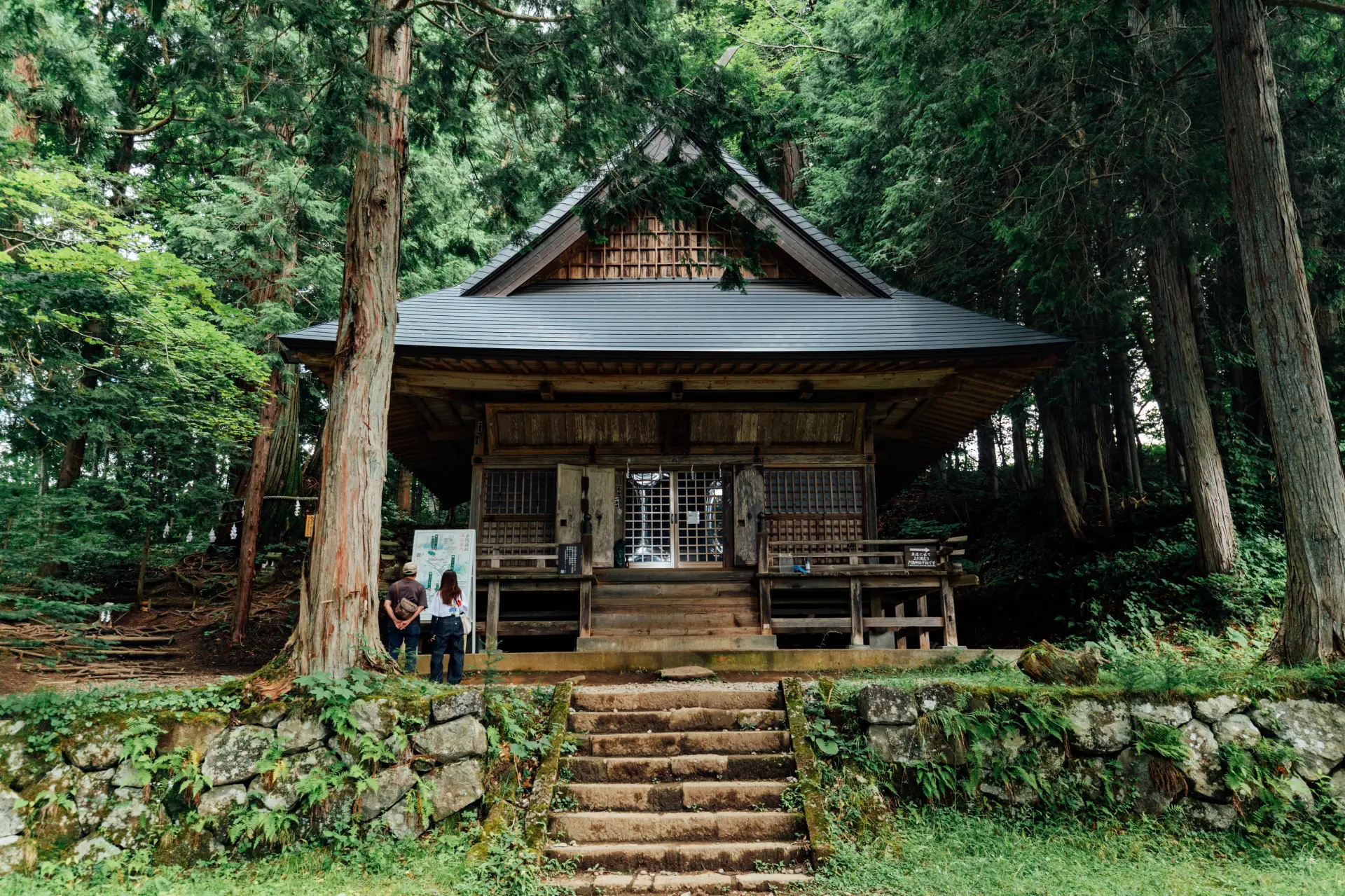
Hinomikosha, Dedicated Primarily to Ame-no-Uzume-no-Mikoto
Hinomikosha is the only one of the five shrines to have preserved a solely Shinto tradition without influence from the blending of Shinto and Buddhism.
Its principal deity is Ame-no-Uzume-no-Mikoto, the goddess whose dance before the Heavenly Rock Cave helped entice Amaterasu Omikami outside.
It also enshrines three other deities—Takamimusubi-no-Kami, Takuhatachijihime-no-Mikoto, and Ame-no-Oshihomimi-no-Mikoto—and is worshiped for blessings such as improvement in the performing arts, matchmaking, and protection from fire.
One highlight is the pair of cedar trees known as the Married Cedars, which are over 500 years old.
Because the two trees stand closely together, they are popular as a spiritual site for matchmaking.
With the sound of ritual claps echoing through the quiet grounds, visitors can experience an atmosphere shaped by a history distinct from that of the other four shrines.
Special Experiences Unique to Togakushi Shrine
The appeal of Togakushi Shrine extends beyond visiting its five shrines.
Its centuries-old faith, culture, and food offer a closer connection to the area.
Here are three experiences to combine with your visit.
1. Daidai Kagura, a Traditional Performing Art Offered to the Deities
Daidai Kagura, passed down at Togakushi Shrine since ancient times, is a traditional performing art designated an Intangible Folk Cultural Property of Nagano Prefecture.
As a Shinto ritual performed in honor of the deities, it is presented about 70 times a year during occasions such as monthly festivals, annual festivals, the prayer festival for a good harvest, and the harvest thanksgiving festival.
There are 10 dances in total, including one based on the myth of the Opening of the Heavenly Rock Cave, and each has its own meaning.
These solemn dances portraying stories of the deities offer a valuable opportunity to experience the faith and traditional culture preserved in Togakushi.
Reservations are generally not required, and admission is free, so check the schedule in advance.
2. Collect Goshuin Seals from All Five Shrines
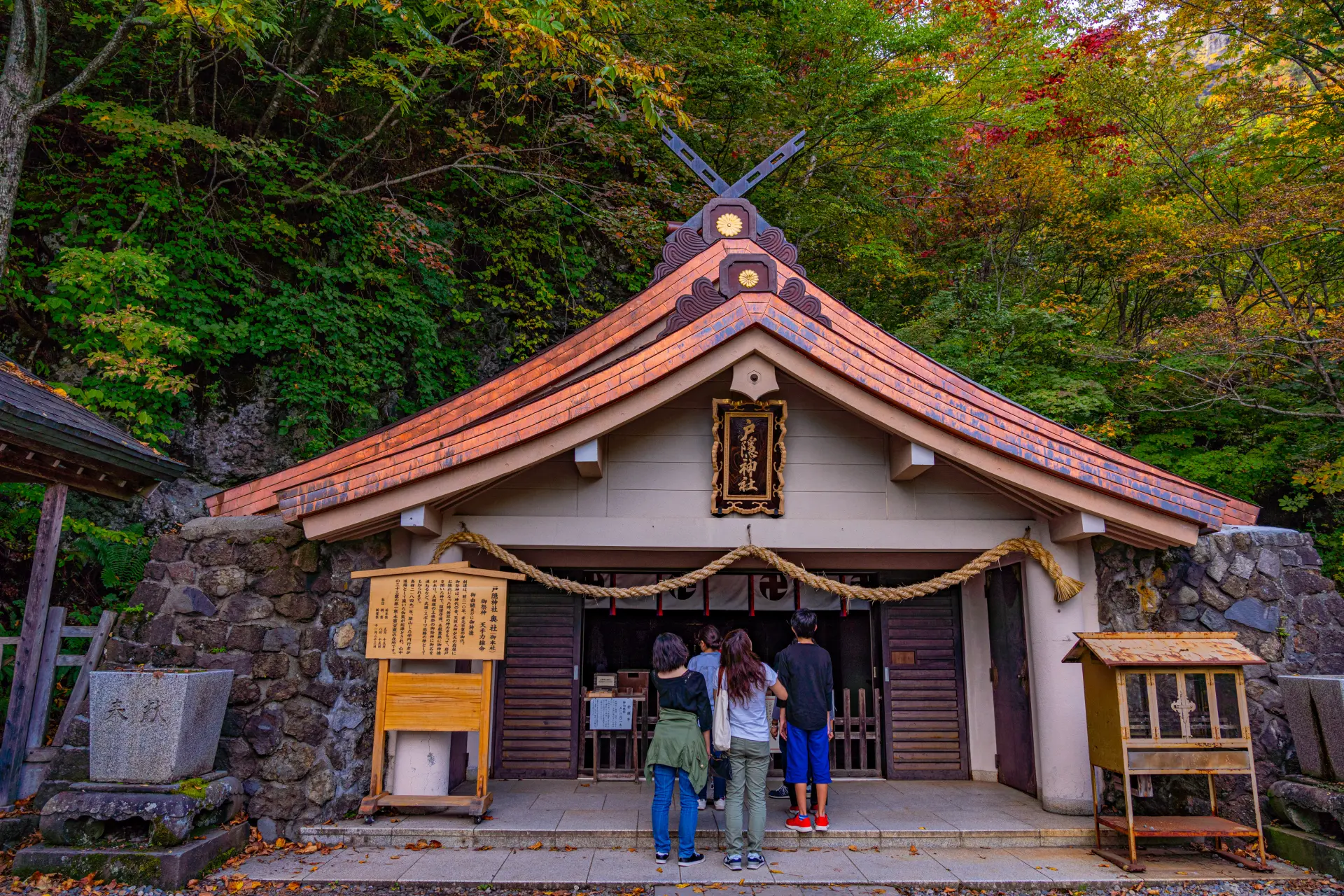
Each of Togakushi Shrine's five shrines offers its own goshuin seal.
Collecting them one shrine at a time provides an opportunity to learn about each deity and story, as well as a keepsake from your visit.
Those who receive all five goshuin can request a commemorative bookmark for visiting all five shrines at the office where they receive their fifth seal.
Hinomikosha does not have an amulet office, so obtain its seal at Hokosha or Chusha after visiting. The Kuzuryusha seal must be obtained at the Okusha office.
Hours are 9:00 a.m.–5:00 p.m., excluding winter. Busy periods such as Golden Week can be crowded, so allow plenty of time.

3. Uzuraya, a Renowned Restaurant Serving Flavorful Togakushi Soba
This popular restaurant in front of Chusha often draws long lines.
It sources buckwheat from select local producers, ages it, mills it with a stone mill during the coldest part of winter when its flavor is at its peak, and stores it in a freezer at -4°F.
The buckwheat is thawed as needed and expertly made into noodles while preserving its full umami, earning praise for consistently flavorful, fresh-tasting soba with a pleasantly chewy texture.
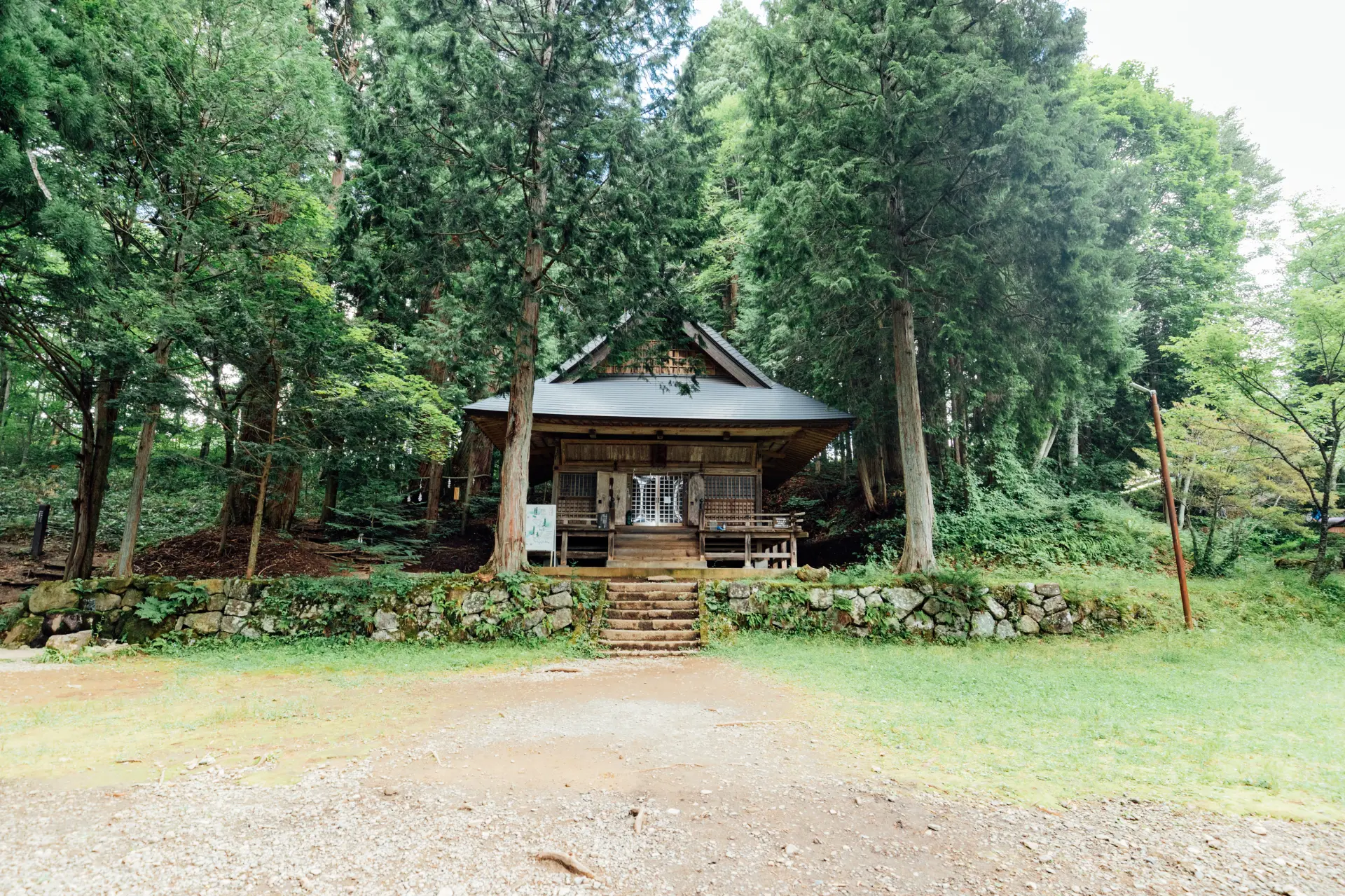
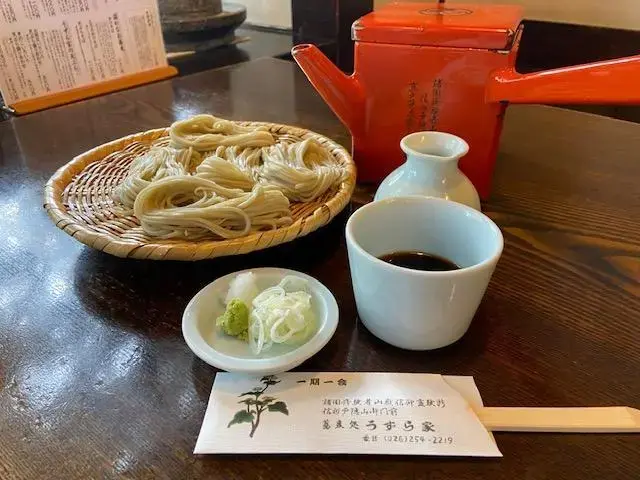
The restaurant's top recommendation is zaru soba, which lets the buckwheat's flavor take center stage.
It is served in Togakushi's traditional bocchi-mori style, with bite-sized portions arranged in horseshoe shapes on a round bamboo tray.
- Name in Japanese
- 蕎麦処 うずら家
- Postal Code
- 381-4101
- Address
-
3229 Togakushi, Nagano City, Nagano
Google Maps - Telephone
- 026-254-2219
- Holiday
- Wednesdays (If falls on a holiday, the previous day. During winder, Tue-Wed or Tue-Thur)
- Hours
- 10:30am - 4:00pm (When ingredients run out, the store closes)
- Budget
- 1,000 yen
- Directions
- From Hokuriku Shinkansen, Nagano Station, ride the bus bound for Togakushi Campground for an hour and get off at Togakushi Chusha. The restaurant is nearby.
- Credit Cards
- Not accepted
- Official Website
- Official Website (Japanese)
Recommended Route Around Togakushi Shrine
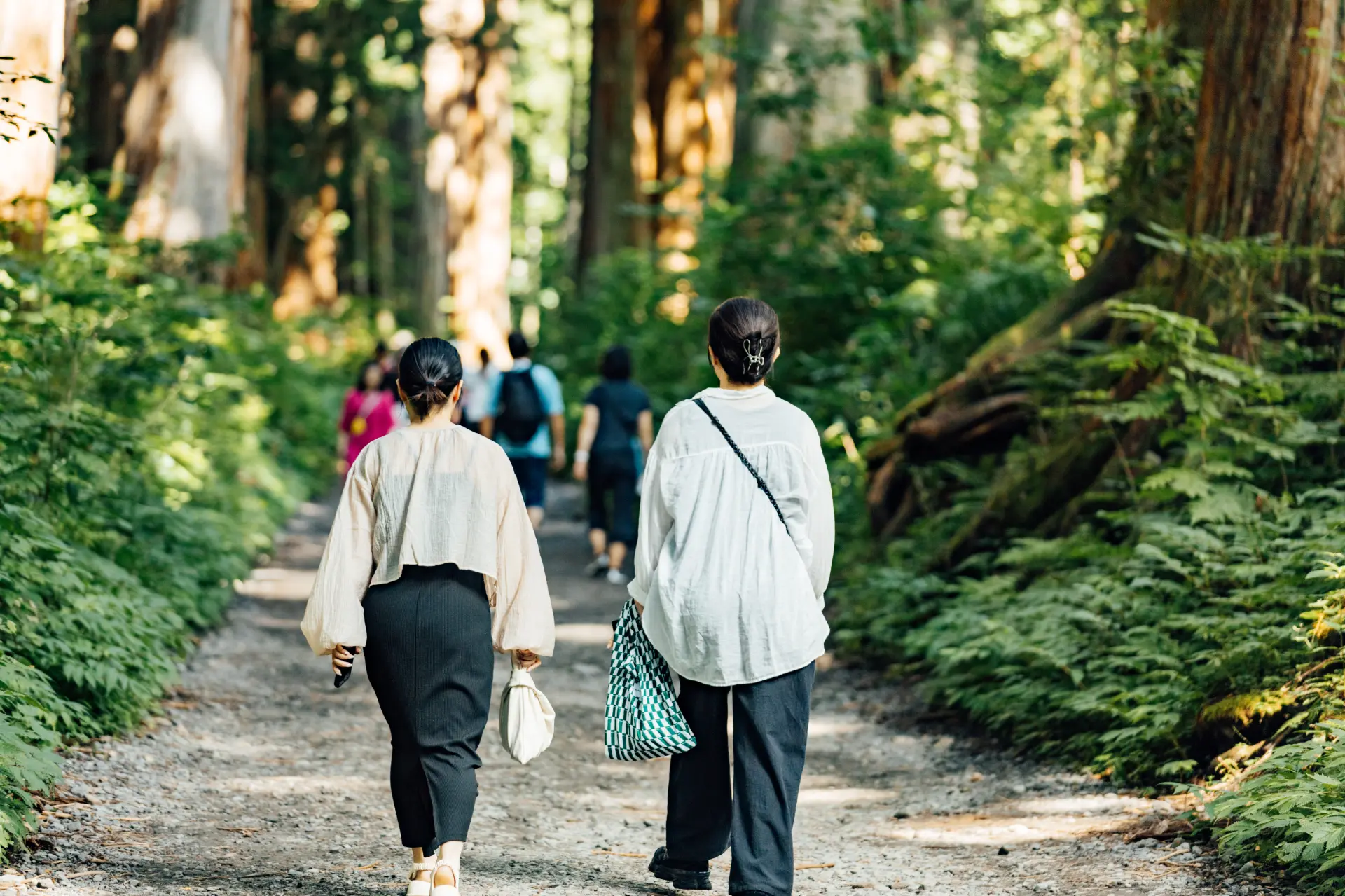
There is no official order for visiting Togakushi Shrine's five shrines, so you can choose freely based on your fitness level, transportation, and available time.
If you are unsure, the easiest route is Hokosha → Hinomikosha → Chusha → Okusha and Kuzuryusha.
Walking the entire route takes about half a day, so allow plenty of time.
The table below summarizes recommended routes by mode of transportation.
| Transportation | Route | Approximate Time | Highlights |
|---|---|---|---|
| On foot | Hokosha → Hinomikosha → Chusha → Okusha and Kuzuryusha | Half a day to 1 day | Visit all five shrines while walking the historic Togakushi trail through lush nature |
| Rental car | Hokosha → Hinomikosha → Chusha → Okusha and Kuzuryusha | About half a day | Reduce travel time between shrines and spend more time on the Okusha approach |
-
1. You cannot drive close to the Okusha shrine building; it is about a 40-minute walk from the entrance to the approach
-
2. Allowing a full day is advisable if you include breaks, meals, and worship
-
3. If time is limited, the Chusha → Okusha and Kuzuryusha route is recommended
Important Tips for Visiting Togakushi Shrine
Togakushi Shrine is a sacred place shaped by rich nature and a long history, but visitors should also be mindful of its mountain environment.
Especially on a first visit, check local conditions in advance and plan a manageable itinerary.
Keep the following points in mind to fully appreciate your visit.
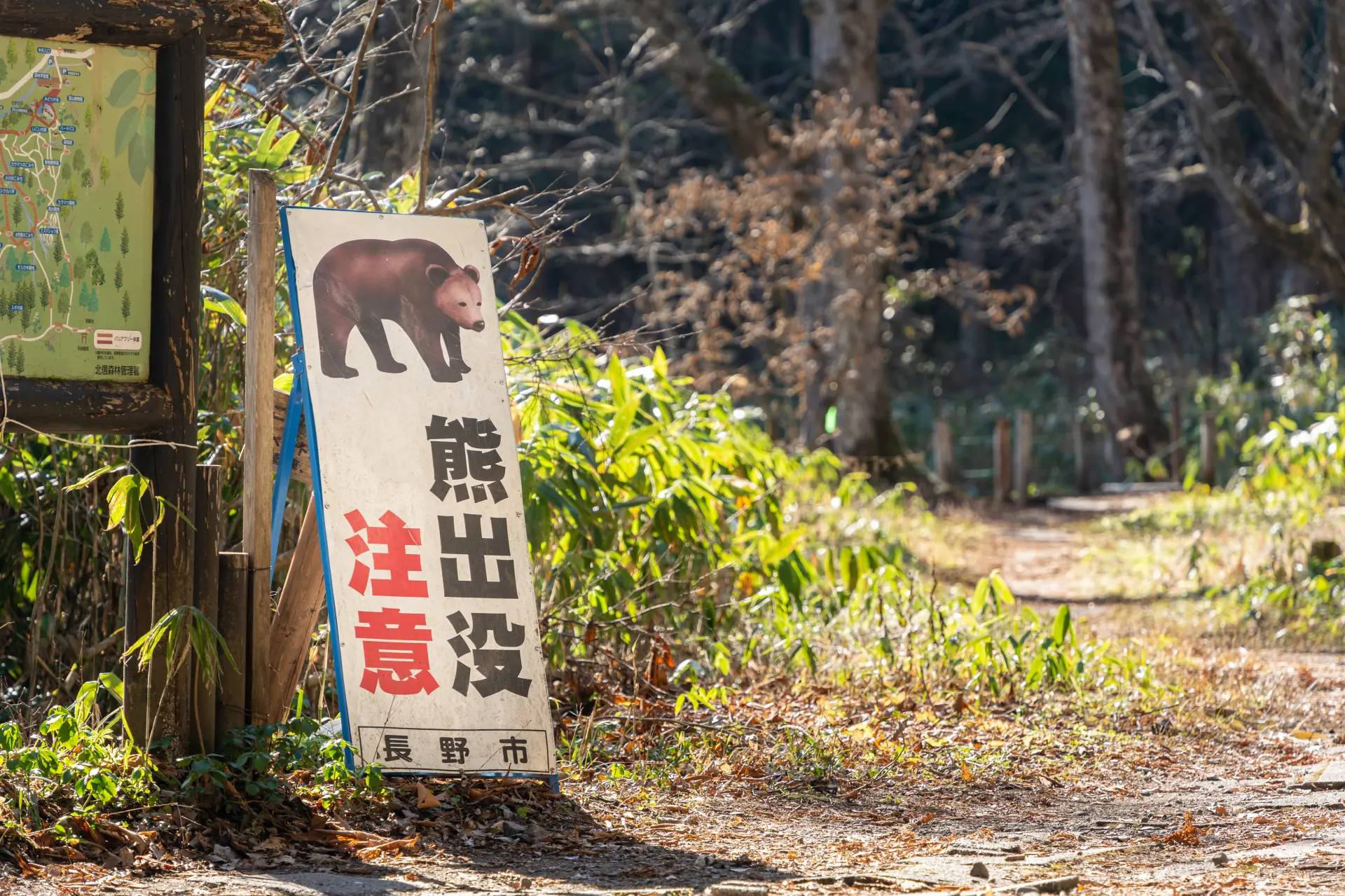
Preparing for Bear Encounters
Togakushi is a nature-rich area within a national park and is home to wild animals, including Asian black bears.
Actual sightings have been reported along the Okusha approach and around Kagamiike Pond, so preparation is essential.
To avoid encounters, make noise with a bear bell or radio, or by talking, to alert bears to your presence as you walk.
Encounters are especially likely from dusk to dawn, so try to finish your visit by around 3:00 p.m.
If you see a bear, do not provoke it or turn your back and run. Slowly back away to create distance.
For added peace of mind, check the latest sighting information before your visit.

Footwear and Weather Precautions
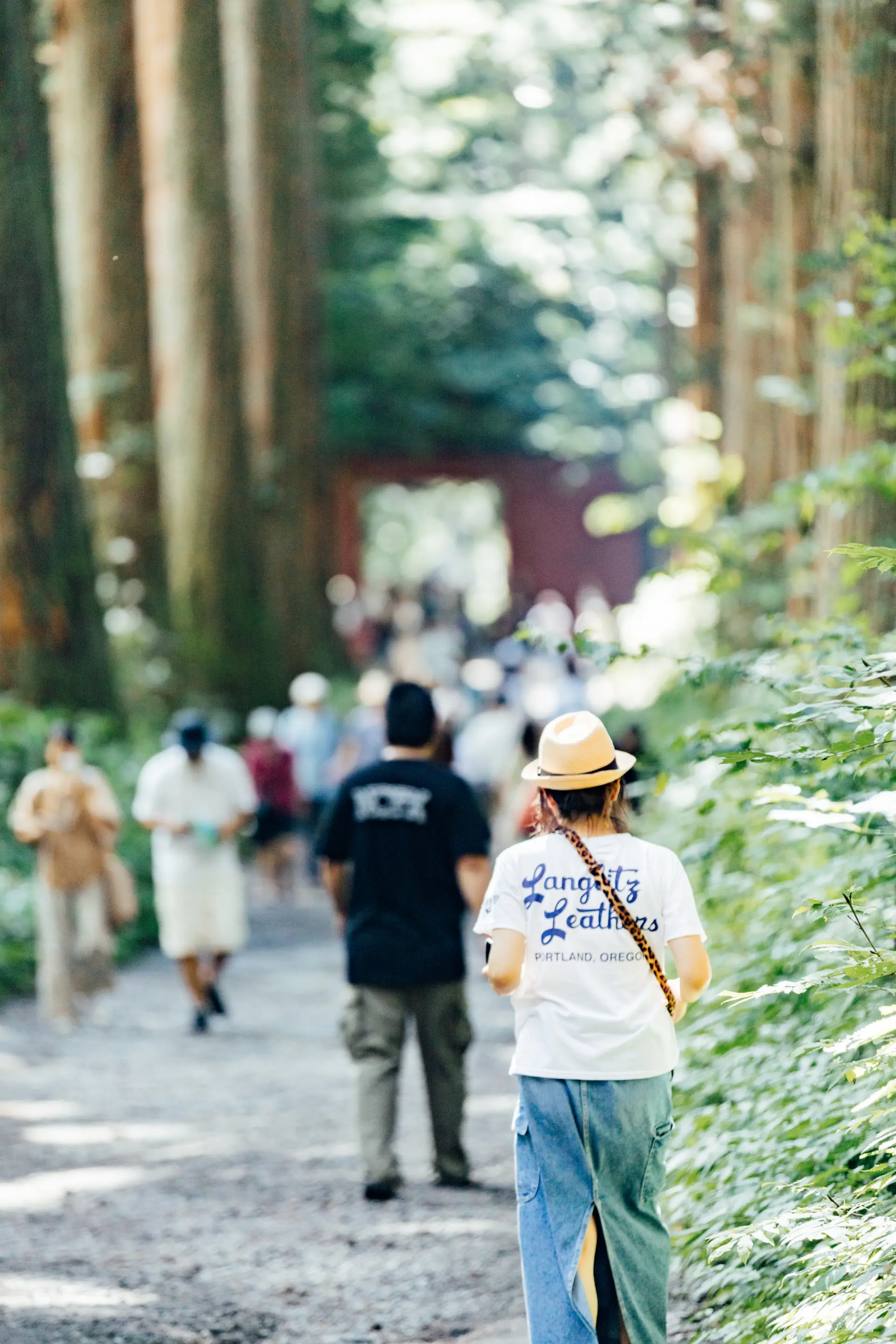
Togakushi Shrine lies in a mountainous area at an elevation of approximately 3,900–4,300 feet, and visiting all five shrines involves considerable walking through nature.
Hokosha has approximately 270 stone steps, while Okusha is about 2 kilometers and a 40-minute walk from the entrance to the approach, with stone steps continuing through the latter section.
Conditions along the approaches change with the weather, so wear comfortable shoes with good traction.
Choose layered clothing that allows you to regulate your body temperature, and bring rain gear and warm clothing as appropriate for the season.
Stay hydrated, take frequent breaks, and follow a manageable schedule.
Visiting in Winter
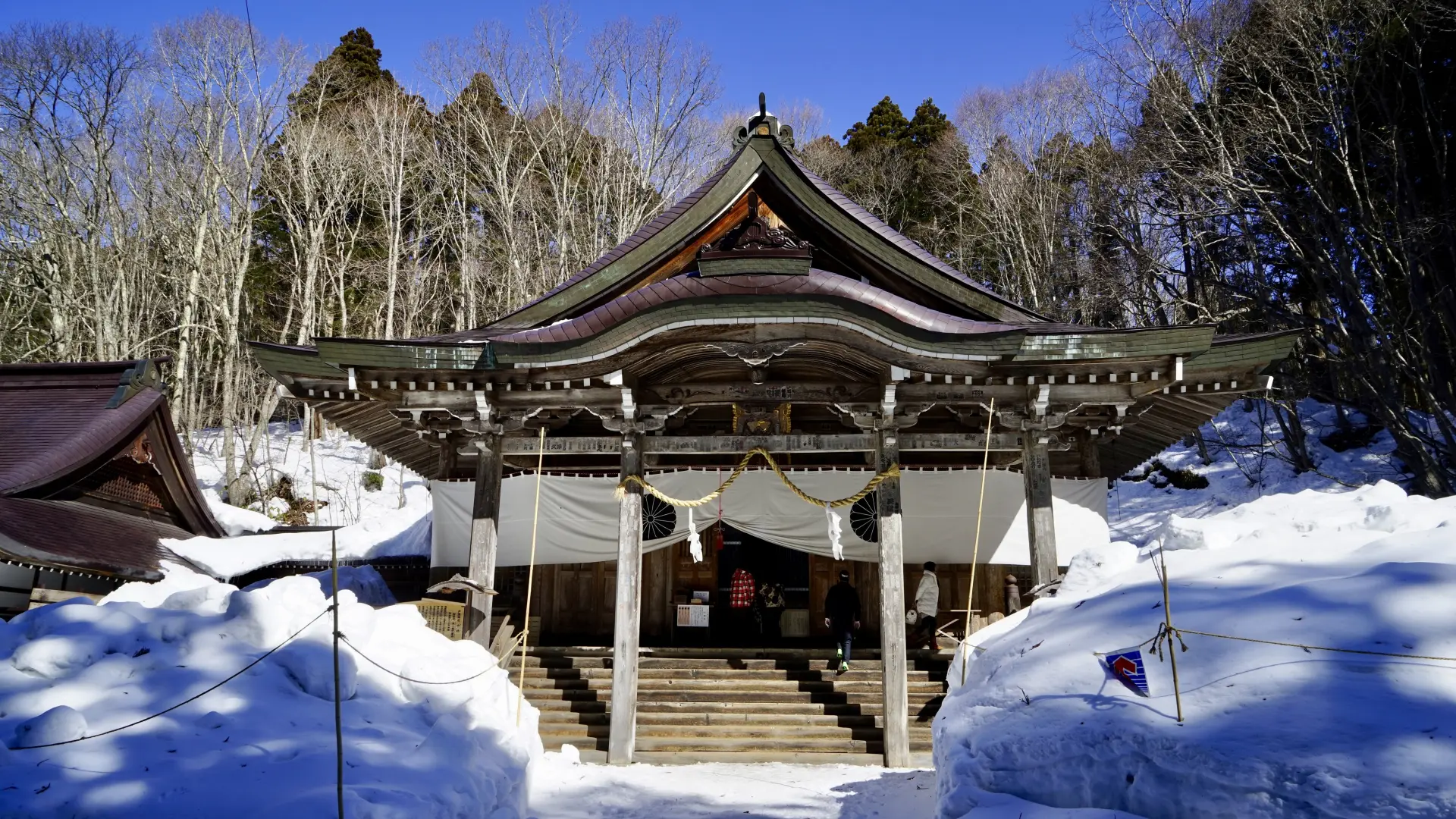
During winter, Togakushi Shrine operates differently from usual because of snow and ice.
Okusha and Kuzuryusha are generally closed from January 7 until around late April and cannot normally be visited.
The Okusha approach is closed beyond the Zuishinmon Gate, so do not enter restricted areas.
If you wish to worship Okusha and Kuzuryusha during this period, consider paying respects from a remote worship site near the entrance to the Okusha approach or from Chusha.
Goshuin for all five shrines are also available from the Chusha office during winter.
Bring warm clothing and slip-resistant winter footwear, and check bus operations as well as snow and ice conditions on roads and in parking lots before setting out.
3 Popular Nagano Attractions to Visit with Togakushi Shrine
When visiting Togakushi Shrine, consider exploring other popular attractions nearby.
Many showcase the distinctive appeal of Nagano and offer a variety of experiences.
Here are several places that pair well with Togakushi Shrine and offer activities, nature, and culture.
1. Chibikko Ninja Village
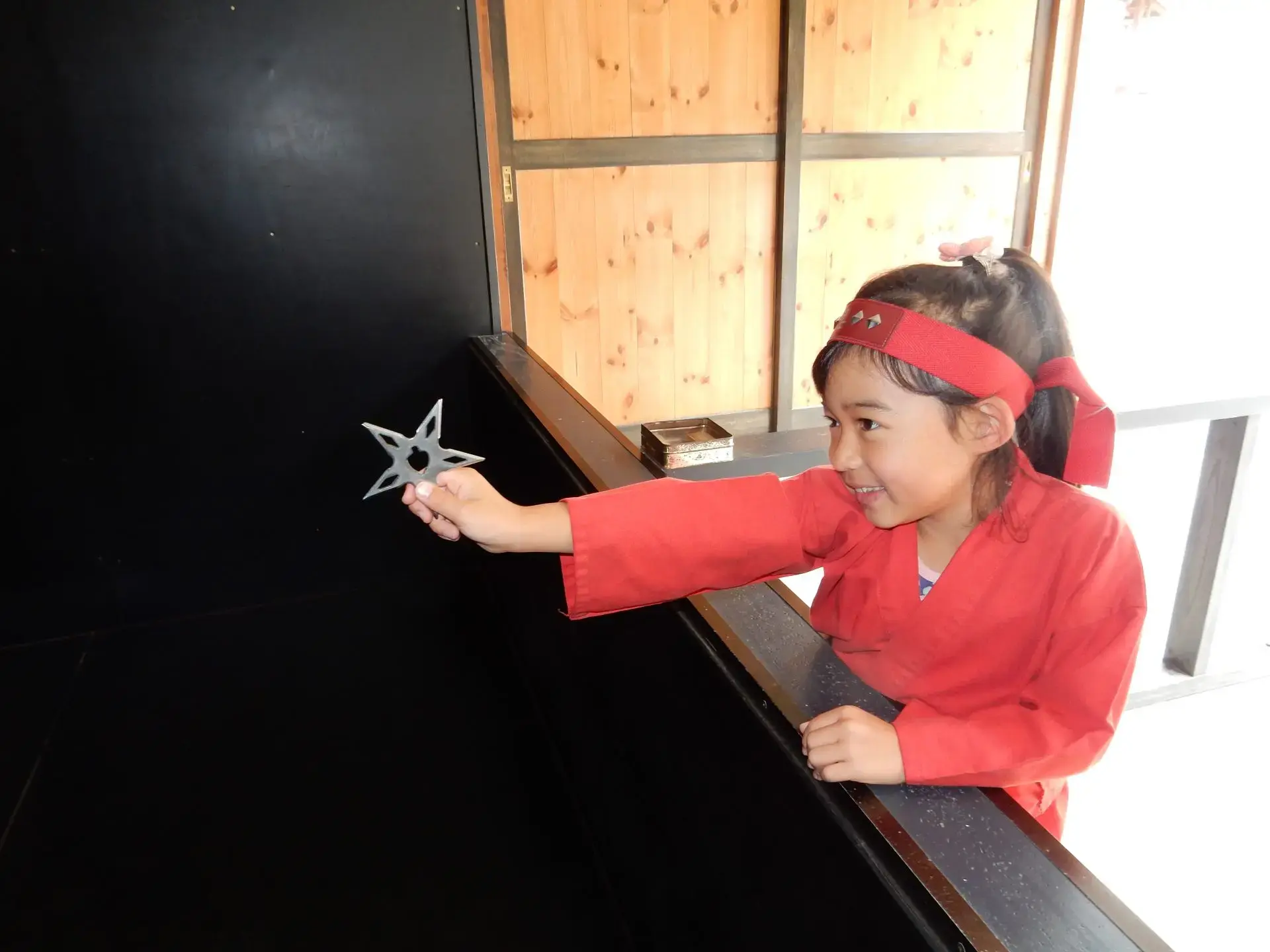
This ninja-themed amusement park is set in Togakushi's forested landscape.
Its outdoor obstacle course, packed with equipment that simulates ninja training, offers three routes: Training Forest, Ninja Fort, and Hidden Fort.
Take on challenging obstacles featuring suspension bridges, tree climbing, ropes, nets, and logs.
Other attractions include Ninja Slalom, where visitors race down a large slide on a wheeled sled, along with areas for trying ninja projectile weapons through shuriken target throwing, distance throwing, and blowgun activities.
- Name in Japanese
- チビッコ忍者村
- Postal Code
- 381-4101
- Address
-
3193 Togakushi, Nagano City, Nagano
Google Maps - Tel
- 026-254-3723
- Closed
- Thursdays (open always from mid-July through the end of August)
- Hours
- Late April - late November, 9am - 5pm (Last entry 4:30pm)
- Admission
- Kozaru Ticket (only entry into the village) Adult: 650 yen, 4-6 year-olds: 350 yen / Sarutobi Ticket (Entry+6 facility tickets) Adult: 2,200 yen, 4-6 year-olds: 1,850 yen / 1 Facility ticket: 350 yen
- Directions
-
1) From JR Hokuriku Shinkansen, Nagano Station, ride Alpico Transportation, Togakushi Line bus bound for Togakushi Campground for an hour, get off at Togakushi Chusha and walk 15 min.
2) From Joshinetsu Expressway, Shinanomachi Interchange, drive 40 min. - Credit Cards
-
Accepted (Visa, JCB, Mastercard, Diners Club, American Express, DISCOVER, UnionPay)
* Allowed only at the village admission window and Ninyusha souvenir shop - Official Website
- Official Website (Japanese)
2. Kagamiike Pond
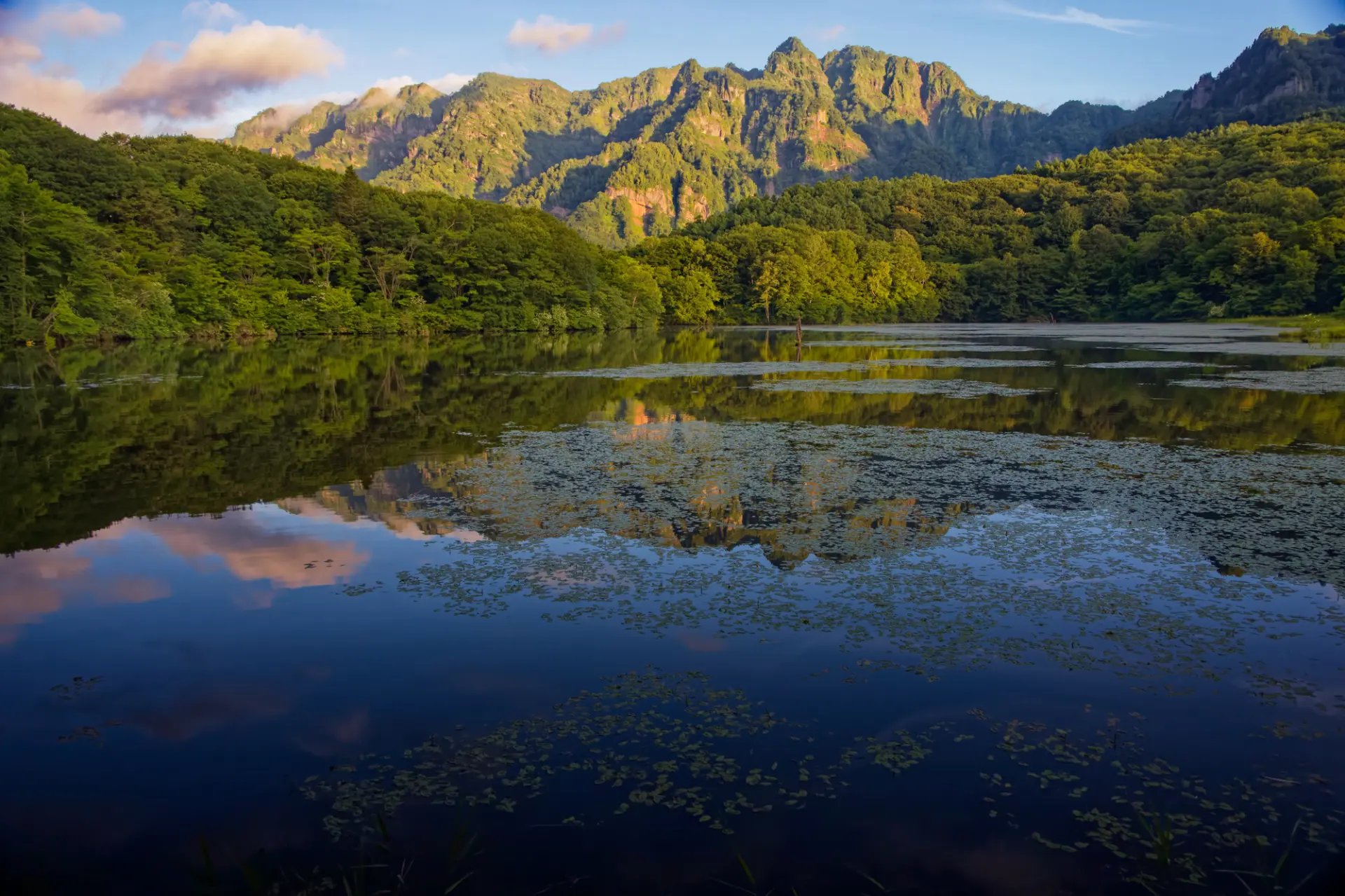
Located at an elevation of 3,900 feet, the pond takes its name from the mirror-like reflections of the Togakushi mountain range and surrounding peaks on its surface.
It is one of Togakushi's most scenic locations. While popular during the fresh greenery season, it is especially recommended in fall, when the trees turn fiery shades of red.
A walking path circles the pond, offering views of maples and larches coloring the lakeshore.
3. Zenkoji Temple
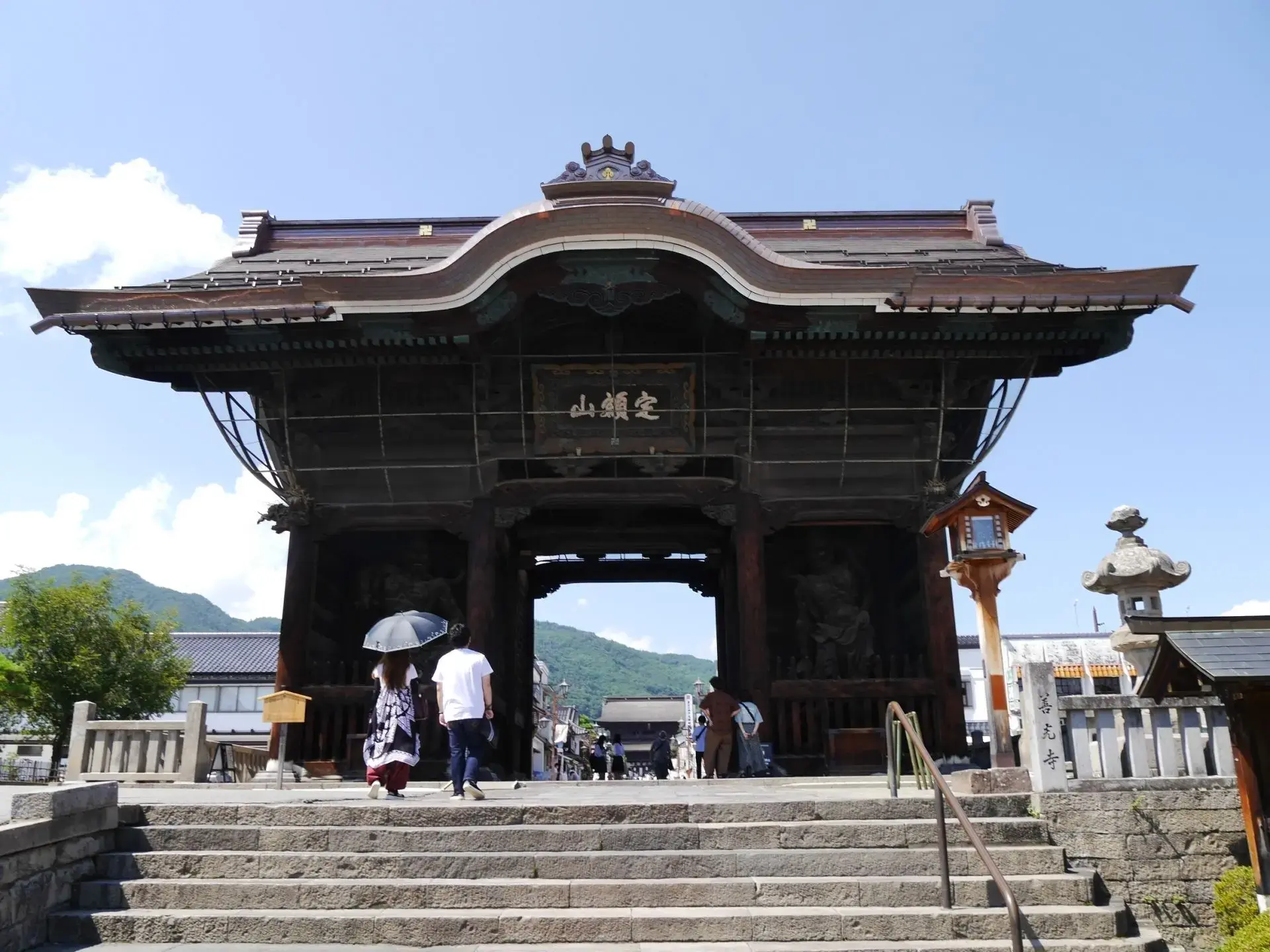
Founded approximately 1,400 years ago, this major temple complex spans about 635,000 square feet and includes Daikanjin, Daihongan, and numerous temple lodgings.
Because it predates the division of Buddhism in Japan into separate sects, people of any denomination may worship here. Over the centuries, it has attracted everyone from powerful figures such as Minamoto no Yoritomo and Tokugawa Ieyasu to ordinary people.
It is also famous for the legend behind the saying, "Led by an ox to Zenkoji," and approximately 6 million worshipers still visit each year.
- Name in Japanese
- 善光寺
- Postal Code
- 380-0851
- Address
-
491 Motoyoshicho, Nagano City, Nagano
Google Maps - Telephone
- 026-234-3591
- Holiday
- Open every day
- Hours
-
The public is permitted to visit the precincts.
O-KAIDAN Tour: 4:30am - 4:30pm during summer season
6:00am - 4:00pm during winter season
Museum , Sanmon (the most important gate of the temple), and Buddhist Texts Library: 9:00 am - 4:00 pm - Admission
-
An admission ticket NAIJIN-KEN (for O-KAIDAN Tour and Museum ): 800 yen
Ticket for three buildings, Naijin (A tatami-mat space in the main hall), Sanmon , and Buddhist Texts Library: 1,500 yen - Directions
-
1) From Nagano station on the Hokuriku Shinkansen Line, about 15 minutes by bus bound for Zenkoji, get off at Zenkoji Ⅾaimon bus station , and walk about 5 min.
2) A 40-min drive from Nagano IC on Joshin-etsu Expressway. - Credit Cards
- Accepted (Visa, Mastercard, JCB, UnionPay) * at the goods store only.
- Official Website
- Official Website (English)
Frequently Asked Questions About Togakushi Shrine
Q
How long does it take to visit all five shrines at Togakushi Shrine?
Visiting all five on foot generally takes about half a day. If you include worship, breaks, and meals, plan a schedule with plenty of extra time.
Q
Is there a set order for visiting Togakushi Shrine?
There is no official order, so you can choose a route based on your fitness level and transportation. Hokosha → Hinomikosha → Chusha → Kuzuryusha and Okusha is an easy route to follow.
Q
Can I visit Togakushi Shrine in winter?
Yes, but Hokosha, Okusha, and Kuzuryusha are closed for certain periods during winter. Be mindful of snow and icy roads, and check the latest information in advance.
Summary
Each of Togakushi Shrine's five shrines has its own deities and stories, giving the site a depth that cannot be fully captured in a single visit.
The majestic cedar-lined approaches, the experience of collecting goshuin while visiting each shrine, and traditions rooted in the region reveal the distinctive interplay of nature and faith found here.
Prepare carefully, then visit the foot of Mount Togakushi to experience its enduring world of mythology.
Also be sure to read this article for essential information to help you make the most of your trip to Nagano.