
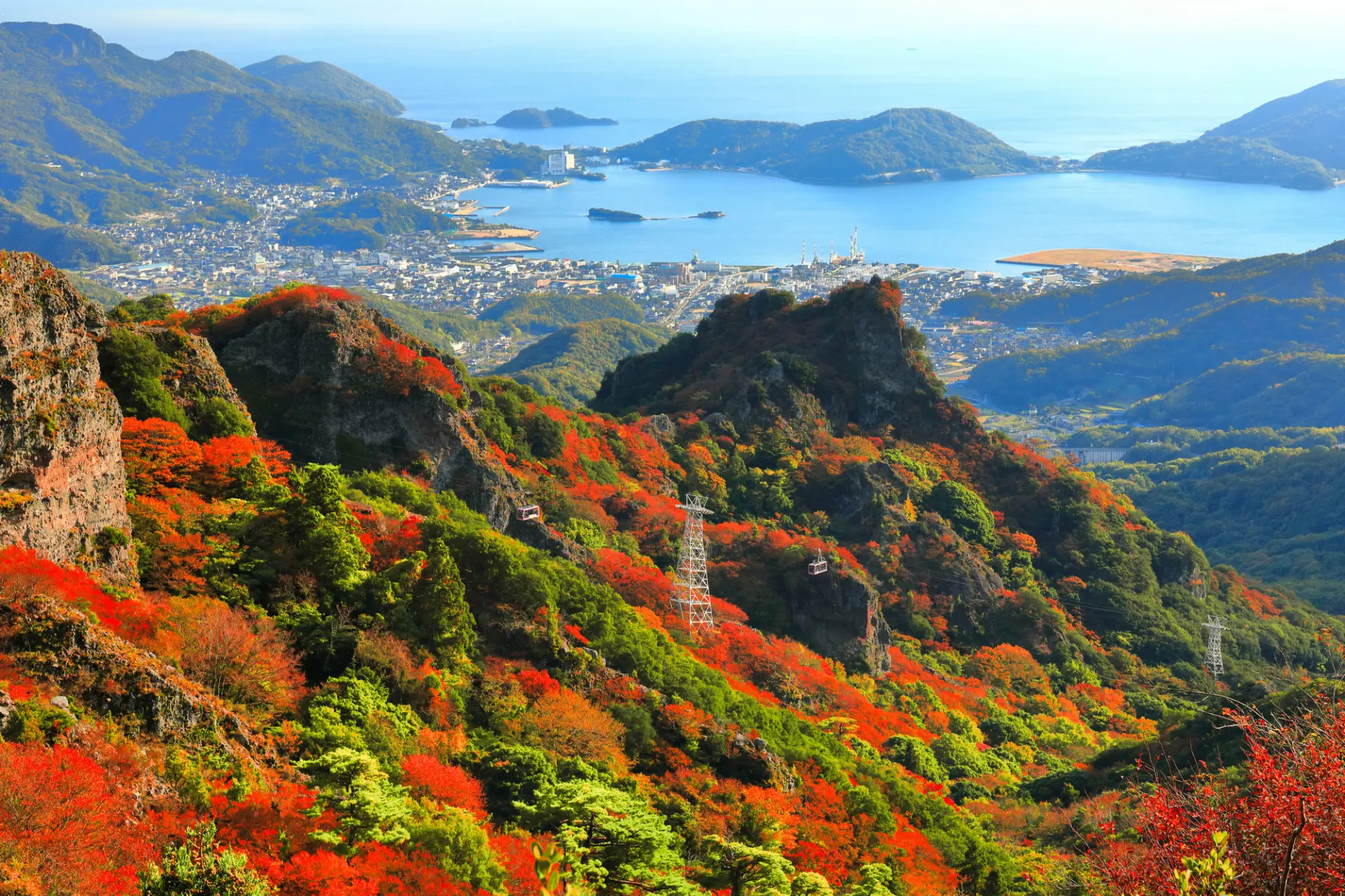
Autumn Travel Guide to Kagawa: Fall Foliage, Setouchi Scenery, and Seasonal Food
Autumn in Kagawa, facing the Seto Inland Sea, brings a variety of seasonal scenery across the coast and mountains, from Shodoshima’s island landscapes and golden rice terraces to the fall foliage of Kankakei Gorge and Ritsurin Garden.
Autumn flowers at Sanuki Manno National Government Park and harvest scenery at the Nakayama Senmaida Rice Terraces add color to the journey. Other pleasures include climbing the stone steps of Kotohira-gu Shrine and savoring Sanuki udon, Setouchi seafood, Shodoshima soy sauce, and local sake.
Explore Kagawa as the season gradually deepens.
How to Experience Autumn in Kagawa by Month
From Setouchi scenery and rural mountain landscapes to fall foliage, the pleasures of traveling through Kagawa gradually change from September through November.
September, when the summer heat still lingers, is ideal for island travel; October is suited to exploring towns and rural areas; and November brings fall foliage and seasonal flavors.
Choose destinations to match the season and follow autumn scenery across both the coast and mountains.
September: Visit the Setouchi Region While Summer Still Lingers
With the summer heat still lingering, September is a good time to venture to Shodoshima and the other islands of the Seto Inland Sea.
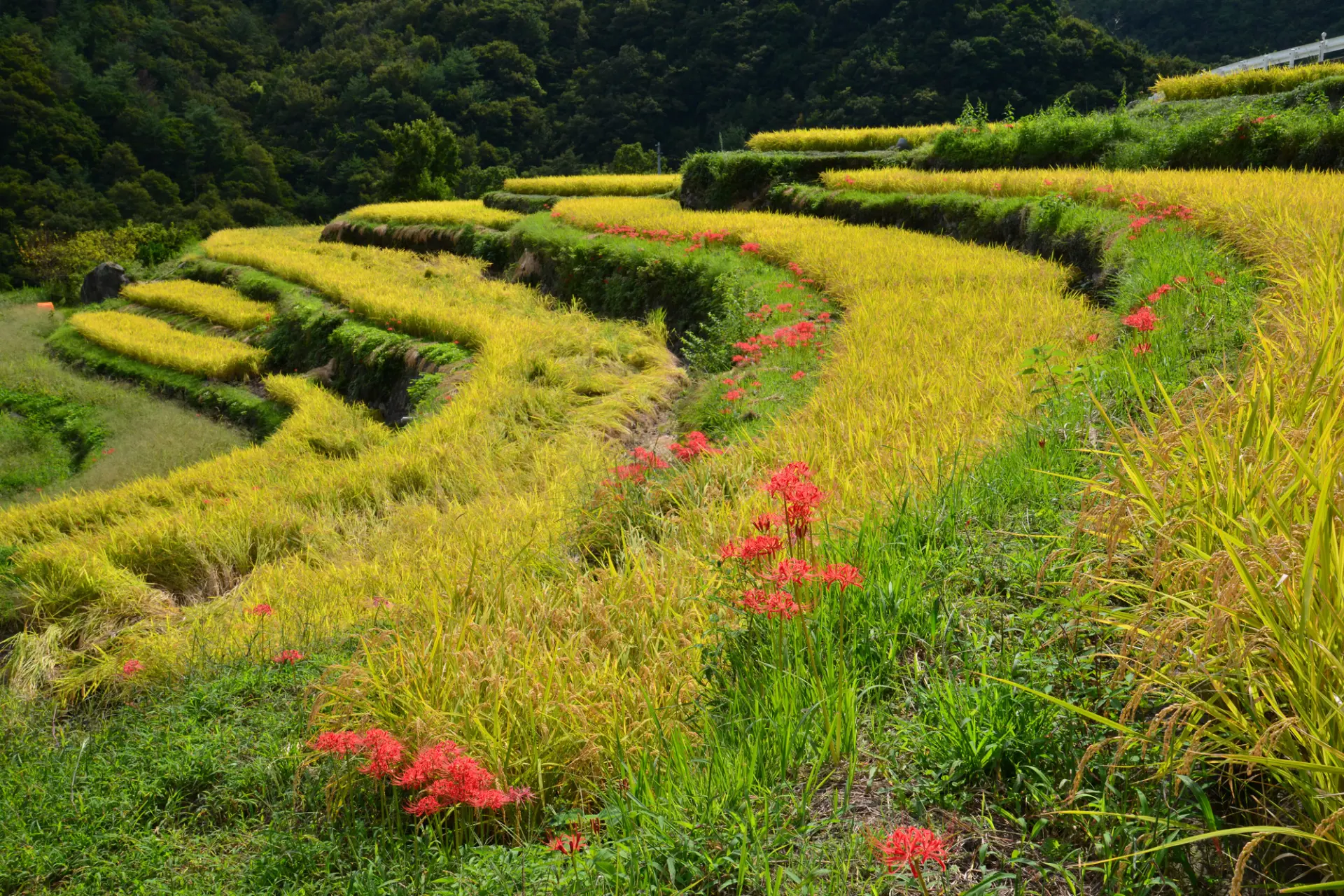
Along with visiting places overlooking the sea, travelers can see harvest scenery at the Nakayama Senmaida Rice Terraces, where golden rice stalks and red spider lilies add seasonal color. A place where you can learn about Shodoshima’s long-established soy sauce culture is also worth adding to the itinerary.
Including the ferry journey to the islands, this is an ideal season for planning a distinctly Setouchi trip.
October: Visit Kotohira-gu Shrine’s Grand Festival and the Temple Town
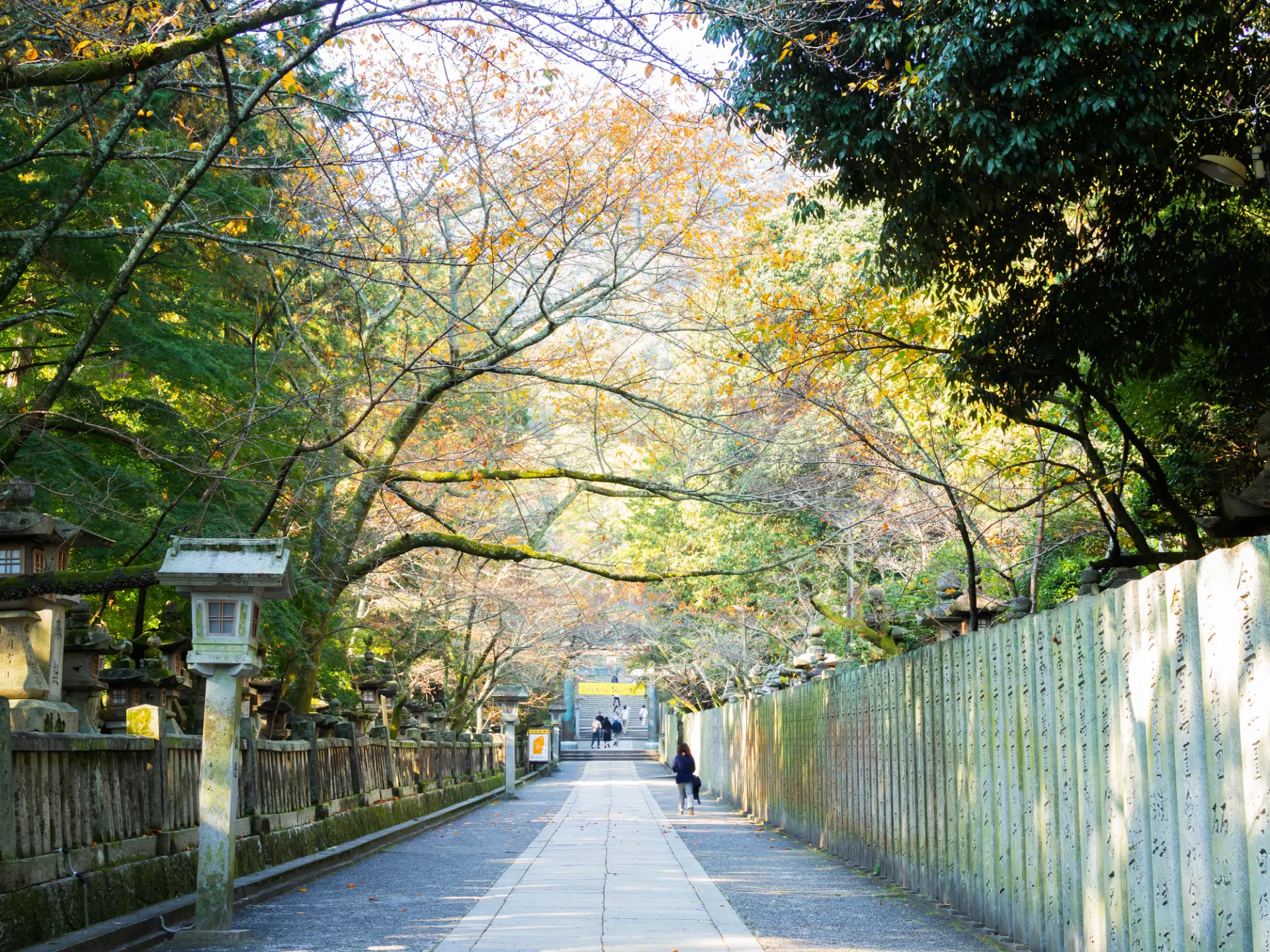
As the heat eases in October, the weather is well suited to climbing the stone steps to Kotohira-gu Shrine and exploring the town at its entrance.
The shrine’s annual grand festival is held from October 9 to 11, with a sacred procession taking place on the evening of October 10.
Walk along the historic approach and through the temple town to experience the energy of an autumn festival while discovering Kotohira’s culture.
November: Enjoy Fall Foliage and Seasonal Food
As the mountains change color in November, visit places known for autumn scenery, such as Kankakei Gorge, Ritsurin Garden, and Kotohira-gu Shrine.
On Shodoshima, travelers can also experience the island’s food culture through autumn-harvested olives, soy sauce, local sake, and more.
After touring the fall foliage in the gorge and gardens, savor Sanuki udon and Setouchi seafood to experience the deepening season throughout the day.
7 Popular Kagawa Attractions to Visit in Autumn
Autumn in Kagawa offers a varied combination of attractions, from expansive flower-filled parks and golden rice terraces to a historic castle, a traditional theater, and Shodoshima’s soy sauce culture.
Rather than focusing only on fall foliage, explore harvest landscapes, culture, and local craftsmanship for a trip that reflects the season.
1. Sanuki Manno National Government Park (Manno Town)
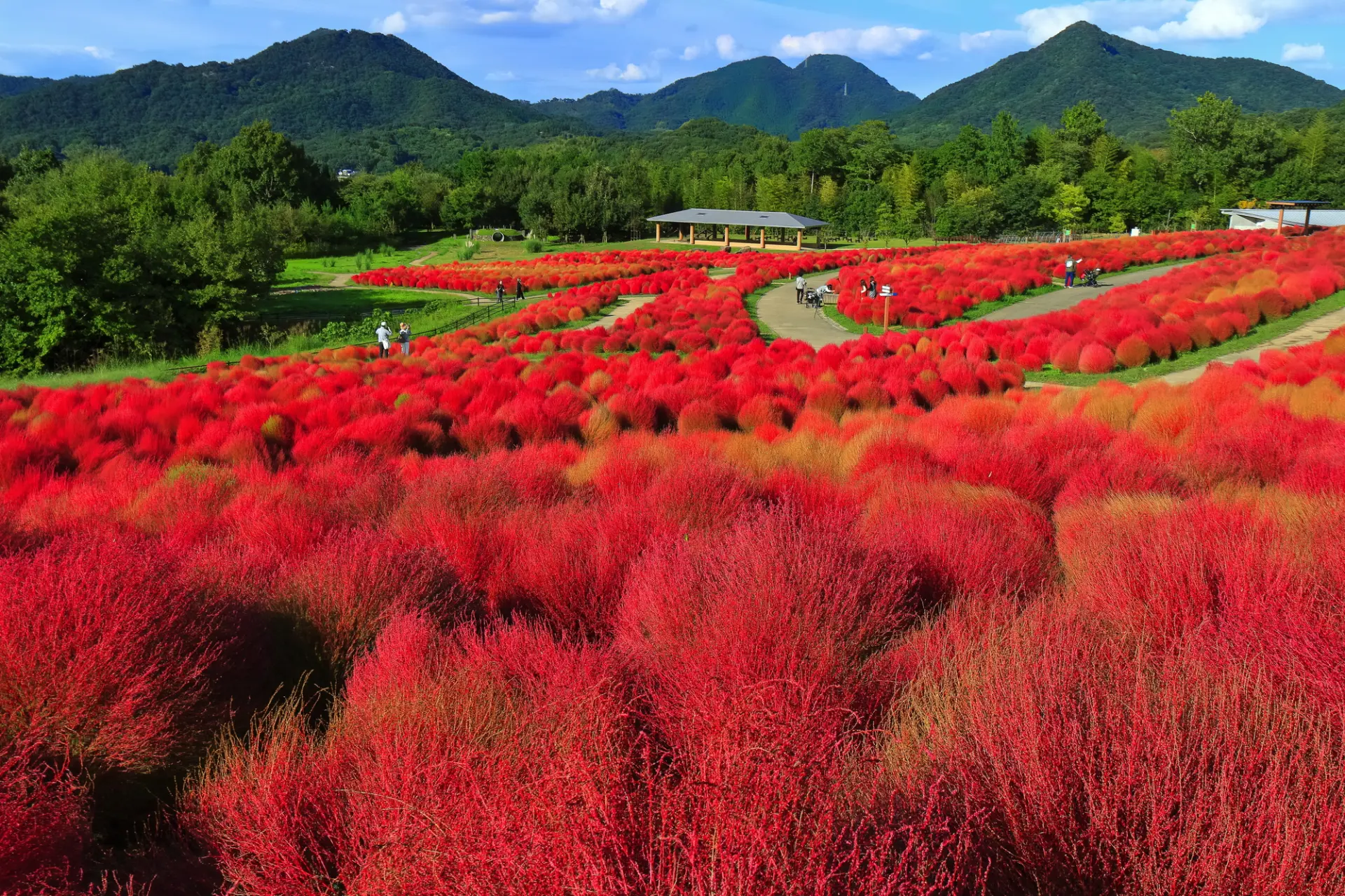
Shikoku’s only national government park covers approximately 865 acres along the shore of Manno Pond. From spring through autumn, visitors can see seasonal flowers in bloom, including tulips, nemophila, hydrangeas, and cosmos.
In addition to seasonal flowers, the grounds are dotted with places to experience nature, including Shoryu Falls, the Nature and Ecology Garden, which recreates a traditional rural landscape, and the Manno Pond Scenic Promenade. Large playground equipment, lawns, and bicycle rentals make it easy to explore the spacious park while viewing the autumn flowers.
2. Nakayama Senmaida Rice Terraces (Shodoshima Town)
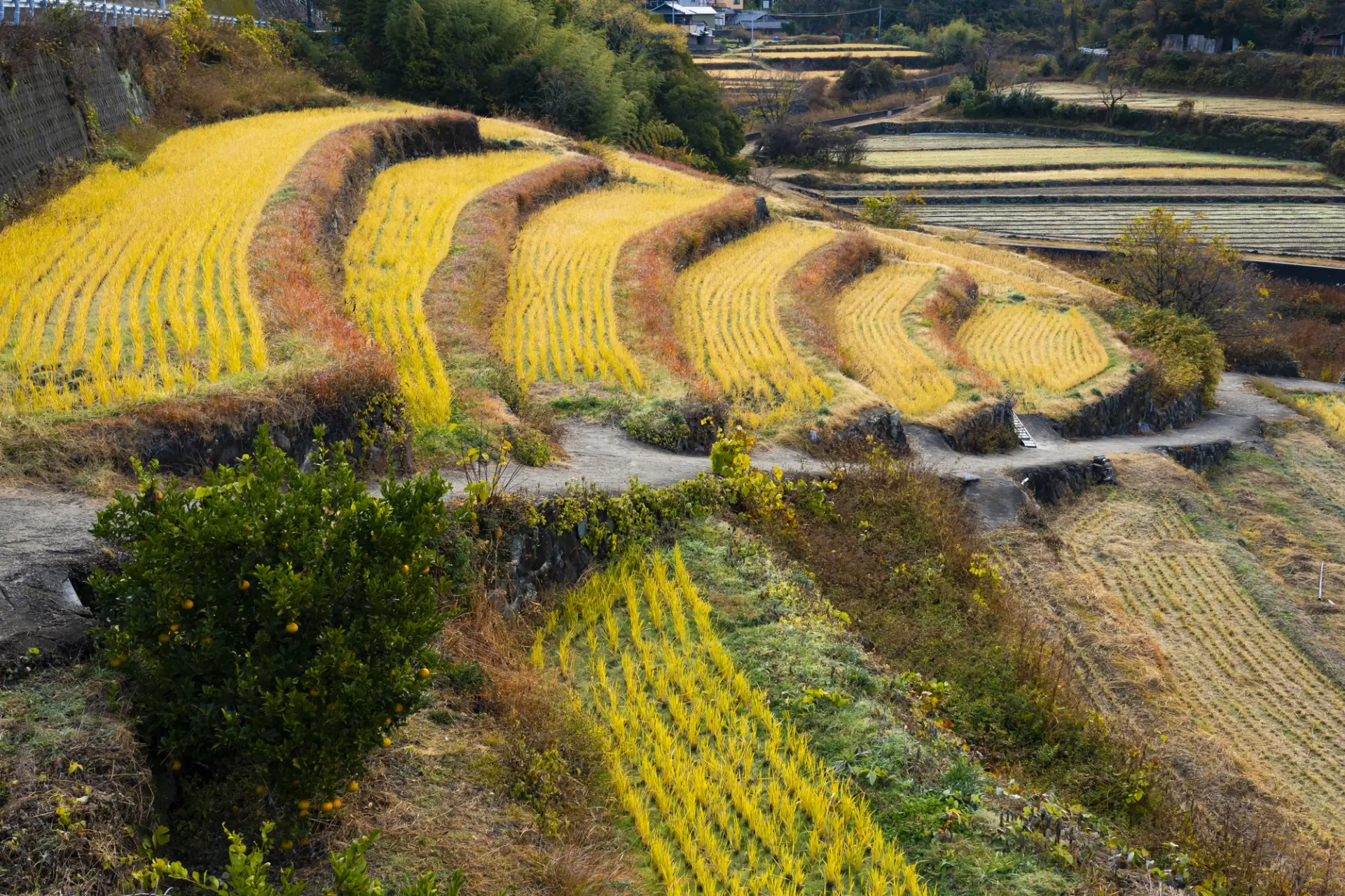
This scenic area features approximately 800 rice terraces of varying sizes layered across slopes at elevations of 490 to 820 feet in the Nakayama district of central Shodoshima. The terraces take on different appearances with each season, filled with vivid green rice plants from spring through summer and golden rice stalks in autumn.
Selected as one of Japan’s 100 Best Rice Terraces, the area is also home to the nearby Komame Shokudo, where meals are prepared with rice harvested from the terraces. Take time to admire the rural scenery as it changes with the seasons.
3. Marugame Castle (Marugame City)
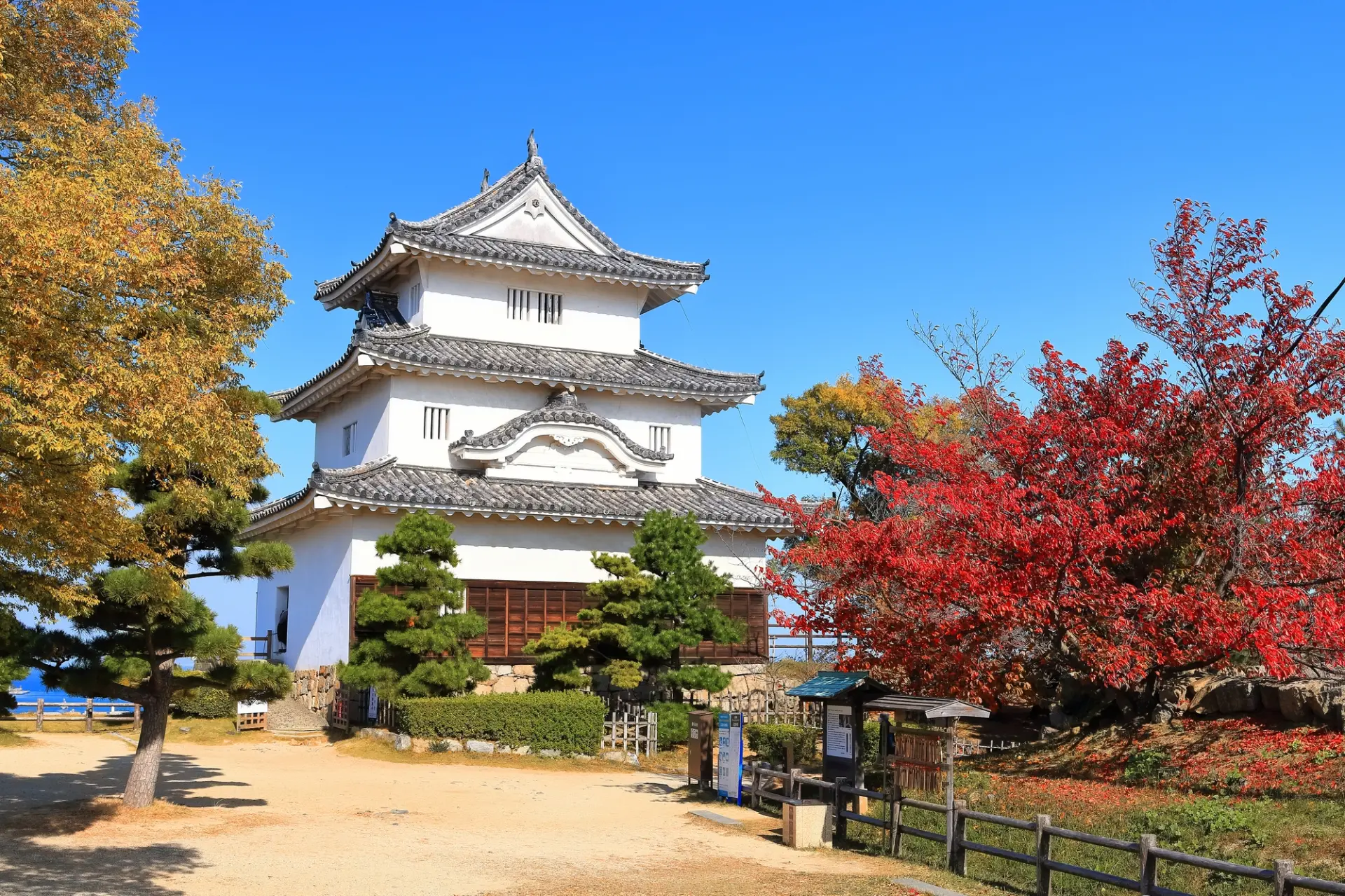
This hilltop castle, with a history spanning 400 years, is a symbol of Marugame. Stone walls rise approximately 197 feet from the inner moat toward the keep, allowing visitors to see their distinctive fan-shaped curves up close.
The keep is one of only 12 surviving original wooden castle keeps in Japan and is designated an Important Cultural Property. Its white exterior harmonizes with the surrounding nature to create a picturesque landscape. From the top floor, visitors can look out over the Seto Inland Sea while taking in the stone walls, castle keep, and surrounding scenery together.
4. Former Konpira Grand Theatre, Kanamaruza (Kotohira Town)
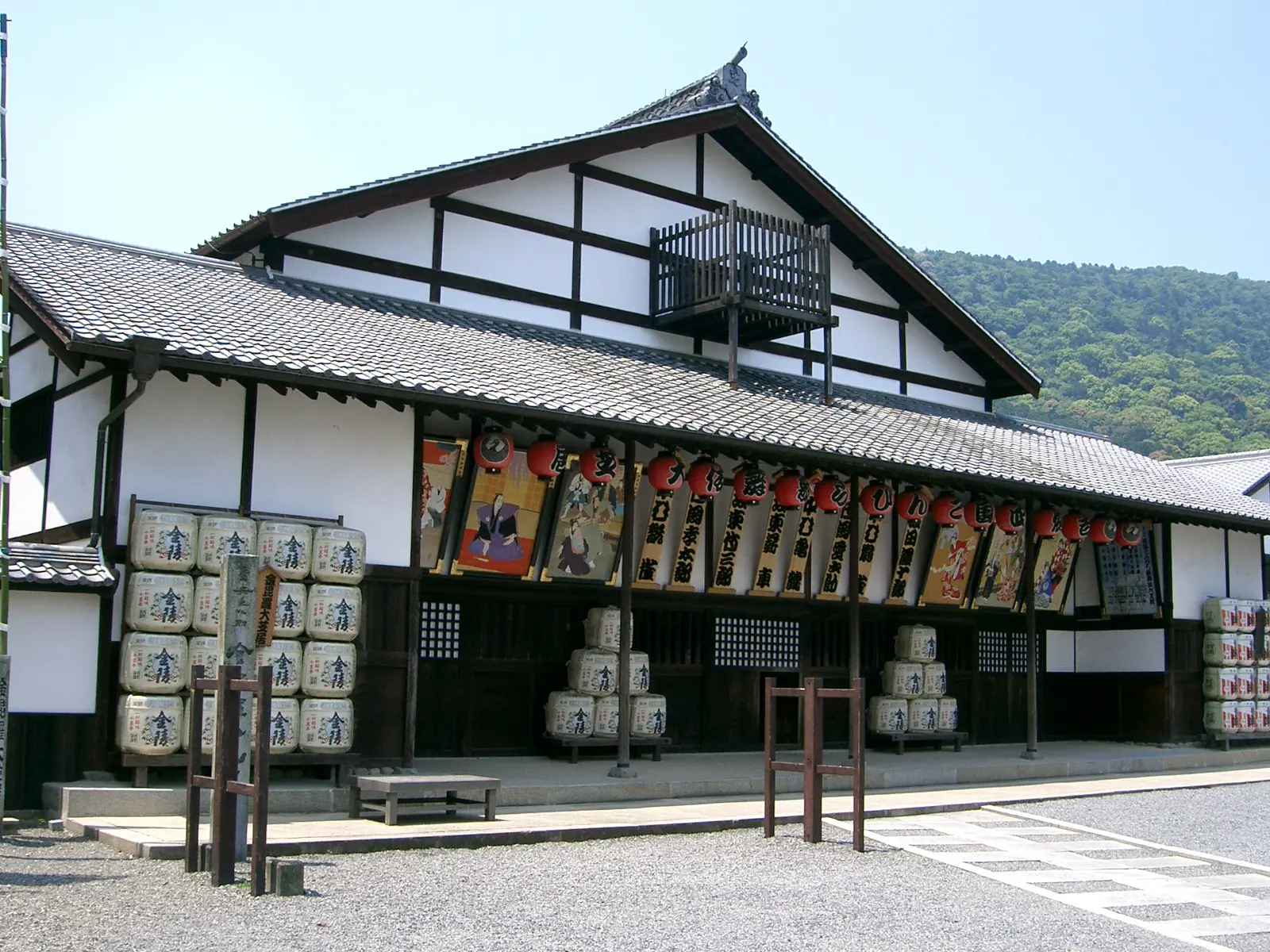
Built in 1835, this is Japan’s oldest surviving traditional playhouse. During the Edo period, markets were held in the bustling town visited by worshippers traveling to Kotohira-gu Shrine, while plays and sumo matches were staged in temporary structures. This building was later established as a permanent theater.
Features such as the budodana overhead rigging and kakesuji rope-and-pulley system have been restored, offering a sense of an Edo-period playhouse. Although it was once closed, the theater was preserved through the dedication of local residents and is now designated an Important Cultural Property.
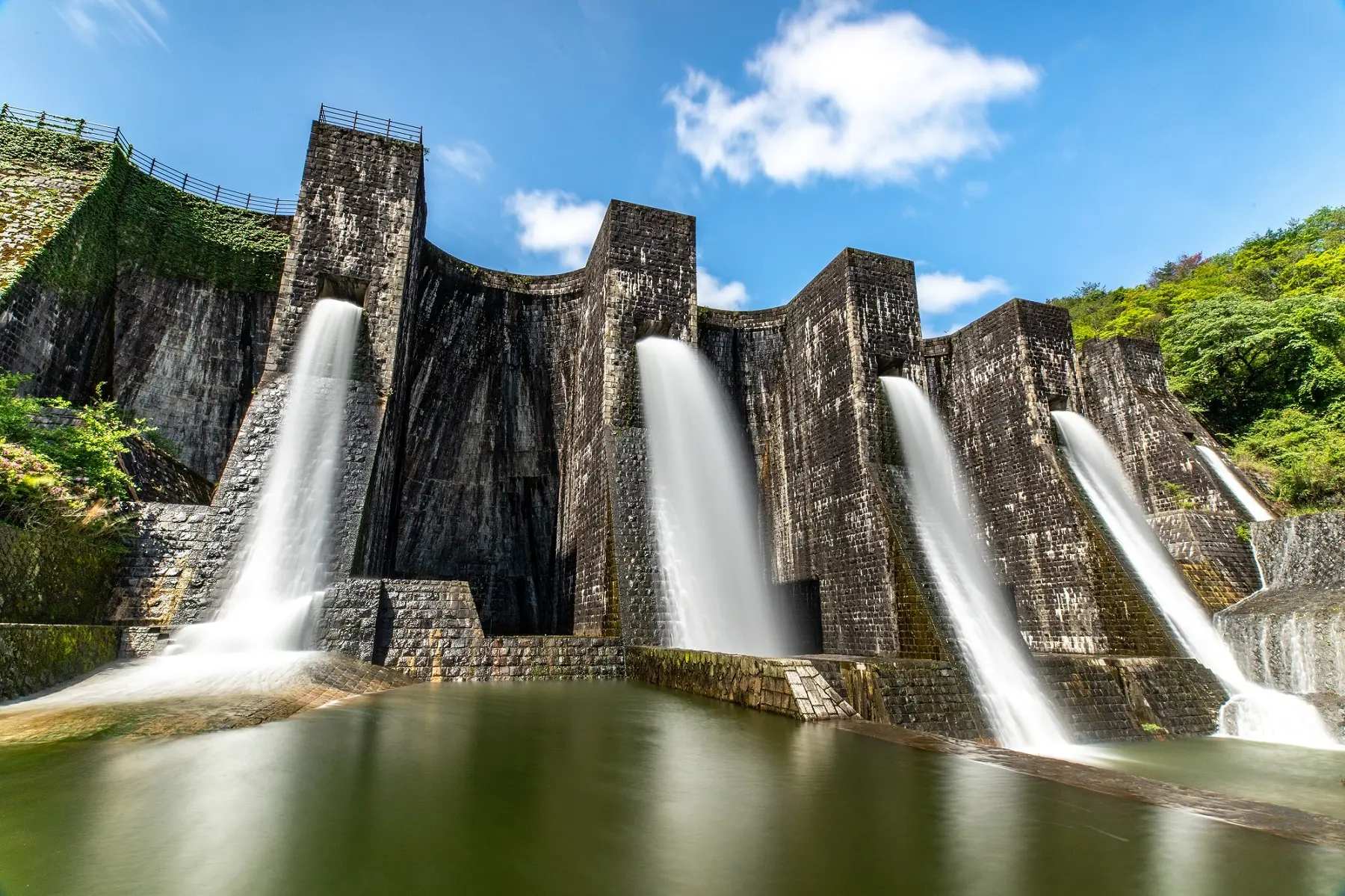
5. Hōnen-ike Dam (Kanonji City)
This concrete reservoir dam was built on the upper reaches of the Kunita River in the Asan Mountains. It measures 477.4 feet long and 99.7 feet high. Viewed up close, its distinctive structure of five arches and six buttresses immediately stands out.
One of Japan’s earliest concrete multiple-arch dams, it was designated an Important Cultural Property in 2006. After decades of exposure to wind and rain, its imposing appearance resembles a medieval European castle and continues to fascinate visitors.
6. Marukin Soy Sauce Memorial (Shodoshima Town)
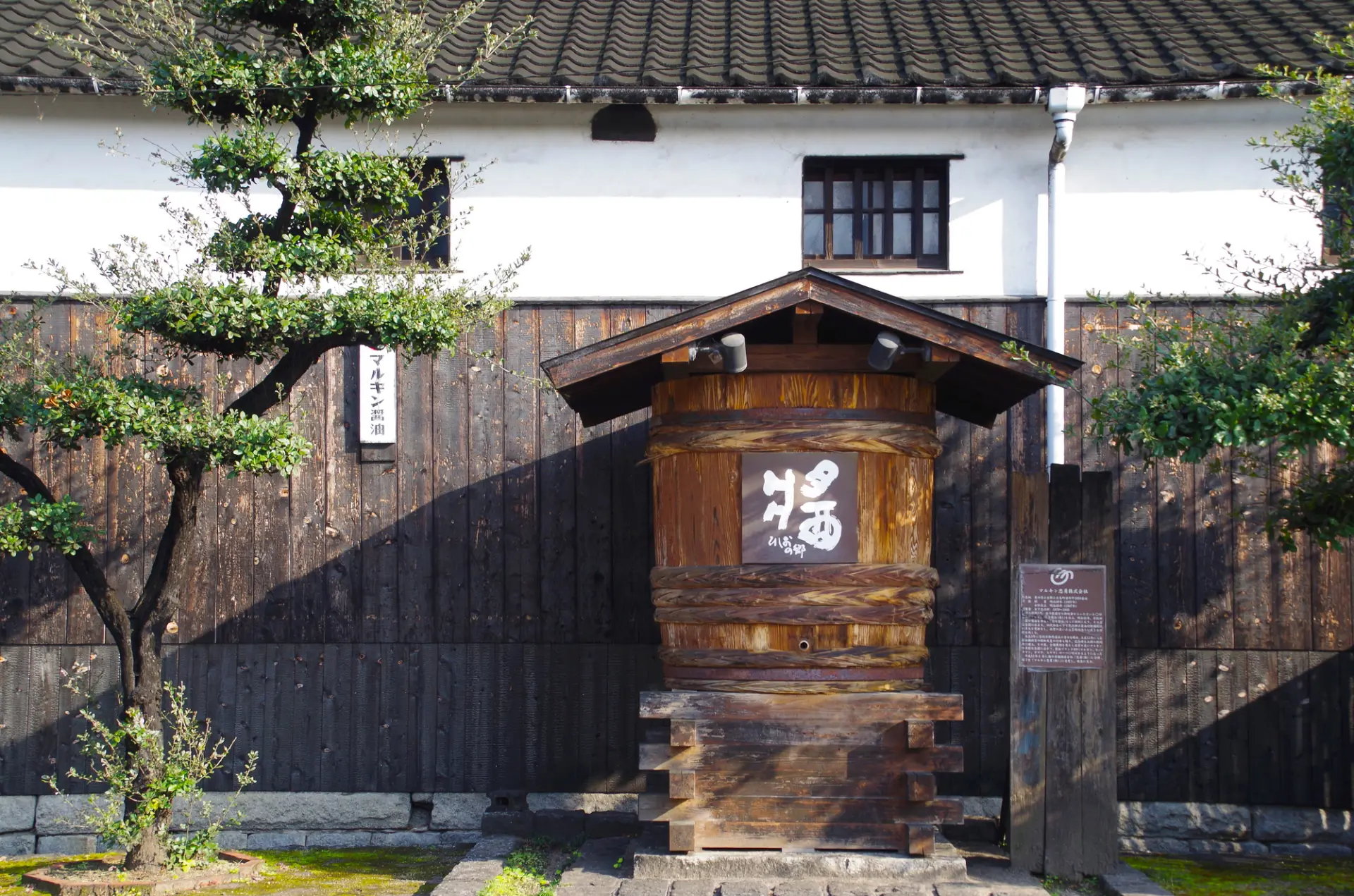
This museum is operated by Marukin Soy Sauce, which has continued making soy sauce with traditional methods for more than 100 years. Its large gassho-style building, one of the largest of its kind in Japan, is registered as a Tangible Cultural Property.
Inside, actual tools and display panels explain the history and production methods of soy sauce. The museum shop carries standard and limited-edition products, while visitors can also try soy sauce soft-serve ice cream made with raw soy sauce brewed in wooden barrels at the naturally fermented brewery.
7. Hoshoin Temple’s Shinpaku Tree (Tonosho Town)
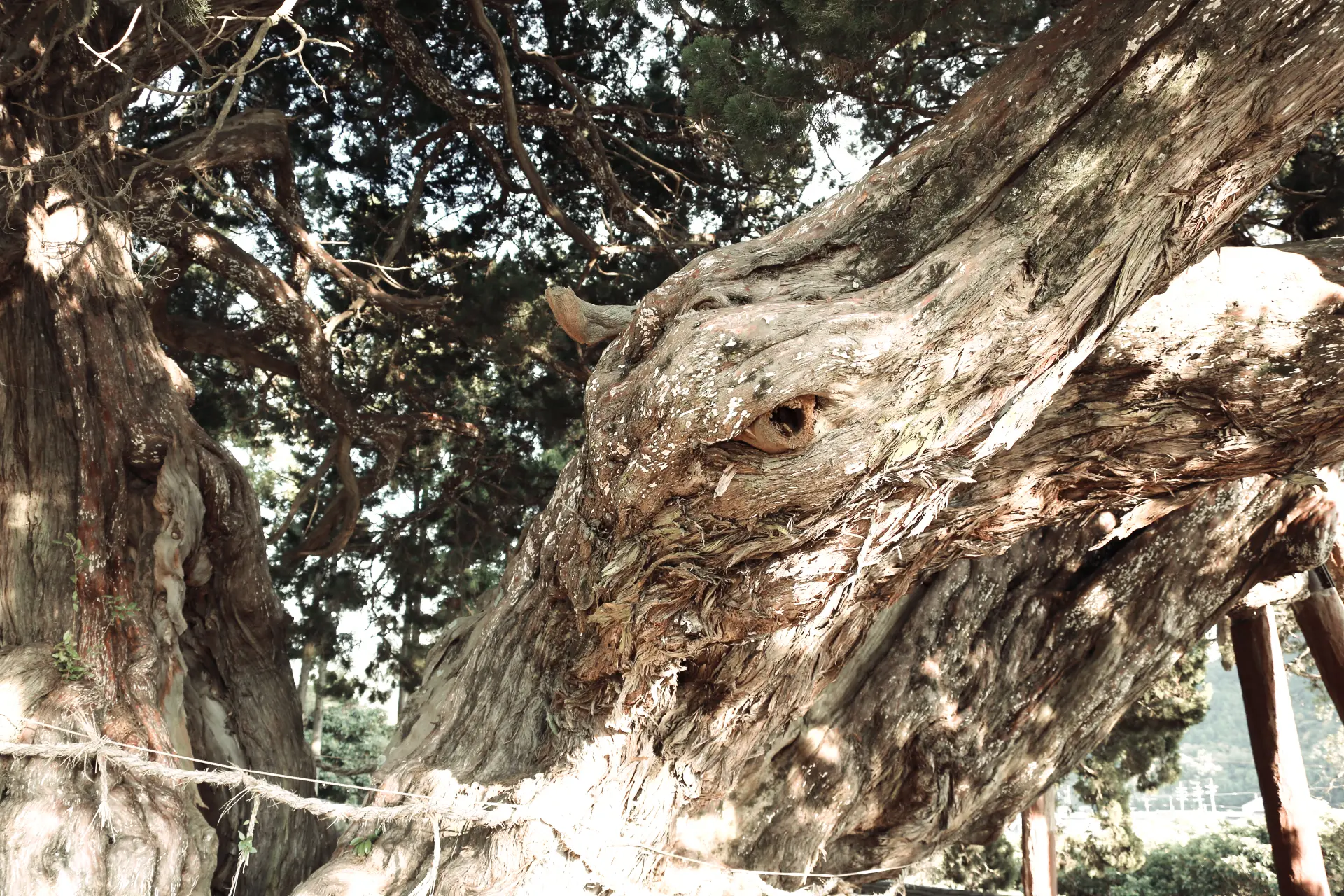
This enormous Chinese juniper towers over the grounds of Hoshoin Temple, the 54th temple on the Shodoshima 88-Temple Pilgrimage. Measuring approximately 55.4 feet around its base and 68.6 feet tall, the giant tree is said to be more than 1,600 years old and is designated a Special Natural Monument of Japan.
About 3.3 feet above the ground, the tree divides into three large trunks, and its magnificent branches resemble an entire forest. Some sections look like an elephant, dragon, or turtle. Look up at the trunk to appreciate the tree’s immense scale.
3 Top Fall Foliage Spots in Kagawa
Kagawa’s autumn scenery is defined by colorful foliage across its gorges, gardens, and shrine approaches.
At Kankakei Gorge on Shodoshima, the foliage complements the gorge and Seto Inland Sea. At Ritsurin Garden, it surrounds ponds and landscaped hills, while at Kotohira-gu Shrine, it frames the long stone staircase and surrounding nature. Here are three distinctive spots to consider for your itinerary.
1. Kankakei Gorge (Shodoshima Town)
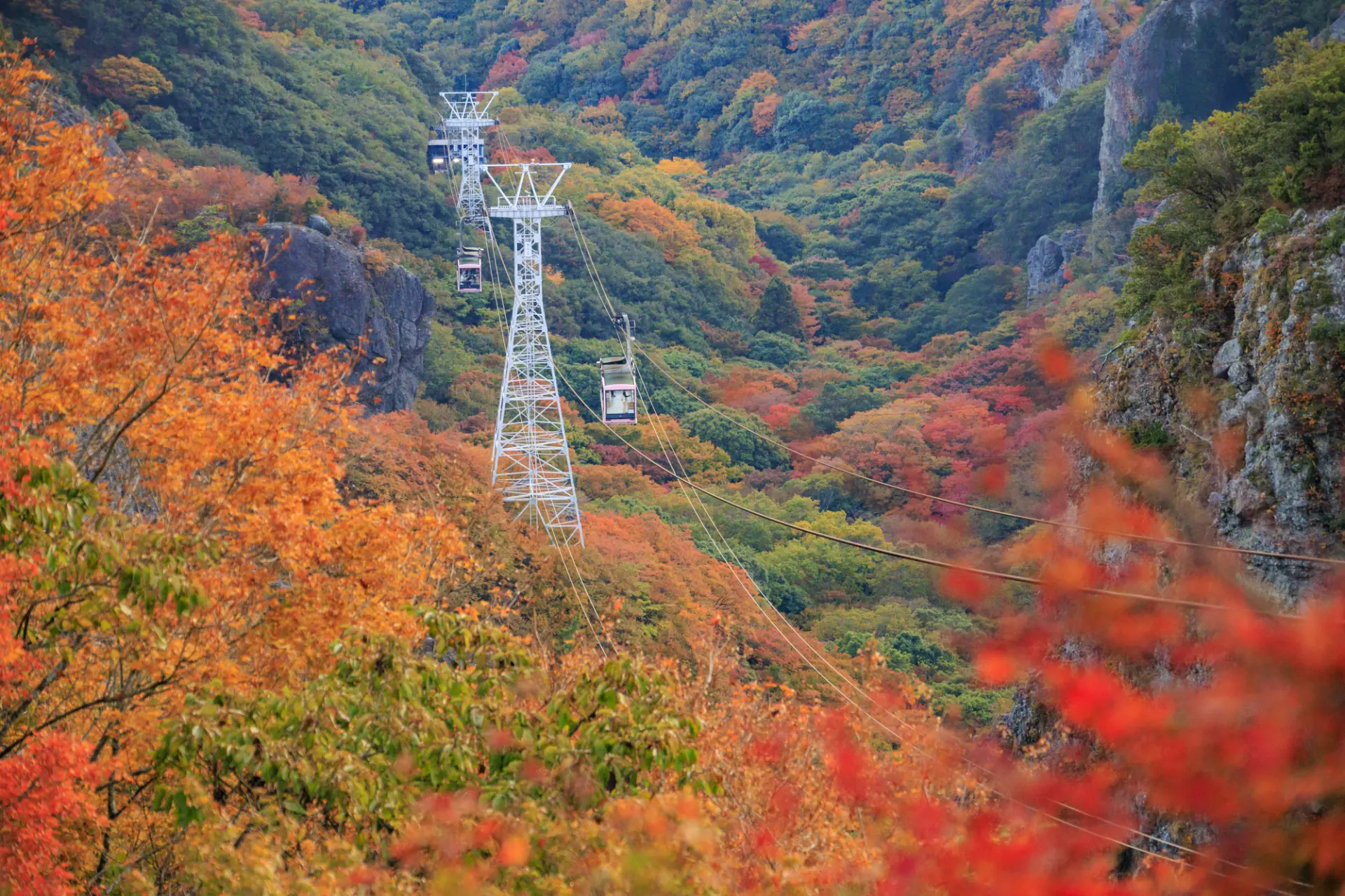
Kankakei Gorge on Shodoshima is located in the heart of Setonaikai National Park. Its unusual rock formations were created through volcanic activity and erosion over many years.
A ropeway crosses the deep gorge, offering views of the Seto Inland Sea and the mountains covered in fresh greenery or autumn colors, depending on the season. In addition to the ropeway’s expansive views of the sky, sea, and gorge, hiking trails lead to the summit, allowing visitors to see the foliage-filled valley from different elevations.
2. Ritsurin Garden (Takamatsu City)
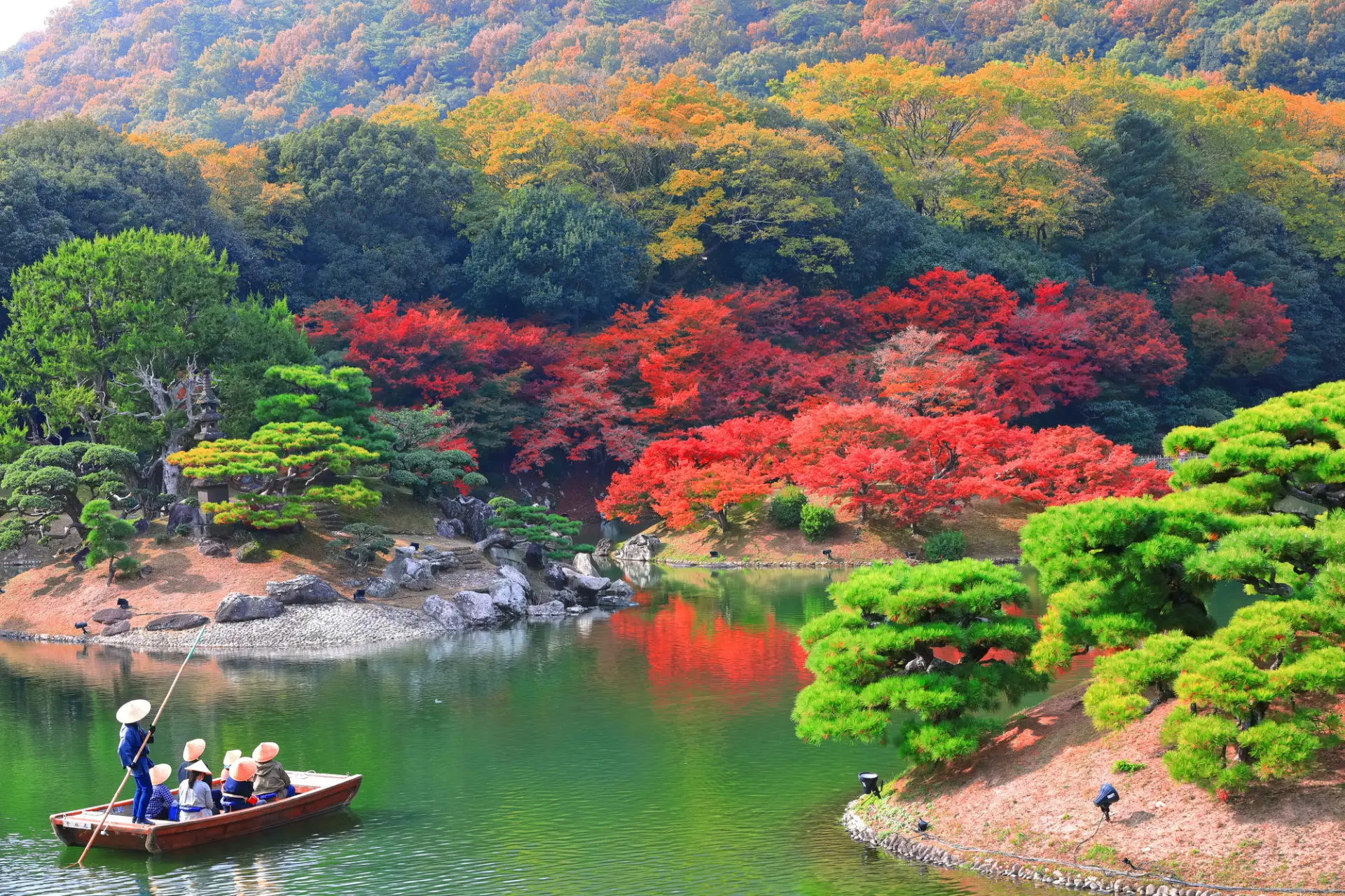
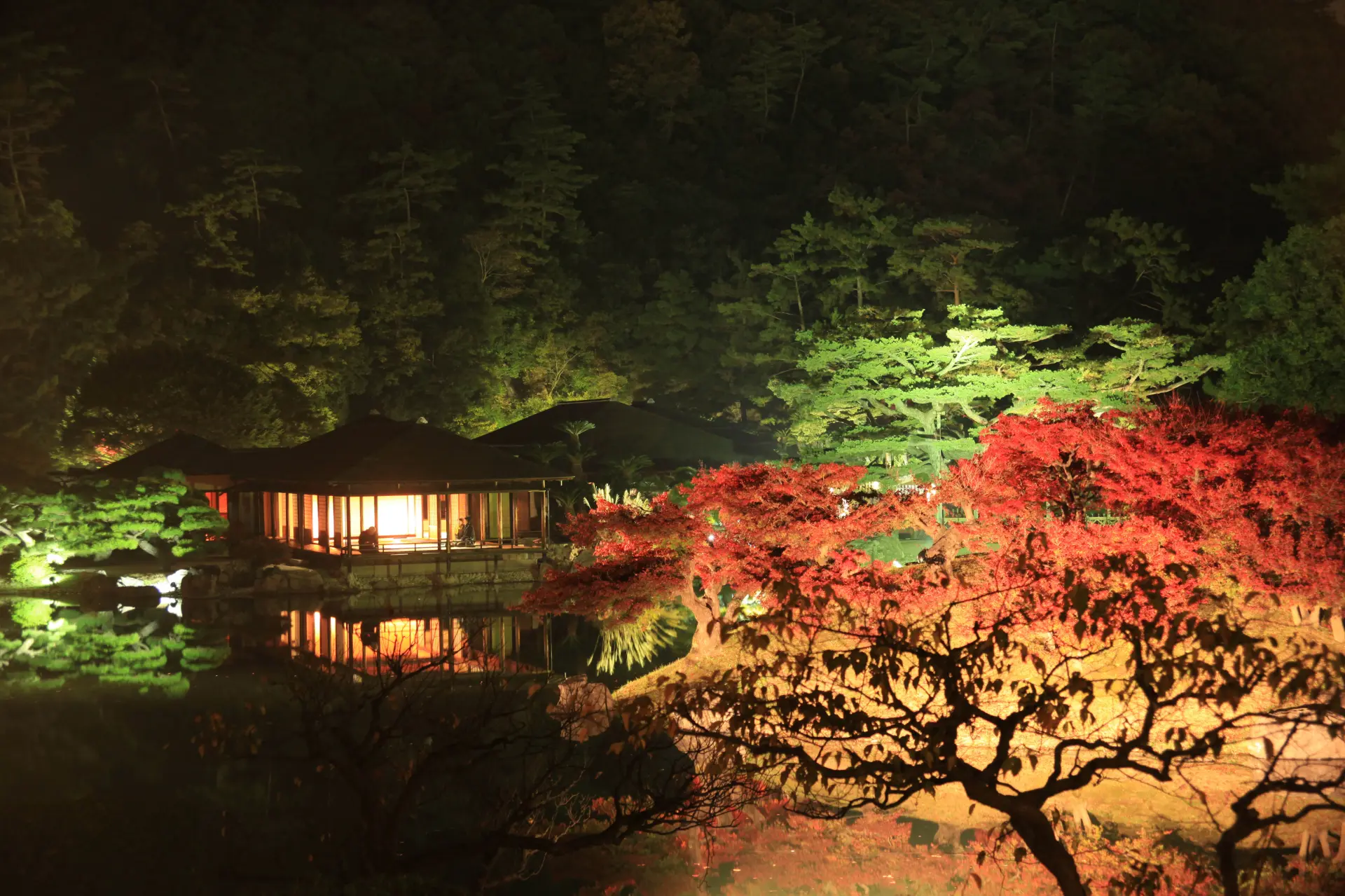
Designated a Special Place of Scenic Beauty, this garden was developed over generations as a villa of the Matsudaira family, the lords of the Takamatsu Domain. With Mount Shiun as its backdrop, the garden features ponds, landscaped hills, and approximately 1,400 pine trees.
This strolling garden consists of six ponds and 13 landscaped hills. It is often described as presenting a new view with every step. Highlights include the view from the landscaped hill Hiraiho and Kikugetsutei, a teahouse favored by generations of feudal lords. Take a leisurely walk through the garden, where autumn colors mingle with evergreen pines.
3. Kotohira-gu Shrine (Kotohira Town)
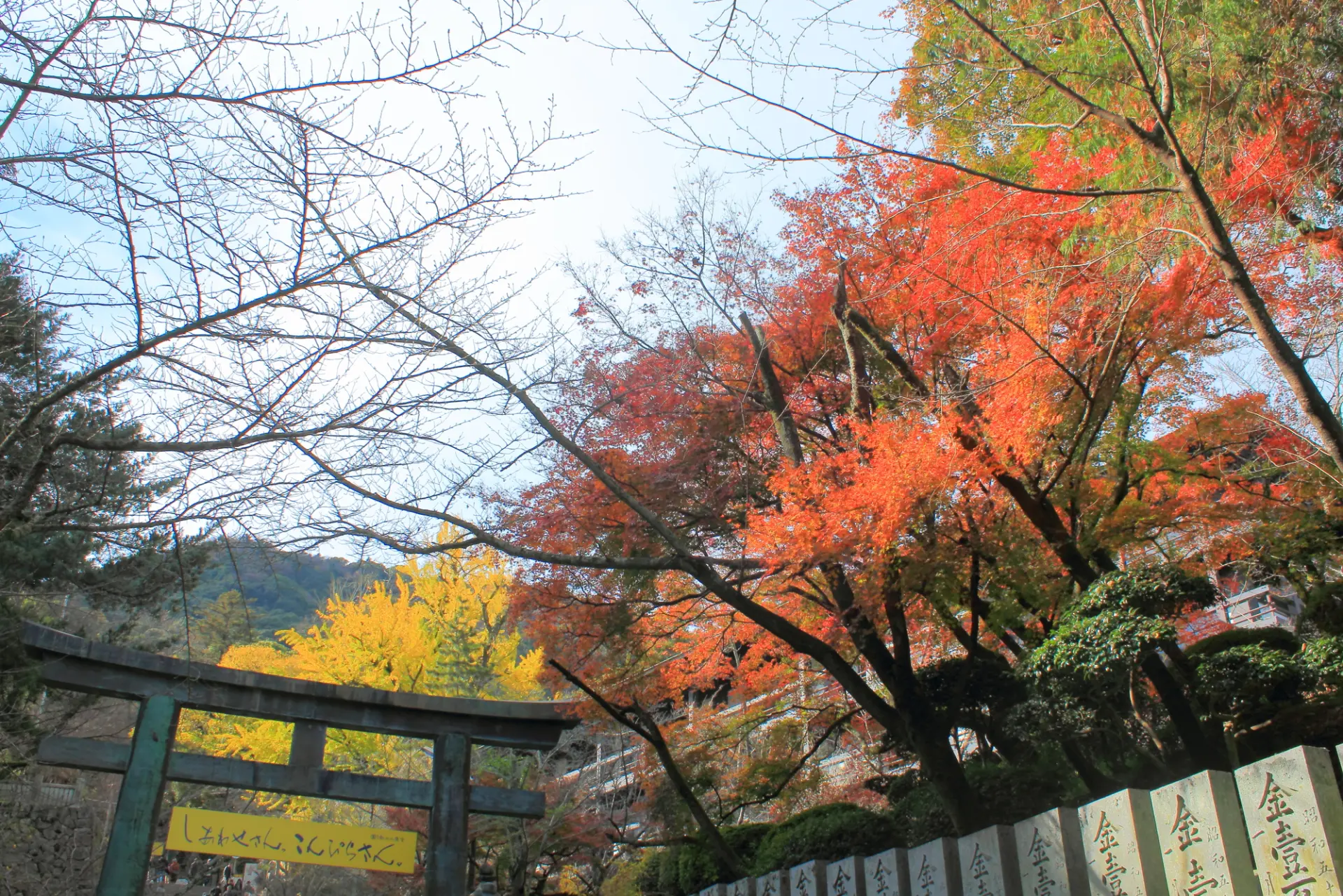
Located on Mount Zozu, Kotohira-gu is the head shrine of all Kotohira shrines and welcomes approximately 4 million visitors annually. A long stone staircase extends from the town at the shrine’s entrance to the Main Shrine, with a total of 785 steps. Climbing one step at a time offers views of cultural properties, artworks, and the natural scenery along the approach.
After visiting the shrine, return to the town below to try treats such as Kyuman sweets, croquettes, and soft-serve ice cream made with Sanuki ingredients. The local Kotohira experience continues even after the walk through the autumn scenery.
5 Restaurants to Visit on an Autumn Outing in Kagawa
Beyond Sanuki udon, Kagawa offers food rooted in each region, including Setouchi seafood, Shodoshima rice, and local sake.
Choosing restaurants that fit easily into a sightseeing itinerary creates a natural connection between exploring the scenery and enjoying local meals. Here are five places to visit during an autumn trip.
1. Konpira Udon Sando Branch (Kotohira Town)
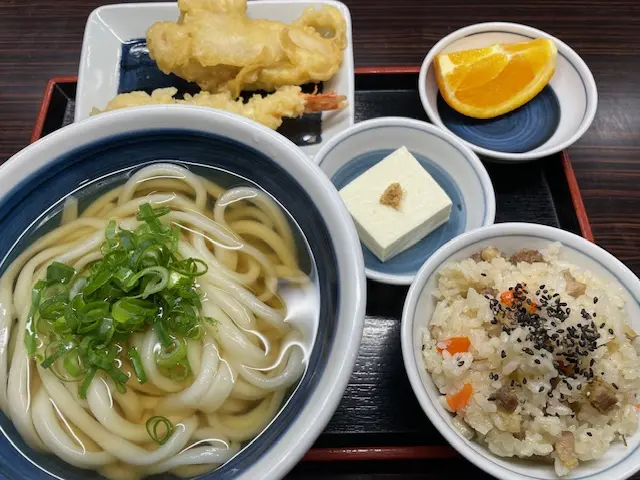
Located along the approach to Kotohira-gu Shrine, this udon restaurant has a 65-year history. The building, a registered cultural property, is a former inn constructed more than a century ago. Handmade udon is served in its calm, traditional interior.
The broth blends kombu from Hokkaido with dried sardines from the Seto Inland Sea, dried mackerel, and bonito flakes, extracting their savory flavors over 15 hours. The thickness of the noodles is adjusted according to the season and temperature. Freshly fried tempura, chicken tempura, and torimeshi chicken rice made with Sanuki-grown rice are also available, making this a convenient place for a meal after visiting the shrine.
2. Sakana-ya no Sushi Tōshin (Takamatsu City)
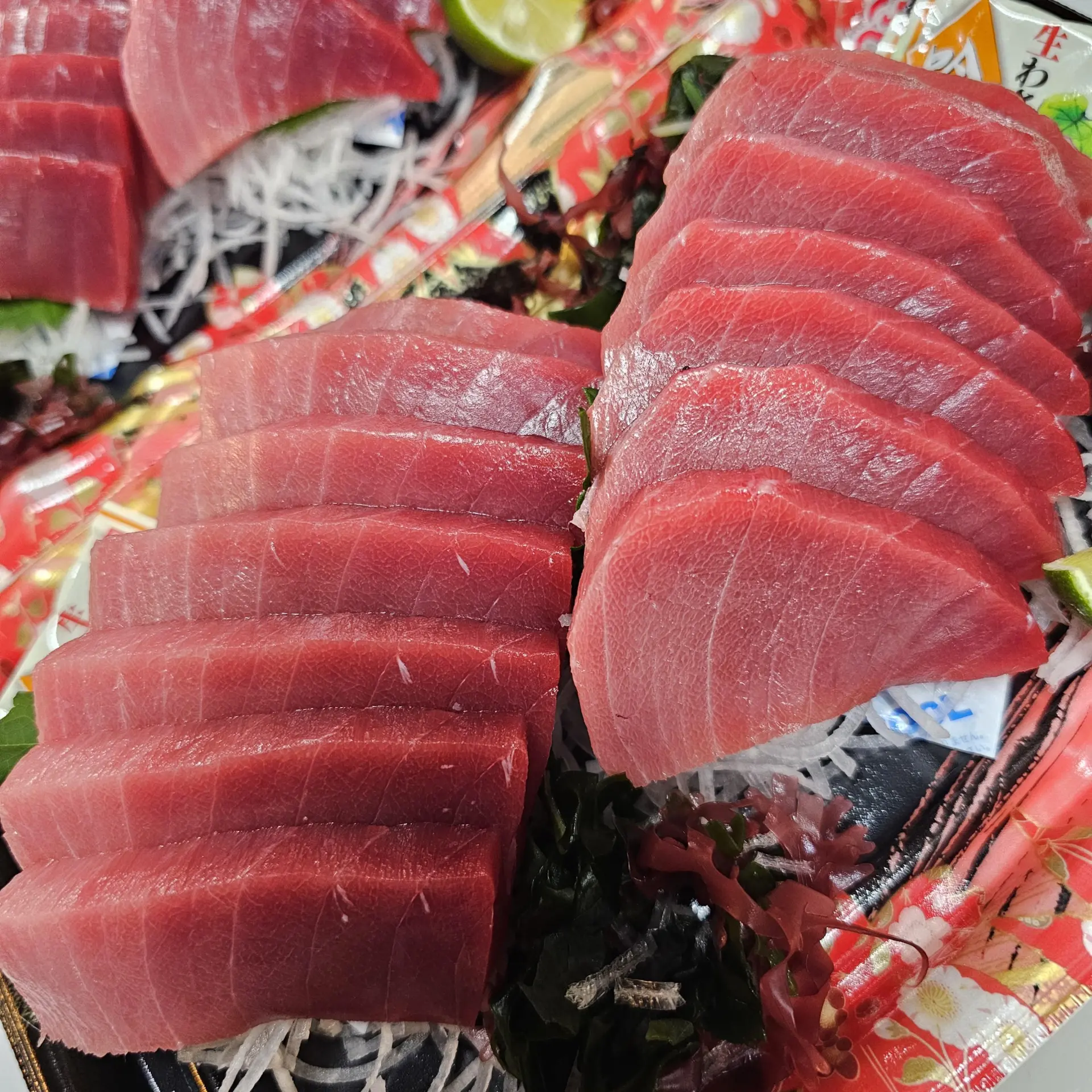
Because the previous owner ran a fish market, this Japanese restaurant in Takamatsu serves generous portions of seafood from the Seto Inland Sea. Its lunch menu consistently offers more than 20 choices, including bluefin tuna yukhoe rice bowls, octopus and sillago tempura, and shrimp with mayonnaise, along with sushi and grilled dishes.
The spacious dining area has counter seats, Japanese-style seating, and private rooms for small groups. Limited-time dishes made with locally harvested oysters are available in winter, allowing diners to select Setouchi seafood to suit their mood.
3. MORIKUNI, Shodoshima Sake Brewery (Shodoshima Town)
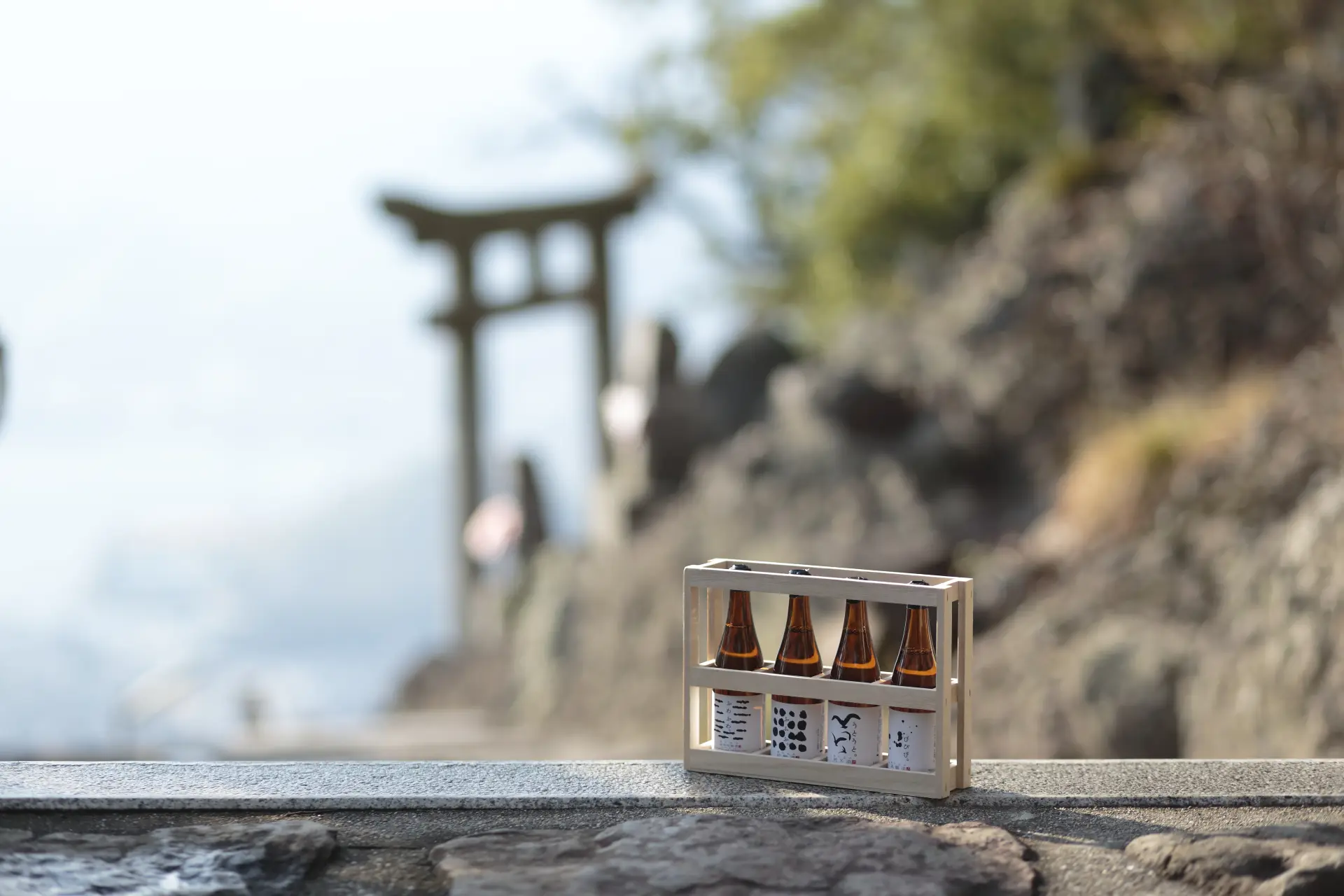
MORIKUNI is the only sake producer on Shodoshima. Its brewers carefully make sake using ingredients such as Oseto, a Kagawa sake rice grown in the Nakayama Senmaida Rice Terraces, and Sanuki Olive Yeast, developed from olives grown on Shodoshima.
The signature Shima Series features playful names such as Fuwafuwa., Fufufu., Utouto., and Bibibi. The grounds also include a gallery and bakery converted from former brewery buildings, where visitors can pair sake with ingredients from Shodoshima.
4. Komame Shokudo (Shodoshima Town)
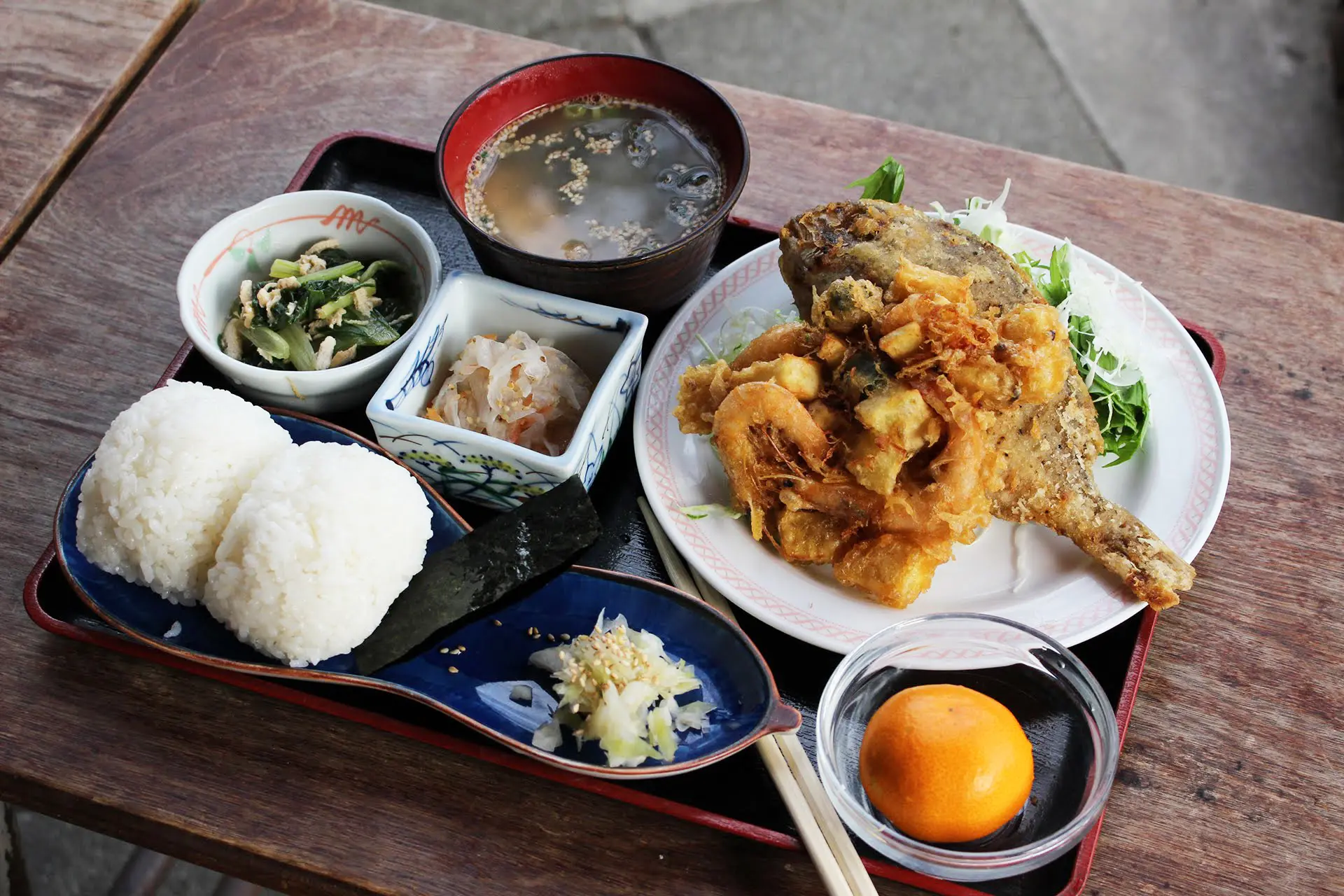
This restaurant and café is located in the mountains of Shodoshima overlooking the Nakayama Senmaida Rice Terraces. Guests can take a break amid the rural scenery while enjoying the Rice Terrace Onigiri Set Meal, prepared with rice harvested from the terraces.
The restaurant occupies a renovated building once used as a rice mill and believed to date from the early Showa period. In addition to indoor seating, there is a terrace overlooking the rice fields. Shodoshima somen noodles, juice made with island-grown fruit, and handmade sweets are also available, adding to a visit to the terraces.
5. Udon Ippuku Kokubunji Main Branch (Takamatsu City)
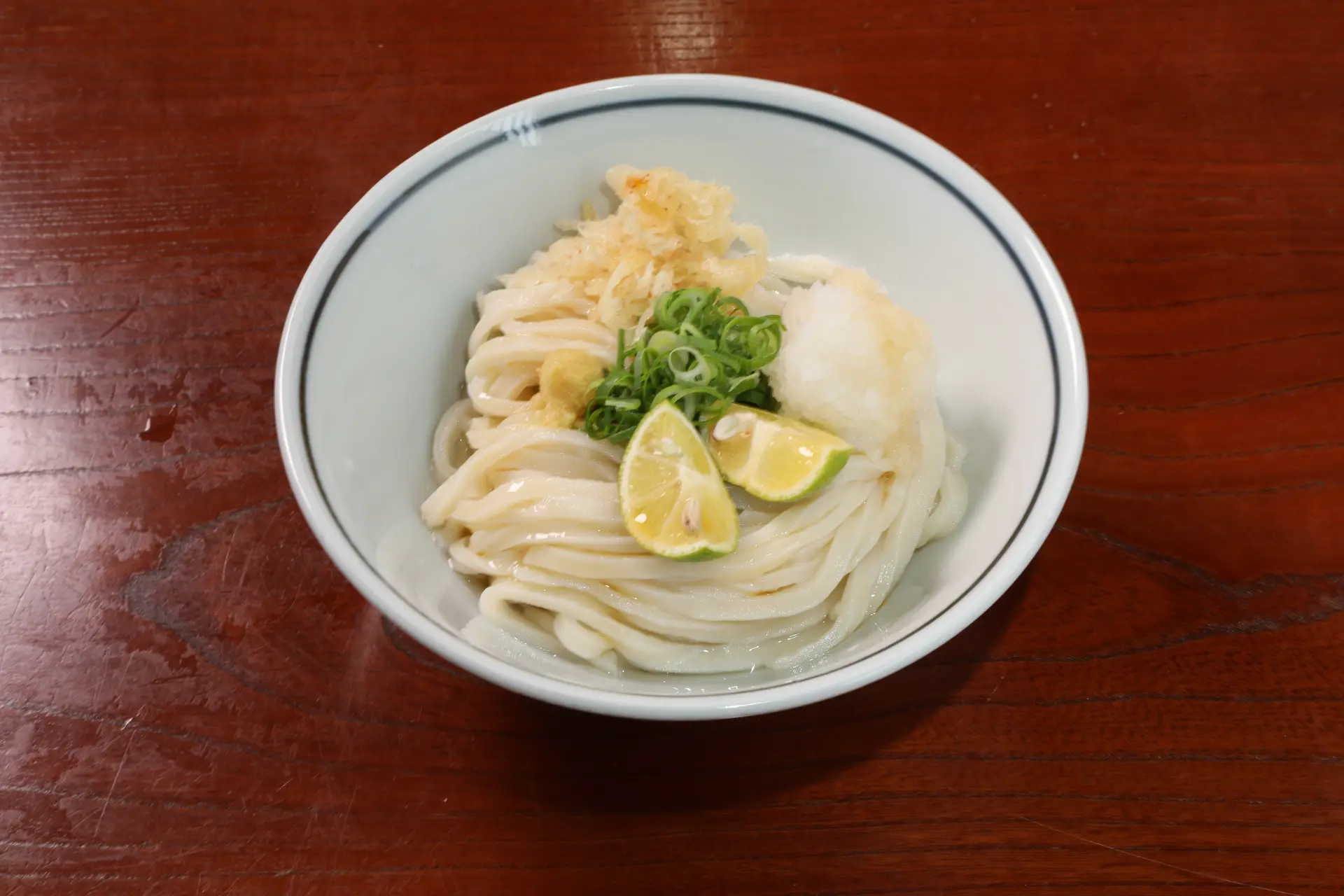
Located a 10-minute walk from JR Hashioka Station, this well-regarded Sanuki udon restaurant serves slightly thin, pleasantly chewy noodles with fragrant broth. Choose from options including kake udon, bukkake udon, and meat udon.
For kake udon, both the noodles and broth can be ordered hot or cold and customized with tempura, green onions, grated daikon, and other toppings. In winter, the local specialty shippoku udon also appears on the menu, offering another distinctly Kagawa-style bowl.
3 Convenient Hotels for an Autumn Trip to Kagawa
The best place to stay depends on whether you plan to explore Shodoshima at a relaxed pace or center your trip around a visit to Kotohira-gu Shrine. These three properties reflect the character of Kagawa through features such as hot springs, views of the Seto Inland Sea, and cuisine incorporating Shodoshima soy sauce.
Here are three places where the travel experience continues even after a day of sightseeing.
1. Shimayado Mari (Shodoshima Town)
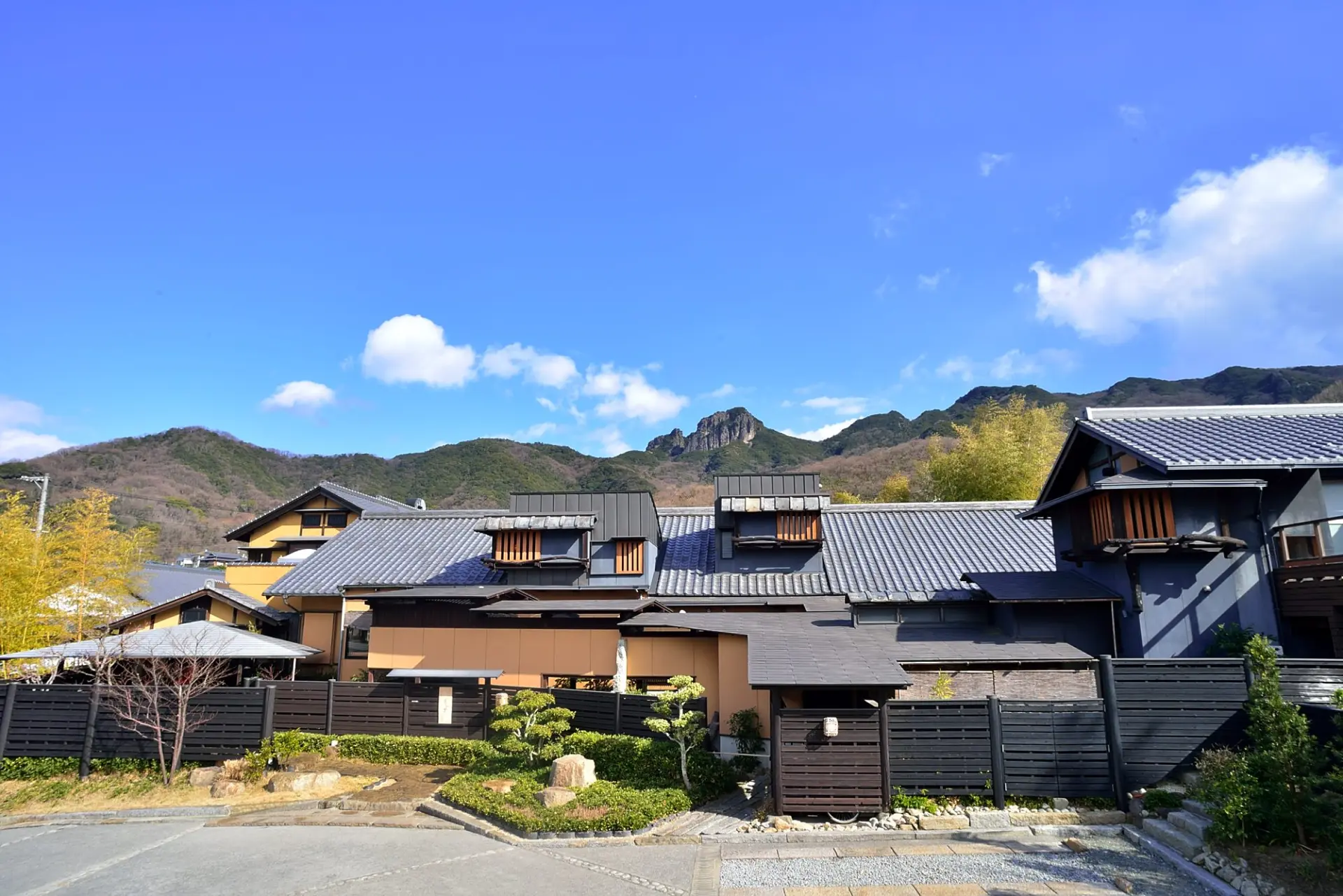
Located in Hishio no Sato, an area lined with soy sauce breweries, this inn offers stays in spaces created from traditional homes and storehouses. Guests are welcomed by individually designed rooms and a dining area housed in a traditional home registered as a Tangible Cultural Property.
All eight guest rooms have free-flowing natural hot spring baths. A private bath with both indoor and open-air tubs is also available. At dinner, guests can savor a soy sauce kaiseki meal incorporating Shodoshima soy sauce and seasonal ingredients from the Setouchi region while spending an evening immersed in the island’s food culture.
2. Shodoshima International Hotel (Tonosho Town)
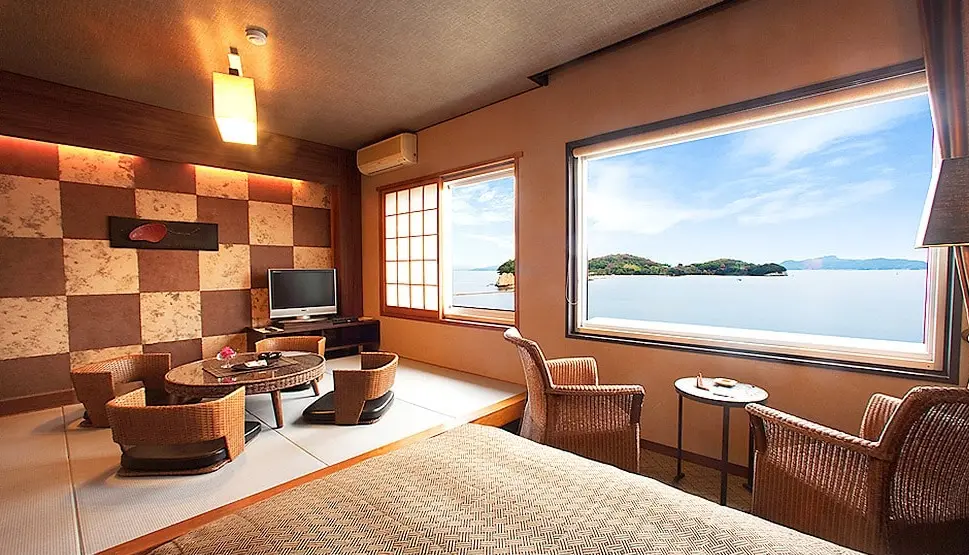
This resort hotel is located a 3-minute walk from the popular sightseeing destination Angel Road. Every guest room offers panoramic views of the graceful islands of the Seto Inland Sea and the imposing form of Yashima in Shikoku, framed like a painting.
The hotel has 100 rooms, including rooms with open-air baths, suites, and Japanese-Western-style rooms. Its open-air bath overlooking the nearby sea is another welcome feature for travelers. Guests can experience the island scenery alongside meals featuring produce from Shodoshima’s sea and mountains.
3. Kotohira Grand Hotel Sakuranosho (Kotohira Town)
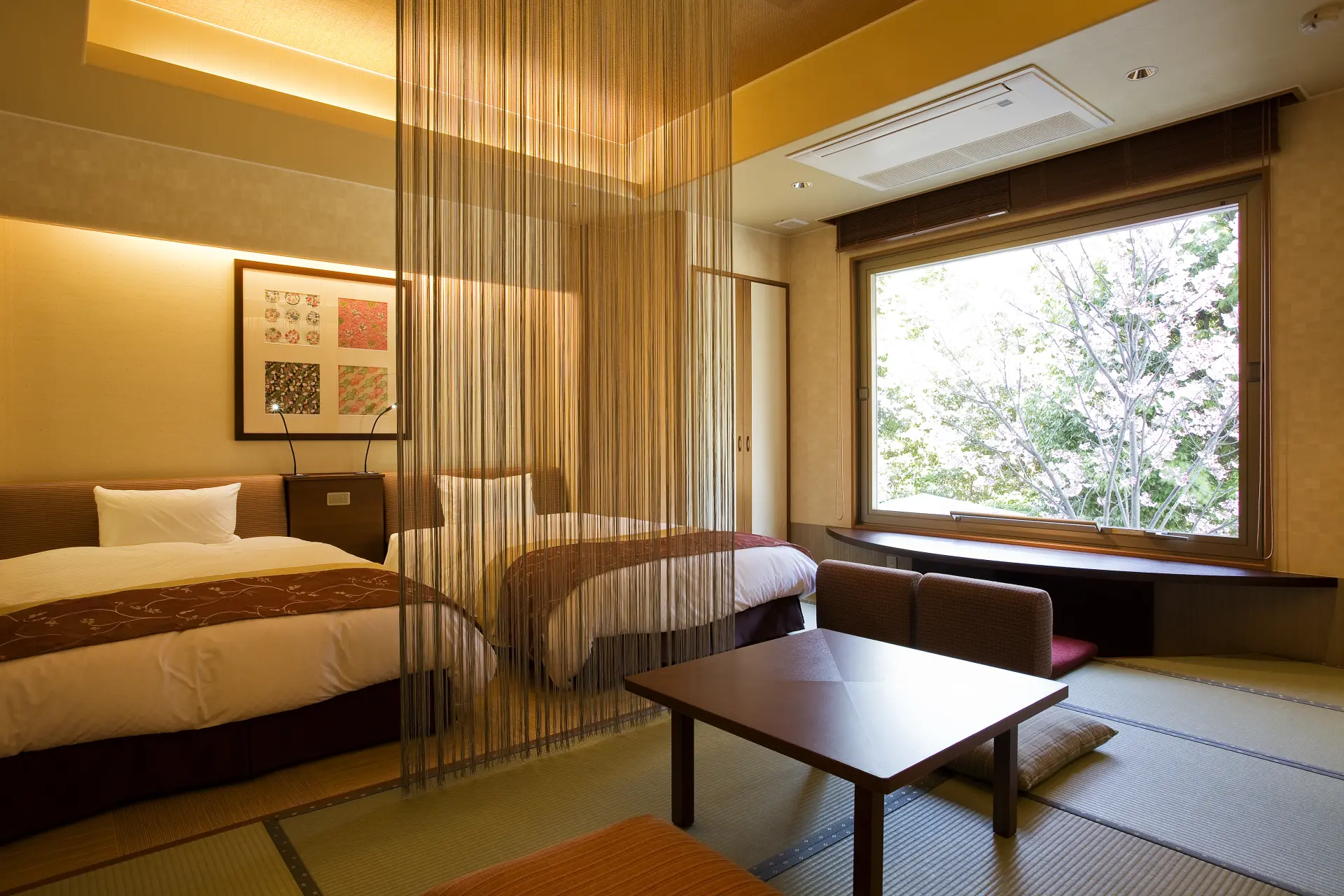
Located near the approach to Kotohira-gu Shrine, this hot spring inn is easy to combine with a shrine visit. After walking the stone steps, guests can soak in an open-air bath overlooking the shrine and enjoy the seasonal scenery.
A wide range of accommodations is available, including Hatsune Premium Japanese-Western-style rooms with open-air baths. The hotel’s Ikiri restaurant incorporates elements of Chinese and Western cuisine into kaiseki meals made with seasonal ingredients. It is a place to connect a shrine visit, hot spring soak, and meal at a relaxed pace in Kotohira.
A Sample Autumn Itinerary for Fall Foliage, History, Culture, and Island Travel in Kagawa
This two-day, one-night itinerary travels through Kotohira, Takamatsu, and Shodoshima, combining history, culture, gardens, fall foliage, rural scenery, and food.
On Day 1, travel from Kotohira-gu Shrine to Ritsurin Garden. On Day 2, explore Shodoshima’s soy sauce culture, Kankakei Gorge, and the Nakayama Senmaida Rice Terraces. The route offers Kagawa’s characteristic scenery and culture while moving between different areas.
- Day 1
- Rent a car at Takamatsu Airport → Visit Kotohira-gu Shrine → Tour the Former Konpira Grand Theatre, Kanamaruza → Have a Sanuki udon lunch at Konpira Udon Sando Branch → Walk through the autumn scenery of Ritsurin Garden → Take a ferry from Takamatsu Port to Shodoshima → Stay at Shimayado Mari
- Day 2
- Depart Shimayado Mari → Learn about Shodoshima’s soy sauce culture at the Marukin Soy Sauce Memorial → Take in the fall foliage and gorge scenery at Kankakei Gorge → Walk through the Nakayama Senmaida Rice Terraces → Have lunch featuring Shodoshima ingredients at Komame Shokudo → Visit Hoshoin Temple’s Shinpaku Tree → Take a ferry from Tonosho Port to Takamatsu Port
Average Autumn Temperatures in Kagawa
Some hot days remain in Takamatsu in September, but the weather becomes milder in October, making it more comfortable to walk outdoors. Mornings and evenings grow colder in November, a season well suited to autumn trips featuring fall foliage and hot springs. Choose activities such as island excursions or city walks according to the timing of your visit.
| Month | September | October | November |
|---|---|---|---|
| Temperature | 76.5°F | 66.2°F | 55.8°F |
What to Wear in Kagawa in Autumn
Short sleeves are comfortable on many September days, but a lightweight outer layer is useful for mornings and evenings.
In October, long-sleeved shirts and lightweight sweaters work well and are practical for sightseeing on Shodoshima or climbing the stone steps at Kotohira-gu Shrine. November is the season for jackets and light coats. Places such as Kankakei Gorge can be colder than urban areas, so bring an outer layer that makes it easy to adjust to changing temperatures.
Frequently Asked Questions About Visiting Kagawa in Autumn
Q
When is the best time to see fall foliage in Kagawa Prefecture?
Many locations reach peak color from early to late November, when autumn scenery can be seen at places such as Kankakei Gorge and Ritsurin Garden. Timing varies with the weather, so check the latest foliage reports before visiting.
Q
Do I need a rental car for sightseeing in Kagawa in autumn?
Central Takamatsu and the area around Kotohira can be explored by public transportation, but a rental car is convenient for efficiently visiting Shodoshima and attractions outside the cities. It also makes travel times easier to manage when combining several areas in one trip.
Q
Where can I travel to Shodoshima from?
Ferries and high-speed passenger boats operate from Takamatsu Port to Tonosho Port, Ikeda Port, and other destinations. Vehicles can also be taken aboard some ferries, making this option useful if you want to continue traveling around Shodoshima by rental car.
Q
Besides udon, what local food should I try when visiting Kagawa in autumn?
Kagawa offers many other local flavors, including seasonal seafood caught in the Seto Inland Sea, Shodoshima soy sauce and olives, and Olive Beef. On Shodoshima, where fermentation culture has deep roots, visitors can also try dishes made with soy sauce and local sake.
Summary
From the island scenery of the Seto Inland Sea and golden rice terraces to the fall foliage of Kankakei Gorge and Ritsurin Garden, autumn in Kagawa offers both coastal and mountain landscapes in a single trip.
Visit Kotohira-gu Shrine and a historic playhouse, then explore local flavors such as Sanuki udon, Setouchi seafood, Shodoshima soy sauce, and local sake.
As the season deepens from September through October and November, an autumn journey through Kagawa’s distinctive scenery and cuisine awaits.