Jk's Reviews Page 4/15

Jk’s Profile Page
  • TOKYO SKYTREE(R) TOKYO SKYTREE TOWN(R)

    Boasting a height of 634 meters, TOKYO SKYTREE is the world’s tallest free-standing tower which stands in the center of TOKYO SKYTREE TOWN surrounded by tourist facilities. The tower has two observation decks, Tembo Deck at a height of 350 meters and Tembo Galleria at 450 meters.

    • Asakusa, Tokyo Skytree
    • Observatories
    See More

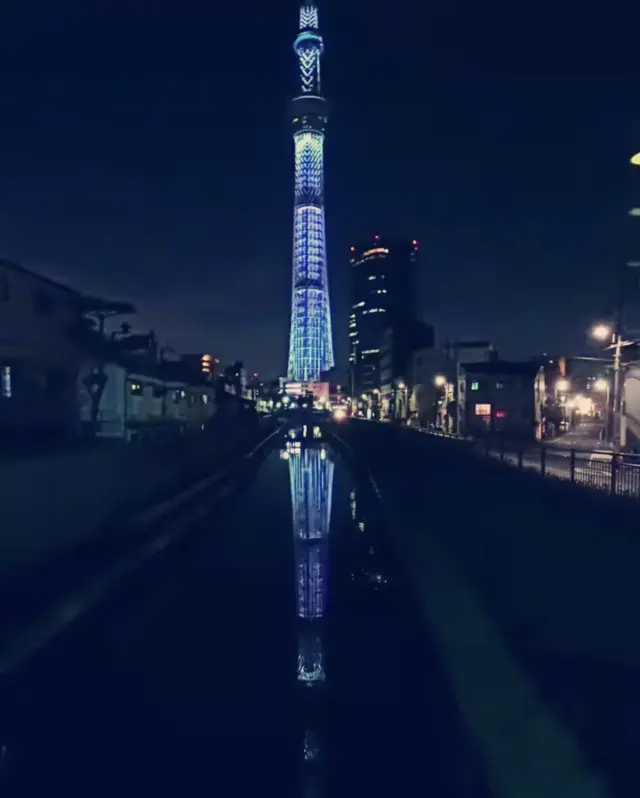
    No matter where you go, the moment you look up, you’ll be stunned by this enormous 634-meter-tall tower! It’s already spectacular enough during the day, but once it lights up at night, TOKYO SKYTREE becomes so beautiful that you can’t stop pressing the shutter.
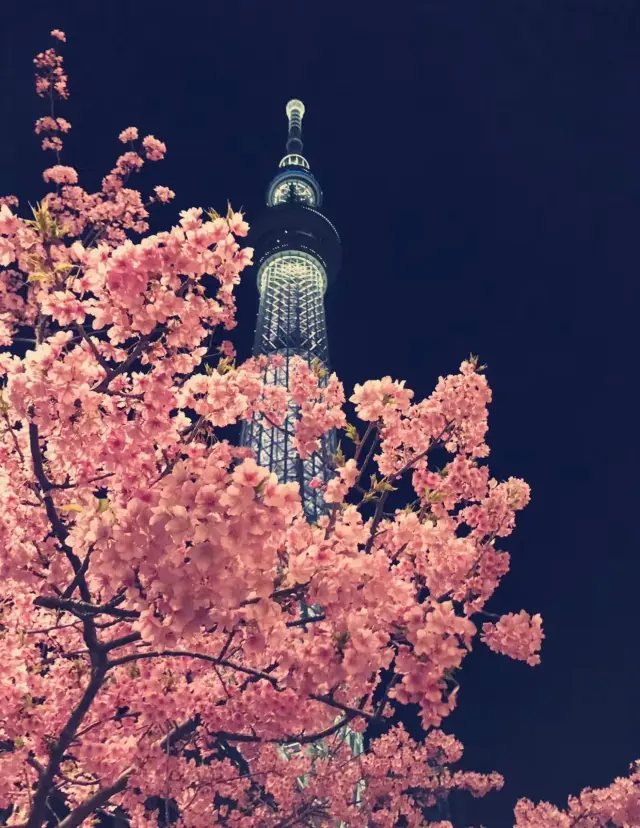
    The limited-time spring scenery takes it to another level! Look up from a nearby park and you’ll see delicate pink cherry blossoms in full bloom. The dense petals of the nighttime blossoms glow softly against the dark sky, gently surrounding TOKYO SKYTREE as it shines with a cool light in the background. The composition blends a futuristic sense of technology with traditional Japanese romance, and any casual shot looks beautiful enough for a postcard!
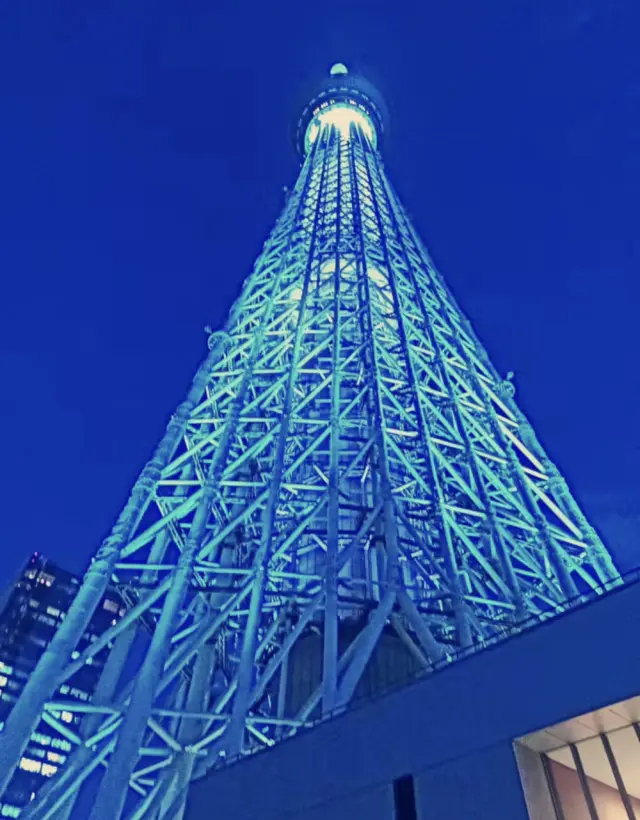
    Walk to the plaza directly beneath TOKYO SKYTREE and tilt your head back until it almost hurts. The entire steel structure gradually narrows as it shoots straight into the deep blue night sky, with its classic blue-and-white lights illuminating the framework layer by layer. The overwhelming presence and beauty of the geometric lines from this low-angle view are seriously imposing!
    Finally, you have to head to Jikken Bridge to unlock the most classic nighttime photo angle! Looking ahead from the bridge, the entire TOKYO SKYTREE, glowing with brilliant blue light, rises at the end of the waterway. The calm surface acts like a giant mirror, perfectly reflecting an identical upside-down TOKYO SKYTREE at Jikken Bridge. The tower above and below the water echo each other, making Tokyo’s nightscape feel both peaceful and dreamlike.
  • Odaiba Marine Park

    Odaiba Seaside Park is home to an approximately 800m artificial beach "Odaiba Beach" and a rocky shore "Isohama Zone" where you can fish. In addition to enjoying fishing and water sports, there are cafes and restaurants where you can relax. It's a popular spot that both adults and children can enjoy.

    • Tsukiji, Odaiba, Toyosu
    • Parks & Gardens
    See More

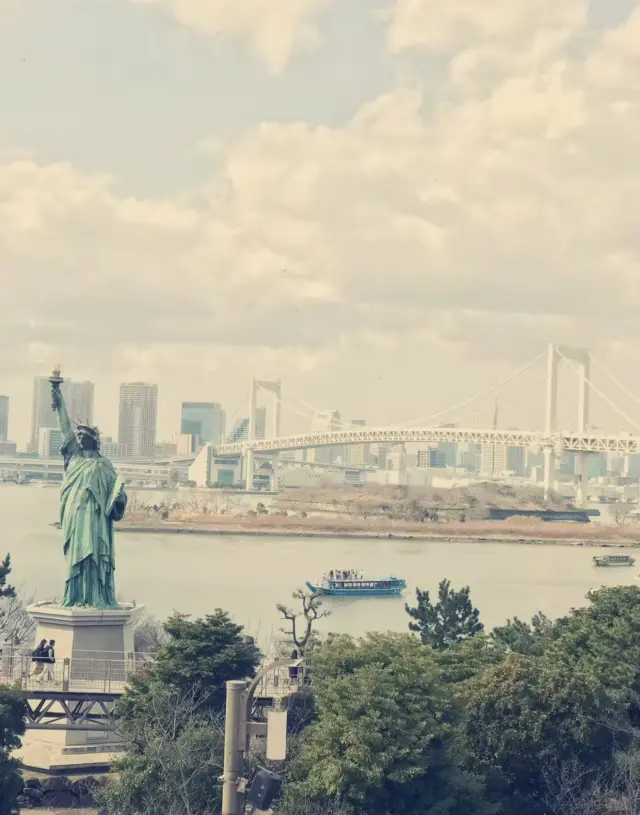
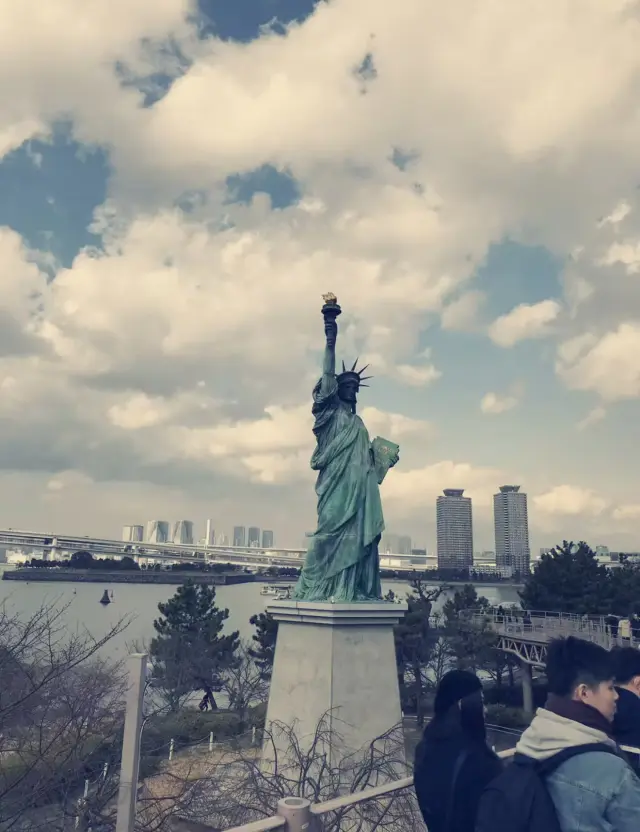
    From the skywalk at Odaiba Seaside Park, the entire sweeping view of Tokyo Bay opens up right before your eyes, and the first thing that grabs your attention is definitely the striking Statue of Liberty! There’s no need to fly all the way to New York—you can see a full-scale replica of the iconic statue right here in Tokyo, standing tall with a golden torch raised in her right hand and the Declaration of Independence in her left. The folds and texture of her bronze-green robe are incredibly detailed, and with the blue sky and thick white clouds behind her, the whole scene feels both exotic and futuristic.
    Walk along the wooden boardwalk, and the photo angle is simply unbeatable! If you stand in the right spot, you can fit the blue-green Statue of Liberty, the white Rainbow Bridge stretching across the bay, and the dense skyline of downtown high-rises in the distance all into one shot. Sightseeing boats and yakatabune leisurely glide across the water from time to time, leaving long ripples behind them and instantly adding a relaxed, pleasant sense of movement to the otherwise still scenery.
    At the observation deck directly in front of the statue, look up at her imposing expression and the seven-pointed crown radiating from her head, which looks especially three-dimensional in the sunlight. The area is always crowded with visitors from around the world, all trying to find the right angle for selfies by the railing. With the lively atmosphere and the cool sea breeze blowing toward you, leaning against the railing after a long walk, enjoying the breeze, and looking out at the distant ocean instantly makes all your accumulated travel fatigue disappear.
    Wander down the steps, and right beside them is a wide, clean artificial beach and a neat, tree-lined walkway. With fine sand under your feet and the sound of waves hitting the shore in your ears, you can look up and see a modern bridge and skyscrapers while still feeling as relaxed as if you were on an island vacation. This contrast between the city and nature is exactly what makes Odaiba so charming. Whether you come during the day to see the impressive Statue of Liberty beneath the blue sky and white clouds, or stay until evening to watch the sunset turn the entire Rainbow Bridge golden, Odaiba Seaside Park is definitely a god-tier place for a stroll where simply walking around will put you in a much better mood!

  • Fuji Television Headquarters

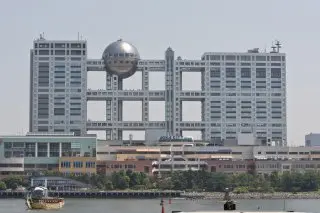
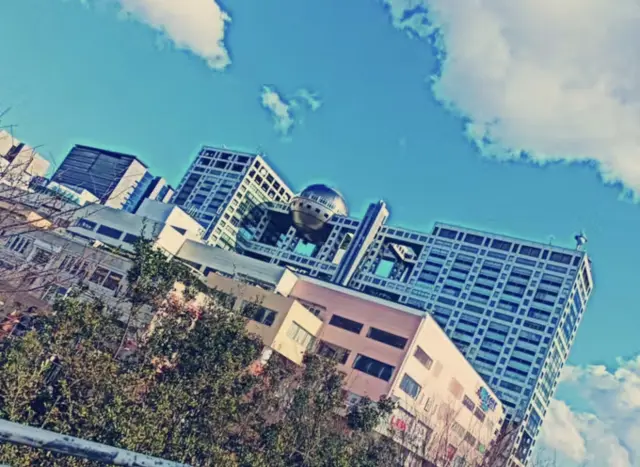
    Designed by Kenzo Tange, the Fuji Television Headquarters is an Odaiba landmark with a silver sphere that gives it a futuristic appearance. Although it is a working television station, some floors are open to visitors.

    • Tsukiji, Odaiba, Toyosu
    • Museums
    See More

    The moment you look up and see that building, you really can’t help but say, “Wow!” The entire Fuji TV Headquarters looks just like a secret base from a sci-fi movie. The most outrageous feature is the enormous silver sphere wedged right into the middle. It gleams like a spaceship that could launch at any moment and is incredibly eye-catching!
    Ride the long outdoor escalator slowly upward, with the street views beside you and the sea breeze blowing past, and you’ll feel completely relaxed. The best part is heading straight inside that huge sphere! From the circular observation deck, the whole of Tokyo Bay and Rainbow Bridge spread out below your feet. When the weather is good, you can even see Tokyo Tower far in the distance. The view is so expansive that you’ll want to stand there zoning out for several more minutes.
    There’s also so much to explore inside the building, with tons of elements from anime and Japanese dramas that everyone grew up watching. There are sets and photo areas featuring series like One Piece and Chibi Maruko-chan, and you can’t help stopping to take photo after photo as you walk around. The merchandise shop will also make you itch to buy something.
    Afterward, you can wander over to the nearby seaside park for a walk in the ocean breeze and see the Statue of Liberty and the giant Gundam nearby. The whole outing offers unbeatable ocean views and plenty of photo opportunities while being both fun and relaxing. You really can’t miss this place when visiting Odaiba!

  • Tsukiji Outer Market

    Over 400 food shops and restaurants gather speciality shops. Suppliers, general shoppers for daily food, and tourists searching for specialty food always crowd even though after a change of the location of the central wholesale market from Tsukiji to Toyosu in October, 2018.

    • Tsukiji, Odaiba, Toyosu
    • Shopping Streets
    See More

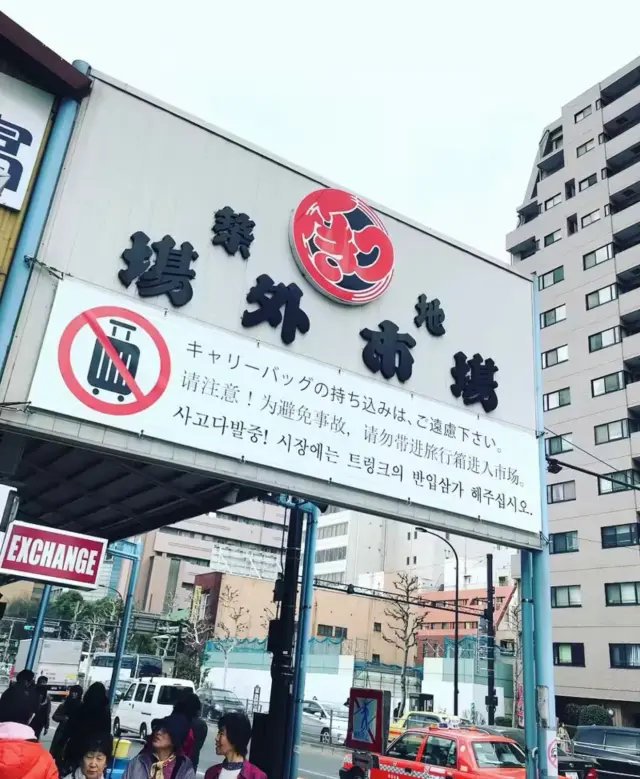
    The moment I saw the huge archway topped with the red “Tsukiji Outer Market” sign, my appetite and exploration radar instantly kicked into high gear! At the entrance, there was even a prominent sign prohibiting suitcases, because the narrow lanes were already packed solid with food lovers and tourists from around the world. The calls of vendors in Japanese mixed with the sizzling sounds of charcoal grills, making the whole place lively, noisy, and bursting with energy! Even though the wholesale market has relocated, Tsukiji Outer Market remains Tokyo’s most intense and passionate pilgrimage destination for seafood lovers!
    Following the crowd into the lanes, I was met with an almost ridiculously dazzling array of seafood stalls! Beds of crushed ice were covered with freshly shucked jumbo oysters, each one plump, full, and glistening, while nearby were small mountains of richly colored monkfish liver. Without a second thought, I picked out a large oyster. The vendor deftly handed it to me with a bamboo skewer, added a few drops of lemon juice, and I slipped the whole thing into my mouth. The rich, sweet taste of the sea and its silky texture instantly exploded across my tongue. It was so fresh, without even a hint of fishiness—just pure sweetness and a satisfying crispness. After finishing it, I couldn’t help closing my eyes and exclaiming with delight!
    After the oyster, I turned a corner and was immediately hit by wave after wave of irresistibly smoky charcoal-grilled aromas! The grill was lined with steaming white scallop shells, each packed with thick scallops and crab sticks. The most outrageous part was the thick layer of rich, golden sea urchin spread on top! As everything cooked over the intense heat of the charcoal, piping-hot juices bubbled and sizzled around the edges of the shells, while the sea urchin released an incredibly rich aroma. I took the luxurious charcoal-grilled seafood scallop and dug into a huge bite while it was still hot. The springy scallop and sweetness of the crab, paired with the intensely creamy flavor of the melted sea urchin, were incredible. The broth was so delicious that I couldn’t bear to waste a single drop. My mouth was filled with an extravagantly sweet taste of the sea, and the satisfaction was completely off the charts!
    The most enjoyable thing about exploring Tsukiji is this laid-back rhythm of holding freshly grilled seafood in one hand while weaving through the narrow, traditional lanes. Besides oysters and scallops topped with sea urchin, both sides are lined with piping-hot, freshly cooked tamagoyaki, richly marbled Kuroge Wagyu beef skewers, and long-established traditional shops displaying plump tuna nigiri everywhere you look. Every shop seems to beckon to the stomachs of passersby. The thrill of feasting on premium seafood everywhere you turn makes this absolutely one of Tokyo’s most irresistible and unforgettable food paradises!

  • Gotokuji Temple

    A Soto school temple situated in Setagaya ward and the birthplace of Manekineko. In 1480, Masatada Kira, a lord of Setagaya, established a temple called Kotokuin, in 1659, the temple’s name was changed to Gotokuji.

    • Jiyugaoka, Sangenjaya, Setagaya, Futako-Tamagawa
    • Shrines & Temples
    See More

    The moment you step into Gotokuji Temple, you'll be completely overwhelmed by the spectacular and heartwarming wave of beckoning cats! This is said to be the birthplace of the maneki-neko, and as soon as you reach the Shofukuden Hall, the sight before you is guaranteed to make every cat lover and traveler exclaim, “Wow!” Layer upon layer of wooden shelves are packed with thousands upon thousands of pure white beckoning cats, all lined up neatly. They range from delicate miniatures smaller than a finger to hefty, round, extra-large cats. Every one of them wears a bright red collar with a small bell and raises its adorable right paw to beckon everyone over. There are so many that the shelves are completely packed, and the visual impact and cuteness are instantly off the charts!
    If you look closely, you'll also notice that the beckoning cats here are quite different from the maneki-neko commonly seen elsewhere: they aren't holding gold coins! That's because Gotokuji's beckoning cats are meant to “invite good connections and good fortune.” As long as you remain grateful and form positive connections, good luck and blessings will naturally follow. This pure and heartwarming meaning makes them even more lovable the longer you look. Almost everyone who comes here takes one home to make a wish, then respectfully brings it back as an offering once the wish comes true. Before anyone knew it, they had accumulated into the unrivaled army of white cats you see today. Taking photos in front of these adorable little creatures is almost unfairly cute from every angle!
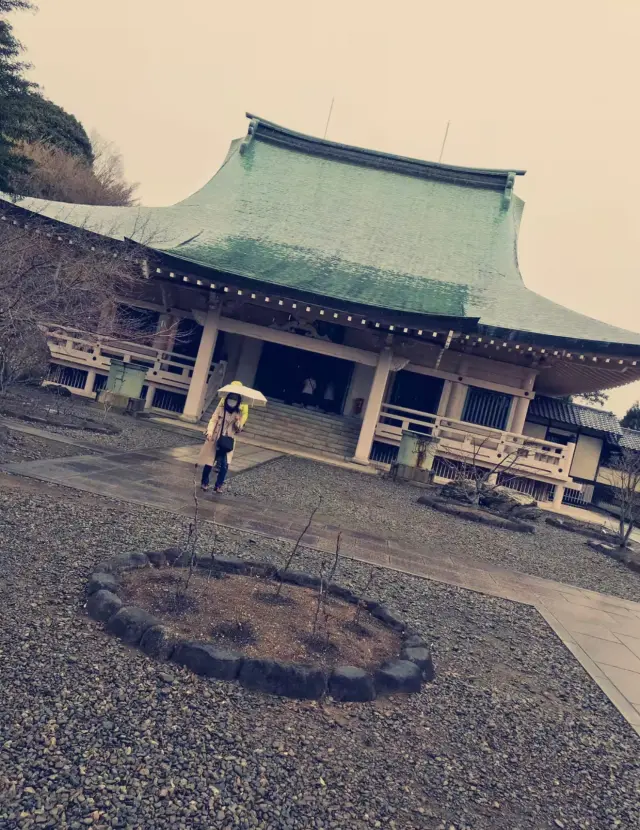
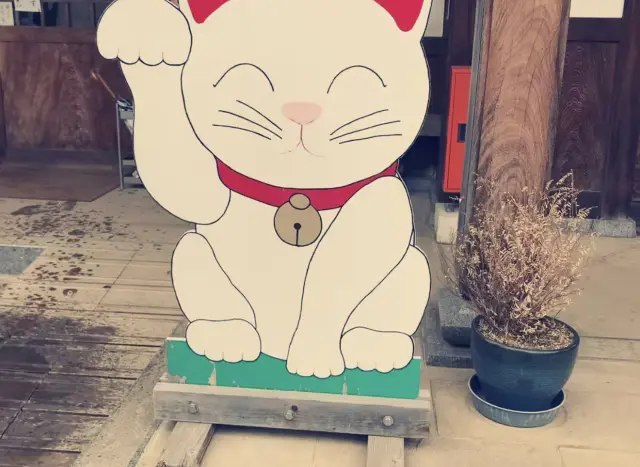
    Besides the extremely popular shelves of beckoning cats, there is also a large cutout of a smiling, waving cat with curved eyes at the entrance. Its playful and amusing appearance lifts your mood the moment you see it, making it an absolute must for photos before going inside to worship! Passing through the wooden temple gate, the grounds reveal a completely different sense of peaceful charm. Lush old trees line both sides of the broad, tidy gravel paths. Even on a day with a gentle drizzle, the main hall's green eaves, washed by the rain, still give off an elegant, stately, and timeless beauty. Walking under an umbrella along the softly crunching gravel path, the surroundings are so quiet that all you can hear are raindrops and the breeze rustling through the treetops. The atmosphere is incredibly relaxed and pleasant.
    There's absolutely no need to rush while strolling here. You can first buy a beckoning cat amulet that catches your eye, put your hands together in prayer before the main hall, and then slow down as you walk through the garden beneath the towering old trees. Take a deep breath of air scented with earth, grass, and trees, and your whole body, mind, and spirit will feel completely cleansed and restored. Whether you want to take countless photos of the incredibly adorable sight of more than 10,000 beckoning cats lined up together, or escape the noise of the city and enjoy the peaceful Zen atmosphere unique to an old Japanese temple, Gotokuji is definitely a wonderful hidden gem filled with good fortune that will have you smiling without even realizing it!

  • Lake Shinji sunset Spot (Torupa)

    A 300m-long promenade was set up along the east side of national highway route 9 so visitors can enjoy the sunset over Lake Shinji, one of Japan's Top 100 Sunset Views. Ministry of Land, Infrastructure and Transport assigned the location as the Parking Lot to Capture the Sunset (Torupa) and people love to take a snap here.

    • Shimane
    • Tourist Attractions
    See More

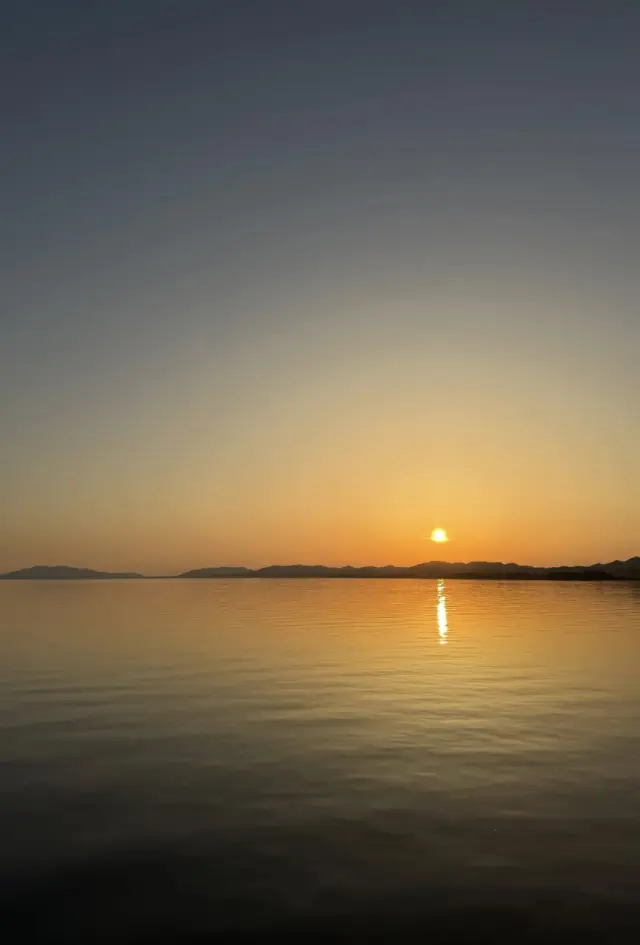
    If you come to Matsue, Shimane, without seeing the sunset over Lake Shinji, then this trip really feels like it’s missing half its soul! As the sun slowly begins to sink in the evening, the entire sky shifts from a faint grayish blue into warm honey gold and soft orange. The gradient is so clear and luminous that you simply can’t look away—it’s breathtakingly beautiful!
    The round sunset looks like a glowing golden egg yolk suspended above the silhouettes of the rolling mountains in the distance, its harsh light softening into the gentlest orange-yellow afterglow. The most incredible part is the reflection on the lake. A light breeze creates layer after layer of incredibly delicate ripples, while the sunset stretches a straight, shimmering shaft of golden light across the water. It looks as though countless flecks of gold have been scattered over the calm lake. Whether you see it with your own eyes or capture it through a camera lens, the scene is as beautiful as a natural watercolor painting!
    The waters of Lake Shinji truly have an incredible kind of magic. The surroundings are wide open, with the water meeting the sky, and the lakeside air carries a touch of moisture and a cool breeze that lets you completely relax. Standing on the shore, listening to the waves gently lap against it, you’re surrounded by travelers and local residents also waiting for the sunset. Everyone quietly watches the sun sink little by little, as though the whole world has been switched to slow motion. All your worries and the exhaustion of rushing through your itinerary are instantly washed away by the orange-gold scenery of the lake and mountains.
    Lake Shinji is not only renowned as one of Japan’s 100 best sunset views, but its local specialty, the “Seven Delicacies of Lake Shinji,” is also famously excellent. After taking in such a spectacular and soothing sunset, head straight for a steaming bowl of rich, flavorful shijimi clam soup or some fragrant grilled eel. With your mouth full of savory flavor and your eyes full of the sunset’s afterglow, the combined visual and culinary pleasure reaches its absolute peak!
    From the magical moment when the sky changes from blue to gold, to the golden sunset casting a gorgeous shaft of light across the lake, and finally to the ultimate tranquility of the distant mountains blending with the water, twilight at Lake Shinji has a romantic charm that stays with you for a lifetime after seeing it just once. Slowing down and casually waiting by the lake in silence for nature to work its magic is definitely one of the most luxurious and deeply restorative pleasures of a leisurely road or rail trip through the San’in region!

  • Izumo Taisha

    Izumo Taisha is one of the most revered, ancient shrines in Japan, along with Ise jingu Shrine. Its records go as far back as writings from the Kojiki, Japan’ oldest historical account compiled in 712. The deity enshrined here is Okuninushi no Okami, who is known as the deity of love and marriage.。

    • Shimane
    • Shrines & Temples
    See More

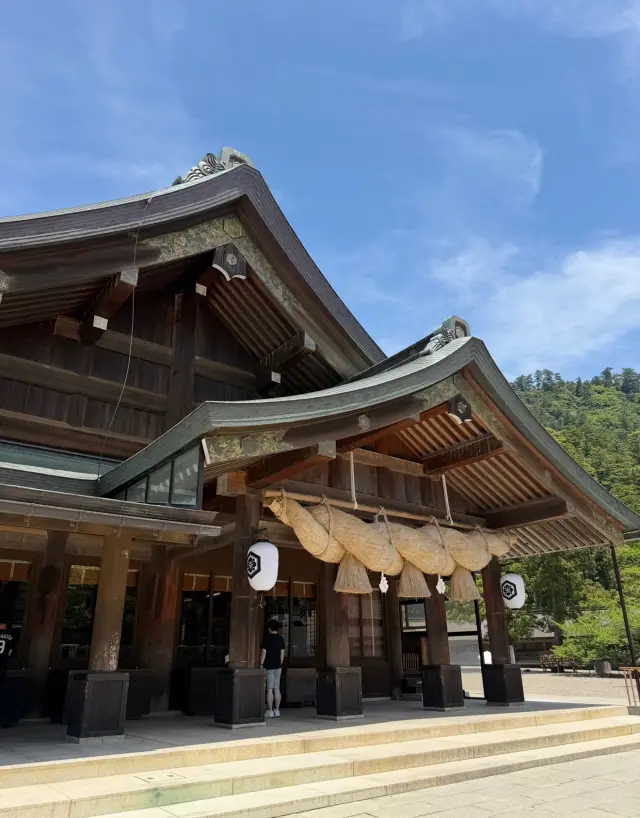
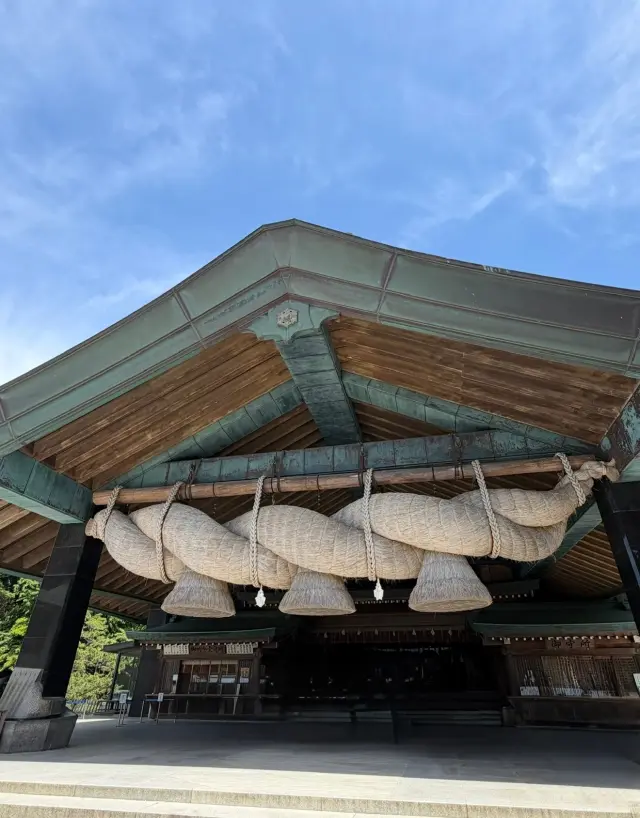
    Izumo Taisha, the heart of Japanese mythology in Shimane, truly leaves you speechless the moment you stand in front of the Kaguraden and see its unbelievably enormous shimenawa rope! Seeing one of Japan’s thickest and largest shimenawa ropes in person, with the immense weight of layer upon layer of tightly woven straw, is dozens of times more imposing than it looks in photos. The sheer power of it hanging beneath the majestic wooden eaves makes you keep staring upward in awe!
    The worship hall is equally magnificent, with thick, dark natural-wood pillars, layers of rustic cypress-bark roofing, white lanterns bearing the shrine crest hanging on both sides, and a solemn shimenawa rope. Under the bright sun and clear sky, it gives off a powerful sense of sacredness and calm. When visiting, don’t forget to follow the local custom. What makes worship at Izumo Taisha especially unique is the ritual of “two bows, four claps, and one bow.” Along with the crisp, resounding claps, you can pray for all kinds of good connections at Japan’s most powerful sacred place for matchmaking—whether in relationships, your career, or finances. It feels like your positive energy is instantly maxed out!
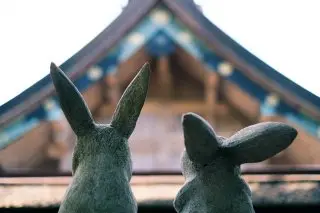
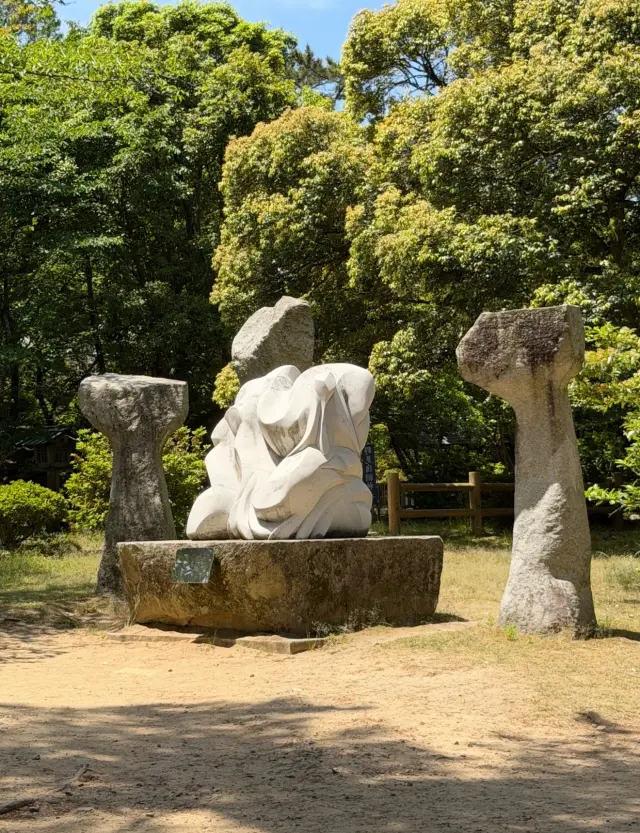
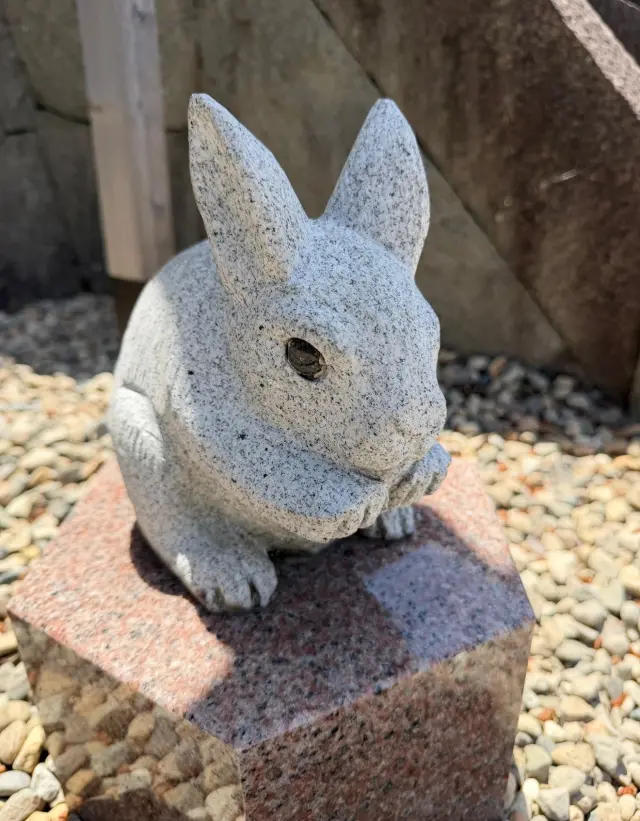
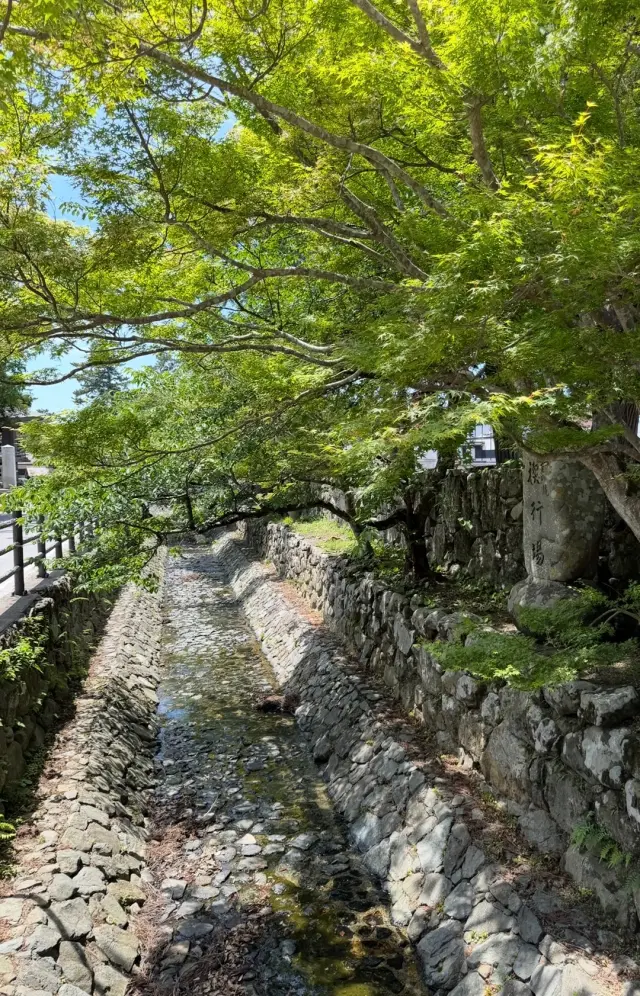
    The entire shrine grounds are also incredibly spacious and enjoyable to explore. Strolling along pebble-covered paths, with a cool stream bordered by old stone embankments beside you, sunlight filtering through the lush green maple leaves and casting dappled patterns, and a gentle breeze blowing by, the atmosphere is peaceful and unbelievably comfortable. Around the corners, you’ll also come across stone artworks in various forms, as well as super-cute little rabbit sculptures based on the myth of the “White Rabbit of Inaba.” The sight of them sitting obediently on stone pedestals with their paws together is unbearably adorable and makes you stop to snap a few extra photos!
    From the visually stunning giant shimenawa rope at the Kaguraden and the wooden shrine buildings filled with history, to the forest scenery surrounded by greenery and the White Rabbits of Inaba looking cute everywhere, Izumo Taisha has both the sweeping solemnity of a top-tier shrine and a spiritual, soothing quality throughout that completely relaxes you. This fulfilling experience of wandering around at your own pace and personally connecting with the origins of Japanese mythology is definitely an unforgettable, top-tier mythological pilgrimage on any trip to the San’in region!

  • The Great Buddha of Kamakura at Kotoku-in Temple

    As the principal object of worship at Kotoku-in temple (officially known as Daii-san Kotoku-in Shojosen-ji), the Buddhist statue of Amida Nyorai enjoys tremendous popularity among the famous spots of Kamakura. The Great Buddha of Kamakura is familiar for the intensity of its presence.

    • Kamakura
    • Shrines & Temples
    See More

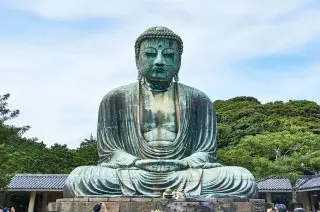
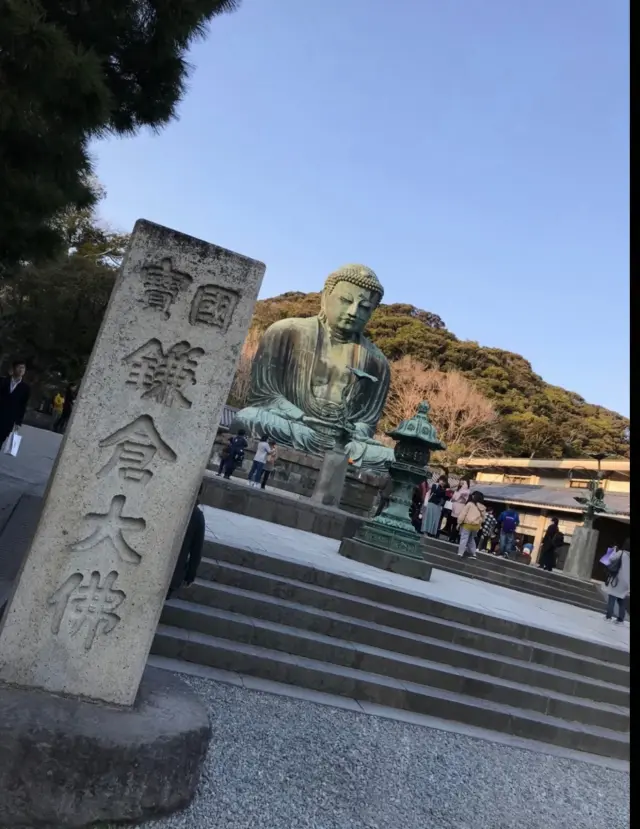
    As soon as I entered Kotoku-in and saw the huge stone monument inscribed with “National Treasure: Great Buddha of Kamakura,” my anticipation went through the roof! After walking a few more steps and looking up, I saw the entire bronze statue of Amida Buddha sitting majestically between heaven and earth. The sight could only be described as “stunning and imposing”! With rolling green mountains behind it and a clear blue sky overhead, the Buddha’s kind, gentle features and slightly lowered eyes, as if deep in contemplation, looked especially solemn and serene in the open natural light.
    The grounds were packed with pilgrims and tourists from around the world. Everyone crowded below the steps and around the incense burner to take pictures and gaze up at the statue. Even the incredibly lively atmosphere couldn’t overpower the calming presence radiating from the Buddha. The most distinctive and coolest thing about this statue is that it’s an “open-air” Great Buddha! Apparently, it was originally sheltered by a magnificent hall long ago, but after centuries of storms and tsunamis, the wooden structure was mercilessly destroyed by nature. Only this solid bronze Buddha remained seated securely on its stone pedestal. It has been sitting there for more than 700 years, witnessing all the changes in the world. Simply standing before it and feeling the profound weight of all that accumulated history fills you with awe!
    Besides standing in the plaza and looking up at it for photos, the most satisfying hidden experience that you absolutely shouldn’t miss is paying just a few dozen JPY to explore the “inside of the Great Buddha”! You enter through an inconspicuous little door behind the statue, and it feels like being enclosed in a gigantic bronze time capsule. The space inside isn’t very large, but you can clearly see the traces of how Japanese craftsmen skillfully joined and welded the bronze plates together hundreds of years ago. Faint sunlight also filters in through openings in the back. The amazing feeling of touching the warmth of history with your own hands is several times cooler than just taking pictures outside!
    Walking around the stone steps with a gentle breeze blowing through the tips of the pine branches, whether you’re admiring the simple, subdued color of the bronze, examining the bronze lanterns on the stone platform, or stopping to take a deep breath and experience the peaceful yet vibrant atmosphere, all your accumulated travel fatigue instantly melts away. This relaxed pace, where you can experience the impact of ancient history and culture while casually strolling among nature and historic sites, is definitely one of the most classic, memorable, top-tier stops in Kamakura!

  • Enoshima Electric Railway (Enoden)

    Enoshima Electric Railway, affectionately known as the “Enoden,” is a private railway operating an approximately 10-kilometer line connecting Fujisawa City and Kamakura City in Kanagawa Prefecture. The line opened in 1902 between Fujisawa and Katase (now Enoshima), and for more than 120 years it has served both as a vital means of daily transportation for local residents and as a key railway supporting tourism in the area.

    • Kamakura
    • Trains & Subway
    See More

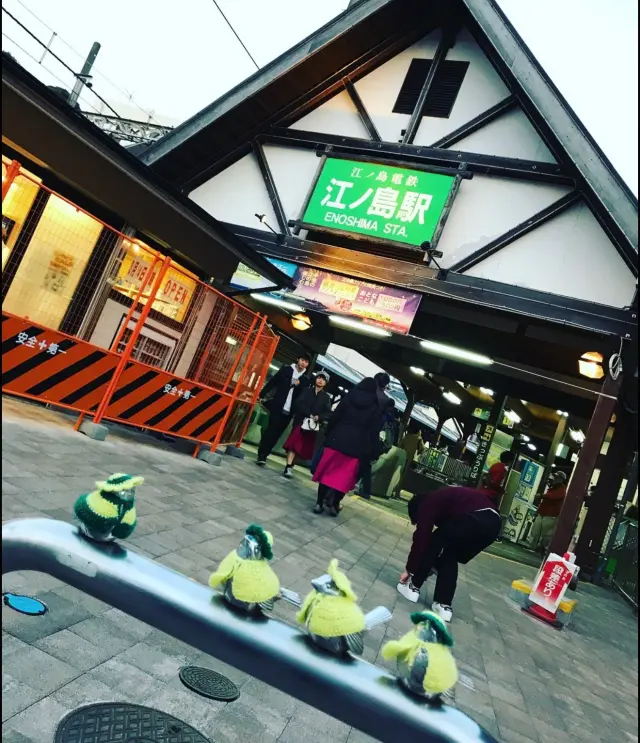
    At Enoden’s Enoshima Station, the island vacation atmosphere and nostalgic retro charm hit you the moment you arrive! The station itself retains the classic character of an old wooden station. The most eye-catching feature is the group of adorable little bronze sparrows on the railing by the entrance. Every so often, a kind local grandmother hand-knits little sweaters and hats in different colors for them. Their seasonal outfit changes are so cute that you can’t help snapping photo after photo.

    Follow the crowds and slowly wander along the lively shopping street, where the air is filled with the aroma of freshly baked rice crackers and tempting grilled seafood. The street is lined with Showa-era-style shops, Japanese sweet shops, and unique souvenir stores, making the walk both relaxing and full of local character. Enoden’s retro green-and-yellow trains slowly pass behind you from time to time with a ding-ding sound. The laid-back, easygoing pace immediately makes you slow down.

    Stroll across the bridge over the sea with the cool ocean breeze on your face, and the lush green hills of Enoshima and the steadfast lighthouse observation deck unfold in the distance. Before you is the deep blue Pacific Ocean stretching all the way to the horizon, and the wide-open view instantly lifts your spirits. This atmosphere combining a retro railway, a leisurely street stroll, and unbeatable ocean views is exactly what makes Enoshima Station so charming.

  • Hasedera temple (Kamakura)

    Hasedera Temple, often referred to as "Hase Kannon," is known as one of the most scenic spots in Kamakura. The principal deity is the statue of Kannon, the Goddess of Mercy, with 11 faces. Standing at 9.18 meters high, it is one of the largest wooden Buddha statues in Japan.

    • Kamakura
    • Shrines & Temples
    See More

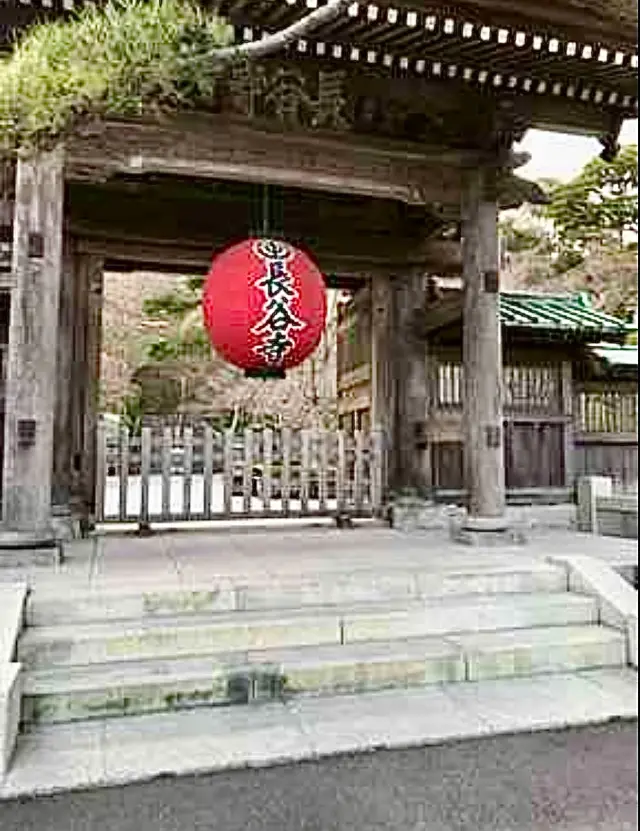
    At the entrance to Hasedera Temple in Kamakura, the first thing that catches your eye is the rustic wooden temple gate, with a striking large red lantern hanging high in the center bearing the three characters for “Hasedera.” The entire gate has a strong sense of history, and the combination of stone steps and wooden pillars creates a calm and peaceful atmosphere as soon as you arrive.
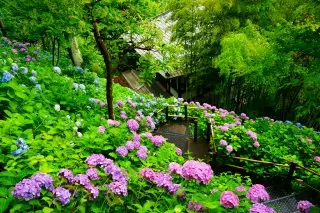
    As you stroll through the temple grounds, you can enjoy the carefully maintained Japanese gardens along the way. Hasedera is known not only for its evergreen scenery throughout the seasons, but also for its excellent views overlooking Kamakura’s beautiful coastline. From the elevated observation deck on the grounds, you can take in the blue coastline of Sagami Bay and the surrounding houses, with a wide and refreshing view.
    The temple is also known for its solemn standing statue of Kannon and its many small Jizo statues. Each stone Jizo statue has a unique expression and pose, adding a touch of warmth to the quiet temple. Slowing down for a walk here while listening to the breeze and the temple bells makes this a wonderful place for a peaceful stroll and to experience the culture and atmosphere of the historic city.

Hokkaido Tohoku Kanto Chubu Hokuriku Kansai Chugoku Shikoku Kyushu Okinawa