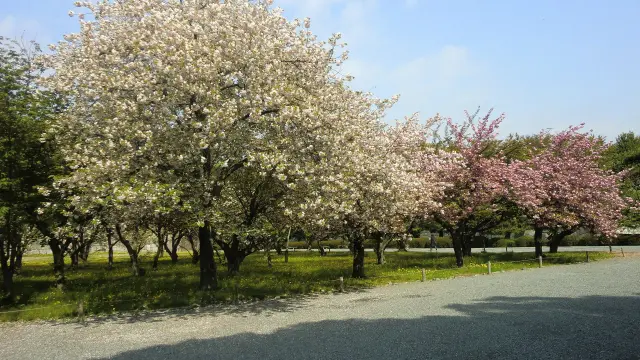
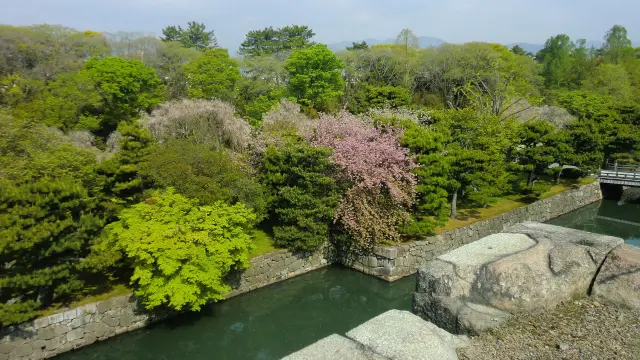
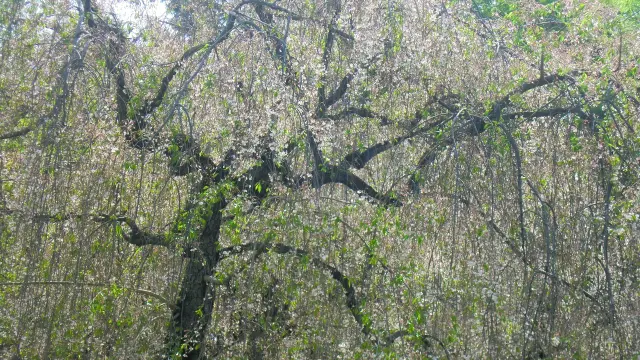
Nijo-jo Castle is very famous for its cherry blossoms. There are many varieties inside the castle grounds, from early-blooming to late-blooming ones, so the viewing season lasts longer than at places with only one variety. The Nijo-jo Castle Cherry Blossom Festival and nighttime illuminations are also held every spring. Although I visited near the end of cherry blossom season, luckily I still saw quite a few trees in full bloom.
Nijo-jo Castle is also very important in Japan’s modern history. It was at Ninomaru Palace that the 15th shogun, Tokugawa Yoshinobu, asked for opinions on returning political authority to the emperor. He later formally returned power to the imperial court, symbolizing the end of Tokugawa shogunate rule. Today, when visiting Ninomaru Palace, you can also see mannequins in the Great Hall recreating this historical scene.
Another interesting feature of Ninomaru Palace is the corridor commonly known as the “nightingale floor.” It makes a sound when you walk on it. I tried really hard to see if I could cross without making any noise, but it was simply impossible. As soon as you put any weight on it, it chirps.
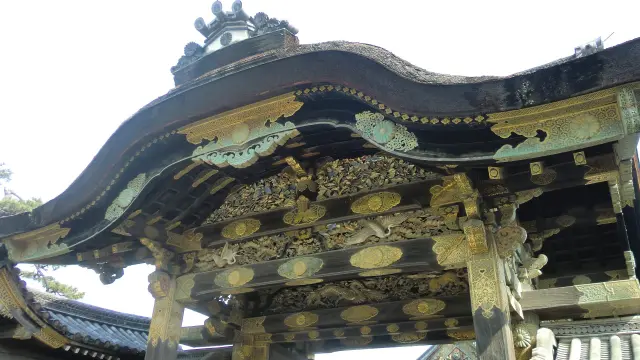
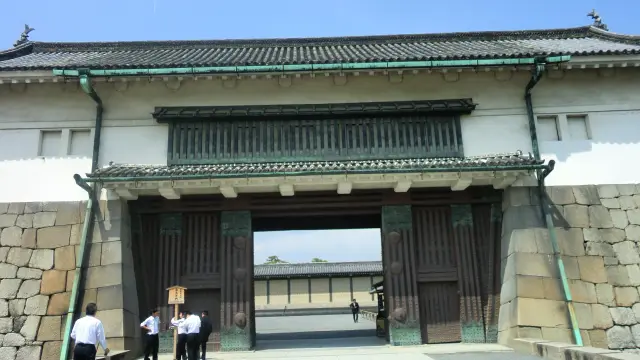
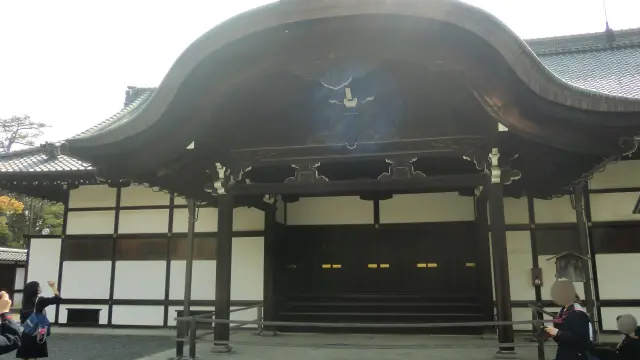
My personal favorite is still the Karamon Gate before entering Ninomaru Palace. The cypress-bark roof has karahafu gables on both the front and back, and the gate is covered in vividly colored carvings of pine, bamboo, plum blossoms, cranes, Chinese guardian lions, and more. It’s truly magnificent. Many traditional buildings in Kyoto tend to have a more understated feel, but the Karamon gates at Nijo-jo Castle and Toyokuni Shrine take a completely different approach. Just looking at them, you can really feel the difference that comes with being in power.
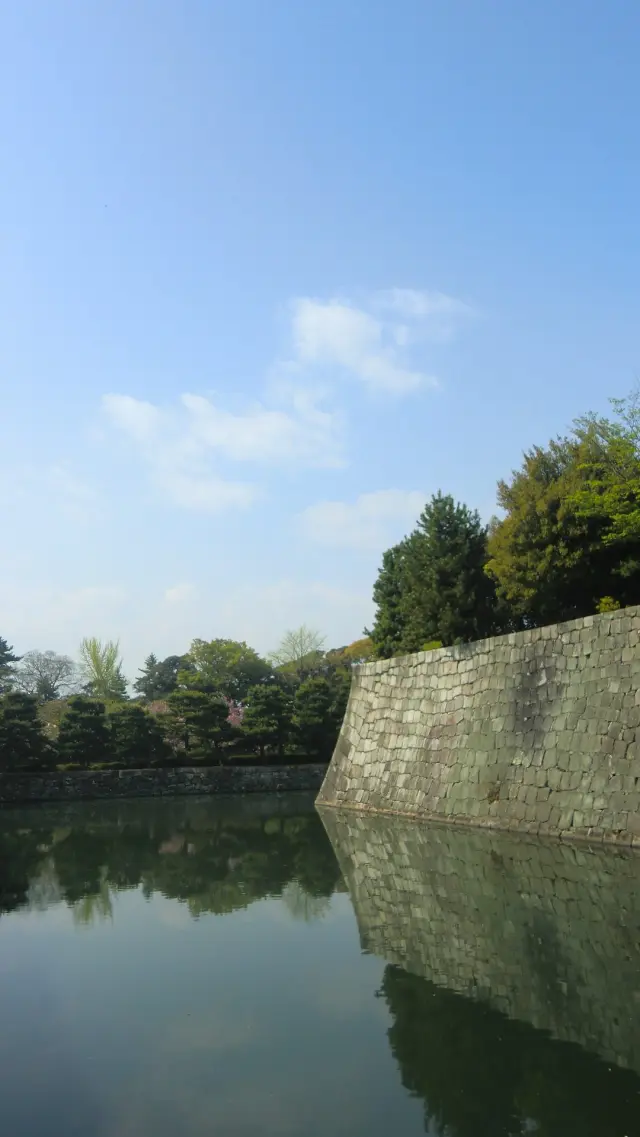
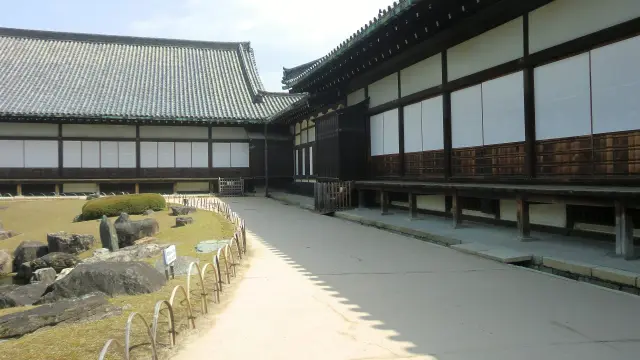
Nijo-jo Castle originally also had a five-story keep, said to have been relocated from Fushimi Castle, but it burned down after being struck by lightning in 1750 and was never rebuilt. Today, you can only climb the former keep’s stone base to see the ruins and surrounding scenery, which feels a little unfortunate. But from another perspective, the truly valuable part of Nijo-jo Castle isn’t the keep, but the fact that Ninomaru Palace has survived. Most of the original palaces at Edo Castle, Osaka Castle, and Nagoya Castle have disappeared, and Nagoya Castle’s Honmaru Palace was only recently reconstructed based on historical records. Although part of Kawagoe Castle’s Honmaru Palace remains, it is no longer a complete palace complex. Nijo-jo Castle’s Ninomaru Palace, however, has been preserved intact, along with its Kano school wall paintings, transoms, and decorative metal fittings. This is what truly makes it irreplaceable among Japanese castle architecture.
Nijo-jo Castle | Review by Holly
Other Reviews by Holly
-
Hikone Castle Ruins (Special Historical Site)
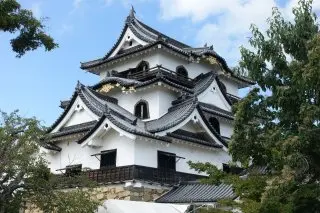
This castle is one of the three most famous castles in Japan that was completed in 1622 and its castle tower is designated as a national treasure. This type of castle is called Hirayamajiro, which means a castle built on a mountain or hill in the middle of a plain.
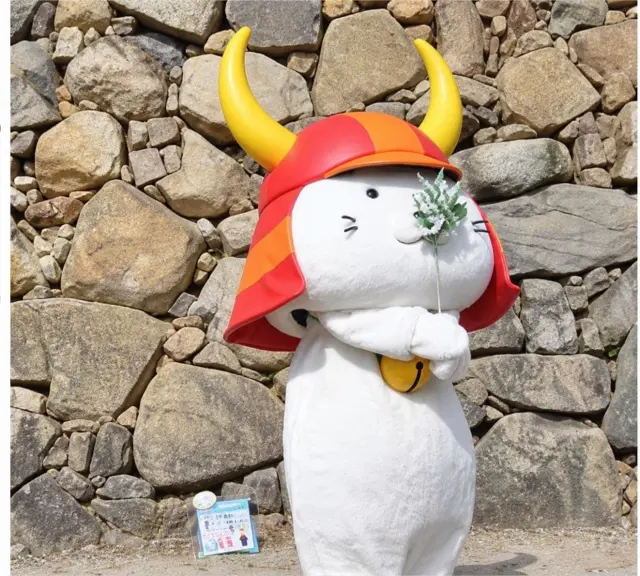
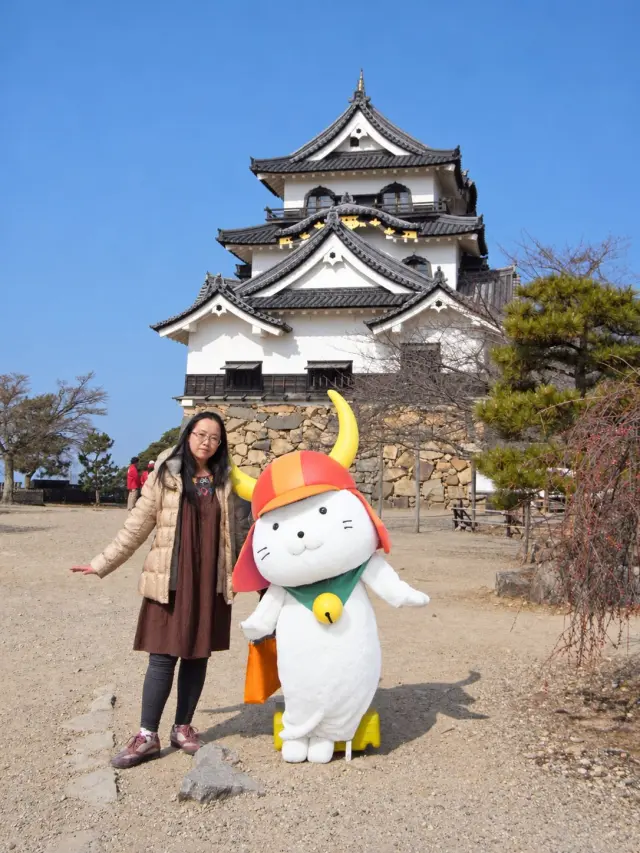
I actually had only two goals for this visit to Hikone Castle: Hikonyan and the legendary staircase that's nearly 90 degrees steep. To make the schedule go more smoothly, we specifically came in the morning, hoping to catch Hikonyan's 11:00 performance. Hikone Castle itself is a National Treasure of Japan. Construction began in 1604 and took about 20 years to complete. The castle, once ruled by the Ii family as feudal lords, still retains much of its historic appearance. I originally didn't have many expectations for the castle itself, but once I went inside, even just walking from the entrance toward the castle grounds made me realize that it was actually quite large. There's a fair distance from the entrance to the castle keep.
The path into the castle grounds is actually pretty steep, but once I climbed up and looked down, the whole view suddenly gave me a strange sense of traveling through time, as if I had really stepped into the castle grounds of the past. Then it was time to wait for the staff to lead Hikonyan out to meet everyone. All I can say is that as soon as Hikonyan appeared, everyone there instantly went wild! Hikonyan was already adorable, and the staff member in the costume kept acting cute, so I couldn't stop taking pictures. I was snapping away almost the entire time.
The only unfortunate thing was that we couldn't take pictures directly with Hikonyan that day. We could only take photos from a distance or pose with the nearby signboard. Still, I was already very satisfied just to see Hikonyan in person.
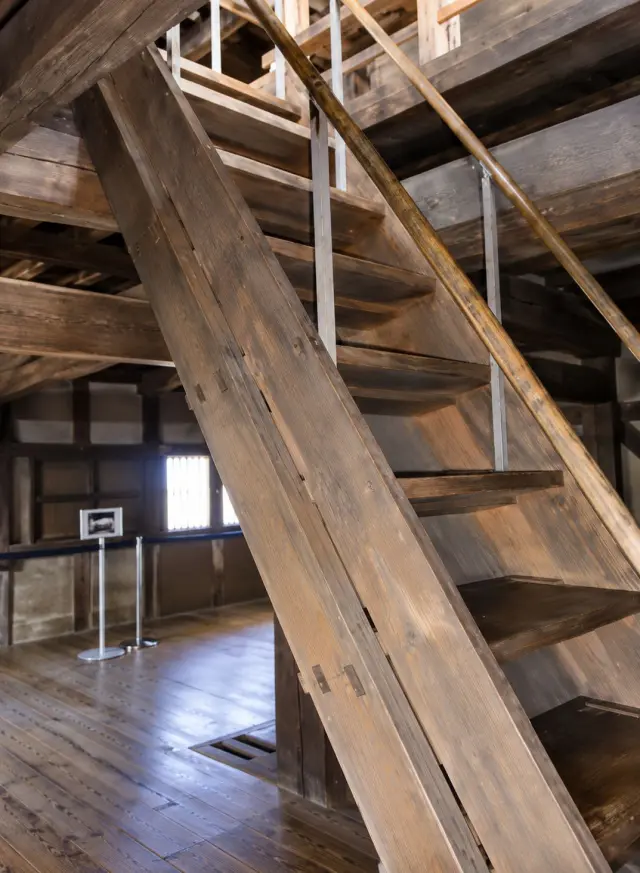
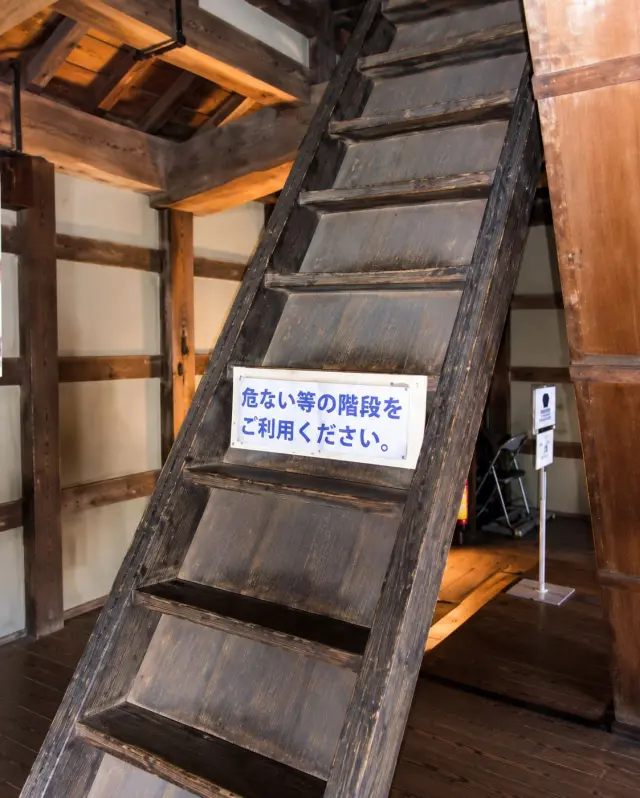
After seeing Hikonyan, it was time to take on the extremely steep staircase leading up to the castle keep. Hikone Castle has an original three-story compound-style keep, and the stairs inside have an incline of around 60 to 62 degrees. Even before reaching the legendary staircase, the other stairs inside the castle were already very steep. When I finally saw the staircase leading to the very top, it honestly looked even more extreme than I'd imagined. There was just a rope beside it serving as a handrail, with staff at the top and bottom watching out for visitors' safety. I felt like I was basically crawling up on all fours.
After climbing to the top of the keep, the view outside was truly beautiful. Apparently, you can see Lake Biwa when the weather is clear. Unfortunately, although the weather was pretty good that day, there were still some clouds, so Lake Biwa wasn't very clear. Still, being able to look out over the surrounding scenery from that height made me feel that the difficult climb hadn't been for nothing.
But the real challenge wasn't over yet. Climbing up the stairs was already painful, but going down was a different kind of torture. I kept feeling like I might tumble down at any moment, and at one point I even thought rolling down might be faster! But that was just a thought. I still clung desperately to the rope and slowly made my way down one step at a time. I have no idea what position I was in as I went down anymore. I only remember trying very hard to make it down alive.
Besides the castle keep, there's also Genkyuen Garden, a daimyo garden next to Hikone Castle. Unfortunately, because it was winter, the garden scenery was rather plain. However, we unexpectedly came across a Japanese couple taking wedding photos. The bride was wearing an iro-uchikake wedding kimono and looked truly beautiful, which added another pleasant surprise to the trip. -
-
Naha Airport
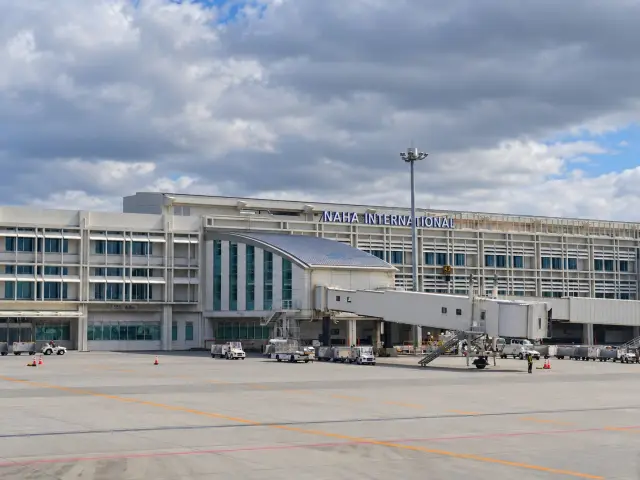
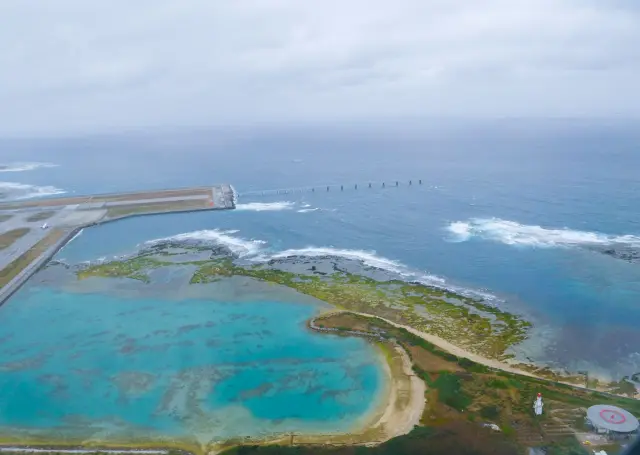
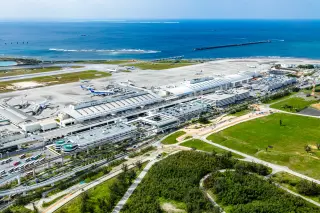
Naha Airport sits on Okinawa’s main island, serving as Japan’s southern gateway to the world. Flights here service a regular roster of domestic flights to major cities including Tokyo (Haneda), Osaka (Kansai), Nagoya (Chubu), and Fukuoka, while international routes link Okinawa directly with several Asian destinations. In addition to frequent flight options to Okinawa’s outlying islands, including Ishigaki, Miyako, and Kume, the airport sees over 20 million passengers each year.
This trip, I entered Japan through Naha Airport and then took a domestic flight from here to Haneda. It was also my first time taking a domestic flight in Japan from Okinawa, so I got to experience Naha Airport in a different way.
Although Naha Airport has several floors, the overall layout isn't too difficult to understand. The domestic and international terminals are in separate areas, so if it's your first time here, just check which airline you're flying, and you basically won't get lost. In the domestic terminal, the arrivals lobby is on the first floor, and you can find the bus and taxi stops there. To take the Yui Rail, follow the signs on the second floor. The route is very clear, and you don't need to make any detours. The third floor is for entry, so basically, each floor is clearly divided.
I also had a special mission this time: I wanted to find a Goshoin. One thing to note is that the sales counter is in the domestic terminal, and it takes some time to walk there from the international side. So I bought it when I was taking my domestic flight; otherwise, it would have been too far, since I was in a hurry. If you collect Goshoin like I do, I recommend allowing extra time instead of waiting until you're about to board and then rushing around looking for it. The walk alone may take longer than expected.
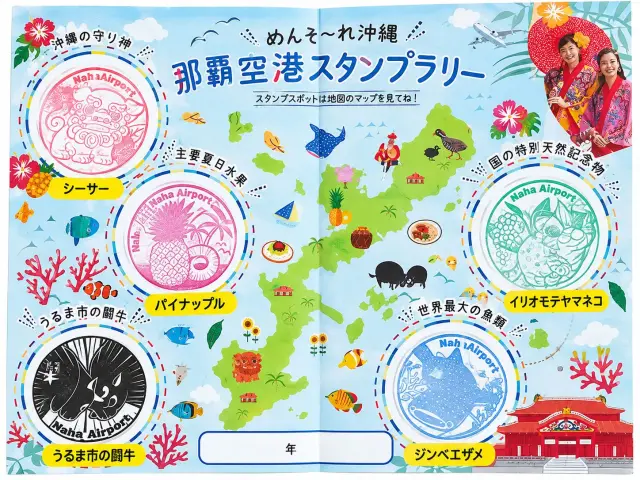
Naha Airport also has a very interesting stamp rally where you use layered-color stamps to complete a picture. Once you collect them all, you can exchange it for a 3D sticker. Unfortunately, one of the stamps was broken when I visited, so I couldn't complete the original picture and had to use other commemorative stamps instead. That was a little disappointing. Another thing to note is that you need to ask at the airport information counter for the designated paper used for the activity and to redeem the sticker. You also need to go during the counter's business hours, so I recommend checking the details before participating.
And if you want to participate in this activity, be sure to allow enough time because the stamps are spread across three floors. I went up and down several times to collect them, walked through both the departure and arrival areas of the domestic and international terminals, and also shopped for souvenirs. By the end, I felt like I almost knew Naha Airport better than Taoyuan Airport.
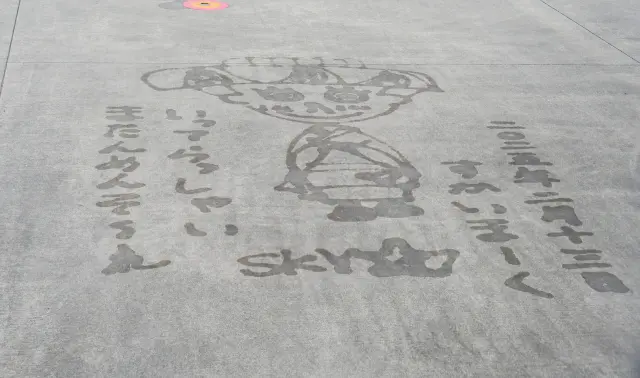
This time I flew Skymark from Naha to Haneda. Unexpectedly, before boarding, I got to see the ground crew writing and drawing with water on the apron. I'd seen similar scenes online before and thought they were interesting, but I never expected to see it in person in Okinawa this time. It really made me very happy.
Overall, I think Naha Airport is very convenient to get around, especially since the Yui Rail connects directly to the terminal, which is a big plus for independent travelers. In addition to basic transportation and shopping facilities, the airport also has commemorative stamps and a stamp rally, which shows how much thought Naha Airport puts into the experience. But could the stamp stations maybe not be spread across three floors? Going up and down is really tiring. -
-
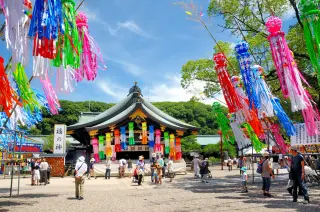
Ichinomiya Tanabata Festival
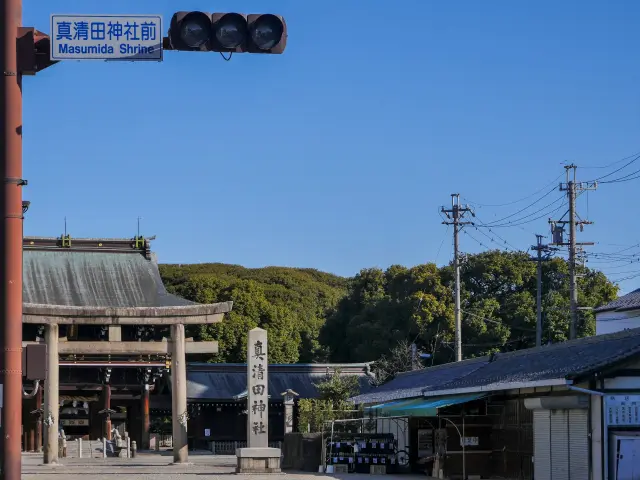
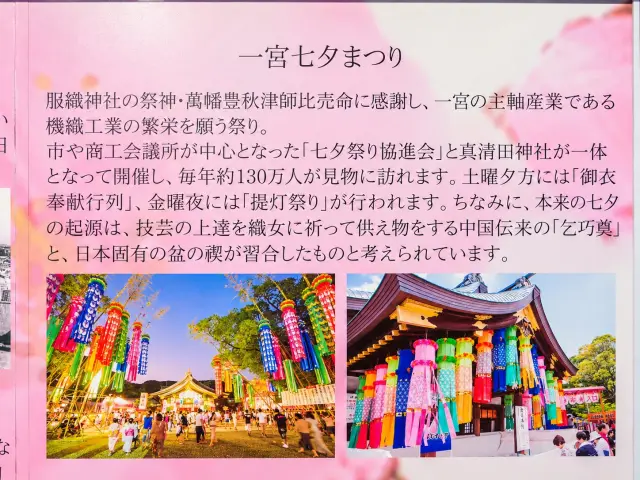
Held in Ichinomiya City, Aichi Prefecture, long known for its thriving textile industry, this festival is recognized as one of Japan’s leading Tanabata festivals. It is held as a Tanabata event associated with Hikoboshi and Orihime, who have deep ties to textiles, to pray for the prosperity of the textile industry. The venues include Masumida Shrine, the ichinomiya of Owari Province, the area around Ichinomiya Station, Ginza Street, and the Honmachi shopping street, and it attracts Approx. 1 million visitors every year.
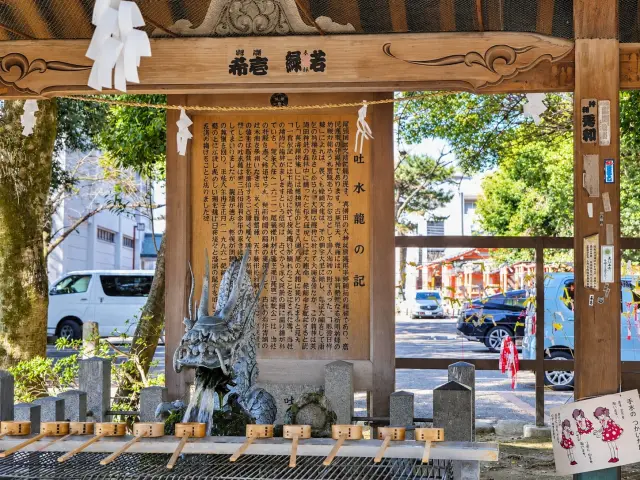
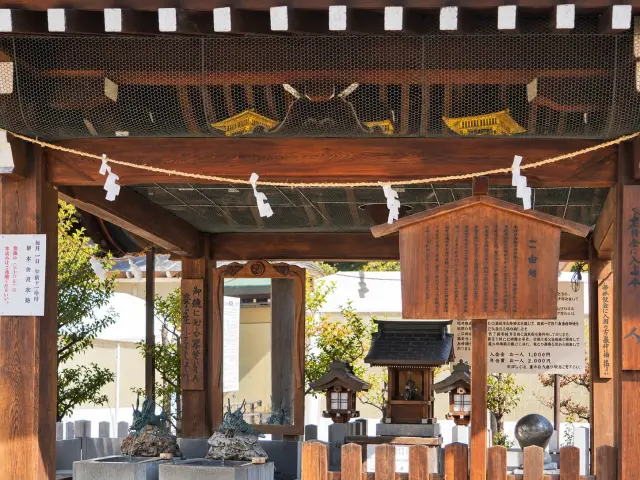
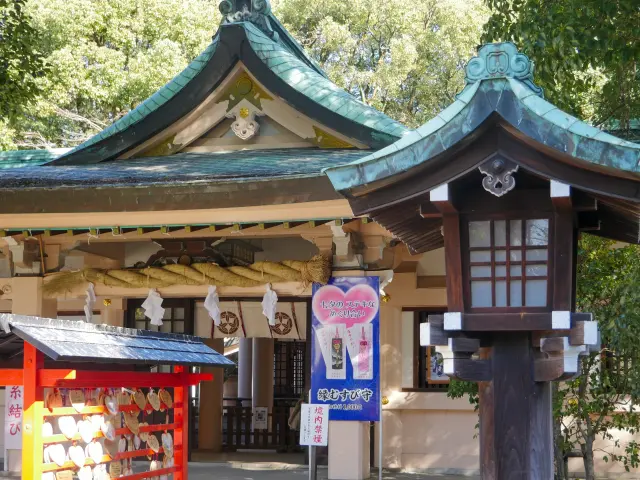
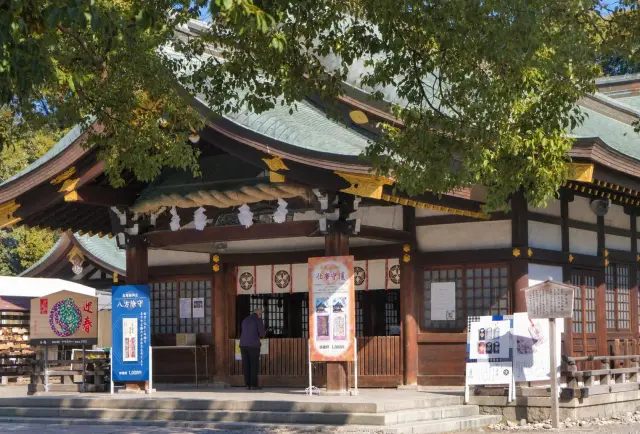
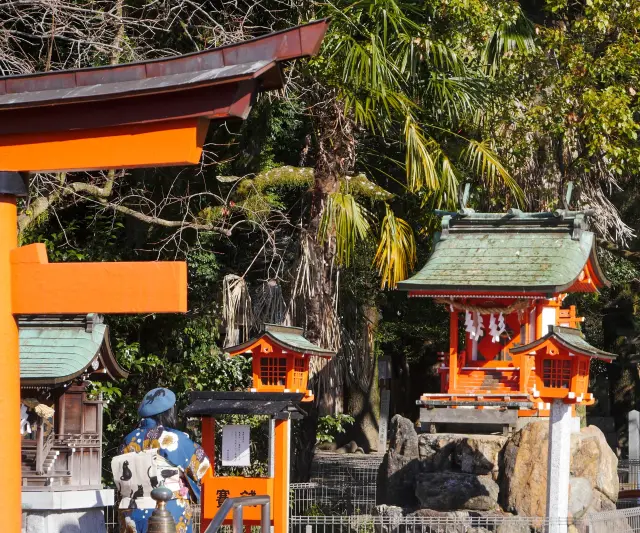
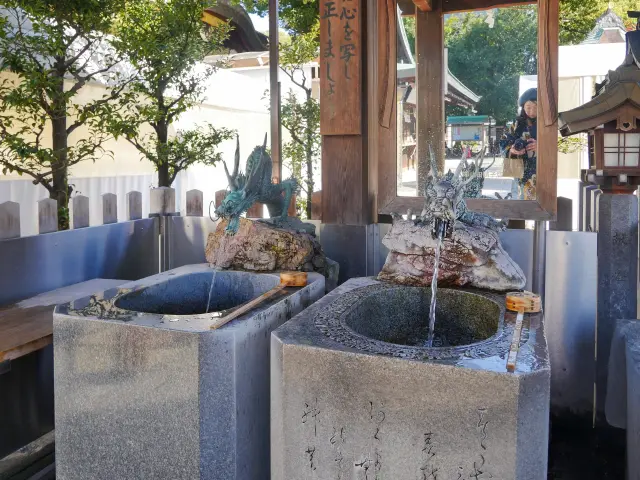
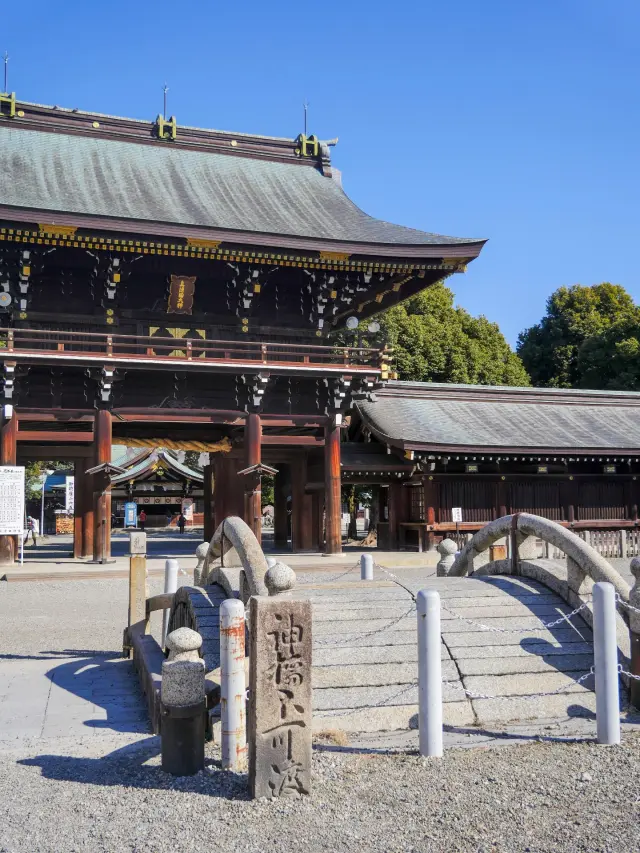
Masumida Shrine was a last-minute addition to this trip, and I ended up visiting it unexpectedly. After actually going there, I thought it was well worth the visit. The grounds have a sacred pond, a vermilion Good Fortune Bridge, and Hachiryu Shrine. The overall scenery is a little different from shrines where you only visit the main hall, and there are quite a few places to take photos.
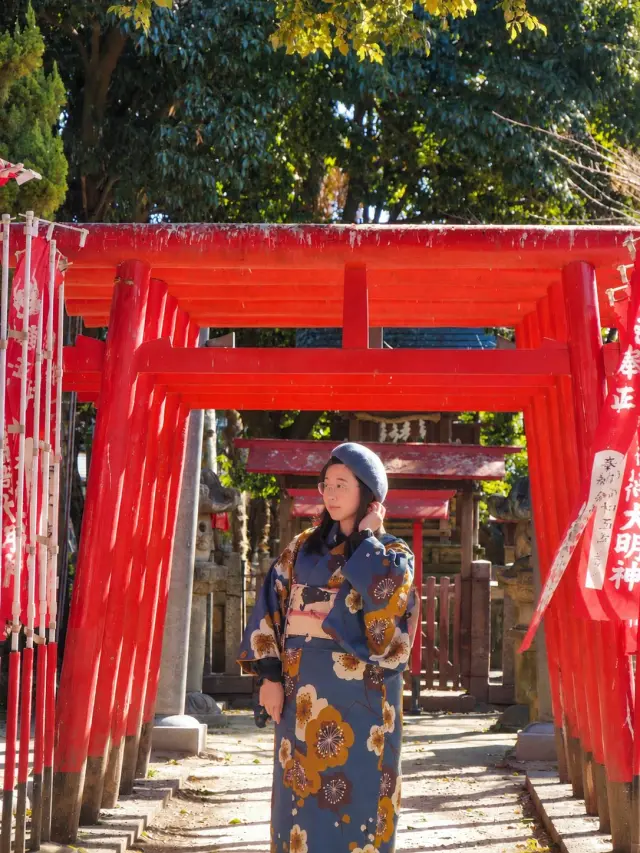
You can collect sacred water at the Shinsuisha, so if you want to drink some, remember to bring a bottle. There is also a row of red torii gates in front of Tomishima Inari Daimyojin. Although it isn't on the same scale as the seemingly endless thousand torii gates at Fushimi Inari Taisha in Kyoto, it still looks beautiful in photos. Since this place is a little out of the way, most tourists don't come here, so it wasn't crowded when I visited and was pleasant to walk around. About 30 minutes to an hour should be enough.
Another thing I found interesting is its deep connection to Ichinomiya City's textile culture. Hatori Shrine on the grounds enshrines deities associated with textiles, and the Tanabata Festival held in Ichinomiya City every summer is also connected to the local wool textile industry and the worship of Orihime. The Ichinomiya Tanabata Festival is considered one of Japan's three major Tanabata festivals, alongside those in Sendai and Hiratsuka, which made me want to find an opportunity to come back during Tanabata.
The wool textile industry is also connected to Nagoya's breakfast ("morning service") culture. In the past, textile merchants often used coffee shops for business discussions, and the shops gradually began serving coffee with simple meals. This later spread throughout Nagoya and became a local specialty.
If I get the chance to come during Tanabata, I'll probably set aside a full day to really experience the local character of the area. I tried to fit a little too much into this trip, so I didn't leave enough time here, which was a bit of a shame. -