

10 Must-Visit Tourist Spots in Naha: Okinawa Highlights in One City
With Naha Airport, Naha is the gateway to Okinawa.
From beautiful traditional streetscapes to historic buildings designated as cultural properties, Naha is packed with places to explore.
Its cityscape—where urban energy meets old-school Okinawan charm—is a big part of the appeal.
With restaurants serving Okinawan food culture and hotels that deliver a resort vibe, you can truly experience Okinawa without ever leaving Naha.
What is Naha Like?
Naha City is Okinawa’s thriving urban hub.
With its port developed since ancient times, the city flourished as a center for international exchange where Ryukyu Kingdom culture bloomed.
In Naha alone, you can enjoy stunning views of blue skies and ocean, lively entertainment districts popular with visitors, and areas where Ryukyu-era ruins still remain.
It’s no exaggeration to say Naha brings together the very best of Okinawa.

Best time of year to visit Naha
The best season for Naha sightseeing is summer, especially July and August.
Along with exploring the city, you can enjoy swimming and marine activities.
Take in the breathtakingly beautiful ocean.
What to wear in Naha by season
- Spring (March - May): Light layers, short sleeves
- Summer (June - August): Short-sleeve shirts or T-shirts
- Fall (September - November): Light layers
- Winter (December - February): A light jacket or coat
How to get to Naha
From Tokyo’s Haneda Airport to Naha Airport takes about 2.5 hours.
From Osaka’s Itami Airport or Nagoya’s Chubu Centrair International Airport, it’s Approx. 2 hours.
There are also direct flights from China, Taiwan, and South Korea, making access from overseas easy.
Main ways to get around Naha
Naha is served by Okinawa’s only rail system: the monorail.
From the monorail, you can see Naha’s mix of old and new from above, including modern city views and traditional tiled-roof houses.
The Yui Rail runs from Naha Airport to Shuri (home to Shurijo Castle) and is great for sightseeing since you don’t have to worry about traffic.
The bus network is also extensive, and with a 1-day pass, you get unlimited rides on the Yui Rail and select buses in Naha.
10 Must-Visit Tourist Spots in Naha: Okinawa Highlights in One City
As home to Naha Airport—Okinawa’s main gateway—Naha is where the island’s appeal comes together.
Shurijo Castle Park, a UNESCO World Heritage site, is one of the prefecture’s top attractions and a symbol of Okinawan culture and history.
You’ll also find historic landmarks, plus beaches where you can soak in Okinawa’s beautiful sea and sky.
Here are the classic must-visit spots for sightseeing in Naha.
1. Naminoue Shrine
True to its name, this historic shrine stands atop a seaside cliff overlooking brilliant blue water. Locals affectionately call it “Namin-san.”
Its origins are unknown, but it’s said to have begun as a sacred worship site where people prayed for bountiful fishing and harvests to the gods of Nirai Kanai, a paradise believed to lie beyond the sea.
Don’t miss the vivid vermilion worship hall, filled with a distinctly Okinawan tropical atmosphere.

2. Okinawa Prefectural Museum & Art Museum (Okimyu)
Known as “Okimyu,” this is Okinawa’s largest cultural complex, combining a museum and an art museum in one facility.
The museum explores Okinawa’s nature, history, and culture under the theme “Living with the Sea and Islands.”
Starting with an approach featuring coral reef motifs underfoot, you can learn about the Ryukyu Kingdom—from its rise and fall to postwar Okinawa and the future.

3. Shikinaen Garden
Completed in 1799 during the reign of King Sho On (15th king of the Second Sho Dynasty), this was the Ryukyu royal family’s largest villa.
It was used for royal retreats and to welcome Chinese imperial envoys (Sapposhi).
Designated a Place of Scenic Beauty in 1941, it was devastated during the Battle of Okinawa near the end of World War II.
After postwar reconstruction, it was redesignated in 1976 and, in 2000, recognized as a Special Place of Scenic Beauty.
That same year, it was also registered as a UNESCO World Cultural Heritage site as part of the “Gusuku Sites and Related Properties of the Kingdom of Ryukyu.”

4. Shurijo Castle Park
Shurijo Castle is Japan’s only red castle, painted in striking vermilion, and a true symbol of Okinawa.
From 1429 to 1879, for 450 years, it stood as the political, diplomatic, and cultural heart of the Ryukyu Kingdom.

5. Tamaudun Mausoleum
Built in 1501 during the reign of King Sho Shin, often regarded as the golden age of the Ryukyu Kingdom, this is a royal mausoleum.
Its massive stone structure is said to be modeled after Shurijo Castle, with three chambers (east, west, and center) where remains are interred.
Many original features from its founding in 1501 remain, including the Tamaudun stele engraved with the names of the royals laid to rest here.

6. Naminoue Umisora Park: Naminoue Beach
Naha’s only beach, located near Naminoue Shrine, one of Okinawa’s most prestigious shrines and ranked first among the Ryukyu Eight Shrines.
It’s part of Naminoue Umisora Park, a waterfront park beloved by locals and visitors alike.
The beach is split into two areas—Wakasa side and Tsuji side—separated by the cliff where the shrine stands. Wakasa connects to Wakasa Seaside Park, while the Tsuji side has eateries such as fast-food spots.

7. Shuri Kinjocho Stone-Paved Road
The Shuri Kinjocho Stone-Paved Road is part of the Pearl Road, one of the routes built in the 16th century during the Ryukyu Kingdom era to connect Shurijo Castle with various regions.
Located on a slope in the quiet residential area of Shuri Kinjocho, about 500 m from Shurijo Castle, the road averages about 4 m wide and is paved with 20–30 cm Ryukyu limestone stones, stretching for about 300 m.

8. Senagajima Umikaji Terrace
A resort complex on Senagajima, a small island (about 1.8 km around) connected to Naha Airport by a seaside road.
Whitewashed buildings line the island’s slope facing emerald-green water, creating a look that feels like a small town.
It’s said to be inspired by European resort destinations like Italy’s Amalfi Coast and Santorini in the Aegean Sea—and it’s easy to see why.

9. Okinawa World
A hugely popular theme park that brings together Okinawa’s best, attracting visitors from Japan and abroad.
Gyokusendo Cave, Okinawa’s largest limestone cave, was formed over about 300,000 years and features more than 1 million stalactites—an unforgettable reminder of nature’s mystery and grandeur.
Beyond the cave, highlights include the “Ryukyu Kingdom Castle Town,” recreating old Ryukyu with traditional homes registered as Tangible Cultural Properties, plus a “Tropical Fruit Garden” growing rare subtropical fruits like shikuwasa and lychee.

10. teamLab Future Park Okinawa
A permanent exhibition by the world-famous art collective teamLab, known for works shown in Japan and around the globe. Built around the concept of “collaborative creativity,” it lets you create and enjoy art freely with family, friends, and others sharing the space.
Each interactive artwork changes through touch and movement, with shifting visuals and sound—so there’s always something new to discover. Some pieces even bring your own drawings of fish or animals to life in the exhibition space, making you feel truly part of the art.

6 Popular Places to Eat in Naha
In Naha, you can enjoy not only traditional Okinawan cuisine, but also American-style food.
With so much variety, you won’t get bored no matter how many days you stay.
Here are some restaurants you’ll want to stop by when you visit Naha.
1. Resort-Style Shaved Ice Specialty Shop -the Sea
A tiny shaved ice spot tucked behind Kokusai-dori, right in the heart of Naha sightseeing.
The ice—shaved from Kumejima deep-sea water—has a fluffy, airy texture and an ultra-smooth mouthfeel.

2. Yakiniku & Horumon Nakama
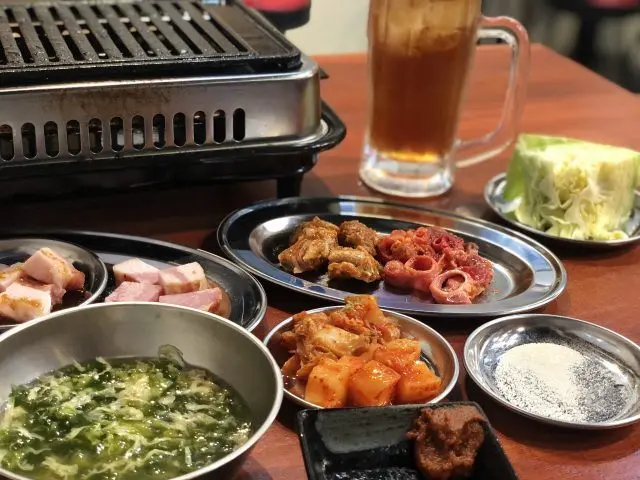
A specialist restaurant where you can enjoy Okinawa’s brand pork, Agu Pork—both cuts and offal—grilled yakiniku-style. For meat cuts, they offer thick tongue, loin, belly, tenderloin, and more.
The carefully prepped offal lineup includes rare parts, with 15+ varieties served daily. Their signature Agu Pork mainly comes from “Kin Agu,” raised in Kin Town, Okinawa.
Being able to try “Kin Agu” offal is rare even in Okinawa.
3. A&W Naha Kanagusuku
An American fast-food chain that opened its first Okinawa location in 1963, before Okinawa’s reversion to Japan. Today it has 20+ locations across the prefecture.
A&W’s appeal lies in its retro, American-diner vibe—and the Naha Kanagusuku location is no exception. With a pop-colored counter, window seats along curved walls, and booth seating, you can fully sink into the all-American atmosphere.

4. Steak House 88 Tsuji Main Branch
The flagship location of the 88 Group, a steakhouse chain loved across Okinawa for its extensive menu and reasonable prices.
Its roots trace back to “CLUB88,” opened in 1955. During the U.S. administration era, it passed strict American standards for restaurants serving U.S. personnel and earned an “A Sign” business license.

5. Shuri Soba
A beloved Okinawa soba spot in a residential area a short walk from Shurijo Castle, known for lines even before opening.
The menu is refreshingly simple: besides the signature Shuri Soba, there’s simmered pork, onigiri, jushi (Okinawan seasoned rice), and shaved ice zenzai.

6. Kokusai-dori Yatai Village
A yatai (food stall) village that opened in 2015 on Kokusai-dori—an essential stop for Okinawa sightseeing.
Packed with spots serving Okinawan dishes and creative cuisine, it’s a lively favorite from day to night.
There are 20+ stalls, offering everything from local Okinawan specialties to sushi featuring fish like gurukun and irabucha, Agu Pork gyoza, and Ishigaki beef steak. True to Okinawa’s open, multicultural spirit, you’ll also find plenty of inventive, original food.

Find Naha-Only Souvenirs! 3 Classic Shopping Areas
Shopping is one of the best parts of traveling.
Naha has plenty of shopping areas, from Kokusai-dori lined with every kind of souvenir to Tsuboya Yachimun Street, where you’ll find yachimun (Okinawan pottery), one of the island’s traditional crafts.
Naha is easy to get around and close to the airport, so you can shop right up until it’s time to fly.
From local food products and traditional crafts to one-of-a-kind items you can only find in Naha, why not shop as much as time allows?
1. Naha Kokusai-dori Shopping Street
Located in central Naha, Naha Kokusai-dori Shopping Street is Okinawa’s signature main street.
It’s the city’s largest downtown area and also known as a hub for both shopping and entertainment.
Built around the concept of “a people-friendly city, a city that’s fun to walk,” it’s widely loved as simply “Kokusai-dori.”

2. Tsuboya Yachimun Street
Yachimun is Okinawa’s distinctive pottery, with a history spanning more than 300 years since the Ryukyu Kingdom era.
Tsuboya’s story began in 1682, when the Ryukyu government gathered kilns scattered across the islands into this area.
Along this approx. 400 m street paved with Ryukyu limestone, you’ll find workshops, shops, and galleries dedicated to yachimun.
Stroll the old streetscape and experience Okinawan craft culture up close.

3. Naha City First Makishi Public Market
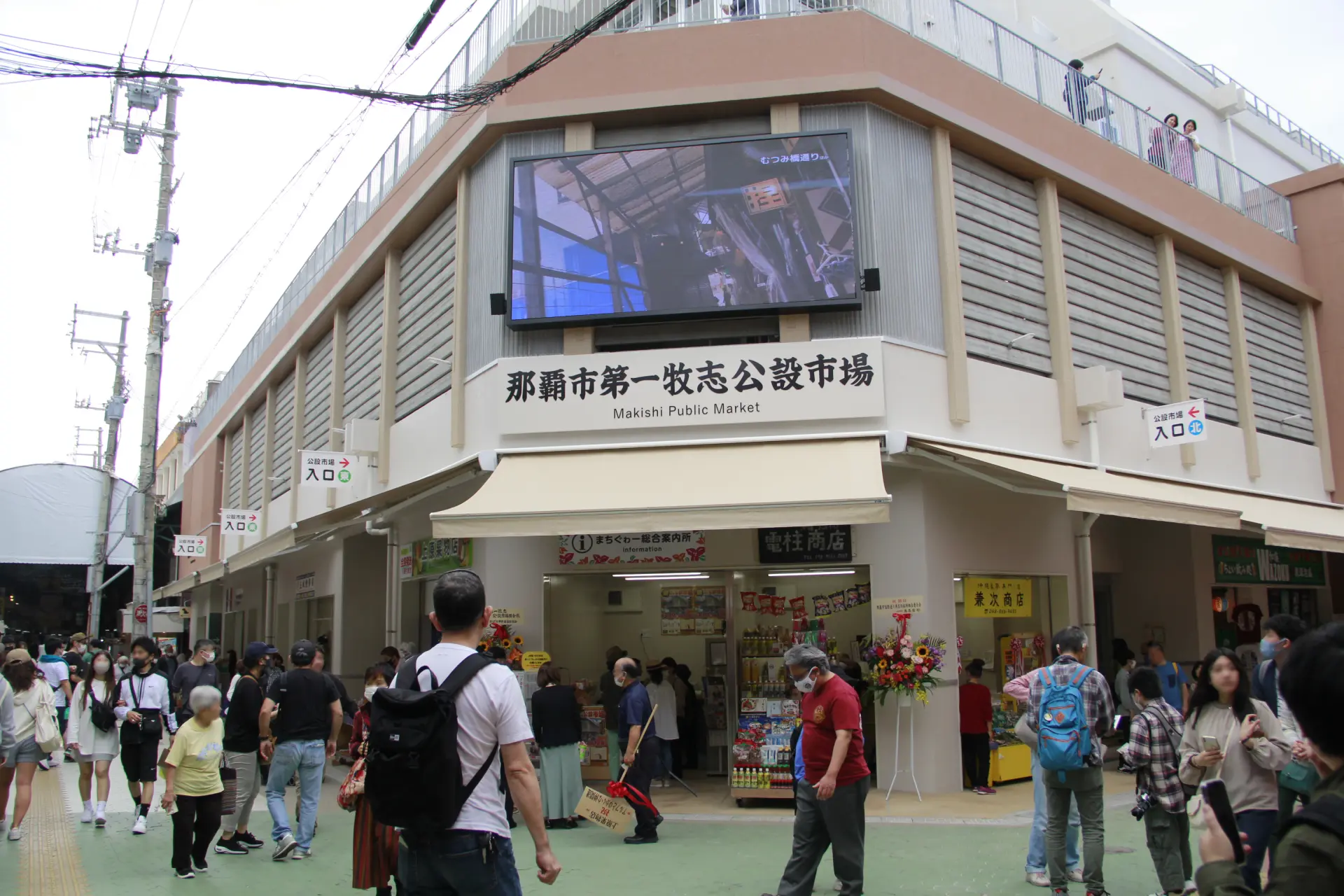
It is the kitchen of the Uchinanchu (Okinawan people), with colorful fish, island vegetables that convey the energy of the land, pork of various parts, and other foods unique to Okinawa.
If you want to take your time to browse, go in the morning when the market is relatively empty. If you want to experience the lively atmosphere of the market, go in the afternoon or evening. You will feel much closer to Okinawa if you enjoy interacting with the shopkeepers while looking at foodstuffs you would not normally encounter when shopping. If the shopkeeper gives you an extra treat when you pay your bill, you are already an expert in Okinawan travel.
Where to Stay in Naha: 3 Recommended Accommodations
Naha is full of attractions, including Okinawa’s biggest downtown area, Kokusai-dori, and many top sightseeing spots.
You’ll also find a great selection of places to stay, from convenient city resort hotels and special-occasion luxury stays to welcoming guesthouses.
Here are three standout picks to make your Naha trip even better.
1. HOTEL SANSUI NAHA Ryukyu Onsen Naminoue-no-Yu
An easy-to-access urban resort hotel opened in February 2022, about a 10-minute drive from Naha Airport.
Naminoue Shrine, known as a matchmaking power spot, and Naminoue Beach (Naha’s only swimming beach) are within walking distance. It also offers easy access to Kokusai-dori and Shurijo Castle, making it an ideal base for sightseeing.

2. THE KITCHEN HOSTEL AO
A guesthouse near Naha City Hall, within walking distance of Kokusai-dori.
It’s a budget-friendly dormitory-style stay, but comfort is a priority, with Nishikawa futons and IDC Otsuka pocket-coil mattresses to support a great night’s sleep.
Each bed also has a power outlet, USB connector, and reading light, so you can enjoy your own downtime too.

3. Hewitt Resort Naha
The first thing you’ll notice upon entering is a work by contemporary Japanese painter Hiroko Otake displayed on the wall behind the front desk.
A large-scale piece with swirling butterflies and flowers welcomes you in.
Guest rooms inspired by Okinawa’s sea and sun feature high-end interiors, including Simmons beds designed for exceptional sleep.

Summary
We’ve introduced sightseeing spots in Naha—a city that brings together Okinawa’s charm, from Ryukyu-history landmarks to a unique streetscape blending urban life with vivid blue sea and sky.
As Okinawa’s gateway, Naha also offers plenty of great places to stay and eat.
Don’t treat it only as a transit point to other destinations—take the time to enjoy Naha as a destination in its own right.
After Naha, consider extending your trip to Ishigaki Island, where the blues of the sea and sky feel even more intense.
Just a 1-hour flight from Naha Airport, Ishigaki is a wonderful place to feel the ocean breeze, listen to the waves, and stargaze at night.