

Plenty to Enjoy Even on a Short Trip! 9 Classic Kagawa Attractions
Kagawa is Japan’s smallest prefecture by area, so even with a short stay you can fully enjoy must-see sights like historic shrines and castles, plus beautiful natural scenery.
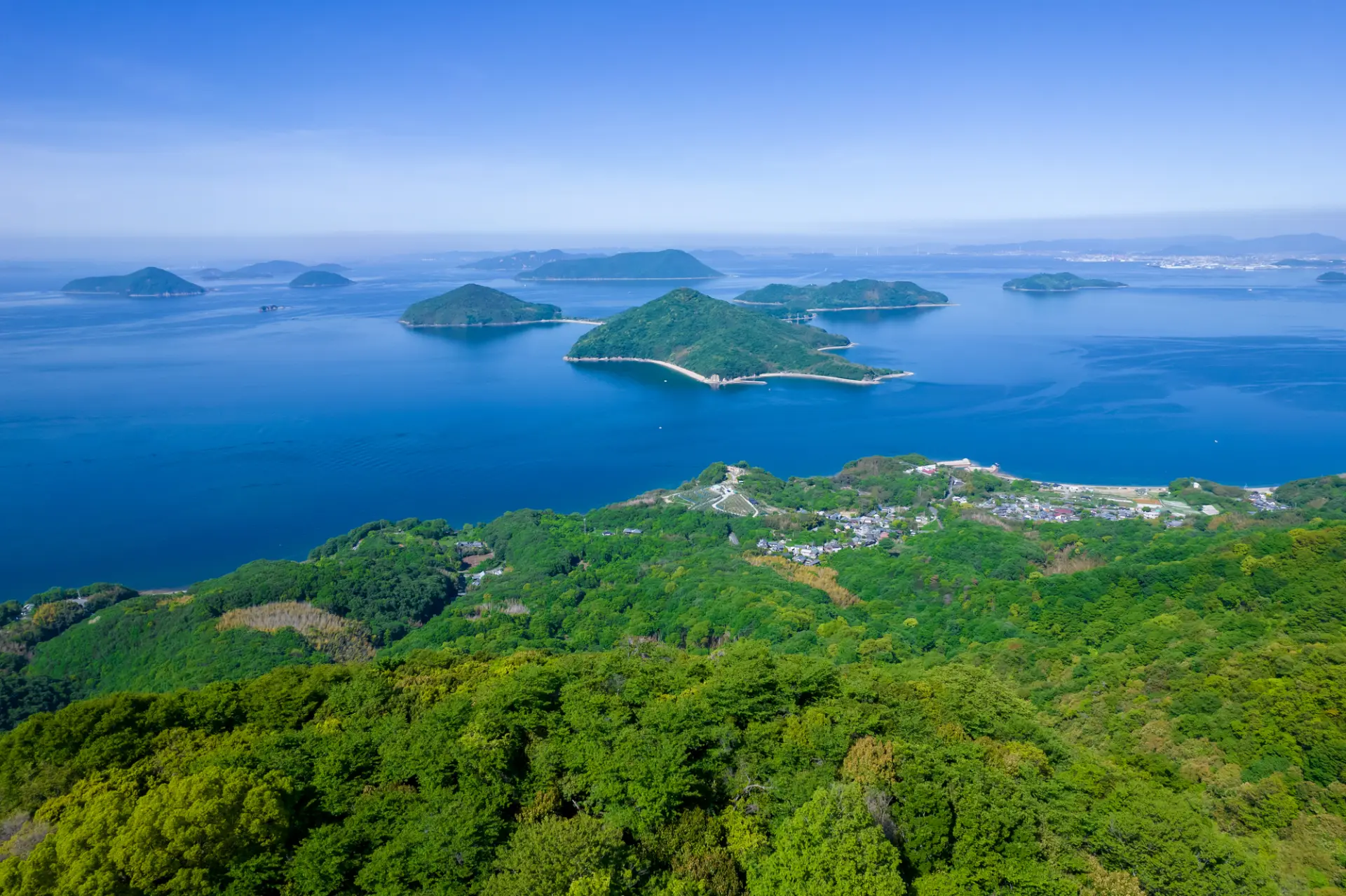
Remote islands floating in the Seto Inland Sea, such as Shodoshima and Naoshima, are also part of Kagawa’s appeal.
If you’re sightseeing in this charm-packed prefecture, here are the attractions, places to stay, and local food you won’t want to miss.
What is Kagawa Like?
Kagawa Prefecture is located in the northeastern part of Shikoku.
It sits between the Sanuki Mountains to the south and the Seto Inland Sea to the north, with many islands scattered nearby.
Another hallmark is its mild Setouchi climate.
Along with its rich natural setting, Kagawa is also famous as one of Shikoku’s top power spots.
The deeply historic Kotohira-gu Shrine, known for its strong blessings, and the “Henro” pilgrimage that visits the 88 sacred sites of Shikoku are essential when introducing Shikoku.
“Henro” refers to a journey that follows the sacred sites established and the training paths walked by Kobo Daishi (Kukai) Approx. 1,200 years ago.
It’s said that by joining the pilgrimage, you can cleanse the worldly desires hidden in your heart and attain enlightenment.
Many people join not only from Japan but also from overseas.
The final destination of that pilgrimage is in Kagawa.
Kagawa is also nicknamed “Udon Prefecture,” with both udon production and consumption thriving, so you can enjoy authentic Sanuki udon.
Seafood from the Seto Inland Sea is also delicious, and being able to savor Kagawa’s local specialties is another big draw.

When is the best season to visit Kagawa?
The best season for sightseeing in Kagawa is fall.
There are many spots where you can see beautiful autumn leaves, and enjoy scenic views unique to the season.
Don’t miss the stunning fall foliage garden view from the “Nanko Sightseeing Boat,” which leisurely cruises the ponds in Ritsurin Garden.
If you’re making the trip to Kagawa, why not adjust your travel dates and visit in fall?
What to wear in Kagawa by season
- Spring (March - May): A light jacket and a thin sweater
- Summer (June - August): Light clothing, short sleeves
- Fall (September - November): A light jacket, coat
- Winter (December - February): A coat, a thick sweater or jacket
How do you get to Kagawa?
Kagawa has Takamatsu Airport, so flying lets you get from Tokyo’s Haneda Airport to Takamatsu Airport in a short time—Approx. 1 hour.
From Osaka and Nagoya, it takes 2 to 2.5 hours by shinkansen.
Takamatsu Airport also has international flights, making it easy to access from overseas.
Main ways to get around in Kagawa
Many lines run through Kagawa, including JR lines and the Takamatsu-Kotohira Electric Railroad, and if you combine them with loop buses, you can travel comfortably to tourist spots without stress.
We also recommend rental bicycles, perfect for slowly enjoying Kagawa’s peaceful countryside and the Seto Inland Sea’s beautiful island-dotted scenery.
So Many Highlights in a Small Area! 9 Classic Kagawa Attractions
If you’re sightseeing in Kagawa, you’ll want to explore the calm views of the Seto Inland Sea, historic buildings and gardens, and power spots.
There are many Kagawa-only experiences, including Ritsurin Garden, featured with a three-star rating in the Michelin Green Guide Japan, and Kotohira-gu Shrine, home to Important Cultural Properties.
Among Kagawa’s many sights, here are the classic spots you should absolutely visit.
1. Ritsurin Garden
Ritsurin Garden was completed nearly 300 years ago, with successive lords of the Matsudaira clan renovating it over generations as a villa of the Takamatsu Domain.
The flat garden area is a very large 16 hectares, but the total area including Mt. Shiun, which forms the backdrop, reaches an impressive Approx. 75 hectares.
Among cultural heritage gardens designated as Special Places of Scenic Beauty, it is the largest in Japan.

2. Kotohira-gu Shrine
The head shrine of Kotohira Shrines, built on Mt. Zozu. Approx. 4 million worshippers visit each year.
The main enshrined deity, Omononushi-no-Kami, has been known since before the Middle Ages as a guardian god of maritime transport, and is a deity said to bring abundant harvests and prosperity in industry and culture.

3. Marugame Castle
A symbolic presence in Marugame with 400 years of history.
This hilltop castle was built over five years by the warlord Ikoma Chikamasa together with his son Kazumasa.
The stone walls stacked from the inner moat up to the main keep are among Japan’s tallest at Approx. 60 m, and their distinctive curves have earned them the nickname “fan-shaped slope.”
The keep is also one of only 12 surviving original wooden keeps in Japan, and is designated an Important Cultural Property.

4. Takamatsu Castle Ruins (Tamamo Park)
Takamatsu Castle was the residence of successive feudal lords: four generations of the Ikoma clan and 11 generations of the Matsudaira clan.
Its nickname is Tamamo Castle.
Built facing the Seto Inland Sea, it is a sea castle and is counted as one of Japan’s three great water castles.
Today it is open to the public as “Tamamo Park.”
The main keep, once the largest in Shikoku, was dismantled in 1884 due to deterioration, but buildings such as the Tsukimi Yagura, Mizute Gomon Gate, Watari Yagura, and Ushitora Yagura remain, are designated Important Cultural Properties, and can be visited.

5. Yashima
Yashima is located in the northeastern part of Takamatsu City. It is designated as part of Setonaikai National Park, as well as a National Historic Site and Natural Monument.
Covered by a horizontal hard rock layer called a “mesa,” it is a table-shaped highland with steep cliffs along parts of its perimeter, and looks like a large roof.
It is also famous as a stage of the Genpei War (1180–1185).

6. Great Seto Bridge
The Great Seto Bridge connects Okayama Prefecture on Honshu and Kagawa Prefecture on Shikoku.
The name “Great Seto Bridge” refers collectively to six bridges spanning 9.4 km across the strait section.
A series of different bridge types—suspension, cable-stayed, and truss—form this road-rail combined bridge, one of the largest in the world.

7. Yoshima Parking Area
Yoshima Parking Area sits almost in the middle of the strait section of the Seto-Chuo Expressway. It’s a perfect viewpoint where you can see the Great Seto Bridge up close.
Yoshima Plaza has a food court, souvenir shops, and “Kakehashi Yume Udon,” where you can eat the local specialty, Sanuki udon.
For your udon, we recommend adding a topping of tempura from the wide selection.

8. Angel Road
Angel Road (Tenshi no Sanpomichi) in the southwest of Shodoshima appears from the sea twice a day at low tide, forming a sandy path that connects four islands. Along with the rumor that couples who walk it hand-in-hand will be happy in the future, it’s also often used as a filming location for movies and TV dramas, making it a popular, lively spot with visitors.

9. Twenty-Four Eyes Movie Village
A theme park for Japanese film and literature that uses an open set built for the movie Twenty-Four Eyes, which depicts the bond between a female teacher and 12 children. On a coastal site of Approx. 10,000 m² overlooking the Seto Inland Sea, a small village from the Taisho era and early Showa era has been recreated. The scenery—lined with buildings that brought famous scenes to life, including a wooden schoolhouse, the male teacher’s home, a fisherman’s house, a teahouse, and souvenir shops—offers a richly nostalgic Taisho/early-Showa atmosphere.

The Setouchi Triennale: Make Your Kagawa Trip Even More Special
The Setouchi Triennale is a festival of contemporary art held across 17 areas on the islands floating in the Seto Inland Sea—Japan’s largest inland sea—and along its coastlines.
Across the full festival period, 255 artworks are exhibited, with seven projects and 25 events held.
The venues are largely non-touristy islands centered around Kagawa’s remote islands, and you can travel from island to island by ferry or high-speed boat, enjoying an experience like a sea journey.
As you walk the islands, enjoy the artworks and interactions with local residents, and through those experiences you’ll likely feel the memories of the land and the lives of the people who live there.
Through the Setouchi Triennale, art should shift from something you simply “view” to something that “deepens your trip.”
To enjoy Kagawa’s charm even more, we hope you’ll include the Setouchi Triennale in your travel plan.
3 Popular Places to Eat in Kagawa, the Birthplace of Sanuki Udon
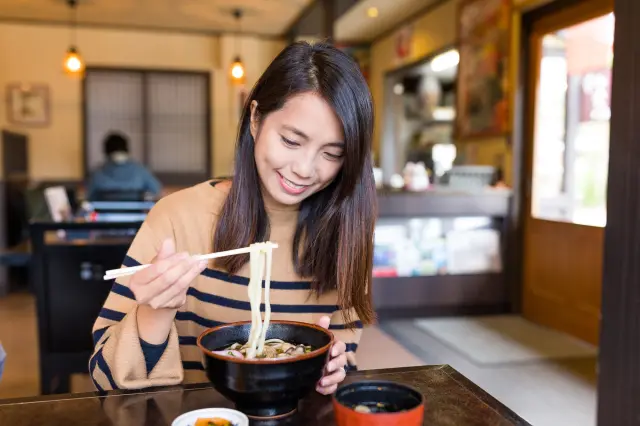
When you think of Kagawa, Sanuki udon is a must.
There are also many other Kagawa specialties, so we want you to fully enjoy meals between sightseeing stops.
Here are popular restaurants you should visit.
1. Udon Honjin Yamada-ya Sanuki Honten
Located a 20-minute walk from Yashima Station on the Kotoden Shido Line, Udon Honjin Yamada-ya Sanuki Honten is a place where you can enjoy authentic Sanuki udon—so well-regarded it’s been selected as a top restaurant on major gourmet websites.
It also offers a wide variety of dishes, including the local Sanuki specialty “Shippoku udon,” “Sanuki udon suki” (udon served in a hot pot), and “udon kaiseki,” where you can enjoy udon and various Japanese dishes at once.

2. Tedachi Judan Udon Baka Ichidai
Udon Baka Ichidai is a famous udon specialty shop with lines, a 7-minute walk from Kotoden Kawaramachi Station.
It has been featured in media such as TV and magazines, and many celebrities also visit.
The popular dish is Kama Butter Udon.
Egg and butter coat the noodles, topped with black pepper, for a taste reminiscent of carbonara.
There are plenty of other options too, including classic meat udon and bukkake udon.

3. Benesse House Museum Café
A café on the second floor of Benesse House Museum, where a museum and hotel are combined into one.
In the airy space filled with natural light from large openings to the south and west, you can casually enjoy light meals and drinks while looking out over the Seto Inland Sea below.

Add Shopping Between Sightseeing Stops! 4 Classic Shopping Spots in Kagawa
Kagawa has many shopping spots and shopping areas.
Some include the only retro general store on an island, and shopping spots where you can take breaks and enjoy shopping to your heart’s content—so be sure to stop by between sightseeing visits.
1. Takeuchi Shoten
The only store on the island, Takeuchi Shoten is like the island’s convenience store, carrying everything from food to daily necessities.
Look for the red signs that say “Ice Cream” and “Beer,” and you’ll find the small interior packed with all kinds of items.

2. Youme Town Takamatsu
A popular commercial complex that attracts many visitors from across Kagawa and outside the prefecture.
It houses Approx. 160 shops, including popular apparel stores, variety shops, interior stores, and electronics retailers.
There are free rest areas scattered throughout, so it’s nice to be able to take a break as soon as you get tired.

3. AEON Mall Takamatsu
AEON Mall Takamatsu is a commercial complex centered around the AEON Takamatsu store, made up of a variety of specialty shops for fashion, goods, dining, and services.
Dining options are plentiful too: the first-floor restaurant area and the third-floor food court offer a wide range of choices for both adults and kids, and it’s also recommended even just for a break.

4. Roadside Station Shodoshima Olive Park
A popular park with Mediterranean-like scenery and excellent facilities. It features many photo spots you’ll want to capture, including a white windmill on a hill overlooking the Seto Inland Sea and an English garden filled with Approx. 120 varieties of herbs and roses.

Unwind After a Day Out! 3 Places to Stay in Kagawa
Kagawa, popular for its nature-rich sightseeing spots and local food, has many different accommodations.
Here are recommended places to stay where you can soothe travel fatigue with beautiful natural scenery and natural hot springs.
1. Kotohira Grand Hotel Sakura no Sho
Located near the approach to Kotohira-gu Shrine, making it convenient for sightseeing.
First, check out the hot springs that help ease the fatigue from visiting Kotohira-gu.
In the open-air bath overlooking Konpira-san, relax while enjoying the seasonal scenery.

2. Shimayado Mari
An inn in Hishio no Sato, where soy sauce breweries line the streets and striking scenery unfolds.
With a dining space in a traditional house registered as a Tangible Cultural Property and guest rooms renovated from storehouses, the modern yet somehow nostalgic, calming atmosphere is deeply memorable.
There are just eight guest rooms, and every room comes with a free-flowing hot spring bath.

3. Le Port Awashima
An accommodation facility nestled within the grounds of Awashima Seaside Memorial Park in Setonaikai National Park.
A soothing inn where you can spend relaxed “island time,” and an ideal base for exploring Awashima.
Rooms include both Western-style and Japanese-style options, and since 2020 an art room featuring works by artists has also launched.
Also noteworthy is the initiative where 500 yen from the lodging fee is given as support money to young artists.

Wrap-up
We’ve introduced sightseeing spots where you can enjoy Kagawa’s rich nature and history, local specialties like Sanuki udon, and accommodations where you can relax with hot springs.
Nature-rich islands such as Shodoshima and Naoshima are within 1 hour by ferry from Takamatsu Port, so we hope you’ll add them to your travel plan.
Kagawa’s neighbor, Tokushima Prefecture, is also packed with highlights, including the Naruto whirlpools—one of the world’s three major tidal currents—and the traditional performing art Awa Odori, which originated in Tokushima.
If you take the JR Kotoku Line Limited Express “Uzushio,” you can get there in 1 hour, so we hope you’ll stop by Tokushima as well.