
![[Ueno Park Travel Guide] A Place to Feel Refreshed by Nature and Culture](https://static.gltjp.com/glt/data/article/21000/20394/20230831_132724_369e8fa8_w1920.webp)
[Ueno Park Travel Guide] A Place to Feel Refreshed by Nature and Culture
Ueno Park is a popular sightseeing spot that’s easy to access, with many cultural facilities, as well as Shinto shrines and Buddhist temples, scattered throughout.
It’s actually Japan’s first official park, and also a park with a long history that has been loved by Japanese people for over 140 years.
With so many highlights across its vast grounds, you likely won’t be able to see everything in just one day.
But don’t worry.
By reading this article, you’ll learn about Ueno Park’s charms and must-see spots, so you’ll know how to enjoy Ueno Park.
What is Ueno Park Like?
Ueno Park is located in Taito City, Tokyo, and is just a 2-minute walk from Ueno Station, making it incredibly easy to reach.
Its official name is Ueno Onshi Park, and it’s also known as “Ueno no Mori” (Ueno Forest) and “Ueno no Yama” (Ueno Hill), a nature-filled oasis in the city.
Across its vast grounds, you’ll find many cultural facilities such as museums, art museums, and a zoo.
Ueno Zoo, inside the park, is one of only three zoos in Japan that keep pandas.
From the Saigo Takamori Statue, a popular meeting spot, to the scenic Shinobazu Pond, Kiyomizu Kannon-do Temple, and the Ueno Daibutsu, there’s no shortage of things to see.
Take a walk through the lush greenery and visit the zoo, museums, and other attractions to enjoy a relaxed day.


The History of Ueno Park
Originally, it was the grounds of Toeizan Kaneiji Temple, and it was already bustling as a famous cherry blossom viewing spot during the Edo period.
Although it wasn’t developed as a park at the time, the Edo shogunate and Buddhist monks, hoping to make it a place that ordinary people could enjoy, built various facilities, and it became a popular sightseeing spot.
In 1868, the Boshin War broke out between the “former shogunate forces” led by the 15th shogun, Tokugawa Yoshinobu, and the “new government forces” centered around the Satsuma and Choshu domains.
The grounds of Toeizan Kaneiji Temple became a battlefield in the Boshin War, and many buildings were lost to fire.
The new government confiscated the entire temple grounds, and in 1872 it was decided that a military hospital would be built on the site.
However, Dr. Bauduin, a Dutch military doctor, saw the nature-rich Ueno hill and urged the Japanese government to develop it as a park.
As a result, the decision was overturned, the area was developed as a park, and in 1876 it was registered as Japan’s first official park.
During the Meiji period (1868–1912), various cultural facilities gathered within the grounds, shaping the park into something close to what Ueno Park is today.
Although it suffered damage from earthquakes and war, it was rebuilt each time, and Ueno Park has continued to be a center of Japanese culture.

Access to Ueno Park
Here’s how to get to Ueno Park from JR Ueno Station, a major terminal served by many lines, including the Shinkansen.
It’s only a 2-minute walk from JR Ueno Station to the park.
Exit through the Park Exit ticket gates at JR Ueno Station, and Ueno Park will be right in front of you, so you shouldn’t get lost.
Ueno Park Hours and Admission
Ueno Park itself has no admission fee, and it’s open from 5am to 11pm.
Admission and hours vary by facility within the park, so if there’s a specific place you want to visit, be sure to check in advance.
The Charms of Ueno Park Change by Season
At Ueno Park, you can enjoy beautiful natural scenery in every season.
Since you’re making the trip to Ueno Park, be sure to enjoy the unique charms you can only experience at that time of year.
[Spring] Feel Japan’s Spring at a Cherry Blossom Spot Loved Since the Edo Period
Ueno Park is also famous as a cherry blossom spot, and in spring, around 800 cherry trees burst into bloom.
From early March to mid-April, when the blossoms are at their best, the park is lively with people spreading blue tarps under the trees and enjoying hanami with food and drinks they’ve brought along.
It has been a cherry blossom spot since the Edo period, and it’s said that the custom of holding parties where you can see the blossoms also began at Ueno Park in the Edo period.
In addition to Somei Yoshino and weeping cherry trees, early-blooming Kan-zakura also bloom in the park, so you can enjoy hanami for a long time.
The cherry-lined paths around Shinobazu Pond and the weeping cherry tree near Kiyomizu Kannon-do Temple are must-sees.
Be sure to also enjoy the Ueno Sakura Matsuri, where various events are held and food stalls line the streets.
Stroll under illuminated cherry blossoms after sunset, with glowing paper lanterns, and you’ll truly feel Japan’s spring.


[Summer] Beautiful Views at Shinobazu Pond Brightened by Summer Flowers
The charm of Ueno Park in summer is the beautiful scenery, with hydrangeas in June and lotus flowers in full bloom in July.
The waterside view of lotus flowers blooming at Shinobazu Pond, which peaks in late July, is loved as a summer tradition.
If you’re going to see the lotus flowers, the morning is recommended, when the blooms are open.
They start opening early in the morning and close by early afternoon, so keep that in mind.


[Autumn] A Fall Foliage Spot with a Wide Variety of Views
Across the vast grounds of Ueno Park, you’ll find many spots to enjoy beautiful fall colors.
From late November to early December, when foliage is at its best, cherry trees, maples, and ginkgo trees turn vibrant colors, and you can enjoy a wide variety of scenery, such as temples and shrines paired with autumn leaves and the ginkgo-lined path leading to the Tokyo National Museum.
The dignified Saigo Takamori Statue with golden ginkgo trees behind it is a popular photo spot.
Take a walk through Ueno Park in autumn and soak up the atmosphere of Japan.


[Winter] Enjoy Wild Birds and Peonies with the Whole Family
Ueno Park in winter is also full of attractive spots.
At Ueno Toshogu Shrine, which enshrines Tokugawa Ieyasu, a shogun of the Edo shogunate, impressive peonies bloom, with 160 plants across 40 varieties.
An event called “Ueno Toshogu Fuyu Botan” is held from the New Year through late February, where you can take your time viewing peonies, known as auspicious winter-blooming flowers.
At Shinobazu Pond, many wild birds such as ducks, seagulls, and great egrets fly in.
Many of them are used to people and can be observed up close, making it recommended for a child’s first birdwatching experience.


Enjoy Japan’s Rich Nature and Culture! 7 Must-See Highlights in Ueno Park
Ueno Park is a place where you can enjoy art, history, and culture alongside rich nature.
With cultural facilities like museums, art museums, and a zoo, as well as shrines and temples, there’s no shortage of things to see.
Among the many highlights, here are some can’t-miss spots.
1. Ueno Toshogu Shrine
A Shinto shrine that enshrines Tokugawa Ieyasu, the first shogun of the Edo shogunate (1603-1867).
It is designated as an Important Cultural Property of Japan, and its biggest highlight is the golden, shimmering shrine building. Also called the Golden Shrine, its exterior walls are decorated with lavish carvings.
There are also multiple other nationally designated Important Cultural Properties, including the Karamon Gate and 48 bronze lanterns.
In addition, “Eiyo Gongen-sha” is worshiped as a deity of success in exams, job hunting, and victory.

2. Ueno Zoo
A zoo that first opened in 1882 as Japan’s first zoo. Though located in central Tokyo, it’s an urban zoo that preserves nature and is home to around 300 species and 3,000 animals. The spacious, greenery-filled grounds are divided into the East Garden and West Garden, with animals ranging from famous favorites to rare species kept in environments close to their natural habitats.

3. The National Museum of Western Art
An art museum in the greenery of Ueno Park that, as its name suggests, specializes in Western art.
Its foundation is the Matsukata Collection, which was donated and returned from the French government.
It features a French art collection centered on paintings by Impressionists such as Renoir, Van Gogh, and Monet, as well as works by Picasso, plus sculptures by Rodin. In addition, the permanent exhibition displays works from the Middle Ages to the 20th century, along with donated and deposited works.

4. National Museum of Nature and Science
Located in Ueno Park, this is Japan’s only national comprehensive science museum dedicated to natural history and the history of science and technology.
The “Japan Gallery” is known for its neo-Renaissance Western-style architecture, completed in 1931, and is also designated as an Important Cultural Property of Japan. Inside, exhibits cover the nature and formation of the Japanese archipelago, the development of the Japanese people, and the history of their relationship with nature. On the basement level, you’ll find a museum shop and Theater 36◯.

5. Tokyo National Museum
Tokyo National Museum is Japan’s oldest museum, founded in 1872. It consists of six exhibition buildings: the Honkan (Japanese Gallery), Toyokan (Asian Gallery), Horyuji Treasures Gallery, Heiseikan, Hyokeikan, and Kuroda Memorial Hall. It houses Japanese and Asian art and archaeological artifacts. The collection totals around 120,000 items, including 89 National Treasures and 646 Important Cultural Properties.

6. Tokyo Metropolitan Art Museum
A museum that has served as a temple of art since opening in 1926, known for its brick-colored tiled building nestled in Ueno’s forest.
It hosts many exhibitions, including special exhibitions of masterpieces from Japan and abroad, self-organized exhibitions, and open-call exhibitions. It also focuses on the “Art Communication Project,” which develops activities that foster connections through art, and runs various programs such as special viewing sessions for children and people with disabilities.

7. Shinobazu Pond
A natural pond about 2 km in circumference, stretching across the southern end of Ueno Park.
The pond is made up of three areas: “Boat Pond,” which offers rental boats (paid) such as rowboats and swan boats, “Lotus Pond,” where lotus flowers are at their best from early July to late August, and “Cormorant Pond” inside Ueno Zoo. On Nakanoshima Island, where the three ponds meet, you’ll find Shinobazu Bentendo, with an octagonal hall designed so it can be worshiped from anywhere around the pond.

Two Great Places to Eat in Ueno Park When You Need a Break
Ueno Park has not only cafes where you can take a break, but also restaurants where you can enjoy a proper meal.
If you get tired from walking around, relax at one of the gourmet spots introduced below.
1. Starbucks Coffee Ueno Onshi Park
Located in a corner of the Fountain Plaza near the center of the park, it’s the perfect place to take a break while exploring.
The building is a single-story structure with a gabled roof, featuring a warm wood design that blends well with the park scenery. With large glass walls, you can take your time enjoying the park’s greenery even from inside. There are also plenty of terrace seats, a park-specific perk.

2. Kamonka Ueno Bamboo Garden
A restaurant with the concept of “a theater where you can savor the Chinese continent,” offering “continental cuisine” that transcends eras and borders. In a modern Chinese space that reimagines traditional Chinese architectural styles and motifs, you can enjoy a luxurious time.
The dishes are created by a top-class chef who has served cuisine to dignitaries in Chongqing, the heart of Sichuan cuisine, and a top-class dim sum chef who has led Japan’s dim sum boom, recreating traditional Chinese dishes in a modern style. Based on the concept of food as medicine, a diverse menu is prepared using carefully selected premium ingredients.

3 Tourist Spots to Visit Along with Ueno Park
Around Ueno Park, you’ll find many spots that showcase culture and history.
Not only that, you can also walk to other top Ueno attractions that rival Ueno Park for the No. 1 and No. 2 spots in popularity.
After strolling through Ueno Park, be sure to visit the three spots introduced below as well.
1. Kaneiji Temple
A Tendai Buddhist temple founded in 1625 and the head temple for the Kanto region.
It was established by the high-ranking monk Tenkai, who was deeply revered by three generations of shoguns—Tokugawa Ieyasu, Hidetada, and Iemitsu—in order to pray for the stability of the Tokugawa shogunate and the peace of ordinary people.
It served as the Tokugawa shogunate family’s prayer temple and family temple, and even today, six of the fifteen Tokugawa shoguns are buried here.
At the time, it boasted grounds larger than the entire present-day Ueno Park and developed into one of Edo’s greatest temples, but later, many buildings were lost to late-Edo warfare and other conflicts, and it was reduced to its current size.

2. Ameya Yokocho (Ameyoko Shopping Street)
A shopping street with around 400 shops lining a stretch of about 500 meters between JR Ueno Station and JR Okachimachi Station.
It gathers many types of shops selling food, sweets, clothing, general goods, jewelry, and more. Bargain sales are held year-round, and you can enjoy the lively atmosphere that feels like a condensed version of old downtown Tokyo.
There are also many food stalls and restaurants where you can enjoy tasty, affordable meals.

3. Former Iwasaki Residence Gardens
A Tokyo Metropolitan garden developed from a residence and garden built in 1896 (Meiji 29) as the main home of Hisaya Iwasaki, the third head of the Iwasaki family, which founded Mitsubishi. In its heyday, about 20 buildings stood on a site of around 15,000 tsubo, but today, three buildings—the Western-style house, the Japanese-style house, and the billiards room—along with the garden, are preserved.
The wooden two-story Western-style house with a basement was designed by the renowned British architect Josiah Conder. A representative example of modern Japanese residential architecture in Western wooden style, it features must-see Jacobean-style decorations throughout the interior.

3 Recommended Places to Stay Near Ueno Park
With its cluster of museums and seasonal nature, Ueno Park is one of Tokyo’s classic sightseeing areas.
Nearby, you’ll find accommodations to match your travel style, from hotels for a calm stay to places with a traditional downtown atmosphere.
From here, we’ll introduce recommended options with convenient locations for exploring Ueno Park, combining comfort and character.
1. Mitsui Garden Hotel Ueno
A 2-minute walk from Ueno Station. With smooth transfers to major lines and easy access to popular sightseeing areas like Asakusa and Akihabara, it’s a highly popular hotel as a sightseeing base.
Among its 242 guest rooms, the rooms themed around Ueno Zoo’s beloved “panda” are recommended.
With panda patterns on items like coffee cups, cushions, and shower curtains throughout the room, you can fully enjoy their charm—something unique to this hotel.

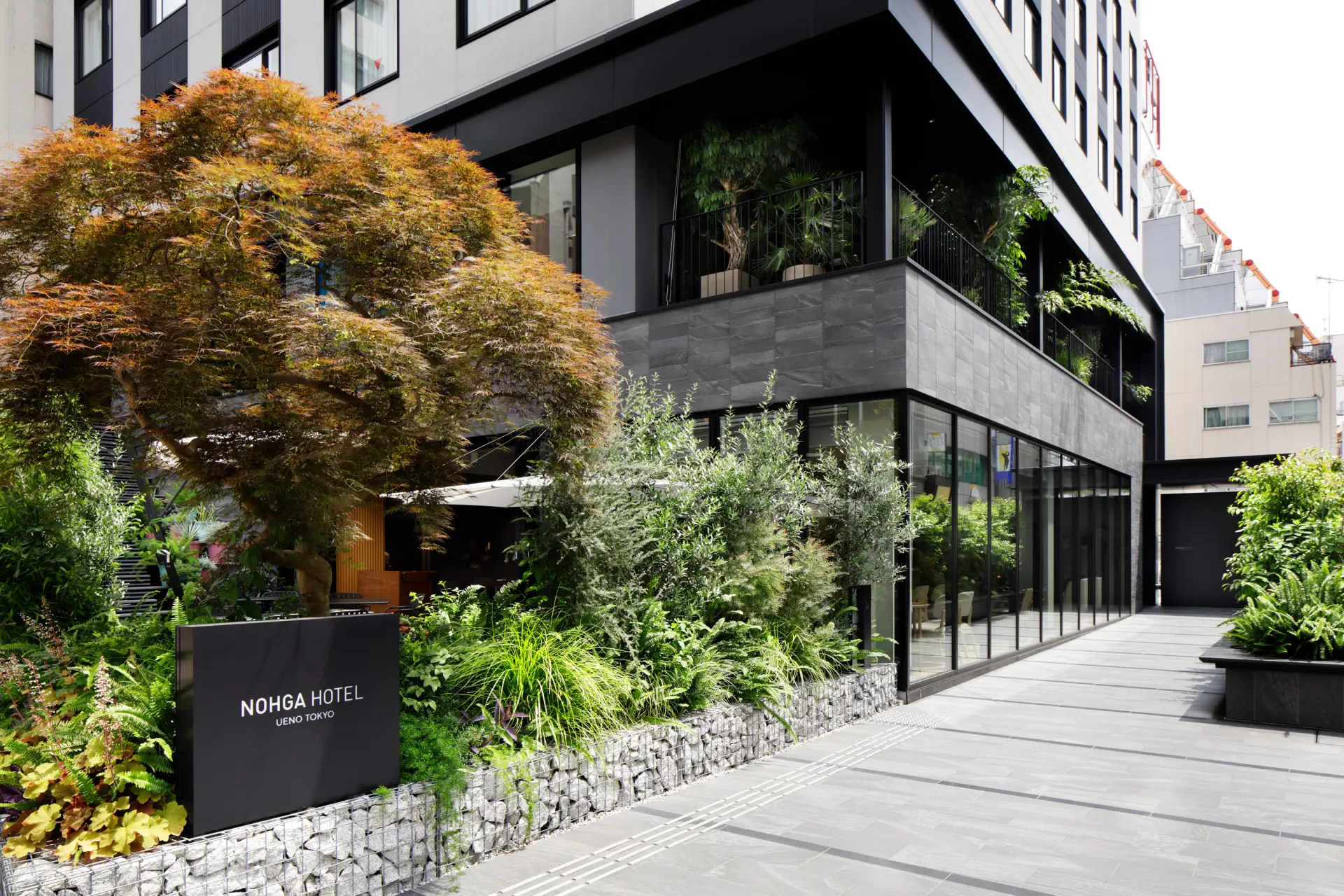
2. Nohga Hotel Ueno Tokyo
(NO HGA HOTEL UENO TOKYO)
Nohga Hotel Ueno Tokyo is a lifestyle hotel that values Ueno’s culture and connections with the local community.
About a 3-minute walk from JR and Tokyo Metro Ueno Station, it’s an ideal location for both sightseeing and business, and recommended as a base for experiencing Tokyo more deeply.
Guest rooms feature photos capturing the Ueno area, works by Japanese artists, and ukiyo-e prints. With separate bath and toilet and a shower-booth setup, it’s highly functional and helps create a comfortable stay.
3. Sato san’s Rest
A guesthouse popular for its homey, warm service, run by a former backpacker couple.
It’s located in the nostalgic downtown arcade shopping street “Joyful Minowa Shopping Street,” which is also part of its appeal, letting you experience the good old atmosphere of Japan.
It’s also fun to stroll through the shopping street while snacking on downtown foods like yakitori, tempura, and Japanese sweets.

Reviews
4.68
Some reviews are AI-translated.
-
It’s amazing that a city can still hold an environment this rich in nature. Even though Shinobazu Pond doesn’t have much greenery in winter, it has a different kind of beauty—nature’s own lively buzz.
-
In June 2025, my husband and I visited Ueno Onshi Park and really loved the natural vibe. It was a Monday when the museums were closed, so there weren’t many visitors.
That day we had blue skies and fluffy clouds, and the lotus flowers were just about to bloom. We also stopped by the Starbucks there to try some desserts and drinks. It was a relaxing, easygoing day. -
Cherry blossom viewing here in spring is absolutely gorgeous. It's definitely one of the most popular spots for sakura in Tokyo.
FAQ about Ueno Park
Q
When is the best time to see cherry blossoms at Ueno Park?
A
They are usually at their best from late March to mid-April.
Q
Are there any cafes inside Ueno Park?
A
Yes, there are cafes where you can relax and take a break.
Q
What are the Hours for Ueno Park?
A
From 5am to 11pm.
Summary
We’ve introduced the highlights of Ueno Park, where you can enjoy rich nature along with art, culture, and history, as well as its seasonal charms.
With this article, you should be able to enjoy Ueno Park to the fullest.
If you’d like to enjoy sightseeing in Ueno even more, please also check out this article.