

What Is Natto, a Food Deeply Rooted in Japanese Food Culture?
Known for its distinctive smell and sticky texture, natto is one of Japan’s most iconic superfoods and is deeply rooted in Japanese food culture.
In Japan, it is a breakfast staple and is often eaten with plain white rice.
This article introduces natto from a variety of angles, including its basics and history, as well as its different types and recommended ways to enjoy it.
By the end, your image of natto may change, and you may even want to give it a try yourself.
Natto, a Traditional Part of Japanese Daily Life
Natto is a fermented soybean food made using natto bacteria (Bacillus subtilis).
In the traditional method, soybeans are thoroughly steamed, cooled, wrapped in rice straw bundles, and then fermented for about one day in the right environment, allowing natural natto bacteria to grow and produce natto.
By the way, this is the traditional method, and today natto is often made using cultured natto bacteria.
It is broadly divided into two types: “itohiki natto” and “shiokara natto (tera natto),” and when people simply say natto, they usually mean “itohiki natto.”
It has long been eaten in Japan as a traditional everyday food, but because of its sticky texture and strong, distinctive smell, some Japanese people do not like it either.
In particular, there are relatively many people in western Japan who dislike natto.
In the past, natto was eaten as a source of nutrition in place of fish and vegetables, but in western Japan fish was easy to obtain, so the habit of eating natto did not take root there.
This historical background is said to be one reason why many people in western Japan still dislike natto today.
Expected Health Benefits of Eating Natto
Natto is known as a highly nutritious food with excellent health benefits.
Its main nutrients include high-quality protein, vitamin K2, B vitamins, calcium, and nattokinase, an enzyme unique to natto, making it a food that provides a wide range of nutrients at once.
These nutrients are expected to help maintain bone health, prevent blood clots, improve the intestinal environment, and support recovery from fatigue.
There are very few single foods that are so easy to eat, low in calories, and packed with this many nutrients.
It is recommended to eat natto raw rather than heated, as this allows you to take in its nutrients more efficiently.

Types of Stringy Natto
“Itohiki natto” is classified into several types depending on its shape, production method, and bean size.
Here, we will introduce three common types of “itohiki natto.”
Even within the same category, the characteristics vary, so use this as a guide when trying or buying natto.
1. Whole Soybean Natto
“Whole soybean natto” is the most common type of natto, made by steaming whole soybeans without removing their skins.
Its key feature is that the rich flavor and depth of the soybeans remain intact, and the more you chew, the more sweetness you can taste from the beans.
Because the skins remain, it has a firmer texture and gives a satisfying “you’re really eating beans” feel.
Depending on the size of the soybeans used, it is classified as “large soybeans (7.9 mm to 9.1 mm), medium soybeans (7.3 mm), small soybeans (5.5 mm), and extra-small soybeans (4.9 mm).”
The smell and flavor also vary depending on the soybean variety and the natto bacteria used, and with included sauces and other differences, there is a very wide range of products.
Japanese people tend to prefer small beans, and at home “small soybeans” and “extra-small soybeans” are commonly eaten.
The nutritional value does not differ that much between the types, so it is recommended to choose the size you like best.

2. Hikiwari Natto
“Hikiwari natto” is made by crushing soybeans, removing the skins, then adding natto bacteria and fermenting them.
Compared with whole soybean natto, the pieces are smaller and have a finer appearance.
Because the skins are removed and the natto bacteria can spread over a wider surface area, the umami is easier to notice than in whole soybean natto.
Its strong stickiness and smooth mouthfeel make it useful in a wide variety of dishes, including natto rolls and dressed side dishes.
Its distinctive natto smell is also somewhat milder, and because it is easy to digest and absorb, it is recommended for first-time natto eaters, children, and international visitors as well.

3. Goto Natto
“Goto natto” is natto made by adding salt and koji to hikiwari natto, then fermenting and aging it.
It is a local preserved food that has long been passed down mainly in the Okitama (Yonezawa) area of Yamagata Prefecture, and it is said that the name comes from the use of a large barrel holding five to (Approx. 90 liters) to prepare the natto.
Today, it is often sold under the product name “Yukiwari Natto.”
It looks more like miso than natto and has a strong salty taste and rich umami from fermentation, so it can be eaten without adding sauce or soy sauce.
It is also popular as a topping for rice and a snack to go with alcohol, and one of its appeals is its versatility.

The Many Theories Behind the Origin of Natto
There are various theories about the origin of natto, but its exact beginnings remain unclear.
However, the “Hachimantaro Yoshiie theory” is often cited as one of the leading explanations.
According to this theory, during the late Heian period (794 to 1185), the warrior Minamoto no Yoshiie was on campaign in the Tohoku region when boiled soybeans were wrapped in straw for storage and naturally fermented, becoming stringy.
This is thought to have led to the discovery that natto bacteria living in straw could naturally ferment soybeans.
When the soldiers actually tried eating it, they found it tasty and useful as food, and it is said that the practice eventually spread to farmers as well.
There is also a theory that fermented soybean foods had already existed in various parts of East Asia before that, and that a natto-like food existed as early as the Yayoi period, around the 10th century BC to the mid-3rd century AD.
In any case, both boiled beans and straw are involved, and something born by pure chance developed in a uniquely Japanese way and has continued to the present day.

The History of Natto, from Its Birth to Widespread Popularity
The word “natto” first appeared in written records in the mid-Heian period work “Shin Sarugakuki.”
The natto mentioned in this text is said to have been shiokara natto, which is not stringy, and it seems to have often been made in temples.
One leading theory says the name “natto” came from a “bean dish” made in the monks’ kitchen, called “nassho.” ※There are various theories.
On the other hand, stringy natto was first confirmed in the Muromachi period (1336 to 1573) in “Shojin Gyorui Monogatari.”
By the mid-Edo period (1603 to 1868), natto had become common enough to appear on the dining tables of ordinary people.
Gradually, the culture of eating natto for breakfast spread, and at that time merchants called “natto sellers” walked around selling it with lively calls.
In the modern era and beyond, production shifted from fermentation in straw to hygienic packaging and machine manufacturing, improving shelf life and distribution, and natto became a common food across Japan.

The Many Ways Japanese People Enjoy Natto
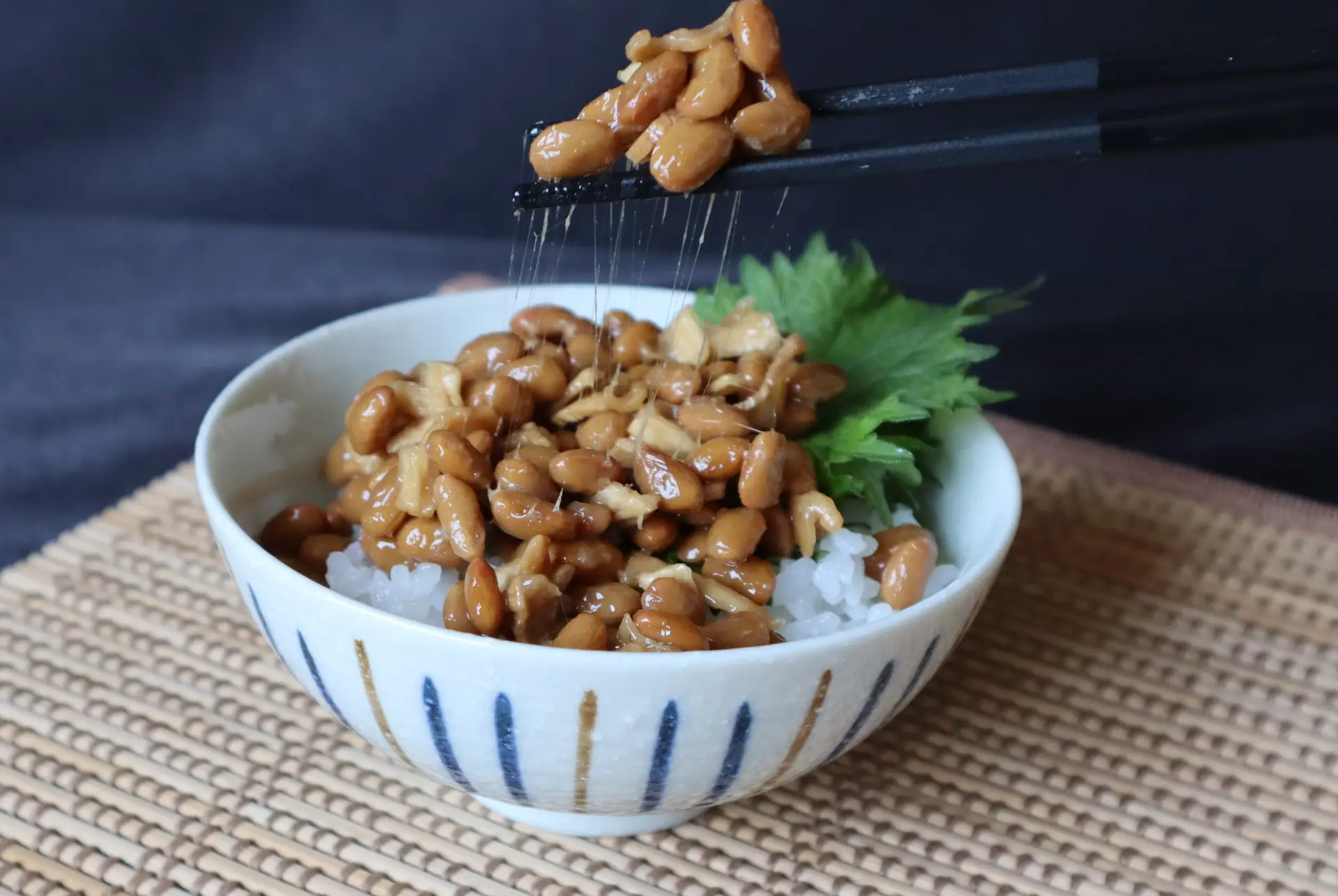
The most basic way to eat natto is “natto rice,” made by mixing natto with the included sauce and mustard, then placing it over rice.
By the way, it is said that mixing natto adds air to its sticky components, creating a fluffier texture.
The nutritional value does not change depending on how many times you mix it, and there is no single correct answer, so it is best to go with your own preference.
If you find the smell off-putting, adding seasonings such as soy sauce or wasabi can make it easier to eat.
There are also regional and personal differences, but “natto toast” on sliced bread and “natto soup” added to miso soup are also widely enjoyed.

Enjoy It with Extra Toppings
Many Japanese people enjoy natto not only with sauce or soy sauce, but also by adding other seasonings and ingredients.
With just a small twist, the flavor and texture expand dramatically, letting you enjoy a taste quite different from eating it plain.
The table below summarizes five specific examples of popular extra additions, from standard choices to unusual ones.
There are many other foods that pair well with natto too, and finding your favorite combination may make you like natto even more.
- Chopped Green Onion
- A classic extra topping. It adds a crisp texture and aroma, and may also help with recovery from fatigue.
- Egg (Raw Egg, Soft-Boiled Egg)
- It adds mildness and softens natto’s distinct flavor.
- Kimchi
- These two fermented foods are an excellent match, and the spicy kick goes great with rice. It is also perfect for helping improve the intestinal environment.
- Whitebait
- Adds umami and saltiness while boosting the nutritional value.
- Grated Daikon Radish
- It brings out natto’s flavor and makes it taste lighter and fresher. Adding shredded nori as well gives it a sea aroma accent and even more umami.

Enjoy Creative Dishes with Natto
Many Japanese people also enjoy creative dishes made with natto.
Although natto has a strong character, with a little creativity it can be used in a surprisingly wide variety of dishes, and it can also enhance umami and nutritional value.
The main examples are summarized below, so feel free to use them as inspiration.
- Natto Fried Rice
- A classic natto recipe in which the umami of natto blends perfectly with fragrant stir-fried rice.
- Natto Pasta
- A Japanese-style, healthy dish made by tossing boiled pasta with natto, soy sauce, butter, and green onion.
- Natto Omelet
- A highly nutritious breakfast-friendly dish in which fluffy eggs and the rich flavor of natto are a perfect match.
- Natto Gratin
- A dish that combines the rich taste of white sauce and cheese with natto’s umami, offering both surprise and deliciousness.
- Fried Tofu Natto Pizza
- A simple dish made by using crispy grilled fried tofu as the base and topping it with natto and cheese before baking, perfect as a snack or light bite.

Enjoy the Wide Variety of Natto-Flavored Snacks
There are also snacks made from natto and snacks flavored like natto.
For example, crunchy snacks made by drying natto itself are easy to eat while still keeping natto’s distinctive aroma and stickiness.
Crackers and rice crackers made with natto powder mixed into the dough are known for their light saltiness and rich flavor.
There are also unique sweet products combined with chocolate or caramel that have quietly gained popularity.
All of them are satisfying, and one of their appeals is that they offer an easy, healthy way to enjoy the nutrients of natto.
Since they can give you a sense of what eating natto is like, they are recommended as a good starting point for people who strongly dislike natto.

Combinations That Make Natto Easier to Eat
People who dislike natto or have never tried it often react negatively to its distinctive smell and sticky texture, so eating it on its own right away can feel like a high hurdle.
However, with a little creativity in the recipe, its visual impact softens and it becomes easier to accept.
The creative dishes mentioned above are one example, but here are three more.
Of course, tastes vary from person to person, but these are generally easier to eat than natto in its usual form.
If you want to overcome your dislike of natto, it is recommended to try one of them.
- Natto Curry
- Natto adds a mellow flavor and richness to spicy curry, creating a deeper taste. The pairing is surprisingly good and can become addictive.
- Natto and Garlic Chive Jeon
- You can enjoy a texture that is crispy on the outside and fluffy on the inside, without worrying much about natto’s stickiness. Adding cheese or kimchi also softens the smell.
- Stamina Natto Rice Bowl
- A dish made by stir-frying natto and ground chicken with long green onion and ginger, then topping it with a raw egg at the end. It has a good nutritional balance and is recommended even when you do not have much appetite.

Natto Is Easy to Find at Supermarkets and Convenience Stores
One of natto’s appeals is that it is easy to find and enjoy anywhere in Japan.
It is mainly sold at supermarkets and convenience stores in sets of three to five round or square packs.
Another nice point is the affordable price, at around 100 yen per pack.
Since it does not often appear on restaurant menus, when you visit Japan, try buying it at a supermarket or convenience store, or give it a try at a hotel breakfast buffet.

Is There a “Natto Town” in Japan?
Mito City in Ibaraki Prefecture, which boasts the highest natto production volume in Japan, is known as the “town of natto.”
Because the Mito Domain, now Mito City, encouraged natto production during the Edo period, the area developed a strong foundation for natto making and was also well suited to securing raw materials.
In the Meiji period (1868 to 1912), Seizaemon Sasanuma of Mito City founded “Tengu Natto” and established natto manufacturing techniques.
Then, with the opening of the Mito Railway, now the JR Mito Line, in 1889, small-bean natto sold in the station plaza as a souvenir and Mito specialty became popular and helped make it known nationwide.
Mito City is not only a production area for natto, but also home to many natto-themed events and facilities, promoting natto culture across the whole region, and it is cherished by local people as more than just a food.
“Mito Natto,” Made in the Town of Natto
“Mito natto” is one of the representative local specialties of Mito City in Ibaraki Prefecture.
Its major features are tradition, high quality, and rich flavor, inherited by long-established makers from the original “Tengu Natto” commercialized by the above-mentioned Seizaemon Sasanuma.
Because it uses high-quality domestically produced small soybeans, it mixes easily with rice and offers stronger stickiness and deeper umami than other natto.
Even today, handmade products that showcase artisan skills and natto wrapped in straw remain popular, and they are also well liked as travel souvenirs.
There are four natto businesses in the city, each producing “Mito natto” with different types and flavors.
Here are some especially recommended products.

If You Want to Try Mito Natto, “Mito Ganso Tengu Natto” Is Recommended
A Mito specialty made by a long-established company founded in 1910, with a history of more than 110 years.
The lineup includes “Wara Natto,” made by traditional methods and offering a pleasant bite, easy-to-use “Pack Natto,” “Soboro Natto” with dried daikon strips, and “Hoshi Natto” with concentrated umami.

Does Japan Have a Natto Day?
Japan not only has a “town of natto,” but also a “Natto Day.”
In 1981, the Kansai Natto Manufacturers Cooperative designated July 10 as Natto Day in order to boost natto consumption in the Kansai region, including Osaka and Kyoto, where consumption had not been growing.
At first, it was a commemorative day limited to the Kansai region, but in 1992 the National Federation of Natto Manufacturers Cooperatives officially established it again as Natto Day, and it became widely known throughout Japan.
In contrast to the Kansai region, Fukushima, which has one of the highest natto consumption levels in Japan, holds natto sales at supermarkets and other stores on Natto Day.

FAQ about Natto
Q
What is the origin of natto?
The origin of natto is not clear. There are various theories, but the “Hachimantaro Yoshiie theory” from the late Heian period is often cited as one of the leading explanations.
Q
What is the recommended daily amount of natto?
There is no clear standard, but one pack per day is a good guideline. Be careful not to eat too much natto, as overconsumption can be counterproductive.
Q
Why do people mix natto?
It is said that mixing incorporates air into the sticky components, making the texture fluffier and enhancing the umami. The nutritional value does not change based on how many times you mix it.
Summary
This article has introduced natto mainly through its origins, types, and recommended creative ways to enjoy it.
Natto is more than just an ingredient, and it continues to be a healthy food that supports the Japanese diet.
Another part of its appeal is the way its taste and how it is eaten vary by person and region, reflecting Japan’s unique food culture and diversity.
Many people are put off by its distinctive smell and stickiness, but that too is part of its character.
If you have never tried natto before, be sure to give it a try at least once.