
11 Scenic Fukushima Spots Shaped by Volcanoes: Waterscapes of Changing Colors and Flow
From the Goshikinuma Ponds and Lake Inawashiro to Tatsusawa Fudo Falls, Fukushima is home to a wide range of waterscapes shaped by volcanic activity.
Differences in lake colors, the flow of mountain streams, and water emerging as hot springs all reveal something about how the land was formed.
Explore each area and experience these differences for yourself.
Compare Lakes and Ponds of Different Colors Created by Volcanoes
In bodies of water influenced by volcanoes, color and clarity vary depending on the minerals they contain and the surrounding terrain.
As you walk between multiple lakes and ponds, you’ll notice that even the same water can show very different expressions. It is enjoyable to move along while comparing the differences from place to place.
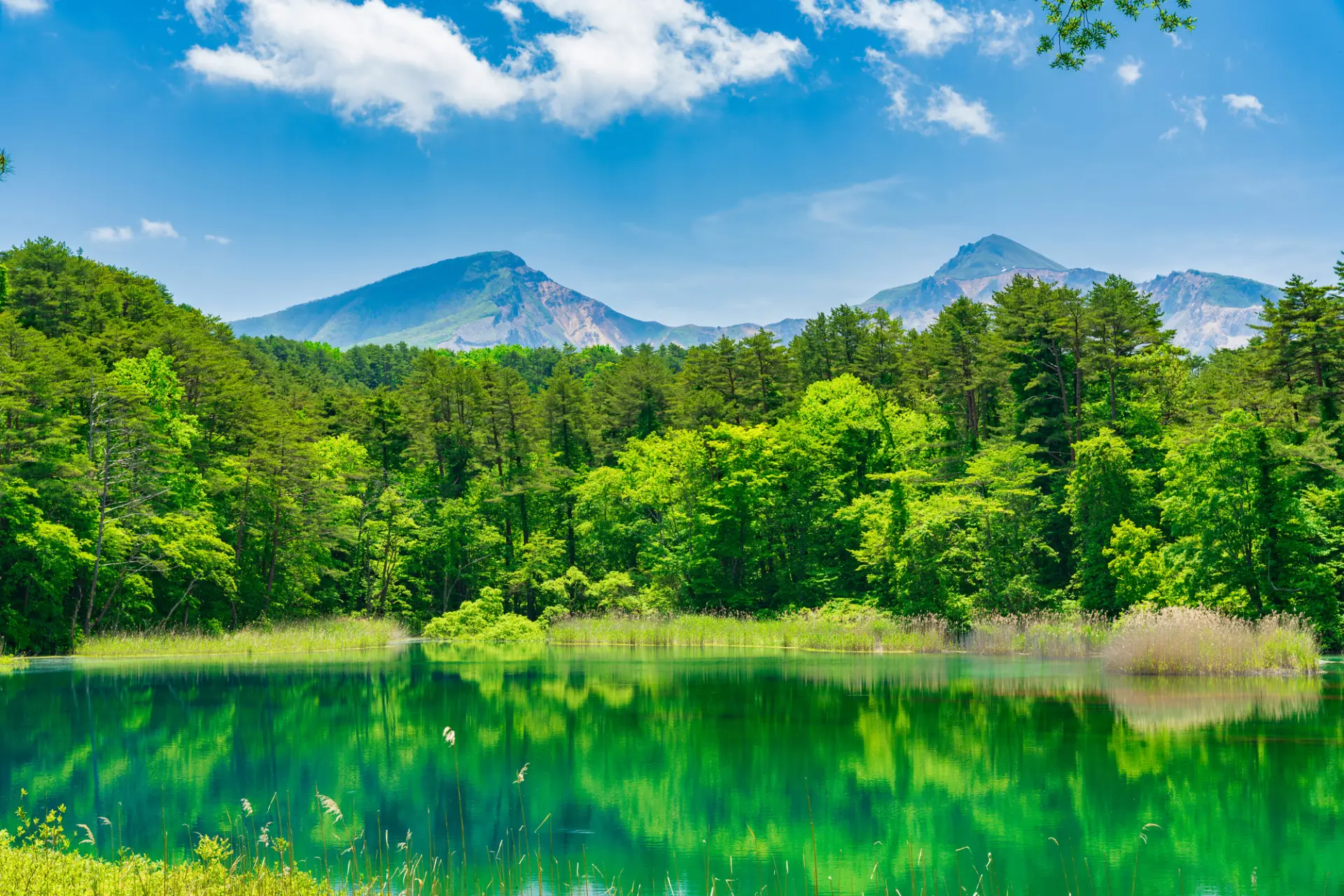
1. Goshikinuma Ponds (Kitashiobara Village)
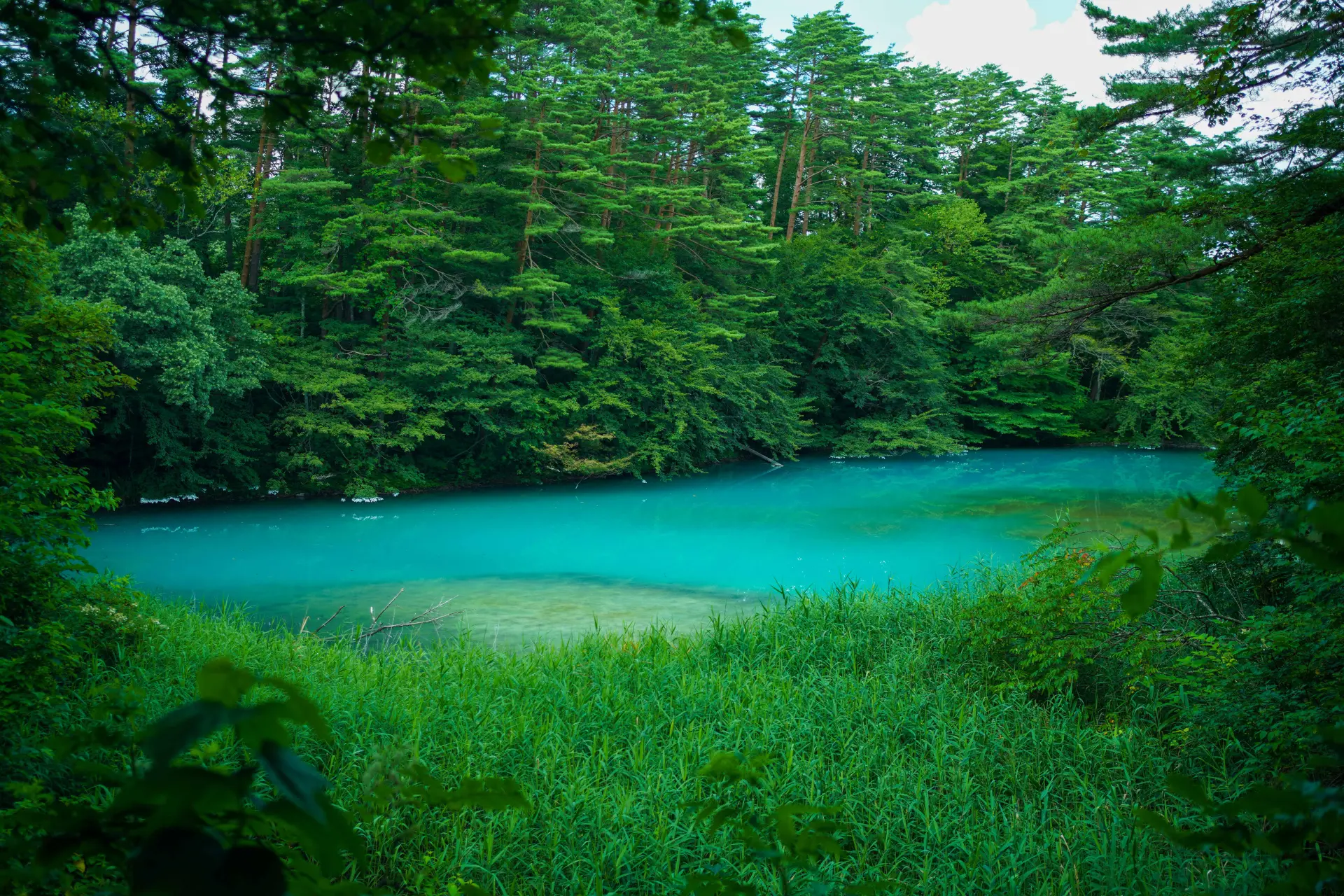
This group of ponds was formed by an eruption in the Meiji period, and includes bodies of water of various sizes such as Bishamon-numa and Ao-numa. Each pond has a different water color, with shades such as emerald green and cobalt blue appearing one after another.
A distinctive feature is that you can naturally compare the changing colors as you follow the route. The Goshikinuma Nature Trail is about 4 km (2.5 miles) long and takes about 1 hour and 20 minutes one way, making it a good place to view the ponds while taking a leisurely walk.
2. Lake Inawashiro (Inawashiro Town)
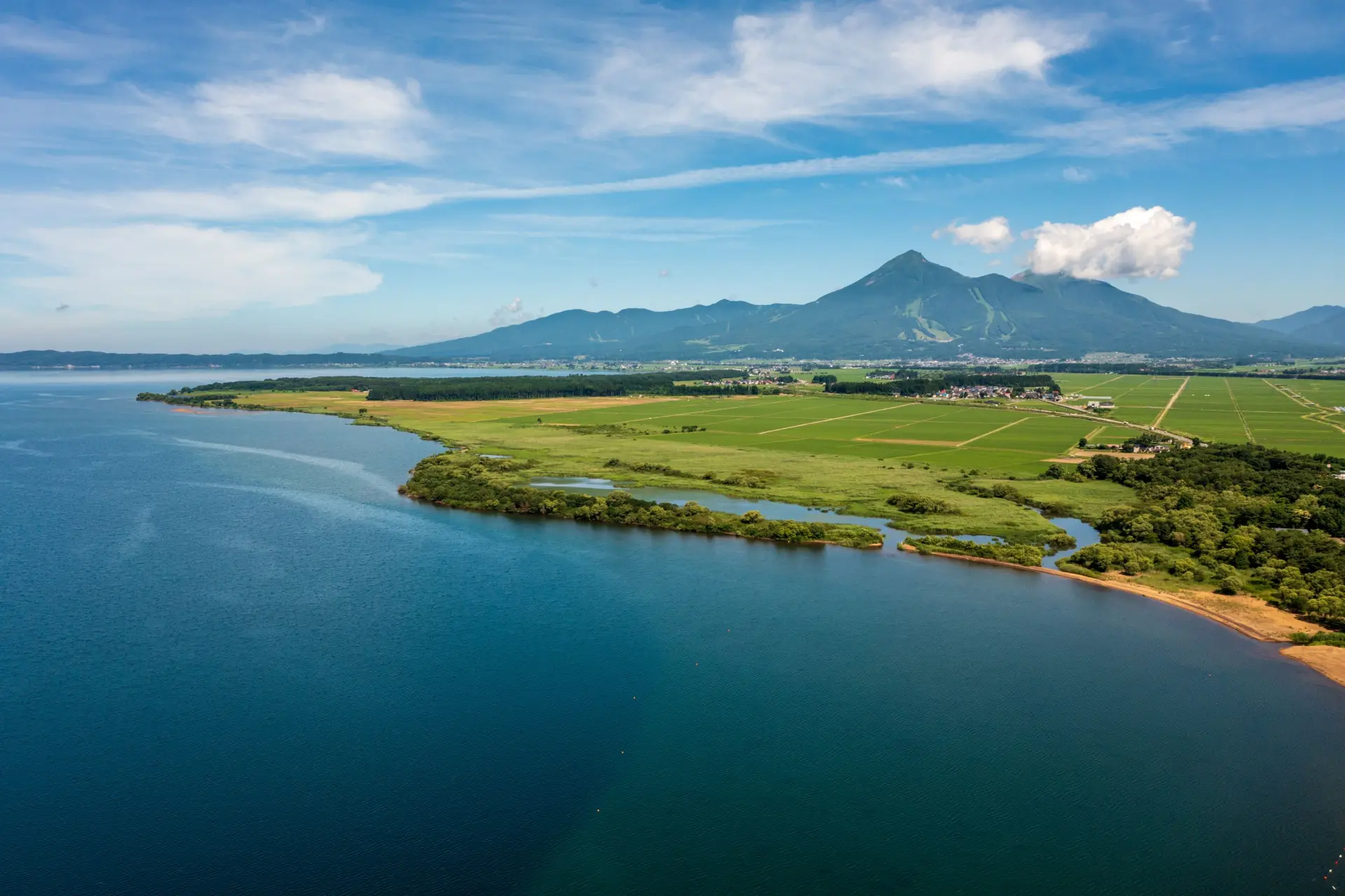
A large lake spreading out at the foot of Mt. Bandai, where the wide water surface and surrounding mountains come together in one landscape.
Located almost in the center of Fukushima Prefecture, it spans two cities and one town: Aizuwakamatsu City, Koriyama City, and Inawashiro Town. The lake covers about 103 sq km (39.8 sq miles), filling your field of view, and the color of the water and the look of the waves change depending on the location.
As you move along the lakeshore and view it from different angles, its vast scale becomes even clearer.
Walk Along Waterfalls and Gorges to Feel the Movement of Cascading Water
Water flowing down from the mountains shapes the land as it repeatedly falls, cuts through rock, and bends its course.
Walking along waterfalls and gorges, you can see these changes appear in sequence and follow the differences in the flow right before your eyes.
3. Tatsusawa Fudo Falls (Inawashiro Town)
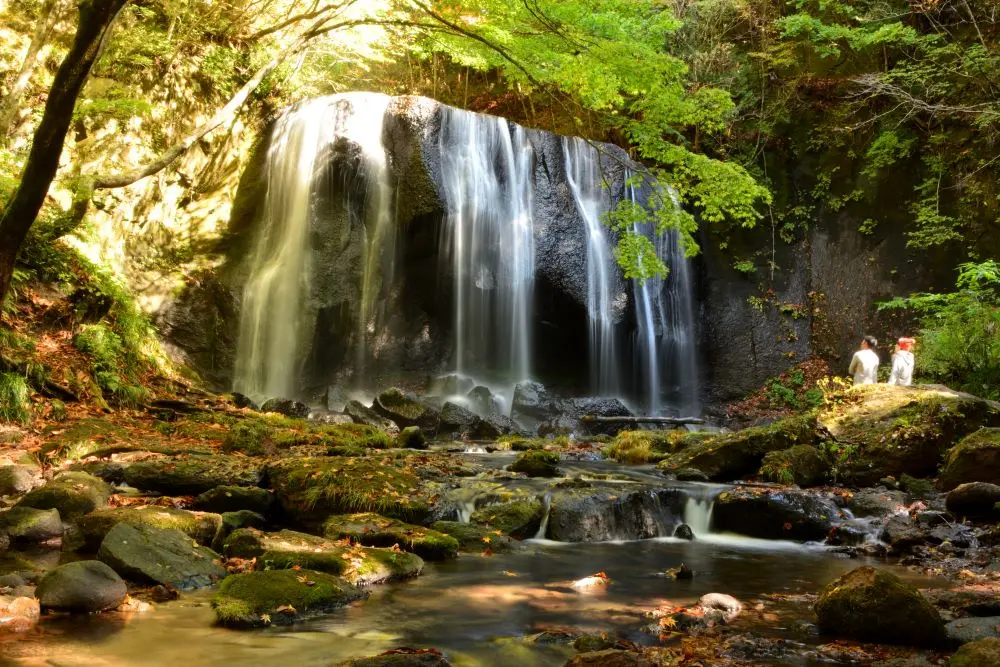
This waterfall appears in the forest, with white water spreading across the rock face.
Measuring about 10 m (33 ft) high and 16 m (52 ft) wide, the water flowing down the rock looks almost like a single curtain. There are two falls: the powerful Otaki, which sends up sprays of water, and the quieter Medaki flowing downstream, each with a different character.
You can view the entire waterfall from the observation area or go down close to the falls to see the water’s movement up close.
4. Nakatsugawa Gorge (Kitashiobara Village)
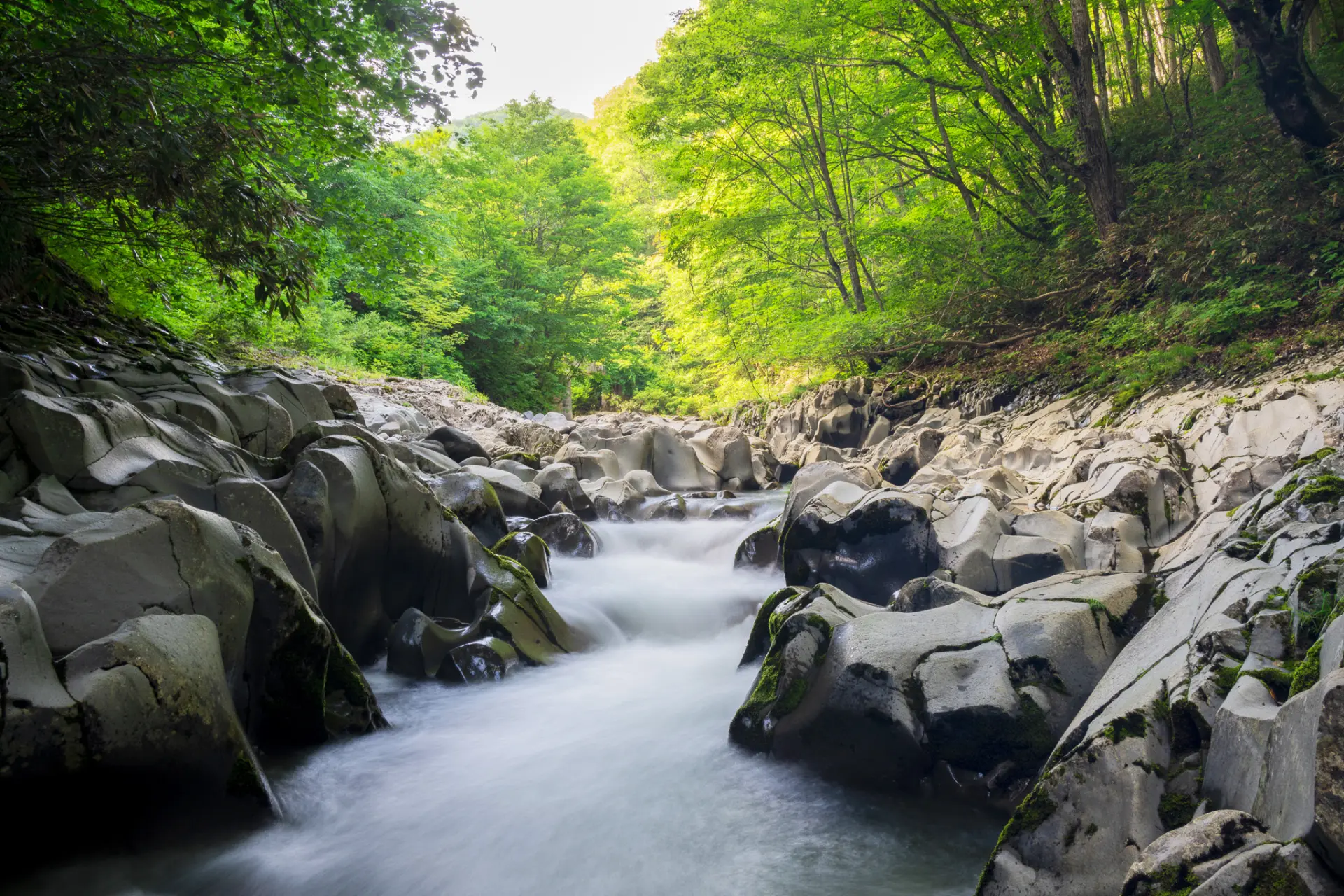
This gorge was created by a stream that originates on Mt. Azuma, and is known for terrain lined with giant rocks and clear water. The contrast between the dynamic boulders and unusual rock formations carved away by the river and the clear flow of water is striking.
Waterfalls and rapids continue for about 10 km (6.2 miles), with the character of the flow changing from place to place. It is known as one of the top fall foliage spots in the scenic Urabandai area, drawing many visitors in season.
Soak in Hot Springs and Feel the Blessings of Volcanic Activity
Hot springs that bubble up from underground are another form of water created by volcanic activity.
The bathing experience changes depending on the spring quality and temperature, and each hot spring has its own characteristics. Learning about the different properties of the waters at each location is part of the appeal.
5. Sabakoyu (Fukushima City)
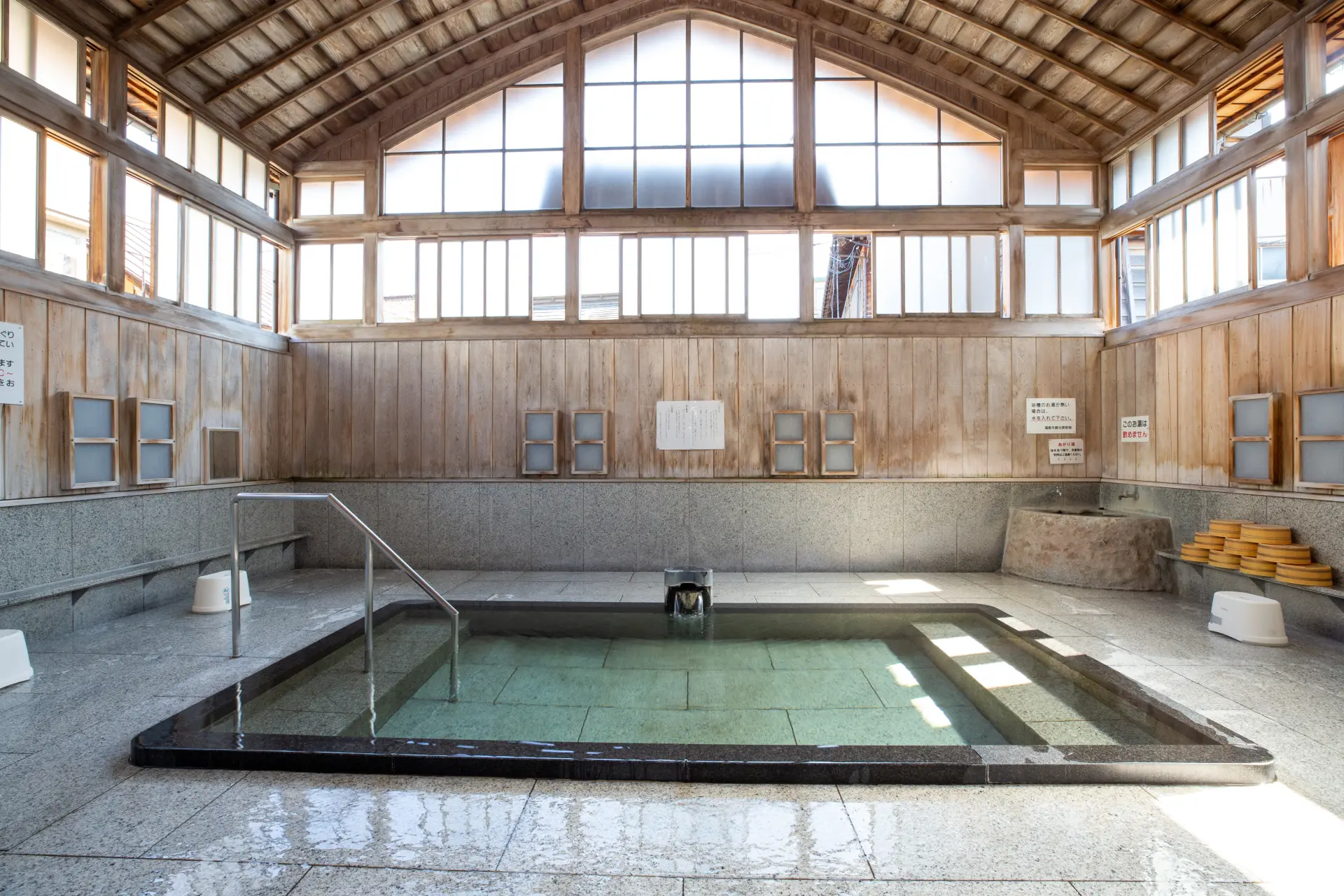
Located in Iizaka Onsen, this public bathhouse carries on a bathing culture with a long history.
The hot spring water filling the granite bath is an alkaline hypotonic spring, and the appeal lies in enjoying a relaxing soak in water that flows directly from the source. Traditional features remain as they were, including a layout where the bathtub and washing area are integrated, as well as a high ceiling.
In this simple space, you can experience the original style of hot spring bathing.
6. Tsuchiyu Onsen (Fukushima City)
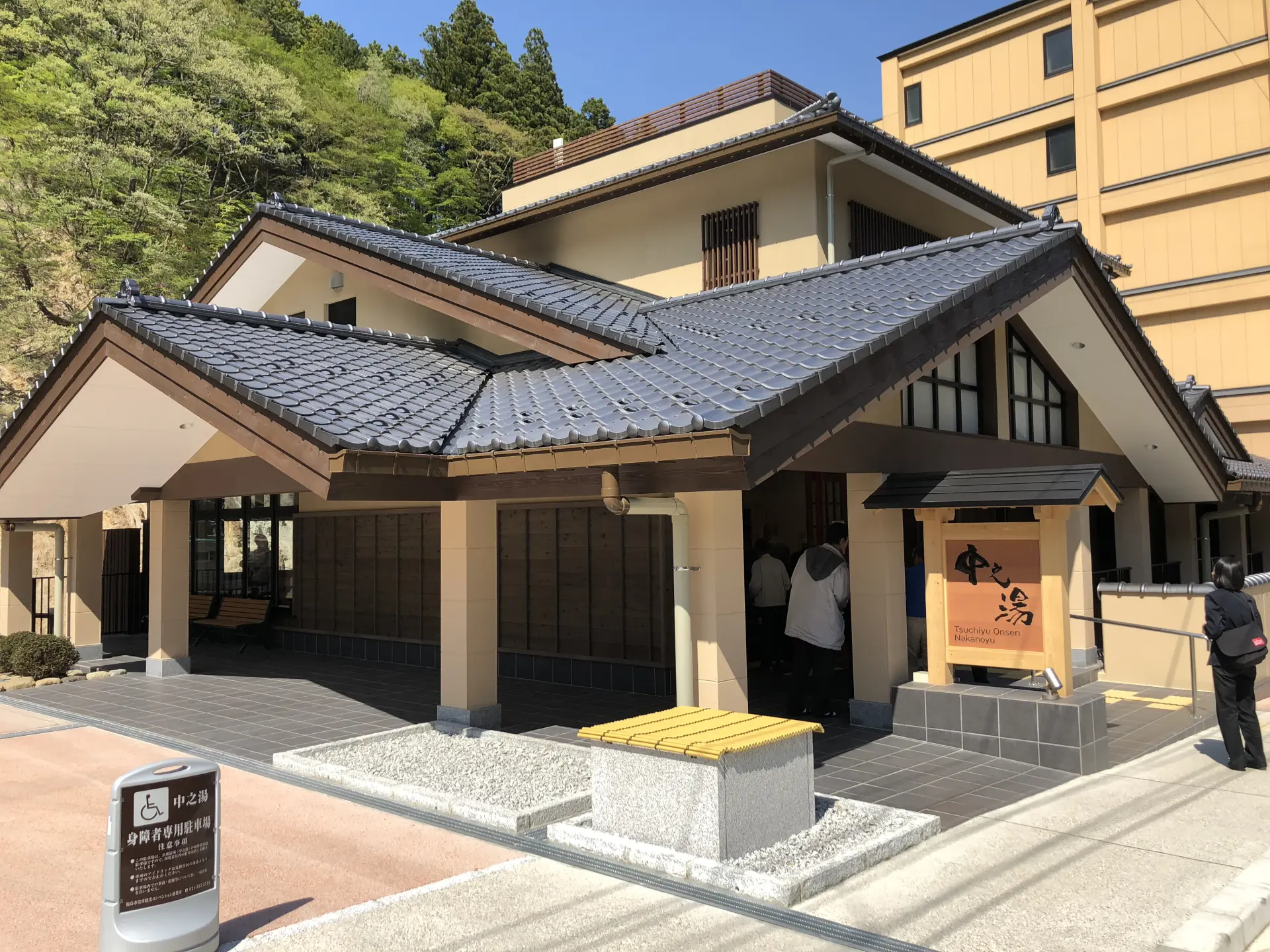
This hot spring area has bathing facilities scattered along a gorge.
The main appeal of Tsuchiyu Onsen is that you can visit several facilities and enjoy a relaxing time while comparing the individual character of each hot spring. The spring qualities vary, including simple springs and sulfur springs, and the feel and temperature of the water also differ by facility.
Using the baths while learning about their features helps you clearly understand the differences between the hot springs.
Take in the Undulating Landscapes Shaped by Volcanoes
In mountains and highlands formed by volcanic activity, differences in terrain appear directly in the scenery.
As you move around while paying attention to changes in elevation and the surface of the land, you can get a sense of how the area was formed.
7. Mt. Adatara (Nihonmatsu City)
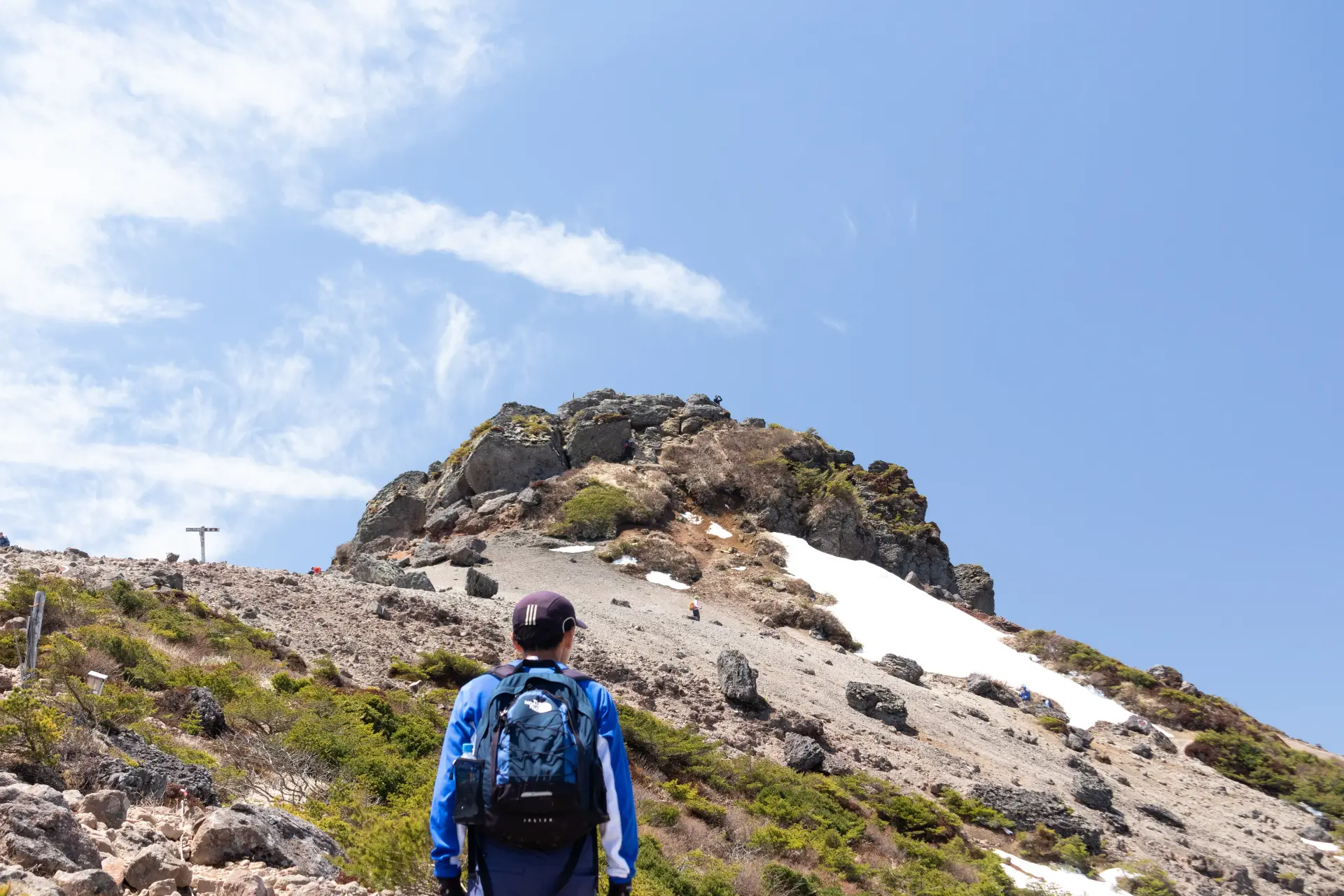
This mountain combines gentle slopes with volcanic crater terrain. Loved by many hikers for the ease with which they can enjoy its natural scenery, it has also been selected as one of Japan’s 100 Famous Mountains.
Using the ropeway, you can reach an elevation of around 1,350 m (4,429 ft), then continue toward the area around the crater. You can also see the contrast between the rugged terrain and the vegetated slopes.
8. Bandai-Asahi National Park (Fukushima, Yamagata, and Niigata Prefectures)
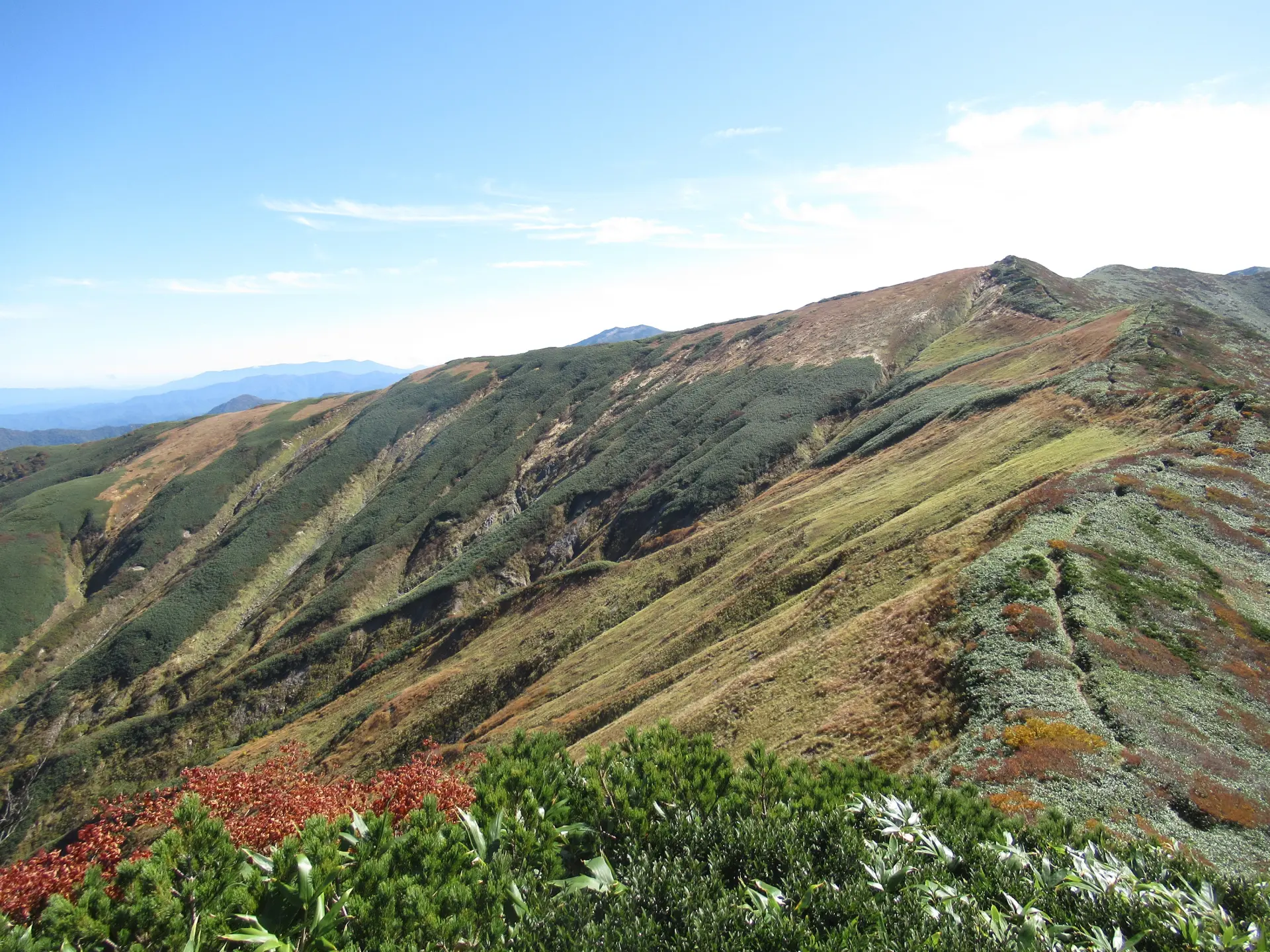
A vast national park that includes several mountain areas and lakes and ponds, such as Mt. Bandai and the Azuma Mountain Range, this area preserves volcanic terrain in many places.
Different landforms continue from place to place, and the character of the scenery changes as you move through the park. By comparing views from different elevations and locations, these differences become easier to see.
From mountain climbing to light hiking, hot spring bathing, and skiing, the park offers activities for everyone from beginners to advanced visitors.
9. Koriyama Nunobiki Wind Plateau (Koriyama City)
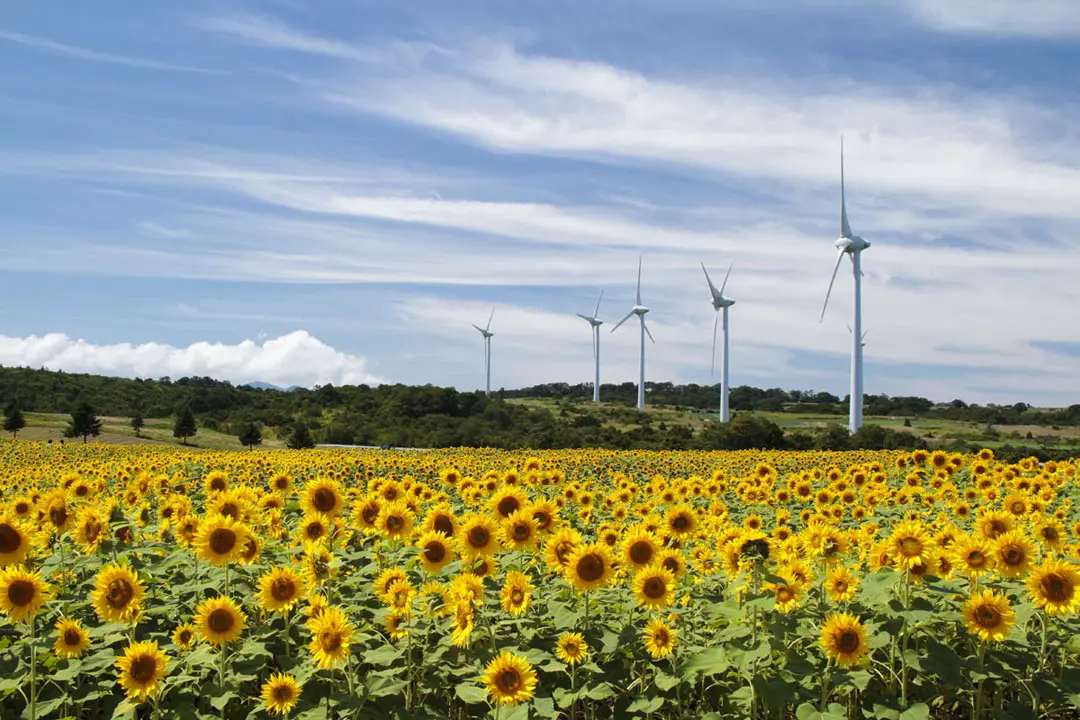
This landscape spreads across a plateau at an elevation of about 1,000 m (3,281 ft), offering an open view lined with wind turbines and flower fields.
Seasonal flowers are another highlight: in summer, a vast sunflower field of about 9 hectares (22 acres) comes into bloom, while in fall, a cosmos field of 70 ares (1.7 acres) reaches full bloom, giving the plateau an even more colorful atmosphere. Below, you can see Lake Inawashiro and Mt. Bandai, with the varied terrain and elevation changes forming one continuous landscape.
Try viewing the area from different positions to take in its full scale.
Summary
The colors of lakes and ponds, the flow of waterfalls and mountain streams, water emerging as hot springs, and terrain that appears as mountains and highlands.
In Fukushima, water and land appear in many different forms. Visit each place and see these differences for yourself.