
Japan’s “Oshibori” Culture That Surprises Foreign Visitors | Its Little-Known Origins and Spirit of Hospitality
Oshibori is one form of hospitality culture that developed in Japan.
More than simply keeping hands clean, it also helps create a sense of comfort and ease, making time spent in a place more pleasant.
In addition to restaurants and hotels, oshibori service has expanded in recent years to many settings such as airplanes, beauty salons, and golf courses, and it is also spreading to hotels overseas.
This article explains what oshibori are, their history, their different types, and how to use them.
By the end, you may find yourself more interested in oshibori and with a deeper understanding of Japanese culture.
What Is Oshibori?
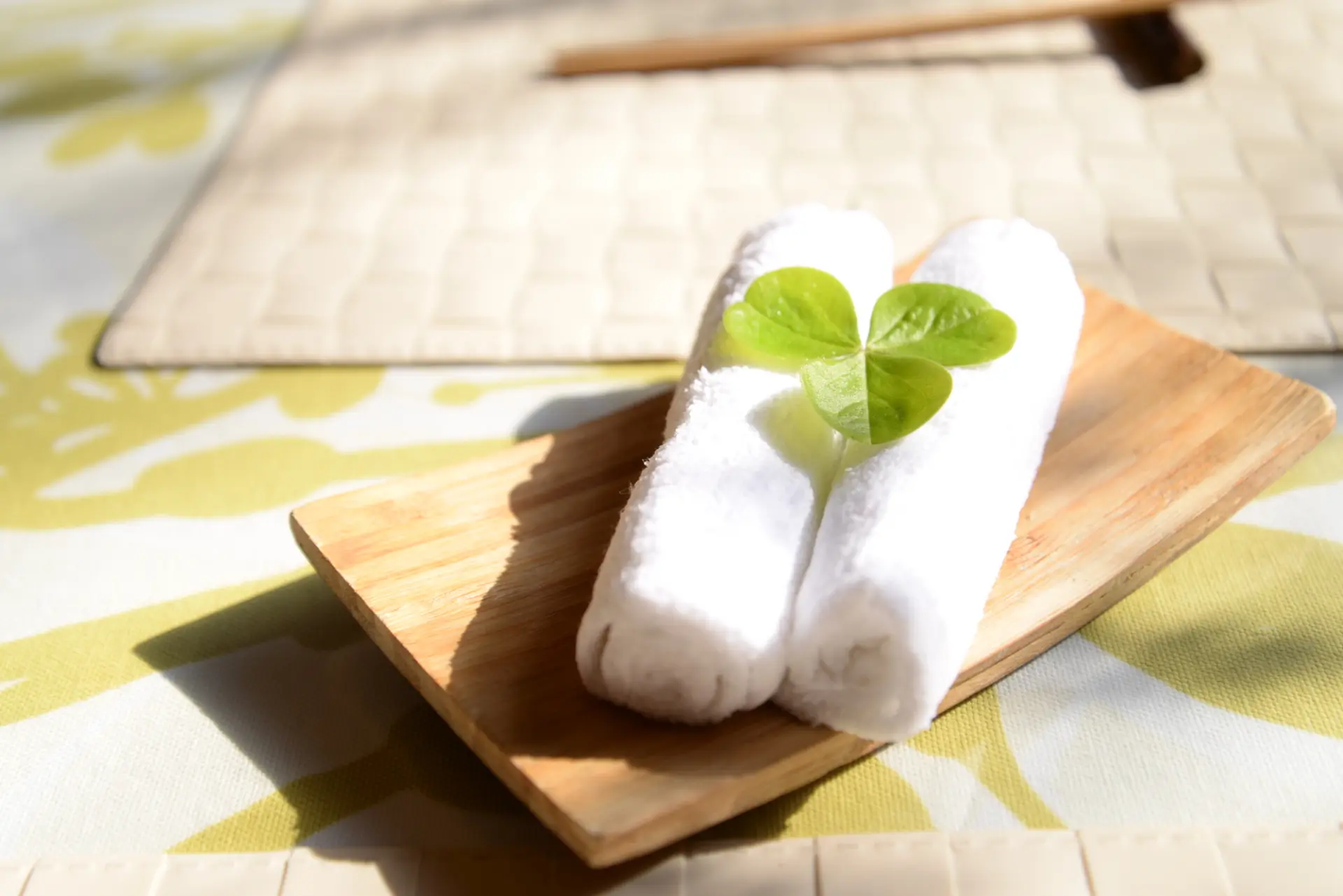
“Oshibori” refers to a damp cloth or disposable paper towel provided to customers at restaurants and ryokan inns for wiping their hands.
The word comes from “shiboru,” meaning “to wring,” with the polite prefix “o,” and is written in kanji as “御絞り.”
It is one of the hospitality customs that developed in Japan and is used in a wide range of settings, including hair salons, Shinkansen bullet trains, and airplanes.
Combining practicality with thoughtfulness, oshibori have more depth than they may seem: they may be served warm or cold depending on the season, and some are scented or designed with special attention to appearance.
In recent years, oshibori have also been introduced at hotels and restaurants overseas under the name “OSHIBORI,” and recognition of them as a form of Japanese hospitality is growing.
The Origins and History of Oshibori
There are several theories, but the oldest traces the origins of oshibori back to the Heian period (794–1185).
One theory suggests that damp cloths offered by court nobles to their guests were an early form of oshibori. If this is true, oshibori have existed for about 1,200 years.
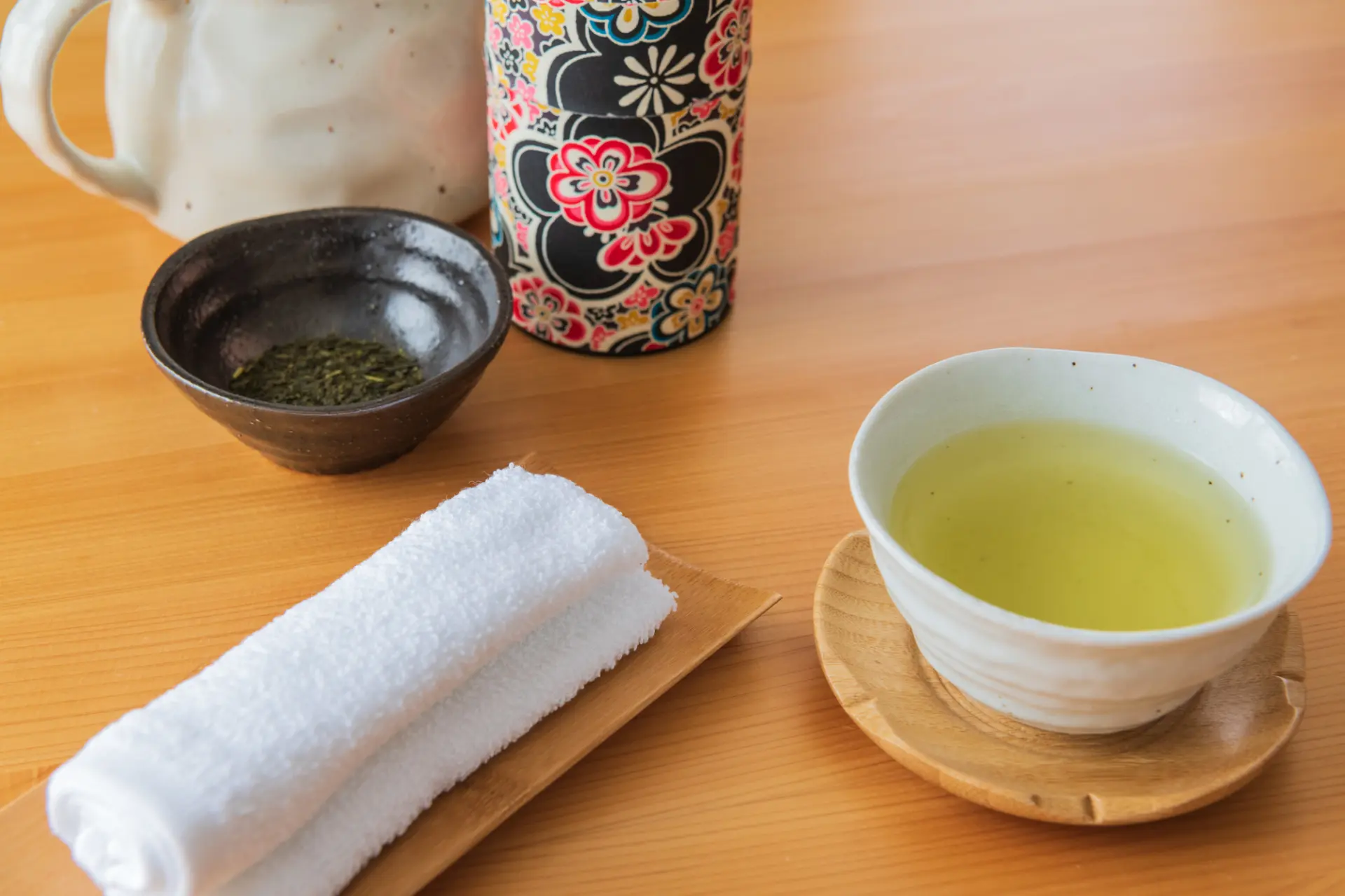
In the Edo period (1603–1868), hatago inns prepared buckets filled with water and tenugui hand towels at their entrances.
Travelers would wet and wring out the towels, wipe dirt from their hands and feet, and soothe the fatigue of their journey.
This custom of wringing out a towel before use is said to be the origin of the name “oshibori.”
Later, after the postwar reconstruction period, the rental oshibori business took off around 1955, greatly increasing their use in restaurants and other establishments.
Washing and disinfecting oshibori with specialized equipment became the industry standard, making it possible to supply hygienic oshibori efficiently.
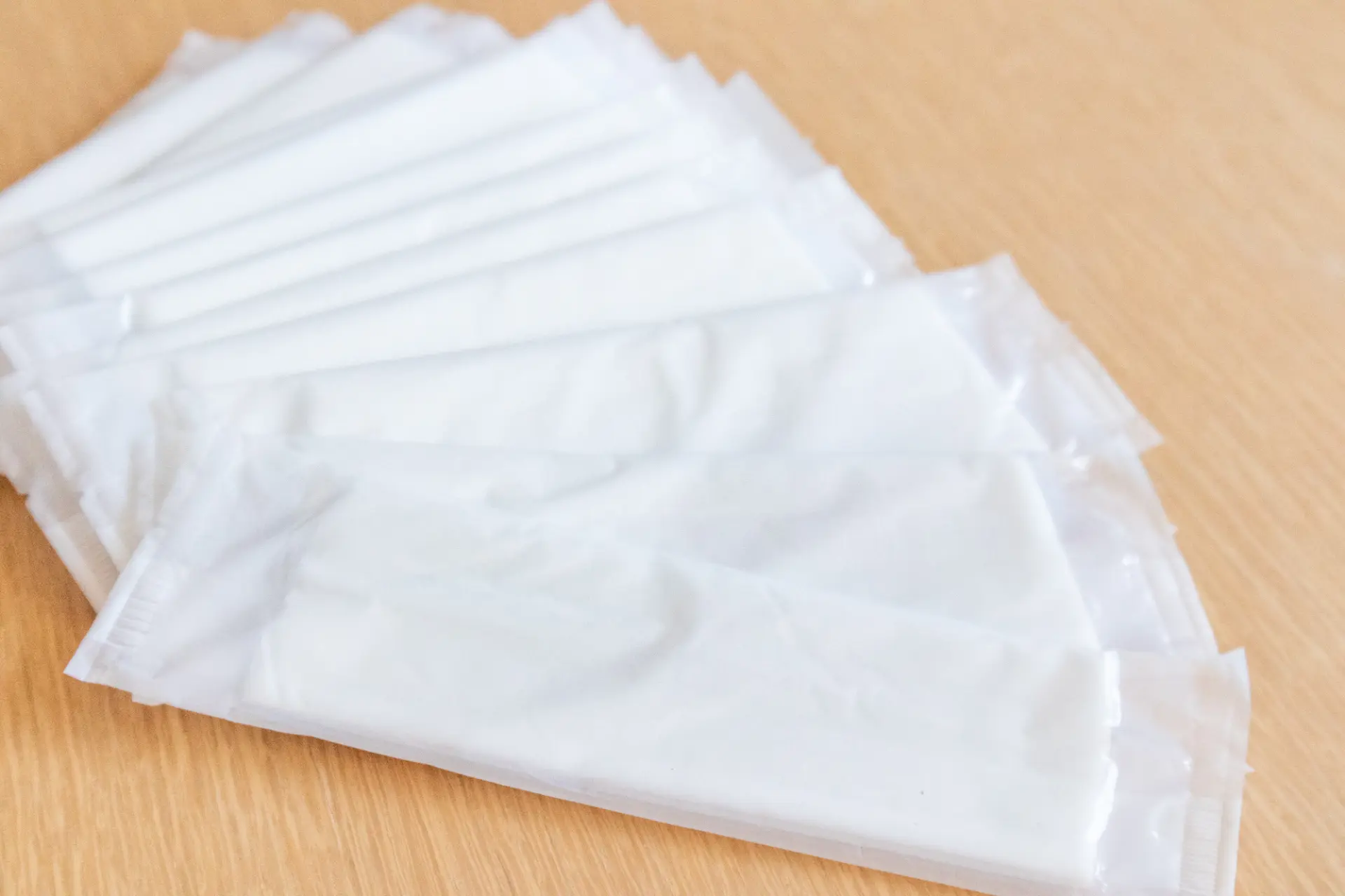
Disposable paper oshibori also appeared, becoming widely used alongside cloth oshibori, and both remain in use today.
Differences Between Cloth Oshibori and Paper Oshibori
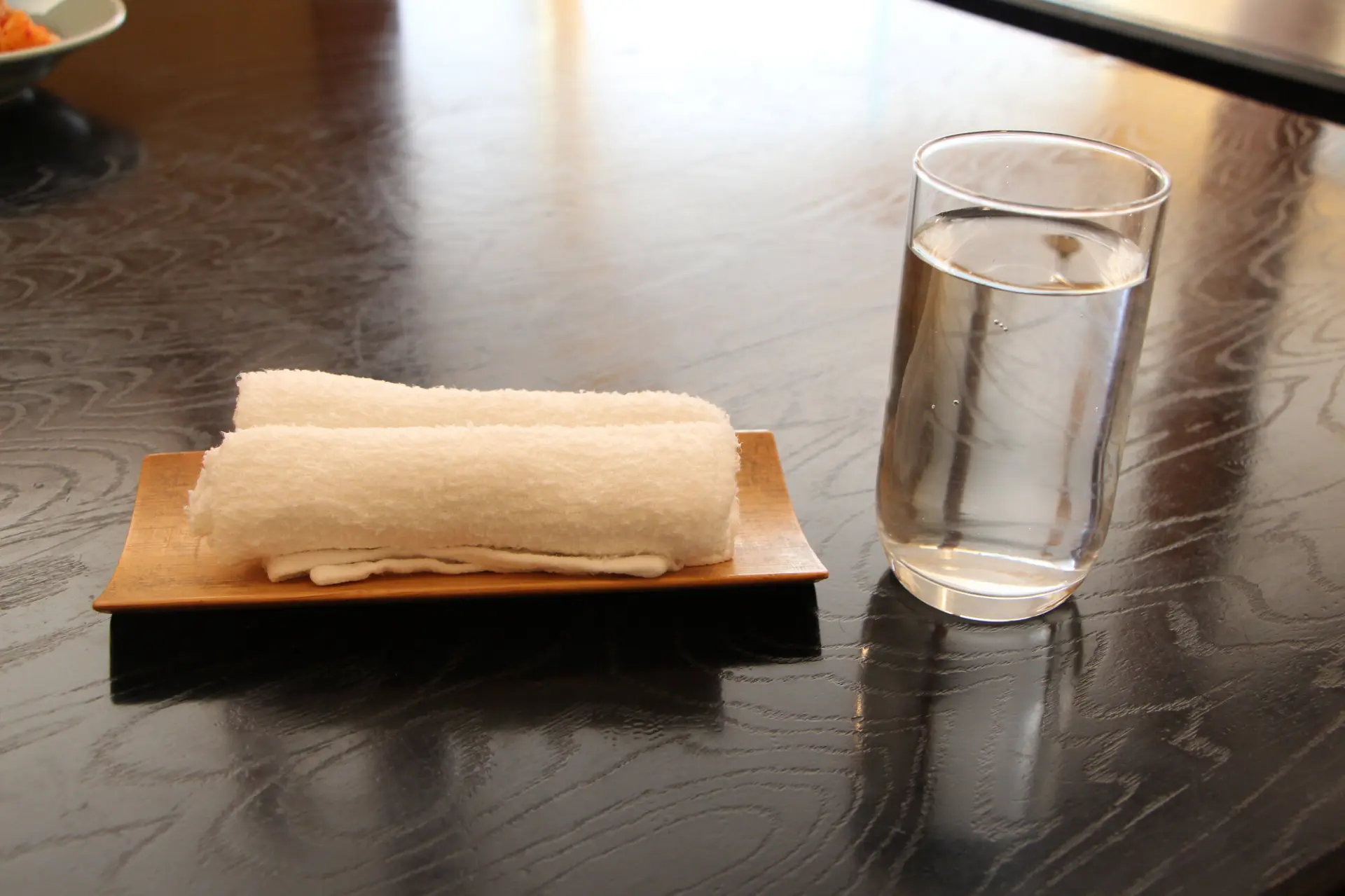
There are two main types of oshibori: cloth and paper.
Neither is better than the other; each has different features and is used according to the setting and the concept of the establishment.
The table below summarizes the differences.
Simply put, cloth oshibori, which retain heat and cold well, can create a refined sense of hospitality, while paper oshibori, which are portable and cost-effective, are easy to use.
| Item | Cloth Oshibori | Paper Oshibori |
|---|---|---|
| Material | Cotton, rayon, blended fabrics, etc. | Nonwoven fabric, pulp, paper, etc. |
| Shape | Generally rolled | Flat (folded) or round (rolled) |
| Texture | Thick, soft, and premium in feel | Thin with a light, refreshing feel |
| Heat and cold retention | Because the fabric is thick, it tends to stay warm or cold longer | Can be served warm or cold, but generally retains temperature for a shorter time |
| Hygiene | Washed and disinfected by specialized companies for reuse | Disposable, so each one is new and hygienic |
| Advantages | Pleasant texture, with warm or cool comfort and a sense of hospitality | Easy to carry and suitable for takeout |
| Main places provided | Ryokan inns, hotels, traditional Japanese restaurants, sushi restaurants, etc. | Family restaurants, convenience stores, event venues, etc. |
The Surprising Psychological Effects of Oshibori
Oshibori are thought to do more than clean the hands; they may also help relax the mind and body.
A warm oshibori gently warms the hands, helping ease tension and create a sense of comfort.
A cold oshibori, on the other hand, can cool down a flushed body and help refresh the mood.
This pleasant stimulation from temperature is one element that can make a meal or service experience feel more comfortable.
Another distinctive point is that being offered an oshibori itself can leave a positive impression of being welcomed and cared for, helping build trust in the establishment.
Oshibori Hospitality Spreading Around the World
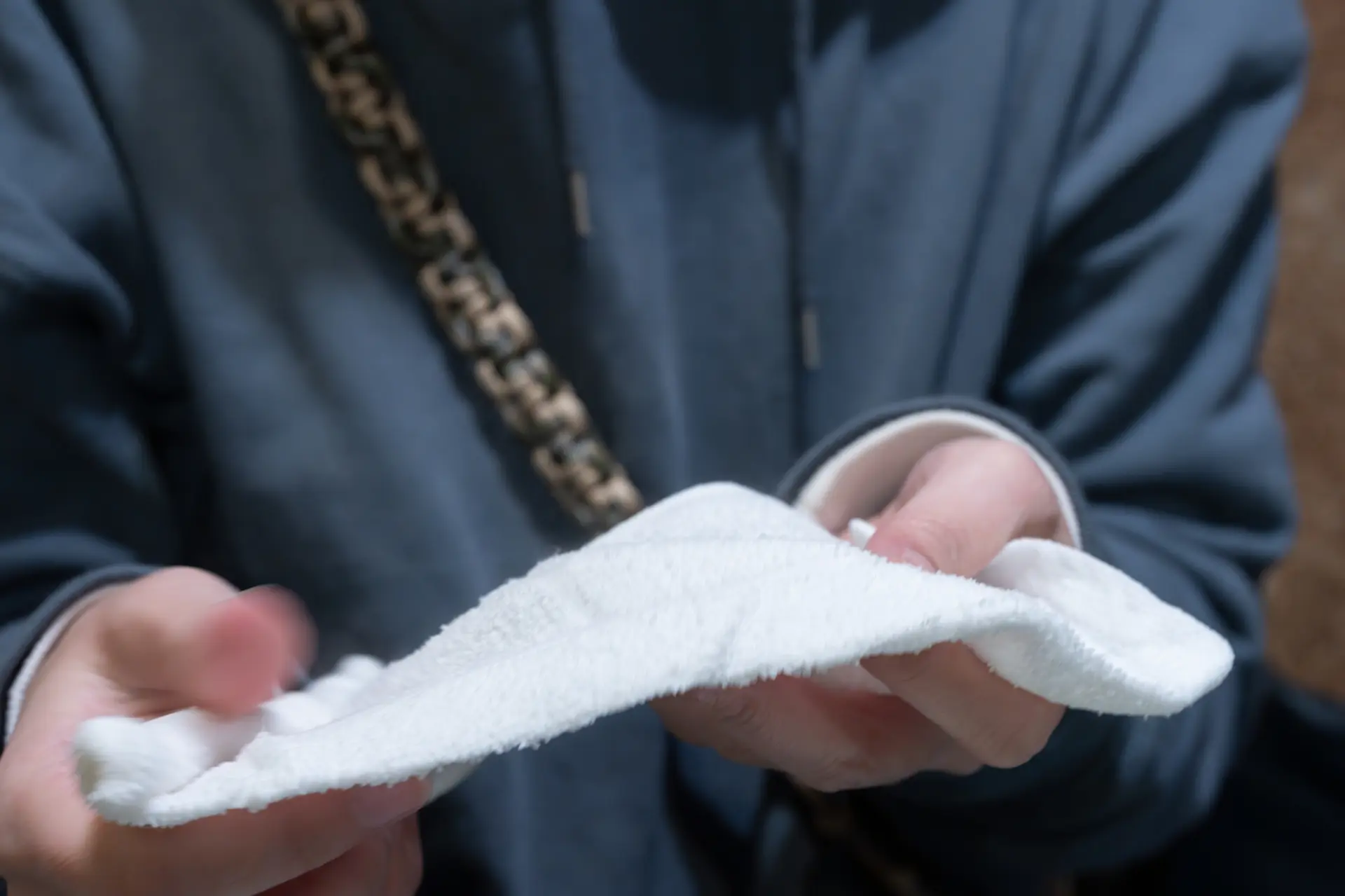
Japan’s oshibori are highly regarded overseas as a service that symbolizes attentive hospitality.
For many international travelers, being given a clean oshibori free of charge at a restaurant or ryokan is a fresh experience.
It often comes as a pleasant surprise, with many people saying it gives them a sense of Japan’s culture of consideration for others.
The oshibori culture nurtured in Japan is spreading to Japanese restaurants, hotels, and other places overseas, especially across Asia.
Interestingly, how oshibori are handled differs by country: in Cambodia, they are generally free at restaurants, while in neighboring Vietnam, they are commonly provided for a fee.
As oshibori begin to take root while adapting to lifestyles in different countries, you can sense the universal comfort held by the culture itself.
How to Use Oshibori
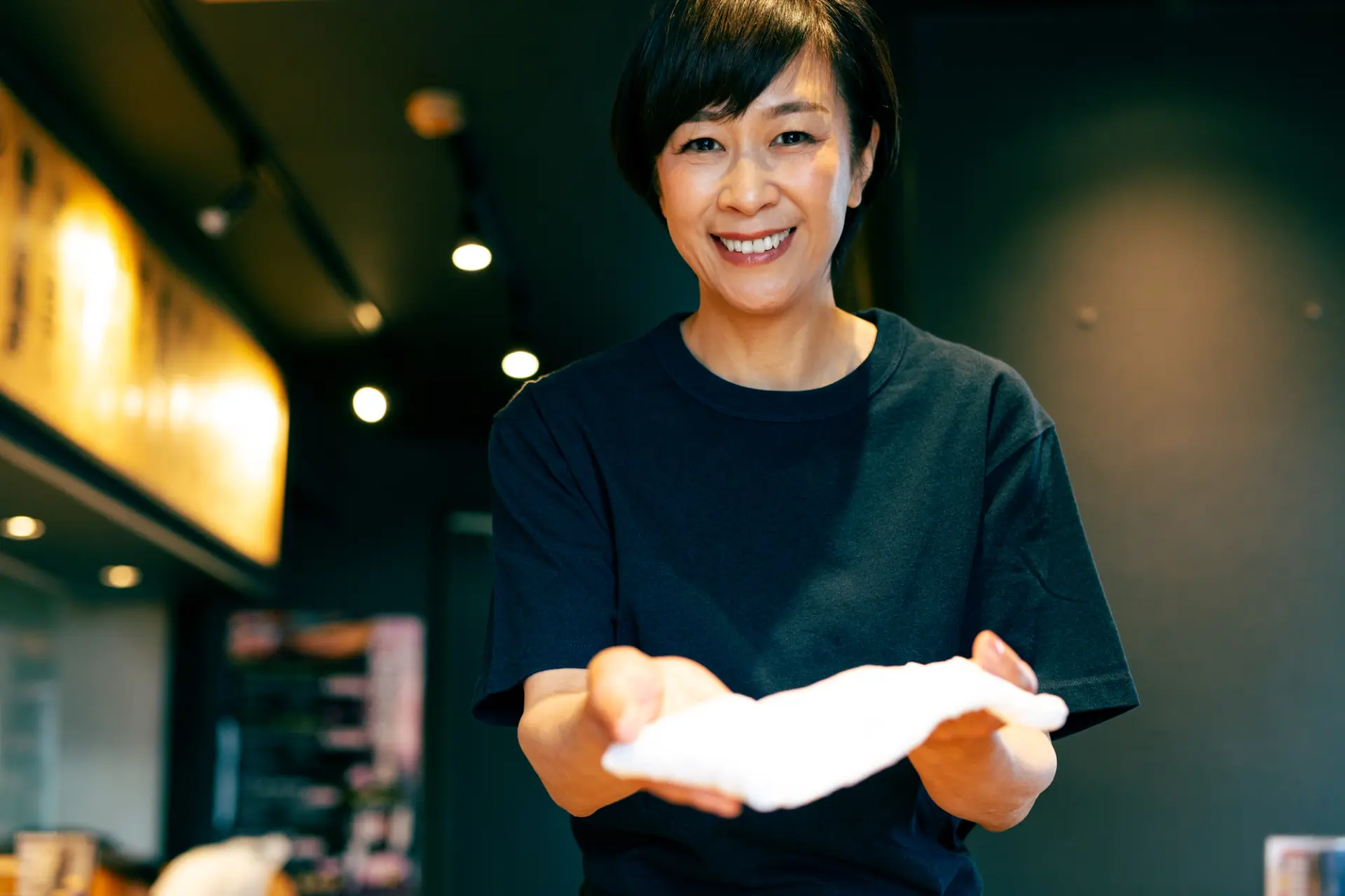
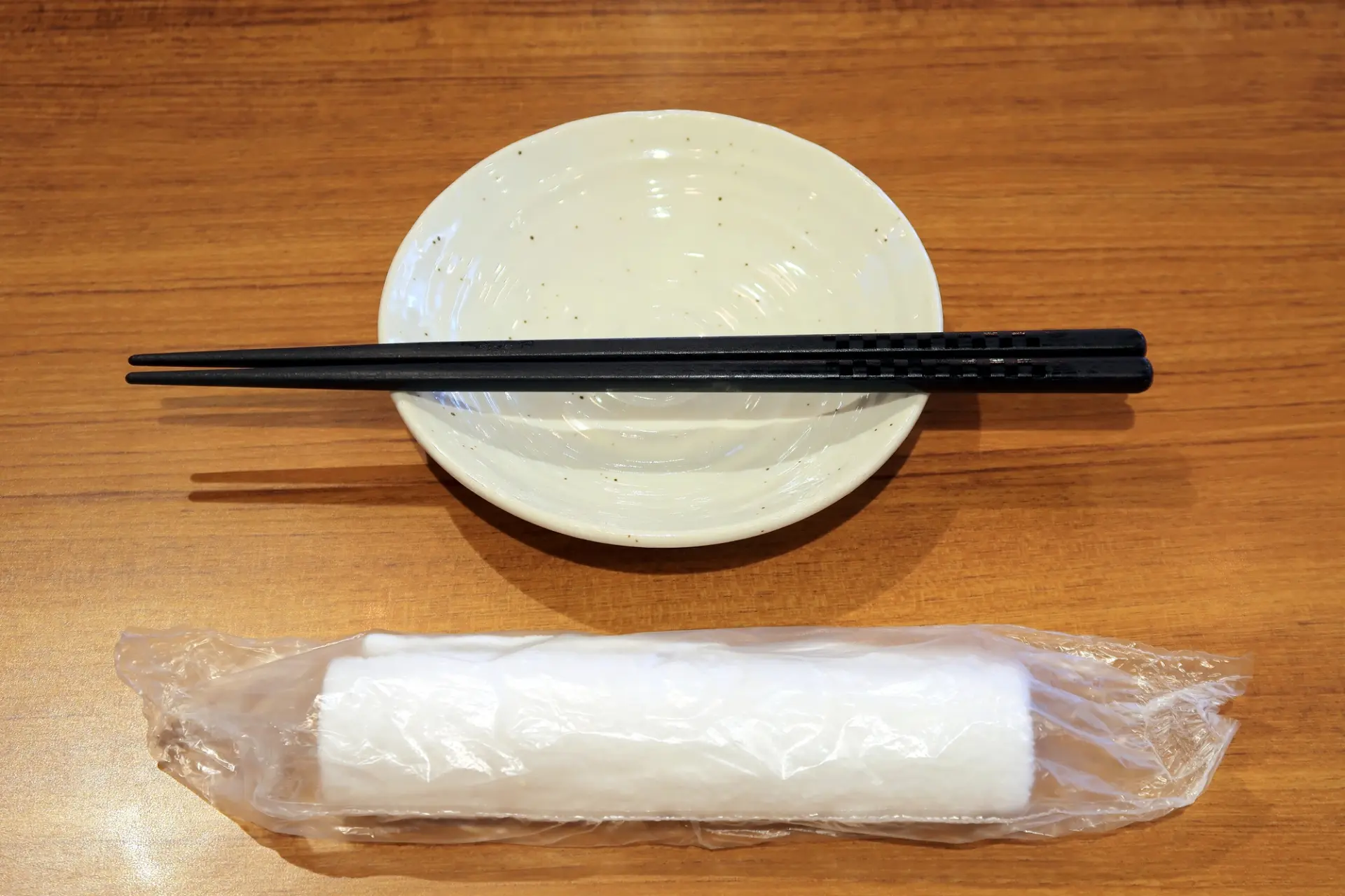
At restaurants and ryokan inns, oshibori are usually provided when you are seated shortly after arriving.
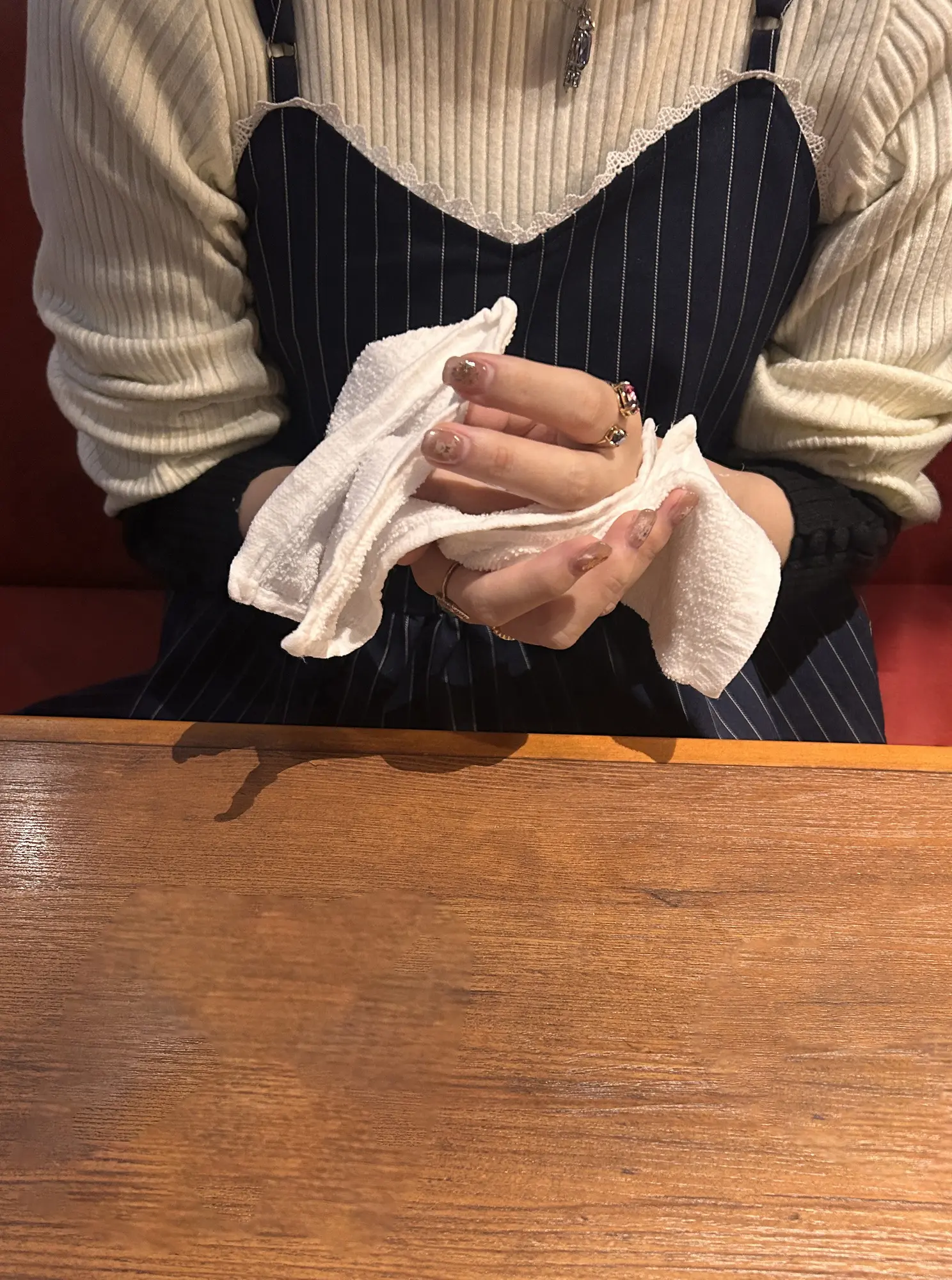
The basic way to use one is to first wipe both hands carefully, cleaning them before starting your meal comfortably.
Although it is not explicitly forbidden, wiping your face or neck is best avoided at restaurants, especially high-end ones, as it may be considered impolite.
After it is provided and during the meal, use it as needed; otherwise, place it on an oshibori tray, on top of its original wrapper, or at the edge of the table.
With some exceptions, you can ask staff for a fresh oshibori, and at high-end restaurants, it is often replaced between courses.
When you are finished using it, lightly fold it and set it down rather than leaving it messy, as this gives a polite impression.
Proper Oshibori Etiquette to Remember
Oshibori are a representative form of Japanese hospitality and customer service, and the proper manners depend on the situation.
As mentioned above, wiping the face or neck is not unusual at casual restaurants, and you do not need to worry too much if you are dining with friends.
However, at upscale restaurants or formal occasions, proper etiquette is to use it only for your hands.
Avoid using it to wipe the table, sweat, or tears, and do not use it to wipe your mouth extensively; a dining napkin is preferable for that purpose.
Also, do not take cloth oshibori home, and follow the restaurant’s instructions for paper oshibori as well.
If you spill something, it is smart to call a staff member rather than trying too hard to handle it yourself.
Using oshibori cleanly, politely, and modestly, with graceful movements, is a way to show consideration for others.

Fun to Know: Oshibori Trivia and Industry Slang
Finally, here is some oshibori trivia and industry slang.
Knowing these small details can deepen your understanding of oshibori culture.
They may feel fresh to international travelers and are not necessarily familiar even to all Japanese people, so they can also become a conversation starter at restaurants.
Can Oshibori Help Relieve Eye Fatigue? A Refreshing Method
Oshibori are used not only for wiping hands but also as an item to help relieve tired eyes.
When you gently place a warm oshibori over your eyes, the area around them gradually warms up, making it easier to refresh eyes tired from long hours of computer work or smartphone use.
The steamed towels offered at hair salons and barbershops are another example of a service that uses the comfort of warmth.
Cold oshibori, meanwhile, can be useful when you want to reduce heat around the eyes or clear your mind.

Industry Terms Mainly Used in Restaurants
In restaurants especially, unique shortened terms for oshibori are used.
Warm oshibori are called “atsushibo,” while cold oshibori are called “tsumeshibo.” There is also the term “kawashibo,” which has a different meaning.
These are industry terms that help staff communicate instantly with one another.
In nightlife businesses such as clubs and lounges, hand signals may also be used so staff can communicate even when voices are hard to hear.
For example, depending on the establishment, staff may use a gesture of wringing a rag with their hands to indicate “nureshibo,” showing their own practical ways of communicating.
Frequently Asked Questions About Oshibori
Q
Is oshibori a culture unique to Japan?
The service of providing free oshibori at restaurants is considered one form of hospitality culture that developed in Japan.
Q
When did restaurants begin providing oshibori?
There are several theories about its origins, but the current style of providing oshibori is said to have become widely established around 1955.
Q
Is it bad manners to wipe your face or neck with an oshibori?
It is not strictly a breach of etiquette and is relatively common at casual restaurants. However, it is best avoided at high-end restaurants or formal settings, where it may be considered rude.
Q
Which is more common today, paper oshibori or cloth oshibori?
They are used depending on the type of establishment. High-end and long-established restaurants often prefer cloth oshibori for their texture, while fast-food restaurants and similar places use paper oshibori because they are easier to manage hygienically.
Summary
This article has introduced the origins of oshibori, etiquette for using them, and related trivia.
A single oshibori casually handed to you carries a long history and the spirit of omotenashi nurtured by Japan’s culture of customer service.
Japan’s oshibori culture continues to be passed down while changing form, and today it is also spreading overseas.
The next time you are handed an oshibori on a trip to Japan, take a moment to think about the thoughtfulness behind it.
That small moment may feel just a little more special.