
Experience the Spirit of the Samurai: A Complete Guide to Kendo
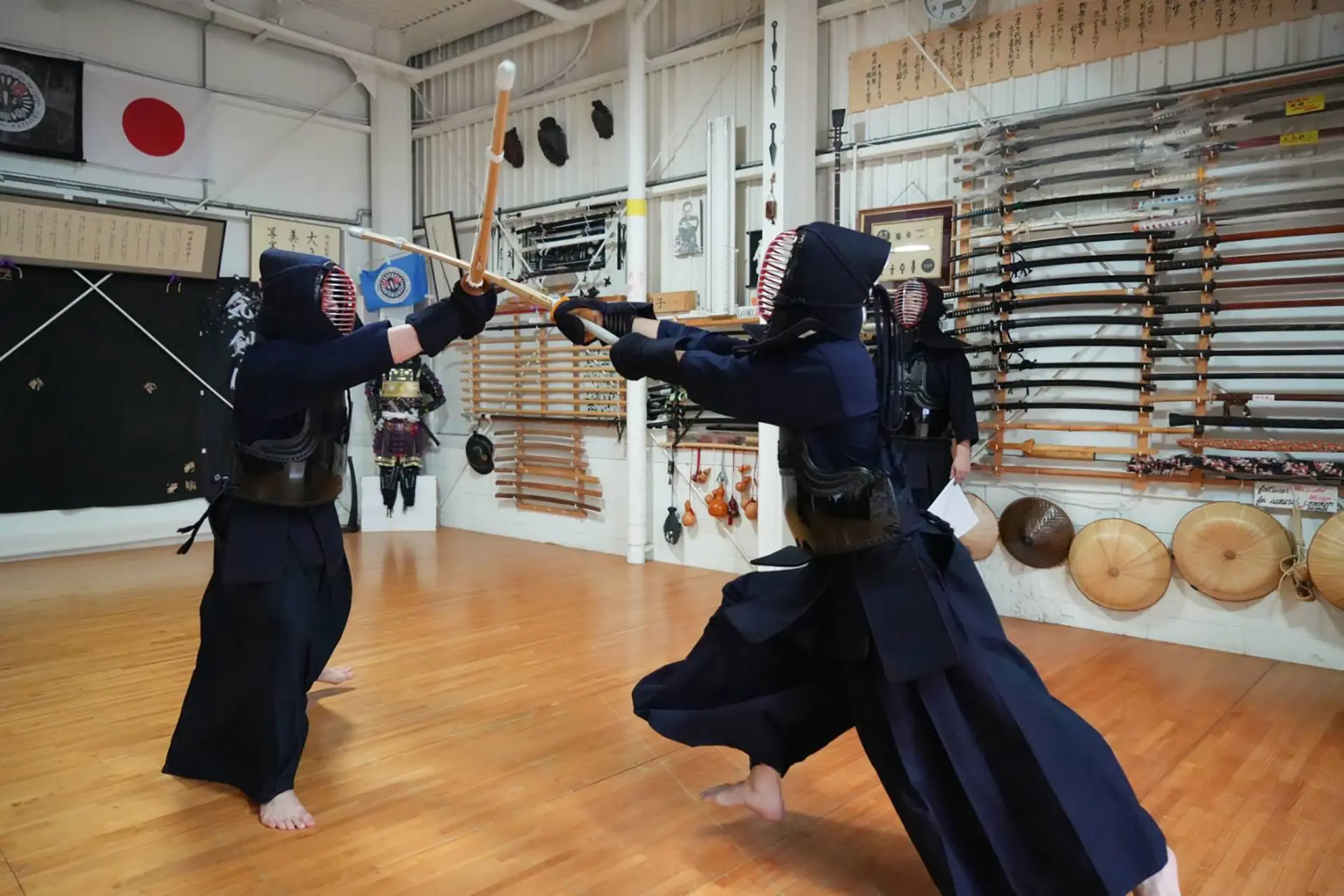
If you want to experience samurai culture during your visit to Japan, kendo is an excellent choice. Kendo is a Japanese martial art in which practitioners face opponents and test their skills using shinai, bamboo swords modeled after Japanese swords. Wearing protective armor known as men, kote, do, and tare while striking with a shinai may evoke the image of a samurai, but kendo is more than just a combat technique. Practitioners bow to show respect for their opponents at the beginning and end of every training session, and developing the proper mindset and attitude toward others is considered extremely important.
This article provides a detailed introduction to the history of kendo, its connection to the samurai, its equipment, and its rules. It also covers the program at Samurai Training Experience KENDO in Osaka, a popular facility where visitors can take part in authentic kendo training.
Training is led by a kendo practitioner who has won numerous tournaments, and all instruction is given in English, allowing international visitors to participate with confidence.
By learning about and experiencing kendo, you can gain insight into the values that the Japanese people have cherished since the age of the samurai.
What Is Kendo?
Facing an opponent with a shinai looks much like a samurai duel. Kendo, literally “the way of the sword,” is a discipline for learning the principles of swordsmanship developed by Japanese samurai through combat with Japanese swords. These principles include correct posture and stance, judging the proper distance from an opponent, and remaining calm without being overwhelmed by the opponent’s intensity. In kendo, it is important not only to understand and master its techniques and principles, but also to learn the samurai spirit and way of life behind them. Rigorous technical training is considered one means of refining that spirit. In other words, kendo is a path toward personal growth. For this reason, it has long been a popular activity for Japanese children and is also taught in junior high and high school physical education classes. This section introduces the history of kendo, its connection to the samurai, its core values, equipment, and rules.
Kendo as a Martial Art
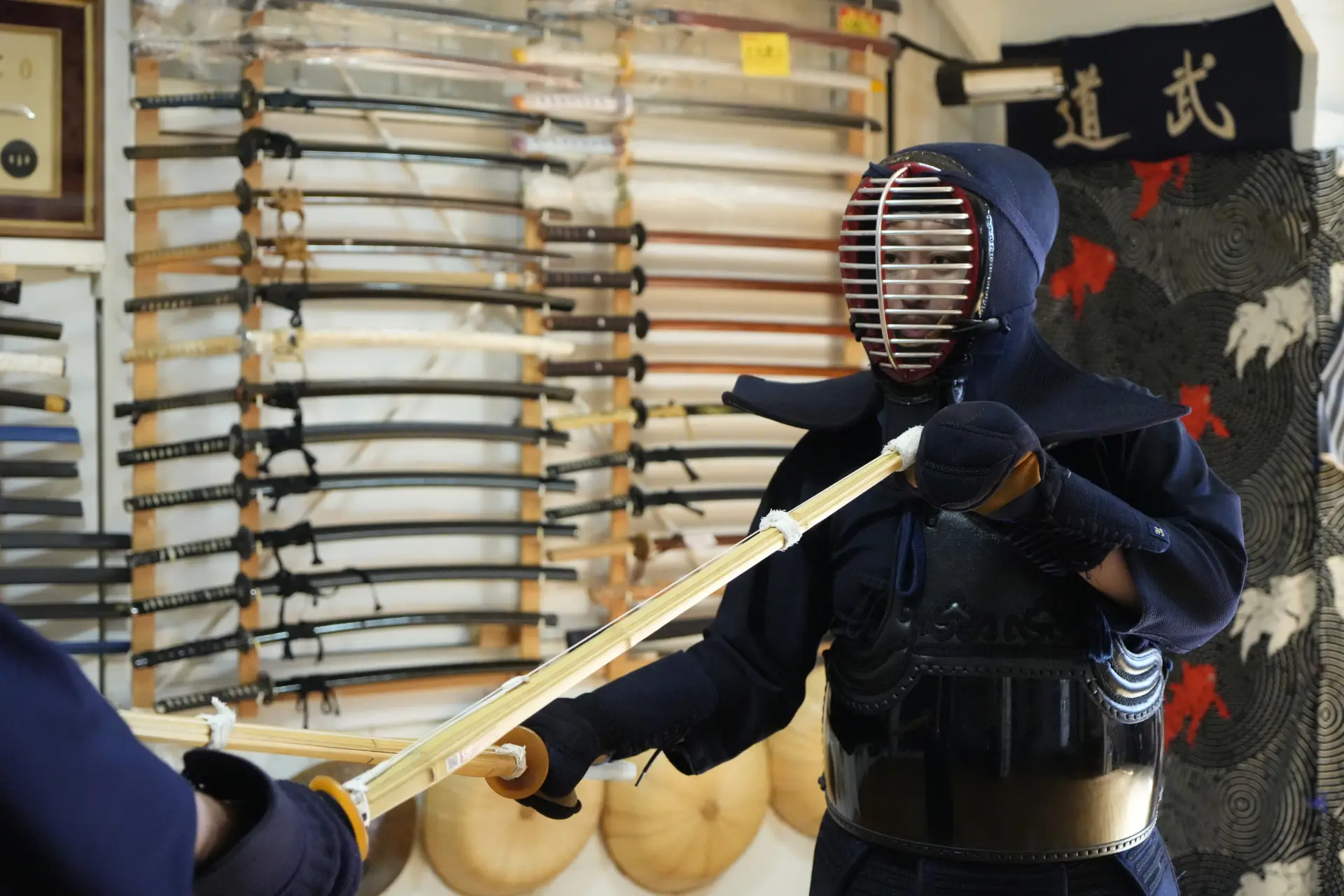
Although kendo also has aspects of a sport, it is regarded as one of Japan’s martial arts. This is because, unlike many sports, its sole purpose is not to determine a winner and loser. Winning matches is important, but kendo places greater emphasis on facing oneself throughout the training process and developing not only the mind and body, but also courtesy, respect for others, and personal character.
The History of Kendo
The history of kendo stretches back to the Heian period (794–1185), when the Japanese sword first appeared.
Japanese swords subsequently became major weapons in battle. During the Kamakura period (1185–1333), Japan’s first warrior government was established, and sword-making techniques advanced dramatically. At the same time, distinctive Japanese swordsmanship techniques developed around the curved blade and ridgeline of the Japanese sword. During the Muromachi period (1336–1573), Japan entered an age of warfare following the Onin War, and samurai played an active role. Sword-making became increasingly advanced and specialized. Japanese swords came to symbolize the spirit of the samurai, giving rise to the saying, “The sword is the soul of the samurai.”
Peace returned during the Edo period (1603–1868). Swordsmanship, which had previously been refined for killing in battle, gradually developed into the concept of katsuninken, the “life-giving sword,” which aimed to cultivate character as a samurai. Sword training came to involve not only technical development but also spiritual discipline and the pursuit of the samurai way of life.
After the end of the Edo shogunate and the beginning of the Meiji period (1868–1912), the new government abolished the samurai class. Carrying swords as samurai had done was prohibited, leading to the decline of swordsmanship.
However, activities by the Tokyo Metropolitan Police Department in 1877 helped spark a revival of swordsmanship. In 1912, the Dai Nippon Teikoku Kendo Kata, or Imperial Japanese Kendo Forms, was established, marking the first official use of the term “kendo.” Its purpose was to pass down the techniques and spirit of Japanese swordsmanship to future generations and unify the various schools of swordsmanship found throughout Japan. It also defined kendo as a martial art rooted in the spirit of Japan’s warrior class.
After Japan’s defeat in World War II in 1945, kendo was restricted. Following the restoration of Japan’s sovereignty in 1952, however, it began to spread once again. Today, people of all ages practice kendo throughout the country.
The Connection Between Kendo and the Samurai
In other words, the origins of kendo can be traced back to around the 12th century, when samurai fought with Japanese swords. During the period commonly known as the Warring States period, swords were used to fight enemies. Once peace arrived in the Edo period, however, the role and purpose of the samurai began to be questioned. After the Edo period ended, samurai were prohibited from carrying swords. This gave rise to the concept of katsuninken, the “life-giving sword.” Rather than using a sword to kill, it came to be viewed as a means and mindset for protecting and preserving life. Martial arts such as kendo, iaido, naginata, and kyudo emerged from this idea. Their practitioners refined their techniques not for killing, but to preserve the honorable samurai way of life and train the mind.
Kendo Equipment
Shinai
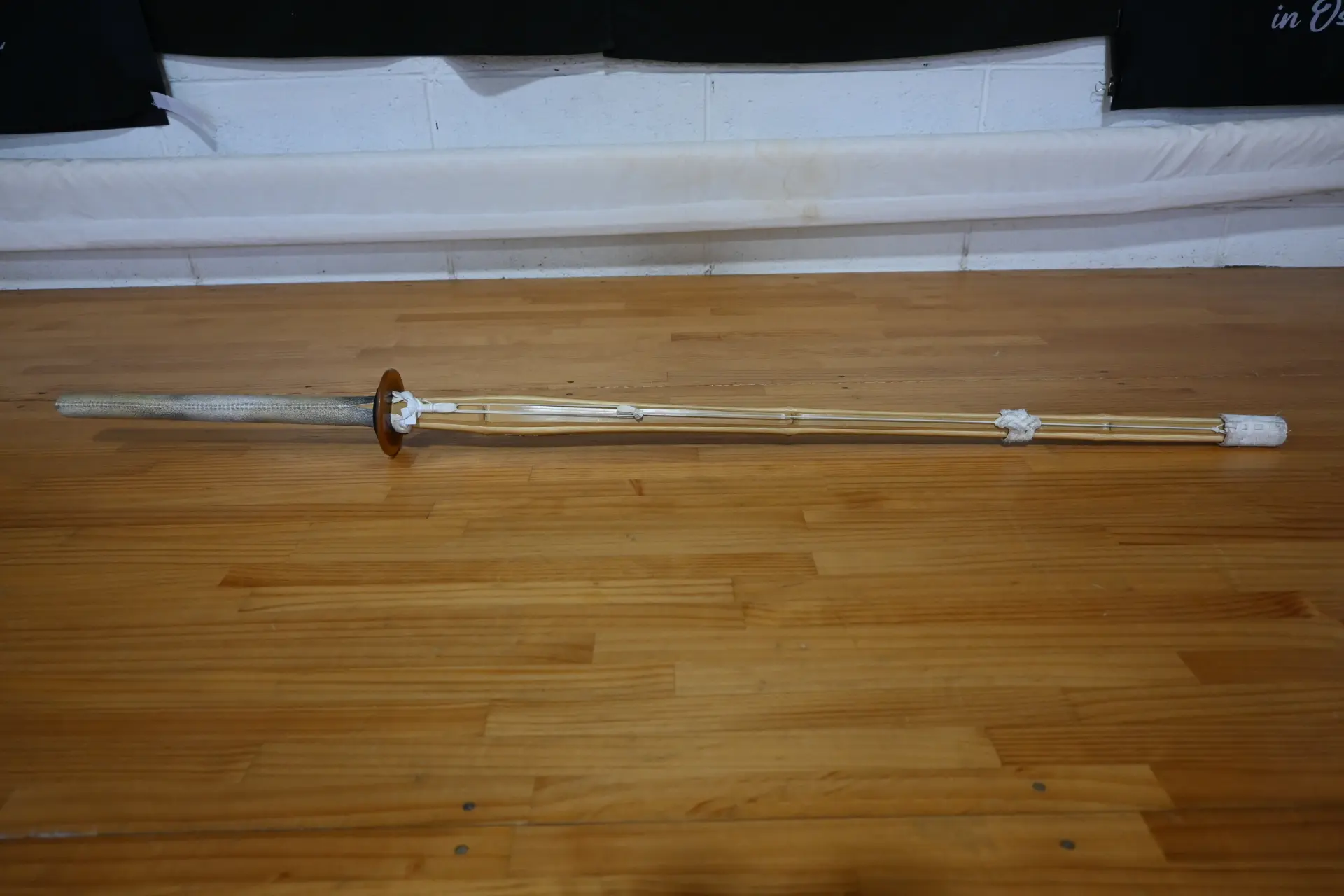
Kendo uses a bamboo sword called a shinai as a substitute for a Japanese sword. It was developed to make swordsmanship training safer. A shinai is made from four bamboo slats. Unlike wood, bamboo is flexible and bends upon impact, allowing practitioners to strike their opponents more safely.
A shinai consists of a handle called the tsuka; a guard called the tsuba, which is also found on Japanese swords and protects the hands gripping the handle; the nakayui, which binds the four bamboo slats together; the sakigawa, which prevents the bamboo from protruding at the tip; and the tsuru, a cord connecting the tip and handle that helps give the shinai its flexibility. The side with the tsuru represents the mune, or blunt back of a Japanese sword, while the side without the tsuru represents the ha, or cutting edge. A shinai is therefore always held with the tsuru facing upward, and strikes are made with the opposite side. A strike made with the tsuru side is not considered valid.
Protective Armor
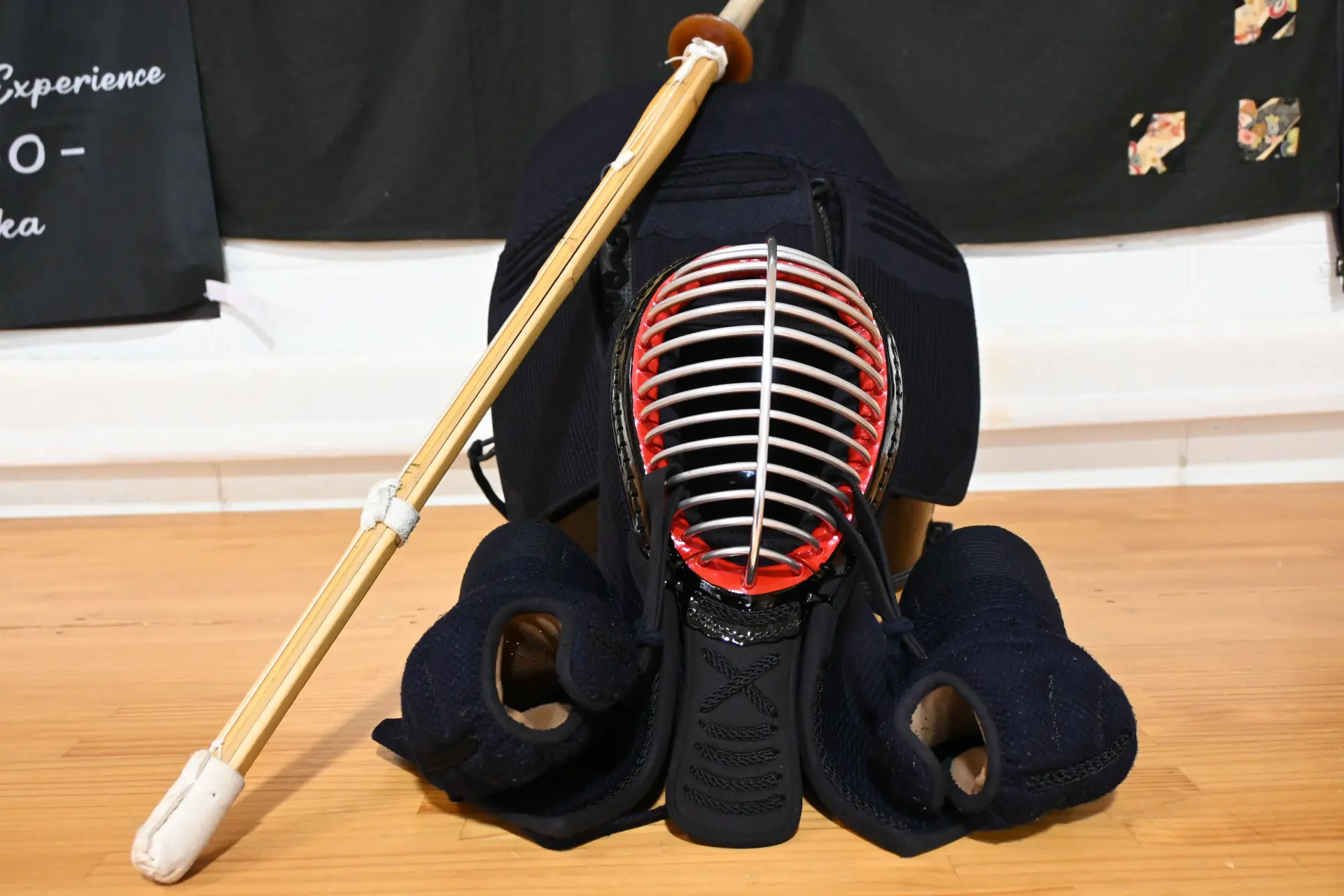
Kendo uses four pieces of protective armor to shield the body from the impact of strikes.
Men: Protects the head, face, and throat. The protective flap hanging beneath the metal face grille is called the tsukidare.
Do: Protects the chest and abdomen and is made from plastic components or bamboo.
Kote: Protects the forearms and wrists.
Tare: Protects the waist and lower body. It displays the practitioner’s name and affiliation.
Keikogi and Hakama
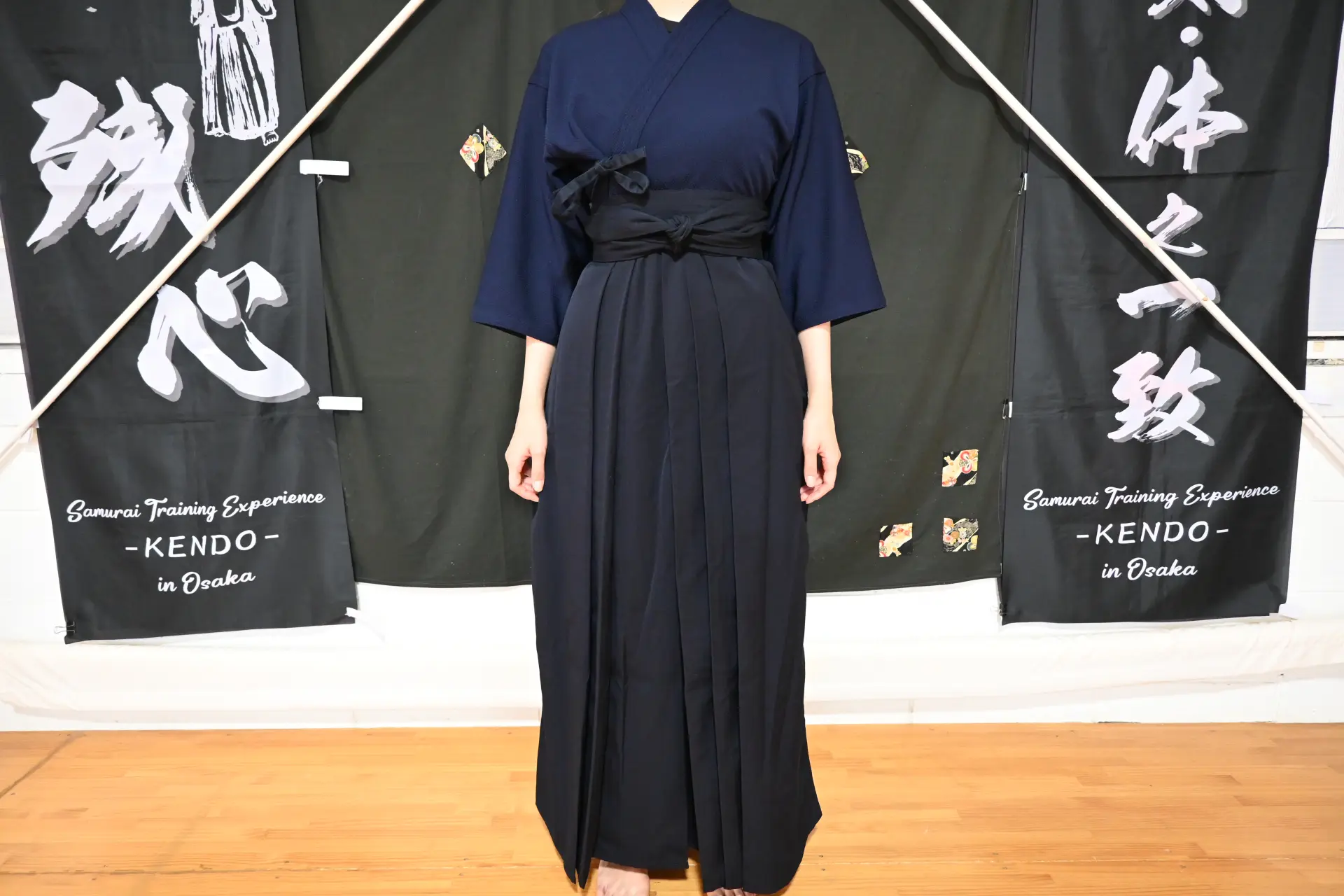
Practitioners wear a keikogi jacket and hakama trousers during training and matches. In competition, they wear substantial-looking indigo-dyed cotton garments. For everyday practice, lightweight, flexible, machine-washable garments made from jersey-like fabric are often used.
Kendo Techniques and Ippon
In kendo, a valid strike against an opponent is called an ippon. The four fundamental techniques used to score an ippon are men, a strike to the head; kote, a strike to the wrist; do, a strike to the torso; and tsuki, a thrust to the throat. Simply touching the opponent’s body with the shinai does not earn an ippon. The strike must hit one of these four target areas.
Before striking, practitioners express their spirit with a loud shout of “Yaa!” When making the strike, they must loudly call out the name of the target area.
Even a strike that hits the target may not qualify as an ippon. In addition to accurately striking the target, the practitioner must meet various conditions, including correct blade alignment, proper posture, a spirited shout, and zanshin, the continued state of alertness and readiness maintained after the strike. Only then is the strike recognized as an ippon. The entire sequence—identifying an opening, striking accurately, and remaining alert afterward—reflects the values at the heart of kendo.
Kendo Matches
A kendo match generally involves two competitors facing each other one-on-one and using their techniques to determine the winner. Matches are usually decided by the best of three points, with the first competitor to score two ippon winning. Referees determine whether a technique qualifies as a valid strike. When an ippon is awarded for a strike to the head, the referee announces “Men-ari!” For the wrist, the call is “Kote-ari!” and for the torso, “Do-ari!” The referee’s decision is final. Protesting is considered contrary to the spirit of the samurai and is unacceptable. Such behavior may result in a penalty or disqualification. Even during an intense match, competitors must remain calm and never forget their respect for their opponent and the referees.
The Importance of Respect
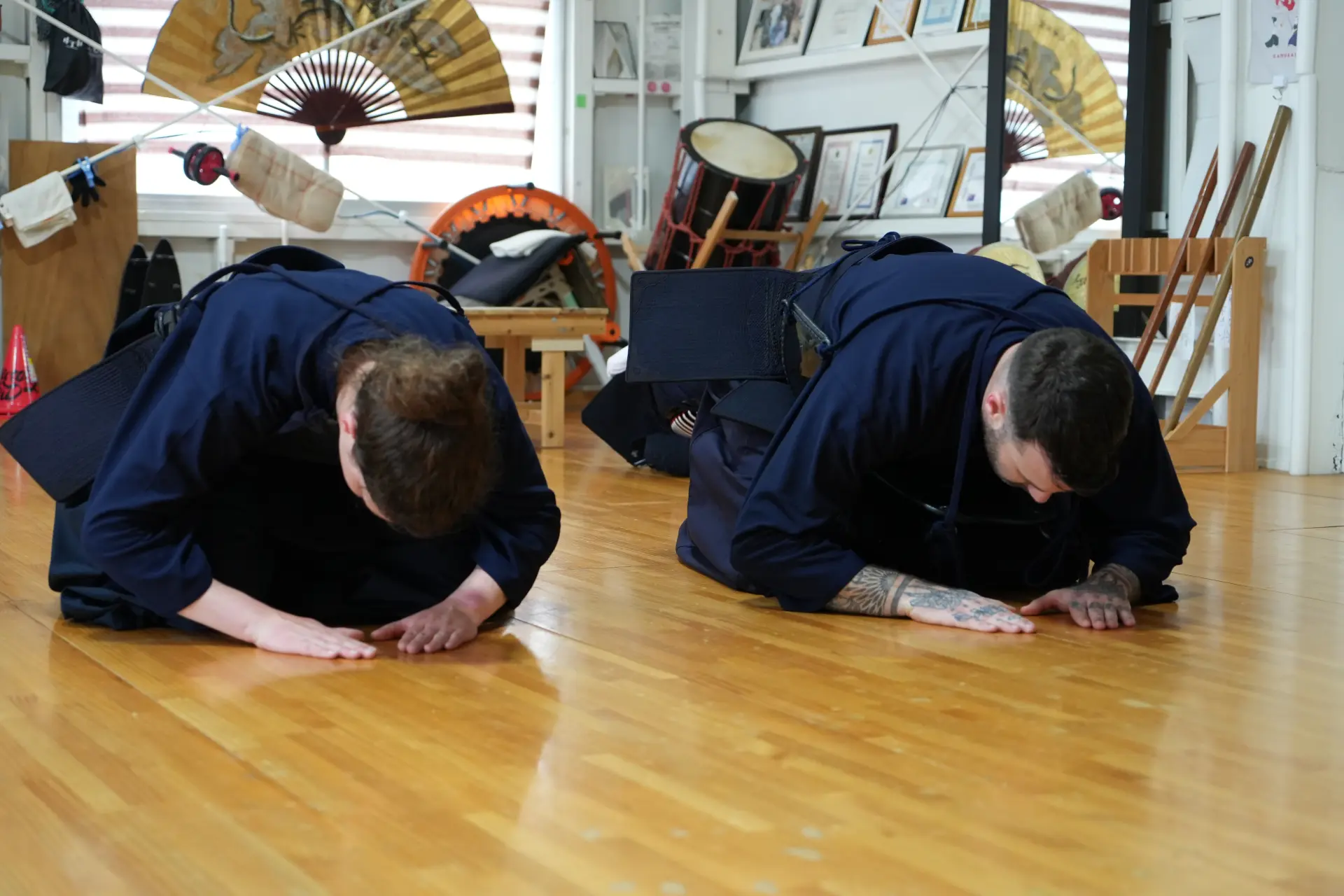
Kendo begins and ends with a bow. Bowing is essential in both training and competition. Practitioners bow to show respect to their instructors, training partners, opponents, referees, and even the environment and equipment that make practice and competition possible. Kendo practitioners can refine their techniques and develop themselves only because they have opponents and a suitable training environment. Because defeating an opponent is not the sole purpose of kendo, bowing and respect are especially important. Bowing also helps practitioners compose themselves and practice self-discipline.
Try Kendo for Yourself!
In Osaka, there is a facility where visitors can learn the fundamentals of kendo while experiencing the culture and values cherished by the Japanese people. It is called Samurai Training Experience KENDO in Osaka. Authentic training is led by Toshihiko Funabiki, who has practiced kendo since the age of 5, has more than 20 years of experience, and has won numerous tournaments. He continues to teach children at a local dojo today. The program not only offers an opportunity to experience Japanese culture through training, but is also conducted entirely in English, making it especially popular with international visitors. Be sure to make a reservation before visiting.
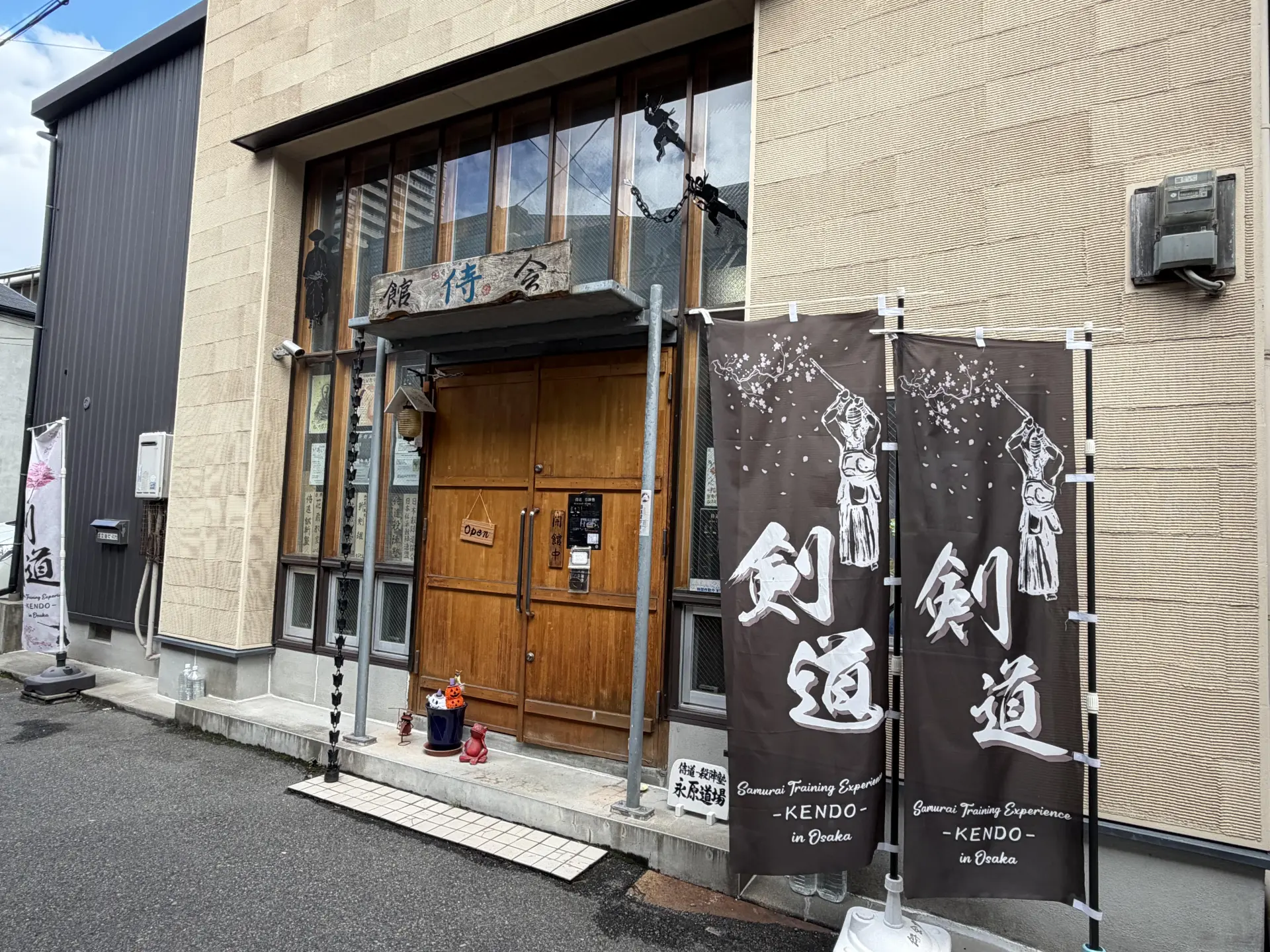
Samurai Training Experience KENDO in Osaka
- Address
- 1-18-2 Honjo-higashi, Kita Ward, Osaka City, Osaka Prefecture
- Session Times
- Monday–Friday, 10:00 a.m.–12:00 p.m. and 2:00 p.m.–4:00 p.m.
- Fees
-
Adults (ages 16–75): ¥19,800
Children (ages 5–15): ¥16,500
Children must be accompanied by at least 1 adult. - Official website
- Official website (Japanese)
Pose for Samurai Photos with Props
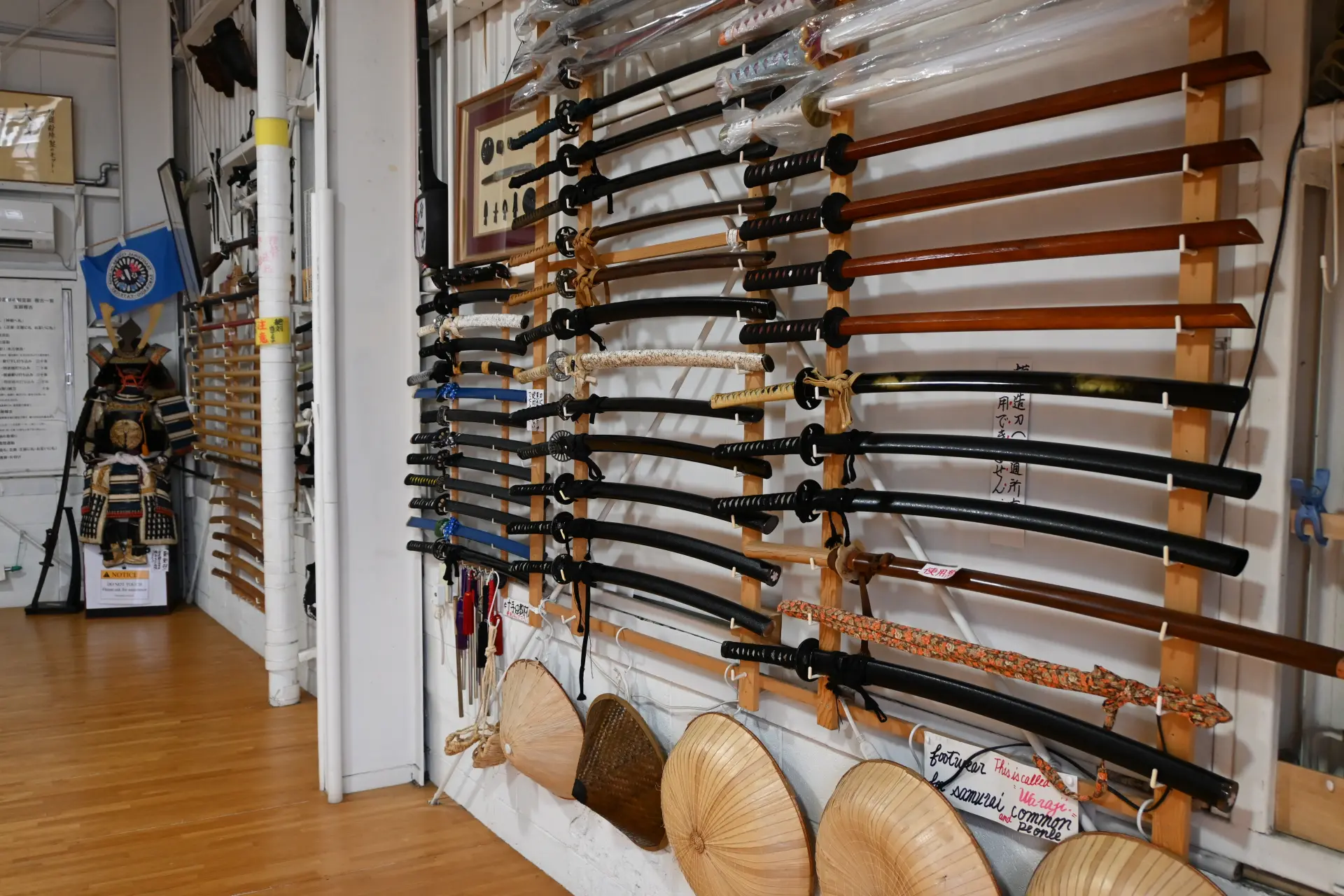
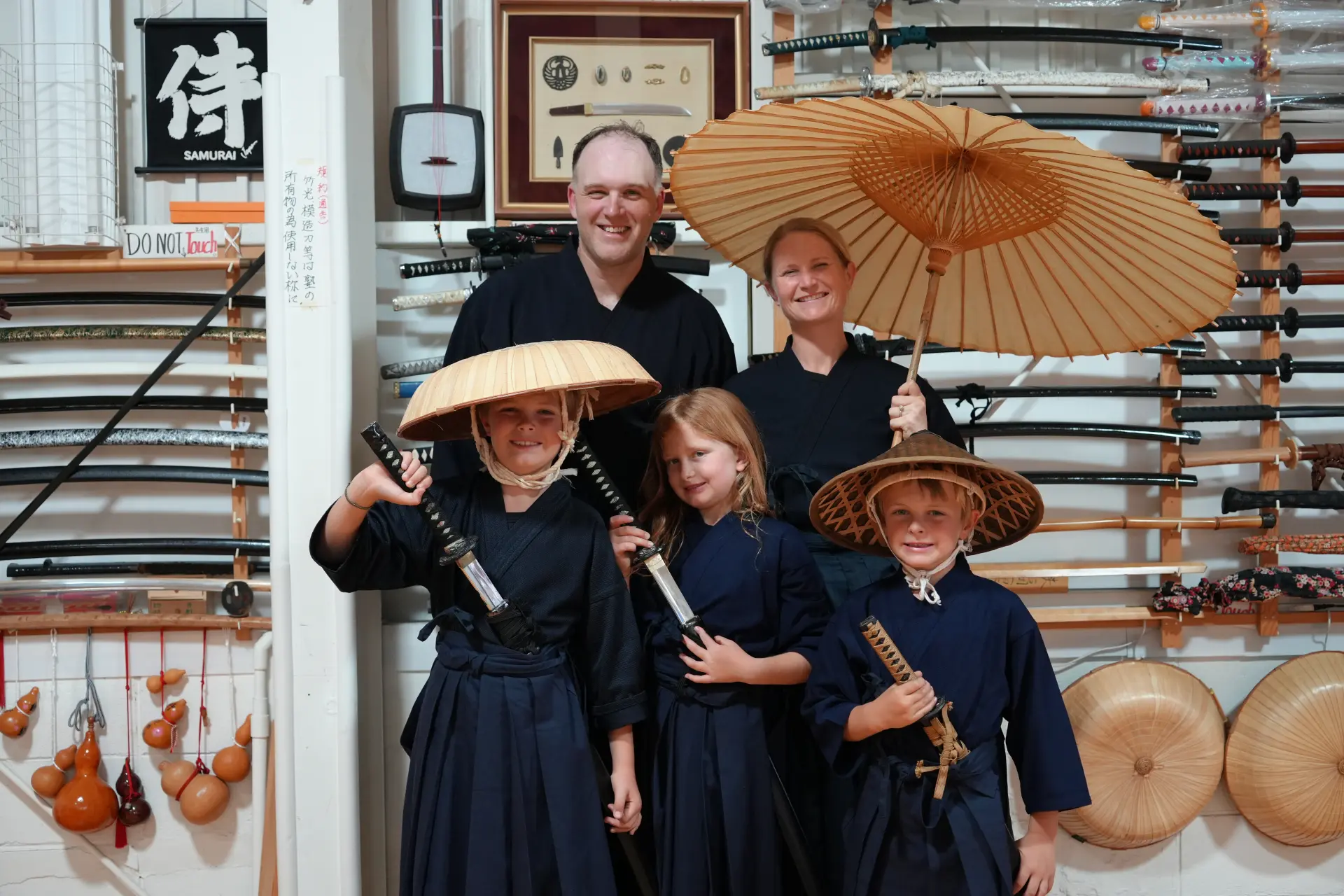
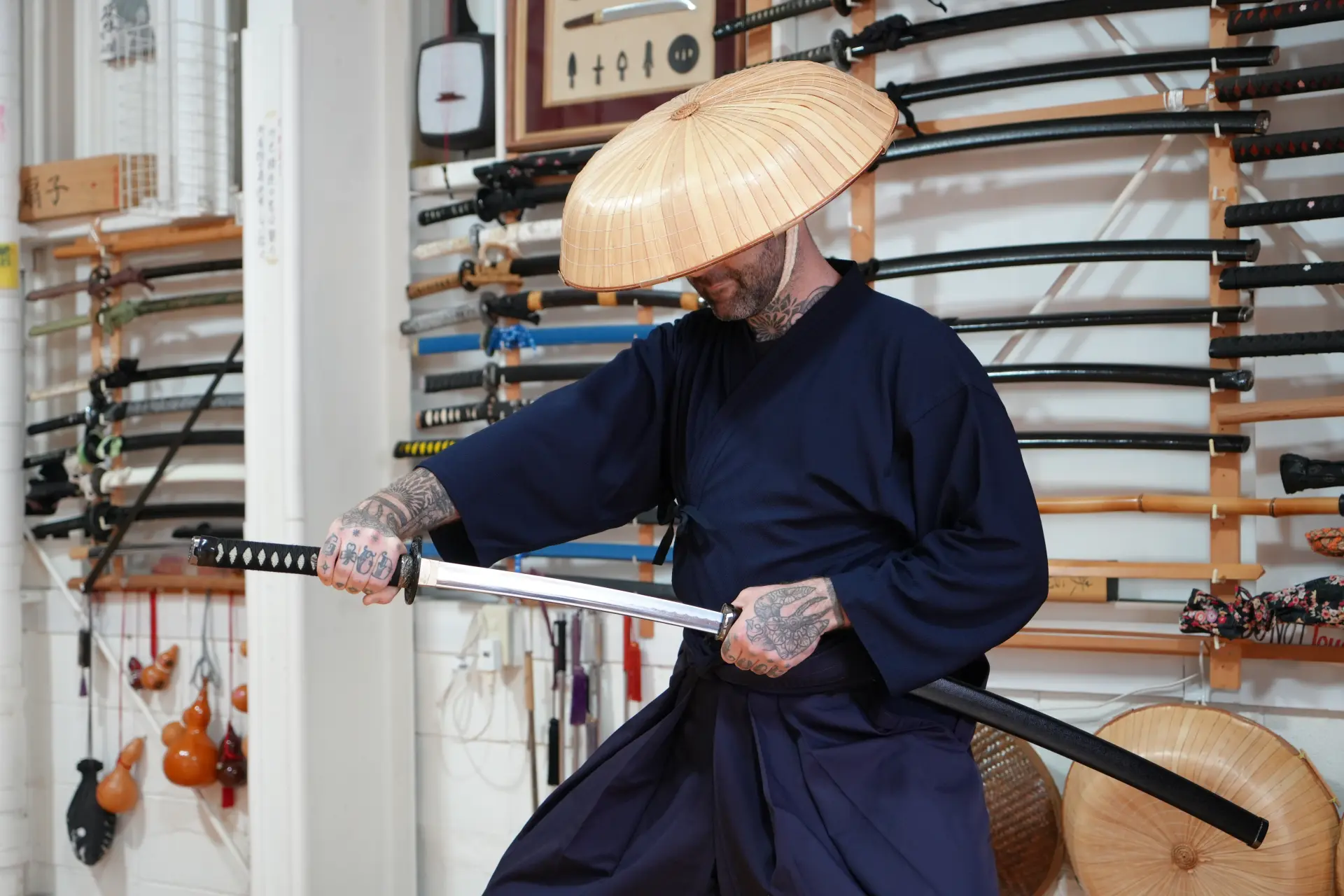
After changing into the provided keikogi and hakama, you can pose as a samurai for commemorative photos before training begins. Choose your pose while holding a Japanese umbrella or sword, or wearing a traditional kasa hat.
Stretching
Next comes stretching as a warm-up. This is an important part of preparing for kendo. Practitioners raise and swing a shinai in large movements and use their leg muscles to take powerful steps forward, so be sure to stretch thoroughly to help prevent unexpected injuries.
The History of Kendo and the Samurai
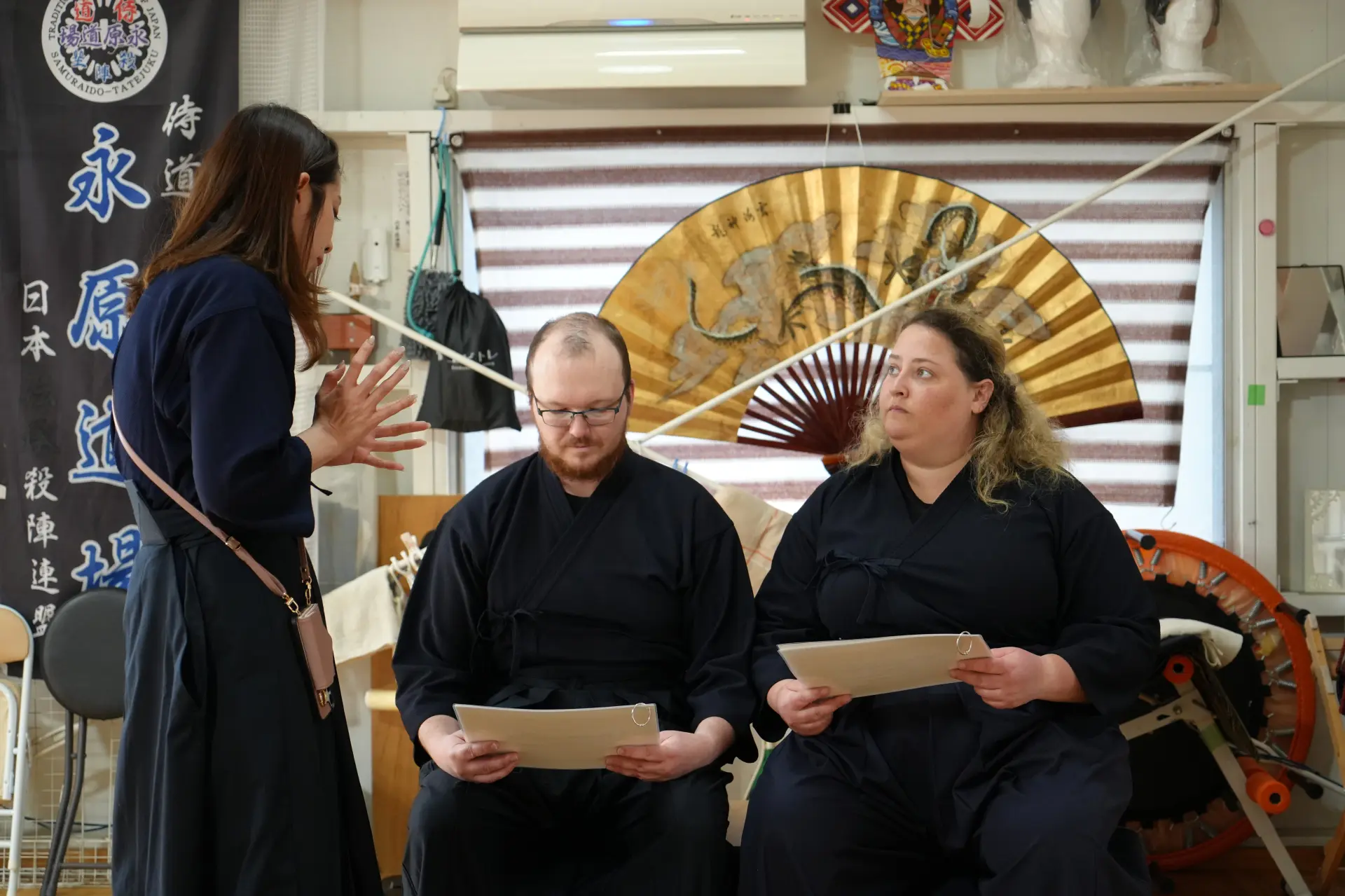
After stretching, you will learn about the history of kendo and the samurai. We heard how kendo originated around the 12th century from the relationship between samurai and Japanese swords, and how, after peace arrived, it developed from a technique for cutting down enemies into a form of mental training for personal growth. Learning this history before beginning the hands-on portion makes the experience more meaningful. Feel free to ask as many questions as you like!
Etiquette and Meditation
You will learn proper etiquette, beginning with how samurai sit and stand. Because samurai wore their swords on the left, they placed their left knee on the floor first. We learned that if they lowered their right knee first, their left leg would obstruct the sword as they drew it, preventing them from moving quickly. We were also taught that samurai bowed at an angle of 15 degrees.
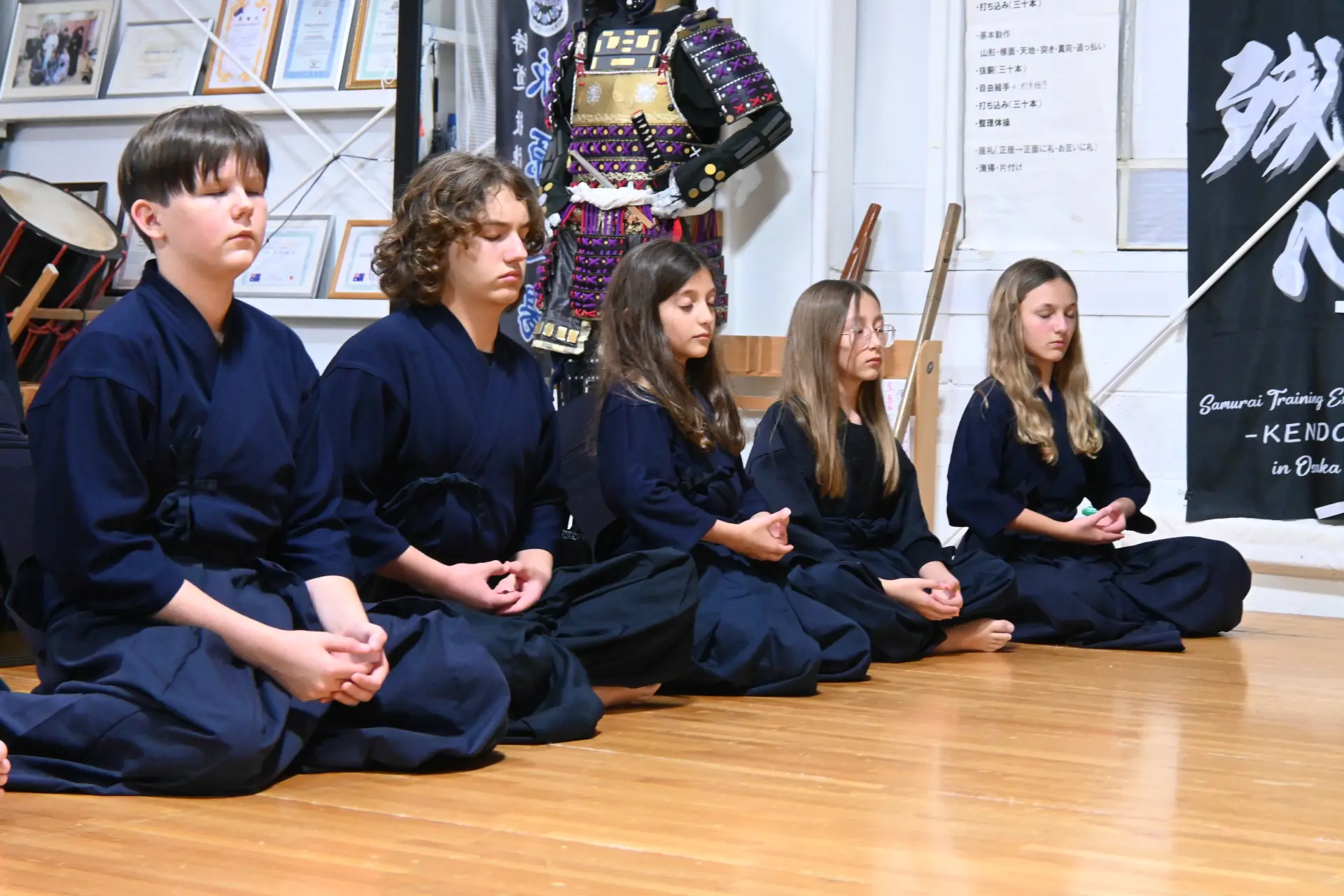
The session also includes meditation along with bowing. During meditation, you sit in seiza and place your hands below your navel, with the right hand underneath and the left hand resting on top to form a rounded shape. In Buddhism and martial arts, the right hand is associated with emotion and the left with reason. Placing the left hand over the right symbolizes controlling emotion with reason. Once your posture is set, close your eyes and meditate. This is a time to express gratitude for having an opponent who makes kendo possible, focus your mind, and prepare yourself for training.
Introduction to Kendo Armor and Shinai
Next, you will learn about the equipment used in kendo. We were taught that a shinai is made from four bamboo slats, which part of it is used to strike, and the four protected target areas: the top of the head and throat on the men, the right hand protected by the kote, and the abdomen protected by the do.
Practice Swings with a Shinai
Now it is finally time to begin the authentic training. The session starts with practice swings using a shinai. The instructor explains how to hold the shinai and take the proper stance.
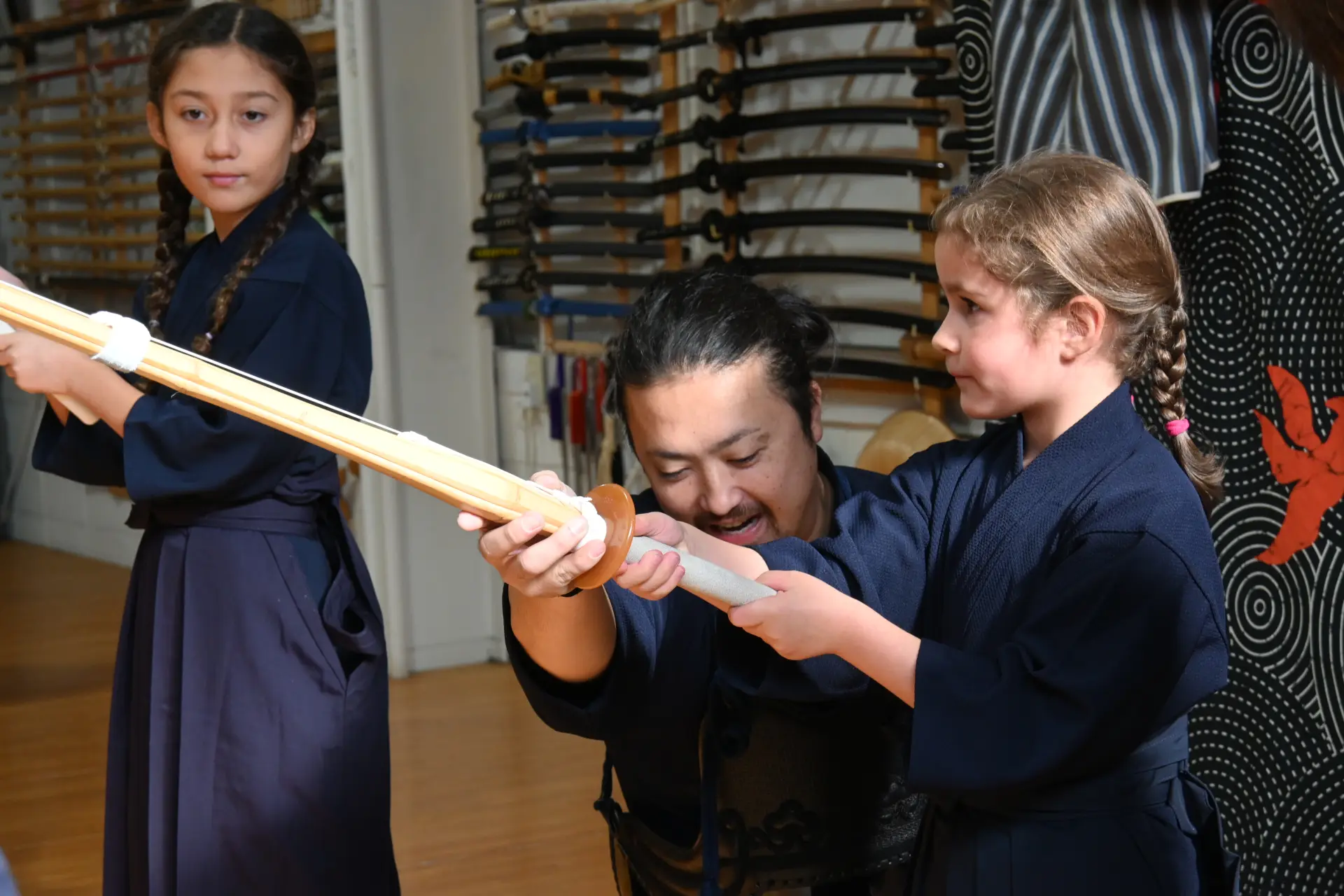
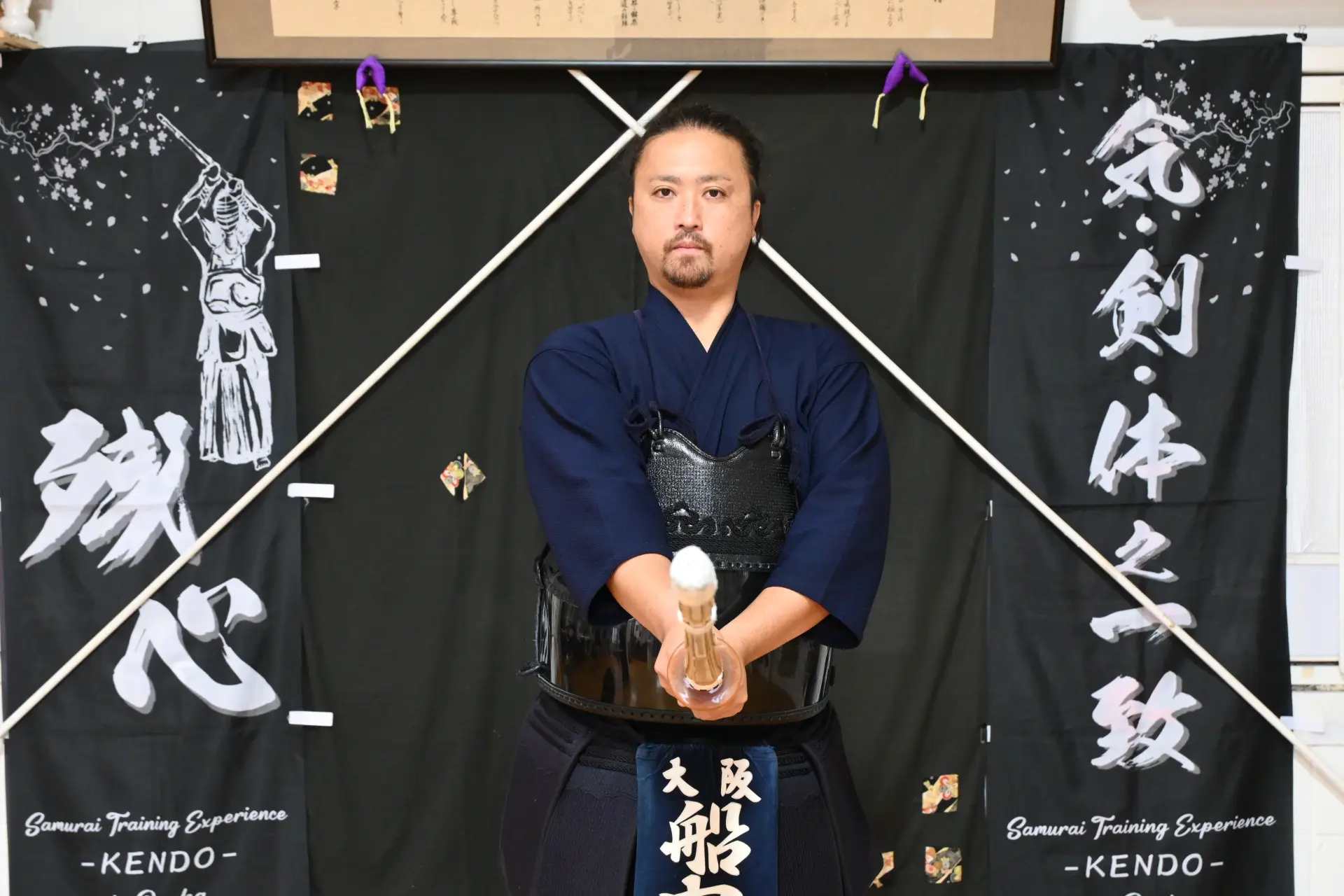
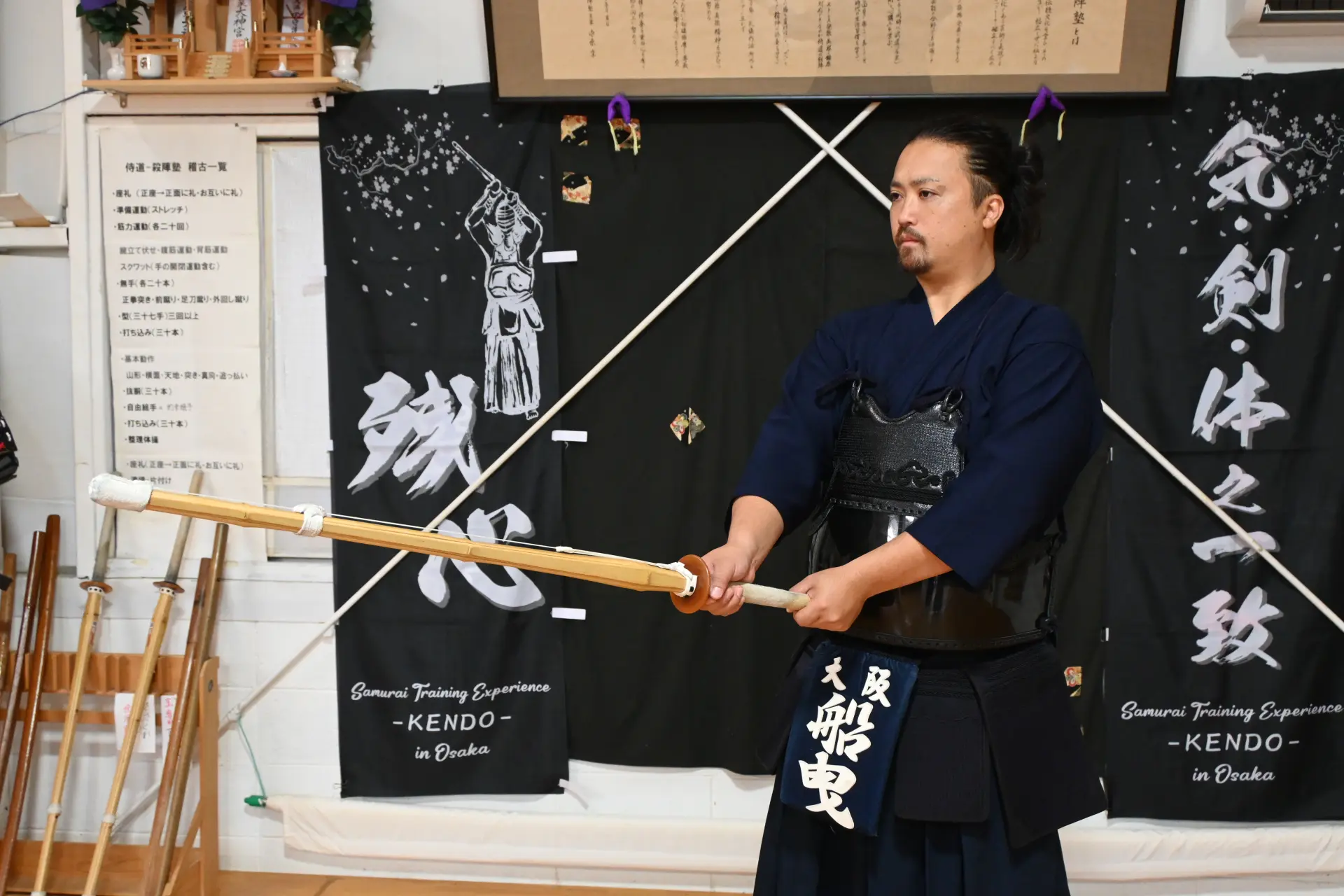
There are three styles of stance: jodan, chudan, and nito, the two-sword style. The most common is chudan, in which the right hand and right foot are positioned forward.
We were taught to begin by holding the shinai in the left hand, bring it around in front with the right hand, keep the tsuru facing upward, and position the tip along an imaginary line extending from the forehead. It becomes easy with practice, but at first it is surprisingly difficult to position the hands correctly while keeping the tsuru facing upward. Practice is the only way to achieve a confident-looking stance.
After practicing the stance, you move on to swinging the shinai. We were taught to raise both hands behind the head while keeping the shinai straight, then extend both arms and swing it down with force. As you raise the shinai, slide the right foot 1 step forward. As you swing it down, slide the left foot forward to meet it.
Footwork Practice
Footwork is another extremely important element. The basic movement involves sliding the feet while keeping them close to the floor. The session includes repeated footwork drills, and without careful attention, the movement can easily start to resemble skipping. For me, this footwork was the most difficult part of the training. In kendo, it is essential to leap forward quickly and strike the opponent, so make sure to practice the footwork thoroughly.
Practice Basic Strikes While Wearing Armor
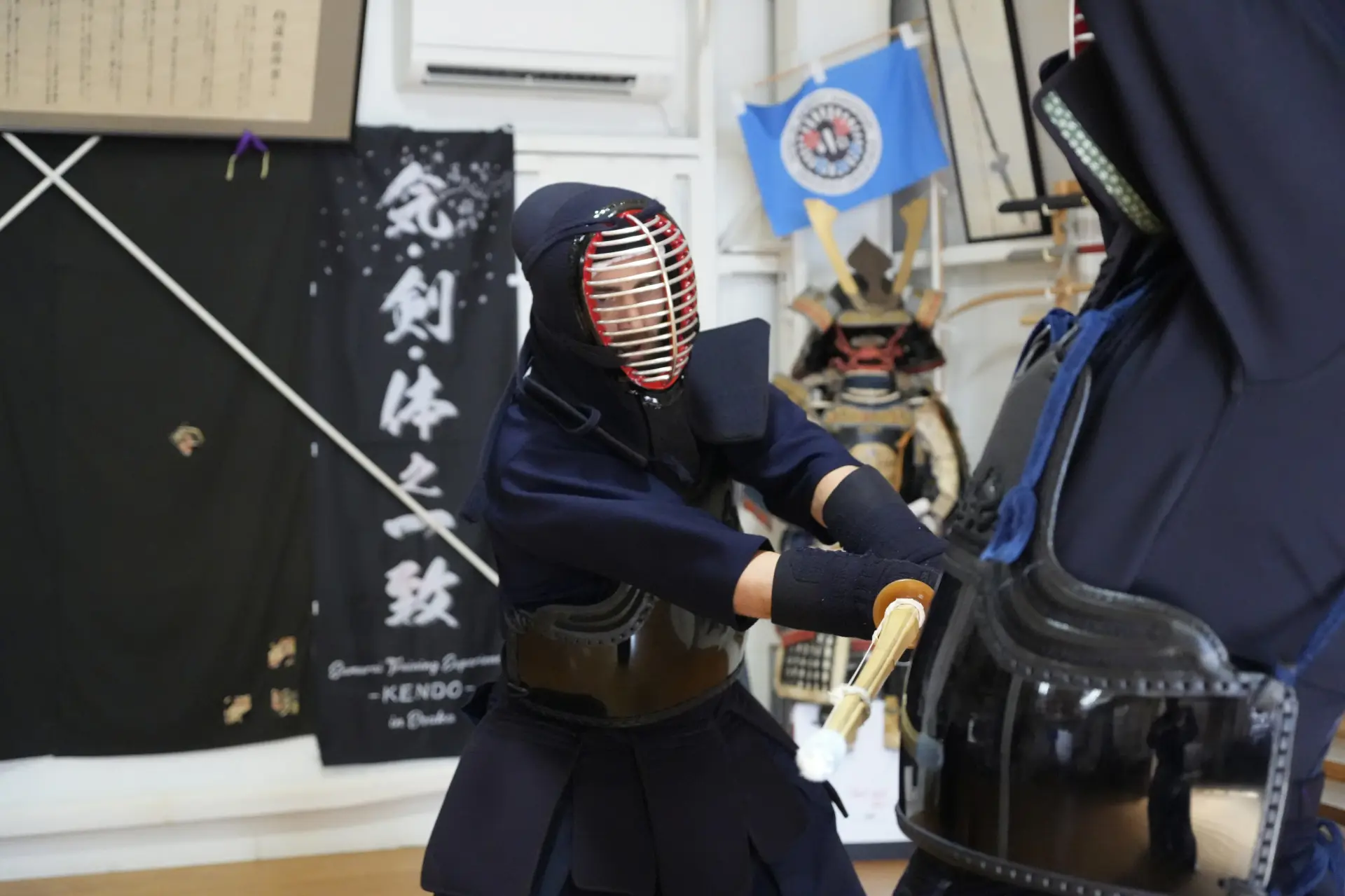
After learning the basic movements through practice swings and footwork drills, you put on the protective armor and practice fundamental strikes. You will learn four types: men, kote, do, and kote-men.
First, face your opponent and shout “Yaa!” loudly from your core to express your spirit. Then call out the target, such as “Men!” “Kote!” “Do!” or “Kote, men!” and strike the area you named while moving past your opponent. After striking, continue forward without stopping, then turn to face your opponent. This is called zanshin. You must remain alert and ready even after landing a strike so that you can respond to a counterattack.
For men, aim at the top of the head; for kote, the right hand; and for do, the right side of the abdomen. For kote-men, strike the right hand and then the top of the head. At first, you may hesitate out of concern for your opponent, but the protective armor prevents the strikes from causing pain, so there is no need to be overly cautious. Strike firmly and try to produce a sharp crack from the shinai. It feels very satisfying when you get a good sound.
Technique Training
After practicing the basic strikes, you move on to specific techniques. You will learn 5–7 techniques, including ai-men, in which both practitioners strike men at the same time, and kote-suriage-men, in which you deflect an opponent’s kote strike upward with your shinai and immediately counter with a men strike. These techniques are one step more practical than the basic strikes and are therefore more challenging, but as you learn them, you can feel your shinai control improving. A match follows this training, so practice until the movements begin to feel natural.
Learn the Rules, Then Compete or Spar
That concludes the practice portion. You will then either compete against friends or family members attending with you or take part in sparring practice with the instructor.
First comes an explanation of the match. A kendo court measures either 9 m × 9 m or 11 m × 11 m.
Take 1 step into the court from outside, face your opponent, maintain eye contact, and bow your head 15 degrees. The bow is limited to 15 degrees because you must remain ready to engage the opponent in front of you. A deep bow that takes your eyes off your opponent could leave you vulnerable to an attack, illustrating the close connection between kendo and the samurai.
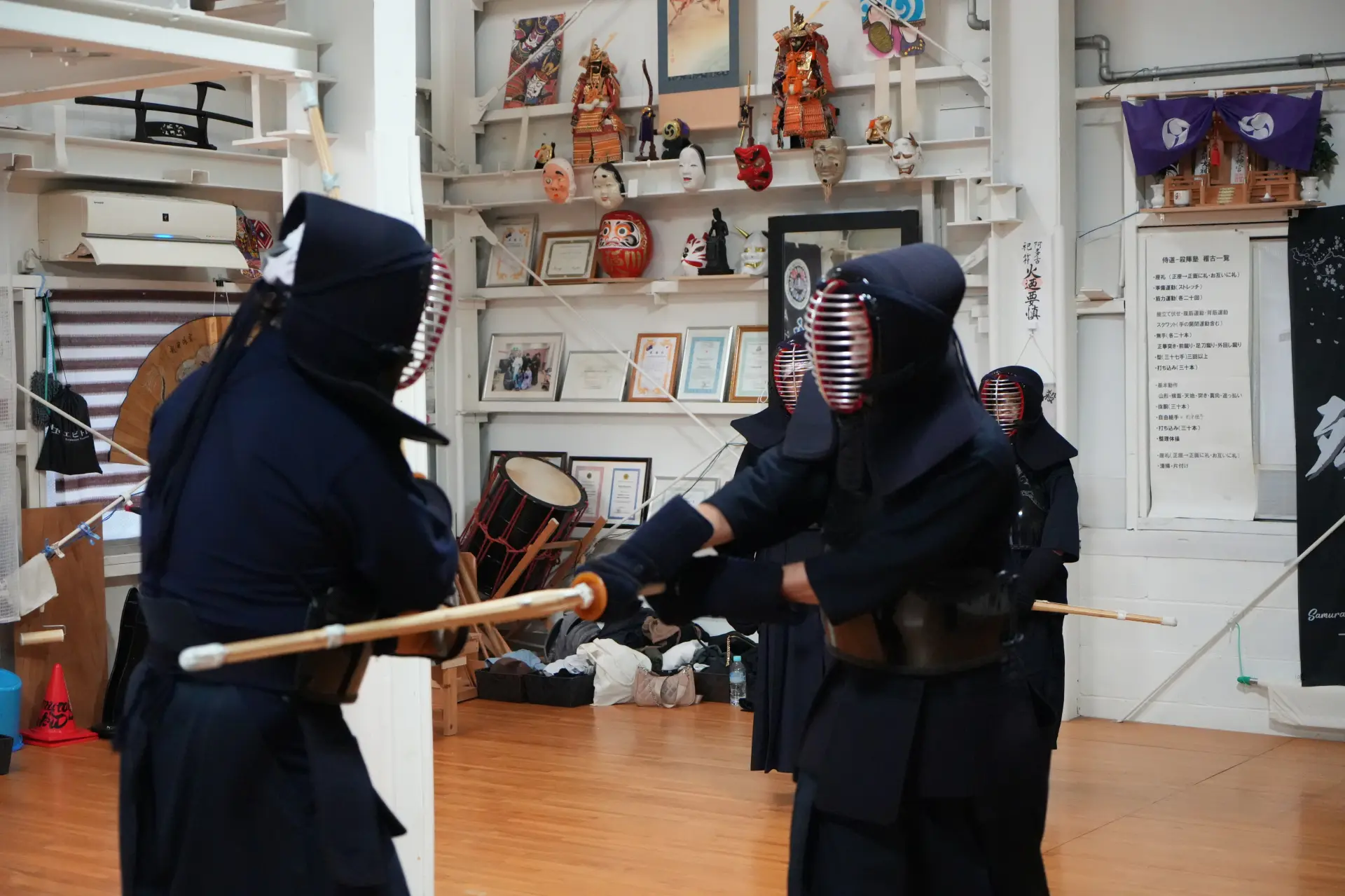
Next, raise the shinai in your left hand to your waist, take 3 steps forward beginning with your right foot, and lower yourself into the sonkyo position while taking your stance. Sonkyo is a crouching position in which the upper body remains straight while the knees open outward and the body is lowered onto the toes. Lowering yourself demonstrates respect for your opponent and reflects a traditional aspect of Japanese culture and values. It can be difficult to maintain your balance in sonkyo, but be sure to lower your hips fully.
When the referee calls “Hajime,” meaning “Begin,” stand up and start the match. The first competitor to score 2 ippon wins. Once the result has been decided, return to the position where you began the match and lower yourself into sonkyo again while maintaining your stance. Lower the shinai, stand up, step backward, face your opponent, and bow your head 15 degrees. This completes the sequence.
Kendo begins and ends with a bow and is practiced with respect for one’s opponent. For this reason, you must not celebrate or make a victory gesture after scoring an ippon. Doing so may cause the point to be revoked and can result in a penalty or disqualification. Aggressive behavior, such as striking the ground with the shinai, is also considered a breach of etiquette and results in a penalty.
In addition, dropping your shinai during a match ends the match immediately. Stepping outside the court is also a penalty.
We were also taught that simply landing a strike is not enough to score an ippon. You must demonstrate ki-ken-tai-itchi, the unity of spirit, sword, and body, by striking accurately with determination and stepping forward powerfully.
In an actual match, you become so focused on executing your techniques that it seems to end in an instant. When none of your techniques connect, it can be discouraging, but even a momentary lapse in concentration may give your opponent an opening to score an ippon. Stay focused and approach the match with a strong determination to strike. Do not hesitate—attack boldly. Remember to shout “Yaa!” loudly and call out the target of your strike. Landing a strike with a sharp crack from the shinai and scoring an ippon gave me a strong sense of accomplishment.
Bowing and Meditation
After completing all the training, you bow and meditate once more, expressing gratitude for the opportunity to practice kendo and to the opponent who competed against you.
Final Impressions
The full 2-hour program was rewarding and enjoyable, even for a beginner. Because all communication during training is in English, it is easy to understand why the experience is so popular with international visitors. In addition to providing authentic, physically active training, the program offers a thorough introduction to the history of kendo and the values of the Japanese people, making it a highly satisfying experience. The explanations and instruction are careful and easy to follow, so beginners and families with children can participate with confidence.
Summary
This article has shown that learning kendo involves much more than mastering sword techniques. Kendo is not simply a form of physical exercise. Its depth, and its distinctly Japanese character, come from the samurai spirit and mindset at its foundation.
Beginning and ending with a bow. Facing yourself. Respecting your opponent. Training the mind while refining your techniques. These principles have been passed down throughout kendo’s long history. The Japanese people have cherished kendo as a “way” and as a culture that fosters personal growth. When you visit Japan, try holding a shinai and facing yourself through kendo. By experiencing it physically, you will gain a deeper understanding of the values that kendo has preserved.

Author
Freelance Announcer
Sayaka Motomura
Focused on sharing insights related to traditional culture, performing arts, and history.