
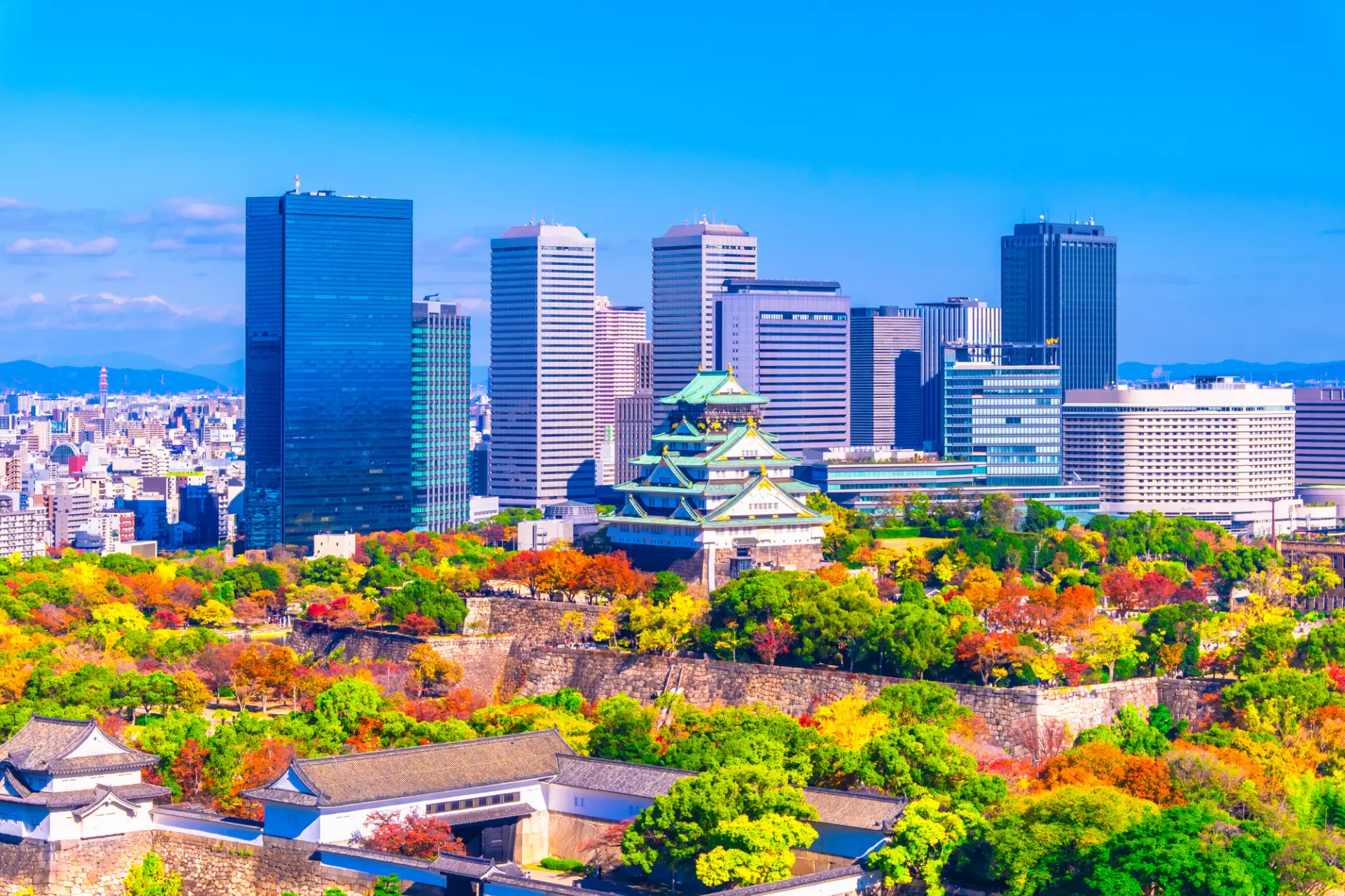
Osaka Fall Travel Guide: Fall Foliage, Scenic Views, and Hot Springs
A fall trip to Osaka offers both the energy of the city and nature dressed in autumn colors.
Admire the seasonal scenery at Minoh Falls and Katsuo-ji Temple, explore waterfront streets and art in Nakanoshima, and unwind in the hot springs of Inunakiyama.
Fall festivals and events increase from September, while the foliage usually peaks from mid-November to early December. Combine World Heritage sites with local Osaka cuisine, and venture from downtown to the suburbs to experience the many sides of Osaka in fall.
How to Experience Osaka in Fall: Nature and History Just Beyond the City
Using central Osaka as a base and venturing into the suburbs greatly expands the possibilities of a fall trip.
Look out over the forest from Hoshi no Buranko and walk among the autumn leaves in Minoh. Explore modern architecture and museums in Nakanoshima, then walk around the enormous burial mounds of the Mozu-Furuichi Kofun Group to experience history firsthand. Continue to Inunakiyama to soak in a hot spring while admiring the fall foliage.
Walk through forests, explore the city, discover its history, and finish with a soothing bath. That variety is what makes a fall trip to Osaka about more than urban sightseeing.
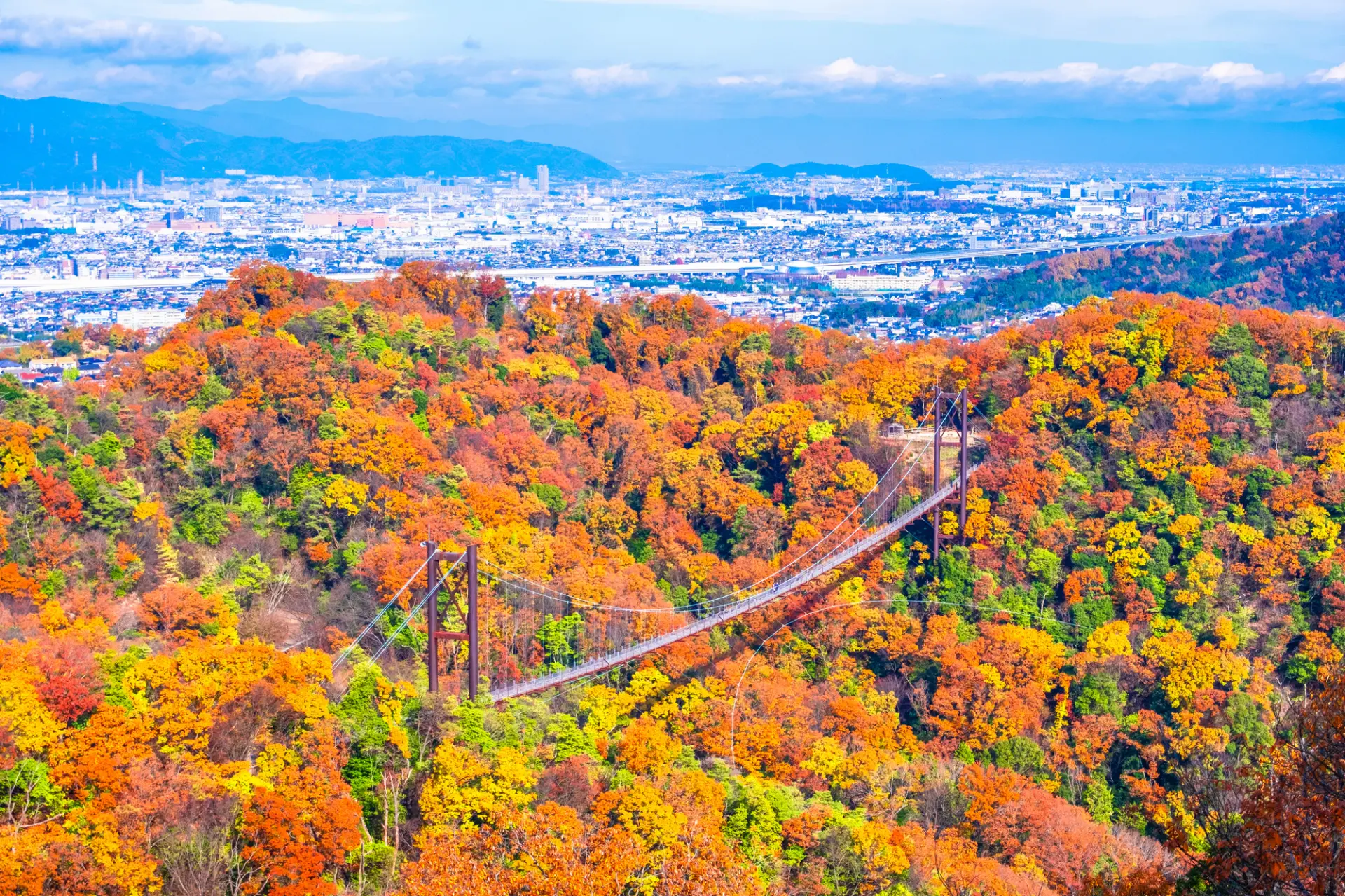
7 Popular Osaka Attractions to Visit in Fall
Osaka is best known as a lively city, but forests, waterfalls, and hot springs await just beyond the urban center, while waterfront and historic sites are scattered throughout the city itself.
Spend one fall day walking through nature amid the foliage and another exploring architecture and culture in town. Visit these seven places to discover Osaka's diverse appeal.
1. Hoshi no Buranko at Hoshida Park, Osaka Prefectural Forest (Katano City)
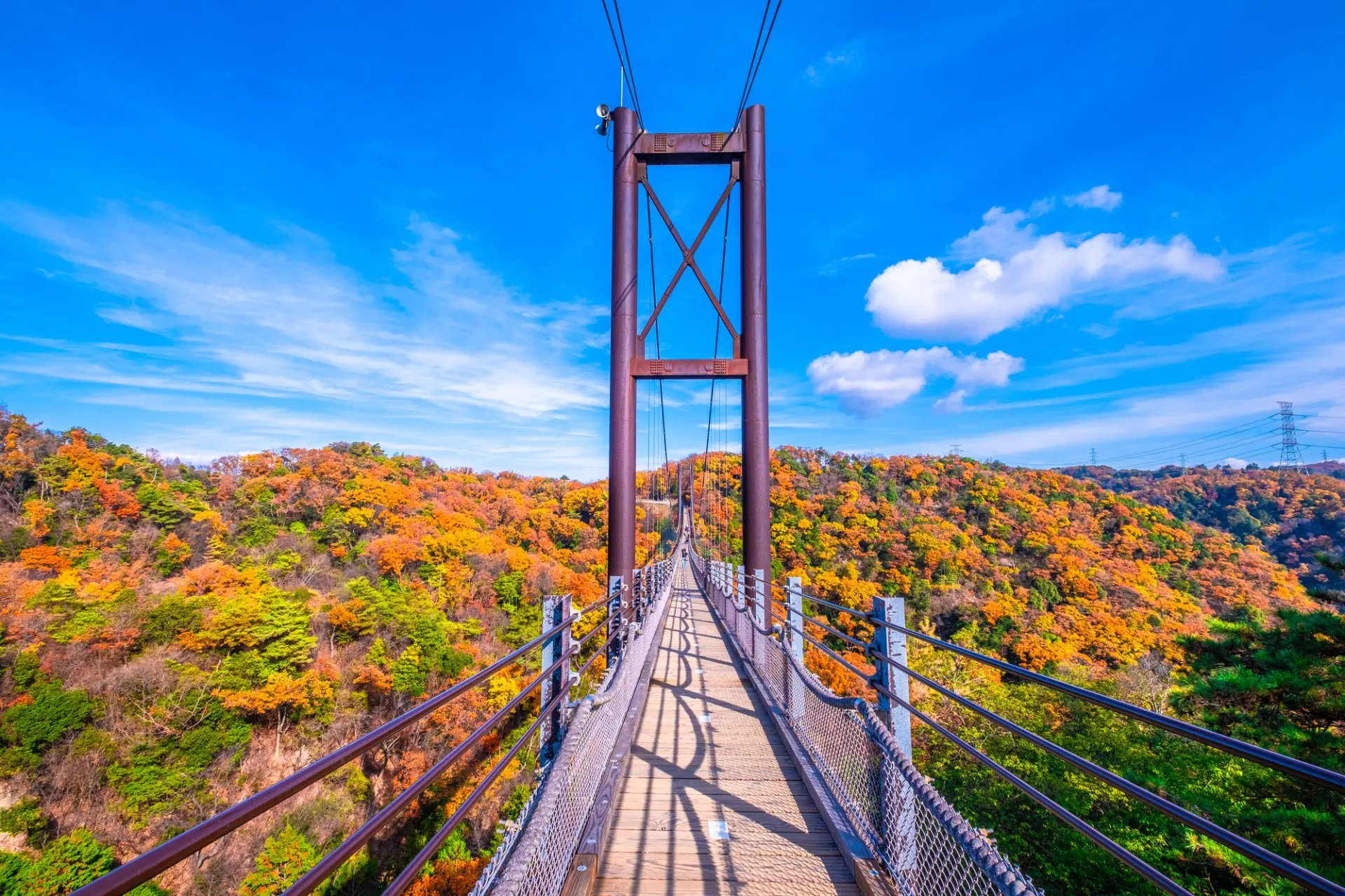
Hoshi no Buranko is a wooden-deck suspension bridge spanning the forest at an elevation of 180 m. It measures 280 m long and rises as high as 50 m above the ground. Cross the bridge for sweeping forest views and scenery that changes beautifully with the seasons throughout the year.
Katano is known as the home of the Tanabata legend, and the bridge was nicknamed Hoshi no Buranko, or “Star Swing,” as a symbol of this “village where stars fall.” The park also has hiking routes for different fitness levels, leading through the forest to this walk through the sky.
- Name in Japanese
- 大阪府民の森ほしだ園地「星のブランコ」
- Postal Code
- 576-0011
- Address
-
5019−1 Hoshida, Katano City, Osaka
Google Maps - Tel
- 072-891-0110
- Admission
- Free
- Regular holiday
-
Tuesday and New Year holidays 12 / 29-1 / 4
* Please check the official website for details. - Business Hours
- 9:30am-4:30pm
- Access
-
Get off at Kisaichi Station on the Keihan Katano Line. A 40-minute walk to Piton's hut on the hiking course (Ikoma traverse, Kawazoi no Michi). It takes about 20 minutes from Piton's hut to Hoshi no Buranko via the road of adventure (the road of steep stairs). After that, it will take about 5 minutes on the gentle management road.
* Please check the official website for details. - Official Site
- Official Site (Japanese)
2. Minoh Falls (Minoh City)
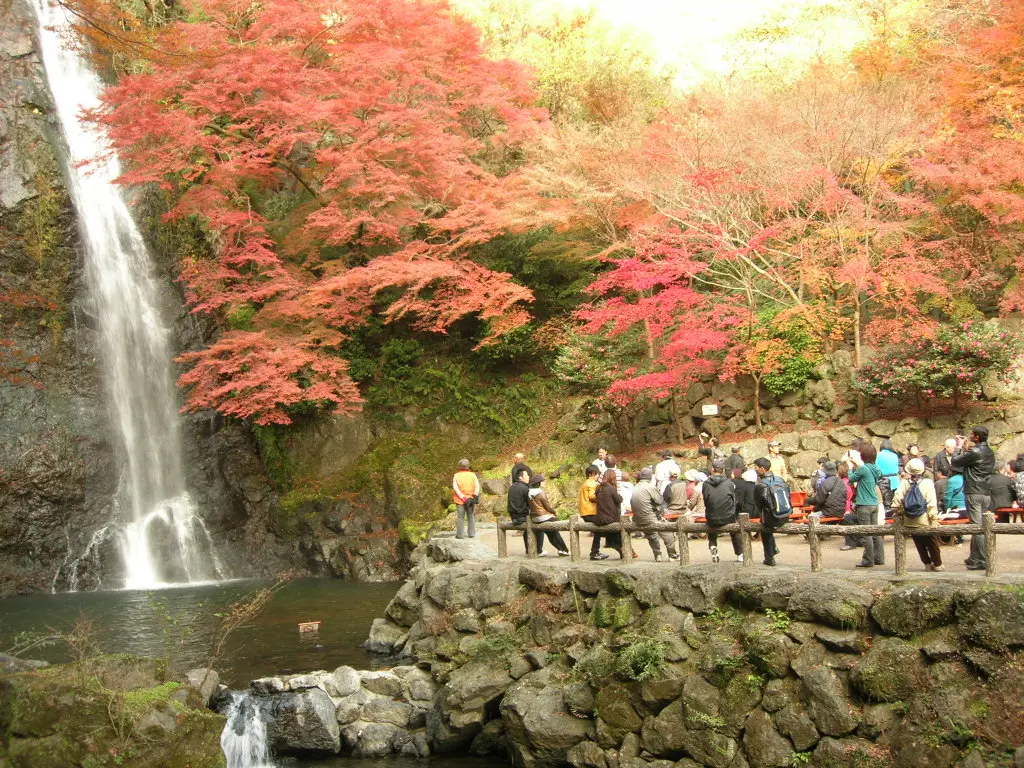
Surrounded by the natural beauty of Minoh Park, Minoh Falls is one of Osaka's best-known waterfalls and is included among Japan's Top 100 Waterfalls. Its name comes from the way the falling water resembles a traditional winnowing basket called a mino.
Minoh Park itself is included among Japan's 100 Best Forest Bathing Sites, and its convenient location about 30 minutes by train from central Osaka adds to its appeal. In fall, follow the tree-lined path and take in the waterfall waiting at the end.
- Name in Japanese
- 箕面の滝
- Postal Code
- 562-0002
- Address
-
Minohkoen, Minoh City, Osaka
Google Maps - Tel
- 072-721-3014
- Admission
-
Free
*Please refer to the official website for the entrance fees of each facility. - Regular Holidays
- None
- Access
- From Minoo Station on the Minoo Line, walk about 5 minutes to the park entrance. About a 40-minute walk to Minoo Falls.
- Official Website
- Official Website (Japanese)
3. Nakanoshima (Kita Ward, Osaka City)
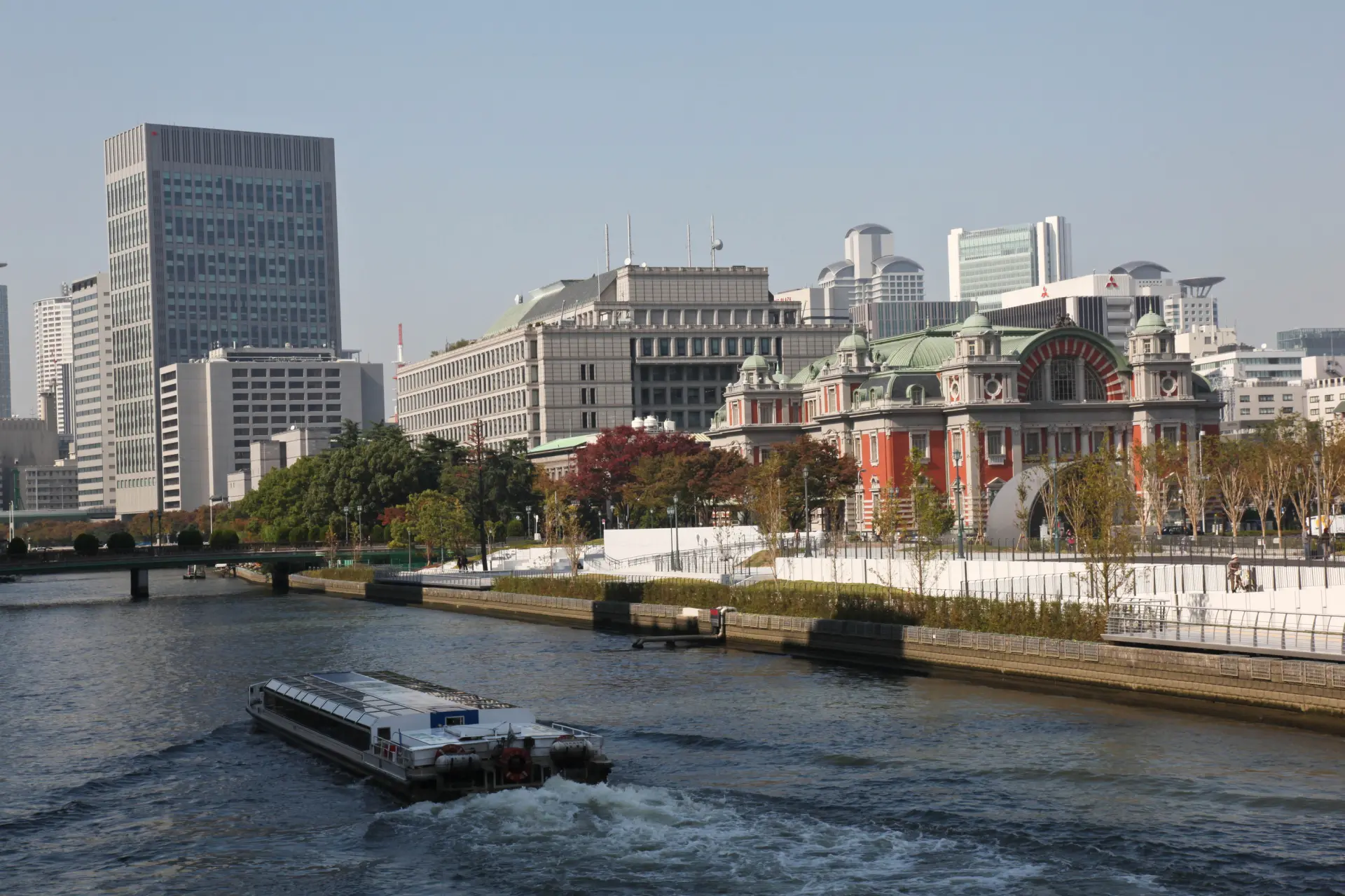
Located between the Dojima and Tosabori rivers, Nakanoshima is an island district symbolizing Osaka's identity as a city of water, where greenery, waterways, and modern architecture come together. Along the river stand buildings constructed from the Meiji period onward, including Osaka City Central Public Hall and the Osaka Prefectural Nakanoshima Library, adding a sense of history to the streetscape.
Many surviving buildings are designated Important Cultural Properties of Japan, making the area popular for photographing retro architecture. With the summer heat fading, fall is an especially pleasant time to walk along the river and admire the cityscape.
- Name in Japanese
- 中之島
- Postal Code
- 530-0005
- Address
-
Nakanoshima Area in Kita-ku, Osaka City, Osaka
Google Maps - Closed
- Always open
- Hours
- Free to walk
- Admission
- Free
- Access
-
(1) Just outside Yodoyabashi Station on the Osaka Metro Midosuji and Keihan Main Lines.
(2) Just outside Higobashi Station on the Osaka Metro Yotsubashi Line. - Credit Cards
- Depend on facilities
- Official Website
- Official Website (English)
4. Kuchu Teien Observatory at Umeda Sky Building (Kita Ward, Osaka City)
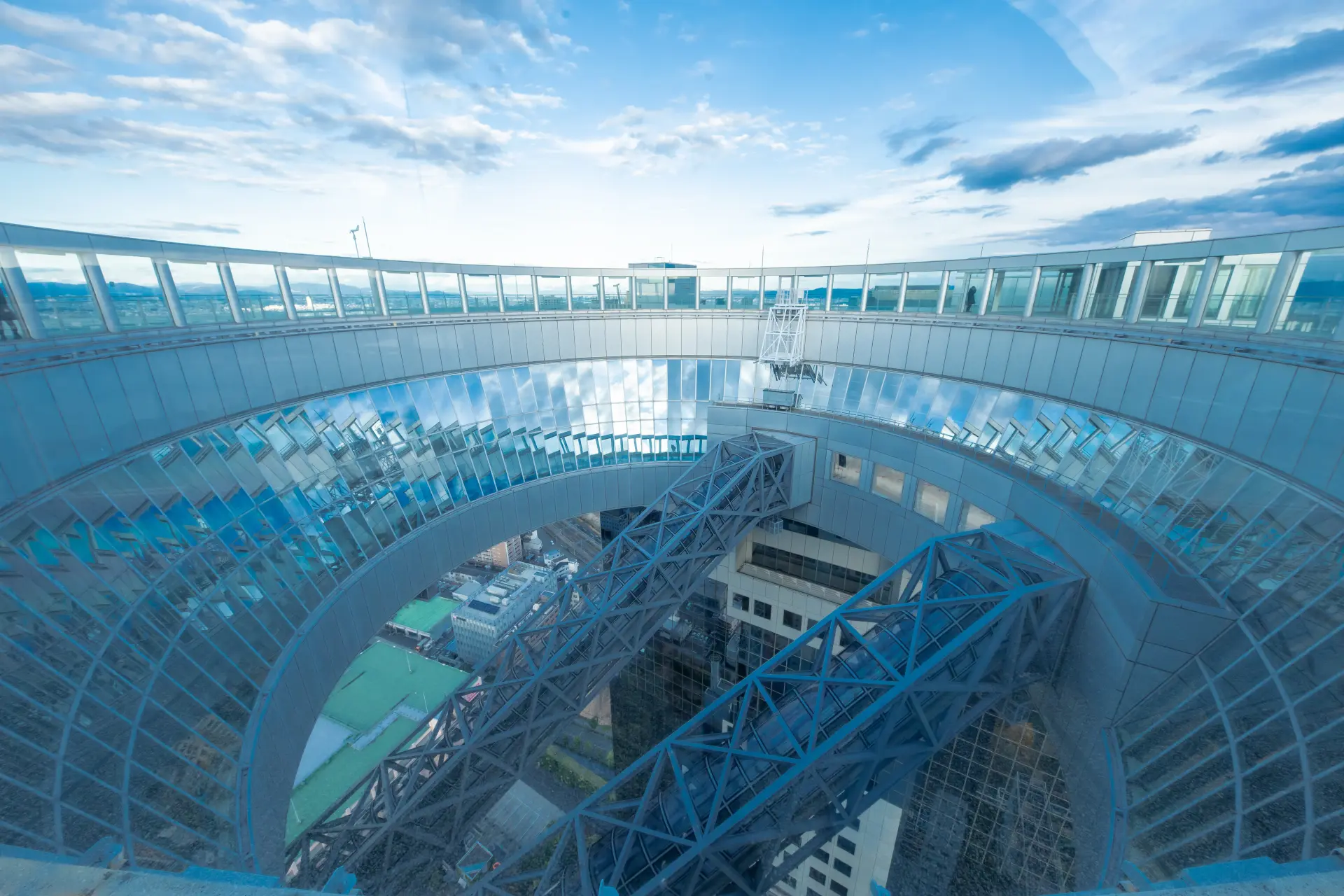
Umeda Sky Building is a striking high-rise in Osaka's Umeda district, consisting of two 40-story towers connected at the top.
From the 35th floor, ride an escalator through a glass-enclosed tunnel to the rooftop Kuchu Teien Observatory, 173 m above the ground. The 360-degree panorama includes the Akashi Kaikyo Bridge, Awaji Island, Mt. Rokko, the Tempozan Giant Ferris Wheel, and the cluster of skyscrapers across Umeda. As the sun sets earlier in fall, watch the city transition from evening light to a glittering nightscape.
- Name in Japanese
- 梅田スカイビル・空中庭園展望台
- Postal Code
- 531-6039
- Address
-
Umeda Sky Building. 1-1-88 Oyodonaka, Kita-ku, Osaka City, Osaka
Google Maps - Tel
- 06-6440-3855
- Closed
- Open every day
- Hours
-
Kuchu Teien Observatory 9:30am - 10:30pm (Last entry: 10pm)
*During reduced hours: 9:30am - 9:00pm (Last entry: 9:30pm) - Admission
- Adults: 2,000 yen (Disabled: 1,000 yen), 4-year-old through elementary students: 500 yen (Disabled: 250 yen)
- Directions
-
1) from JR Osaka Station, walk 7 min.
2) from Hankyu Osaka Umeda Station, walk 9 min.
3) from Osaka Metro Midosuji Line, Umeda Station, walk 9 min. - Credit Cards
- Accepted (JCB, Visa, MasterCard, American Express, UnionPay)
- Official Website
- Official Website (English)
5. Mozu-Furuichi Kofun Group (Sakai, Habikino, and Fujiidera Cities)
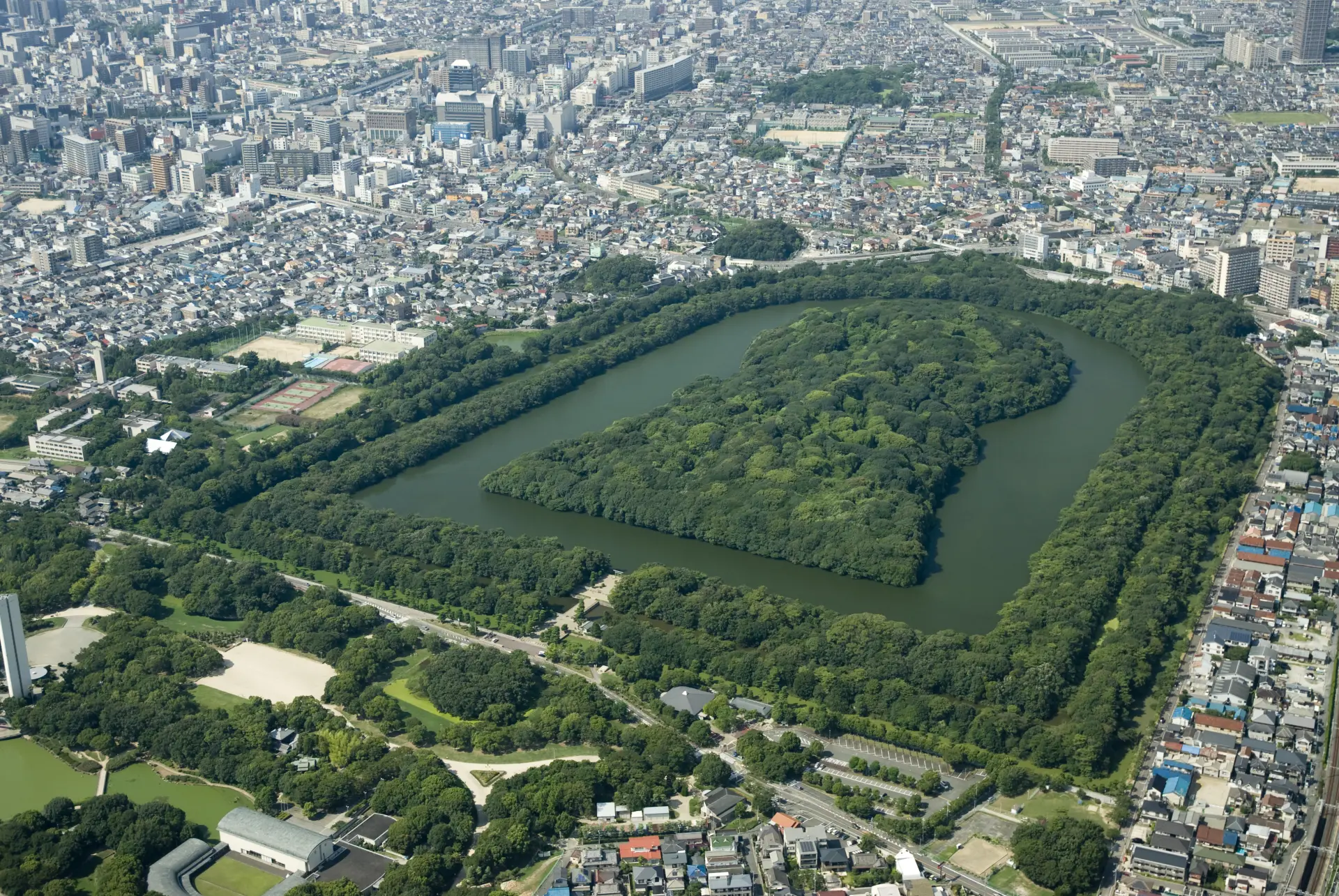
Extending across the Mozu area of Sakai and the Furuichi area of Habikino and Fujiidera, this group of ancient burial mounds became Osaka's first World Heritage site in 2019.
Located in the center of the Mozu area, the Nintoku-tenno-ryo Kofun is considered one of the world's three great tombs, alongside the Pyramid of Khufu and the Mausoleum of the First Qin Emperor. This enormous keyhole-shaped burial mound measures 486 m long, and walking its maintained perimeter takes about 1 hour. The milder fall weather makes it easier to walk around the mound while appreciating its immense scale and history.
- Name in Japanese
- 百舌鳥・古市古墳群
- Address
-
Nintoku-tenno-ryo Kofun : 7-1 Daisencho, Sakai-ku, Sakai City, Osaka 590-0035
Ojin-tenno-ryo Kofun : 6 Konda, Habikino City Osaka 583-0857
Google Maps - Tel
- 06-6210-9742 (Conference Headquarters for the Promotion of Mozu-Furuichi Kofungun for World Cultural Heritage Inscription <in Osaka Prefectural office>)
- Holidays
- Open year around
- Hours
- Open 24 hours
- Admission
- Open free to the public
- Access
-
Nintoku-tenno-ryo Kofun : About a 5-min walk from Mozu Station on the JR Hanwa line
Emperor Ōjin’s Tomb (Kofun): About A 15-Minute Walk From Kintetsu Hajinosato Station On The Kintetsu Minami-Osaka Semi-Express Line - Official Website
- Official Website (English)
6. Suntory Yamazaki Distillery (Shimamoto Town)
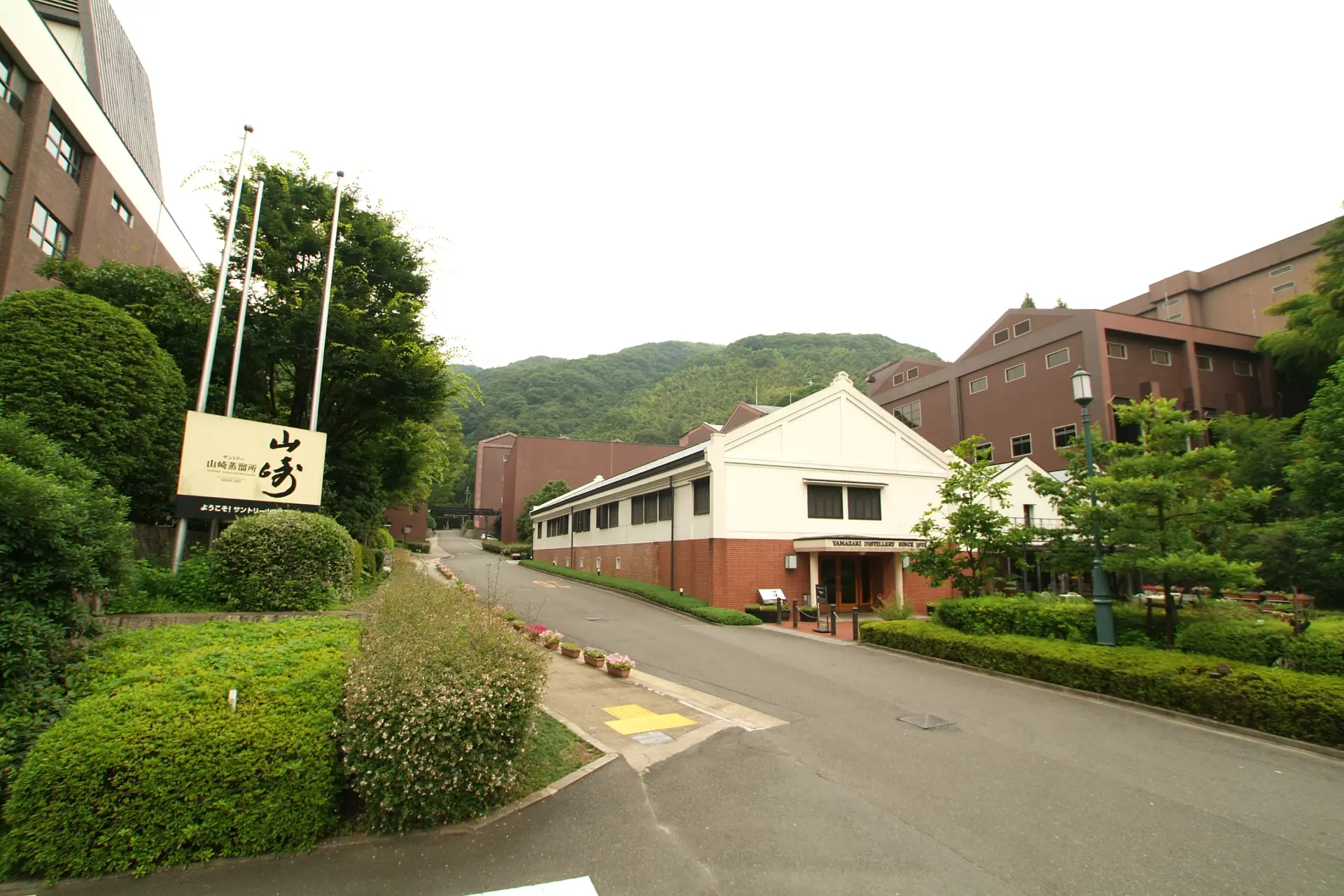
Known as the birthplace of Japanese whisky, Suntory Yamazaki Distillery is a historic distillery whose construction began in 1923. Its natural setting amid the mountains is another reason to visit.
Admission to the Yamazaki Whisky Museum on the grounds is free with an advance reservation. Inside are exhibits covering the company's early history and the evolution of its techniques, along with a shop and a paid tasting counter. Visitors can take time to learn about the craftsmanship and flavors developed at Yamazaki.
- Name in Japanese
- サントリー山崎蒸溜所
- Postal Code
- 618-0001
- Address
-
5-2-1 Yamazaki, Shimamotocho, Mishimagun, Osaka
Google Maps - Telephone
- 075-962-1423
- Closed
- Year-end and New Year holidays, factory holidays, and other off days.
- Business Hours
-
10:00am - 4:45pm(Admission allowed until 4:30pm)
*Reservations required - Admission fee
- Museum is free, but distillery tours and tastings are charged.
- Direction
- About a 10-minute walk from Yamazaki Station on the JR Kyoto Line and Oyamazaki Station on the Hankyu Kyoto Line.
- Credit Cards
- Accepted
- Website
- Official Website (English)
7. Inunakiyama Onsen (Izumisano City)
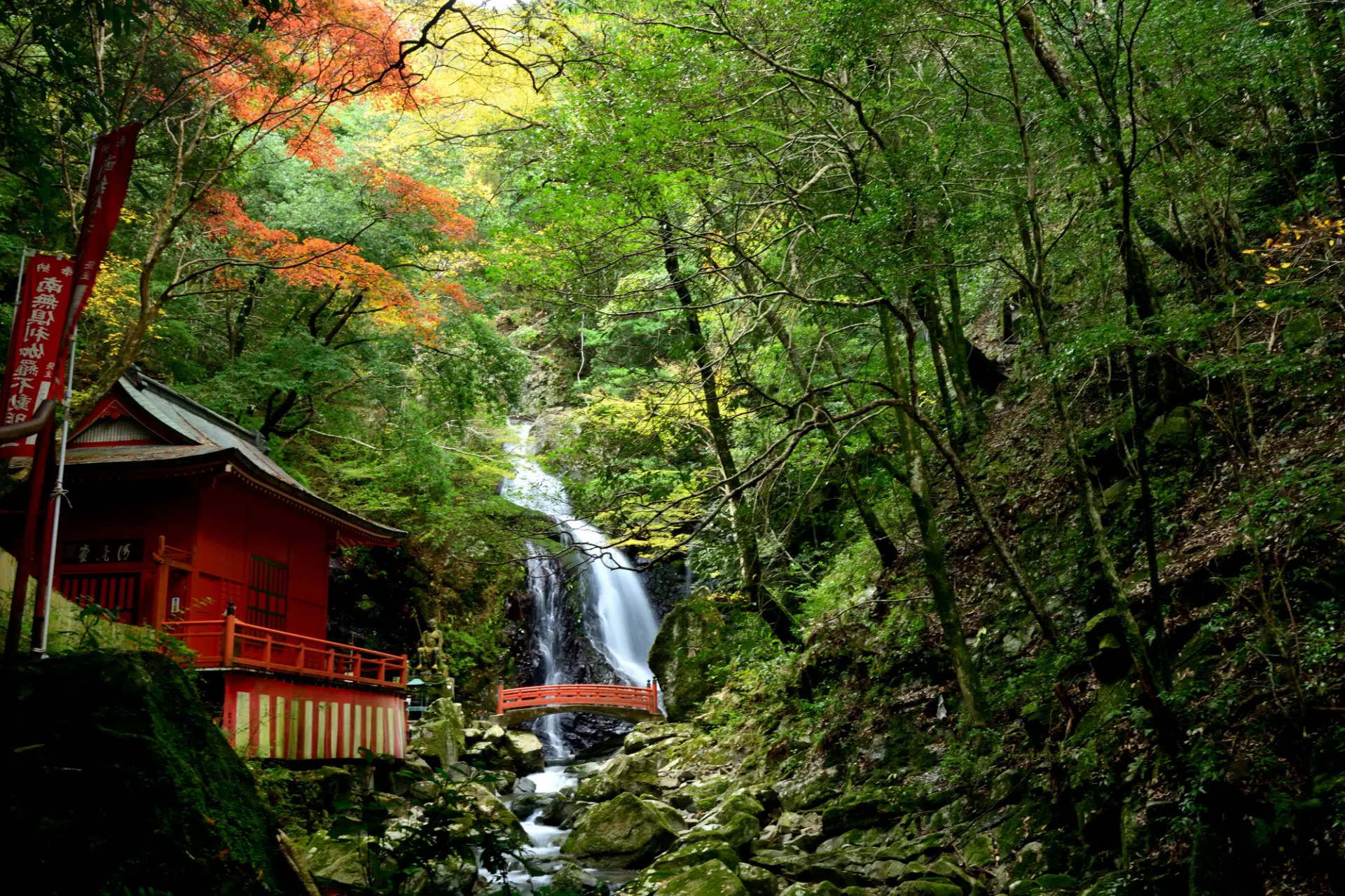
This hot spring area lies at the foot of Inunakiyama, a sacred site of Shugendo mountain asceticism established about 1,300 years ago, and is less than 1 hour by car from central Osaka. After walking the mountain trails, head to a hot spring inn and soak while looking out over the autumn-colored mountains.
The inns extend along the Inunaki River at the foot of the mountain, offering the atmosphere of a secluded hot spring amid seasonal scenery ranging from fresh spring greenery to fall foliage. After walking among the colorful leaves, rest and unwind in the mountain waters.
- Name in Japanese
- 犬鳴山温泉
- Postal Code
- 598-0023
- Address
-
Ogi, Izumisano City, Osaka
Google Maps - Telephone
- 072-469-3131 (Izumisano City Tourist Association)
- Closed
- Vary by facility
- Business Hours
- Vary by facility
- Admission
- Vary by facility
- Access
-
(1) 10 minutes by car from Kaminogo IC on the Kansai Airport Expressway.
(2) 20 minutes by Nankai Wing Bus from JR Hanwa Line Hineno Station, get off at "Inunakiyama" stop, and walk a short distance. - Credit Cards
- Vary by facility
- Official Website
- Official Website (Japanese)
3 Fall Foliage Spots in Osaka
Osaka's fall foliage appears in a variety of settings, from temple grounds and expansive parks to historic mountain temples. Maple trees color the approach to Katsuo-ji Temple, abundant nature fills Expo '70 Commemorative Park, and vibrant leaves frame the vermilion tahoto pagoda at Daiitokuji Temple. Visit between November and early December to see the distinct seasonal scenery at each location.
1. Katsuo-ji Temple (Minoh City)
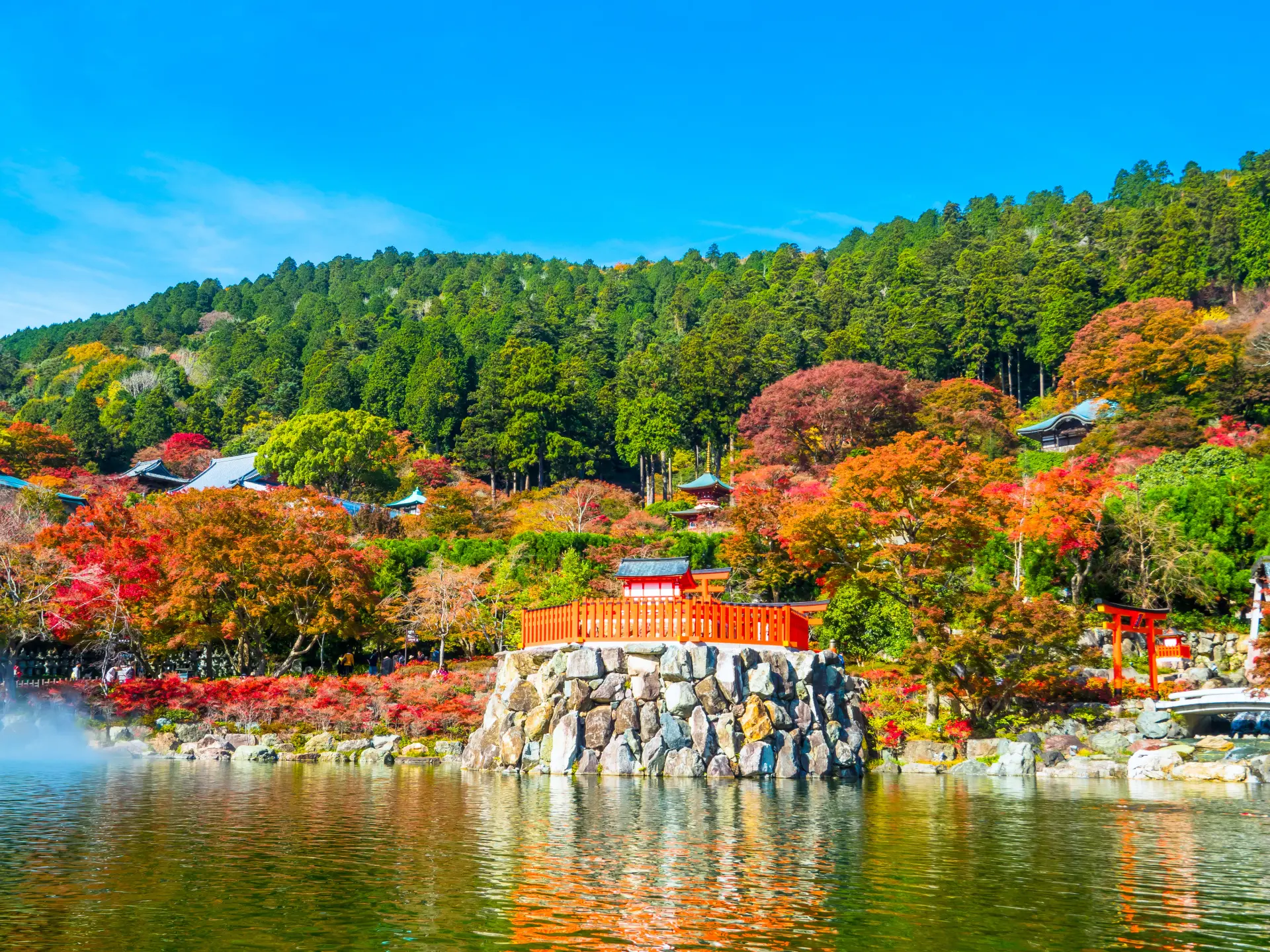
Katsuo-ji Temple is an ancient temple founded in the Nara period with a history of about 1,300 years and grounds covering approximately 264,000 sq. m.
It is one of the most popular spots in Minoh, itself renowned for fall foliage. At this time of year, the grounds turn red and yellow, while arches of maple leaves line the approach. The foliage is usually at its best from mid-November to early December.
Walk among the colorful trees and discover the temple's well-known kachi-daruma dolls, which symbolize prayers for success.
- Name in Japanese
- 勝尾寺
- Postal Code
- 562-8508
- Address
-
2914-1 Aomadani, Minoh City, Osaka
Google Maps - Telephone
- 072-721-7010
- Closed
- Irregular holidays
- Hours
-
Weekdays & Sun/Public Holidays: 8:00 am - 5:00 pm
Saturdays: 8:00 am - 6:00 pm
(Temple visits accepted until 15 minutes before closing) - Admission
- Adults (high school students and older): 500 yen, elementary and junior high school students: 400 yen, preschool children: 100 yen, children under 2 years old: free
- Directions
- 33 min. by Hankyu Bus from Senri-Chuo Station. on the Osaka Metro Midosuji Line, alight at "Katsuo-ji" bus stop, and walk shortly.
- Credit Cards
- Not accepted
- Official Website
- Official Website (English)
2. Expo '70 Commemorative Park (Suita City)
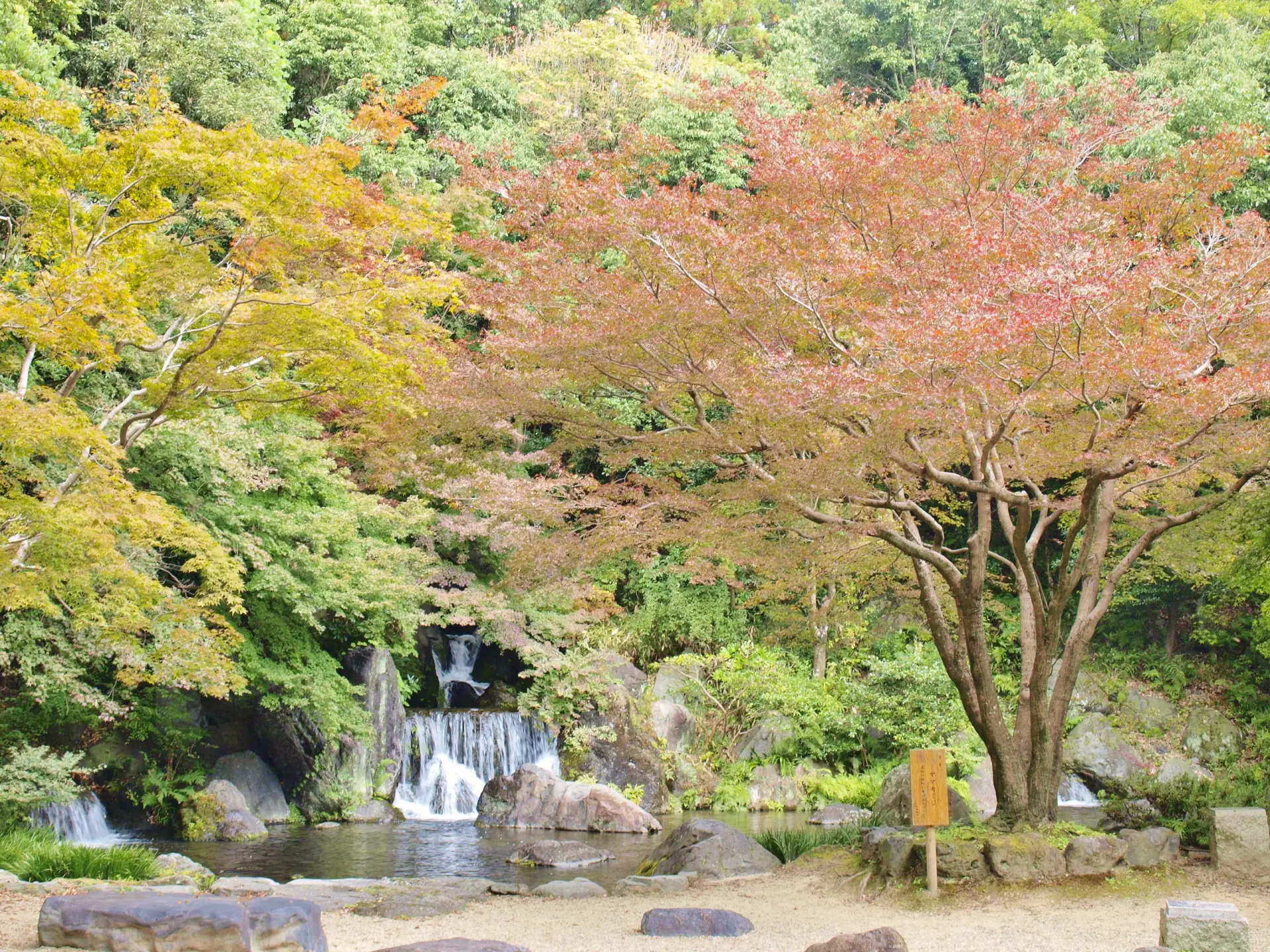
Expo '70 Commemorative Park occupies the former site of the 1970 Japan World Exposition and encompasses forests, satoyama landscapes, and cultural facilities.
Attractions throughout the grounds include the National Museum of Ethnology and the EXPO '70 Pavilion. Fall foliage is usually at its best from early November to early December. Visitors can also tour the interior of the Tower of the Sun, with priority given to reservations, and experience the impressive 41-meter-tall steel Tree of Life.
- Name in Japanese
- 万博記念公園
- Postal Code
- 565-0826
- Address
-
Senri Bampaku Koen, Suita City, Osaka
Google Maps - Tel
- 0570-01-1970/06-6877-7387 (Expo Park Call Center)
- Closed
- Wednesdays (or following day in case of a holiday) ※Open everyday in April/ May (until Golden Week) and October/November months.
- Business Hours
- 9:30am-5:00pm (Last admission is 30 minutes before closing)
- Admission
- Adults (over 15 yrs) 450yen (includes the Japanese Garden and Natural and Cultural Gardens) ※Separate fee may apply for individual buildings
- Access
- 5 min. walk from Bampaku-kinenkoen Station and Koen-Higashiguchi Station on the Osaka Monorail.
- Credit Cards
- Not accepted ※Can be used at some spots within the park.
- Official Website
- Official Website (English) / Official Website of the Tower of the Sun Museum (English)
3. Daiitokuji Temple (Kishiwada City)
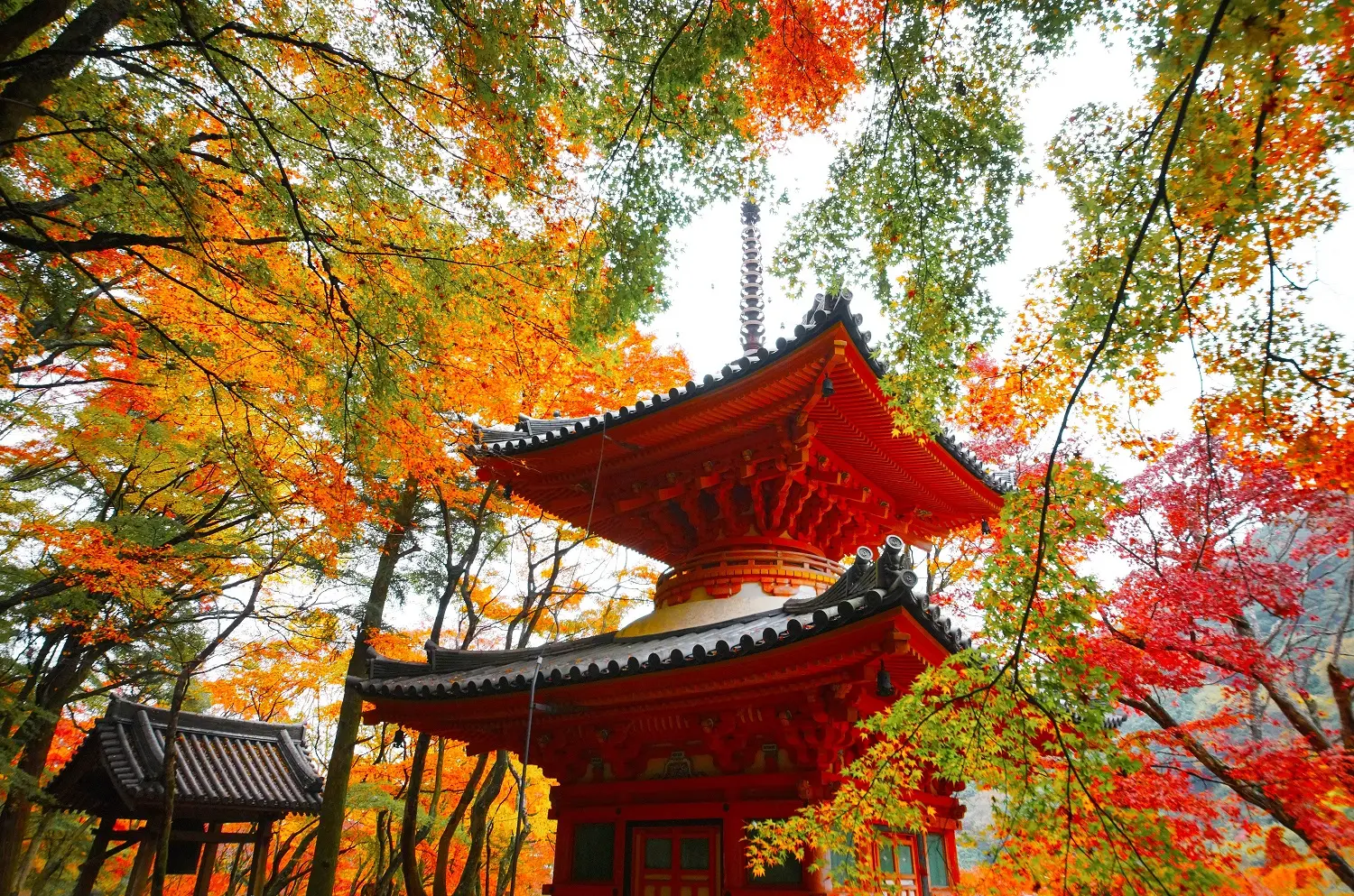
Located on Mt. Ushitaki, where the foliage usually peaks from mid- to late November, Daiitokuji is a mountain temple said to have been founded by En no Gyoja, the founder of Shugendo.
The 13-meter-tall vermilion pagoda commands attention within the grounds and is especially striking against the red leaves covering the mountain in fall. A roughly 1-hour hiking course begins at the rear of the grounds and passes waterfalls of various sizes and a suspension bridge, combining a historic temple with mountain foliage.
- Name in Japanese
- 大威徳寺
- Postal Code
- 596-0114
- Address
-
1178 Osawacho, Kishiwada City, Osaka
Google Maps - Telephone
- 072-423-9486 (Kishiwada City Tourism Division)
- Closed
- Open every day
- Business Hours
- 8:00am - 4:00pm
- Admission
- Free
- Access
- Take the Nankai Wing Bus for 50 minutes from Nankai Main Line Kishiwada Station to "Ushitakiyama" bus stop, then a short walk.
- Credit Cards
- Not accepted
- Official Website
- Official Website (Japanese)
Make Your Fall Trip to Osaka More Enjoyable: 3 Notable Events
Events offering an up-close experience of Osaka's history and culture are another highlight of a fall trip.
From a passionate festival filling the streets of Kishiwada to fireworks over the waterfront and a celebration of Sakai's history and culture, each has its own character.
Experience the lively atmosphere of Osaka in fall that sightseeing spots alone cannot provide.
1. Kishiwada Danjiri Festival (Kishiwada City)
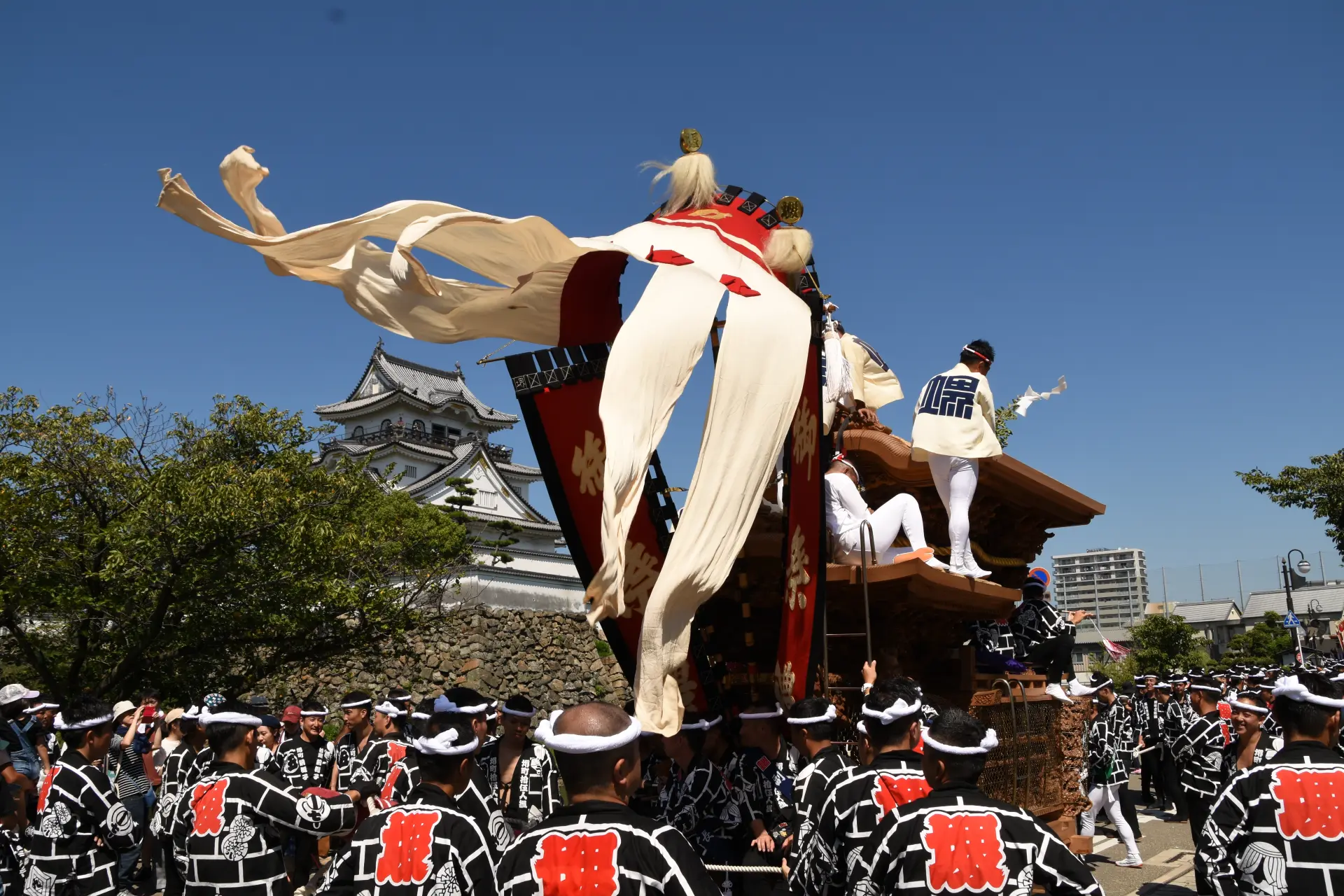
Passed down in Kishiwada for about 300 years, the Kishiwada Danjiri Festival began as a fall celebration praying for a bountiful harvest.
As the danjiri floats race through town, watch for the festival's greatest highlight, yarimawashi. Around 500 participants pull each float, which weighs approximately 4 metric tons, around right-angle corners in a single sweep without slowing down. Admire the intricate carvings depicting historical figures and mythical creatures while experiencing Kishiwada's deeply rooted festival culture.
- Name in Japanese
- 岸和田だんじり祭
- Telephone
- 072-423-2121
- Schedule
- Test run: 1st Sunday of September (if it falls on September 1, then the 2nd Sunday) Pre-festival: Saturday before the Festival day, Festival: Sunday preceding Respect-for-Senior-Citizens Day (3rd Monday in September)
- Directions
- Nankai Main Line, Kishiwada Station
- Website
- Official Website (Japanese)
2. Osaka Art Fireworks (Izumisano City)
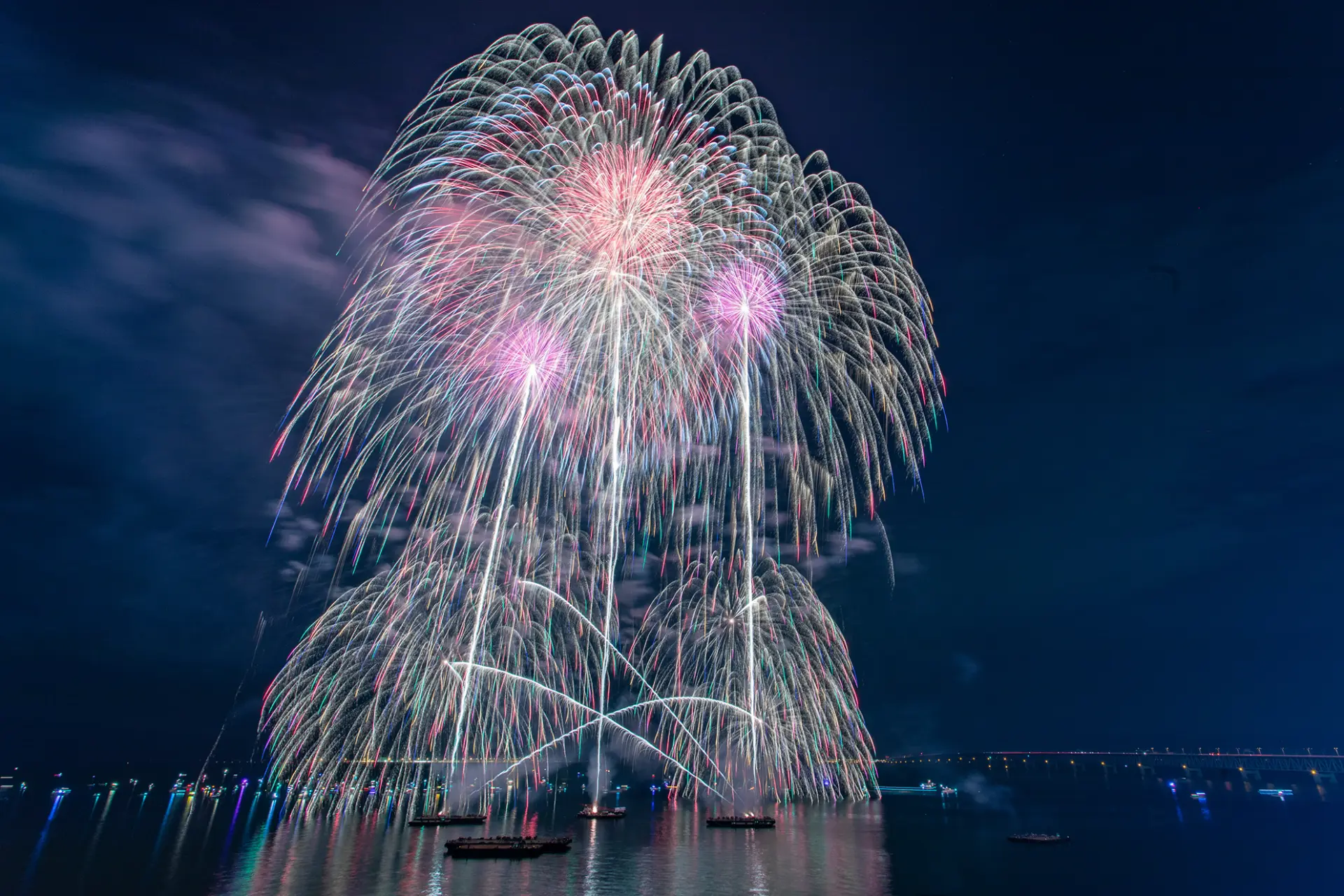
Osaka Art Fireworks is held at Rinku Park, across the water from Kansai International Airport. After a sunset recognized among Japan's 100 Best Sunsets, fireworks rise against the backdrop of Osaka Bay.
Pyrotechnicians gather from across Japan to present approximately 50 uninterrupted minutes of large shells and rapid-fire starmines, synchronized with musical rhythms, melodies, and lyrics. Launched from barges in Osaka Bay, the fireworks offer a powerful, unobstructed spectacle.
- Name in Japanese
- 大阪芸術花火
- Postal Code
- 598-0047
- Location
- 7-1 Rinkuoraiminami, Izumisano City, Osaka(Rinku Park Special site)
- Schedule
-
First Saturday in November
*Scheduled to be held on October 31, 2026 - Access
- About 10 minutes walk from JR or Nankai Rinku Town Station.
- Official Website
- Official Website (Japanese)
3. Sakai Festival (Sakai City)
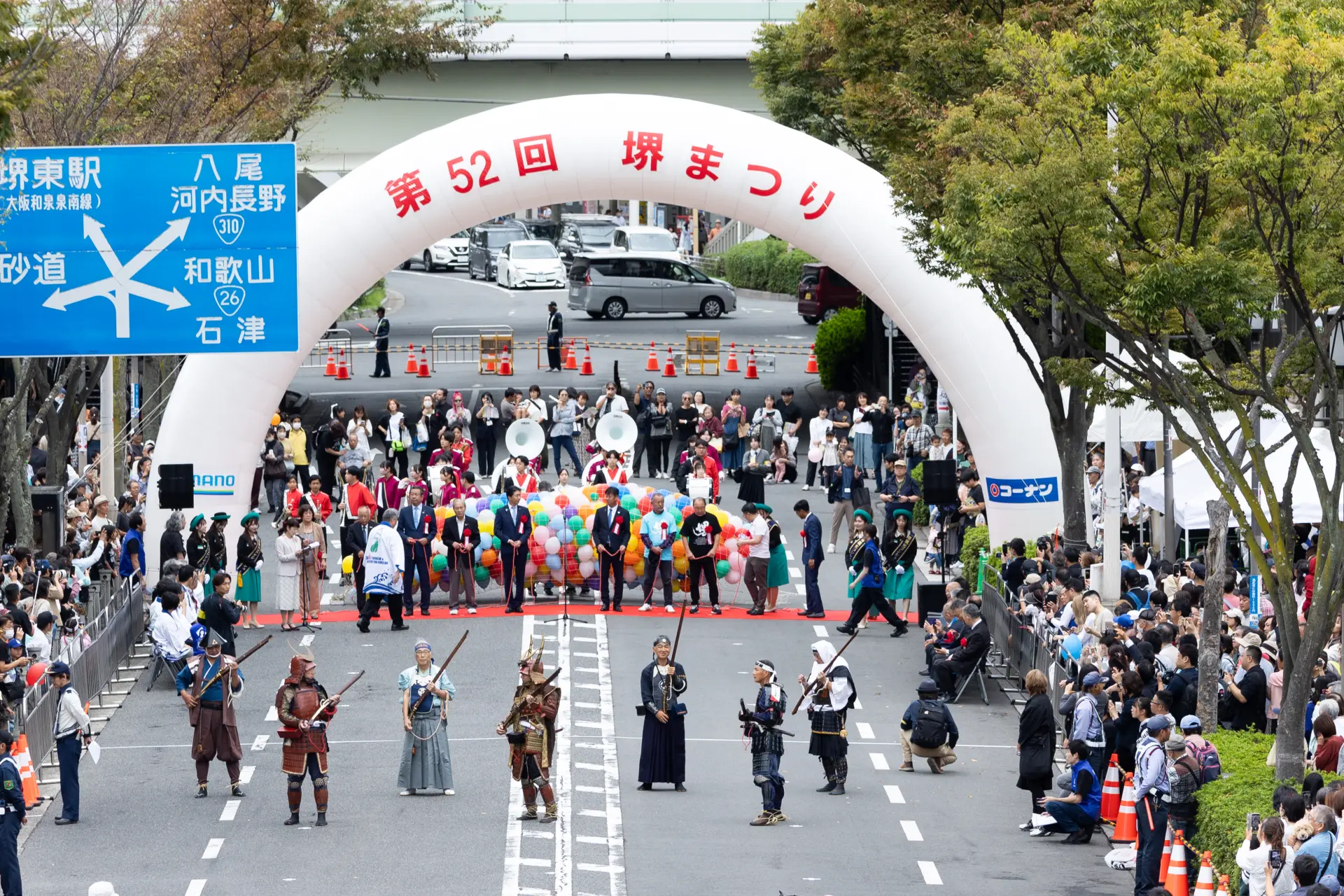
Sakai's largest festival is held each year on the third Saturday and Sunday of October, when Oshoji Avenue becomes a pedestrian zone filled with a wide range of events.
One highlight is a demonstration by matchlock gun squads featuring live firing performances. Futon-daiko floats measuring about 4 m tall and weighing approximately 2 metric tons parade through the streets, alongside the Sakai Grand Tea Ceremony in the Birthplace of Sen no Rikyu and various stage performances. For 2 fall days, Sakai's history and culture fill the city.
- Name in Japanese
- 堺まつり
- Postal Code
- 590-0958
- Venue
- 2-1-1 Shukuincho Nishi, Sakai Ward, Sakai City, Osaka Prefecture (around Oshoji Street)
- Phone
- 072-233-5258 (Sakai Tourism & Convention Bureau)
- Date
- The third Saturday and Sunday of October
- Access
-
1) Approx. 10-minute walk from Sakai Station on the Nankai Main Line or Sakaihigashi Station on the Nankai Koya Line
2) A short walk from Oshoji Stop on the Hankai Tramway Hankai Line - Official website
- Official website (Japanese)
5 Places to Eat During a Fall Trip to Osaka
Make time for memorable meals as you explore Osaka in fall.
Options range from a culinary inn surrounded by Minoh's natural scenery and Sakai's original udon-suki to Osaka-style okonomiyaki, a convenient Umeda café, and a restaurant high above the city.
Choose a meal in Osaka to suit the area and time of day on your itinerary.
1. Otowa Sanso (Minoh City)
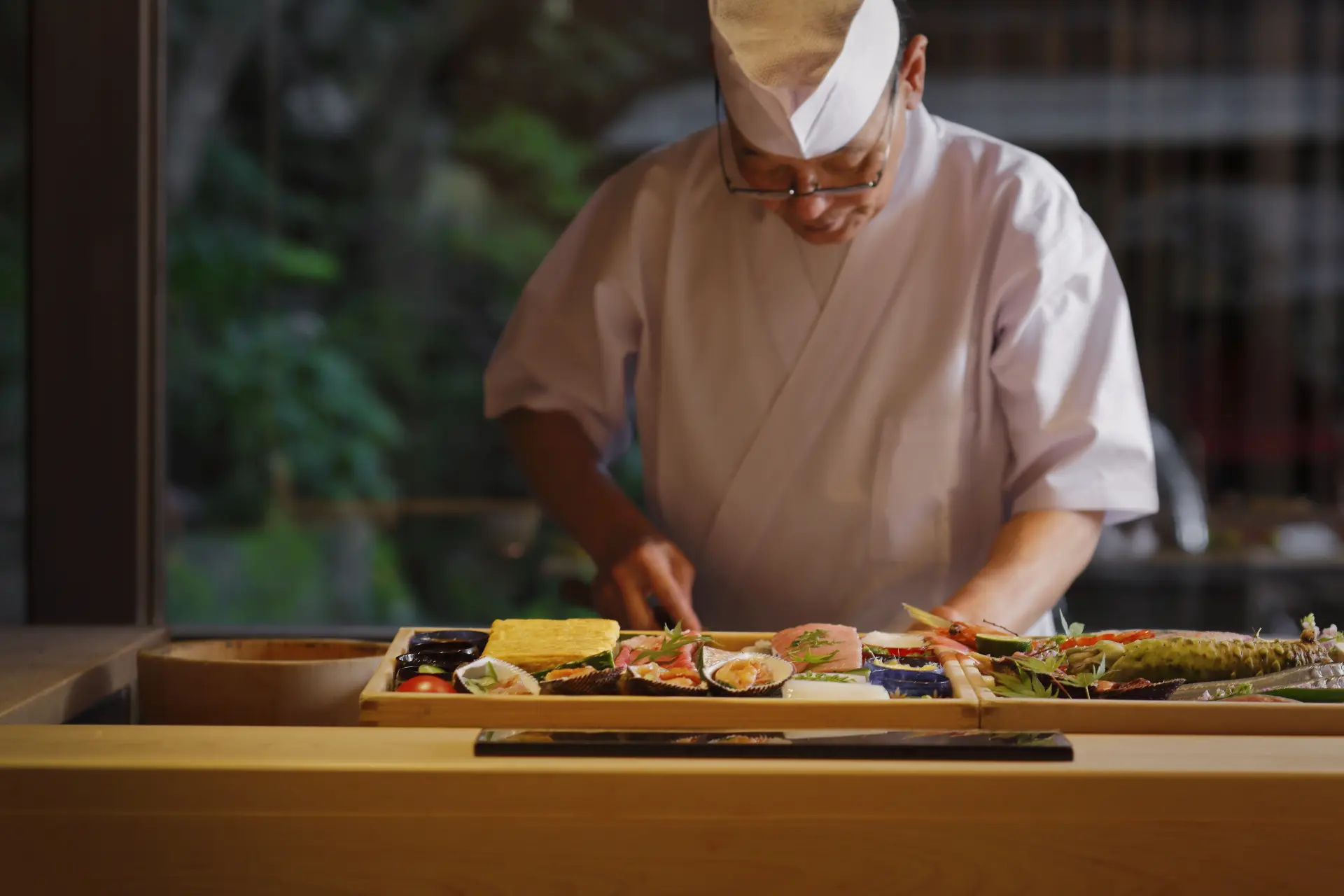
This culinary inn occupies a Taisho-era residence surrounded by the abundant nature of Meiji no Mori Minoh Quasi-National Park.
Its kaiseki cuisine emphasizes seasonal ingredients and dashi, adding contemporary touches to traditional Japanese cooking. At a counter limited to 8 guests per day, large windows overlook the courtyard as chefs prepare sushi directly in front of diners. During a trip through Minoh's natural scenery, savor seasonal flavors inside this warm wooden building dating from 1926.
- Name in Japanese
- 音羽山荘
- Postal Code
- 562-0002
- Address
-
1-3 Minohkoen, Minoh City, Osaka
Google Maps - Telephone
- 072-721-3005
- Closed
- Tuesdays
- Business Hours
- 11:30am - 2:30pm, 5:00pm - 9:00am
- Budget
- Lunch 6,000〜8,000yen, Dinner 15,000〜20,000yen
- Access
- About 8 minutes walk from Hankyu Minoh Line’s Minoh Station.
- Credit Cards
- Accepted
- Official Website
- Official Website (English)
2. Mimiu Sakai (Sakai City)
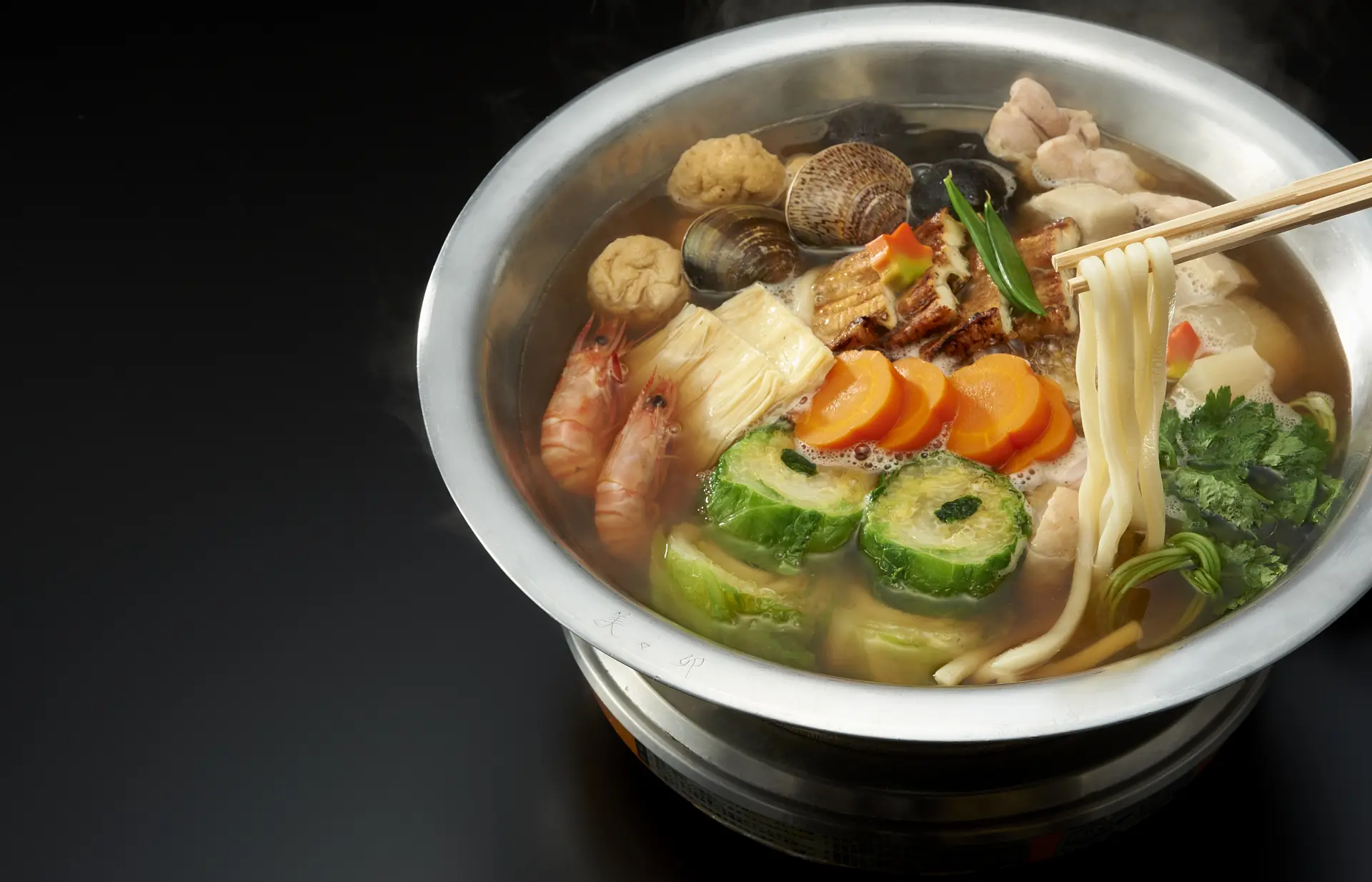
Located in Sakai, this restaurant began about 250 years ago as the traditional restaurant Mimiro and is the birthplace of udon-suki hot pot.
The signature udon-suki owes its flavor to dashi carefully prepared over approximately 2 hours using Rishiri kombu from Hokkaido, soda bonito flakes from Tosashimizu, and aged dried bonito from Makurazaki. The restaurant has table seating, Japanese-style rooms, and private rooms, making it a convenient choice after exploring Sakai. This Osaka specialty invites diners to savor a warming hot pot and its flavorful broth.
- Name in Japanese
- 美々卯 堺店
- Postal Code
- 590-0956
- Address
-
1-1-12 Nakanochohigashi, Sakai-ku, Sakai City, Osaka
Google Maps - Phone
- 072-232-2059
- Closed on
- Tuesdays (subject to change due to national holidays)
- Hours
- 11:00 a.m.–3:00 p.m. (last order at 2:00 p.m.), 5:00 p.m.–9:30 p.m. (last order at 8:30 p.m.)
- Price Range
- Lunch: from ¥2,000; dinner: from ¥6,000
- Access
- 1-minute walk from Shukuin Station on the Hankai Tramway
- Credit Cards
- Accepted
- Official website
- Official website (Japanese)
3. GARB MONAQUE (Kita Ward)
Located in the plaza outside Grand Front Osaka, GARB MONAQUE is a spacious café open from morning until night.
Inside, 3-meter ceilings and floor-to-ceiling windows create an open atmosphere. Breakfast options include yudane bread, soup packed with vegetables, and croque monsieur. The menu also features burgers made with Awaji beef patties and Basque cheesecake. With 130 seats and service spanning breakfast, lunch, café, and bar hours, it is a convenient choice throughout the day.

- Name in Japanese
- GARB MONAQUE
- Postal Code
- 530-0011
- Address
-
Umekita Plaza 1F, 4-1 Ofukacho, Kita-ku, Osaka City, Osaka
Google Maps - Telephone
- 06-6359-5180
- Closed
- Open every day
- Business Hours
-
7:30am - 1:00am
※Breakfast 7:30am - 10:00am(L.O.), Lunch 11:00am - 3:00pm(L.O.), Café 7:30am - 0:30am(L.O.), Dinner 5:00pm - 11:00pm(L.O.) - Budget
- 1,500yen-
- Access
- About 1 minute walk from JR Osaka Station.
- Credit Cards
- Accepted
- Official Website
- Official Website (English)
4. Ajinoya Honten (Chuo Ward)
This popular restaurant serves sizzling okonomiyaki, one of Osaka's signature comfort foods, straight from the griddle. Made with plenty of Japanese cabbage and expertly cooked until fluffy, each pancake is best eaten piping hot with sauce and mayonnaise.
A recommended choice is the Ajinoya Mix, packed with pork, squid, octopus, shrimp, ground meat, and 2 eggs. After exploring Osaka, gather around the griddle and experience the city's flour-based food culture.

5. FaRo Italiano (Kita Ward)
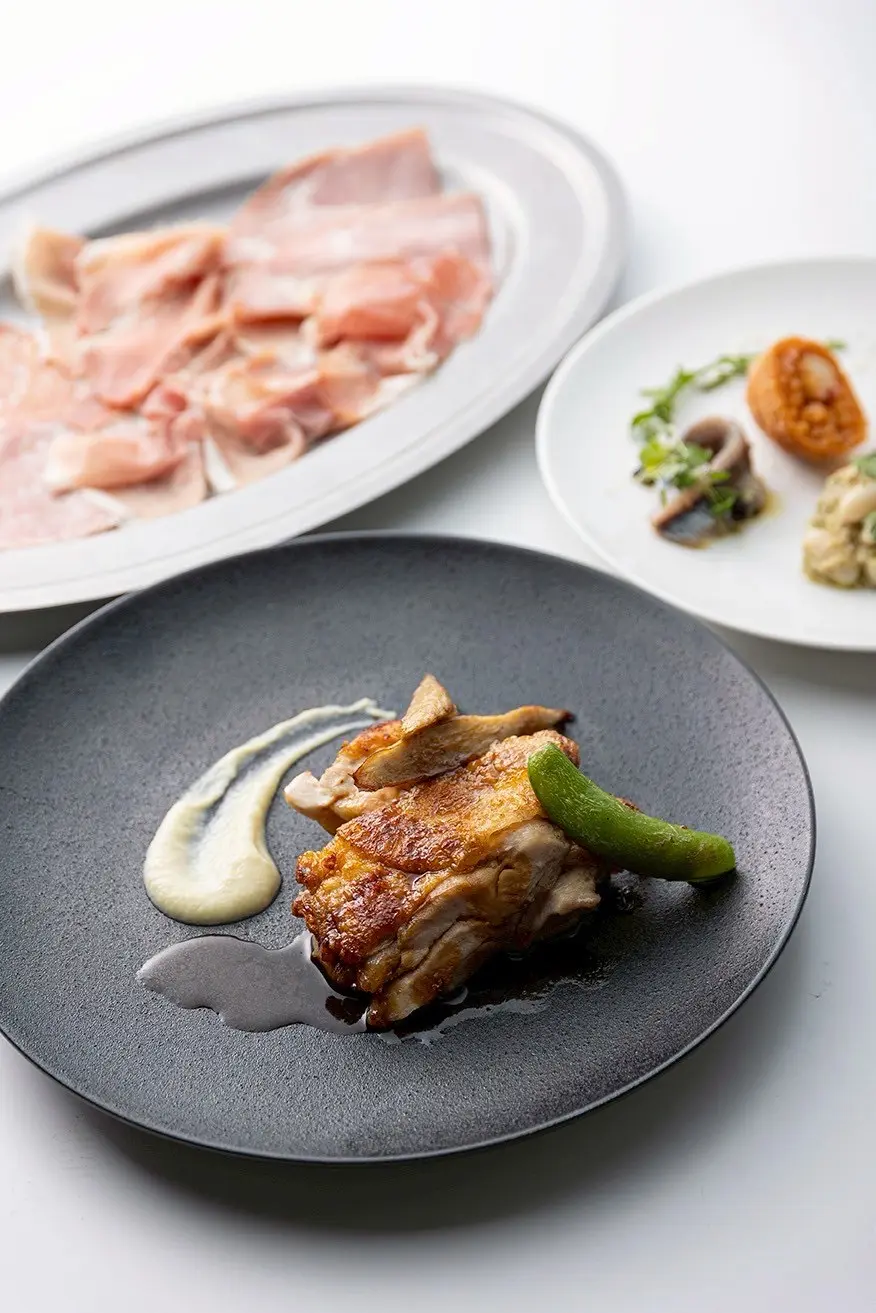
This authentic Italian restaurant is located 120 m above the ground on the 31st floor of Hankyu Grand Building. Its floor-to-ceiling windows provide sweeping views over the Umeda cityscape.
Multiple lunch and dinner courses feature fish, meat, pasta, desserts, and more. A dinner overlooking the sparkling city lights makes a memorable end to a day in Umeda.
- Name in Japanese
- FaRo Italiano
- Postal Code
- 530-0017
- Address
-
31F, Hankyu Grand Building, 8-47 Kakuda-cho, Kita-ku, Osaka, Osaka Prefecture 530-0017
Google Maps - Phone
- 06-6225-7570
- Closed on
- Irregular holidays
- Hours
-
Lunch 11:00am-3:30pm (Last food order at 2:00pm)
Dinner 5:30pm-10:00pm (Last food order at 9:00pm / Last drink order at 9:30pm) - Price Range
-
Lunch: 4,000 yen
Dinner: 12,000 yen - Access
- Approx. 1-minute walk from Hankyu “Osaka-Umeda” Station, Osaka Metro “Umeda” Station Exit 6, or JR “Osaka” Station
- Credit Cards
- Accepted
- Official website
- Official website (Japanese)
3 Convenient Hotels for Exploring Osaka in Fall
To explore Osaka widely in fall, choosing accommodations that suit your travel style is important.
The Nakanoshima and Kitashinchi areas offer distinctive hotels convenient for urban sightseeing, while venturing into southern Osaka brings the option of a hot spring inn in Inunakiyama.
Choose from city views, a sophisticated stay, or mountain hot springs.
1. Conrad Osaka (Kita Ward)
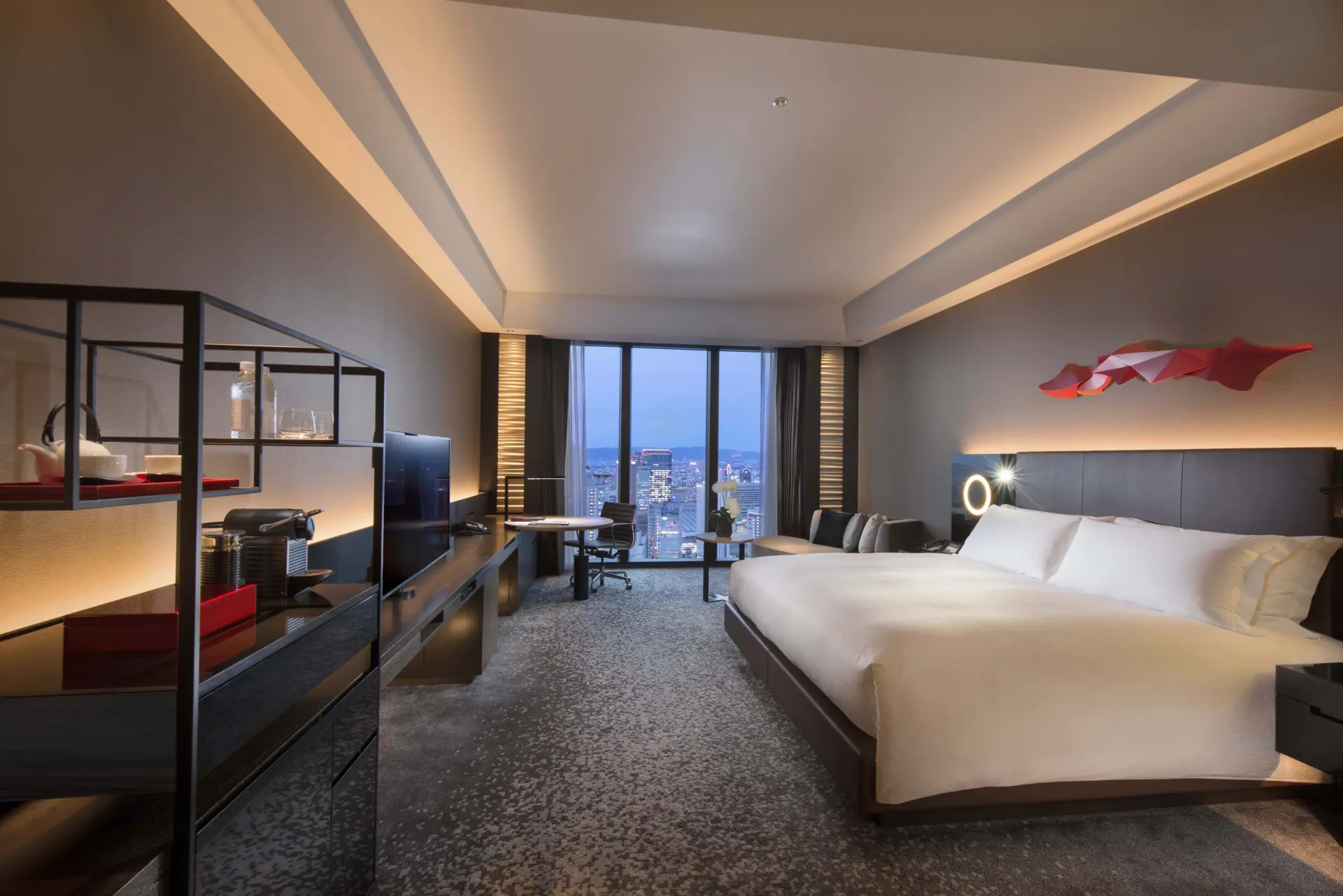
Occupying floors 33 through 40 of Nakanoshima Festival Tower West, this luxury hotel connects directly to the Osaka Metro. True to its concept, “Your Address in the Sky - Through the Clouds,” it offers striking panoramic views over Osaka from 200 m above the ground.
Even standard guest rooms measure at least 50 sq. m, and the hotel also has a heated indoor pool, gym, sauna, and spa. After exploring the city on foot, spend a relaxing evening overlooking Osaka's nighttime skyline.
- Name in Japanese
- コンラッド大阪
- Postal Code
- 530-0005
- Address
-
3-2-4 Nakanoshima, Kita-ku, Osaka City, Osaka
Google Maps - Telephone
- 06-6222-0111
- Check-in
- 3:00 pm
- Check-out
- Until 12:00 pm
- Accommodation Fee
- Starting at 78,000 yen per room (2 people) *Accommodation tax charged separately
- Access
-
(1) Directly connected to Higobashi Station on the Osaka Metro Yotsubashi Line and Watanabebashi Station on the Keihan Nakanoshima Line
(2) A 6-minute walk from Yodoyabashi Station on the Osaka Metro Midosuji Line and Keihan Main Line - Credit Cards
- Accepted
- Official Website
- Official Website (English)
2. Zentis Osaka (Kita Ward)
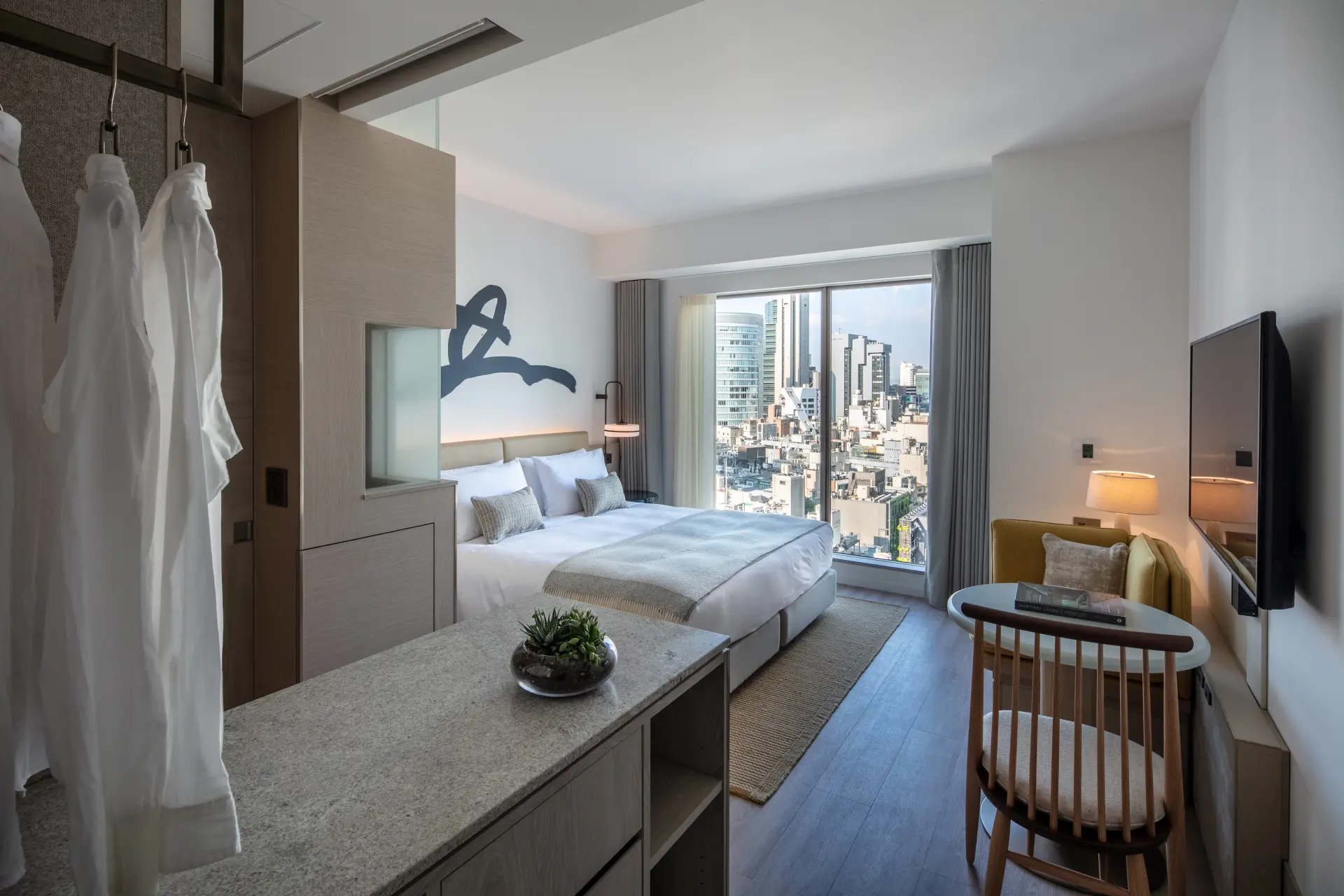
This hotel is part of a new brand launched in Osaka by Palace Hotel Tokyo, with a focus on sophisticated design and comfort. Its thoughtfully designed rooms incorporate natural materials and colors and are praised for their convenience and essential amenities.
Facilities include a guest-only lounge and fitness gym, while the restaurant serves menus incorporating seasonal ingredients and Osaka's culinary culture from morning until night. After exploring the city, spend a peaceful evening in the hotel's calm interior.
- Name in Japanese
- Zentis Osaka(ゼンティス大阪)
- Postal Code
- 530-0004
- Address
-
1-4-26 Dojimahama, Kita-ku, Osaka
Google Maps - Telephone
- 06-4796-0111
- Check-in
- 3:00pm
- Check-out
- 12:00pm
- Accommodation Fee
- From 30,000yen per room, per night (excluding tax and service charge, breakfast not included).
- Access
-
1)About 4 minutes walk from JR Kita-Shinchi Station
2)About 6 minutes walk from Hanshin Osaka-Umeda Station
3)About 7 minutes walk from Osaka Metro Higobashi Station - Credit Cards
- Accepted
- Official Website
- Official Website (English)
3. Inunakiyama Onsen Fudoguchikan (Izumisano City)
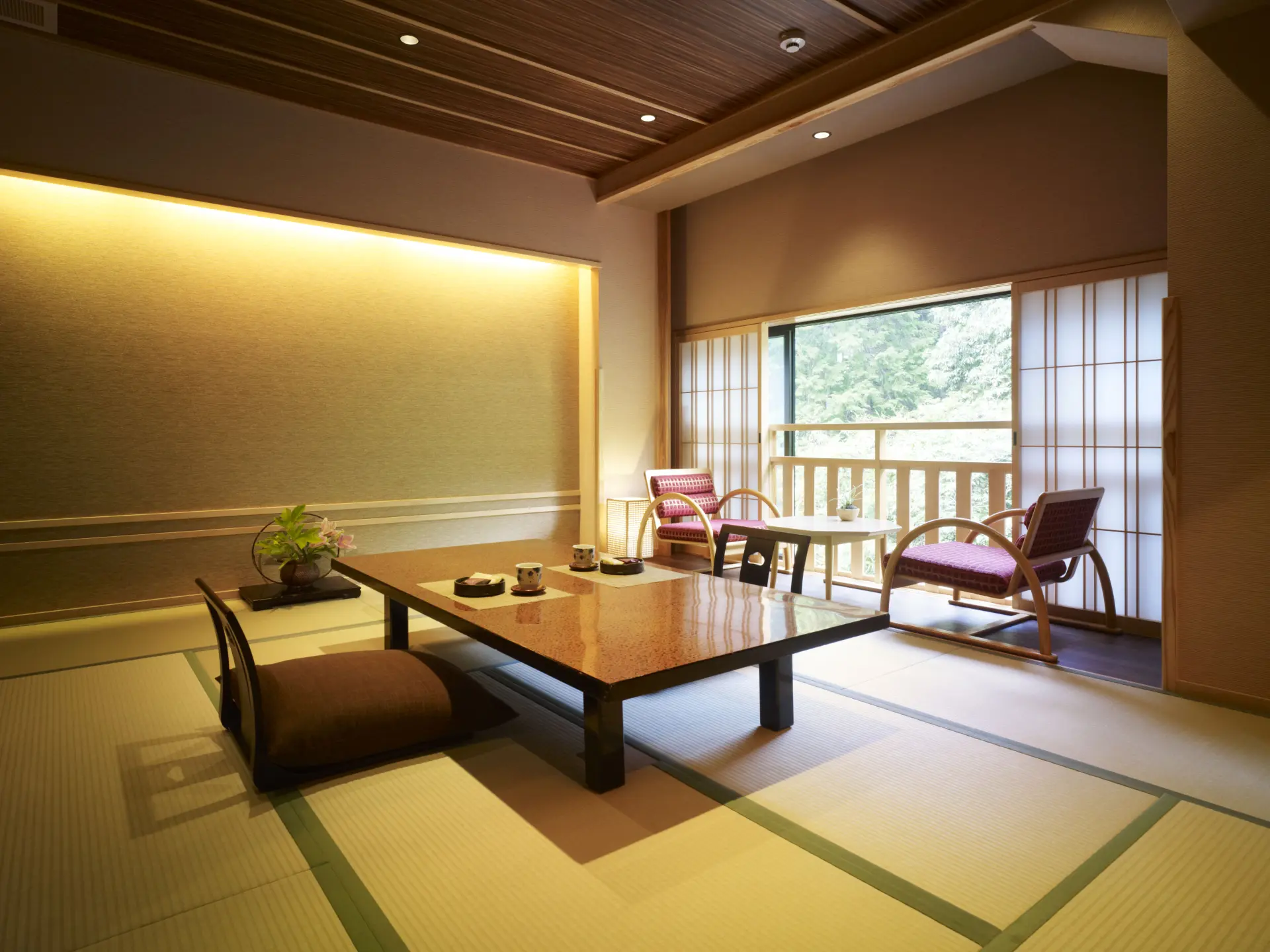
About 45 minutes by car from central Osaka, this popular hot spring inn is surrounded by the natural scenery of Inunakiyama. Guests can relax in natural hot spring waters, and day-trip packages including bathing and a meal are also available.
Its 10 guest rooms come in 3 types, including rooms with open-air baths. Spend the night in the mountains while enjoying cuisine made with ingredients such as vegetables from Senshu and seafood from Sano Fishing Port.
- Name in Japanese
- 犬鳴山温泉 不動口館
- Postal Code
- 598-0023
- Address
-
7 Ogi, Izumisano, Osaka
Google Maps - Telephone
- 072-459-7326
- Check-in
- 3:30pm-
- Check-out
- 10:00am
- Accommodation Fee
-
Relaxing Japanese-style Room: 16,500 yen - (Excluding bath tax) (per person when 3 people share 1 room)
Room with Open-air Bath: 25,300 yen - (Excluding bath tax) (per person when 3 people share 1 room) - Access
-
1)About 15 minutes by the Nankai bus from JR Hineno Station.
2)About 30 minutes by the Nankai bus from Nankai Main Line’s Izumisano Station.
3)About 25 minutes by the bus from JR Kumatori Station, JR Kokawa Station. - Credit Cards
- Accepted
- Official Website
- Official Website (English)
Recommended Fall Osaka Itinerary for Foliage, City Walks, and Hot Springs
For a 2-day, 1-night fall trip to Osaka, consider traveling from Hokusetsu to central Osaka on the first day, then heading south through Sakai, Kishiwada, and Izumisano on the second. A rental car is convenient for reaching the suburbs, but traffic restrictions may be imposed in Minoh during foliage season, so check the latest parking and traffic information in advance.
Discover how Osaka's fall character changes from area to area through foliage, waterfront walks, World Heritage sites, urban views, and hot springs.
- Day 1
- Rent a car near JR Osaka Station → Stroll through the fall-colored grounds of Katsuo-ji Temple → Drive to a parking lot near Minoh Station → Walk along the Takimichi trail to Minoh Falls → Have lunch in the Minoh area → Explore Nakanoshima's waterfront and museums on foot → Admire sunset and nighttime views from the Kuchu Teien Observatory at Umeda Sky Building → Stay overnight in Osaka City
- Day 2
- Walk around Nintoku-tenno-ryo Kofun and nearby Daisen Park → Have lunch in Sakai City → Admire the foliage at Daiitokuji Temple → Take a day-trip bath at Inunakiyama Onsen → Return the rental car near JR Osaka Station
Average Fall Temperatures in Osaka
Temperatures in Osaka fall considerably from September through November. The average is 77.4°F in September, 67.1°F in October, and 56.8°F in November, so adjust your clothing to the time of your visit.
| Month | September | October | November |
|---|---|---|---|
| Temperature | 77.4°F | 67.1°F | 56.8°F |
What to Wear in Osaka in Fall
September remains warm, with an average temperature of 77.4°F, and short sleeves are often comfortable during the day. Bring a lightweight outer layer for mornings, evenings, and late September. Long sleeves with a cardigan or light jacket are suitable in October, while a jacket or coat is advisable in November.
Trips involving walks through natural areas such as Minoh and Inunakiyama require different preparation from urban sightseeing. At places with slopes or hiking trails, including Hoshi no Buranko and Daiitokuji Temple, wear comfortable clothes and walking shoes to explore the fall foliage.
Frequently Asked Questions About Visiting Osaka in Fall
Q
When is the best time to see fall foliage in Osaka?
At many locations, the foliage is usually at its best from mid-November to early December. The typical periods are mid-November to early December at Katsuo-ji Temple, early November to early December at Expo '70 Commemorative Park, and mid- to late November at Daiitokuji Temple.
Q
Which areas of Osaka are recommended for fall sightseeing?
For nature and foliage, visit Minoh and other parts of the Hokusetsu area. To combine history with hot springs, consider Sakai, Kishiwada, and Izumisano. Within Osaka City, Nakanoshima and Umeda offer architecture, art, and city views.
Q
How many nights are recommended for a fall trip to Osaka?
At least 1 night and 2 days makes it easier to explore not only Osaka City but also Minoh, Sakai, Kishiwada, and Izumisano. Dividing the areas between the first and second days lets you experience both the city and the suburbs.
Q
Do I need a rental car for fall sightseeing in Osaka?
Public transportation is sufficient for sightseeing within Osaka City, but a rental car is convenient for visiting several suburban destinations such as Katsuo-ji Temple, Daiitokuji Temple, and Inunakiyama Onsen in one trip. Traffic restrictions and congestion may occur during foliage season, so check the latest information in advance.
Summary
Minoh and Mt. Ushitaki glow with fall foliage, Nakanoshima combines waterfront scenery with modern architecture, the Mozu-Furuichi Kofun Group reveals Osaka's history, and Inunakiyama Onsen offers mountain hot springs. Fall in Osaka provides a wide range of travel experiences beyond its lively city center.
Combine festivals and local Osaka cuisine with journeys from the city into forests, history, and hot springs to discover the different sides of Osaka in fall.