
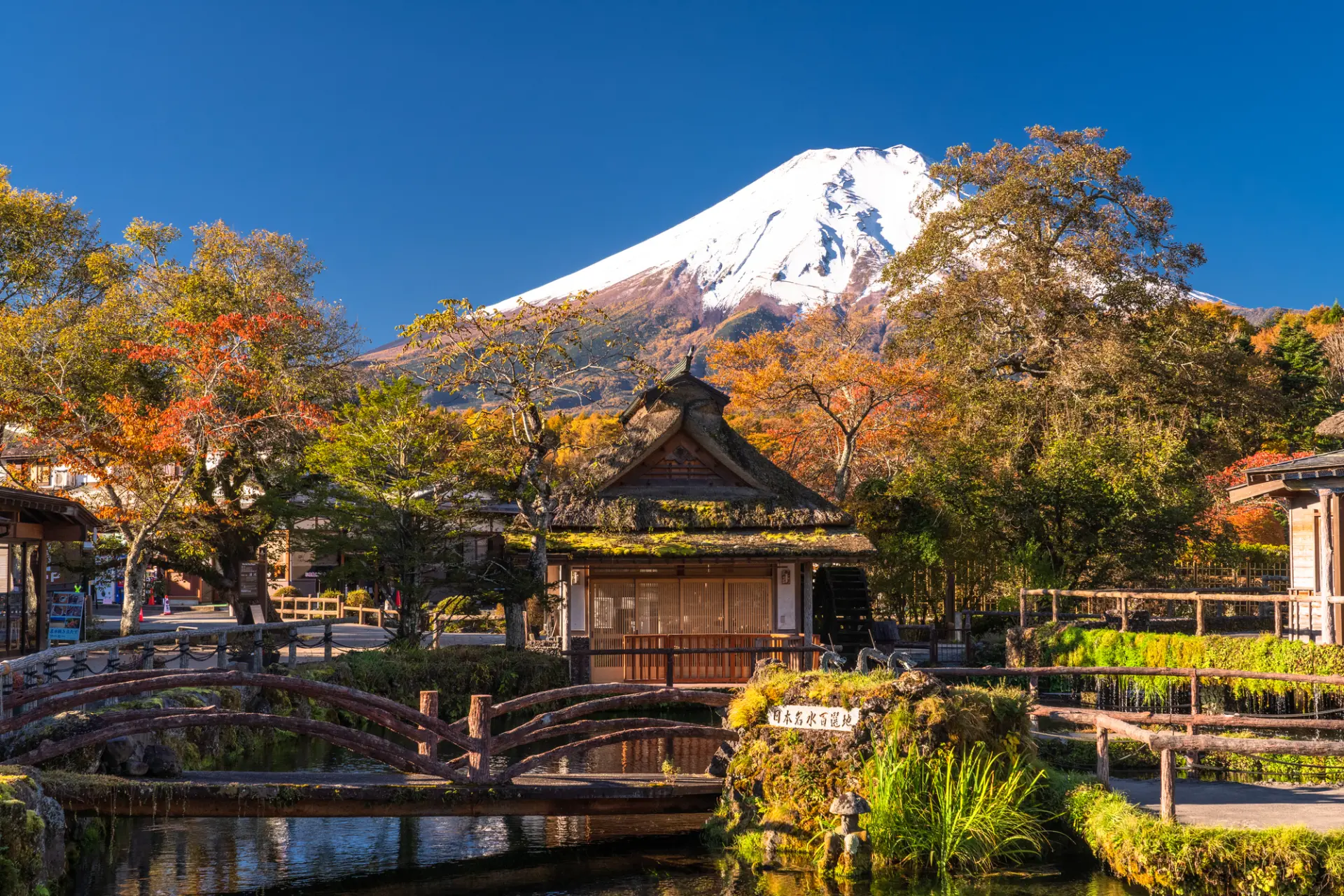
Yamanashi Fall Travel Guide: Mount Fuji, Fall Colors, and Scenic Views
From lakes and highlands overlooking Mount Fuji to colorful gorges and seasonal fruit, Yamanashi offers many ways to experience fall. Explore the scenery around Mount Fuji at Lake Kawaguchi and Oshino Hakkai, then take in the view from an elevation of 1,900 m at Kiyosato. Soak in the hot springs of Isawa Onsen and sample local flavors such as hoto noodles and grapes.
Venture from the Fuji Five Lakes to Kofu and the Yatsugatake area, combining scenery, hot springs, food, and culture to make the most of fall in Yamanashi.
How to Experience Fall in Yamanashi by Month
As fall progresses from September through November in Yamanashi, the highlights of a trip change as well.
Seasonal fruit takes center stage in September, followed by walks through highlands and gorges in October and views of Mount Fuji framed by fall colors in November. Plan your visit to the Fuji Five Lakes, Kiyosato, or the Kofu area according to the season.
September: Seasonal Fruit and Refreshing Highland Air
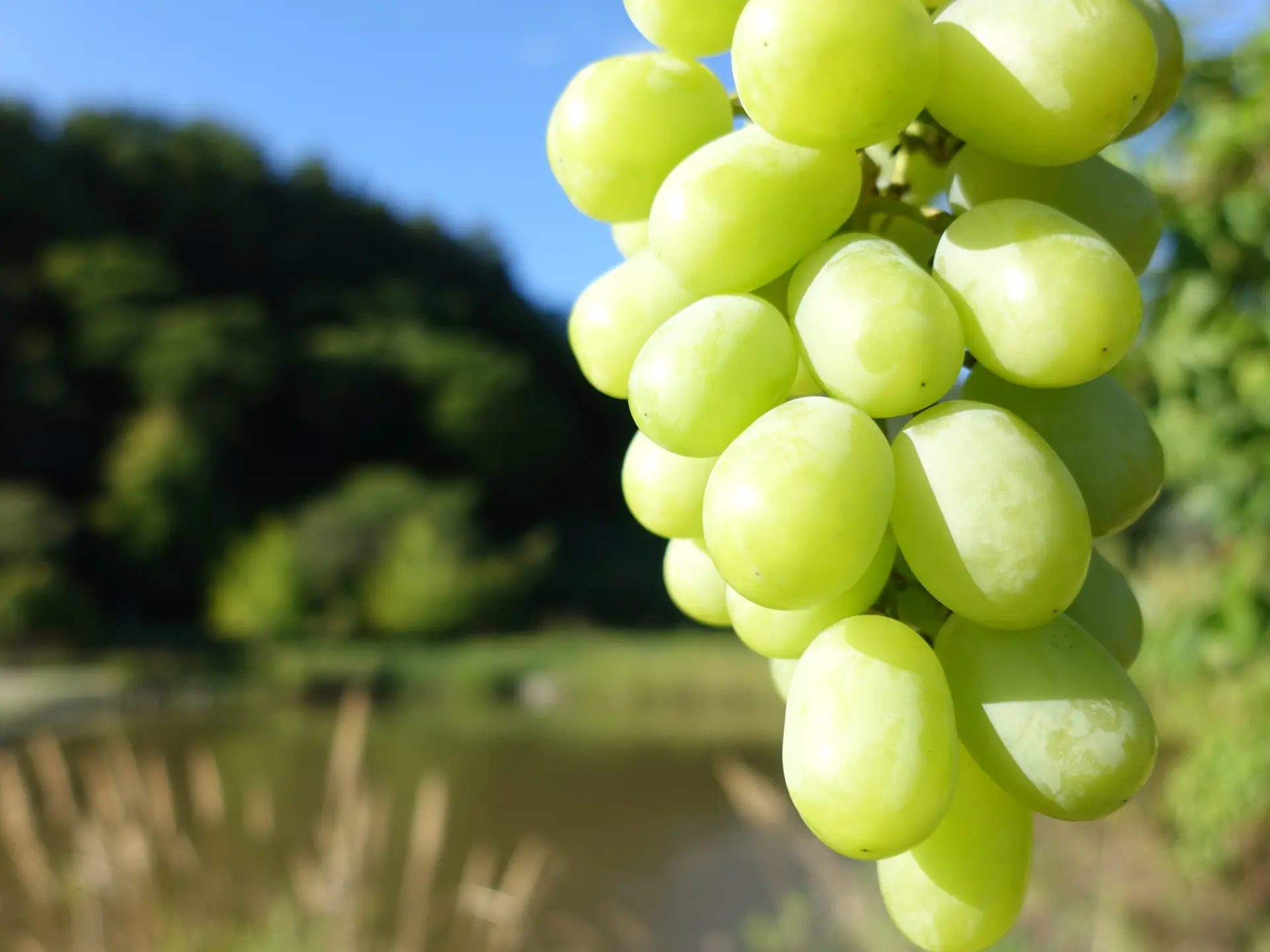
In September, seasonal fruit—especially grapes—adds another pleasure to a trip through Yamanashi. Around Isawa Onsen, visitors can pick grapes and other fruit from summer through fall, while Fruit Cafe Bellavista serves sweets made with fall grapes. For a highland excursion, head to Kiyosato Terrace at an elevation of 1,900 m.
Take in sweeping views of Mount Fuji and the Nobeyama Highlands while experiencing Yamanashi’s seasonal harvest and highland scenery in a single day.
October: Experience the Deepening Fall in the Highlands and Gorges
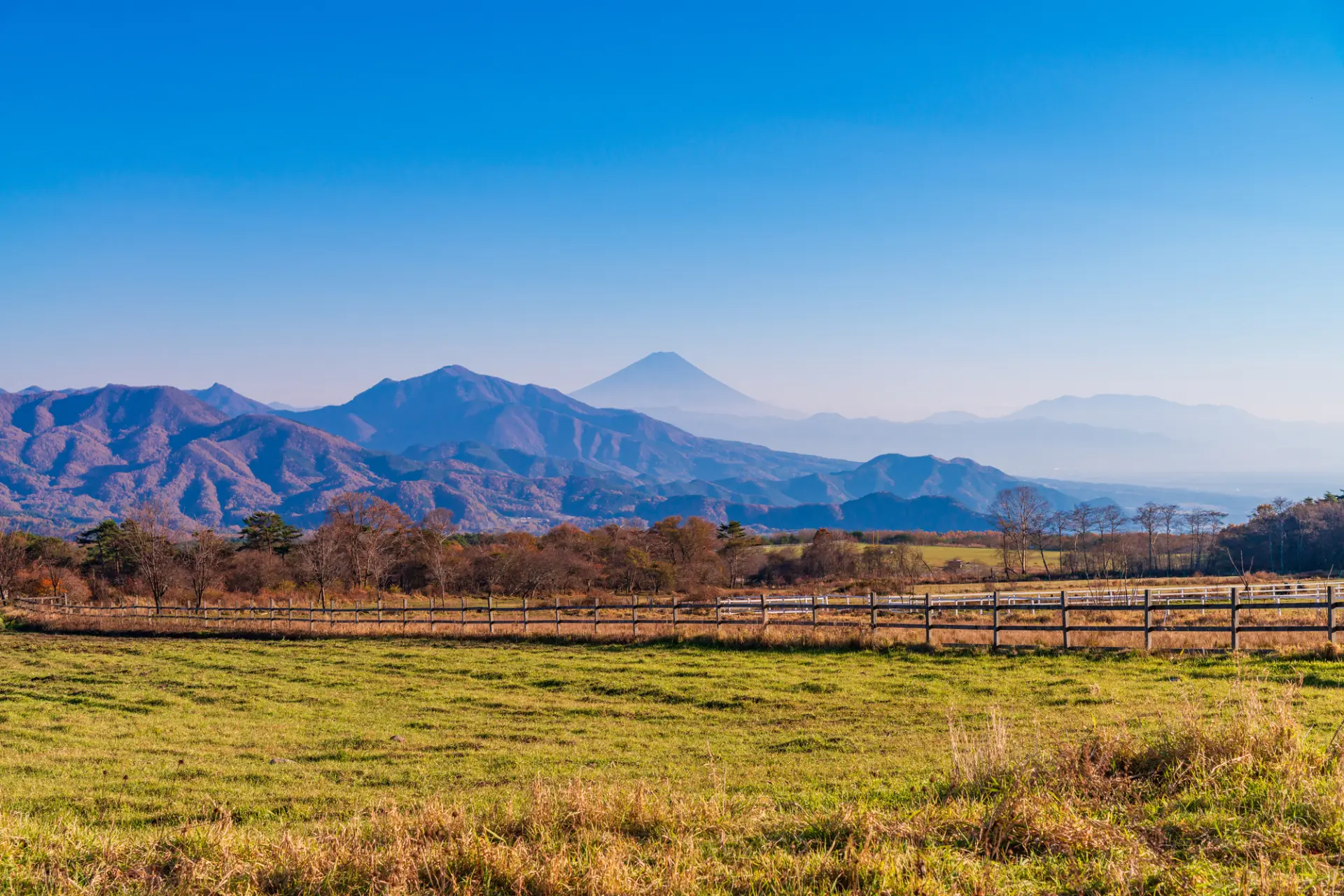
October is a pleasant time to explore outdoor scenery in the highlands and gorges. From Kiyosato’s mountaintop, visitors can look out over Mount Fuji and the Nobeyama Highlands. At Nishizawa Gorge, trails follow a clear stream through a granite gorge past waterfalls of various sizes. Shosenkyo Gorge also has well-maintained walking trails, with a varied landscape that includes Kakuenbo Peak, Senga Falls, and unusual rock formations. Explore Yamanashi’s mountains and waterways while moving between areas and elevations.
November: Mount Fuji and Brilliant Fall Colors
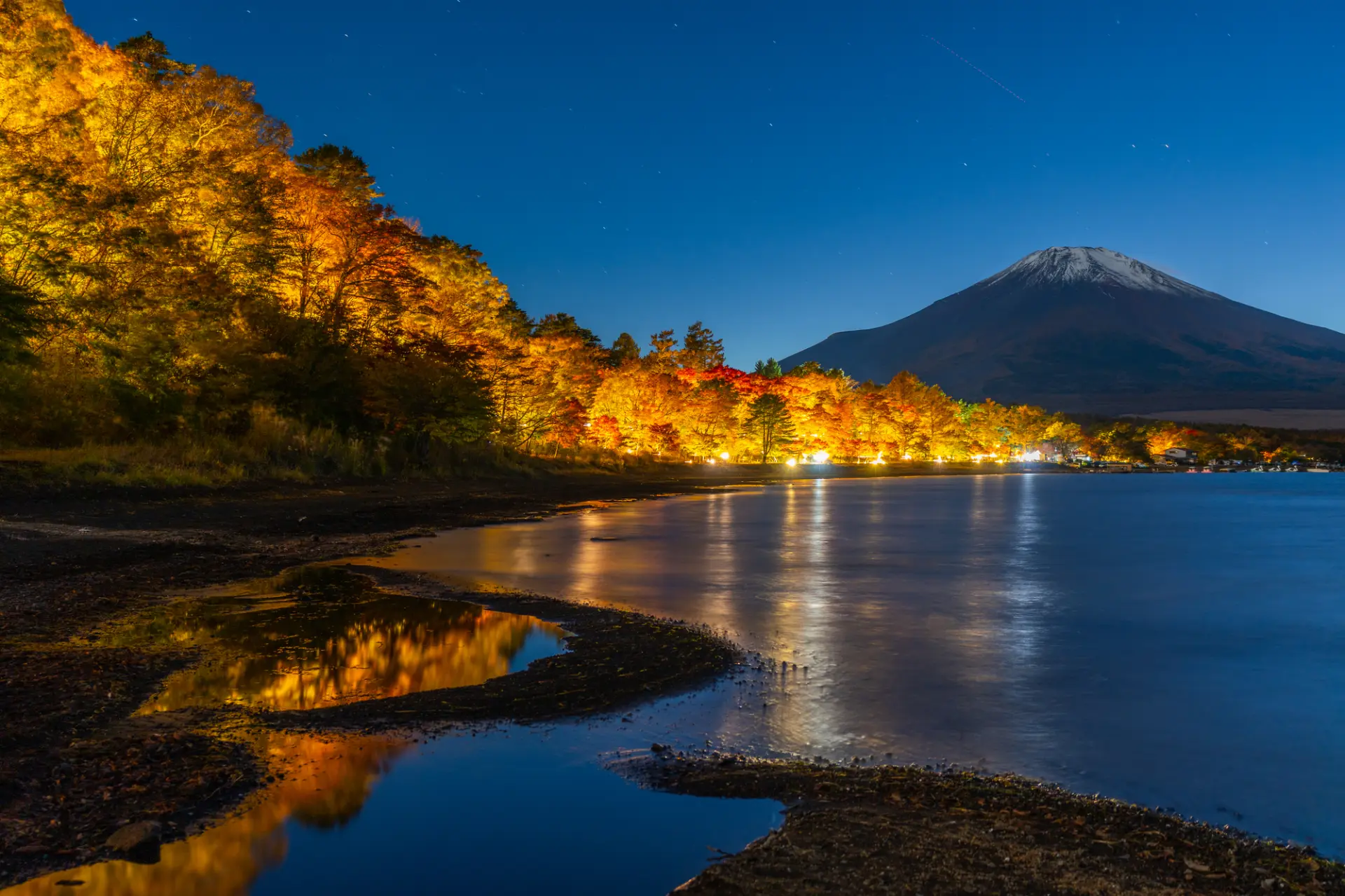
November brings fall colors to places such as Lake Kawaguchi, Lake Yamanaka, and Shosenkyo Gorge. At the Lake Kawaguchi Maple Corridor, maple trees planted near the lakeshore turn red and yellow, and the Fuji Kawaguchiko Autumn Leaves Festival is generally held each year.
At Lake Yamanaka, the Yamanakako Sunset Shore Autumn Leaves Festival takes place from late October to mid-November. The colorful trees in Asahigaoka Lakeside Park are illuminated, offering a nighttime fall landscape with a different atmosphere from the daytime view.
7 Popular Yamanashi Attractions to Visit in Fall
Yamanashi has many places that fit naturally into a fall itinerary, from lakes, spring-fed ponds, and highland viewpoints overlooking Mount Fuji to museums, hot springs, and a whisky distillery.
Beyond seasonal pleasures such as fall colors and fresh fruit, discover Yamanashi’s distinctive nature, culture, and craftsmanship while experiencing a different kind of fall day in each area.
1. Lake Kawaguchi (Fujikawaguchiko)
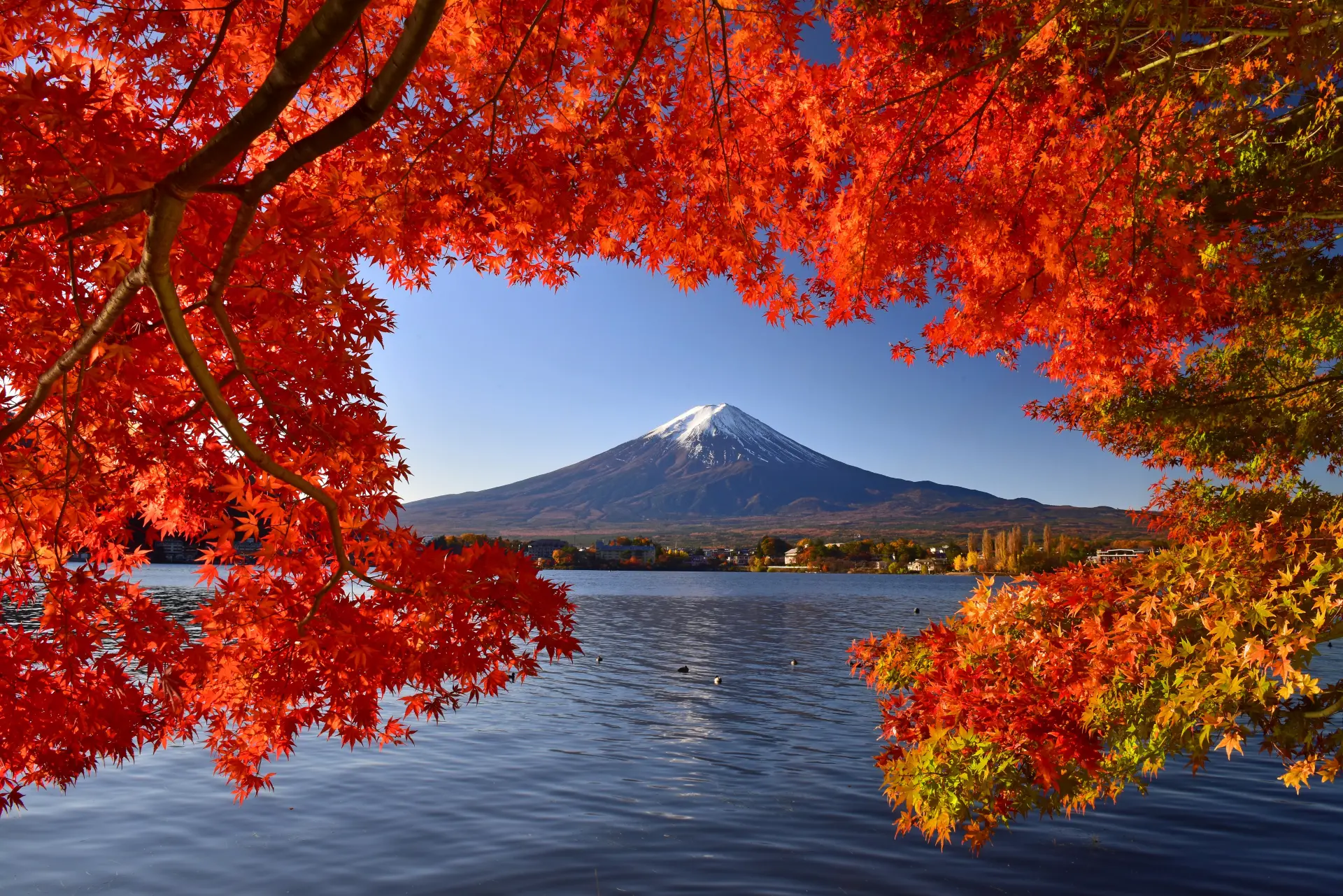
One of the Fuji Five Lakes, Lake Kawaguchi is a scenic lakeside destination overlooking Mount Fuji. Each season brings a different landscape, with cherry blossoms in spring, purple lavender in early summer, and colorful foliage in fall.
Unoshima Island, which measures approximately 700 m around, and the roughly 500 m-long Lake Kawaguchi Ohashi Bridge are also iconic parts of the lake’s scenery. From Oishi Park, visitors can see Unoshima Island with Mount Fuji behind it, while the bridge offers panoramic views of both Lake Kawaguchi and Mount Fuji. In fall, when colorful foliage lines the shore, exploring the waterfront with Mount Fuji in view is especially memorable.
2. Oshino Hakkai (Oshino)
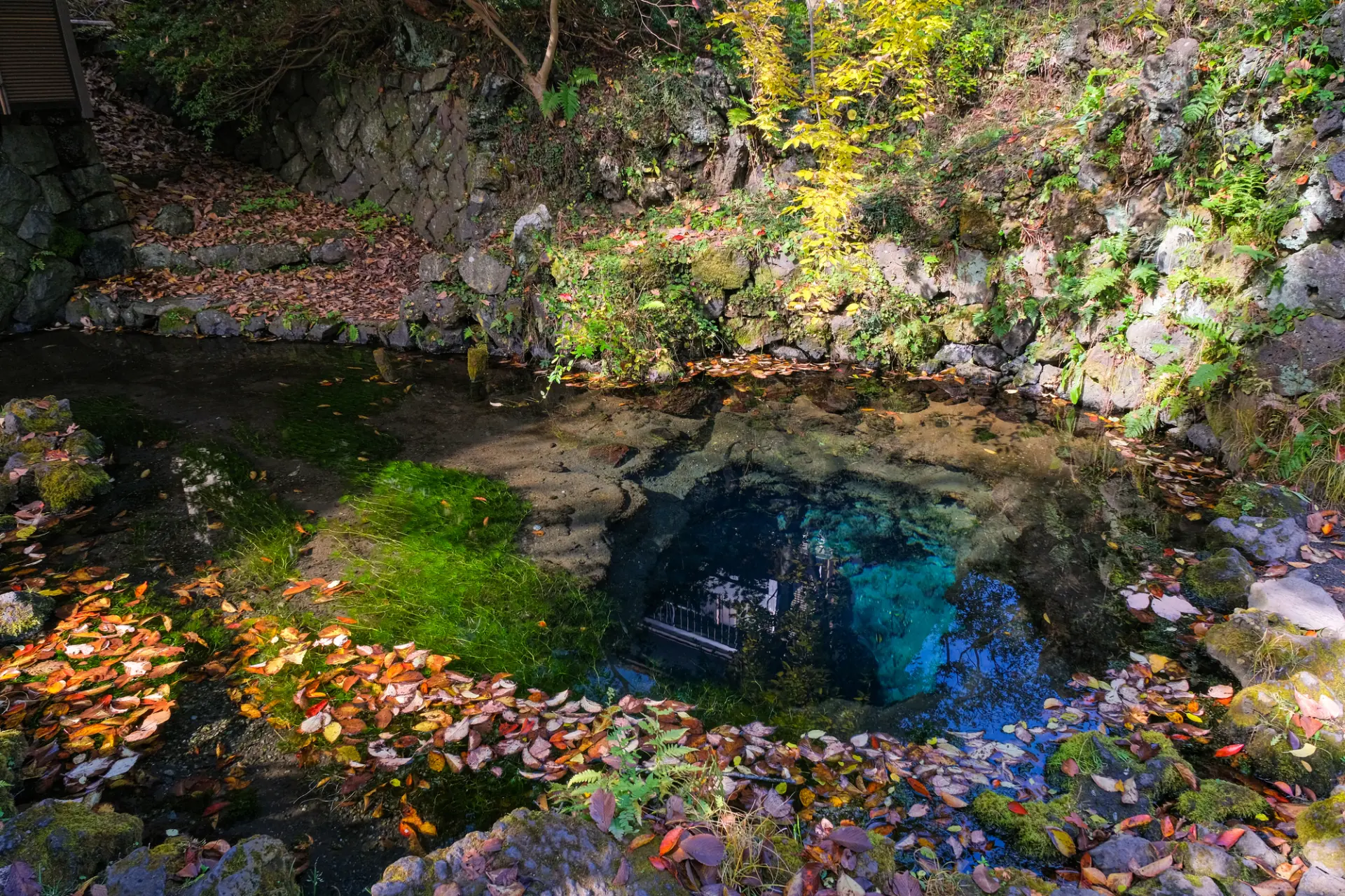
Oshino Hakkai consists of 8 spring-fed ponds supplied by water from Mount Fuji, offering scenery shaped by both the mountain and its water. Walk among Deguchi-ike, Okama-ike, Sokonashi-ike, Choshi-ike, Waku-ike, Nigori-ike, Kagami-ike, and Shobu-ike to see the clear water of each pond up close.
The water is exceptionally transparent because snowmelt from Mount Fuji is filtered between underground layers of lava over approximately 20 years. Stroll through the natural landscape at the foot of Mount Fuji while admiring the mountain and the surfaces of the spring-fed ponds.
3. Honcho Street (Fujiyoshida)
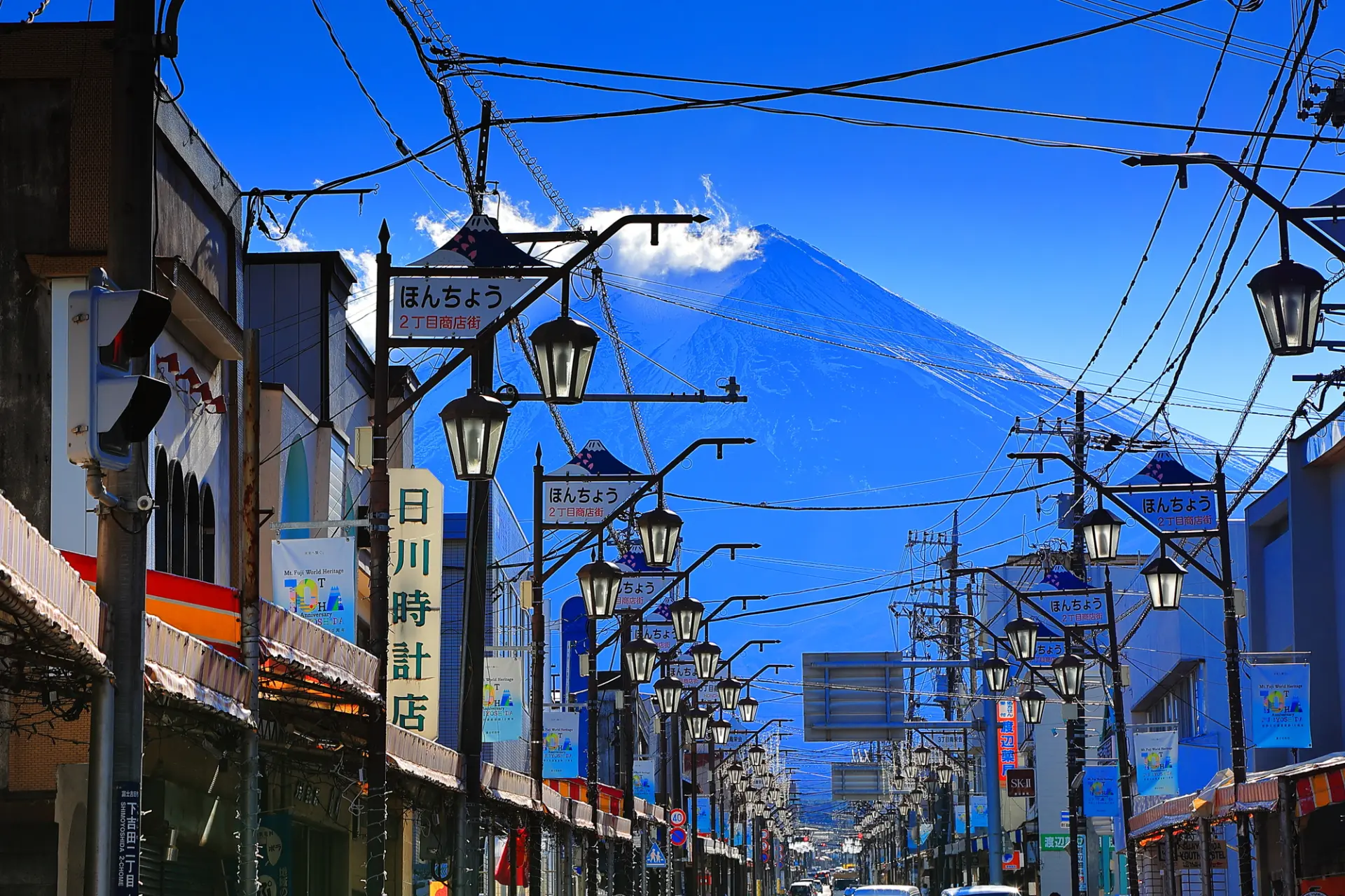
Honcho Street runs north to south through the central urban area at the northern foot of Mount Fuji. It is also known as Fuji Michi, or the road to Mount Fuji. The sight of the enormous mountain rising beyond the signs and lanterns of a traditional shopping street and a web of overhead power lines has made this a popular photo spot on social media in recent years.
Remnants of the former wholesale district remain on the east side, while approximately 100 establishments—including izakaya pubs, bars, and long-established Japanese restaurants—are concentrated on the west side. As this is also a residential and commercial neighborhood, enjoy Fujiyoshida’s urban scenery and mountain views from the sidewalk while being considerate of the people around you.
4. Itchiku Kubota Art Museum (Fujikawaguchiko)
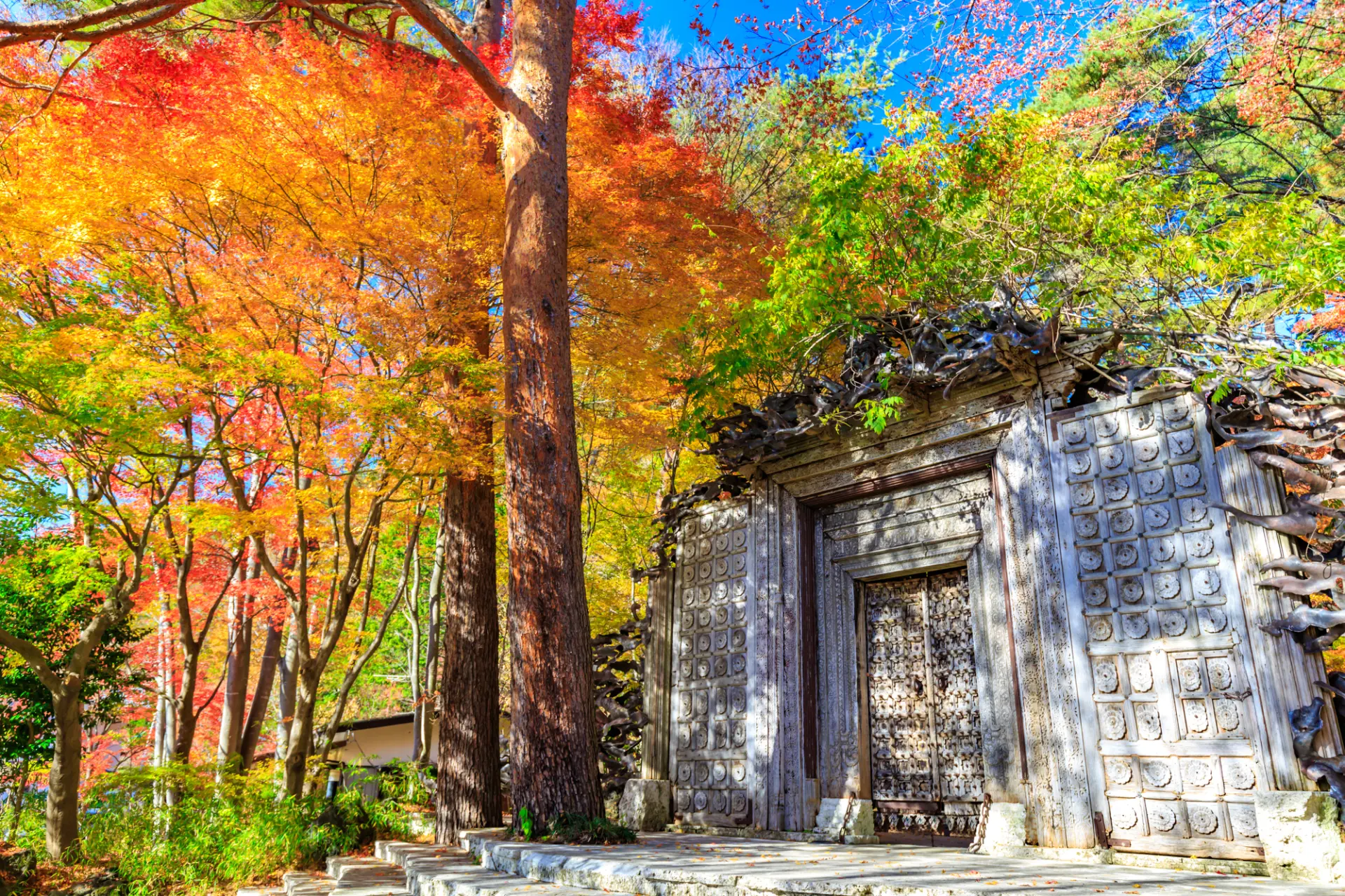
This museum displays works by textile artist Itchiku Kubota, who revived the art of Tsujigahana dyeing through modern techniques. The main building, supported by 16 pillars made from hiba cypress trees more than 1,000 years old, displays his Symphony of Light series and works inspired by Mount Fuji.
The newer building, constructed with Ryukyu limestone and Okinawan plaster, exhibits glass beads from Kubota’s collection. Also striking are the main gate, made with doors from an old Indian castle, and the garden with its waterfall, cave, and works of art. The museum’s distinctive world extends beyond its exhibits to encompass its architecture and gardens.
5. Isawa Onsen (Fuefuki)
Isawa Onsen, the largest hot spring resort area in Yamanashi Prefecture, is a place to combine hot springs with the flavors of fall. More than 30 ryokan inns and hotels are located here, offering alkaline simple hot spring water.
The area is also known for producing a variety of fruit. Visitors can pick cherries in spring, peaches in summer, and fruit such as peaches, grapes, and apples from summer through fall. By alternating between relaxing soaks and tasting fresh fruit, travelers can experience fall in Yamanashi at an unhurried pace.
6. Suntory Hakushu Distillery (Hokuto)
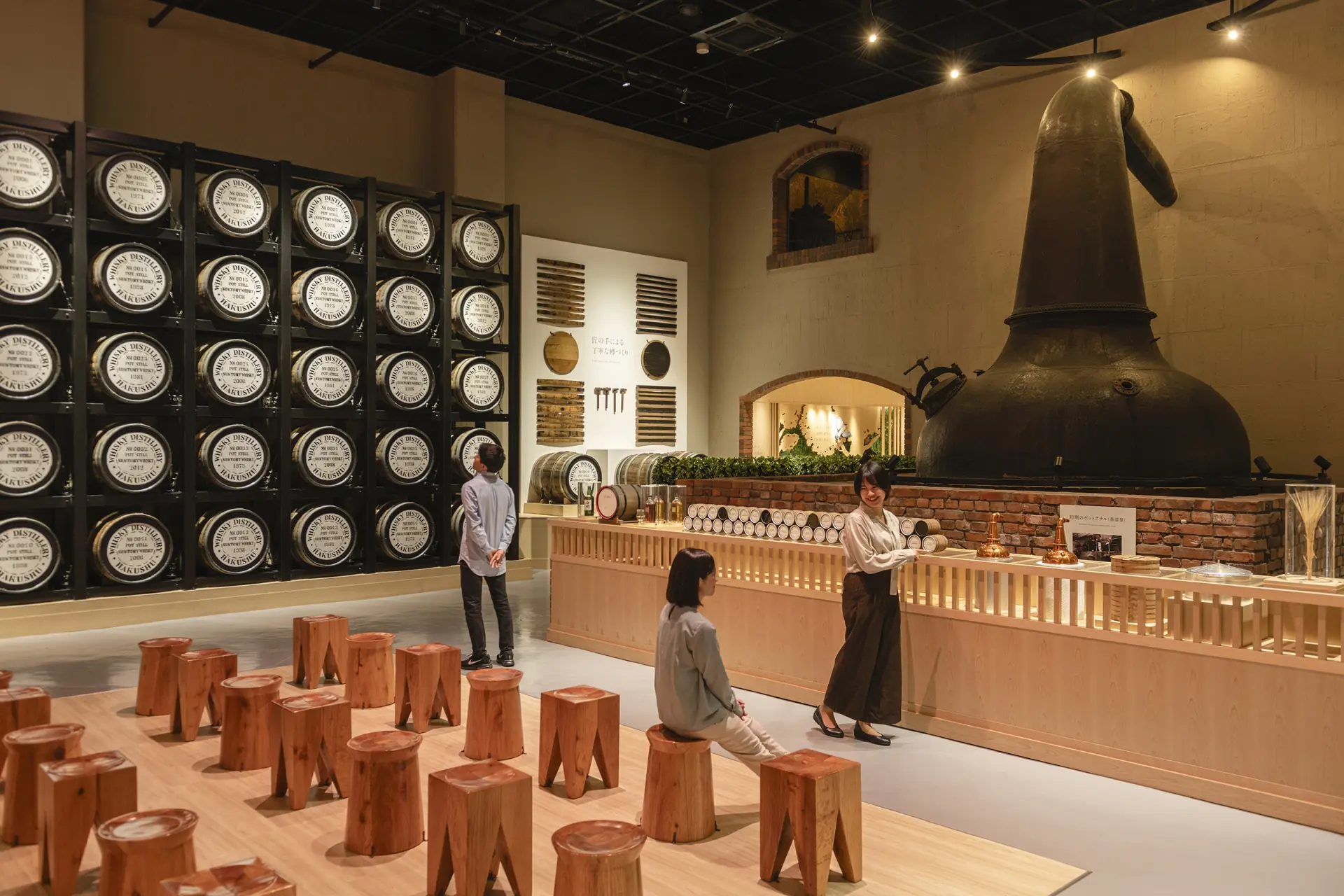
Located at the foot of the Southern Alps, Suntory Hakushu Distillery is a malt whisky distillery completed in 1973. A wide variety of whisky spirits are produced here using natural underground water from the Southern Alps, which flows through the expansive grounds measuring approximately 820,000 m².
At the Whisky Museum, visitors can learn about the history of Hakushu single malt whisky, whisky cultures from around the world, and the production process. Some facilities require reservations or other advance arrangements, so plan ahead when adding Hakushu to your itinerary.
7. Kiyosato Terrace (Hokuto)
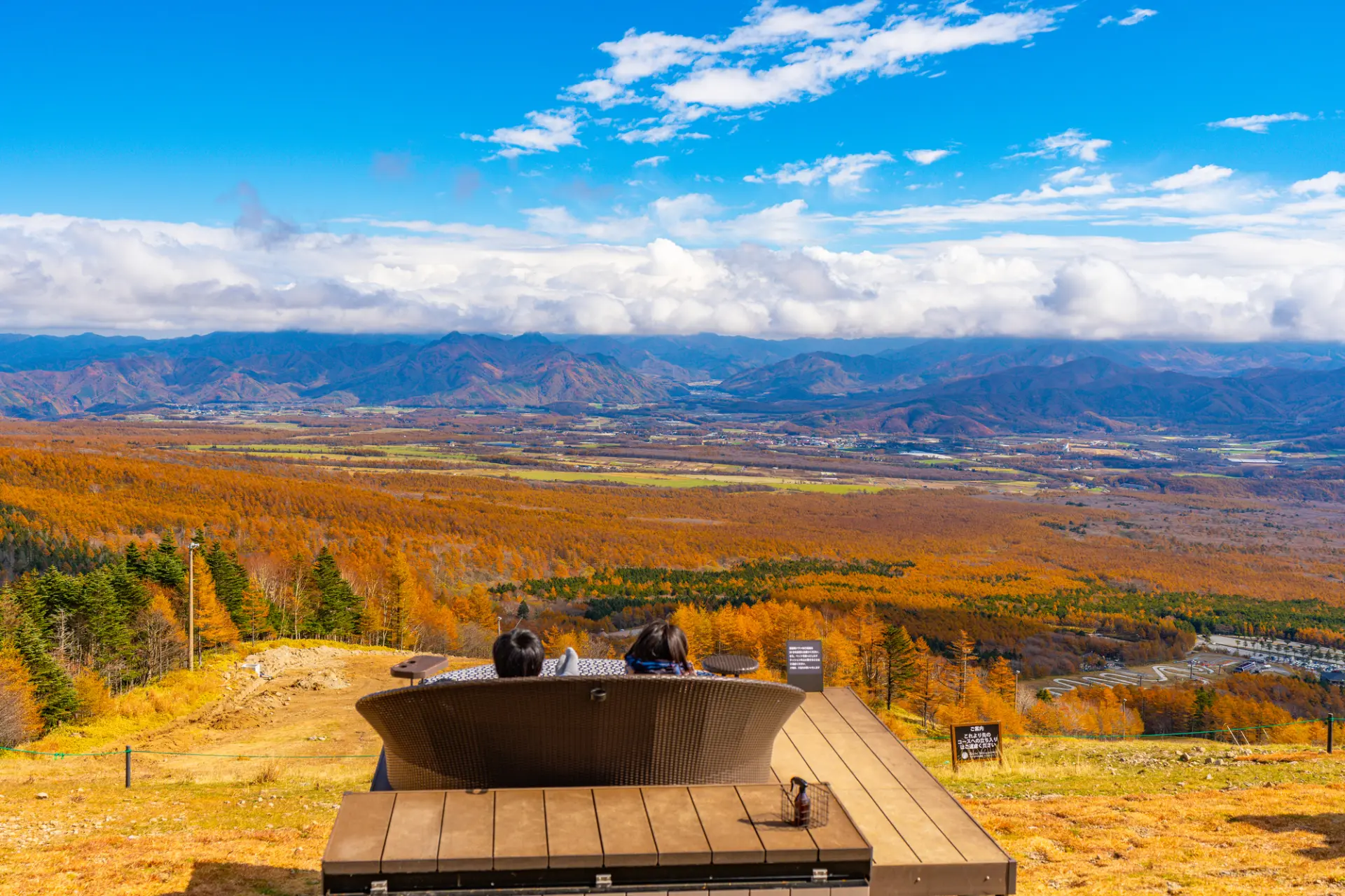
Spread across a mountaintop at an elevation of 1,900 m, Kiyosato Terrace is a highland viewpoint overlooking Mount Fuji and the Nobeyama Highlands. Sit on one of the garden sofas and take in views of the Chichibu Mountains and Mount Fuji. When conditions are right, a sea of clouds may also appear.
Visitors can remove their shoes and lie back on the circular sofas, while the cafe serves smoothies, gelato, parfaits, and other treats made with Yamanashi fruit. Highland views and fresh fruit flavors add to the experience of spending time at the summit.
3 Places to See Fall Colors in Yamanashi
Blessed with mountains, gorges, and lakeshores, Yamanashi’s natural landscapes take on shades of red and yellow in fall.
Each destination offers different scenery and ways to explore, from the granite cliffs of Shosenkyo Gorge to the Lake Kawaguchi Maple Corridor with views of Mount Fuji and Nishizawa Gorge with its clear streams and waterfalls.
These places reveal not only colorful foliage but also the distinctive terrain and flowing water of each area.
1. Shosenkyo Gorge (Kofu)
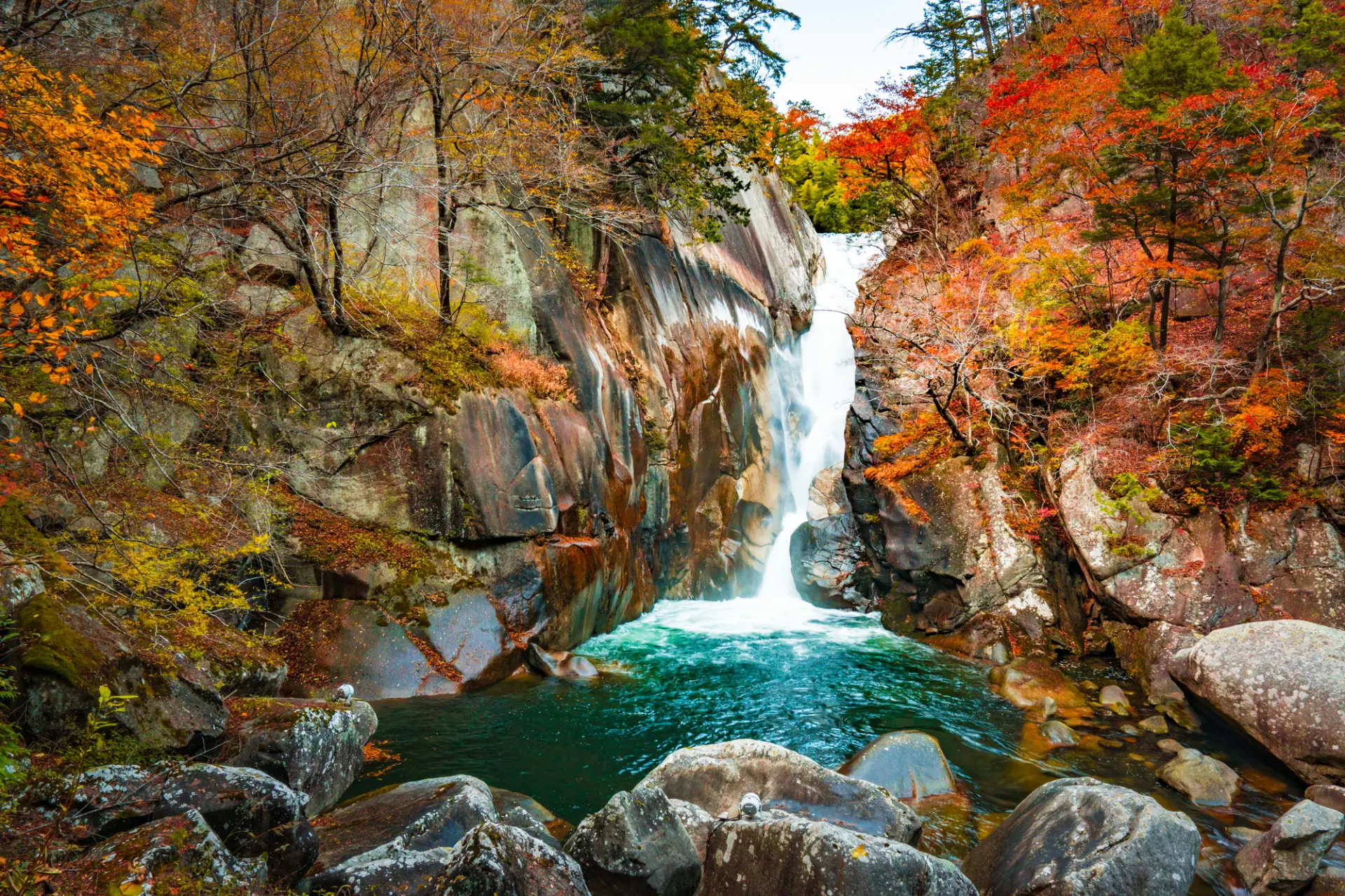
Located in northern Kofu, Shosenkyo Gorge is a scenic area often described as Japan’s most beautiful gorge. Visitors can see granite cliffs carved away over many years, unusual rock formations, and abundant flows of clear water.
Highlights include the 30 m-high Senga Falls, the Stone Gate, and other varied landscapes, as well as Nagatoro Bridge, the oldest surviving concrete arch road bridge in Yamanashi Prefecture. Ride the Shosenkyo Ropeway to the observation deck for expansive views extending to Mount Fuji, Mount Kitadake, and Mount Ainodake.
2. Lake Kawaguchi Maple Corridor (Fujikawaguchiko)
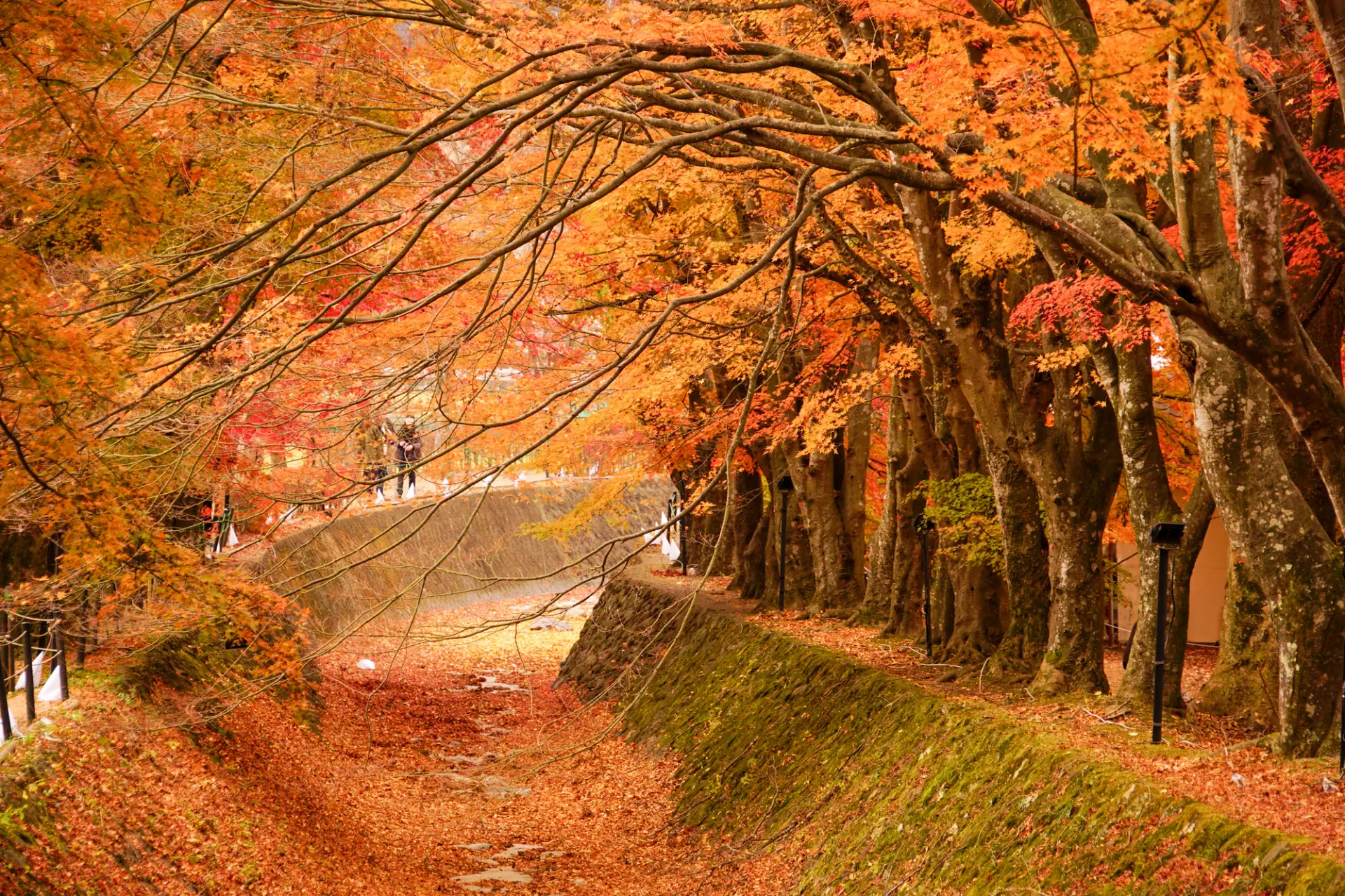
Located near the shore of Lake Kawaguchi at an elevation of 830 m, the Lake Kawaguchi Maple Corridor is one of Yamanashi’s signature fall destinations, offering views of both Mount Fuji and colorful foliage. True to its name, overlapping maple branches form a corridor overhead, while fallen leaves add color to the ground, creating scenery often described as a tunnel of fall foliage.
Each November, it generally serves as the main venue for the Fuji Kawaguchiko Autumn Leaves Festival and is illuminated at night. Visiting at different times of day reveals contrasting views of the fall colors.
3. Nishizawa Gorge (Yamanashi)
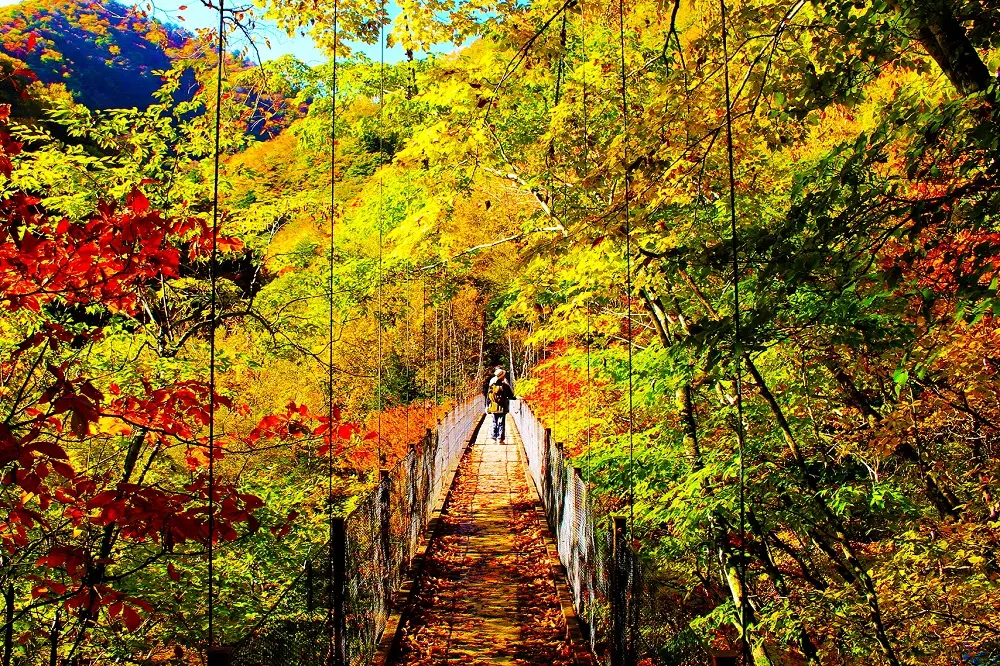
Located in Chichibu-Tama-Kai National Park, Nishizawa Gorge is one of Japan’s leading scenic destinations, where visitors can walk amid fall foliage and clear streams. The gorge was formed as flowing water eroded enormous granite formations. It is also known for its many waterfalls, including Nanatsugama Godan Falls, which was selected as one of Japan’s 100 best waterfalls.
The area has also been certified as a Forest Therapy® Base and attracts many visitors seeking the benefits of forest bathing. Nearby facilities include Roadside Station Mitomi and hot springs for day visitors, allowing travelers to spend a full day in the mountains even after completing the gorge walk.
5 Restaurants and Cafes to Visit on a Fall Trip to Yamanashi
A trip through Yamanashi should include local cuisine and seasonal fruit.
Along with regional dishes such as miso-based hoto noodles, exceptionally firm Yoshida udon, and Kofu-style simmered chicken offal, visitors will find Kiyosato’s well-known curry and sweets made with fall grapes.
Choose restaurants based on the areas you plan to visit and experience the flavors of Yamanashi at mealtimes.
1. Hoto Fudo Kawaguchiko Kitahonten (Fujikawaguchiko)
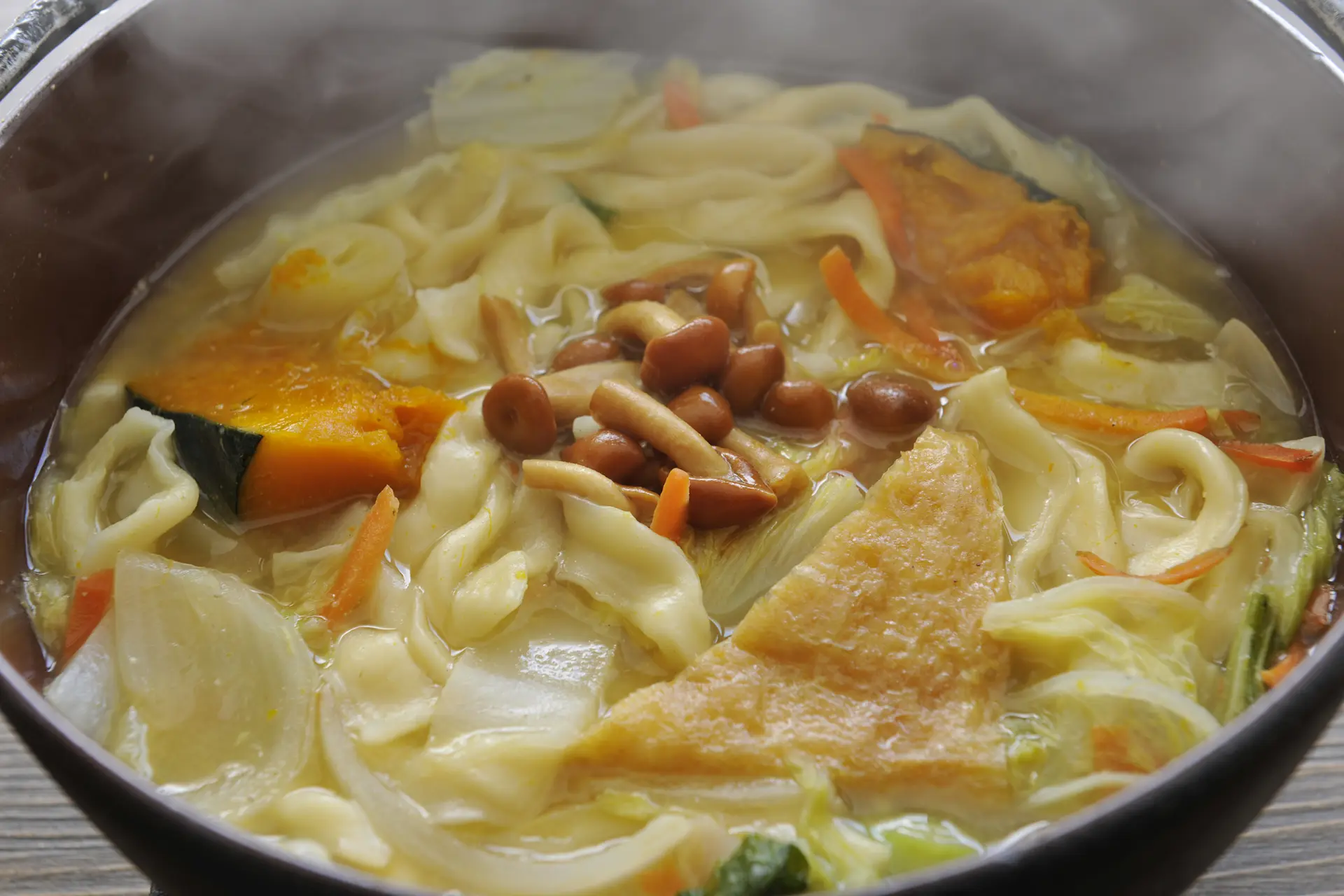
Located near Lake Kawaguchi, Hoto Fudo Kawaguchiko Kitahonten is a popular restaurant serving hoto, a Yamanashi specialty.
Hoto is a traditional Yamanashi dish that has long been part of local cuisine and was selected by the Ministry of Agriculture, Forestry and Fisheries as one of Japan’s 100 best regional dishes from farming, mountain, and fishing villages. Its comforting flavor comes from noodles coated in a broth infused with the natural sweetness of pumpkin, mushrooms, and other vegetables.
During a visit to Lake Kawaguchi, this restaurant offers a chance to pause over a warm bowl of hoto in a building that retains its traditional character.
2. Genji (Yoshida Udon) (Fujiyoshida)
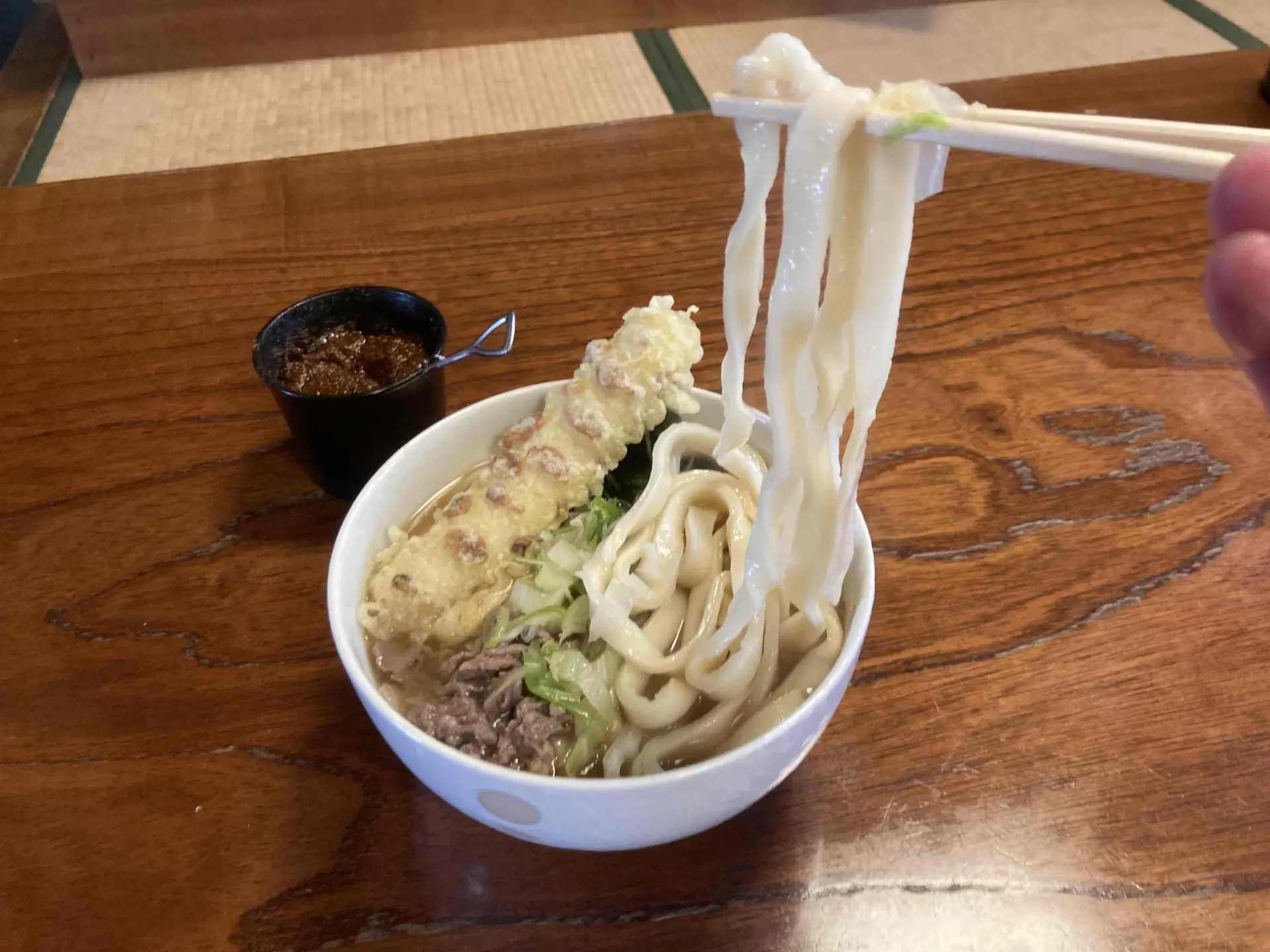
This restaurant serves Yoshida udon, a Fujiyoshida specialty whose noodles are sometimes described as the firmest in Japan. Genji is known for its smooth noodles and soup made by its former-chef owner from a blend of soy sauce and miso.
The menu includes hot noodles in broth, dipping noodles, and chilled tanuki udon, with the meat and tempura udon being especially popular. It is topped with sweet-and-savory simmered horse meat, tempura, and boiled cabbage, and diners can add suridane chili seasoning to taste. After exploring the city of Mount Fuji, settle in with a bowl of Fujiyoshida noodles whose flavor deepens with every bite.
3. Moegi no Mura ROCK (Hokuto)
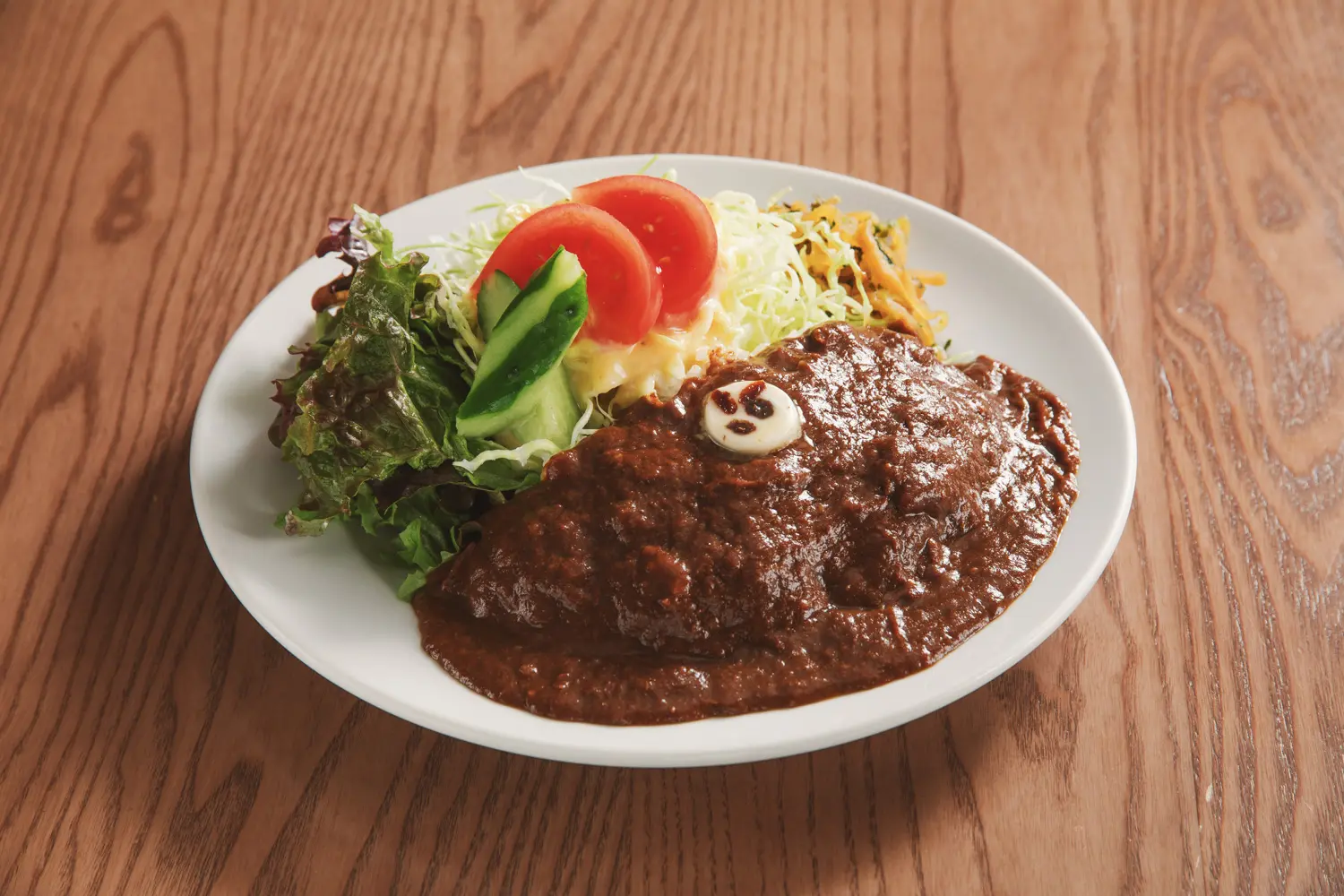
Moegi no Mura ROCK began as a coffee shop in the Kiyosato Highlands in 1971 and now draws many visitors for its signature beef curry. The curry is simmered for at least 10 hours over the course of approximately 1 day, then rested in the refrigerator for 2 days. The finished dish has been described as the very essence of meat and vegetables melted together.
Strawberry jam is used as a secret ingredient, and the curry is served with raisin butter. Enjoy the flavors of Kiyosato alongside a salad made with locally grown vegetables and craft beer brewed at the restaurant’s own Yatsugatake Brewery.
4. Fruit Cafe Bellavista (Yamanashi)
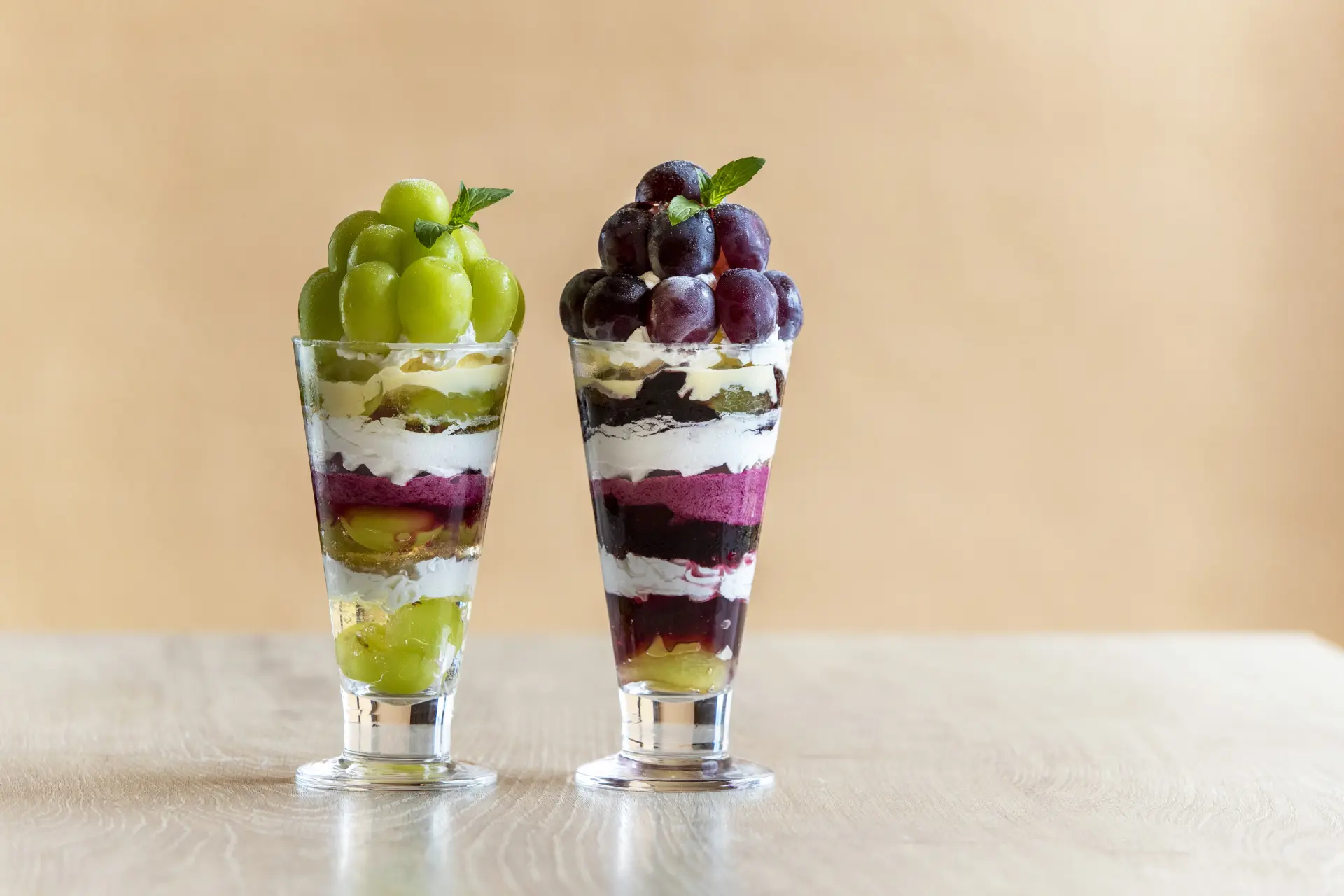
Located inside the Fruit Park Fujiya Hotel, Fruit Cafe Bellavista serves desserts featuring fruit from Yamanashi. It uses seasonal produce delivered by local farmers to create sweets and drinks throughout the year.
Grapes take center stage in fall, appearing in parfaits that combine Shine Muscat grapes with vanilla ice cream, grape sorbet, and grape sauce, as well as in grape waffles. The cafe is also next to Fuefukigawa Fruit Park and a hot spring facility, making it a convenient place to sample the fall harvest during a day of sightseeing.
5. Okuto Honten Kofu Station Branch (Kofu)
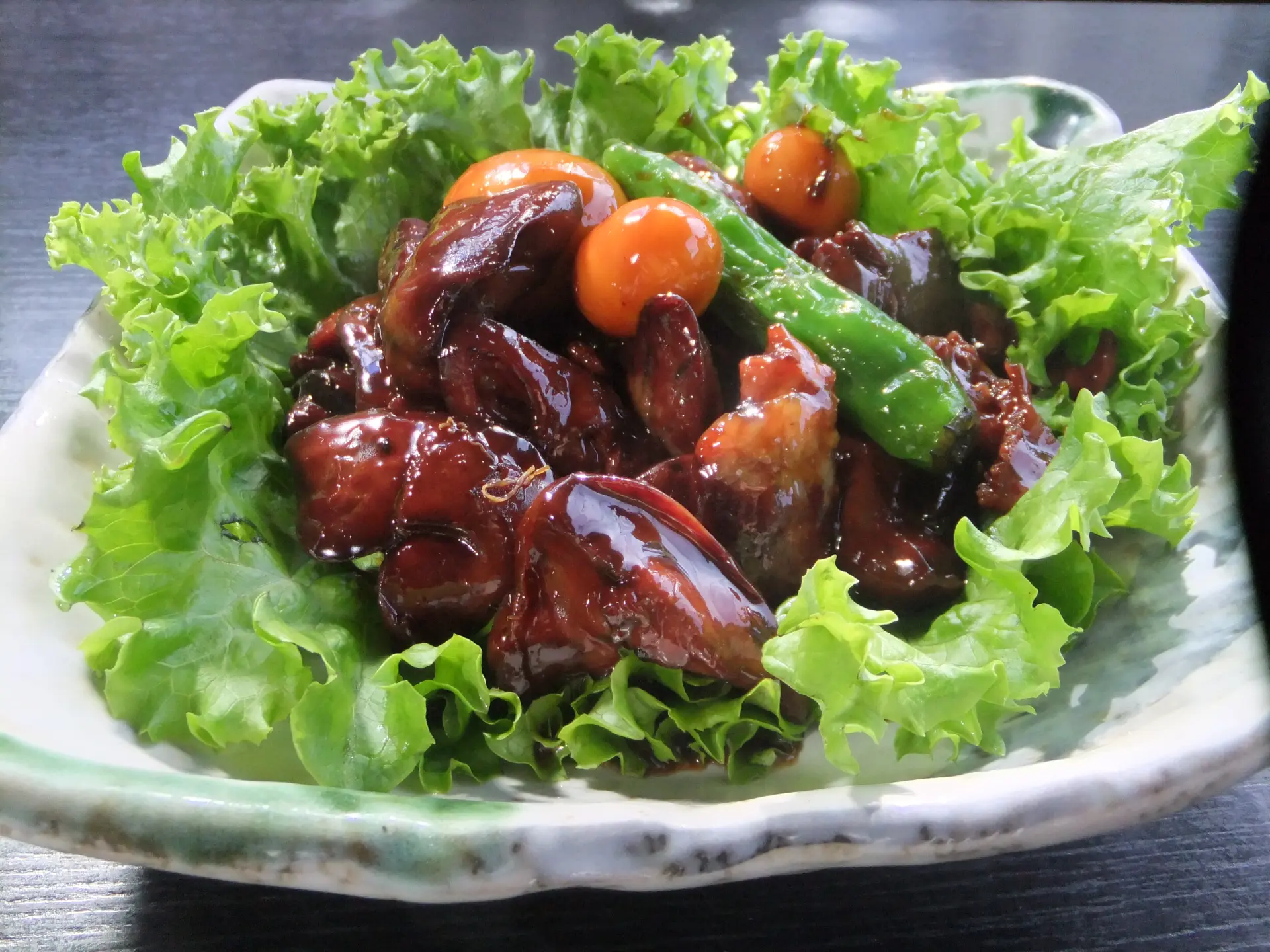
Established in 1913, Okuto Honten Kofu Station Branch is a long-standing restaurant serving handmade soba and local Kofu cuisine. It is also renowned as the birthplace of Kofu-style simmered chicken offal, a dish that has attracted attention as a local Kofu specialty.
The dish combines chicken liver, heart, gizzard, and undeveloped egg yolks known as kinkan with a sweet-and-savory sauce based on sugar and soy sauce. It pairs well with both rice and alcoholic drinks. Along with handmade soba, the restaurant offers Yamanashi wine and local sake, providing a taste of Kofu through both food and drink.
3 Convenient Hotels for a Fall Trip to Yamanashi
When exploring a large area such as Yamanashi—from the Fuji Five Lakes to Kofu and Kiyosato—choosing accommodations near each day’s sightseeing area makes travel easier.
These 3 selected properties include an inn with its own hot spring source in Isawa Onsen, a hot spring inn overlooking Lake Kawaguchi and Mount Fuji, and a highland resort in Yatsugatake. Even after sightseeing ends, the hot springs, food, and scenery make the stay itself part of the journey.
1. Hanayagi no Sho Keizan (Fuefuki)
This inn offers free-flowing hot spring water from its own source along with Yamanashi cuisine. Both the indoor and open-air baths alternate between men and women. Its 2 open-air baths are Hanahinoki, scented with hinoki cypress, and Rokkakusen, a stone bath. The alkaline simple hot spring water has a gentle feel and is known as a “beauty bath” for leaving skin feeling smooth.
For dinner, guests can choose from kaiseki cuisine, teppanyaki featuring Yamanashi-brand beef and wine, and other options. Enjoy the hot springs and dinner as evening slowly settles over Isawa.
2. Shuhokaku Kogetsu (Fujikawaguchiko)
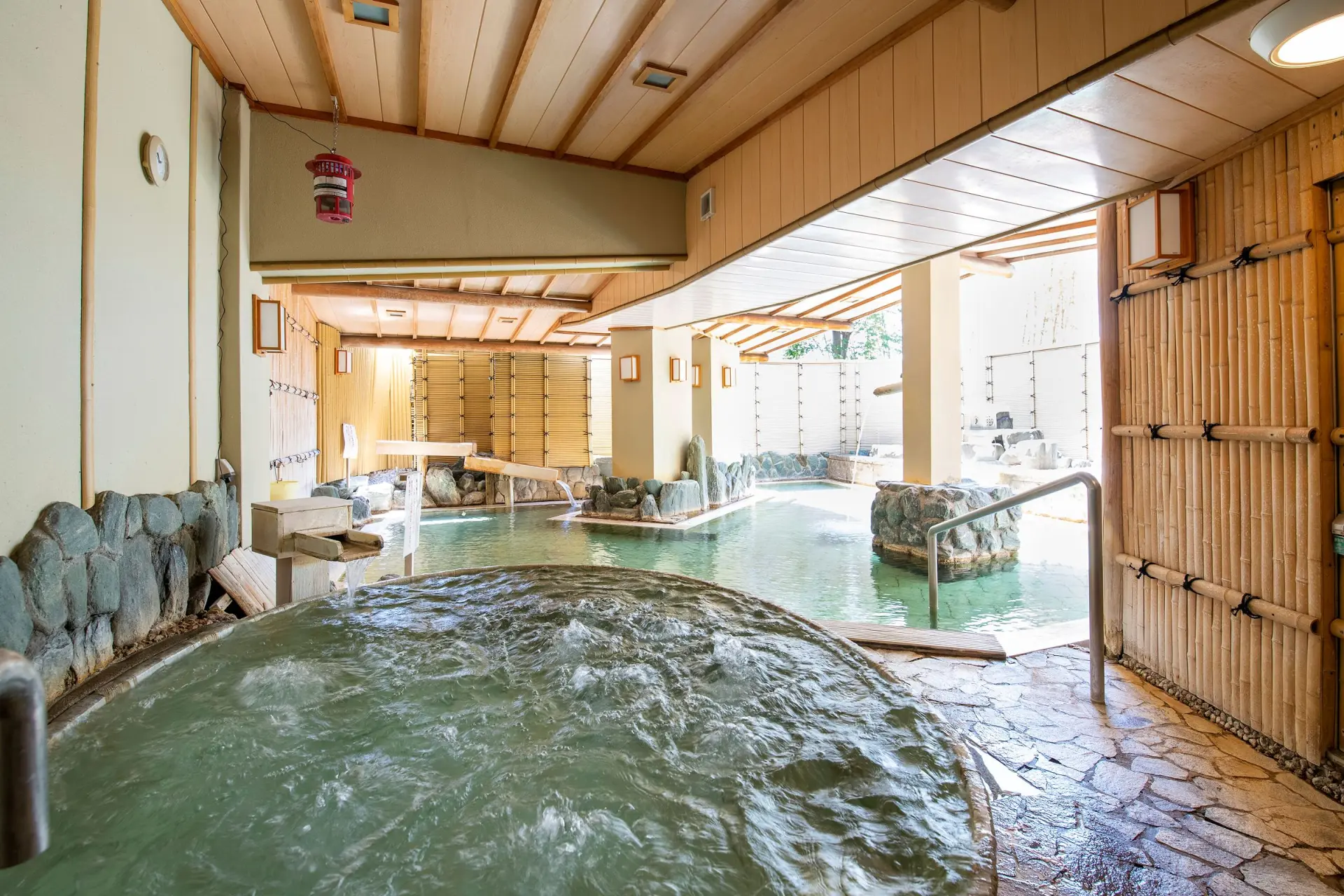
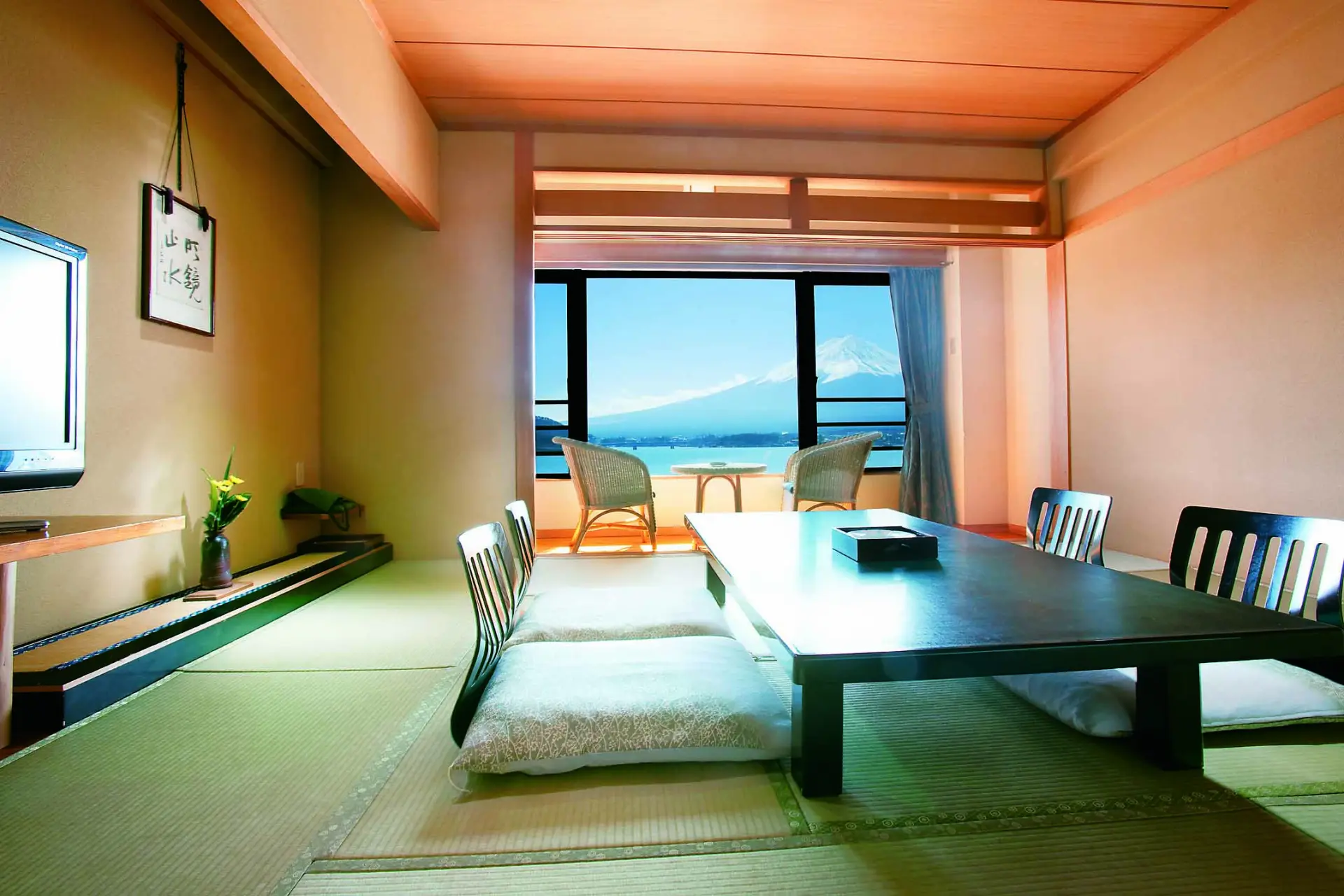
This hot spring inn stands on the north shore of Lake Kawaguchi, allowing guests to stay with views of both Mount Fuji and the lake. Its large public bath offers panoramic views of Mount Fuji through the seasons, providing a soothing soak amid the scenery.
All guest rooms and open-air baths overlook Mount Fuji and Lake Kawaguchi. Guests can choose from a wide range of rooms, including Japanese-style rooms, Japanese-Western rooms, and rooms with private open-air baths or footbaths. Meals feature kaiseki cuisine prepared with seasonal ingredients, so even after a day of lakeside sightseeing, guests can continue spending time with Mount Fuji in view.
3. RISONARE Yatsugatake (Hokuto)
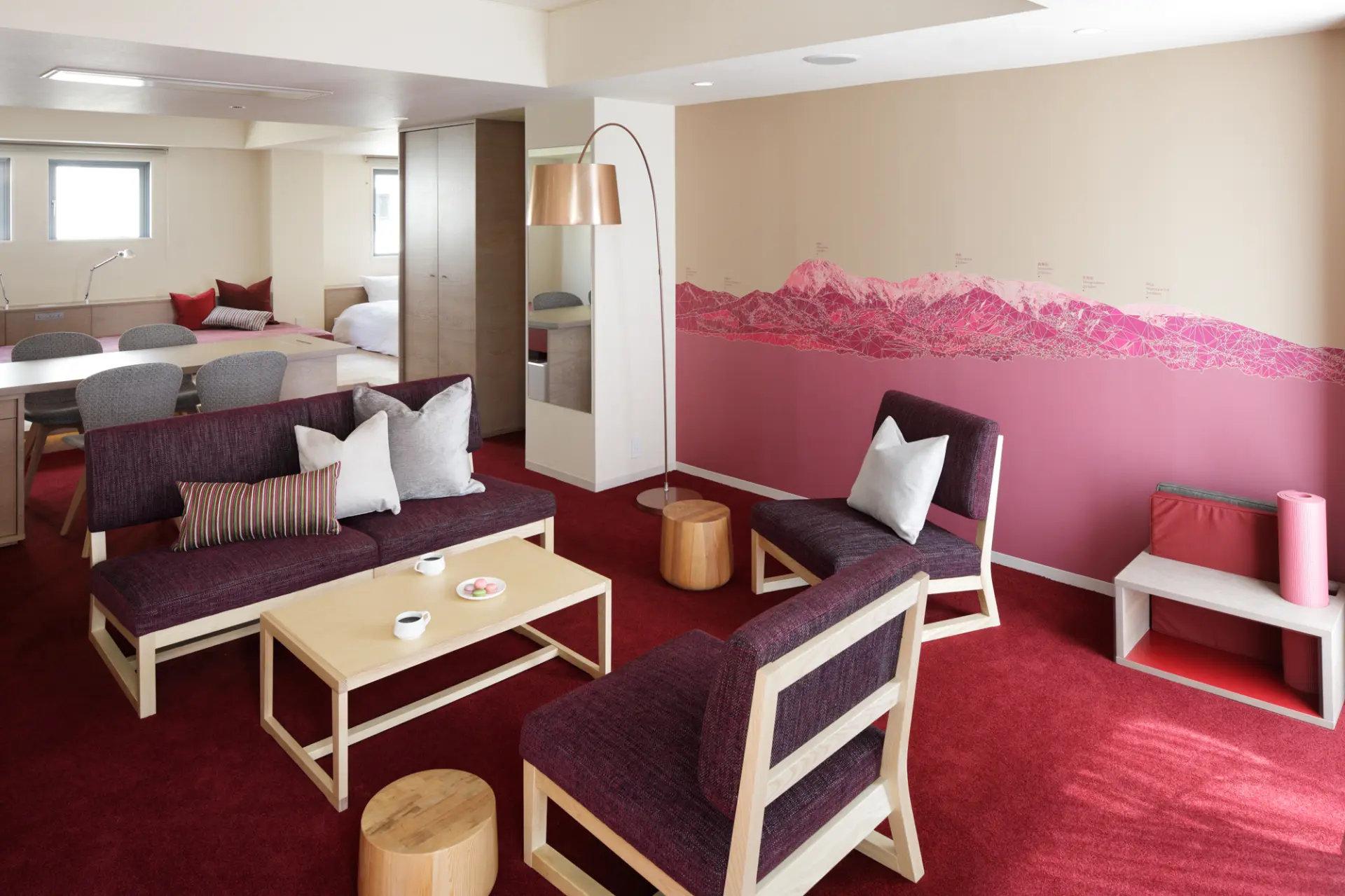
This highland resort features streets reminiscent of an Italian mountain town. A walk along Piment Street on the grounds leads past 19 restaurants, cafes, and shops where guests can dine and shop.
More than 10 room types are available, including spacious accommodations suited to groups and families, making it easy to choose according to travel style. The seasonal event THE HALLOWEEN HOTEL is also held in fall. Breakfast includes dishes such as Yamanashi hoto, while dinner pairs wine with authentic Italian cuisine, making food an integral part of the highland stay.
A Sample Fall Itinerary for Fall Colors, Mount Fuji, and Hot Springs in Yamanashi
This 2-day, 1-night driving itinerary travels from the foot of Mount Fuji to Isawa Onsen, Hakushu, Kiyosato, and Shosenkyo Gorge.
On Day 1, explore Lake Kawaguchi, Oshino Hakkai, and other places around Mount Fuji before continuing to Isawa Onsen.
On Day 2, travel to Hokuto to experience whisky and the scenery of the Kiyosato Highlands, then admire the gorge landscape at Shosenkyo.
The route connects Yamanashi’s Mount Fuji scenery, culture, food, highlands, and hot springs over 2 days.
- Day 1
- Rent a car at Kawaguchiko Station → Admire fall views of Mount Fuji and the lakeshore at Lake Kawaguchi → Visit the Itchiku Kubota Art Museum → Have lunch at Hoto Fudo Kawaguchiko Kitahonten → Travel to Fujiyoshida → Stroll along Honcho Street in Fujiyoshida → Explore the spring-fed village of Oshino Hakkai → Stay at Hanayagi no Sho Keizan in Isawa Onsen
- Day 2
- Depart Hanayagi no Sho Keizan → Tour Suntory Hakushu Distillery and experience its rich natural surroundings → Have the signature curry for lunch at Moegi no Mura ROCK → Take in panoramic views of Yatsugatake and Mount Fuji from Kiyosato Terrace → Admire the gorge scenery and fall colors at Shosenkyo Gorge → Return the rental car at Kofu Station
Average Fall Temperatures in Yamanashi (Kofu)
Fall in Yamanashi grows cooler as the season progresses, with increasingly large temperature differences between daytime and early mornings and evenings.
Because central Kofu, the Fuji Five Lakes, and highland areas such as Kiyosato are at different elevations, perceived temperatures can vary even on the same day. The highlands and gorges can become particularly cold during the fall foliage season, so check temperatures for the specific area and time of your visit.
| Month | September | October | November |
|---|---|---|---|
| Temperature | 23.2°C | 17.1°C | 10.8°C |
What to Wear for a Comfortable Fall Trip to Yamanashi
Yamanashi has noticeable temperature differences between daytime and early mornings and evenings in fall, and temperatures also vary by elevation.
In September, pair short sleeves with a lightweight outer layer. From October onward, long-sleeved shirts, sweaters, and light jackets are useful. If visiting the Fuji Five Lakes, Kiyosato, highlands, or gorges in November, warmer clothing such as a coat or fleece will also be necessary.
For trips involving walks through gorges, along lakeshores, or across highlands, comfortable footwear such as sneakers or hiking shoes is helpful.
Frequently Asked Questions About Fall Travel in Yamanashi
Q
When is the best time to see fall colors in Yamanashi Prefecture?
Fall colors generally reach their peak in different parts of the prefecture from mid-October through late November. The leaves begin changing first in higher-elevation areas such as Kiyosato and Nishizawa Gorge, while colorful foliage can be seen until around mid-November at Lake Kawaguchi, Shosenkyo Gorge, and other locations.
Q
Do I need a rental car for fall sightseeing in Yamanashi?
A rental car is convenient for efficiently visiting multiple areas such as the Fuji Five Lakes, Kiyosato, and Hakushu. Some places in Kofu and around Lake Kawaguchi are accessible by public transportation, but a car makes it easier to travel across the expansive prefecture.
Q
What foods should I try in Yamanashi during fall?
Along with Yamanashi specialties such as hoto, Yoshida udon, and Kofu-style simmered chicken offal, fall brings seasonal fruit such as grapes. Parfaits and sweets made with fruit, as well as Yamanashi wine, are also seasonal flavors to experience while sightseeing.
Q
Can Mount Fuji still be seen clearly in fall?
Mount Fuji can be seen from many of the places featured in this article, including Lake Kawaguchi, Oshino Hakkai, Honcho Street, and Kiyosato Terrace. Each location offers a different combination, such as Mount Fuji with fall colors at Lake Kawaguchi or with spring-fed ponds at Oshino Hakkai.
Summary
From Lake Kawaguchi and Oshino Hakkai with views of Mount Fuji to the Kiyosato Highlands, Shosenkyo Gorge, and the Lake Kawaguchi Maple Corridor in fall colors, each area of Yamanashi presents a different landscape in fall.
Add seasonal grapes, hoto noodles, hot springs, and whisky for a fall trip that goes beyond simply viewing nature.
Travel through Yamanashi while following the changing scenery and flavors from September through November.