
12 Best Fall Foliage Spots in Shikoku for 2026: Spectacular Gorges, Gardens, and Peak Viewing Times
In autumn, Shikoku’s deep gorges, renowned gardens, and historic temples are transformed by vibrant fall foliage. Each destination offers a different landscape, along with many ways to experience the season, including scenic drives, walks along nature trails, and nighttime illuminations. As the summer heat subsides, this is also a great time to savor seasonal local cuisine and relax in hot springs.
This article introduces 12 carefully selected fall foliage spots across Shikoku’s four prefectures, together with essential information. Use it to plan your trip and make the most of the season.
Why Autumn in Shikoku Is Perfect for Fall Foliage, Seasonal Cuisine, and Hot Springs
As the summer heat fades, autumn in Shikoku offers a wide variety of fall landscapes. In gorges carved into the mountains, red and yellow leaves stand out against steep cliffs and clear streams, covering the slopes in seasonal color. At traditional gardens, foliage is reflected in tranquil ponds, while historic temples offer scenes where centuries-old architecture blends harmoniously with autumn hues, creating a distinctly Japanese atmosphere.
Visitors can also sample regional dishes and seasonal ingredients, then unwind in a hot spring after viewing the foliage. Plan an itinerary to suit your interests, whether that means driving along mountain roads, seeing atmospheric nighttime illuminations, or visiting sacred sites along the Shikoku 88 Temple Pilgrimage.
Typical Peak Fall Foliage Periods in Shikoku
Use the table below as a guide to the typical peak fall foliage periods in Shikoku. These are only general estimates based on previous years, and the timing may vary. Check official websites and social media for current conditions before visiting.
- Iya Valley, Tokushima Prefecture
- Late October to mid-November
- Oboke and Koboke Gorges, Tokushima Prefecture
- Mid- to late November
- Mt. Tsurugi, Tokushima Prefecture
- Early October to early November, depending on elevation
- Kankakei Gorge, Kagawa Prefecture
- Early to late November
- Ritsurin Garden, Kagawa Prefecture
- Mid-November to early December
- Okuboji Temple, Kagawa Prefecture
- Late October to mid-November
- Mt. Ishizuchi, Ehime Prefecture
- Early October to mid-November, depending on elevation
- Omogo Gorge, Ehime Prefecture
- Late October to mid-November
- Shirataki Park, Ehime Prefecture
- Mid-November to early December
- Yasui Gorge, Kochi Prefecture
- Early to mid-November
- Nakatsu Gorge, Kochi Prefecture
- Mid- to late November
- Befu Gorge, Kochi Prefecture
- Early to late November
2026 Fall Foliage Forecast for Shikoku
According to a forecast released in October 2026 by the Japan Weather Association, peak fall foliage in Kochi City is expected around December 9. This is seven days later than average. In Shikoku, the leaves generally begin changing color in mountainous areas at higher elevations before the season moves on to gorges and gardens on the plains.
Timing varies even within the same prefecture. In western Japan in 2026, peak foliage is expected from late October to early December in mountainous areas and from late November to mid-December on the plains. Actual timing depends on the weather and temperatures, so be sure to check the latest foliage reports.
Reference: Japan Weather Association
12 Recommended Fall Foliage Spots in Shikoku
Shikoku is home to a diverse range of fall foliage destinations, from brightly colored mountains and gorges shaped by clear streams and unusual rock formations to atmospheric gardens and historic temples. Because peak foliage varies by elevation and region, visitors can experience autumn scenery over an extended period.
Below are three recommended fall foliage spots in each prefecture, along with their typical peak viewing periods. Find a destination that appeals to you and plan a visit.
3 Recommended Fall Foliage Spots in Tokushima Prefecture
Tokushima Prefecture is known for dramatic fall scenery created by its deep mountains and gorges. Trees covering the slopes in red and yellow form striking contrasts with the clear streams below and the steep rock walls rising above them.
At higher elevations, the leaves begin changing color around early October. As autumn progresses, vivid colors spread along the gorges, offering different scenery depending on when and where you visit. In addition to views from observation points, walks along the rivers and scenic fall drives are also recommended.
1. Iya Valley: Vibrant Fall Foliage Blankets a Deep V-Shaped Gorge
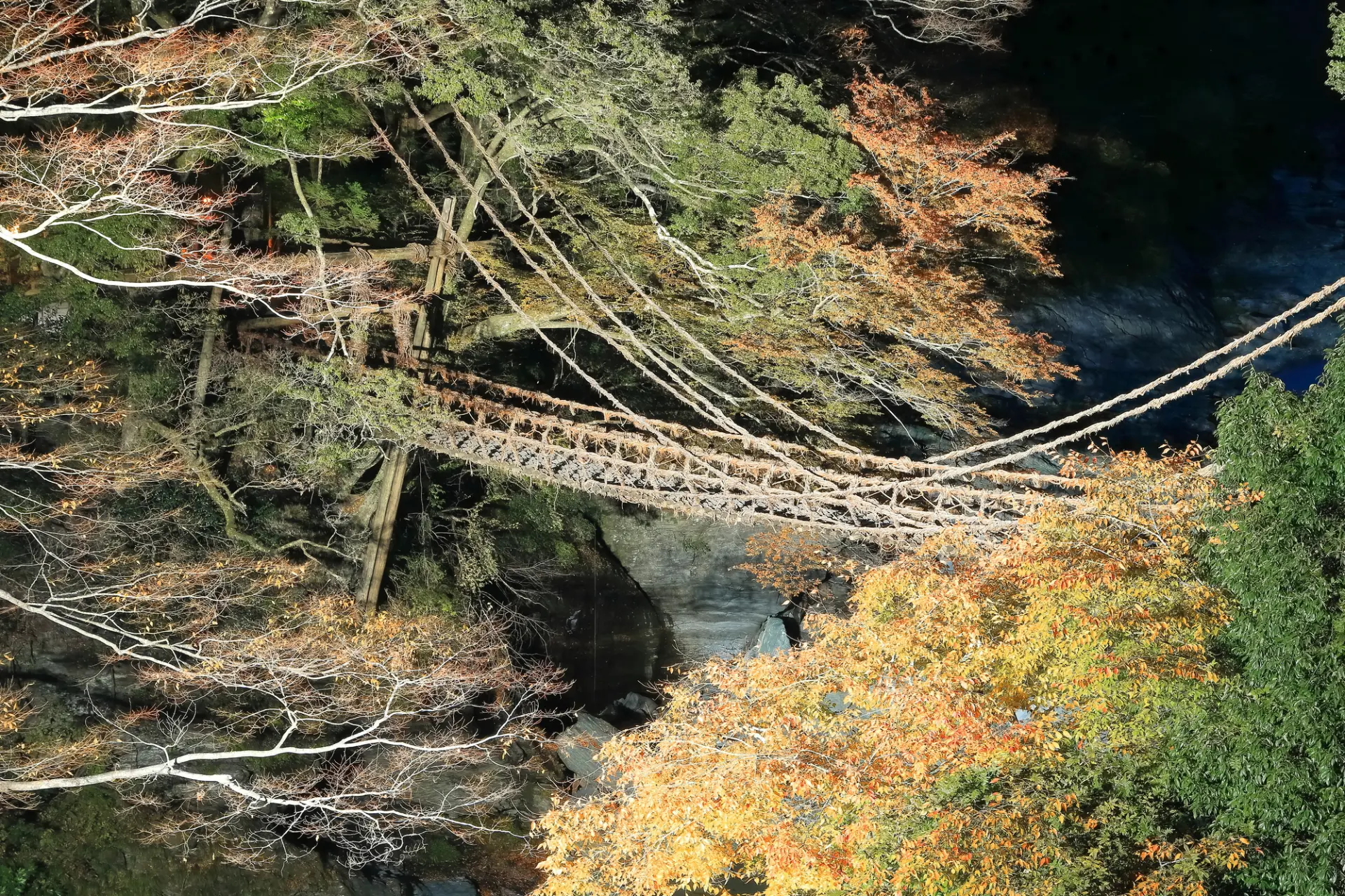
Iya Valley is a V-shaped gorge extending for approximately 6.2 miles along the Iya River in Miyoshi City, Tokushima Prefecture. Its dramatic landscape of steep cliffs and flowing water is impressive, and the statue known as the “Peeing Boy” standing on a rocky outcrop is another highlight.
During the fall foliage season, the mountainsides from the valley floor to the peaks turn red and yellow, creating a striking contrast with the emerald-green water. The Hi-no-Ji Valley viewpoint offers a particularly expansive view of the sharply curving river and the surrounding mountains covered in fall colors.
A short drive away, visitors can also see nighttime illuminations at the Iya Kazurabashi Vine Bridge. Those interested in a more atmospheric scene after dark can combine it with other nearby attractions.
- Typical peak foliage period
- Late October to mid-November
2. Oboke and Koboke Gorges: Fall Colors Along a Clear River and Unusual Rock Formations
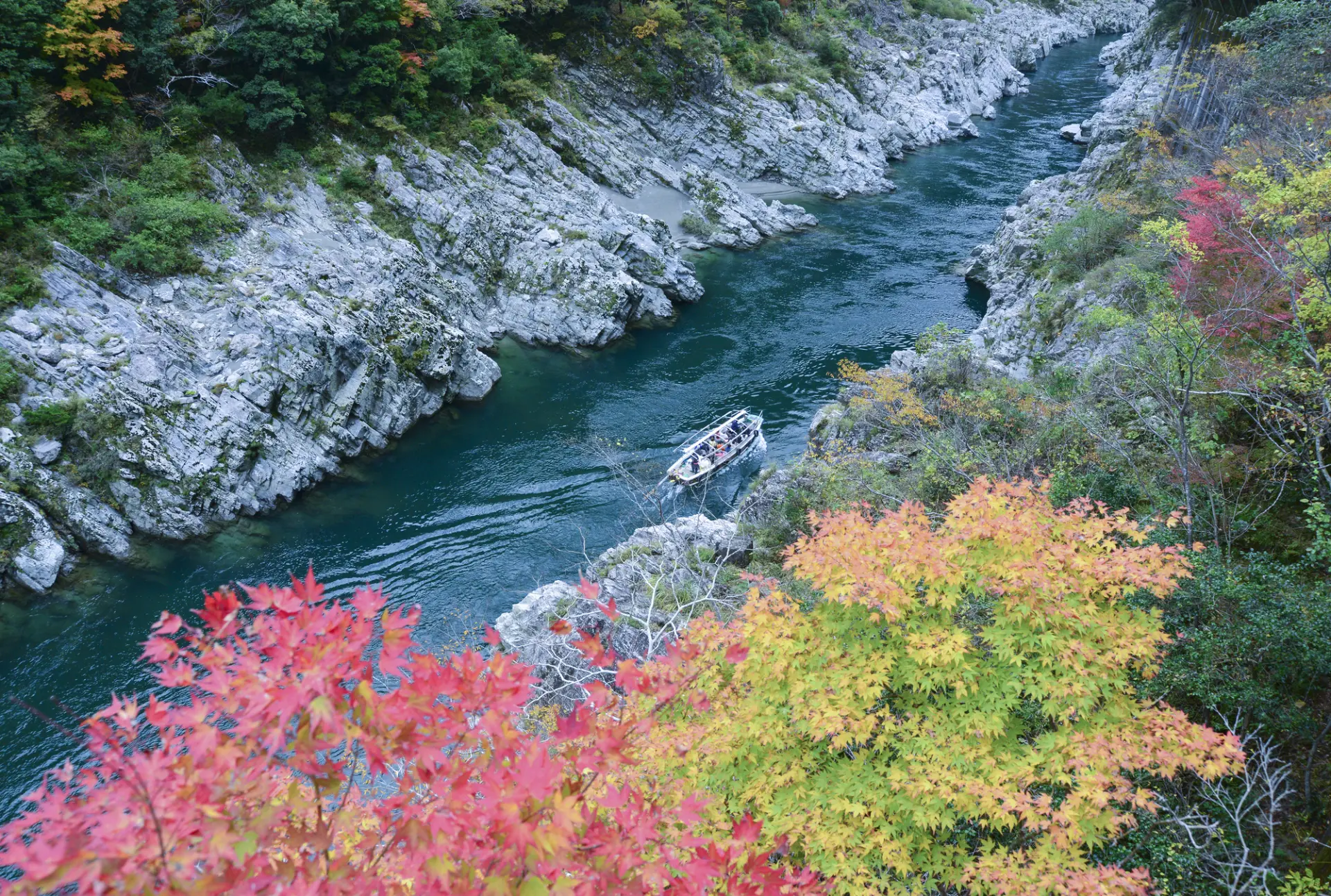
Oboke and Koboke are gorges extending for approximately 5 miles through Miyoshi City, Tokushima Prefecture. Formed by erosion from the Yoshino River, they are designated by the national government as both a Natural Monument and a Place of Scenic Beauty. Their dramatic crystalline schist rock faces and sweeping gorge scenery are their main attractions. One theory behind the names is that the terrain is dangerous whether walking with large steps or small ones.
In autumn, the trees along the gorges change color, adding vivid hues to the rock faces and emerald-green river. For an up-close view of the foliage, take an Oboke Gorge sightseeing boat. The rock walls towering overhead look even more impressive from the water, and the cruise lasts approximately 30 minutes.
- Typical peak foliage period
- Mid- to late November
- Name in Japanese
- 大歩危・小歩危
- Postal Code
- 779-5451
- Address
-
Yamashirochonishiu, Miyoshi City, Tokushima
Google Maps - Telephone
- 0883-76-0877 (Miyoshi City Tourism Association)
- Access
- A few minutes’ walk from the JR Dosan Line’s Oboke Station to each facility
- Official Website
- Official Website (English)
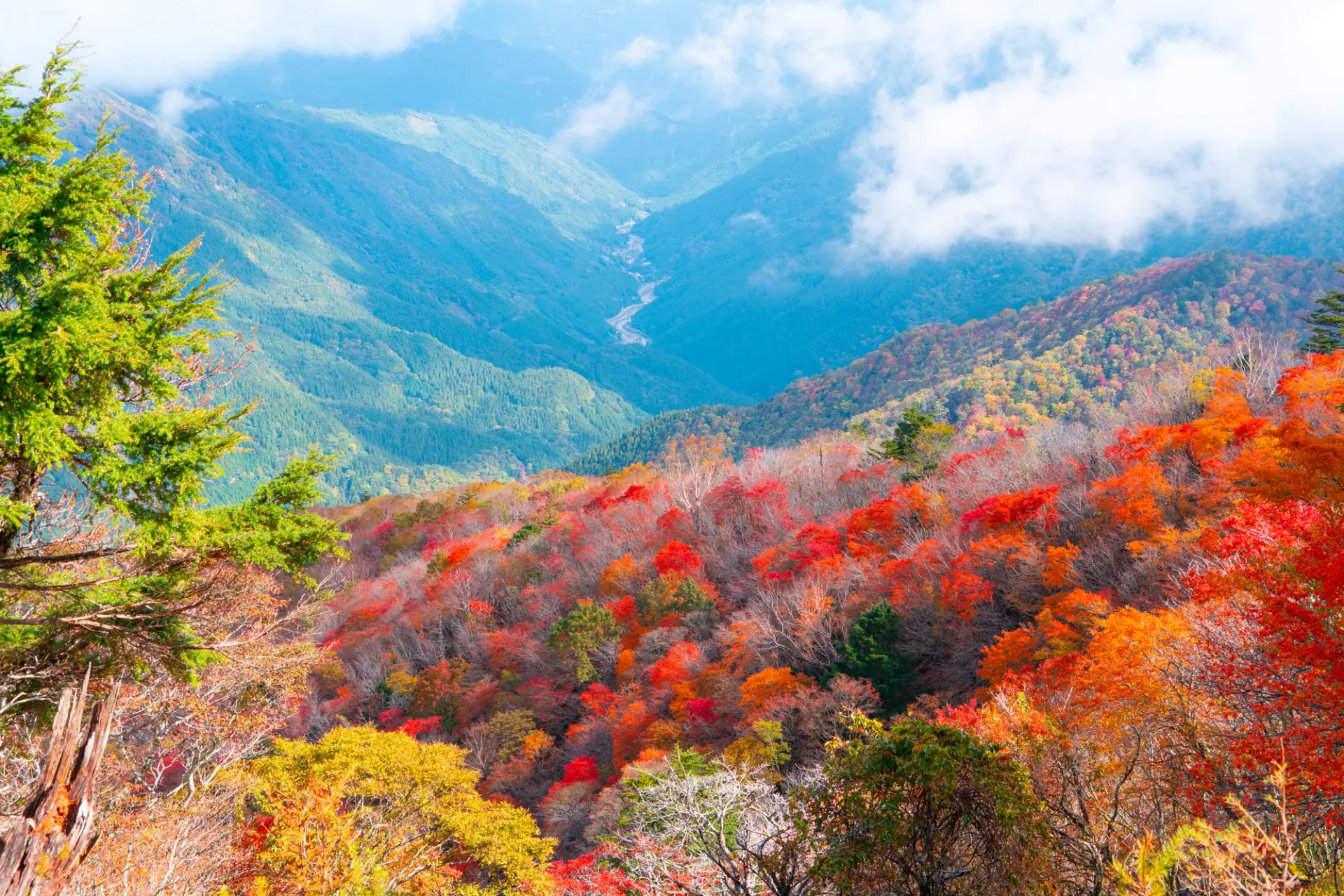
3. Mt. Tsurugi: Mountain Ridges Leading to the Summit Turn Brilliant Autumn Colors
Mt. Tsurugi, one of Tokushima Prefecture’s best-known peaks, rises to 6,414 feet and is the second-highest mountain in western Japan. A sightseeing chairlift takes visitors partway up the mountain, and the well-maintained trails allow even beginners to experience the expansive scenery of the Shikoku Mountains. Visitors may also wish to stop at Tsurugisan Hongu Hozoseki Shrine near the summit, a site associated with traditional mountain worship.
The fall colors gradually move from higher elevations down toward the foot of the mountain. Around the summit and ridgelines, rowan and Erman’s birch trees begin changing color from early to mid-October, with their red and yellow leaves contrasting against the green bamboo grass. As autumn progresses, the slopes around the chairlift and areas near Minokoshi also take on seasonal colors.
The changing scenery at different times of the season is part of the mountain’s appeal.
- Typical peak foliage period
- Early October to early November, depending on elevation
3 Recommended Fall Foliage Spots in Kagawa Prefecture
Facing the Seto Inland Sea and blessed with a mild climate, Kagawa Prefecture offers a variety of autumn scenery, including gardens, historic temples, and gorges. Fall foliage generally reaches its peak from early November to early December, with the colors changing at different times depending on the location. Highlights range from expansive natural landscapes to the distinctive atmosphere of historic temples, shrines, and traditional Japanese gardens.
Some destinations are also easily accessible from central Takamatsu, making it convenient to combine them with sightseeing around the city and sampling local cuisine.
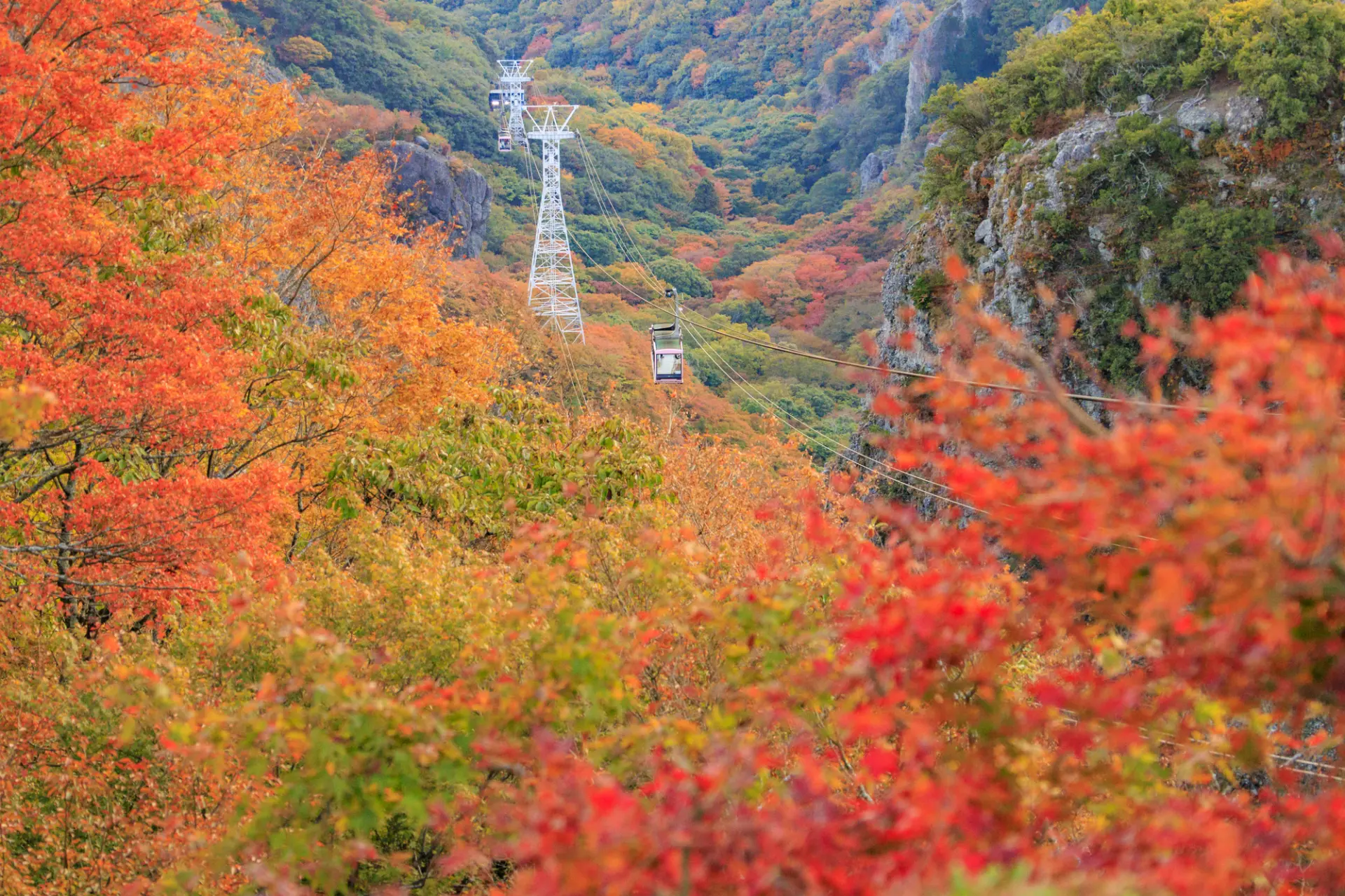
4. Kankakei Gorge: Panoramic Views of a Rocky Gorge from the Ropeway
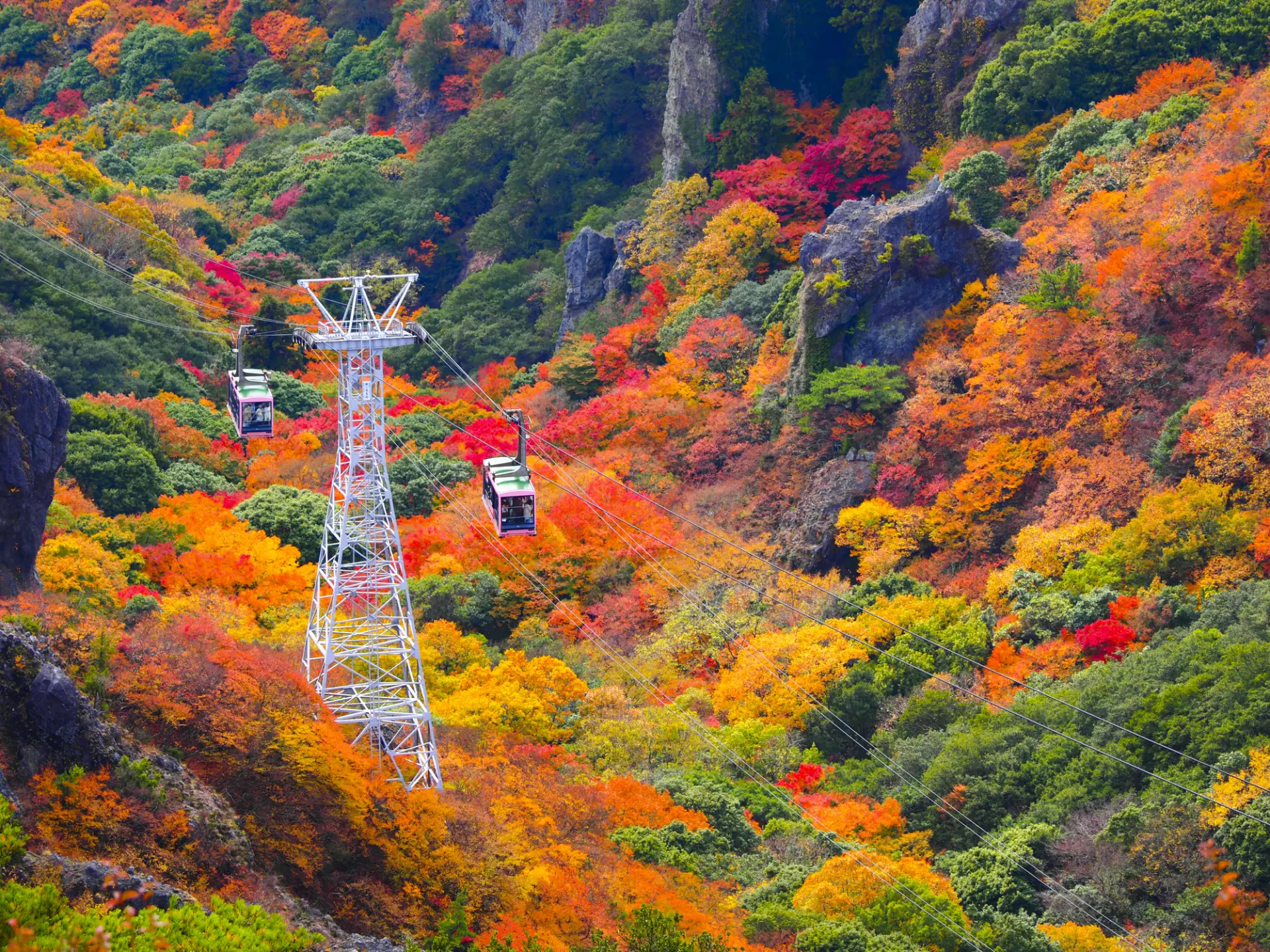
Kankakei Gorge is located on Shodoshima Island in Kagawa Prefecture, at the heart of Setonaikai National Park. Andesite, agglomerate, and other rocks formed by volcanic activity approximately 13 million years ago were shaped over time by tectonic movement and erosion, creating a landscape of towering and unusual rock formations. It has been recognized as one of Japan’s three most scenic gorges, one of its three great natural wonders, one of the 100 Landscapes of Japan, and one of the 100 Natural Sites in Japan to Preserve for the 21st Century.
A ropeway crosses the deep gorge, offering panoramic views of the Seto Inland Sea and the valley covered in fall colors. It is the only ropeway in Japan where visitors can see the sky, sea, and an autumn-colored gorge all at once.
- Typical peak foliage period
- Early to late November
- Name in Japanese
- 寒霞渓
- Postal Code
- 761-4433
- Address
-
327-1 Kankakedori, Shodoshima-cho, Shozu-gun, Kagawa Prefecture
Google Maps - Tel
- 0879-82-0904
- Business Hours
-
March 21st through October 20th 8:30 - 17:00. October 21st through November 30th 8:00 - 17:00. December 1st through December 20th 8:30 - 17:00. December 21st through March 20th 8:30 - 16:30.
※Ropeway departs in 12-minute intervals - Closed
- No regular closures. Check the official website before visiting.
- Ropeway Fee
-
[ Round Trip ] Adults 2,340 yen, Children 1,170 yen
[ One Way ] Adults 1,300 yen, Children 650 yen
※ Fares May Vary Depending On The Period. - Access
- 15 minutes by bus from Kusakabe Port towards Kountei (get off at the last stop)
- Official Website
- Official Website (Japanese)
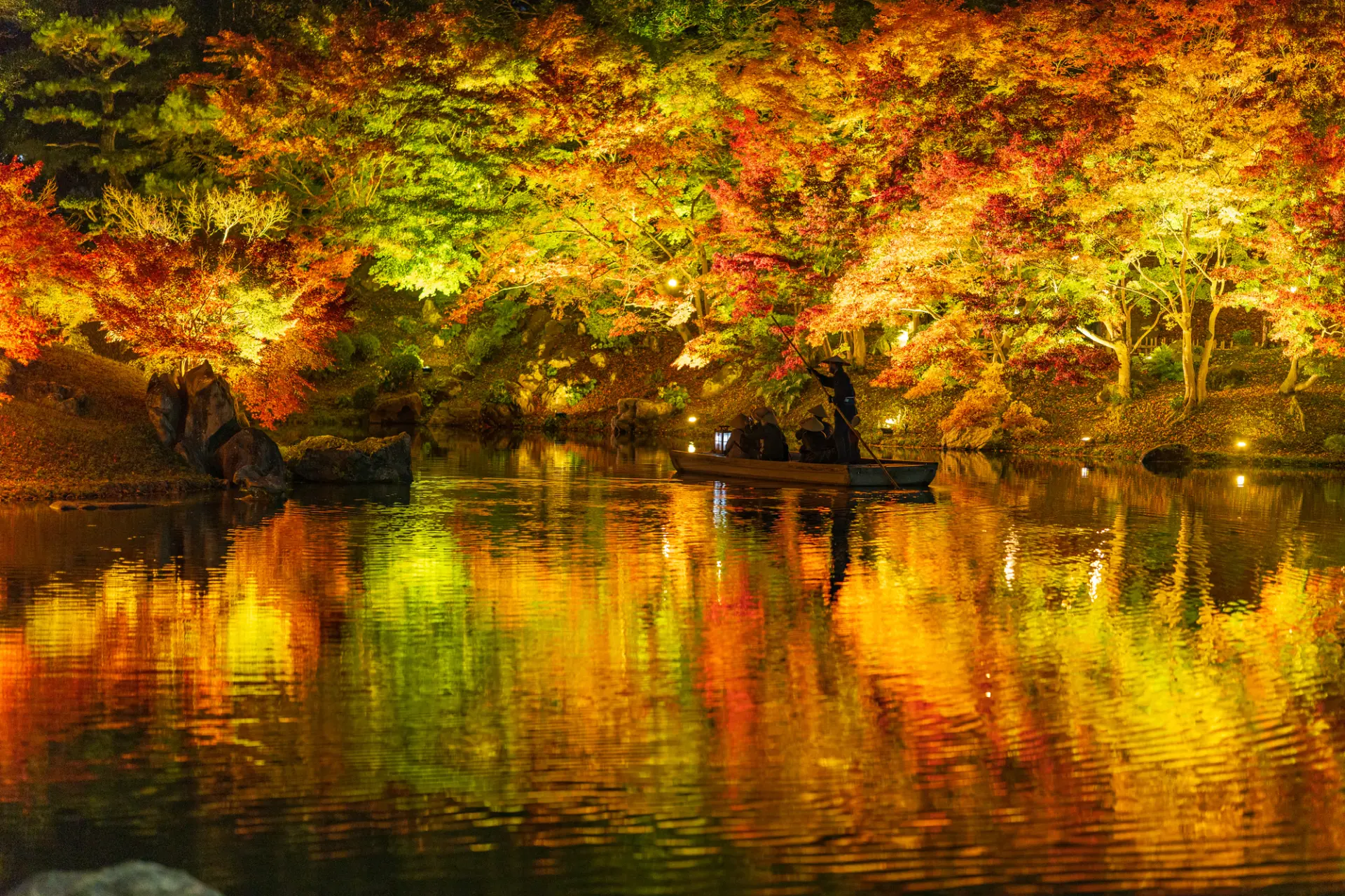
5. Ritsurin Garden: A Tranquil Blend of Fall Foliage and Traditional Garden Scenery
Ritsurin Garden was developed as a villa for the Matsudaira family, the lords of the Takamatsu Domain, and was completed nearly 300 years ago after successive generations expanded and improved it.
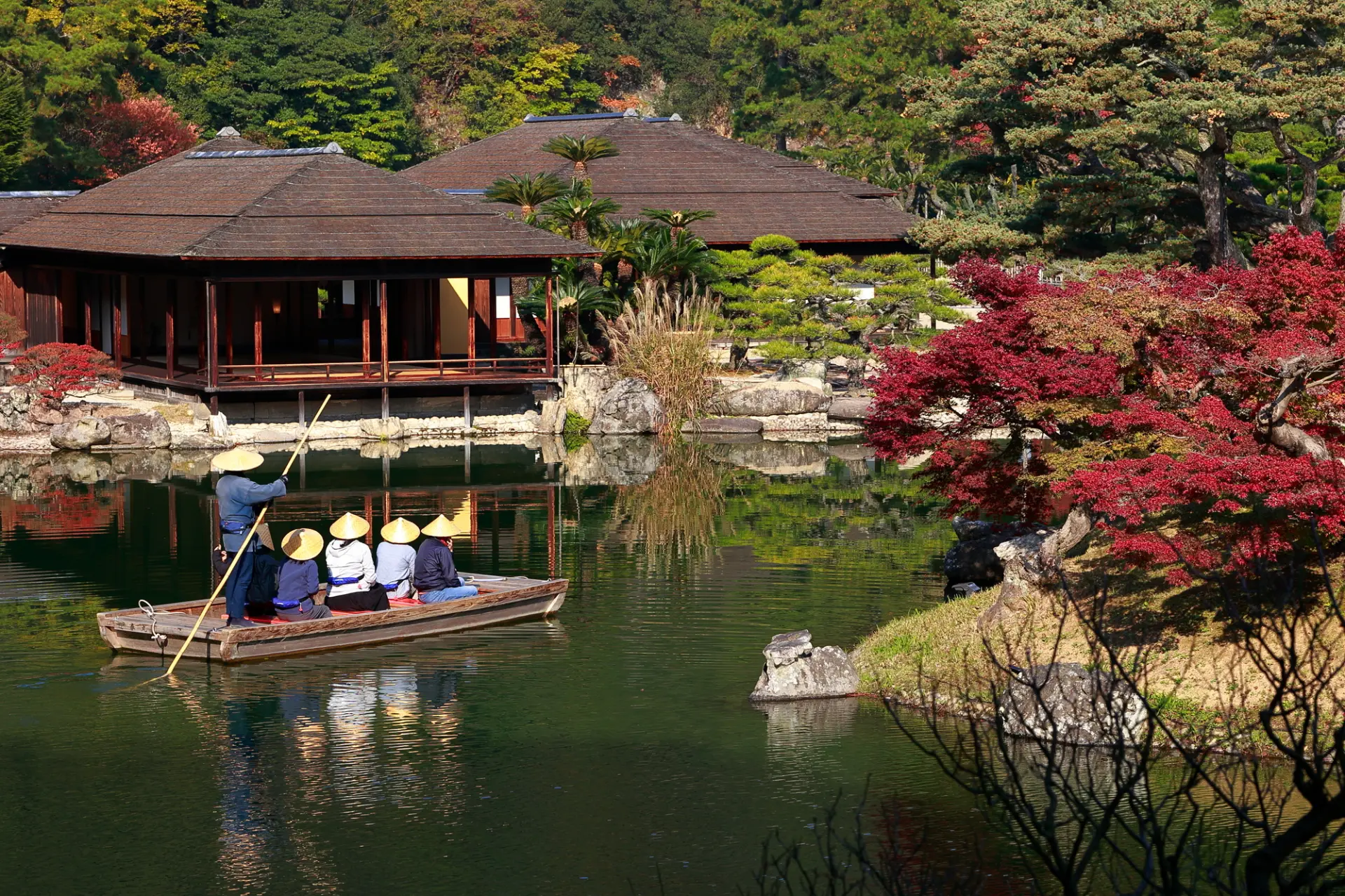
It is the largest of Japan’s traditional gardens designated as Special Places of Scenic Beauty. This strolling garden features six ponds and 13 artificial hills. Often described as offering “a new view with every step,” the garden reveals a different scene as visitors walk through it.
During the fall foliage season, illuminated leaves are reflected in the garden’s ponds, creating an atmospheric nighttime landscape. The Nan-ko Japanese Boat Ride, which offers views of the garden and illuminated foliage from the water, is well worth experiencing during an autumn visit.
- Typical peak foliage period
- Mid-November to early December
- Name in Japanese
- 栗林公園
- Postal Code
- 760-0073
- Address
-
1-20-16 Ritsurincho, Takamatsu City, Kagawa
Google Maps - Telephone
- 087-833-7411
- Closed
- Open year-round
- Hours
-
Mostly from sunrise to sunset
*Hours vary by season. Please check the official website for details. - Admission
-
Adults: 500yen
Children: 170yen
Preschoolers: Free - Access
- About 3 minutes on foot from JR Ritsurin Koen Kitaguchi Station
- Official Website
- Official Website (English)
6. Okuboji Temple: Fall Foliage Surrounds the Grounds of a Historic Temple
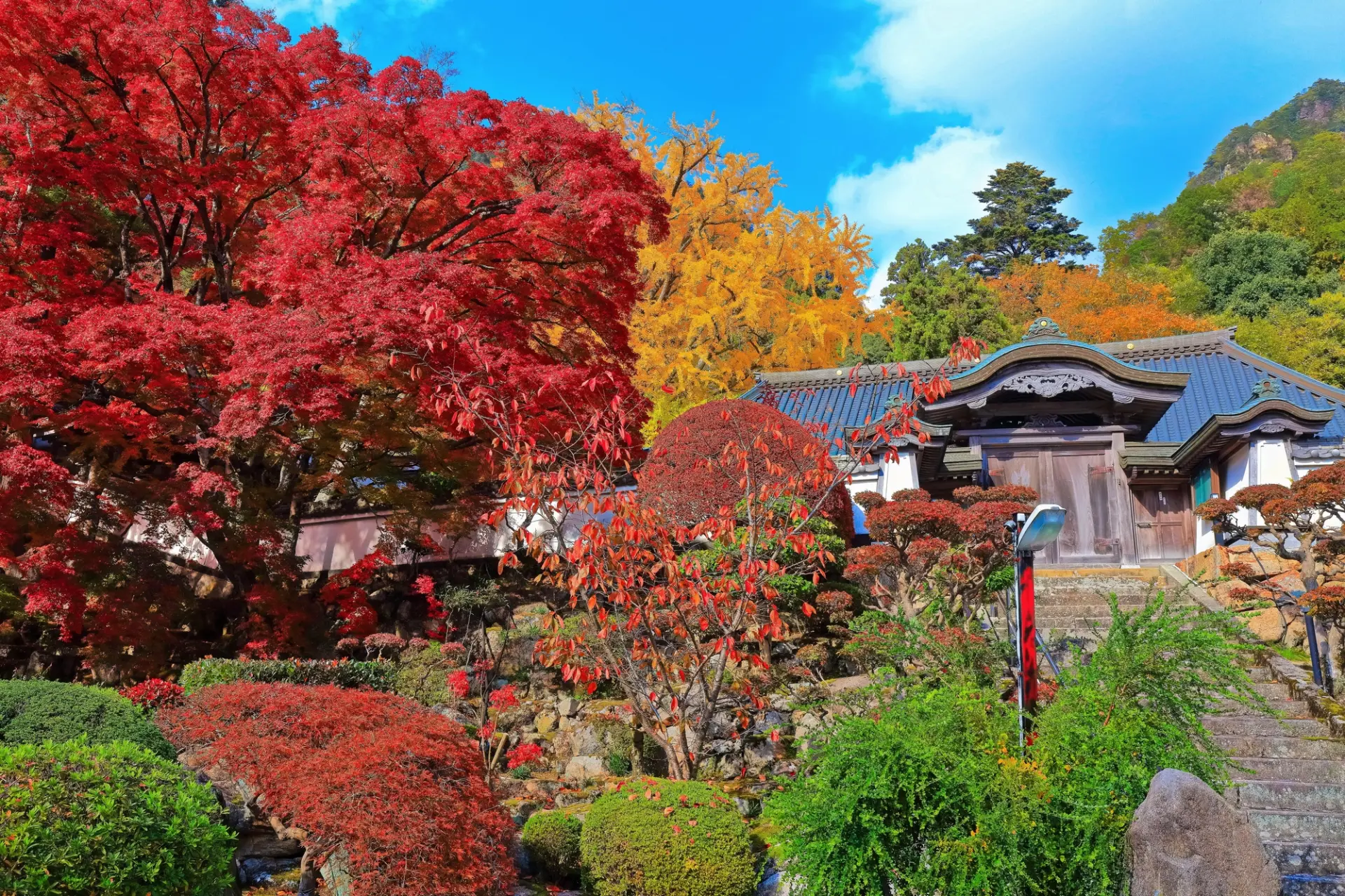
Okuboji Temple in Sanuki City, Kagawa Prefecture, is the 88th temple on the Shikoku 88 Temple Pilgrimage. This historic temple is known as the place where pilgrims complete their journey. Located at the foot of Mt. Nyotai, its main hall and two-story tahoto pagoda stand quietly against the rocky slopes of Taizogamine.
The highlight of the season is the scenery created by the colorful trees and historic temple buildings. The large ginkgo tree on the grounds generally reaches its peak from late October to early November, covering the area in what looks like a golden carpet. From around mid-November, the maple trees near Nitenmon Gate turn red, adding to the temple’s autumn atmosphere.
Between worship and foliage viewing, visitors can also try the local specialty, uchikomi udon, at one of the restaurants near the temple gate.
- Typical peak foliage period
- Late October to mid-November
3 Recommended Fall Foliage Spots in Ehime Prefecture
Ehime Prefecture offers fall foliage amid varied natural scenery, including the sweeping peaks of the Shikoku Mountains and gorges carved by clear streams. The prefecture is divided into the Toyo, Chuyo, and Nanyo regions, each with its own character. Highlights include gorge views from walking trails and vivid foliage along mountain roads.
The leaves generally begin changing color at higher elevations around early October, and some locations remain scenic until early December. Adding hot springs and local cuisine to your itinerary is another excellent way to experience autumn in Ehime.
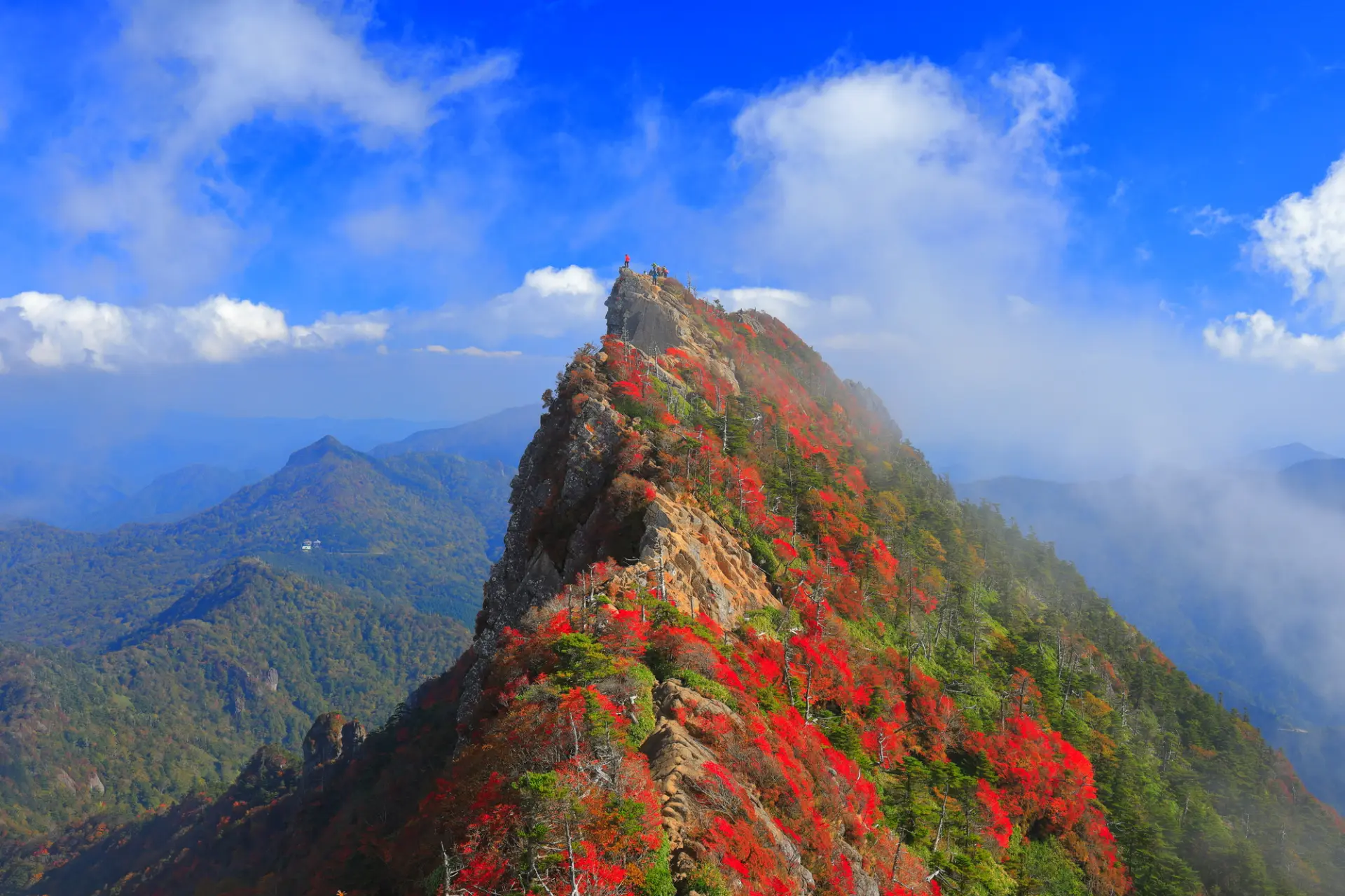
7. Mt. Ishizuchi: Magnificent Fall Scenery on Western Japan’s Highest Peak
Mt. Ishizuchi stretches across Saijo City and Kumakogen Town in Ehime Prefecture. Its 6,503-foot Tengu Peak makes it the highest mountain in western Japan. Long revered as a sacred mountain for religious climbing, it is counted among Japan’s seven sacred peaks.
The leaves generally begin changing color near the summit around early October before gradually spreading to lower elevations. Rowan, beech, and maple trees cover the slopes in vibrant colors, further emphasizing the mountain’s impressive form.
The Ishizuchi Tozan Ropeway takes visitors to Sancho-joju Station at an elevation of approximately 4,265 feet in about eight minutes. From there, transfer to the sightseeing chairlift and head to an observation deck near the final stop for panoramic mountain views.
Those planning to climb the mountain should not miss Yoakashi Pass, which offers a direct view of Mt. Ishizuchi.
- Typical peak foliage period
- Early October to mid-November, depending on elevation
- Name in Japanese
- 石鎚山(石鎚登山ロープウェイ)
- Postal Code
- 793-0215
- Address
-
81 Shimodaniko, Nishinokawa, Saijo City, Ehime
Google Maps - Telephone
- 0897-59-0331
- Closed
- Open every day (Closed in early April. Canceled in inclement weather)
- Hours
- 8:40am - 5:00pm *May change depending on seasons and events
- Fare
- Round trip: Adult (middle schooler and older) 2,200 yen, Child (Elementary schooler and younger) 1,100 yen
- Directions
- From JR Iyo-Saijo Station, ride the Setouchi Bus, get off at Ropeway-mae stop, and walk 5 min.
- Credit Cards
- Available only at the Shimodani Station at the foot of the mountain
- Official Website
- Official Website (Japanese)
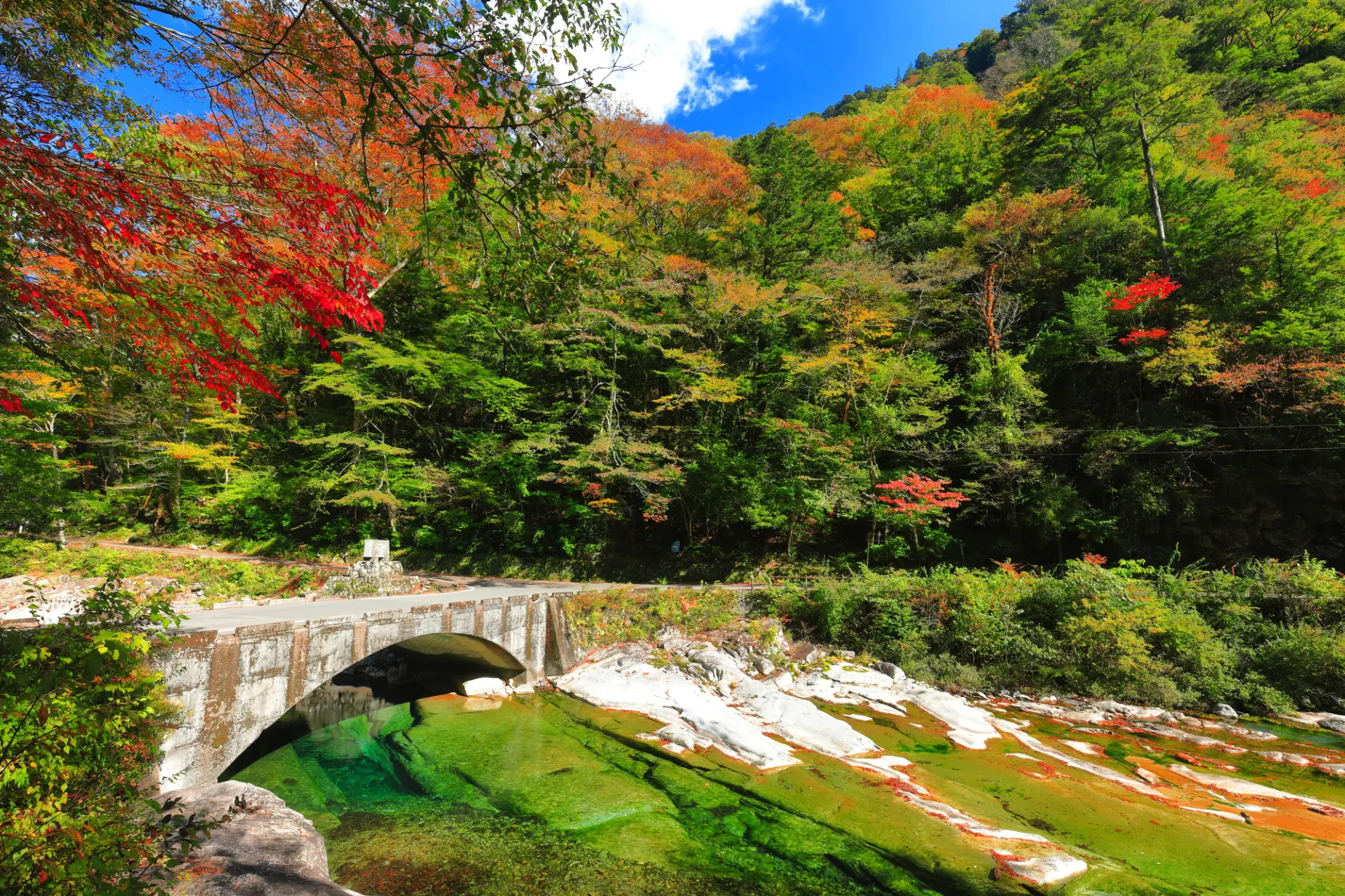
8. Omogo Gorge: Fall Colors Reflected in an Emerald-Green Stream
Omogo Gorge lies at the foot of Mt. Ishizuchi and is designated by the national government as a Place of Scenic Beauty. One of its main attractions is the remarkably clear stream, whose riverbed can be seen even from walking trails some distance away.
The contrast between the emerald-green water and the red and yellow leaves creates a remarkable view with an almost mystical atmosphere. Waterfalls and unusual rock formations add further variety to the landscape.
- Typical peak foliage period
- Late October to mid-November
- Name in Japanese
- 面河渓(おもごけい)
- Postal Code
- 791-1710
- Address
-
Wakayama, Kumakogencho, Kamiukenagun, Ehime
Google Maps - Telephone
- 0892-21-1192(Kumakogen Tourism Association)
- Closed
- Free to walk
- Business Hours
- Walk anytime
- Admission
- Free
- Access
- About a 20-minute walk from the "Omogo" bus stop.
- Official Website
- Official Website (English)
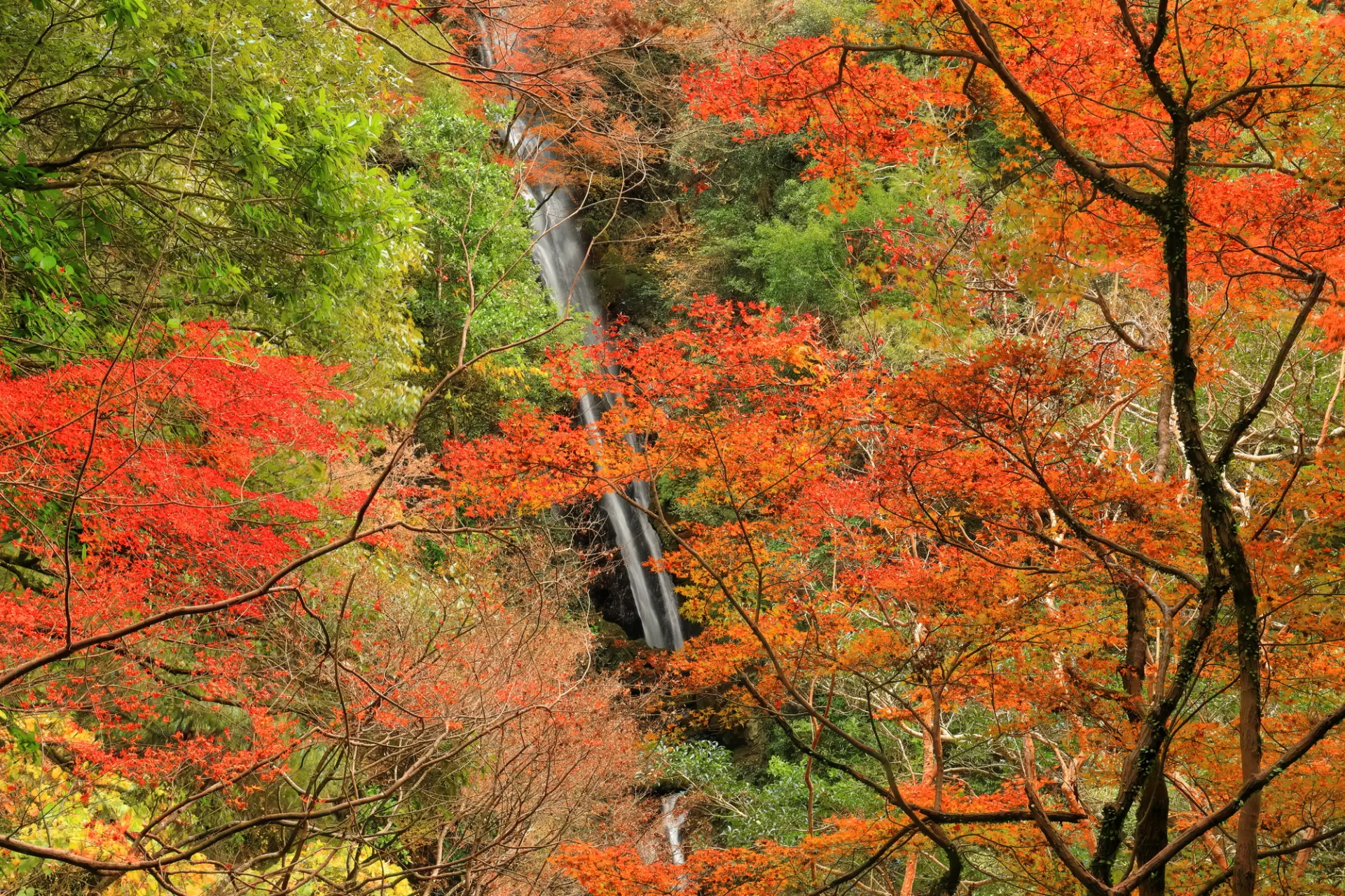
9. Shirataki Park: Seven Waterfalls Framed by Fall Foliage
Shirataki Park in Ozu City, Ehime Prefecture, is a nature-rich park with seven waterfalls of varying sizes. Walking trails run through the grounds, with benches and a free rest area available along the way. The park is also conveniently accessible by public transportation, approximately a 10-minute walk from JR Iyo-Shirataki Station.
The main attractions are its waterfalls, including Medaki Falls, which drops approximately 197 feet.
During the fall foliage season, the surrounding trees turn red and yellow, creating a striking contrast with the white water and rocky surfaces. The Shirataki Momiji Festival is generally held from around mid-November to early December. During the festival period, events include waterfall illuminations, the Waterfall Festival, and the Rurihime Festival.
- Typical peak foliage period
- Mid-November to early December
3 Recommended Fall Foliage Spots in Kochi Prefecture
Approximately 84% of Kochi Prefecture is covered by forest, and the region is blessed with clear rivers and lush mountains. Some of Japan’s most scenic rivers, including the Niyodo and Monobe rivers, flow through the prefecture, with numerous gorges scattered throughout their watersheds.
Fall foliage generally reaches its peak from early to late November, when visitors can see dramatic landscapes shaped by cliffs, massive rocks, and waterfalls. Walk the trails to experience the region’s powerful terrain alongside its autumn colors.
10. Yasui Gorge: Niyodo Blue Surrounded by Red and Yellow Fall Foliage
Yasui Gorge in Niyodogawa Town, Kochi Prefecture, is a scenic area extending approximately 6.2 miles along the Yasui River, a tributary of the Niyodo River. It forms part of a prefectural natural park on the southern slope of Mt. Tsutsujo, which rises to approximately 6,102 feet. The area is characterized by steep cliffs and precipices formed by deep erosion of limestone.
The gorge is also known as a destination for seeing “Niyodo Blue,” the brilliant blue appearance of its exceptionally clear water. Major highlights include Suishobuchi Pool, with its mysterious blue surface, and Hiryu Falls, the largest waterfall in the gorge.
In autumn, the surrounding trees change color, with red maple leaves standing out against the pale blue rock faces and clear water. At Senjin Gorge, where rock walls rise approximately 98 feet, and around Hiryu Falls, visitors can experience both the dramatic scale of the gorge and the vivid colors of the season.
- Typical peak foliage period
- Early to mid-November
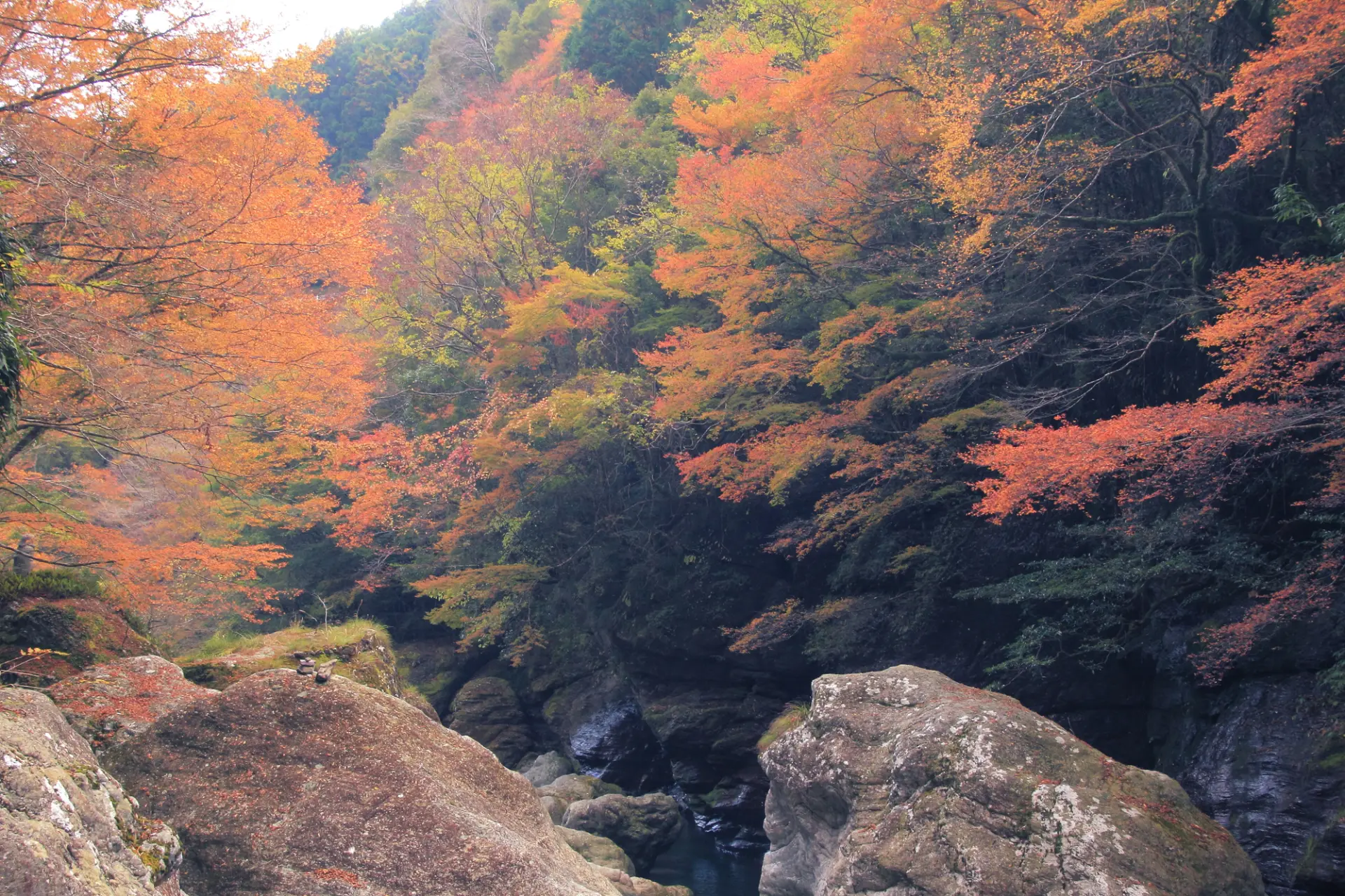
11. Nakatsu Gorge: Walk Through a Gorge Lined with Massive Rocks and Waterfalls
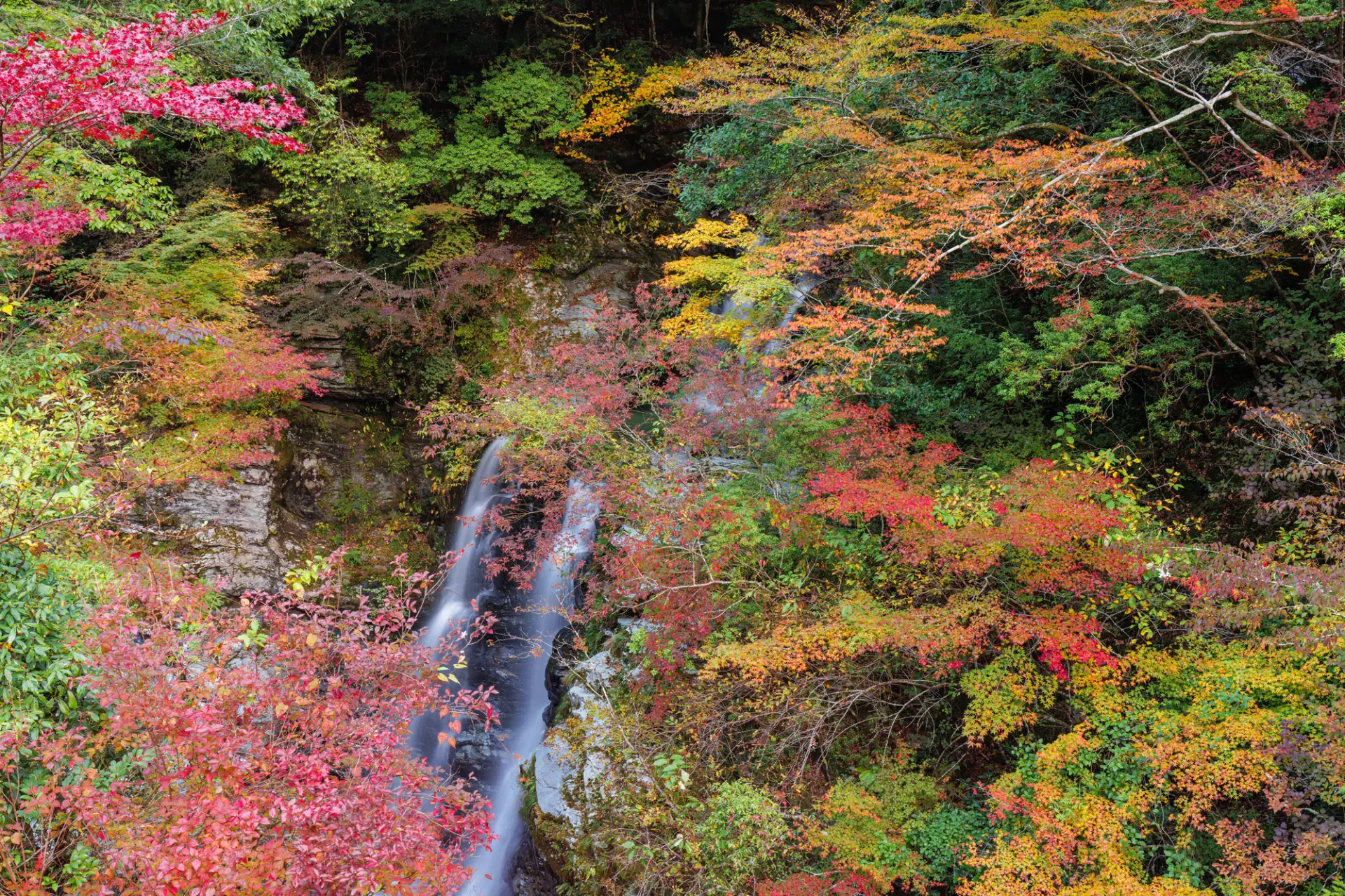
Nakatsu Gorge is a prefectural natural park shaped over many years by rain falling on Mt. Nakatsu Myojin and the flow of the river. A round-trip walking trail of approximately 0.8 miles leads from the entrance to Uryu Falls, the gorge’s symbol. Along the way, visitors can see a varied landscape of massive rocks, unusual formations, and deep pools at close range.
The fall foliage generally reaches its peak from mid- to late November, when the emerald-green stream contrasts vividly with red maple leaves. As the trail continues deeper into the gorge, visitors encounter a succession of scenes combining rocks, water, and seasonal colors.
The stretch from Momiji Falls to Ryugabuchi Pool is particularly scenic, offering some of the gorge’s finest autumn views.
- Typical peak foliage period
- Mid- to late November
12. Befu Gorge: A Striking Contrast of White Rock Faces and Vibrant Fall Colors
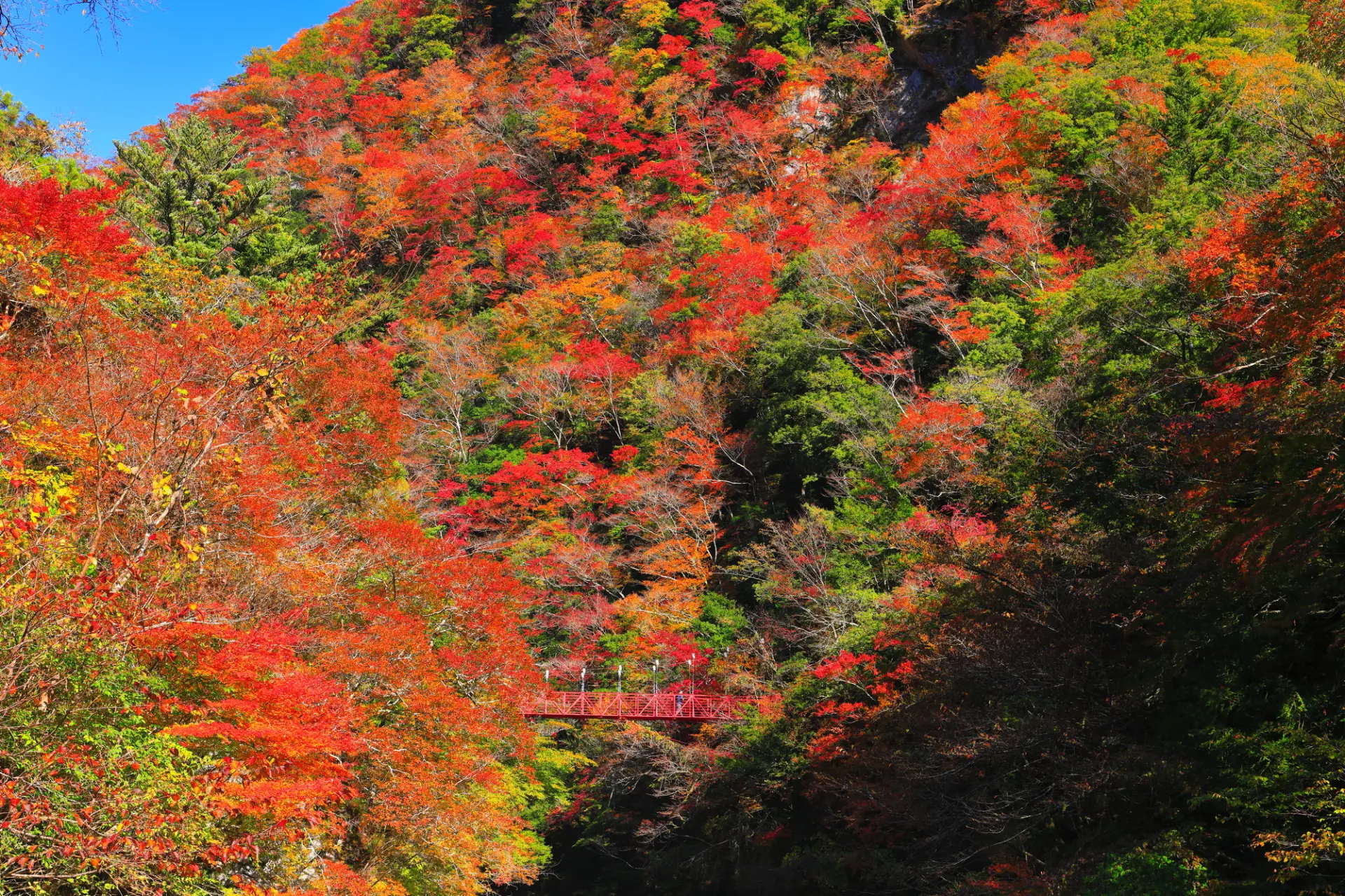
Befu Gorge is a scenic area in Monobe, Kami City, Kochi Prefecture, located near the headwaters of the Monobe River within Tsurugisan Quasi-National Park.
Steep limestone walls line this mountain gorge at elevations of approximately 1,640 to 1,970 feet, creating a distinctive landscape. Walking trails allow visitors to see highlights such as Byobu Rock up close.
The fall foliage generally reaches its peak from early to late November. Japanese hop hornbeam, heartleaf hornbeam, Japanese horse chestnut, Japanese zelkova, Mongolian oak, and various maple species add color throughout the gorge. With the mountainsides dressed in autumn hues and the sound of the river in the background, visitors can experience a peaceful fall outing in the mountains.
- Typical peak foliage period
- Early to late November
Tips for Enjoying Fall Foliage in Shikoku
Many of Shikoku’s fall foliage destinations are in mountainous areas, so advance preparation is important for a comfortable visit.
Here are four key points to keep in mind.
- Check transportation options and road conditions
- Public transportation is limited in many gorges and mountainous areas, making a rental car more convenient in some cases. However, be mindful of narrow roads, traffic restrictions, and possible icy conditions, and check current road information before leaving. If using public transportation, research routes and schedules in advance.
- Check parking in advance
- Parking fees and capacity vary by destination. Research nearby alternatives in case the main lot is full, and check for information about temporary parking areas and traffic restrictions during the fall foliage season.
- Dress warmly and wear comfortable shoes
- Mountainous areas and nighttime illumination venues can become cold, so bring an outer layer that is easy to put on and remove. Wear shoes with good traction on walking trails and slopes, and bring a light if you plan to walk after sunset.
- Plan around crowds
- Weekends during peak foliage and days with nighttime illuminations can be crowded, so allow extra time in your schedule. Visiting at a different time of day or on a weekday can also help you avoid the busiest periods.
Frequently Asked Questions About Fall Foliage in Shikoku
Q
Where can I see illuminated fall foliage at night?
Popular locations include Ritsurin Garden in Kagawa, the area around the Iya Kazurabashi Vine Bridge in Tokushima, and Shirataki Park in Ehime. Dates and times vary by location, so check the official websites in advance.
Q
What routes are recommended for a fall foliage drive?
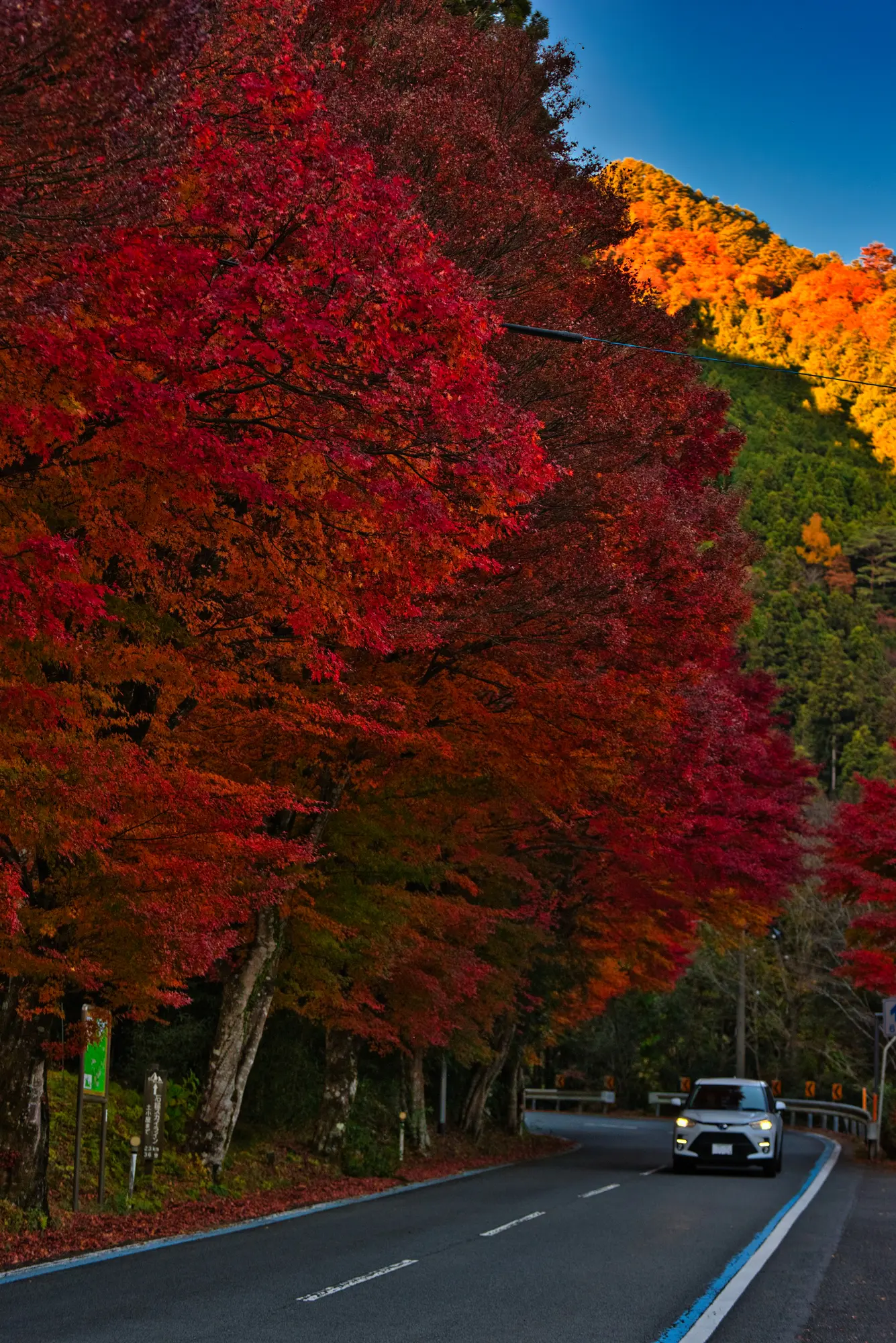
Recommended routes include the Kamegamori Forest Road, also known as the UFO Line, which offers mountain scenery, and the route connecting Oboke and Koboke Gorges with Iya Valley. Be aware that the UFO Line is closed during winter.
Q
Which fall foliage spots can I visit without a car?
Convenient options accessible by public transportation include Ritsurin Garden, approximately a three-minute walk from JR Ritsurinkoen-Kitaguchi Station, and Shirataki Park, approximately a 10-minute walk from JR Iyo-Shirataki Station.
Summary
This article has introduced Shikoku’s fall foliage destinations and their typical peak viewing periods. Across the four prefectures, visitors will find a diverse selection of scenery, including gorges shaped by steep cliffs and clear streams, renowned gardens with colorful leaves reflected in their ponds, and historic temples surrounded by autumn hues. The leaves begin changing early in mountainous areas, while some destinations on the plains remain colorful through late autumn. Choose where to go according to your travel dates and the latest foliage conditions.
Visit one of Shikoku’s fall foliage destinations this autumn and discover scenery that will stay with you. Also see the following article for more information to help plan your sightseeing itinerary.