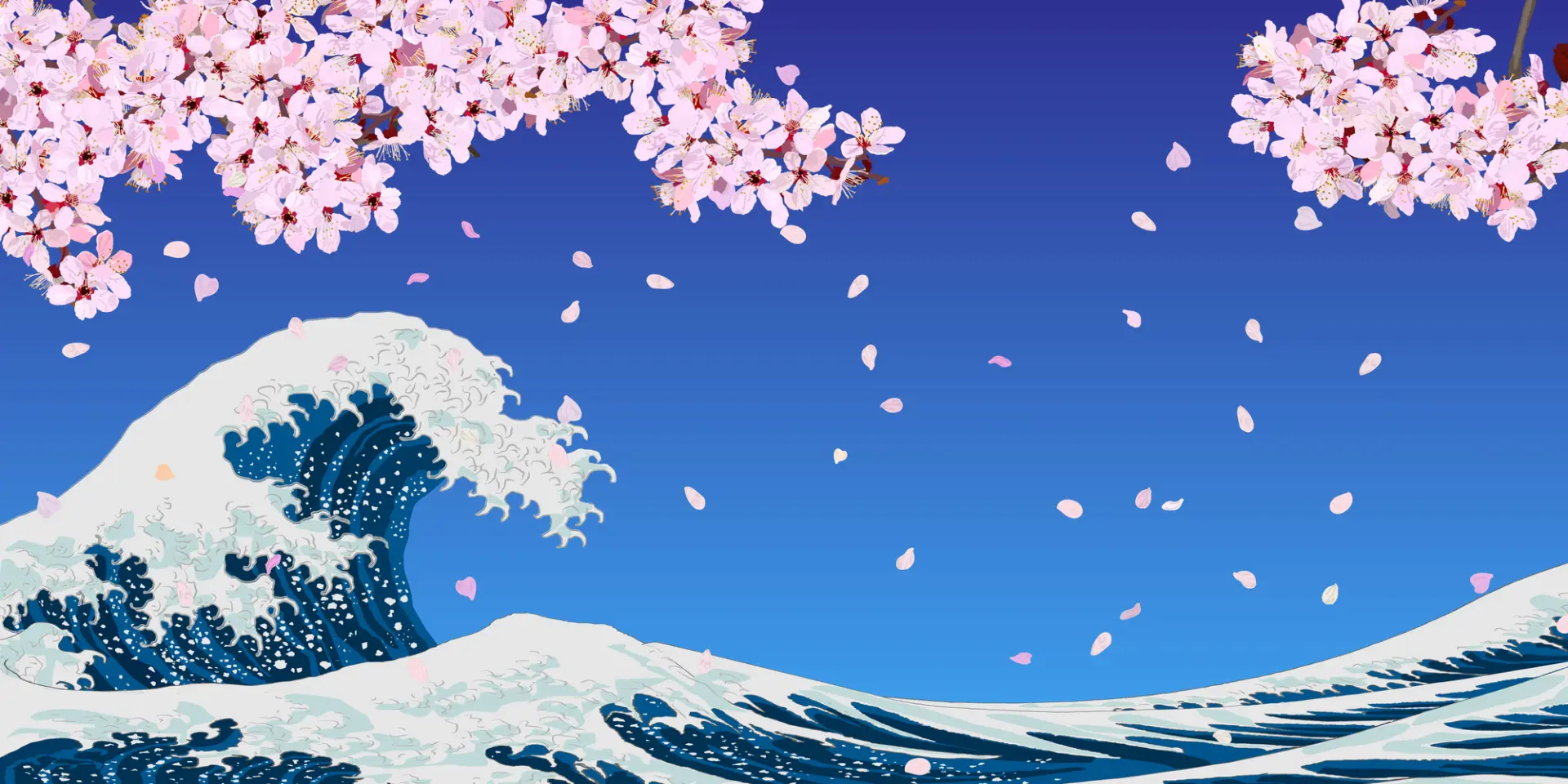
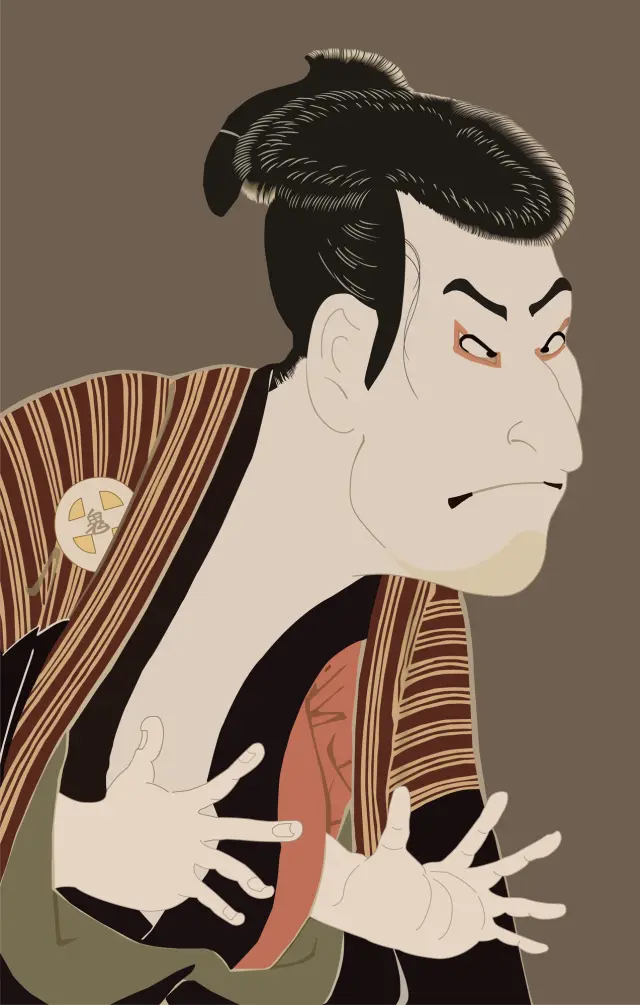
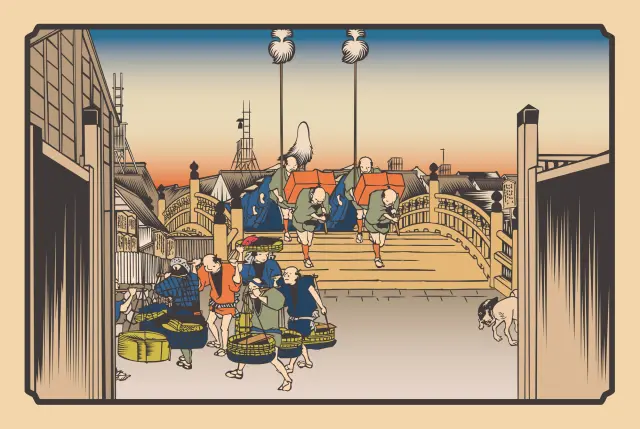
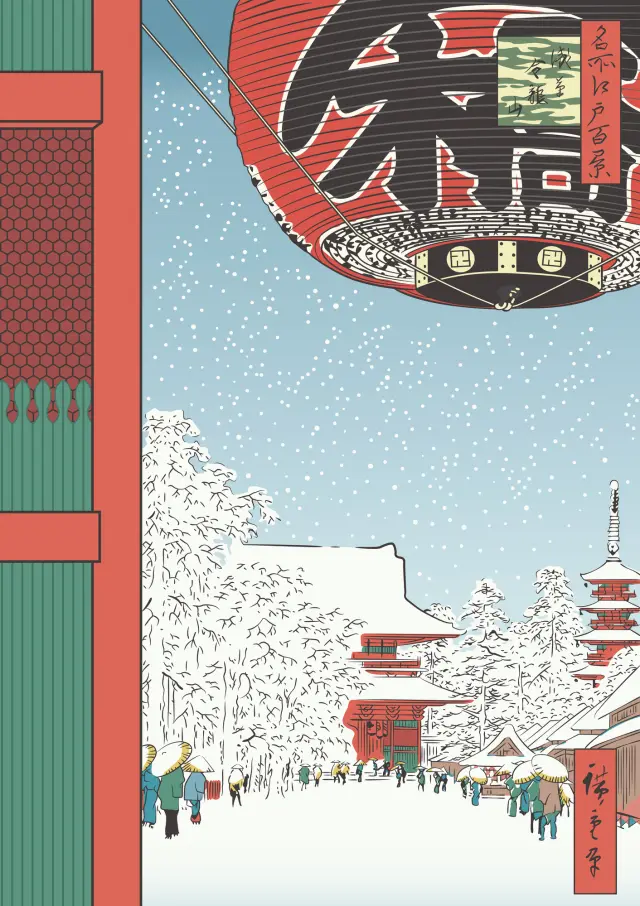
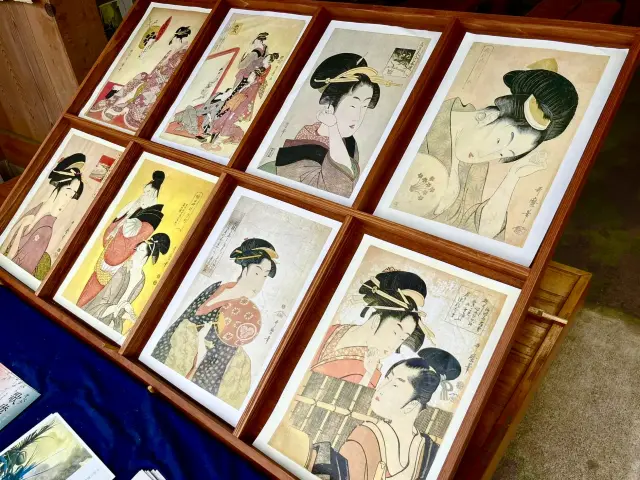
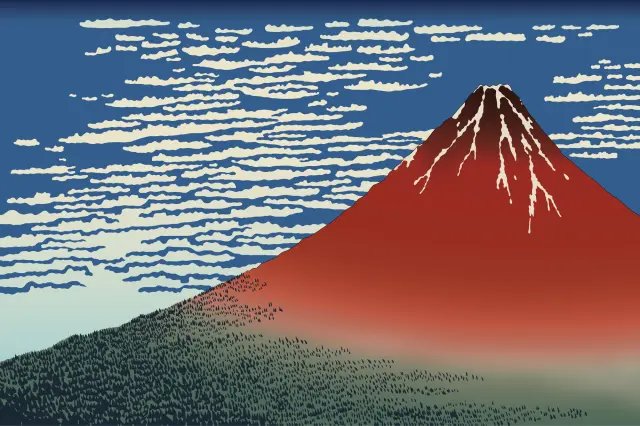
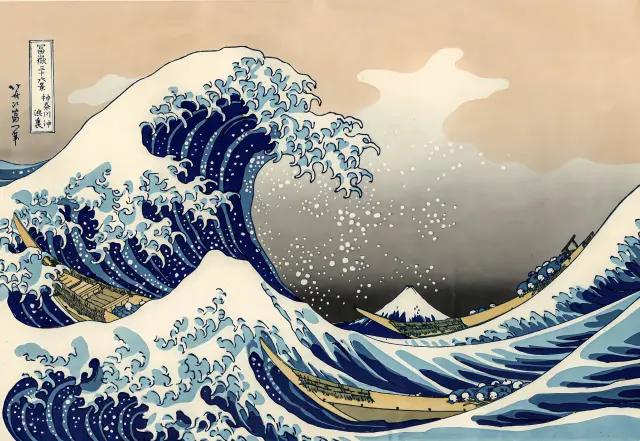
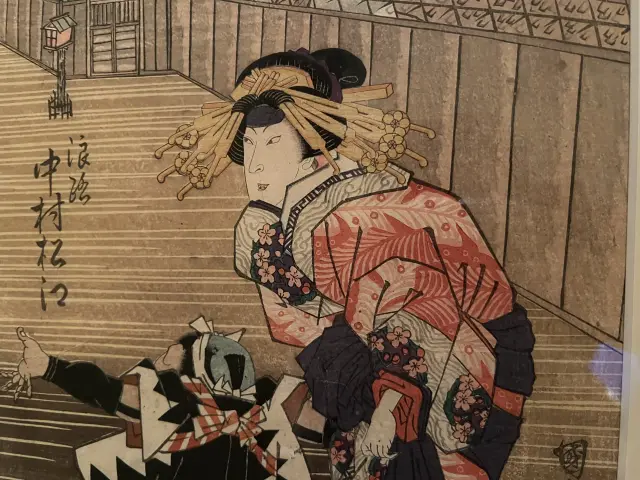
Ukiyo-e are woodblock prints that developed within urban culture during the Edo period. This visual culture captured popular entertainment and trends for ordinary people. Created through multicolor printing using carved woodblocks, ukiyo-e is known for vivid colors and bold, flat compositions. It covers a wide range of subjects, including figures, landscapes, actors, beauties, and flowers and birds. There were differences in size, such as large and medium formats, as well as in techniques like nishiki-e and hand-painted works, and ukiyo-e circulated not only for display but also as souvenirs and in a kawaraban-like role for sharing trends. Each region had its own lineages of publishers and artists, and ukiyo-e was also highly valued as a gift and collectible.
Its origins date back to monochrome printing in the late 17th century, and it entered its golden age in the mid-18th century with the establishment of multicolor printing, or nishiki-e. It was closely tied to kabuki, pleasure-quarter culture, and the popularity of visiting famous places, making urban life, aspiration, and memory visible. Masterpieces by artists such as Katsushika Hokusai and Utagawa Hiroshige also influenced audiences overseas and helped lay the groundwork for Japonisme. From the late Edo period (around 1853–1868) into the Meiji period (1868–1912), its role changed with the spread of photography and lithographic printing, while its reputation as fine art continued to grow.
Materials include washi paper, pigments, and mountain cherry woodblocks. Through the division of labor between carvers and printers, multiple colors are layered, and techniques such as registration and bokashi shading greatly affect the final result. Unlike Western copperplate prints, ukiyo-e is distinguished by its use of clear lines and broad areas of color. It combines a light visual texture with the ability to be mass-produced. The individuality that comes from handcrafting is also part of its appeal.
Today, in addition to being collected and exhibited as art, ukiyo-e is also applied to posters, book design, and interior decor. It creates a distinctly Japanese atmosphere and sense of narrative, and through its fusion with digital media and the creation of new works, it continues to be passed down as a living form of expression in contemporary life.
Highlights
-
Multicolor woodblock prints born from Edo commoner culture.
-
Vivid colors and bold, flat compositions.
-
A wide variety of subjects that visualize customs and trends.
-
Refined expression created through division of labor and artisan skill.
-
Still used today in design and spatial styling.