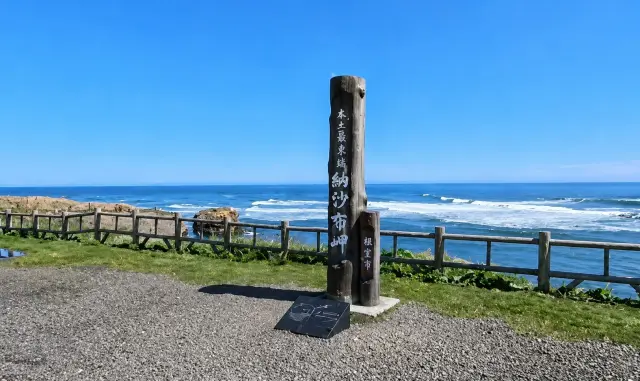
If you come to Nemuro, Hokkaido, be sure to make a trip to Nossapu Cape! This is **the easternmost point of mainland Japan**, and from the eastern tip, you can gaze out over the vast ocean. When the weather is good, you may even get to see Japan's earliest dawn. I originally thought there would be very few people in such a remote place, but surprisingly, quite a few people visited even on a weekday, with more than ten other tourists there.
Besides the ocean view at the easternmost point, there is also a lighthouse to see, as well as several restaurants nearby. I especially recommend the building next door, where you can get an “easternmost point” certificate for free instead of having to buy one at a store. Remember to pick one up as a souvenir! If you're traveling to Nemuro, Nossapu Cape is definitely worth visiting in person. Standing at the easternmost point of Hokkaido and feeling the sea breeze makes for a truly unforgettable travel experience.
Nossapu Cape (Nosappu Misaki) | Review by 楊雅雯
Other Reviews by 楊雅雯
-
Lake Kussharo
Lake Kussharo is Japan's largest caldera lake, stretching approximately 20 kilometers north to south, and the largest freshwater lake that freezes over on its entire surface. Mt. Mokoto, which created Lake Kussharo, is known for its volcanic eruptions that covered the entire Hokkaido region with its ash in ancient times.
For this trip, we drove from Lake Akan to Lake Kussharo. The scenery along the way was very pleasant, with mountains, forests, and lakes coming together to create the natural atmosphere unique to eastern Hokkaido.
Lake Kussharo is Japan's largest caldera lake. Its vast waters are surrounded by mountains and forests, and standing by the shore looking out over the expansive lake really makes you want to slow down.
That's the beauty of Hokkaido. You don't necessarily need any special attractions—just driving and enjoying the scenery along the way is already very soothing.
This Lake Akan → Lake Kussharo route is really worth including in your itinerary! -
-
Lake Mashu
Situated in the eastern part of Hokkaido, u is a caldera lake located within the "Akan-Mashu National Park". Encompassing an area of about 19.6 km² with a circumference of roughly 20 km, the environs of the vast lake have been designated as a special protection area. Due to the steep cliffs surrounding it, direct access to the lake is restricted. However, several observation decks set up around the lake offer panoramic views of its serene surface.
If you're visiting eastern Hokkaido, Lake Mashu is definitely worth adding to your itinerary!
Lake Mashu is a caldera lake located within Akan-Mashu National Park. It is surrounded by steep caldera cliffs, so you can't walk directly down to the lakeshore and can only enjoy the view from the observation decks. The most captivating feature is its clear, deep blue color. When the weather is nice, the sky is reflected on the lake's surface, creating a truly mysterious and peaceful feeling.
We drove here from Lake Akan, and the route was easy, with pleasant scenery along the way. When we arrived at Lake Mashu and looked down from the observation deck, the entire lake was surrounded by mountains and the view was very expansive. Just quietly looking at the lake felt very soothing.
If you're driving around eastern Hokkaido, I highly recommend visiting Lake Akan and Lake Mashu together, taking your time along the way and experiencing Hokkaido's pristine, vast natural scenery. -
-
Akanko Ainu Kotan
The Akanko Ainu Kotan, located in the southern area of Lake Akan-a famous freshwater lake and a top tourist destination in Eastern Hokkaido-serves as a vibrant hub for experiencing Ainu history and culture.
While visiting Lake Akan, we also stopped by Akanko Ainu Kotan.
Maybe it was the off-season, and we arrived around 4:00 p.m., but the whole village felt very quiet. There was hardly anyone on the streets, so it lacked some of the lively atmosphere we had imagined. We walked around the village, looked at the distinctive buildings and small shops, and then started looking for a place to have dinner. But the Ainu village really does close early—by around 7:00 p.m., the entire village was almost completely quiet. -