

Discover Attractions You Haven’t Seen Yet! 18 Classic and Popular Places to Visit in Gunma
Gunma is known for being especially rich in nature, even among the Kanto region.
Of course, its grand seasonal scenery is one of its charms, but Gunma has plenty more to offer.
If you want to fully enjoy sightseeing in Gunma, this article will introduce Gunma’s appeal with a focus on classic spots and hidden gems.
Use this guide to explore Gunma, and you’re sure to discover new sides of it you didn’t know.
What is Gunma Like?
Located in northern Kanto, Gunma is a nature-rich area with forests covering 60% of the prefecture.
With four national and quasi-national parks, a wide variety of natural scenery spreads across the region, including 2,000-meter-class mountains, gorges, and lakes and marshes.
But Gunma’s appeal goes beyond that.
Hot spring areas are scattered throughout the prefecture, including Kusatsu Onsen. With over 450 hot spring sources, you can enjoy many different types of mineral waters, making Gunma one of Kanto’s leading onsen regions.
There are also many history-filled places, such as Paleolithic ruins, the World Heritage Site “Tomioka Silk Mill,” and steam locomotives that still run today.
Gunma is also one of Japan’s top wheat-producing areas, and with thriving pig farming and agriculture, you can enjoy plenty of local cuisine as well.
Along with the famous yakimanju, be sure to try noodle dishes like Mizusawa udon and Kiryu udon, plus a variety of pork dishes made with brand-name pork.

Gunma’s Seasonal Highlights
Since it’s so rich in nature, many people may wonder when to visit Gunma.
Here are Gunma’s attractions by season—plan your trip timing based on what you’d like to see and do.
“Spring in Gunma,” Painted in Color by Countless Flowers
Akagi Nanmen Senbonzakura, a famous cherry blossom spot selected as one of Japan’s “Top 100 Cherry Blossom Sites,” is well known, but there are many other places in Gunma to enjoy spring flowers.
From Misato Shibazakura Park, where Approx. 260,000 moss phlox bloom in full color, to Tsutsujigaoka Park with over 10,000 azaleas across 100 varieties, and Asama Highland Rhododendron Garden, where 150,000 rhododendrons brighten the Asama Highlands, spring in Gunma is all about beautiful scenery you can only see at that time of year.

“Summer in Gunma,” Where You Can Enjoy the Outdoors in Rich Nature
If you visit in summer, enjoy a range of outdoor activities in Gunma’s mountain streams and gorges.
Cool off with river rafting, enjoy camping and glamping, or go hiking and mountain climbing—you can fully experience nature to the fullest.
Fireworks festivals held across the prefecture are another summer highlight in Gunma.

“Autumn in Gunma,” With a Wide Variety of Fall Foliage Spots
In autumn, Gunma’s mountains and gorges are dyed in vivid fall colors.
From powerful, beautiful mountains covered in foliage to atmospheric autumn valleys, and scenery where lakes and marshes meet red and gold leaves, you’ll find plenty of variety.
Also recommended is the kusa-momiji (autumn grass colors) across Oze-ga-hara, Honshu’s largest marshland.
Head out for a hike to see the landscape turn golden.

“Winter in Gunma,” Full of Snow, Onsen, and Illuminations
With many snowy areas, Gunma has plenty of snow resorts and ski areas where you can enjoy winter sports.
And with so many hot spring towns, it’s easy to plan a trip where you soak in onsen to relax after skiing or snowboarding.
Enjoy it along with illumination events held at tourist spots and in city areas.

Gunma’s Average Monthly Temperatures and What to Wear by Season
Please note that Gunma’s climate varies greatly between the plains and the mountainous areas.
The northern mountainous region gets heavy snowfall due to seasonal winds, and temperatures can drop sharply.
In the southern plains, the “karakkaze” winds blow in after dropping snow on the Sea of Japan side, so be sure to dress warmly.
Average Monthly Temperatures
- January
- 4.0℃
- February
- 4.9℃
- March
- 8.5℃
- April
- 14.0℃
- May
- 18.9℃
- June
- 22.4℃
- July
- 26.1℃
- August
- 27.3℃
- September
- 23.4℃
- October
- 17.6℃
- November
- 11.5℃
- December
- 6.2℃
What to Wear by Season
- Spring (March - May): A coat or a light sweater
- Summer (June - August): Light clothing, short sleeves
- Fall (September - November): A light jacket, coat
- Winter (December - February): A coat, thick sweater or jacket
Access to Gunma
Since there are no airports in Gunma, access is generally by train.
The closest airports are Haneda Airport and Narita Airport, and if you’re flying in, it’s recommended to travel to Gunma via Tokyo.
It also depends on the area you’re visiting, but Takasaki Station is often the main hub because it’s easy to reach from Tokyo by train.
From Tokyo, take the Joetsu Shinkansen or Hokuriku Shinkansen from Tokyo Station to Takasaki Station in Approx. 50 minutes. By local train, it takes Approx. 1 hour 30 minutes.
If you’re coming from the Hokuriku area, you can also access Gunma via the Hokuriku Shinkansen.
Main Ways to Get Around in Gunma
You can travel between urban areas by train, and you can reach popular sights by bus, but getting around only by train and bus often takes a lot of time.
That’s why traveling by car is recommended. If you rent a car at Takasaki Station, you’ll be able to visit a wide range of spots efficiently.
If you can’t use a car, consider a sightseeing taxi that takes you around popular attractions.
13 Classic Must-See Spots for Your First Trip to Gunma
From here, let’s take a look at Gunma’s classic sightseeing spots.
If it’s your first time in Gunma, it’s recommended to build your plan around these must-see locations.
1. Tomioka Silk Mill
Tomioka Silk Mill gained worldwide attention after being registered as a World Heritage Site in 2014. Its history goes back to the years following the Meiji Restoration.
On the grounds, you’ll find National Treasure-designated buildings such as the Silk Reeling Mill, the East Cocoon Warehouse, and the West Cocoon Warehouse, as well as Important Cultural Properties including the Boiler House, Iron Water Tank, Director’s Residence, Female Workers’ Dormitory, and Inspector’s House—many of which remain largely unchanged since the time of its founding.

2. Fukiware Falls
Usually, when you visit a famous waterfall, you look up to feel its power.
But Fukiware Falls is different.
It’s a rare spot where you can look down at the falls and feel the sheer force of nature.
With a 7-meter drop and a width of Approx. 30 meters, it’s also known as the “Niagara of the East.”
The sight of abundant water rushing between huge rocks, roaring and sending up spray, is truly breathtaking.

3. Gunma Safari Park
A vast wildlife park built on hilly land next to Lake Oshio.
From inside your car or bus, you can see Approx. 100 species of wild animals up close, including giraffes, white tigers, and lions.
The park also offers plenty of bus tours, including an exciting feeding-experience bus where you can feed lions and herbivores.

4. Lockheart Castle
Lockheart Castle is a photogenic and popular spot, created by relocating and restoring a historic Scottish castle and recreating a medieval-style townscape around it. Its beautiful setting has also been used as a filming location for many TV dramas.
From the authentic castle built in 1829 to the English garden “William’s Garden,” constructed with Scottish stone, the romantic atmosphere blends into the surrounding nature and feels like stepping into another country.

5. Yubatake (Kusatsu Onsen)
Yubatake is the iconic symbol of Kusatsu Onsen, one of Japan’s three most famous hot springs.
Located in the center of the onsen town, you can watch 4,000 liters of hot spring water gush out every minute.
After sunset, the illuminated Yubatake has a charming atmosphere that really makes you feel like you’ve arrived in a hot spring town.
With highlights like the yumomi show and Kusatsu food, there’s plenty to enjoy even without soaking—so it’s also recommended to explore Kusatsu Onsen with Yubatake as your starting point.

6. Haruna Shrine
In central Gunma, Mount Haruna rises on the northern side of the Kanto Plain. Along with Mount Akagi and Mount Myogi, it’s known as one of the “Jomo Sanzan,” Gunma’s three representative mountains.
Haruna Shrine sits on the mountain’s southwestern foothills and is said to have been founded in the 6th century. It’s believed to bring good fortune and business success, and in recent years it has also become popular as a power spot for finding love.

7. Tambara Lavender Park
Tambara Lavender Park is located Approx. 30 minutes by car from Numata IC.
Its grounds feature one of the largest lavender fields in the Kanto region, with 50,000 lavender plants in bloom.
The season is limited, typically from early July to late August, but it’s a must-visit spot for summer sightseeing in Gunma.
In addition to viewing lavender, you can enjoy lavender picking, lavender-themed food, and goods—there are many ways to have fun.
You can also see a variety of other flowers, including salvia, marigolds, and sunflowers.

8. Onioshidashi Park
A striking natural wonder located within Joshin’etsukogen National Park, at the Asama Volcano North Foot Geopark.
In Tenmei 3 (1783), an eruption of Mount Asama caused lava to flow out. As it cooled and solidified, massive lava formations spread across the area, creating a unique landscape.
In the park, located at an elevation in the 1,300-meter range, many alpine plants—such as Togoku-mitsuba-tsutsuji azaleas and iwakagami—bloom among the lava from around mid-May. In fall, from late September to late October, colorful autumn leaves cover the vegetation among the lava rocks, delighting visitors.

9. Lake Haruna
A caldera lake formed by volcanic activity of Mount Haruna, one of the Jomo Sanzan mountains. Located at an elevation of 1,048 meters, the entire lake surface freezes over in winter.
It’s Takasaki’s most popular outdoor spot, where you can enjoy beautiful scenery and nature year-round. In refreshing highland air, you can enjoy boating, rental cycling, auto camping, and more.

10. Akagi Nanmen Senbonzakura
Akagi Nanmen Senbonzakura is a beautiful cherry tree-lined road on the southern foothills of Mount Akagi, with Approx. 1,400 Somei Yoshino cherry trees blooming on both sides of a road stretching Approx. 3.5 km.
After the trees were once cut down and only the road remained, the area was developed over three years starting in 1956, creating the cherry-lined road seen today.
In 1990, it was selected as one of Japan’s “Top 100 Cherry Blossom Sites,” and is known as one of the country’s leading cherry blossom destinations.

11. Usui Third Bridge (Megane-bashi Bridge)
Usui Third Bridge (Megane-bashi Bridge) is Japan’s largest brick arch bridge, spanning Usui Pass on the border between Annaka City, Gunma, and Karuizawa Town, Nagano.
In the Meiji era (1868–1912), a rack railway system known as the Abt system was introduced to Usui Pass for the first time in Japan, and the bridge was built as part of that development.
Today, five bridges from the second to the sixth still remain, and the third bridge is also called “Megane-bashi” (glasses bridge) because of its shape.
Designated as an Important Cultural Property of Japan, its beautiful structure and harmony with the surrounding natural scenery draw many visitors. It’s especially stunning during the fall foliage season, and many people come to enjoy the autumn colors.
Enjoy it along with the walking trail “Abt no Michi,” which uses the former Abt railway line.

12. Oze-ga-hara
Oze-ga-hara is Honshu’s largest marshland, located in Oze National Park.
It stretches 6 km east to west and 2 km north to south, and is home to many plants, led by skunk cabbage (mizubasho).
Wooden boardwalks are maintained, letting you enjoy hiking while taking in beautiful scenery from spring through fall.
In spring, skunk cabbage is a highlight. In summer, it’s Nikko kisuge lilies. In fall, don’t miss the kusa-momiji (autumn grass colors).
Enjoy the spectacular scenery created by marshland plants set against the surrounding mountains.
Please note that it’s closed each year from early November to mid-April.

13. Mount Myogi
Mount Myogi lies on the westernmost side of the Jomo Sanzan mountains, closer to Nagano. It’s said that after volcanic activity Approx. 6 million to 4 million years ago, weathering and erosion created its sharp, rugged, and distinctive mountain shape.
It’s one of Japan’s “Three Great Scenic Wonders.” With multiple peaks, its highest point is Mount Soma (1,104 m).
In the Jomo Karuta, it’s celebrated as “Mount Myogi shining in autumn leaves,” praising the vivid red foliage against its steep slopes—an image read with pride for mountainous Gunma.

5 Hidden Gems to Make Your Gunma Trip Even Better
For those who want to enjoy a deeper side of Gunma, here are some carefully selected hidden gems.
Add these lesser-known spots to a plan centered on the classic sights, and your Gunma trip should feel even more fulfilling.
1. Lake Okushimako
A lake created by the Shima River Dam. It’s located Approx. 30 minutes by car from JR Nakanojo Station. Head north on National Route 353, and as you continue deeper into the mountains to the very end, the lake comes into view.
The lake’s color is a mysterious blue, shifting with the season and timing—showing a world of blue, from cobalt blue and indigo blue to turquoise blue.
In recent years, it’s been called “Shima Blue,” and has become a popular spot visited by photographers and many tourists.

2. SL Gunma Minakami / SL Gunma Yokokawa
Two steam locomotives run in Gunma mainly on weekends: “SL Minakami,” which travels round trip between Takasaki Station and Minakami Station, and “SL Yokokawa,” which runs round trip between Takasaki Station and Yokokawa Station.
On the Minakami service, you can enjoy Mount Akagi’s natural beauty and take in scenic views along the upper Tone River, including iron bridges and gorges. On the Yokokawa service, you can admire scenery like a landscape painting created by Mount Myogi and enjoy rural views with Mount Haruna in the distance.

3. Kajika Bridge
Kajika Bridge (Kajika-bashi) is located near the source of Ikaho Onsen, Approx. a 5-minute walk from Ikaho Shrine, which is reached by climbing the 365 stone steps.
This wooden bridge stands out with its vivid vermilion color, and surrounded by thick trees, it’s also known as a famous fall foliage spot.
The vivid colors in the daytime are impressive, but the illuminated autumn leaves at night are even more beautiful and fantastical.

4. Yanba Dam
Completed in 2020, Yanba Dam is a gravity concrete dam on the middle reaches of the Agatsuma River.
The powerful scenery created by the dam (116 m high, Approx. 290 m long at the crest) and its reservoir is popular even among visitors who aren’t necessarily dam enthusiasts.
If you want to enjoy the view, “Yanba Miharashi-dai (Observation Deck),” which lets you look down on the dam from a higher point, is recommended.
At the reservoir, you can enjoy activities like canoeing and kayaking, and the lakeside also allows camping and BBQs.

5. Oze National Park
A national park spanning Gunma, Tochigi, Fukushima, and Niigata, and a scenic area surrounded by 2,000-meter mountains.
Centered around Oze-ga-hara, Honshu’s largest marshland, you can enjoy grand seasonal scenery throughout the year.
You can hike around Oze-ga-hara and Lake Oze (Oze-numa), and enjoy mountain climbing on Mount Hiuchi (Hiuchigatake) and Mount Shibutsu (Shibutsusan) while taking in its beautiful nature.
Many rare plants also live here, and you may encounter scenery you can only see in this area.

5 Popular Onsen Areas to Stop By in Gunma
If you’re sightseeing in Gunma—home to many hot spring areas, including ones famous nationwide—be sure to stop by these onsen towns as well.
Even without staying overnight, you can stroll through the onsen town, enjoy footbaths, or visit day-use hot springs in many different ways.
1. Kusatsu Onsen
Kusatsu Onsen is famous as one of Japan’s three most well-known hot springs. Its natural spring output is Japan’s highest, at at least 32,300 liters per minute, and its highly acidic waters are also known for strong antibacterial properties.
Sainokawara Park, where hot spring water gushes up from all around, is also popular. Inside the park is the open-air “Sainokawara Rotenburo,” where you can bathe while feeling close to nature.

2. Shima Onsen
Shima Onsen is located upstream along the Shima River, which originates in the Mikuni Mountains, and sits within a lush national park. This renowned hot spring has a history of over 1,000 years.
It gained fame as a therapeutic hot spring, and the Sanada clan that ruled the area continued repairing and improving roads and bridges damaged by warfare. Soon after World War II, when the Jomo Karuta was created, it was described as “Shima Onsen, washing away the dust of the world,” and it has long been noted as a hot spring enjoyed by families.

3. Minakami 18 Hot Springs
Eighteen hot springs scattered across the southern slopes of Mount Tanigawa, in the heart of the mountains along the Joetsu border, are collectively known as the “Minakami 18 Hot Springs.”
With the Joetsu Line and Kan-Etsu Expressway running nearby, it developed as a convenient hot spring area and grew into a resort region alongside Kusatsu and Ikaho.
Since accommodations are built along the gorge of the upper Tone River, you can enjoy views of the gorge and surrounding mountains from any inn.

4. Manza Onsen
Manza Onsen is located at an elevation of 1,800 meters at the foot of Mount Kusatsu-Shirane, which rises in northwestern Gunma.
As a highland resort within Joshin’etsukogen National Park, it’s an appealing hot spring destination year-round—cool in summer and great for skiing in winter.
Its hot springs are among Japan’s highest in sulfur content. The water is hot at Approx. 80°C, with an output of 5.4 million liters per day. With over 20 spring sources, its benefits are said to be wide-ranging.

5. Ikaho Onsen
Ikaho Onsen has been loved since ancient times—so much so that it appears in the Manyoshu—and is also said to have been cherished by writers and artists such as Takehisa Yumeji and Tokutomi Roka.
The town’s symbol is its 365 stone steps, lined on both sides with craft shops and local specialty stores.
Another highlight is that Ikaho Onsen has two types of hot spring sources: “Kogane no Yu” (Golden Bath) and “Shirogane no Yu” (Silver Bath). The distinct tea-brown Golden Bath is also known as an onsen for recovery from illness and injury, and as an onsen associated with fertility.

Recommended Articles for Those Who Want to Learn More About Gunma’s Onsen Towns and Ryokan
Beyond the places introduced in this article, Gunma still has many more attractive hot spring areas.
If you’d like to learn more, check out this article that introduces recommended onsen ryokan by hot spring area.
Recommended for Active Travelers! 5 Popular Hands-On Experiences in Gunma
Gunma has plenty of hands-on, experience-based facilities.
If you want an active travel plan, consider visiting the places introduced below.
1. Konnyaku Park
Gunma is famous for konnyaku production.
It’s said to account for 90% of Japan’s total production. This is a konnyaku-themed park located in the heart of konnyaku country.
At the on-site factory, you can tour three lines: the “konnyaku block production line,” the “shirataki production line,” and the “dessert production line.”
If you want to learn more about konnyaku, hands-on workshops are also recommended. If you book by 1:00 pm the day before, you can join with as few as two people.

2. Kusatsu Onsen Netsunoyu
Yumomi, performed to the Kusatsu-bushi folk song, is a unique bathing method originally done by Kusatsu Onsen bathers.
Netsunoyu, where you can watch yumomi in a show format, is a symbolic tourist attraction that carries on Kusatsu Onsen tradition.
The yumomi show began in Showa 35 (1960), and in Heisei 27 (2015), the Netsunoyu building was reborn as a Taisho-Romantic-style structure with an open two-story interior.

3. Meiken Bokujyo (World Famous Dog Farm)
A farm with a site area of 30,000㎡, built around the concept of a “dog resort for dogs and dog lovers.”
With one of Japan’s largest dog runs and a dog-only pool, it’s packed with facilities for dog lovers and their pups.
There’s the large dog run with a pool, “Dog Hills,” and “Dog Ground.”
Dog Hills has slopes, making it ideal for playing ball. Dog Ground is spacious, letting you run around to your heart’s content with your dog.

4. KAWABA BEER
KAWABA BEER is a carefully crafted beer brewed by Denen Plaza Kawaba Co., Ltd. inside “Michi-no-Eki Kawaba Denen Plaza,” made with beautiful water from Kawaba Village, Gunma.
Its flavor is known for a gentle, yeast-derived fruity aroma, said to be based on German taste.
There are four types in total. “Weizen” has a fruity aroma with reduced bitterness, “Kawaba Ale” features a balanced hop bitterness with caramel malt aroma and sweetness, and “Yukihotaka Pilsner,” made with locally grown Koshihikari rice (Yukihotaka) as an adjunct ingredient, is served as draft beer.

5. UNLIMIT
A facility located on Mount Haruna where you can enjoy activities like motocross and survival games in magnificent nature.
It also offers buggy experiences that kids can enjoy and a spacious auto camping area, letting you fully enjoy the outdoors from a location overlooking Takasaki city.
This is a recommended spot for those who want to enjoy Gunma’s nature through activities.

5 Popular Restaurants in Gunma to Stop By Between Sightseeing
Here are popular restaurants where you can enjoy Gunma’s specialty foods and local dishes.
Enjoy comforting, simple flavors that Japanese people often find deeply satisfying, during breaks in your Gunma trip.
1. Oginoya “Gunma no Daidokoro”
Located on the 2nd floor of “E’site Takasaki,” directly connected to Takasaki Station, is “Oginoya Gunma no Daidokoro.”
This dining restaurant is run by Oginoya, known for making “Toge no Kamameshi,” once praised as one of Japan’s most popular ekiben, and here you can enjoy their traditional kamameshi as a set meal.
A popular menu item is “Toge no Kamazara Gozen,” made with Gunma ingredients to bring out each ingredient’s natural flavor.
They also offer appealing options like “Daidokoro Aburi Oyakodon,” plus a set of Gunma’s specialty yakimanju with ice cream, and more.

2. Eijutei
Eijutei, located a 10-minute walk from Takasaki Station, is a famous katsudon restaurant. Founded in 1919, this long-running establishment still continues to attract many people today.
The popular menu item is, of course, “katsudon.” There are A, B, and C options. Katsudon A is a simple version without egg.
Katsudon B is a katsudon simmered with egg, and Katsudon C is topped with jumbo cutlet with double the volume of A.
Another key point is that it’s seasoned with a traditional Japanese-style sauce, not a sauce katsudon style.

- Address
- 7−1 Aramachi, Takasaki, Gunma 370-0831
- Hours
- 11:00 am 〜 2:00 pm
- Closed on
- Thursday, Friday
3. Ganso Mizusawa Udon Mensaibo Tamaruya
Founded in 1587, Ganso Mizusawa Udon Mensaibo Tamaruya is a place where you can enjoy “Mizusawa udon” made using traditional methods and techniques.
It’s the original and main family of Mizusawa udon, one of Gunma’s famous local specialties.
They offer two types of noodles: 100% Japanese wheat udon and “Koden Kirimugi,” made to bring out the aroma and sweetness of whole wheat flour.
Enjoy them with rich broth made using ingredients like kombu dashi, bonito dashi, and tuna flakes.
Across the street is “Cafe Nohana,” also run by Tamaruya, where you can enjoy house-roasted coffee and bread made with a focus on wheat—another nice plus if you’d like coffee after your meal.
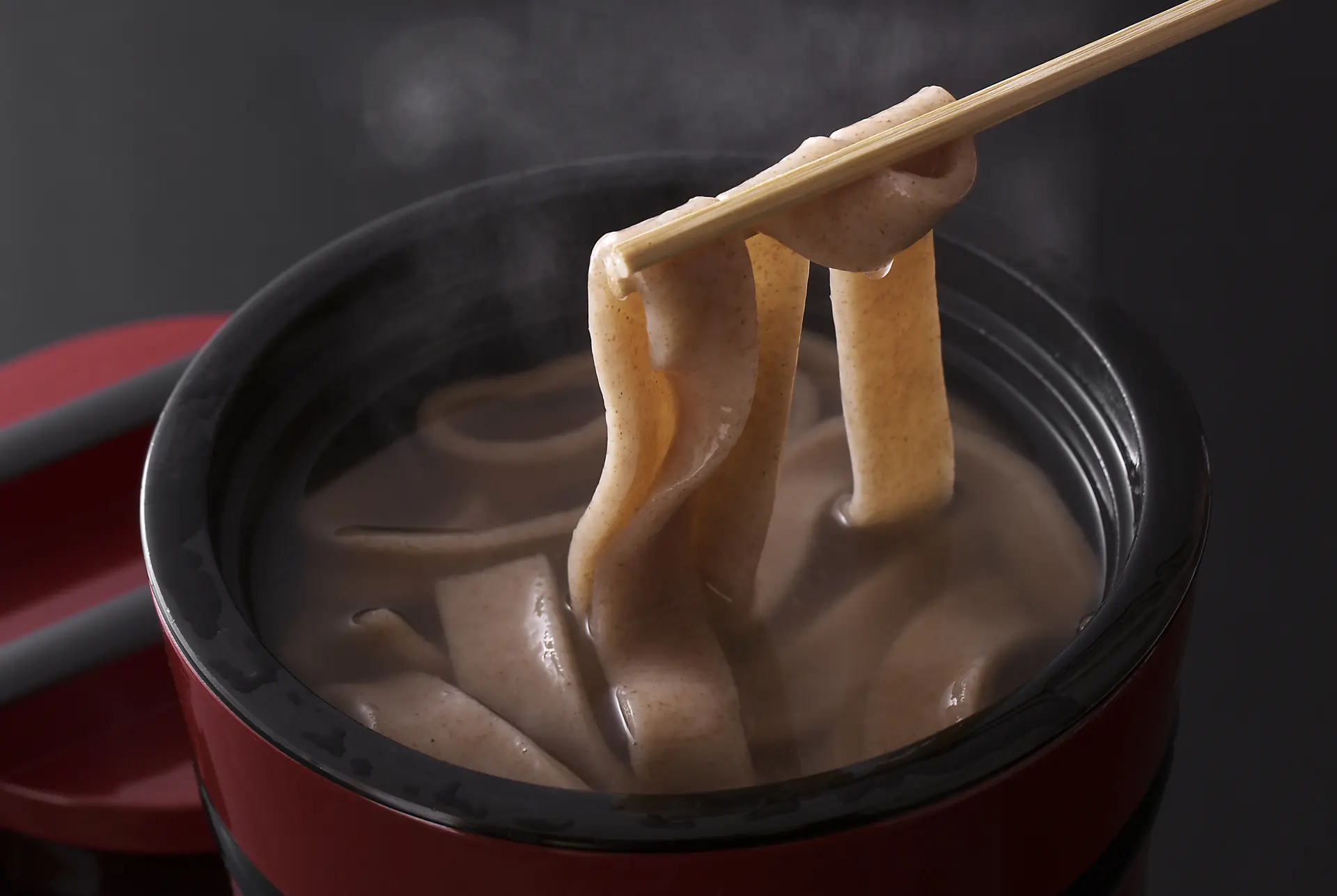
4. Okirikomi no Furusato
Gunma’s oldest specialty restaurant for okirikomi.
Okirikomi is a Gunma local dish made by simmering wide wheat noodles with vegetables, mushrooms, and more.
In 2014, it was selected as an “Intangible Folk Cultural Property of Gunma Prefecture for which records should be made.”
It’s a popular restaurant featured on TV and in newspapers, and a place you’ll want to visit if you want to try Gunma’s local cuisine. However, it’s only open for lunch, so please be aware.

5. Nagai Shokudo
Nagai Shokudo is a popular spot sometimes featured on TV, with the motto “cheap, fast, and tasty.”
The menu is simple, with only motsuni set meals and motsuni with rice as a single item.
The set meal comes not only with motsuni and rice, but also takuan pickles and miso soup.
Even with a large portion, it costs under 1,000 yen—great value.
They also sell motsuni for souvenirs, called “Motsukko,” so it’s also recommended to buy some to take home.

3 Roadside Stations (Michi-no-Eki) in Gunma to Add to Your Itinerary
Between sightseeing stops in Gunma, try stopping by the roadside stations introduced below.
You’re sure to find local food made with Gunma ingredients, plus great souvenirs.
1. Michi-no-Eki Kawaba Denen Plaza
A town market in Kawaba Village, a nature-rich area at the foot of Mount Hotaka, an independent peak in northern Gunma.
As a roadside station focused on local production for local consumption, it’s packed with food options, including a farmers’ market selling fresh local vegetables and fruit, restaurants using local ingredients, a bakery, a beer brewery, and cafes. It also has play areas like a blueberry park, a net adventure course, and play zones, making it a place everyone—from kids to adults—can enjoy all day long.

2. Michi-no-Eki Fujimi
Michi-no-Eki Fujimi, located Approx. 30 minutes by car from Maebashi IC, is a complex facility that combines three areas: the direct sales market “Kaze Line Fujimi,” “Fuji Onsen Fureai Park,” and “Fureai Park.”
At the direct sales market, you can buy seasonal vegetables and also enjoy a range of foods, including the famous yakimanju, soft serve ice cream, and items like bread loaves and dango made at the on-site workshop.
It’s recommended to stop by before heading home from your Gunma trip—try local specialties, relax in the hot springs, and pick up souvenirs.

3. Michi-no-Eki Kanra
If you’re sightseeing in Obata, an area that retains the feel of a castle town from the Edo period (1603–1868), you’ll want to stop by Michi-no-Eki Kanra.
Not only can you buy Gunma specialties like vegetables, fruit, and konnyaku, but you can also enjoy local flavors at the eateries.
For a fee, you can also request sightseeing guidance for Obata.
With many tourist spots around the station, it’s also a perfect starting point for exploring Obata.

Stay Here! 5 Recommended Places to Stay in Gunma
If you’re staying overnight in Gunma, be sure to enjoy one of its biggest attractions: hot springs.
The accommodations introduced below offer not only onsen, but also comfortable spaces to relax.
Here are some great places to rest and recharge after a day of sightseeing in Gunma.
1. Sekizenkan
Founded in Genroku 7 (1694), this inn is said to be Japan’s oldest existing hot spring lodging architecture.
It’s designated as an Important Cultural Property of Gunma Prefecture, and is also said to be the model for a bathhouse in a Studio Ghibli film.
It’s also called one of Japan’s “Three Great Hot Springs for Stomach and Intestinal Ailments,” and its highly beneficial waters—said to be effective for “40,000 ailments”—are also popular.

2. Bettei Senjuan
Bettei Senjuan is a renowned inn embraced by the quiet of a gorge, with Mount Tanigawa as its borrowed scenery.
By incorporating traditional Japanese design elements throughout and blending them with modern architecture, it creates a one-of-a-kind, luxurious atmosphere.
The onsen water is from Tanigawa Onsen, which has been flowing continuously for hundreds of years. With over 20 types of benefits, you can enjoy it in open-air baths in every guest room, four large public baths filled with the scent of hinoki cypress, and a walking bath (summer only).

3. La Vista Kusatsu Hills
La Vista Kusatsu Hills opened in 2021 on a hilltop in Kusatsu Onsen.
With an atmosphere reminiscent of an elegant Western-style mansion, it’s a resort hotel where you can enjoy views worthy of the name “La Vista (view),” including Kusatsu’s first top-floor bath facility among its onsen inns.
The onsen uses three sources: Yubatake source, Bandai-ko source, and Yukawa source.
In addition to the top-floor scenic baths with an open-air bath, indoor bath, barrel bath, and more, you can also take in a grand panorama of the Kusatsu mountains and onsen town from four different private open-air baths, each with its own style, such as rock and ceramic.
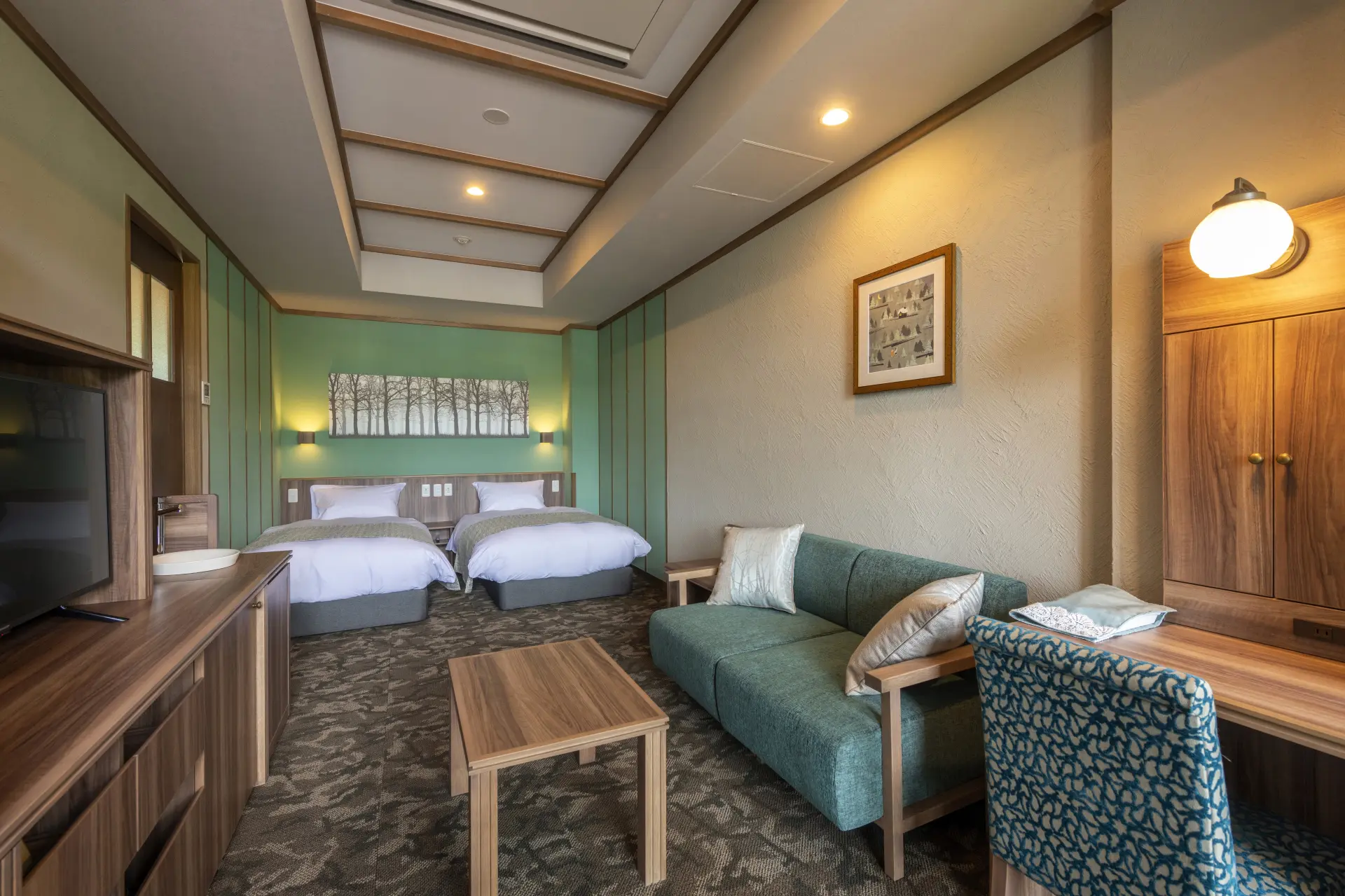
4. Yuyado Tokinoniwa
Yuyado Tokinoniwa is located on a hill overlooking Kusatsu’s onsen town.
You can enjoy two hot spring sources across 23 types of baths, including rustic open-air baths and baths full of Japanese atmosphere.
There are also three types of private baths, where you can soak and relax in different views and atmospheres—another highlight.
The Japanese-style rooms with separate bedroom and living spaces also come with open-air baths.
With tatami flooring throughout the building for relaxing barefoot, it’s a hot spring ryokan where you can spend a truly restful time.

5. Hotel Sakurai
Hotel Sakurai, located on a hilltop in central Kusatsu Onsen, is a large-scale hot spring inn known as one of Kusatsu’s biggest.
It’s proud of its onsen drawn from three sources. In the 30-meter-long large public bath—one of the largest in Kusatsu Onsen—you can enjoy a mixed spring of “Sainokawara source” and “Bandai-ko source,” while the open-air bath offers 100% free-flowing spring water without added water, using all three sources including “Wata-no-Yu source.”
There are 179 guest rooms, with various types to choose from depending on your needs, including rooms with open-air baths and twin Western-style rooms.

Not Sure What to Buy? 3 Classic Gunma Souvenirs
If you’re not sure what to get as a Gunma souvenir, pick up one of these classic items.
No matter which you choose, they’re sure to be appreciated by family, friends, and acquaintances.
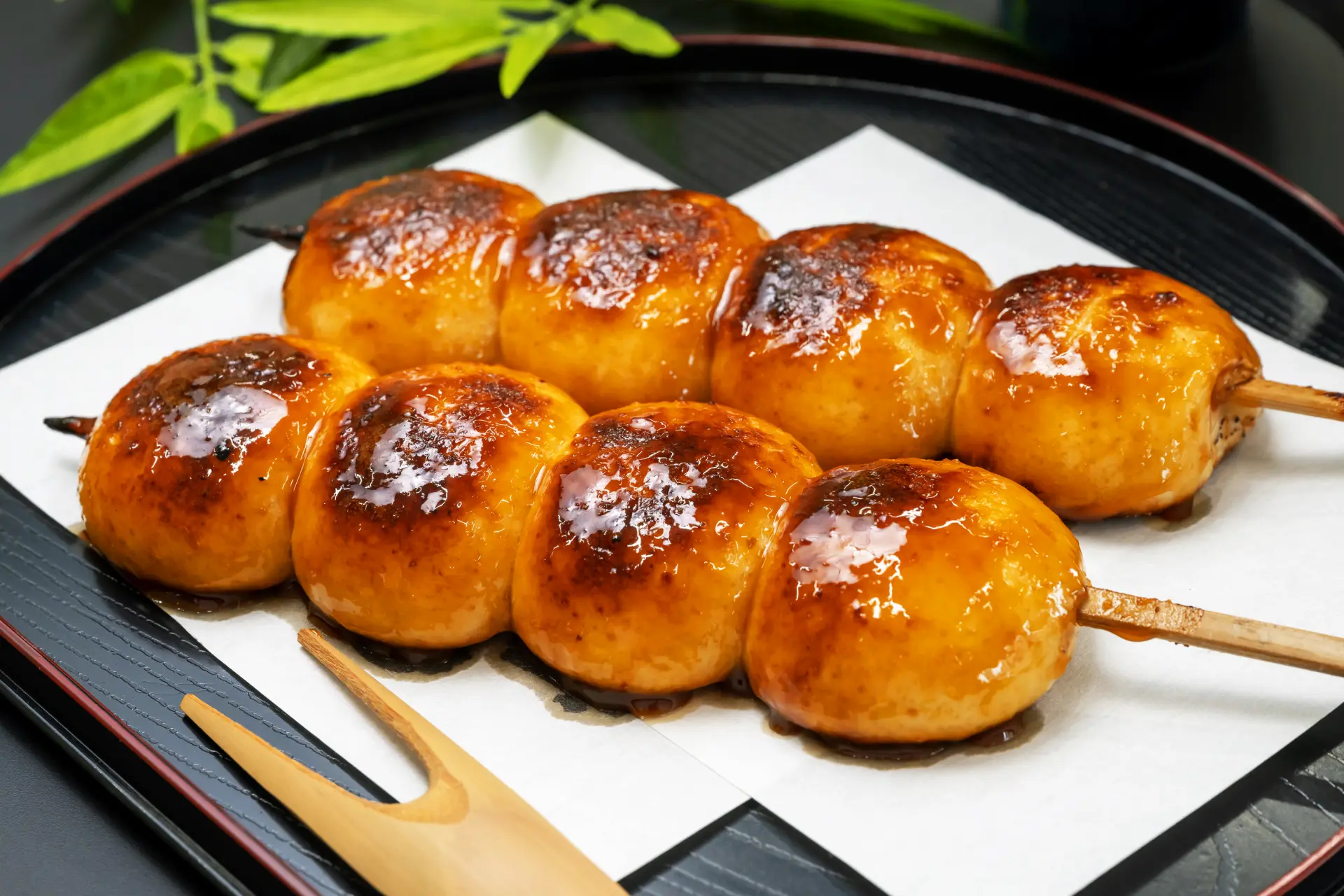
1. Hotakaya “Yakimanju”
Hotakaya sells a wide range of products centered on Gunma’s specialty “yakimanju.”
Yakimanju is a bun made from wheat flour and rice koji, grilled with a sweet miso sauce.
There aren’t many shops or companies that manufacture it even within the prefecture, but Hotakaya’s yakimanju are made in-house.
In addition to yakimanju, they also sell a variety of items such as “yakimanju rusk” and “sake manju.”
2. GATEAU FESTA HARADA “Gâteau Rusk”
GATEAU FESTA HARADA, headquartered in Takasaki, Gunma, is widely loved nationwide for its rusks. Its signature item “Gouter de Roi” means “the king’s snack,” and is made using French bread baked with a uniquely blended flour.
Sliced French bread is evenly coated with high-quality melted butter and finished to perfection.

3. Kashidokoro Omiya “Karinto Manju”
A product from the long-established confectionery Kashidokoro Omiya, founded in Showa 25 (1950), located in a residential area of Shimomurota-machi, Takasaki (formerly Haruna Town).
Their signature “karinto manju” is said to be the hardest in Japan, and is popular with locals and tourists alike.
Filled with smooth red bean paste wrapped in dough kneaded with brown sugar, then fried until crisp, it gives off a fragrant, karinto-like aroma.

3 Famous Events and Festivals in Gunma
Here are some of Gunma’s most famous and largest-scale events and festivals.
If your travel dates line up, be sure to join in.
1. Numata Festival
One of Kanto’s leading summer festivals, held in Numata City from August 3 to 5 each year.
This festival was created by merging the Gion Festival of Suga Shrine, founded in the Edo period, with the “Numata Festival Commerce and Industry Festival,” and draws over 200,000 participants every year.
Events include mikoshi processions from Haruna Shrine and Suga Shrine, floats parades, and a flowing dance known as the “Sennin Odori” (Thousand-Person Dance).
One especially notable highlight is the “Tengu Mikoshi,” where a giant tengu mask is made into a mikoshi and carried by around 300 women.

2. Kiryu Yagibushi Festival
The Kiryu Yagibushi Festival is Gunma’s largest summer festival, held over three days each year from the first Friday to Sunday in August in central Kiryu City (including Honcho-dori, Suehirocho-dori, Nishikicho-dori, and more).
Its biggest feature is that it’s “participatory.” During the festival, yagura towers are set up at several locations around the city, and Yagibushi music plays repeatedly.
Circles of Yagibushi dancing spread in layers, and you can often see not only locals but also visitors spontaneously joining the lines to dance.

3. Takasaki Nanakusa Daikyo Daruma Market
Held in Takasaki City, the birthplace of daruma dolls, the “Takasaki Nanakusa Daikyo Daruma Market” takes place overnight each year from the afternoon of January 6 to the evening of January 7.
It’s the annual festival of Shorinzan Daruma-ji Temple in the city, and stalls selling the famous “Takasaki Daruma” line the area, drawing large crowds.
Other events include offerings of Noh and Kyogen performances and star-festival prayers.

4. Haruna Lake Illumination Festa
From early to late December each year, part of Lake Haruna and the surrounding shopping streets shine with Approx. 200,000 illumination lights.
On specific dates during the event, fireworks are also held, and the illuminations and fireworks reflect on the lake surface.
The tunnel of lights and Christmas tree displays are also highlights.

A 2-Day, 1-Night Model Itinerary to Enjoy Gunma’s Best
We’ve introduced Gunma’s charms from many angles, but it may have made planning even harder.
If that’s you, use this model itinerary as a reference.
Follow it as written, and you can enjoy Gunma’s great nature and famous hot springs, while also visiting a World Heritage Site and power spots.
- Day 1
- JR Takasaki Station→Haruna Shrine→Michi-no-Eki Agatsuma Gorge→Kusatsu Onsen→Ishiusu-biki Soba Sanga-ya→Sainokawara Rotenburo→Sainokawara Street→Kusatsu Onsen Netsunoyu→Hotel Ichii
- Day 2
- Onioshidashi Park→Street food hopping in Tomioka→Tomioka Silk Mill→Konnyaku Park
FAQ about Gunma Sightseeing
Q
Are there any famous sightseeing spots near Kusatsu Onsen?
A
There aren’t many sightseeing spots around Kusatsu Onsen, but Mount Shirane is a famous attraction.
Q
What spots are recommended for sightseeing with children?
A
We recommend hands-on facilities like Konnyaku Park, or enjoying hikes with children at places like Oze-ga-hara.
Summary
We’ve introduced Gunma’s appeal with a focus on classic must-see spots and hidden gems you’ll want to know to make the most of your trip.
If you’re not sure where to go, try building a plan around the model itinerary and adding in the places that catch your interest.
That way, you should be able to fully enjoy Gunma’s wide range of charms.