

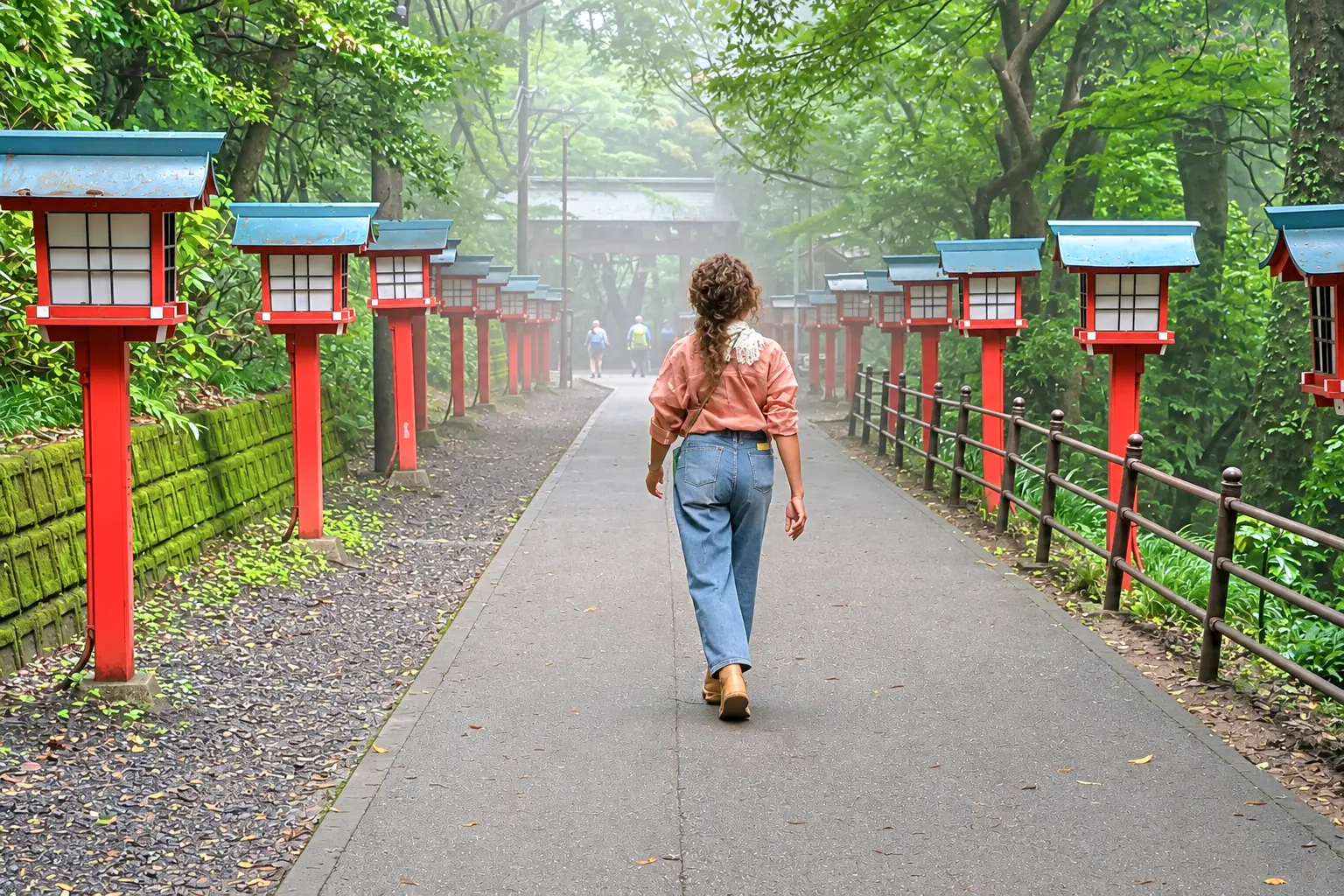
A Sacred Mountain and a Mulberry City: A Day Trip from Tokyo to Mt. Takao and Hachioji
Take the Keio Line from Shinjuku Station, one of Tokyo’s major transport hubs, and head out to the greenery of Mt. Takao. Long revered as a sacred mountain, it is a place where rich natural surroundings meet enduring traditions of prayer and faith. A cable car or chairlift makes it easy to leave the city behind and reach hiking trails filled with fresh mountain air. Along the way, enjoy food prepared with a spirit of hospitality rooted in Buddhist beliefs. After descending, continue to Hachioji, where the history of Soto, or “Mulberry City,” lives on in traditions shaped by silkworm farming and silk weaving. Hike Mt. Takao, savor Buddhist vegetarian cuisine, and experience geisha dancing and traditional parlor games in Hachioji. This day trip connects mountain and city, introducing you to the nature, spiritual traditions, and culture preserved just outside central Tokyo.
What Is the Keio Line Used on This Itinerary?
The Keio Line runs west from Shinjuku Station, one of Tokyo’s main terminals. The railway network centers on the line toward Keio-hachioji, with branches including the Sagamihara Line, which splits off at Chofu, and the Takao Line, which runs from Kitano to Takaosanguchi. Alongside its role in carrying commuters and students between central Tokyo and residential areas, it has long provided access to leisure destinations such as Mt. Takao. Along the network are places with distinctive histories and cultures: historic temples such as Jindaiji Temple, Mt. Takao with its rich natural surroundings and spiritual traditions, and Hachioji, which developed through silkworm farming and silk weaving. A short journey from the city center reveals another side of Tokyo, with temple culture, mountain worship, and local traditions all within easy reach.
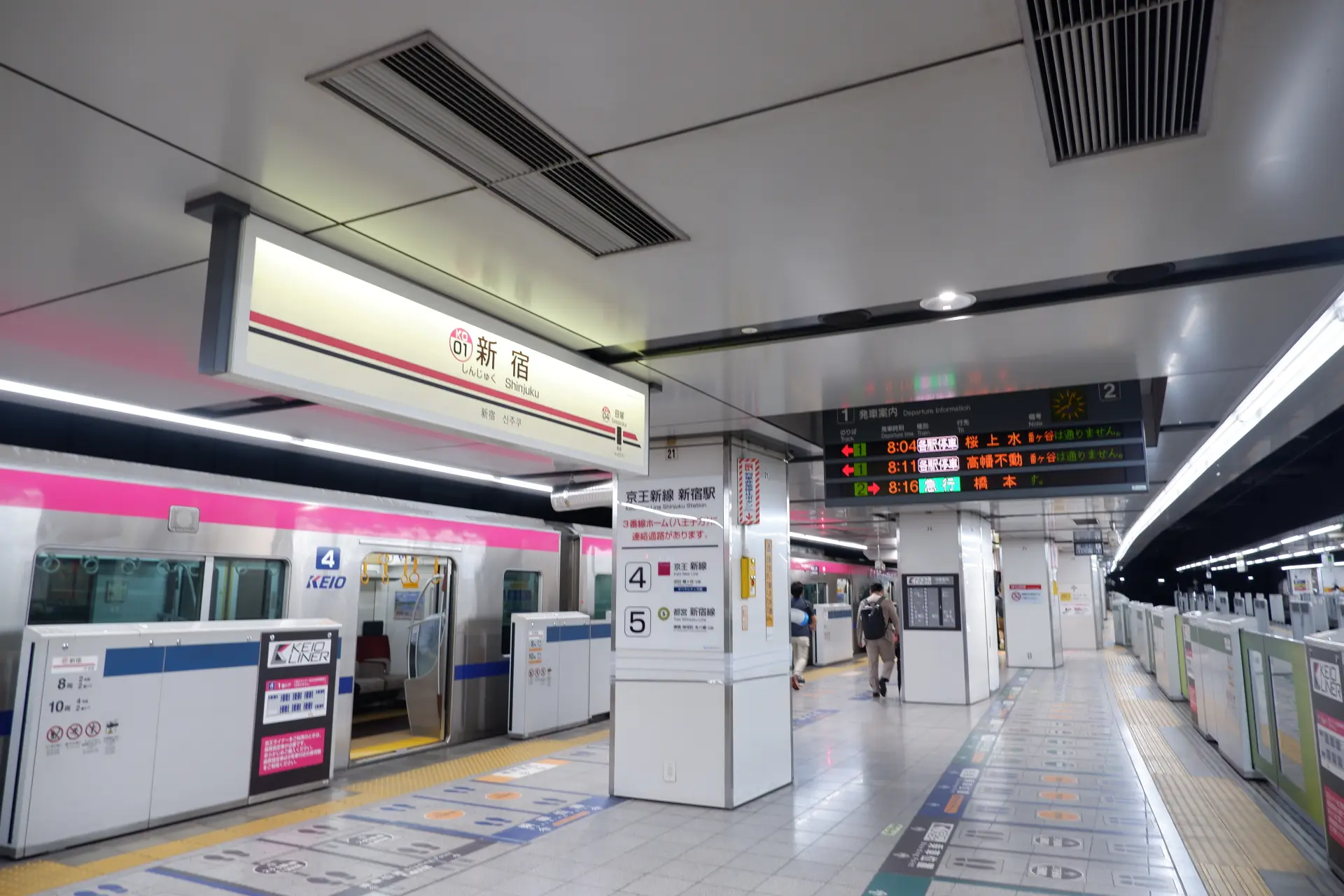
A Day Trip for Buddhist Vegetarian Cuisine on Mt. Takao and Geisha Games in Hachioji
This one-day itinerary takes you along the Keio Line to Mt. Takao and Hachioji. Begin with a morning visit to Jindaiji Temple, then continue to Mt. Takao. Visit Takao-san Yakuo-in Yuki-ji, enjoy Buddhist vegetarian cuisine, and walk to the summit. In the late afternoon, head to Hachioji to experience the geisha culture that grew alongside Soto, the “Mulberry City.”
Discover Japanese Temple Culture at Jindaiji Temple
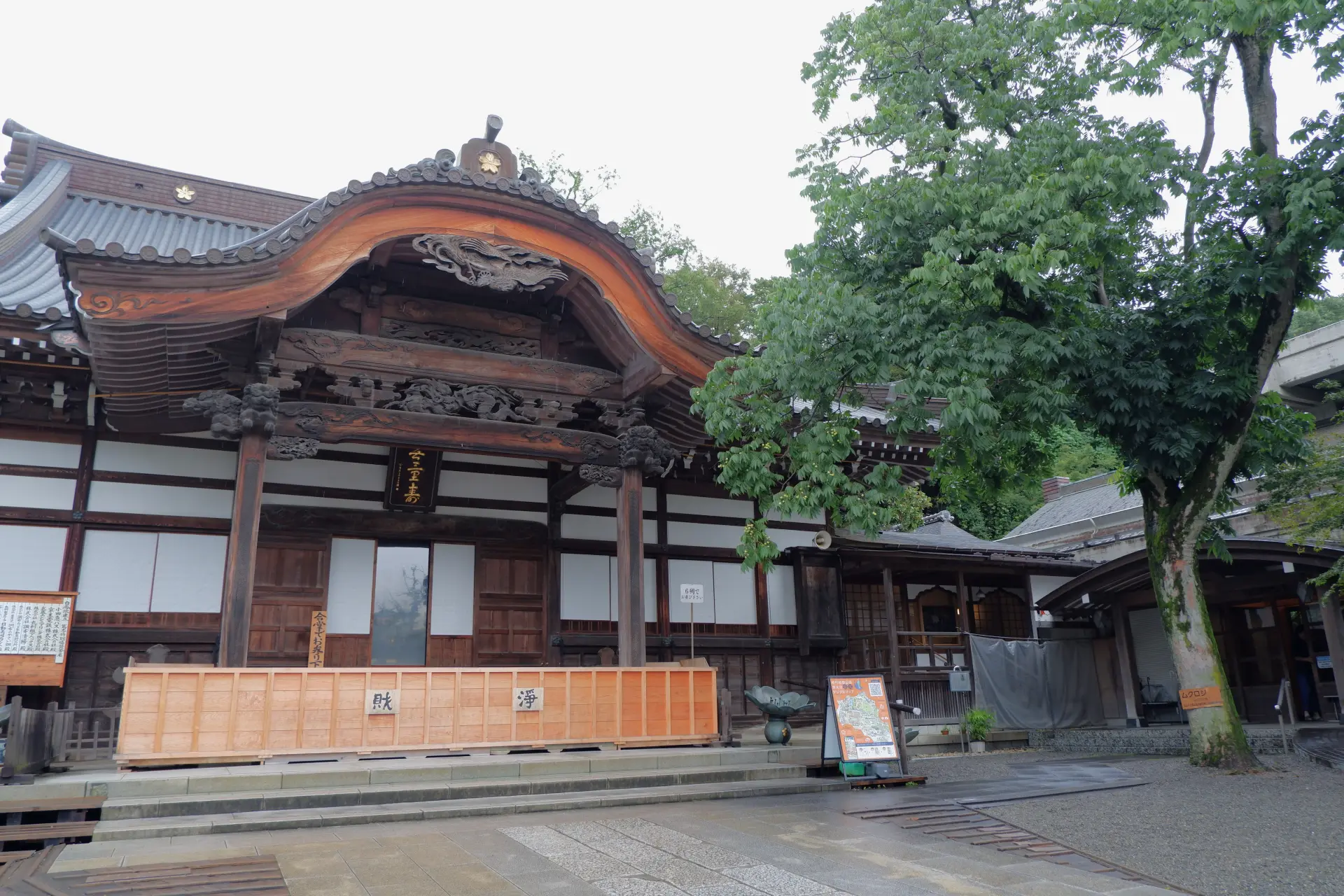
Before hiking Mt. Takao, visit a place where you can experience Japanese temple culture. Take the Keio Line to Tsutsujigaoka Station, then transfer to a bus for Jindaiji Temple, a temple of Tendai Buddhism. Said to have been founded in 733, this historic temple is known for blessings that ward off misfortune and is also cherished as a place to pray for good relationships. Its statue of Shaka Nyorai, or Shakyamuni Buddha, designated a National Treasure, is another highlight. The approach to the temple begins right beside the Jindaiji bus stop. Traditional buildings and fresh air create a welcoming atmosphere, while restaurants serving the local specialty, Jindaiji soba, and souvenir shops line the path, preserving its old-fashioned charm.
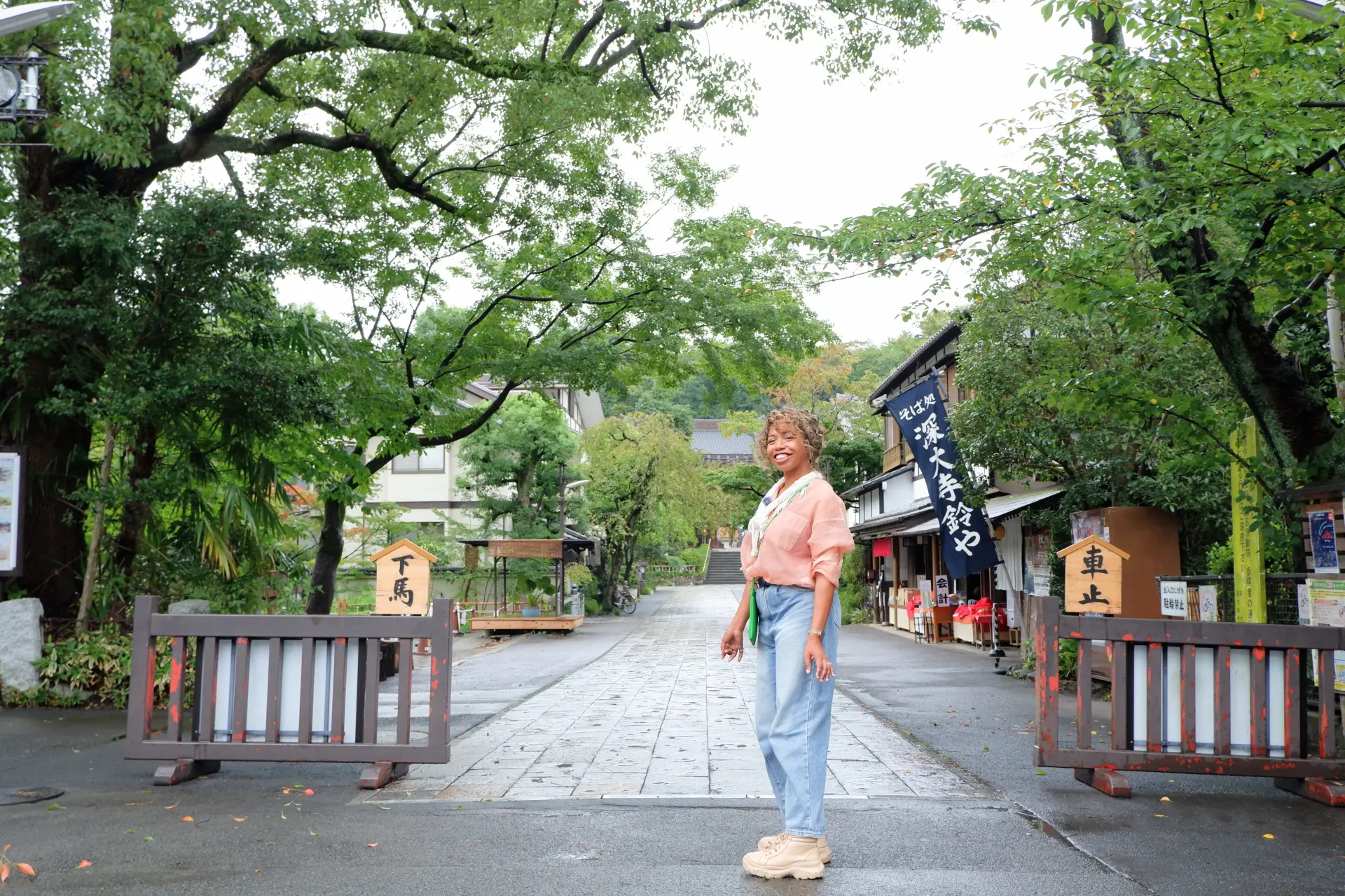
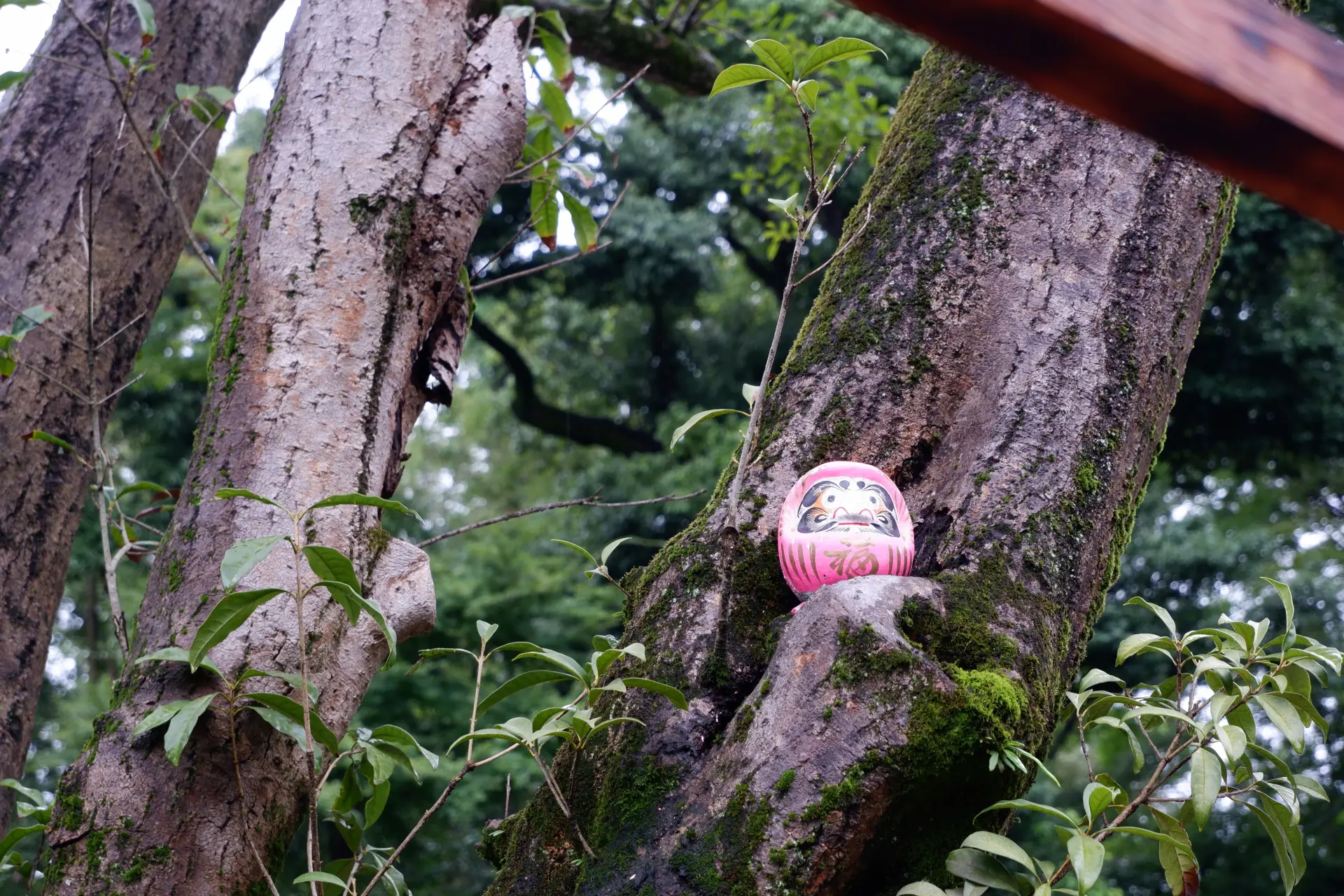
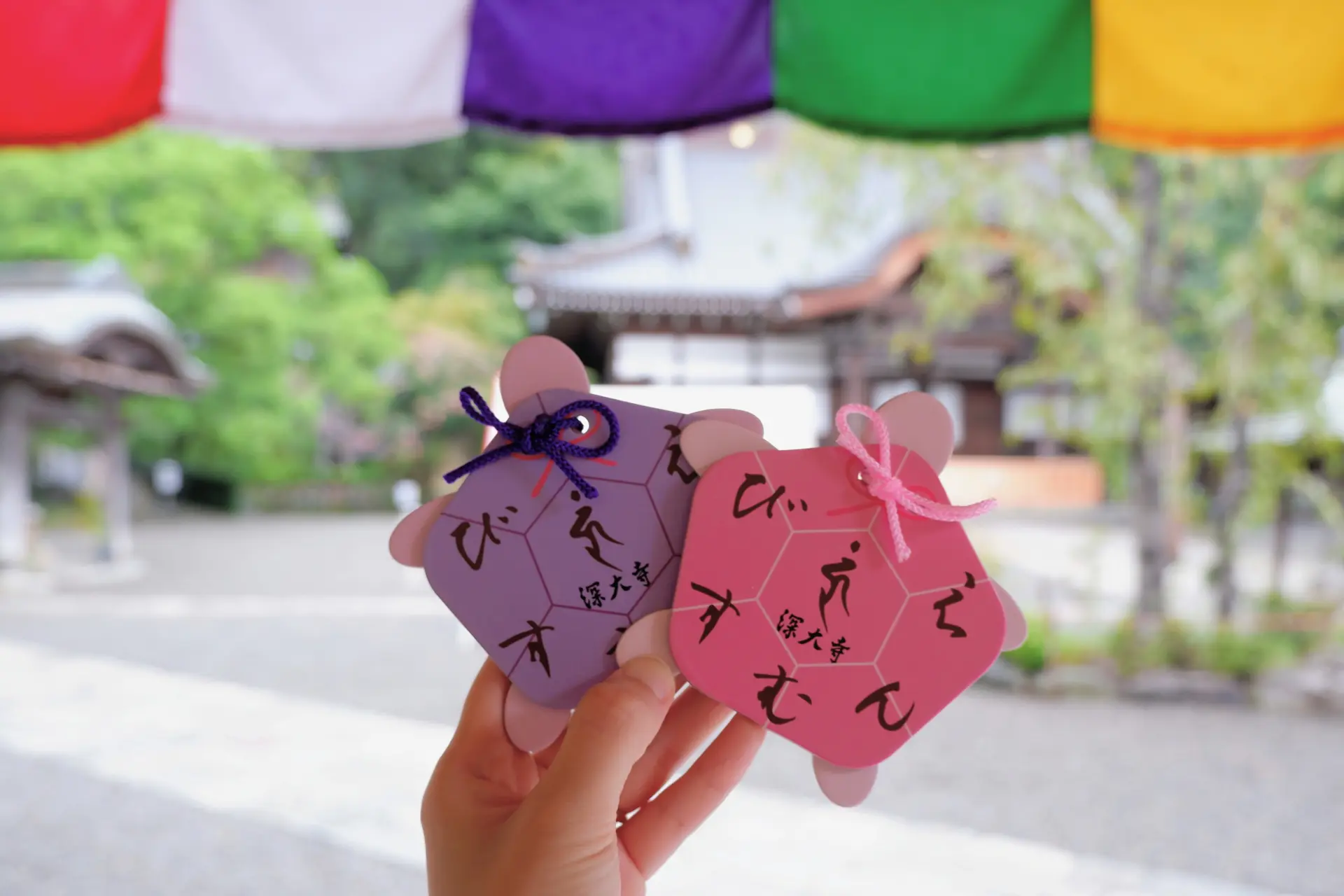
Inside the grounds, you will spot daruma dolls, familiar symbols of protection against misfortune, in all sorts of places. Every March, the Jindaiji Temple Daruma Doll Fair draws large crowds. There is also a wide selection of protective charms and ema votive plaques. Particularly popular are the brightly colored, turtle-shaped enmusubi ema, used to pray for good relationships. Each turtle has a separate body and shell: write your wish on the body, then cover it with the shell. Their appealing design incorporates a thoughtful way to keep your wishes private and protected. Elsewhere in the grounds, colorful flowers float in a hanachozu, a flower-filled purification basin. Although it was raining during our visit, the raindrops falling into the pond and the rain-soaked greenery were beautiful. A quiet stroll through the grounds makes a fitting start to a day spent exploring local culture.
Start Your Mountain Adventure at Takaosanguchi Station
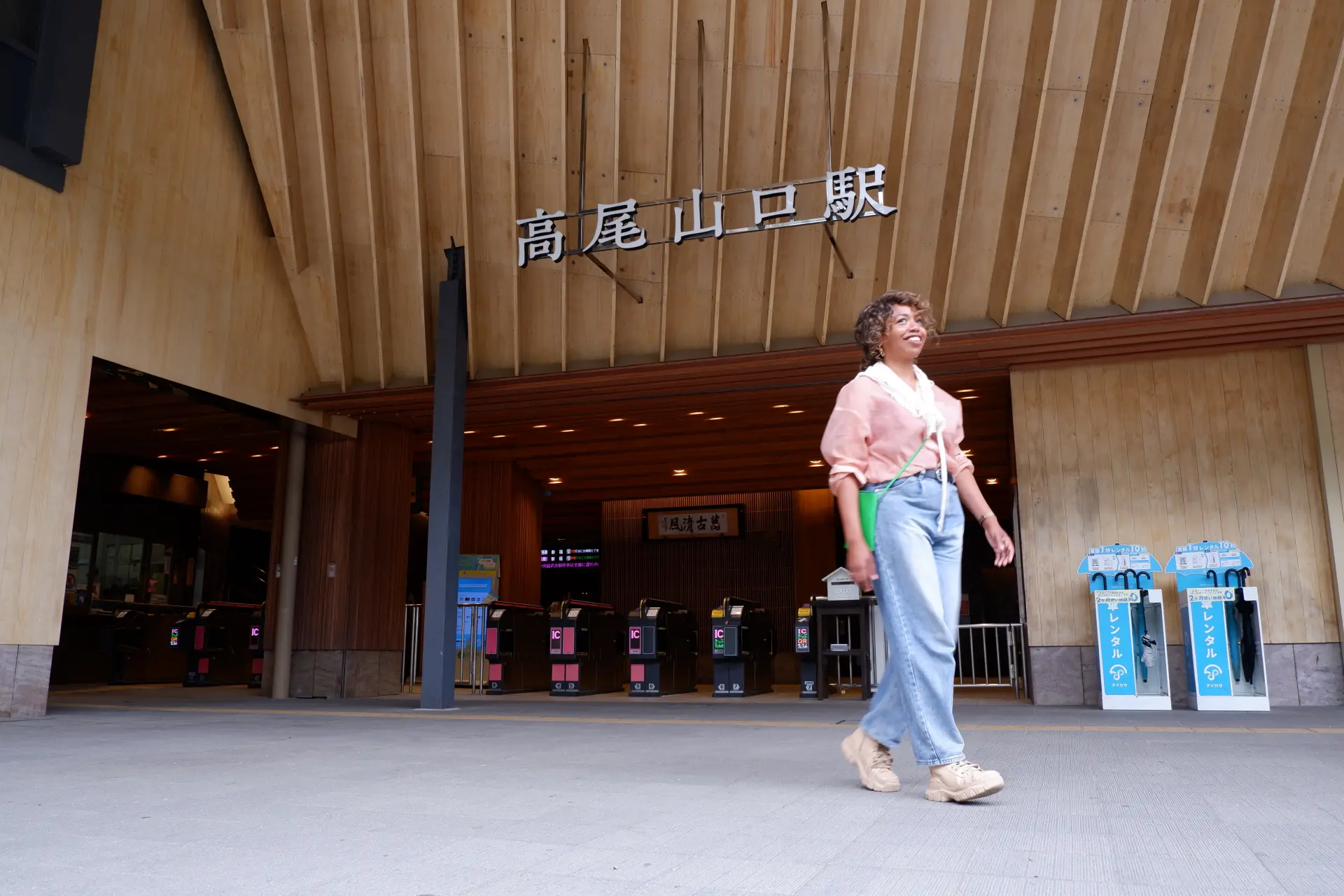
After traveling by bus and train, arrive at Takaosanguchi Station, the gateway to Mt. Takao. Once you pass through the ticket gates, pause before heading off and turn around to admire the building. Designed by architect Kengo Kuma, the station makes generous use of cedar to create a warm, welcoming space. Cafés, outdoor shops, and souvenir stores line the road from the station, adding to the anticipation as you approach the mountain.
Head Up Mt. Takao on Japan’s Steepest Cable Car Railway
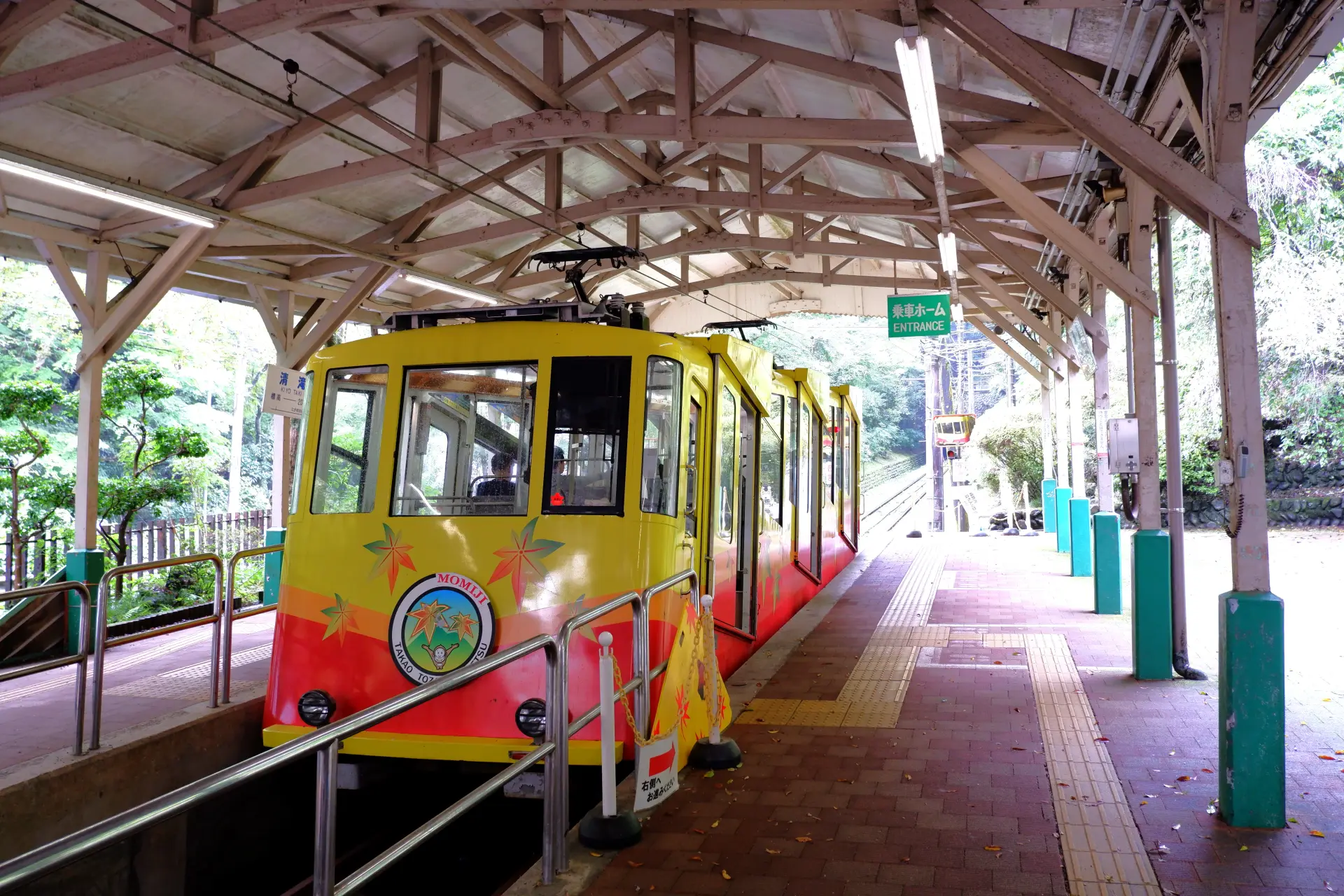
From the Kiyotaki Station area, you can take a cable car or chairlift farther up the mountain. We take the cable car to Takaosan Station, traveling along the steepest gradient on any cable car railway in Japan. The climb is so steep that you can feel your body tilt with the slope. Large windows on every side offer views that seem to wrap you in greenery. The ride quickly gains elevation, making it a good option for those new to hiking or concerned about their stamina.
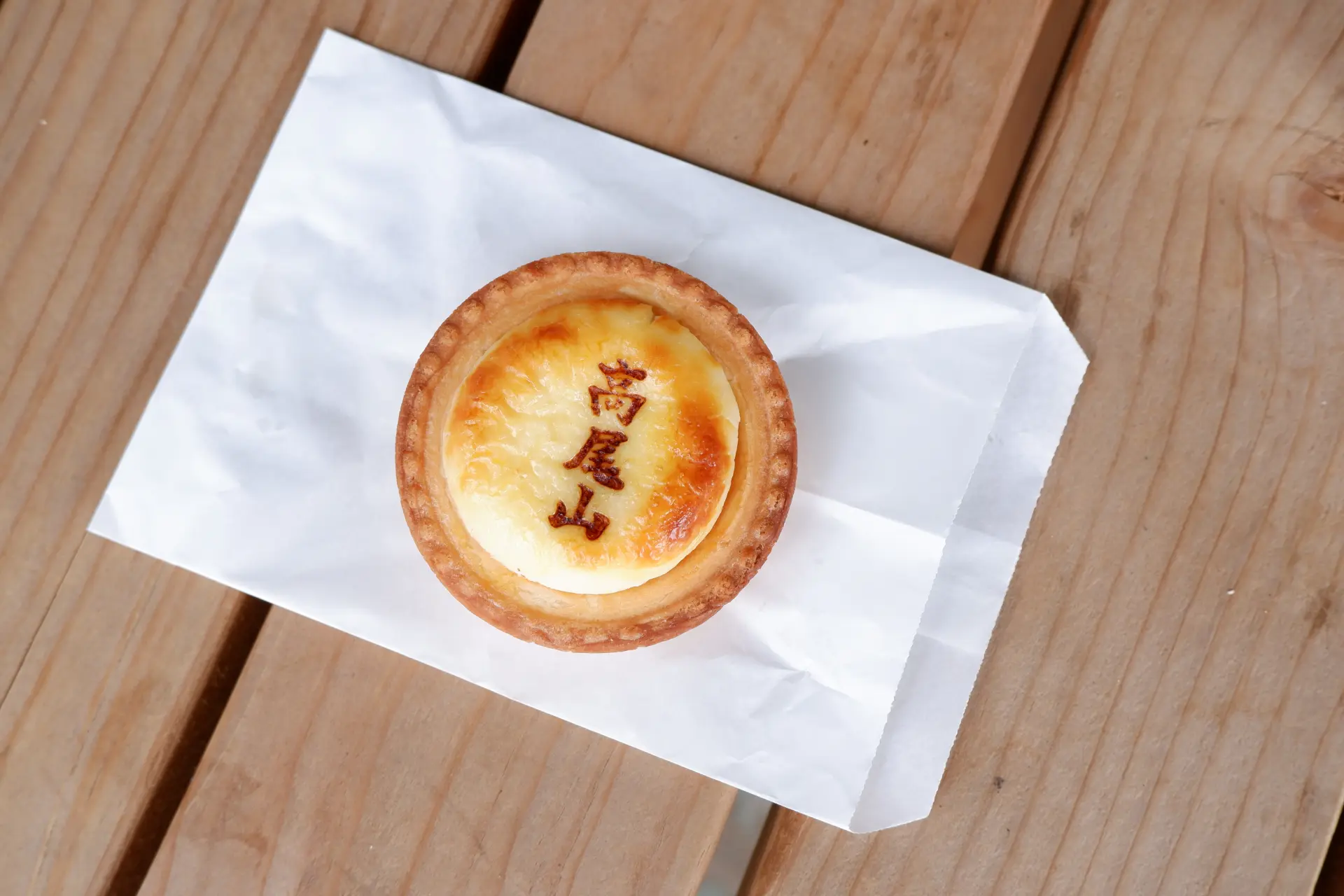
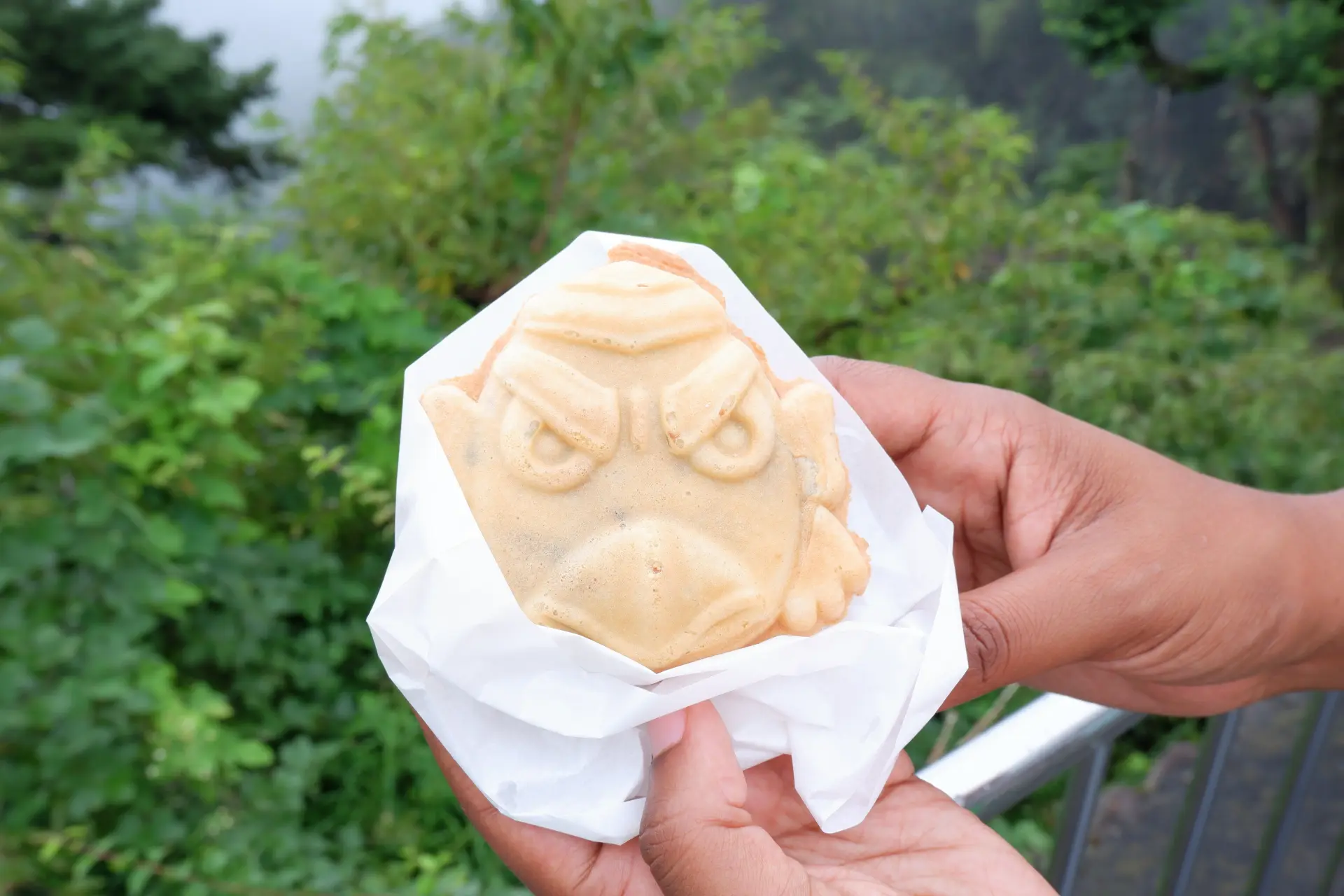
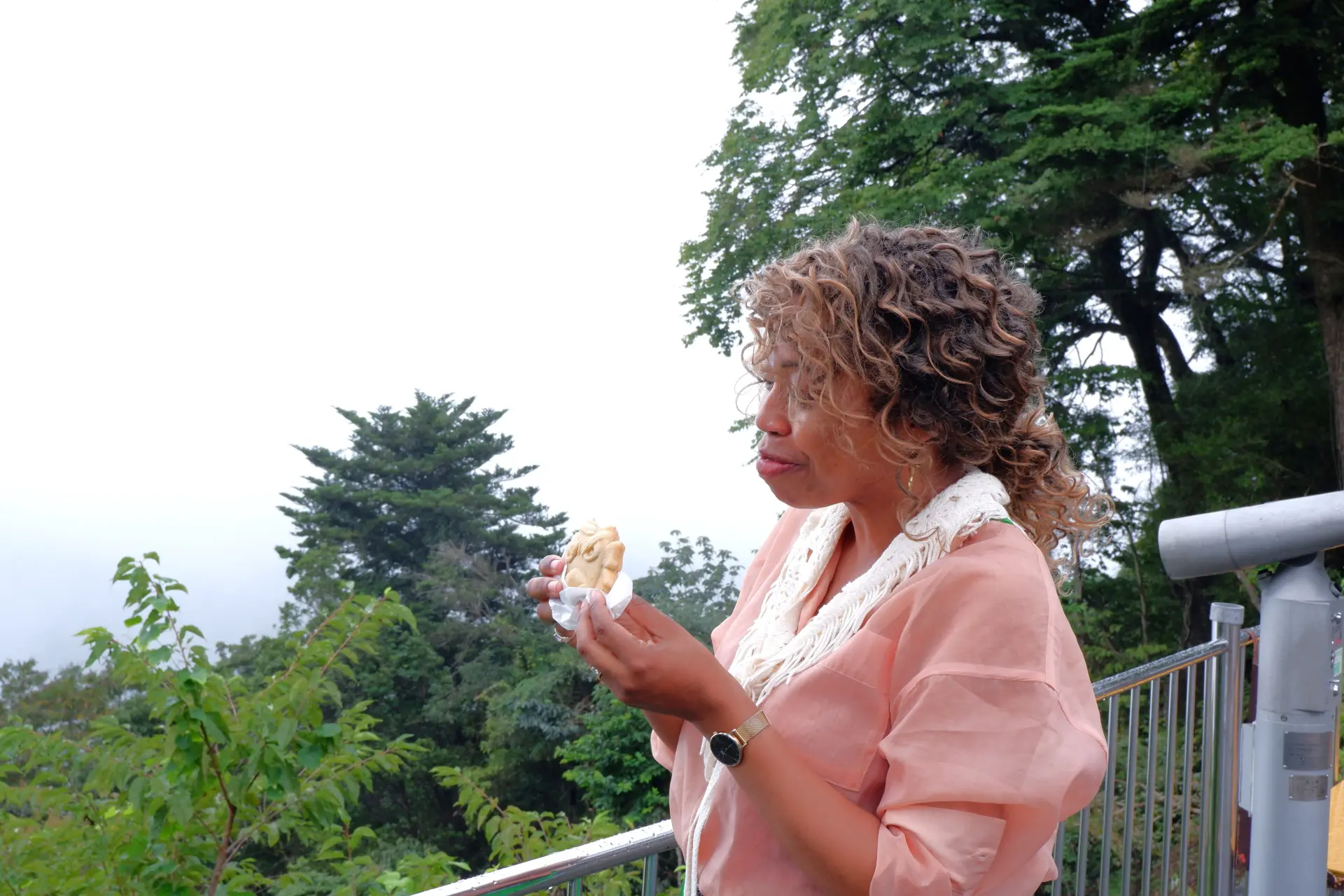
Arrive at Takaosan Station, and a sweet aroma drifts through the air. Before setting off on your walk, recharge with a couple of treats associated with the mountain. First is the cheese tart sold at Takaosan Sumika. The top is stamped with the Japanese characters for Mt. Takao. A generous filling of smooth, soft cheese contrasts with the crisp cookie crust. Another local specialty is Tenguyaki, a pastry shaped like the face of a karasu tengu, a crow-beaked legendary being closely associated with Takao-san Yakuo-in, which you will visit later. Its thin, chewy exterior has crisp edges and is packed with sweet bean paste made with large black soybeans. Gently sweet and easy to enjoy, it is just the thing before a hike.
Walk Sacred Mt. Takao and Discover Its Spiritual Traditions
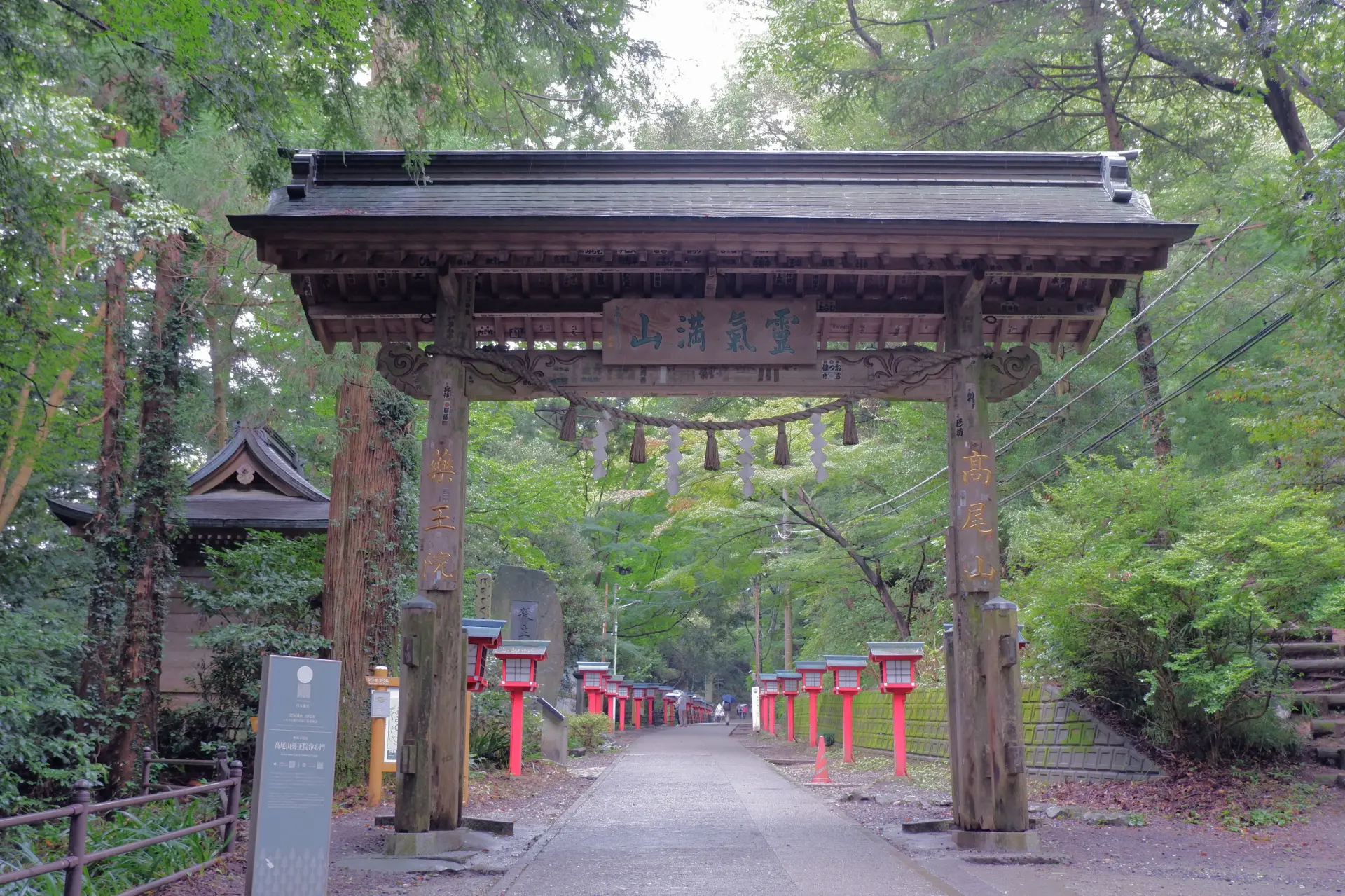
Mt. Takao has several trails, so you can choose one to suit your time and fitness level. This itinerary follows Trail No. 1 to the summit via Takao-san Yakuo-in. A short way into the walk, you reach Joshinmon Gate, topped by a plaque bearing the words “Reiki-Manzan,” expressing the mountain’s spiritual vitality. Beyond this gate, you enter the temple grounds. Magnificent cedars line the path, and the atmosphere seems to change gradually as you make your way deeper into the mountain. Particularly striking are the trees rising straight toward the sky. An ongoing tradition of offering cedar saplings helps protect and nurture the mountain’s cedar forest, and boards along the temple approach bear the donors’ names. These include people once involved in Hachioji’s silk industry, revealing how devotion to Mt. Takao has long been connected to local industry and everyday life.
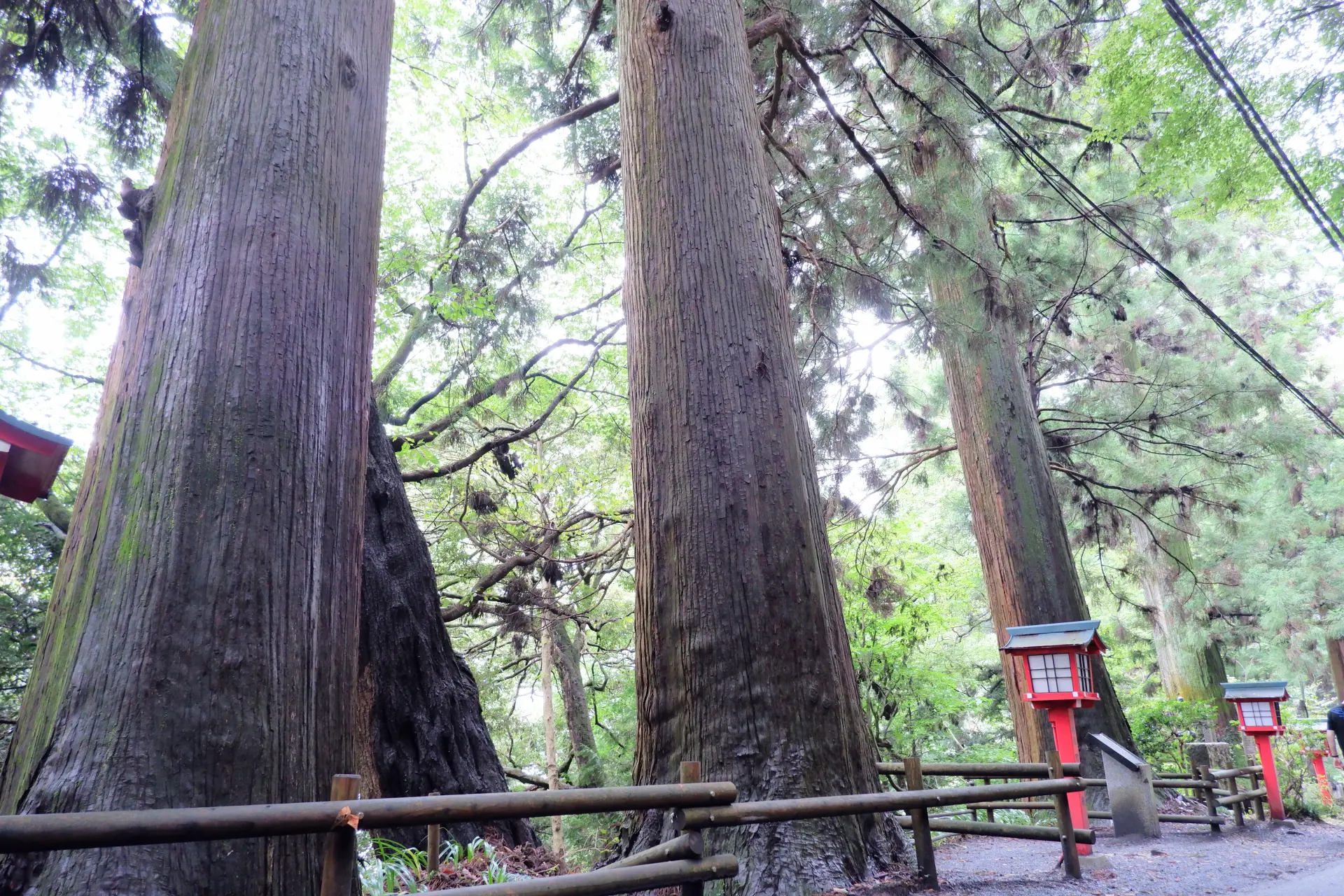
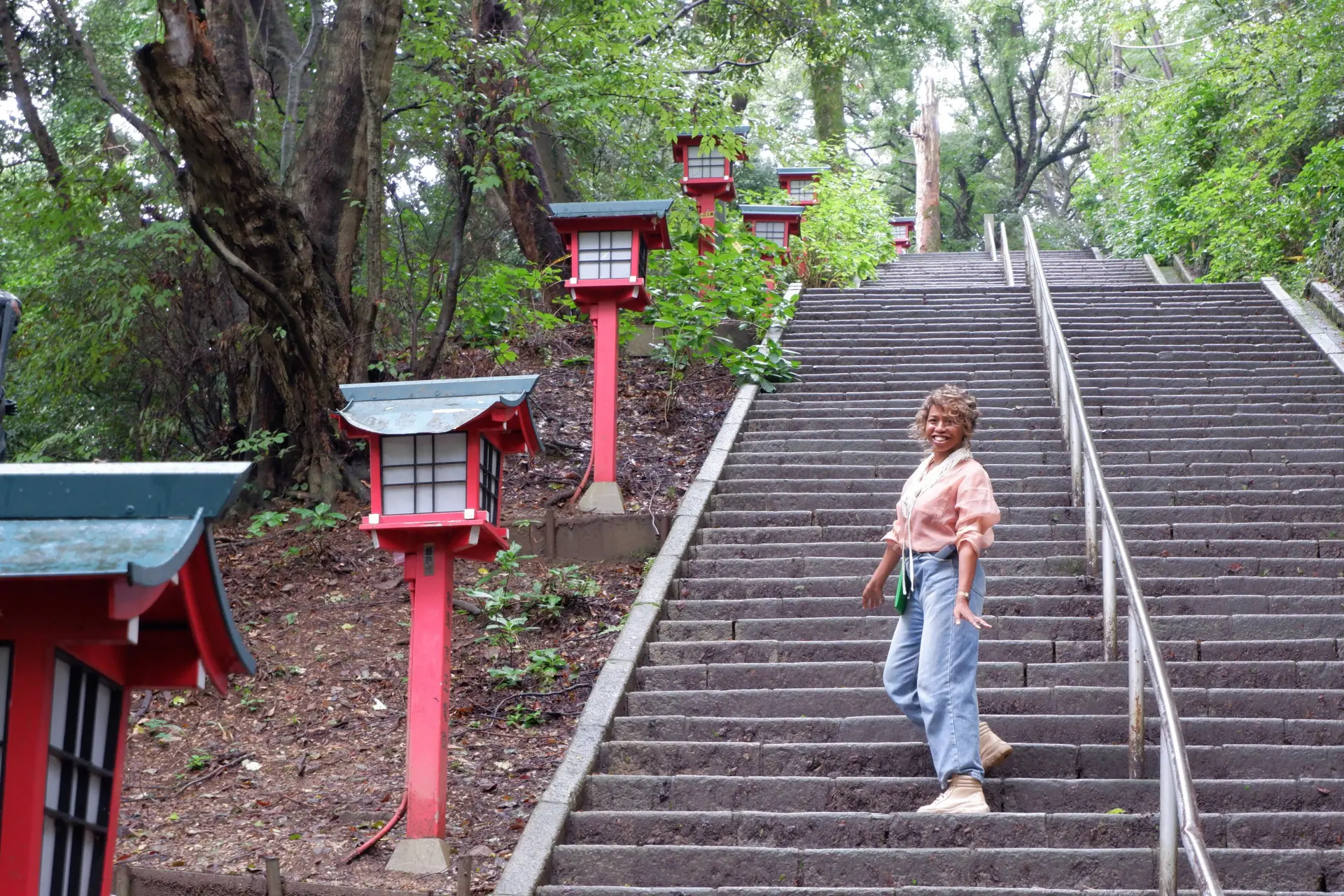
Farther along, the trail splits into Otokozaka and Onnazaka. Otokozaka has 108 stone steps, matching the number of worldly desires in Buddhist belief. Onnazaka offers a gentler incline, so choose the route that suits your energy and mood that day. The paths meet again before continuing to Takao-san Yakuo-in.
Explore Tengu Beliefs and Buddhist Vegetarian Cuisine at Takao-san Yakuo-in
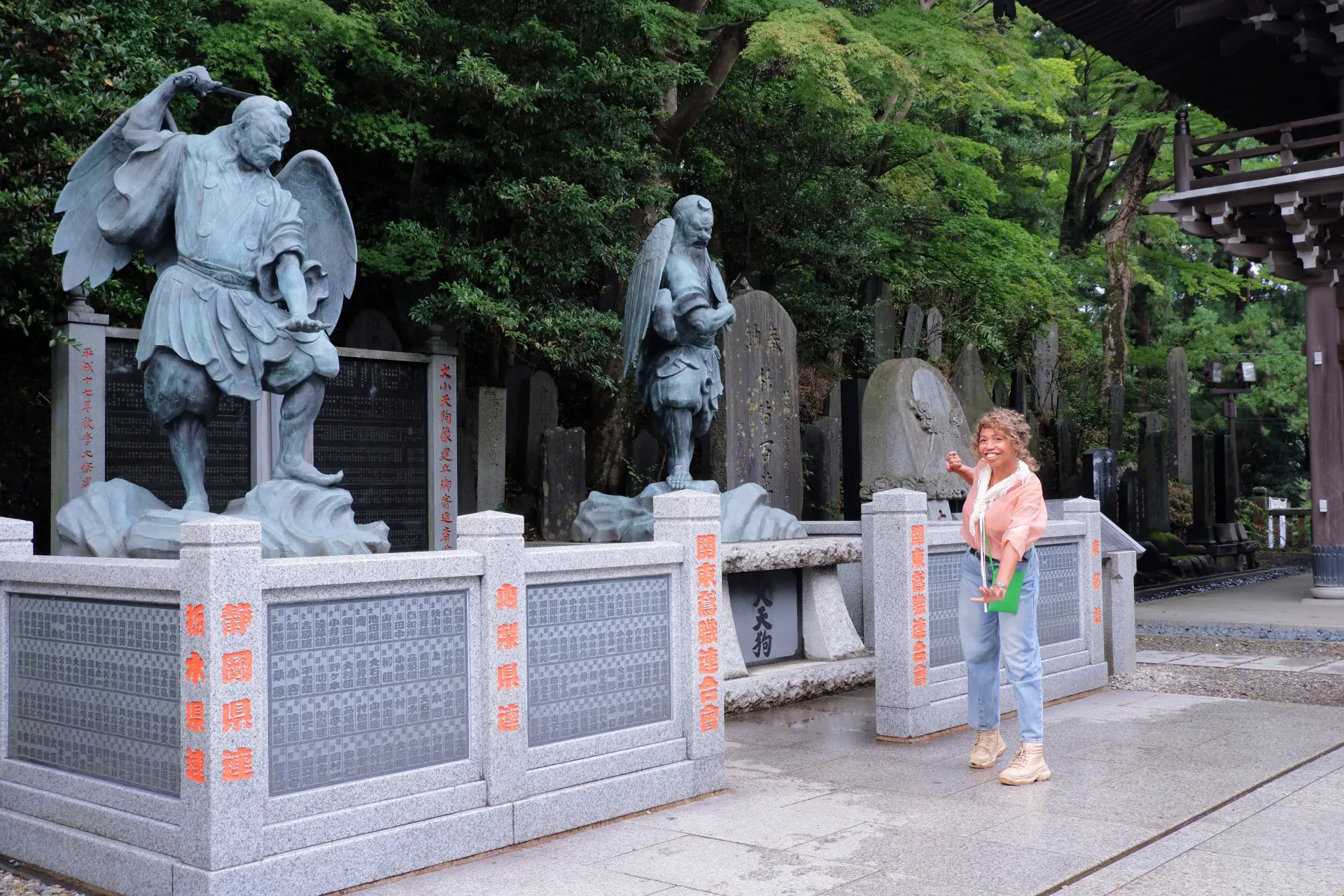
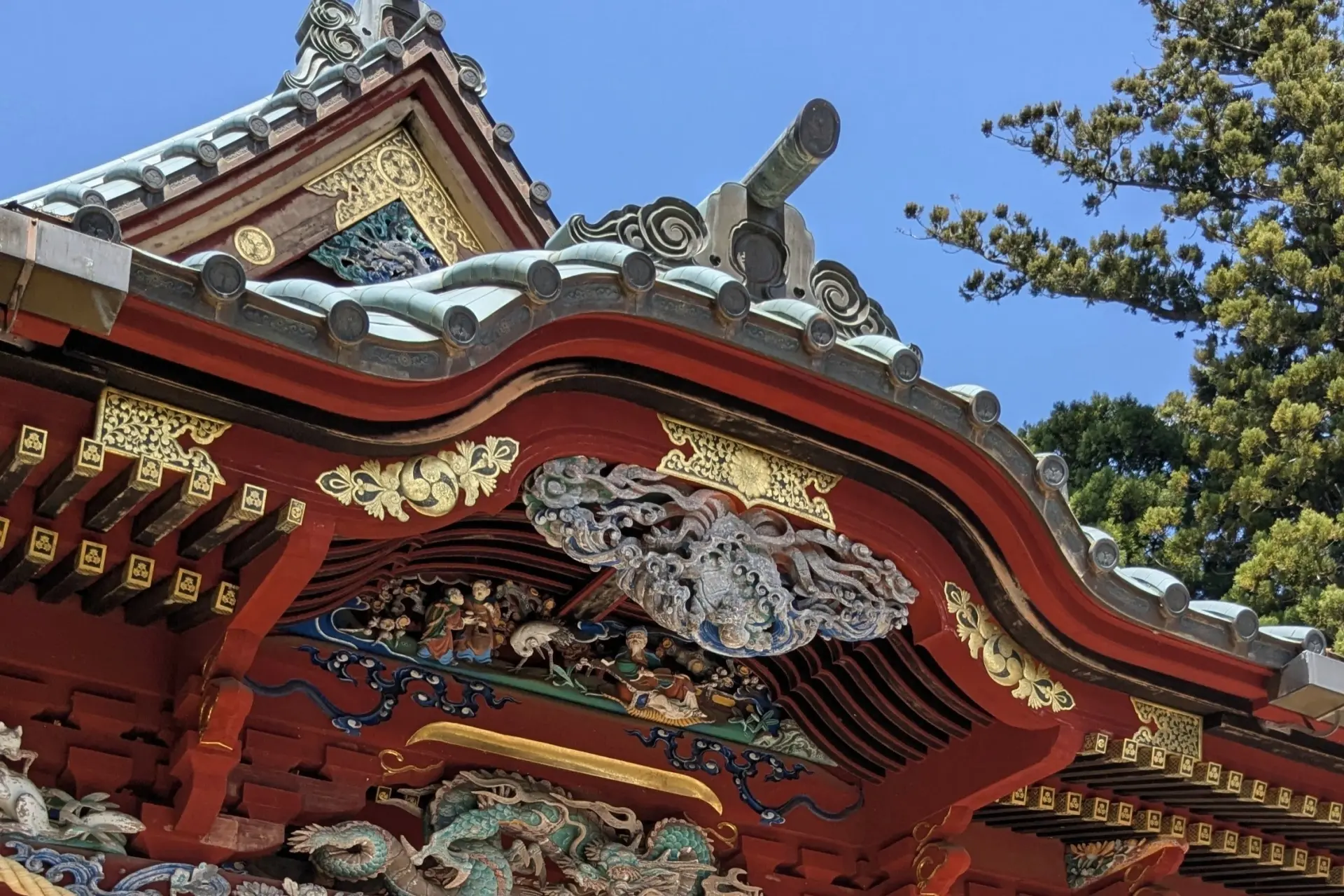
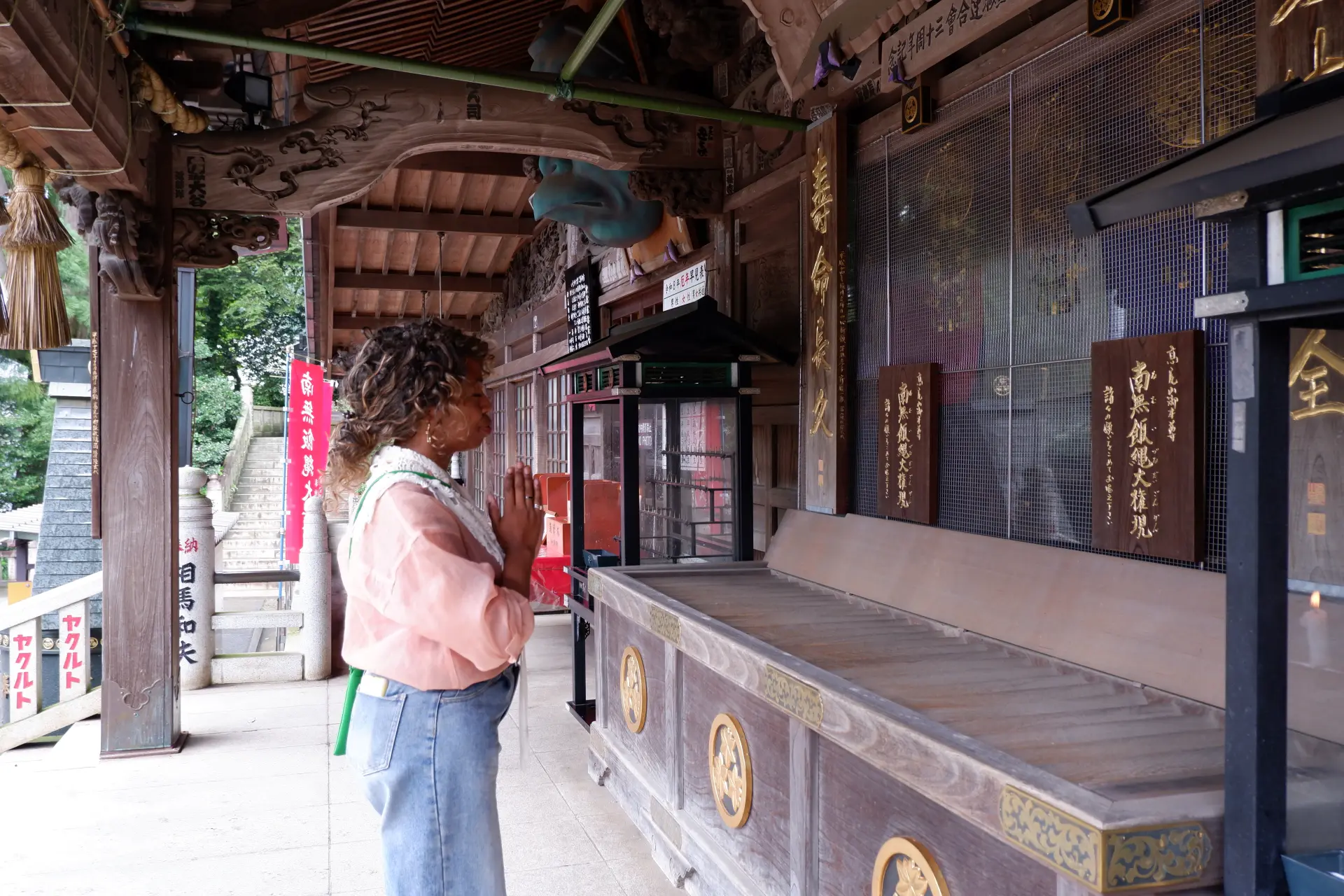
Pass through the imposing temple gate and enter the grounds. Founded in 744, the temple remains a center of spiritual life on Mt. Takao, attracting many visitors. To your right stands a large tengu statue. Mt. Takao’s tengu are revered as messengers of Izuna Daigongen who guard the mountain, ward off harm and evil, and bring good fortune. Their fierce expressions may be a little intimidating, but knowing their role as protectors makes them seem reassuring, too. Climb the steps and pass through a vivid vermilion gate to reach the Main Hall. A further flight of steps to its left leads to Izuna Gongen-do Hall. Its atmosphere is quite different, with richly colored decorations and intricate carvings. Visiting both gives you a chance to appreciate their contrasting character.
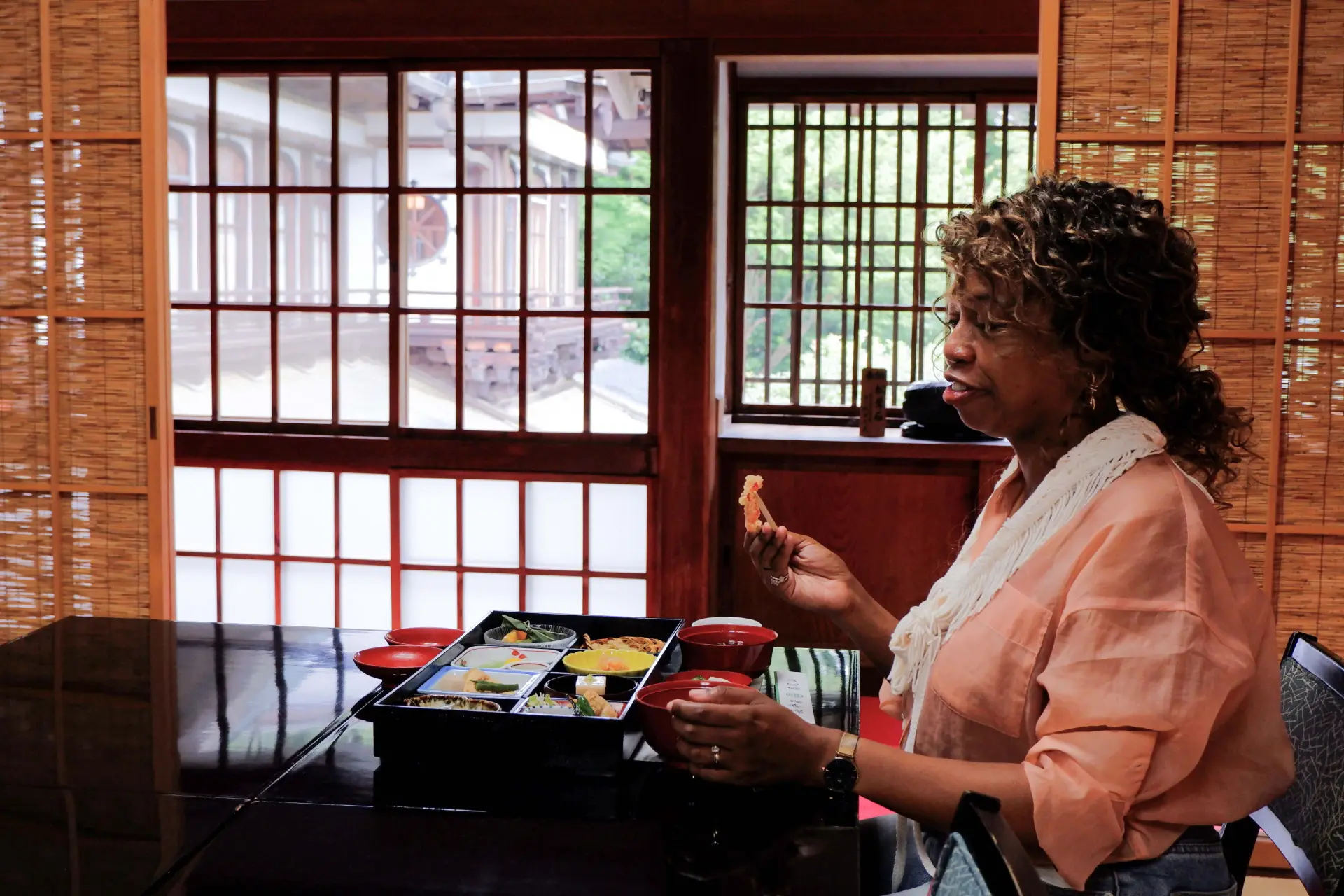
A visit to Takao-san Yakuo-in is also an opportunity to try shojin-ryori, or Buddhist vegetarian cuisine. Dining in a historic building, with greenery stretching beyond the windows, makes the meal feel special. The dishes arrive neatly arranged in square masu containers, encouraging you to sit a little straighter and savor each one slowly. The temple’s cuisine reflects a respect for the mountain’s animals, plants, and the natural world, along with a commitment to making full use of ingredients.
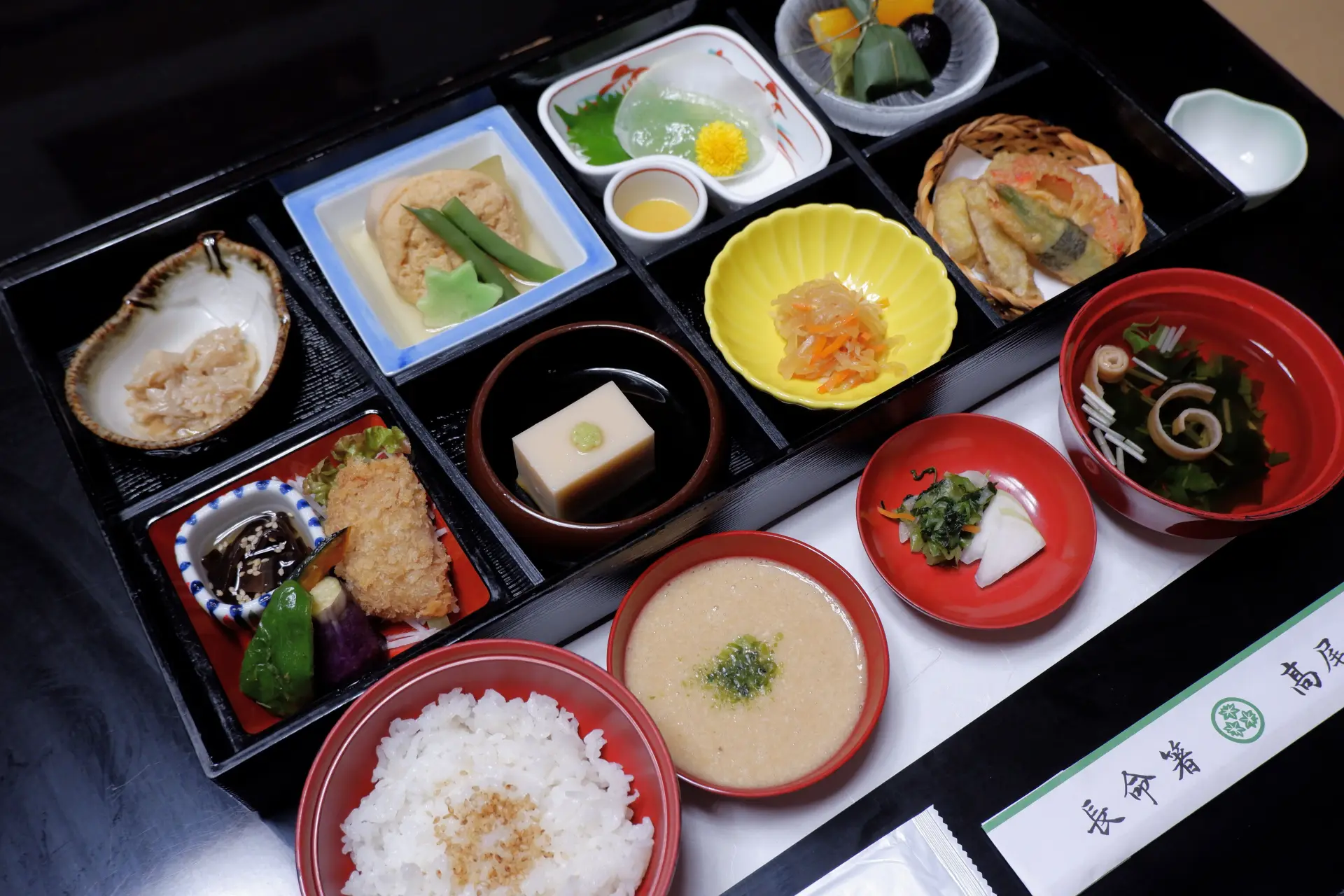
The meal we try also includes thoughtful touches designed to appeal to visitors. Colorful, full of flavor, and satisfying, it offers plenty to enjoy. Take your time over each dish, from simmered dishes with the savory depth of dashi broth to konnyaku sashimi, thin slices of konjac with a pleasantly smooth texture. The gentle flavors are especially welcome after walking on the mountain.
Take In Mountain and City Views from the Summit of Mt. Takao
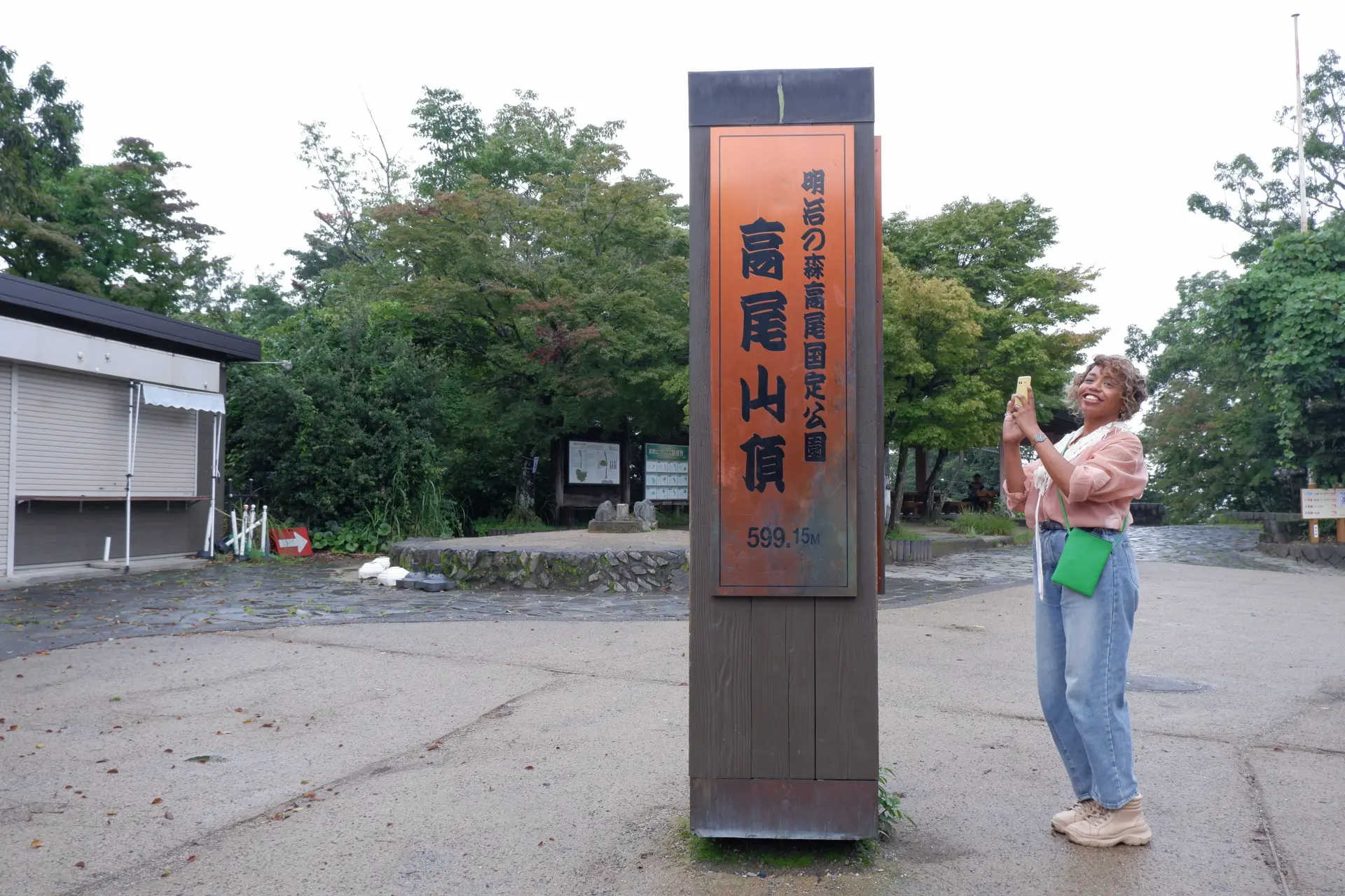
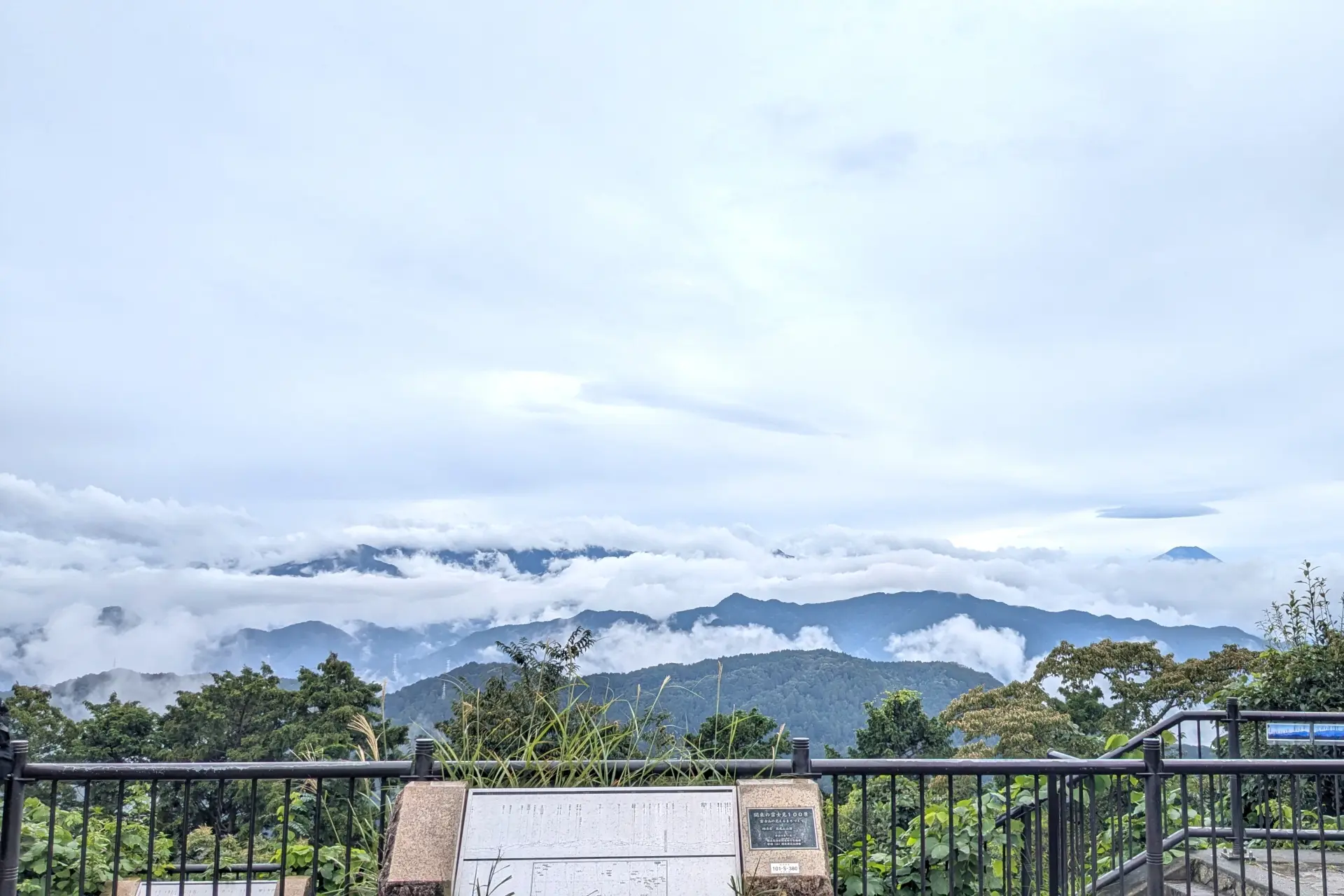
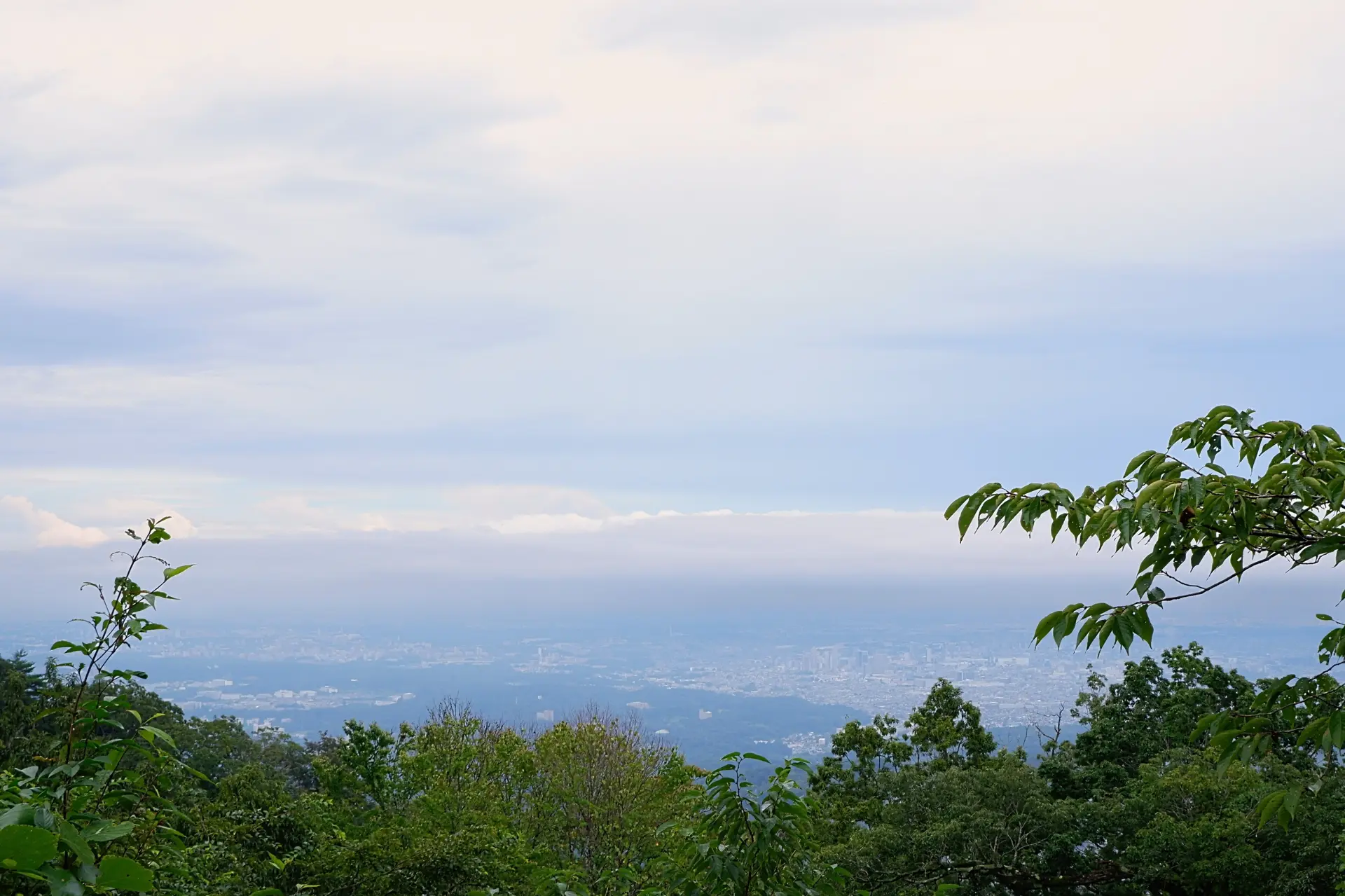
After a break at Takao-san Yakuo-in, continue a little farther to the summit, about a 20-minute walk away. Rain began to fall along the way, leaving us wondering whether there would be a view at all. When we arrived, however, white clouds were rising slowly between the mountains, creating a dreamlike scene. Mt. Takao stands 599 meters above sea level. On clear days, the summit offers both mountain views, including Mt. Fuji, and a lively cityscape of high-rise buildings. After being surrounded by the trail’s abundant greenery, it is surprising to be reminded how close central Tokyo really is.
Experience Hachioji’s Geisha Culture
After descending, head into Hachioji. Once prosperous through silkworm farming and silk weaving, the city was known as Soto, or “Mulberry City.” Raw silk and textiles from the surrounding area were brought here, attracting merchants whose patronage helped the geisha district flourish. That culture continues today. A short walk from the station brings you to Black Fence Street, lined with dark wooden fences and historic traditional restaurants. Here, you can experience the culture of Hachioji geisha that remains part of the city’s life.
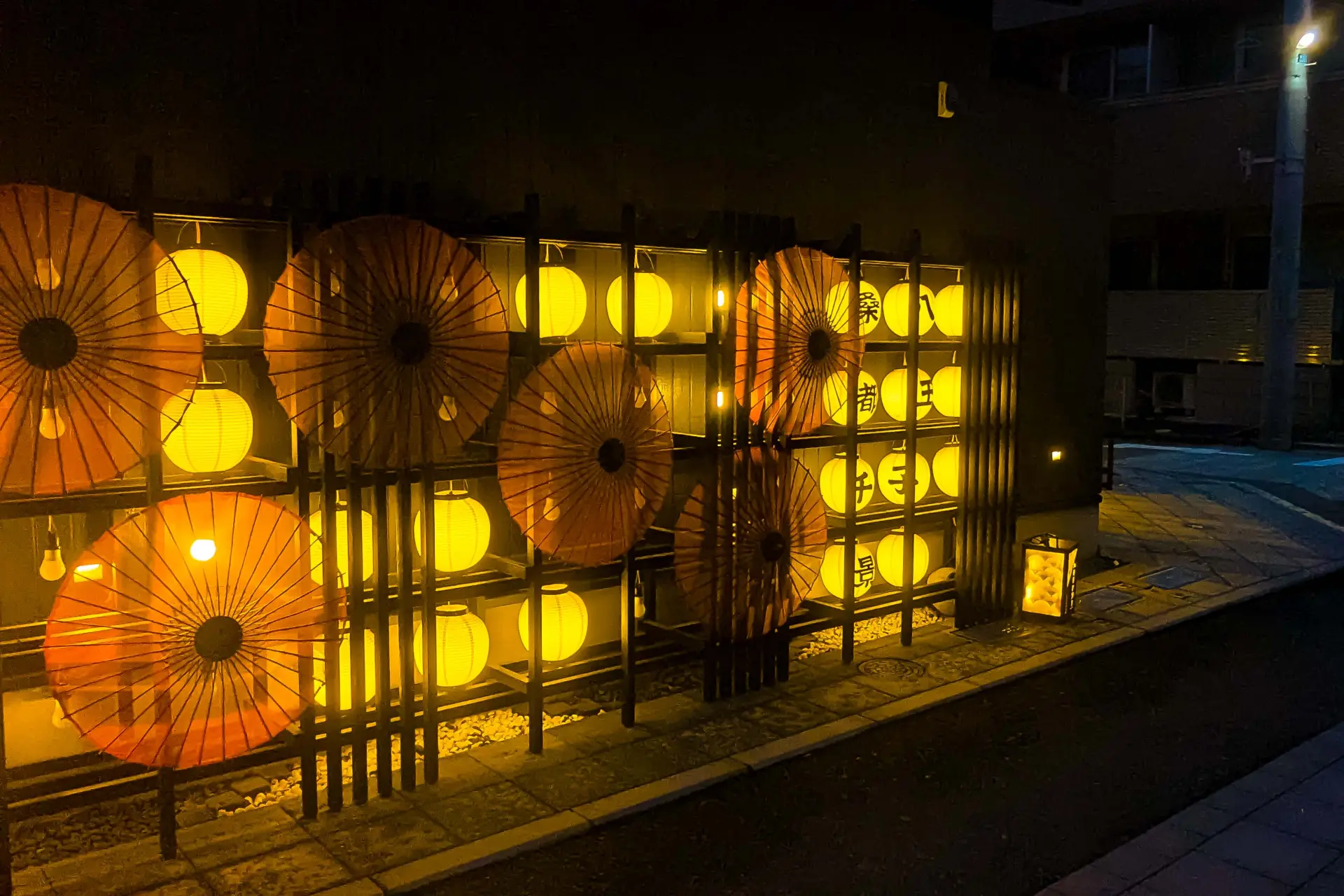
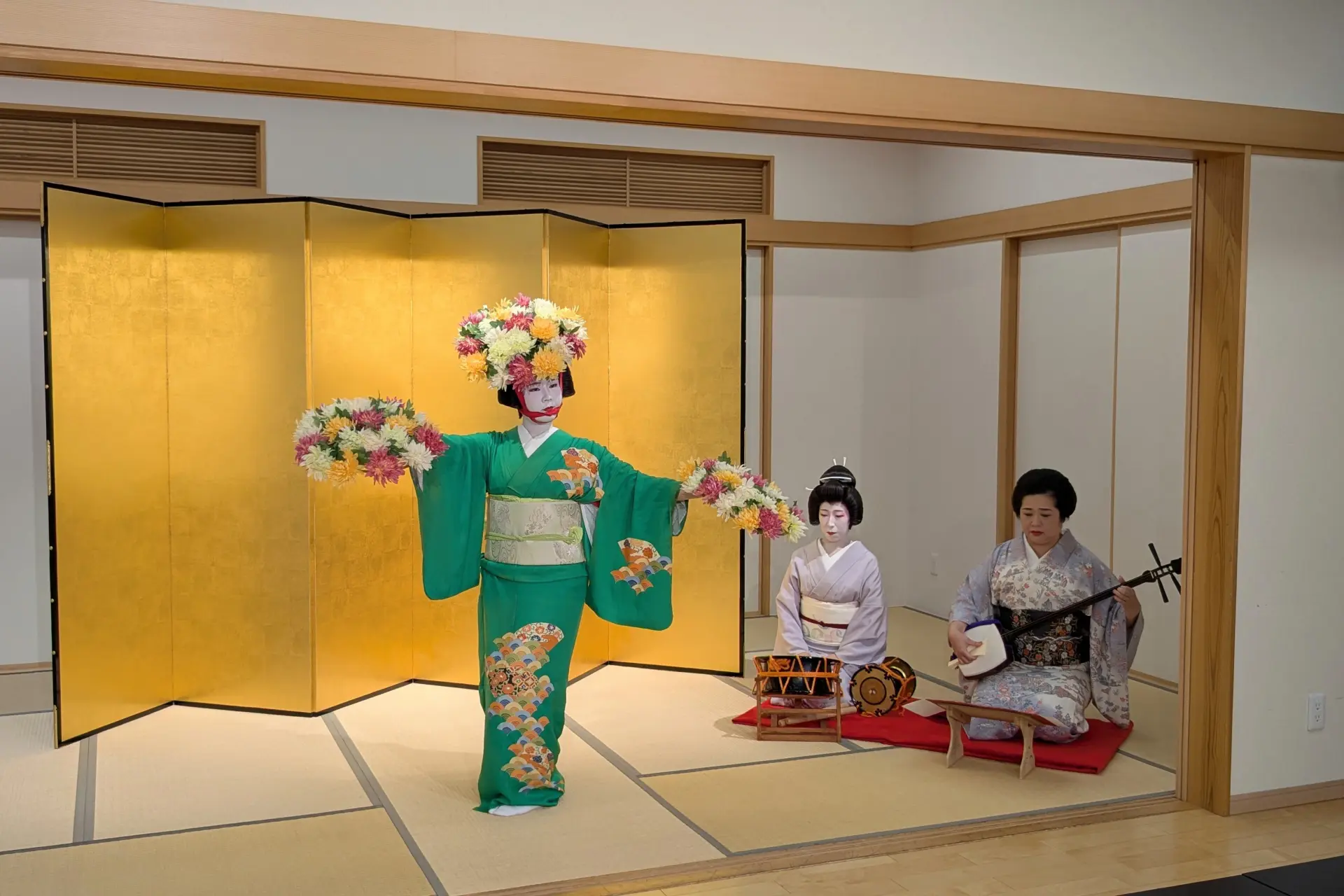
Soto Terrace offers a chance to experience this geisha culture firsthand. Enjoy a distinctly Japanese kaiseki meal while watching geisha dance and sing at close range. We felt a little nervous at first, but the geisha shared stories about where they were from and came over to chat during the meal, soon creating a relaxed sense of connection. Their dances, performed in vivid kimono, are captivating. Thoughtful touches, such as adapting the program to the guests that day, make the experience feel like a vivid introduction to Japanese culture.
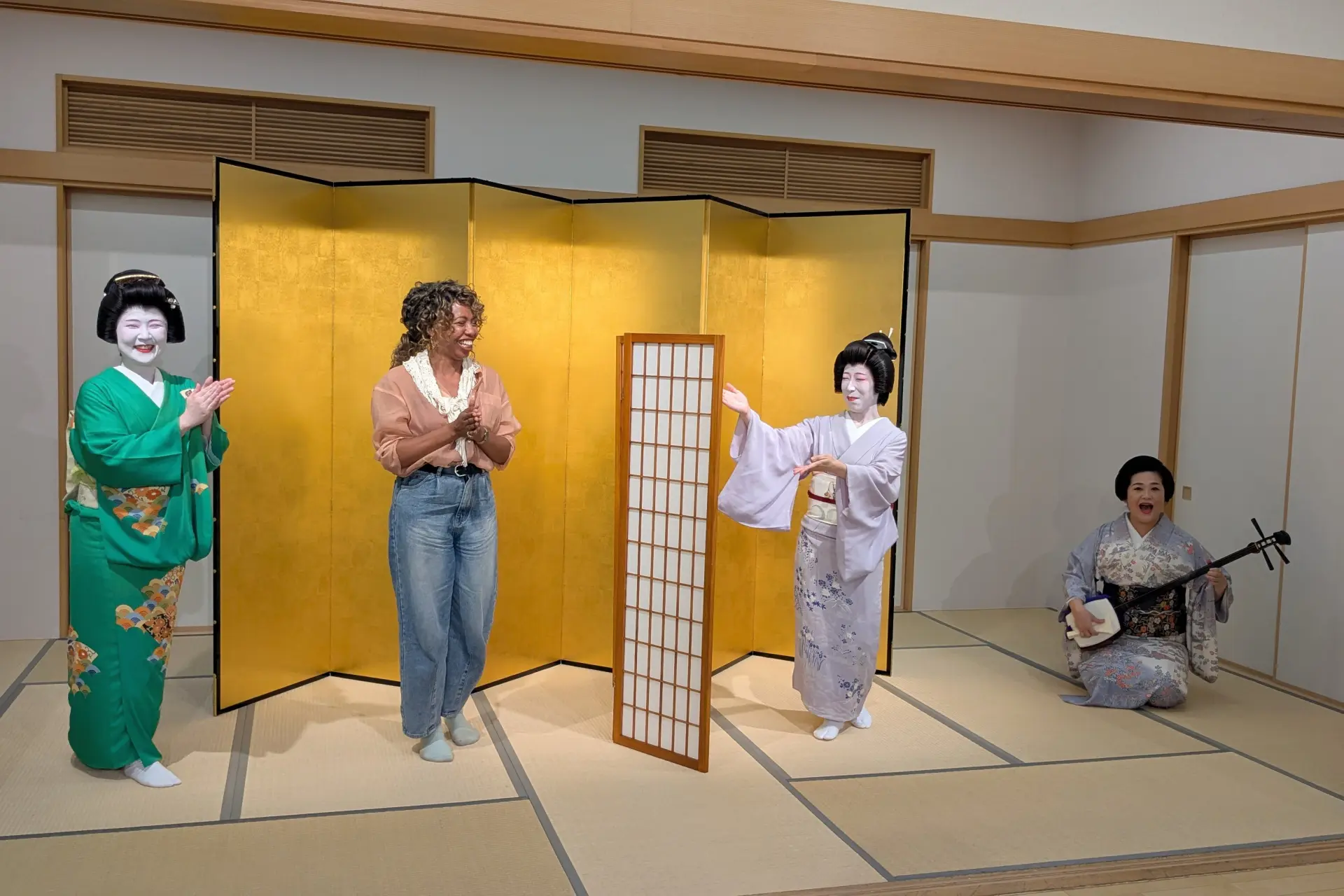
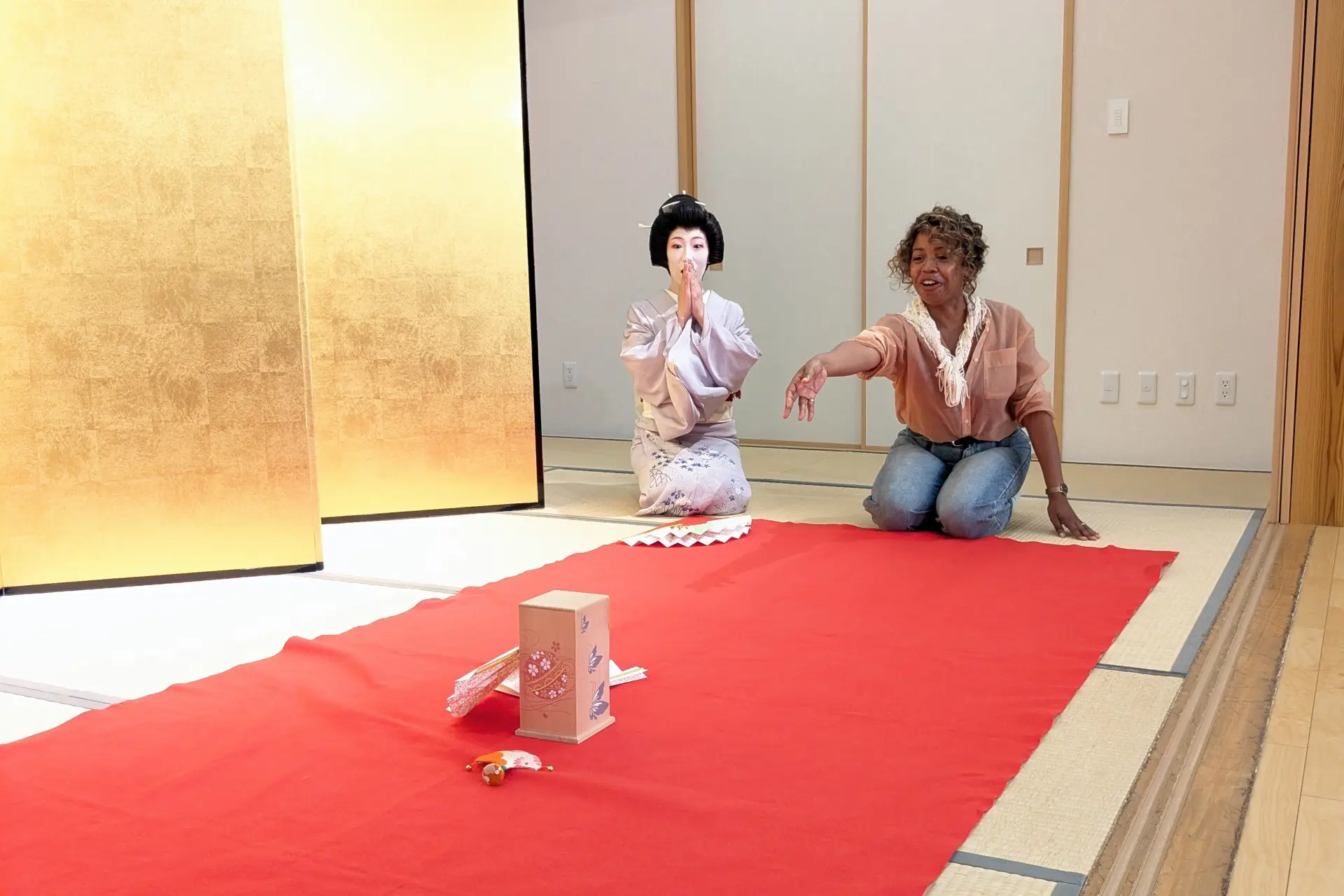
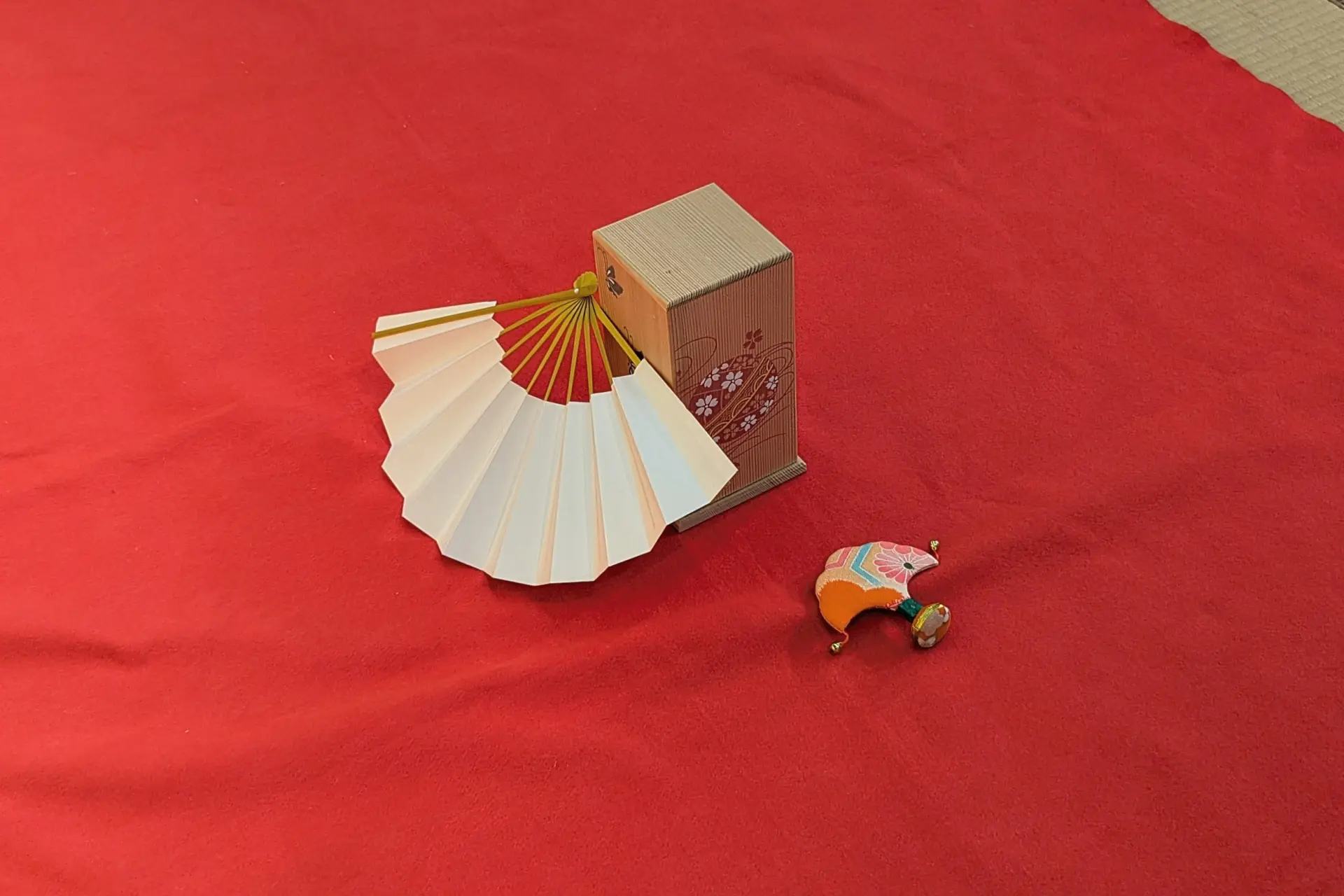
You can do more than watch: try ozashiki asobi, traditional games played with geisha. We begin with Tora tora, a game similar to rock-paper-scissors. Players stand on opposite sides of a folding screen and make gestures representing a tiger, a warrior, or the warrior’s mother in time with music and singing. It can feel unfamiliar at first, but let the geisha guide you and join in. Next comes Tosenkyo, a fan-tossing game. Players throw a folding fan at a target called a cho, or “butterfly,” balanced on a box-shaped stand known as a makura, or “pillow.” Points depend on the positions and arrangement of the target, stand, and fan. It looks simple, but its detailed rules give it surprising depth. Seeing these traditions up close and taking part yourself makes their appeal feel much more immediate.
What to Know Before Following This Itinerary
Advance reservations are required for Buddhist vegetarian cuisine at Takao-san Yakuo-in and for the geisha experience. Check the latest information from each venue and book ahead. Allow plenty of time for the walk to the summit, the scenery along the way, and stops to enjoy local food.
Access and Itinerary for Your Mt. Takao and Hachioji Day Trip
Here is how to reach the starting point from Tokyo and travel between the places introduced in this article. Use the suggested timings as a guide and adapt the itinerary to your travel style.
Getting to the Starting Point and Traveling from the Finish
Start | Shinjuku Station
From Tokyo Station, take the JR Chuo Line for about 15 minutes. From Haneda Airport Terminal 3 Station, take the Keikyu Line to Shinagawa Station, then transfer to the JR Yamanote Line; the journey takes about 40 minutes in total. From Narita Airport Terminal 1 Station, the Narita Express limited express takes about 90 minutes.
Finish | Hachioji Station
The trip ends at Hachioji Station, where you can take the JR Chuo Line back toward central Tokyo.
Suggested Itinerary
- 8:00 am Depart from Shinjuku Station
- Take the Keio Line and a bus to Jindaiji Temple, about one hour in total.
- 9:15 am Explore Jindaiji Temple
- Continue by bus and the Keio Line to Takaosanguchi Station, about one hour and 10 minutes in total.
- 11:40 am Walk and take the cable car to Takaosan Station
- 12:00 pm Walk to Takao-san Yakuo-in
- About 20 minutes on foot from Takaosan Station.
- 12:20 pm Visit Takao-san Yakuo-in and enjoy Buddhist vegetarian cuisine
- 2:00 pm Head to the summit of Mt. Takao
- About a 20-minute walk from Takao-san Yakuo-in.
- 2:40 pm Descend the mountain
- Return to Takaosanguchi Station on foot and by cable car.
- 3:45 pm Depart from Takaosanguchi Station
- Take the Keio Takao Line and JR Chuo Line to Hachioji Station, about 20 minutes in total. Soto Terrace is about a 10-minute walk from the station.
- 4:30 pm Experience Hachioji geisha culture at Soto Terrace
- 6:30 pm Leave Soto Terrace and head to Hachioji Station
Frequently Asked Questions about This Mt. Takao and Hachioji Day Trip
Q
Is there a specific season for hiking Mt. Takao?
Mt. Takao can be hiked year-round. The autumn foliage season is especially popular and attracts many hikers.
Q
Can beginner hikers enjoy Mt. Takao?
Yes. Mt. Takao has many well-maintained trails suitable for beginners. However, there are slopes and stairs, and some sections can become slippery depending on the weather. Wear comfortable walking shoes, such as sneakers, and layers you can easily put on or take off. Prepare for the heat or cold according to the season, too.
Summary
Within easy reach of central Tokyo, Mt. Takao and Hachioji preserve not only natural beauty and spiritual traditions, but also a culture that developed alongside the silk industry. Take the Keio Line from mountain to city and discover the connections between the traditions that continue to shape this area.
*This article was produced by the Greater Tokyo Tourism Organization, a general incorporated association, with support from the comprehensive DMO support program.
Author
Writers & Editors
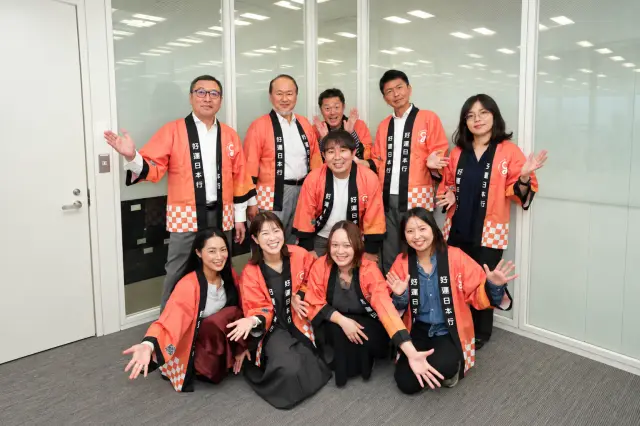
GOOD LUCK TRIP Editors
Sharing lesser-known ways to experience Japan with the world!