

A Travel Guide to Experiencing the Unique Charms of Iwate
Iwate Prefecture, in northeastern Japan along the Pacific coast, is rich in grand nature, history, delicious food, and hot springs, with highlights such as dramatic scenery shaped by its rugged ria coastline and Hiraizumi, which has more than 1,000 years of history.
This article introduces the charms of Iwate, focusing on model courses that let you fully enjoy the area, along with excellent local food.
Use this guide to travel through Iwate to your heart’s content and discover its many attractions and sightseeing spots.
Iwate, with Its Vast Area and Diverse Charms
Iwate Prefecture is located in northeastern Japan and faces the Pacific Ocean.
It is the second-largest prefecture in Japan by area after Hokkaido, and is also known for its harsh winter cold.
Along the Pacific coast stretches a rugged ria coastline, where dramatic landforms created by uplift and erosion form many scenic spots with mysterious beauty.
Other charms of Iwate include the Kitakami River flowing through the inland area, the World Heritage site of Hiraizumi, rich nature and history, and the traditional culture passed down by people who have lived alongside them.
Iwate is also famous as the birthplace of the world-renowned fairy tale author Kenji Miyazawa.
Many visitors from Japan and abroad come to museums where they can learn deeply about the works created by Kenji Miyazawa and his unique, beautiful worldview, as well as spots where they can experience the landscapes that inspired him.

Average Temperatures in Iwate and What to Wear
Although there are slight differences depending on the area, Iwate’s climate is generally cold.
Winters are especially severe, with heavy snowfall as well. Some months have average temperatures below freezing.
Compared with much of Japan, where summers are hot and humid, Iwate is relatively dry and cool, making it comfortable to spend time outdoors.
Average Temperatures in Iwate and What to Wear
| - | January | February | March | April | May | June | July | August | September | October | November | December |
|---|---|---|---|---|---|---|---|---|---|---|---|---|
| Average Temperature (°C) | -1.6 | -0.9 | 2.6 | 8.7 | 14.5 | 18.8 | 22.4 | 23.5 | 19.3 | 12.6 | 6.2 | 0.8 |
Seasonal Clothing Guide for Iwate
- Spring (March - May): Light jacket and thin sweater
- Summer (June - August): Light clothing, short sleeves
- Autumn (September - November): Light jacket, coat
- Winter (December - February): Coat, wool suit, thick sweater or jacket
Access to Iwate
Here is how to access Iwate from Japan’s major cities.
From Tokyo, you can reach Morioka Station in Approx. 2 to 3 hours by shinkansen.
From Osaka, you can arrive at Iwate Hanamaki Airport in Approx. 1 hour 30 minutes by plane.
From Sendai, the largest city in the Tohoku region, it takes Approx. 1 hour by shinkansen.
Iwate Hanamaki Airport also has international flights, with direct access from Taiwan and China.

Access from Iwate Airport to Major Stations
Here, we introduce access from Iwate Hanamaki Airport, the aerial gateway to Iwate Prefecture, to Morioka Station, a key transportation hub for getting around Iwate.
There are two ways to get from Iwate Hanamaki Airport to Morioka Station: by rail or by direct bus.
The train is Approx. 10 minutes faster and cheaper, while the direct bus costs more but offers a more comfortable ride.
- Route
-
By rail: Take the JR Tohoku Main Line from Hanamaki-Kuko Station and get off at Morioka Station
or
By direct bus: Take a direct bus from the Hanamaki Airport bus stop and get off at Morioka Ekimae - Hours
-
By rail: 35 minutes
By direct bus: 45 minutes
Main Transportation Options in Iwate
The main ways to get around Iwate are by train and bus.
For long-distance travel, the shinkansen, conventional train lines, and BRT (Bus Rapid Transit) cover the area well, and there are also private railways such as Iwate Galaxy Railway and the Sanriku Railway Rias Line, making rail travel convenient.
Within Morioka City, bus routes are also extensive, so it is entirely possible to travel using only trains and buses.
However, in areas outside Morioka and its surroundings, services may be infrequent or stations may be far from your destination, so consider renting a car.

Value Rail Passes to Use for a Trip to Iwate
Here are some convenient and cost-effective rail passes for traveling in Iwate.
Since you will be getting around a large prefecture, transportation costs can add up.
However, with the value tickets introduced here, you can save on travel expenses and create a flexible itinerary.
Iwate Holiday Pass
If you are traveling to Iwate during a sightseeing season such as weekends or holiday periods, the Iwate Holiday Pass is a great deal.
The Iwate Holiday Pass is a pass that offers unlimited rides for one day on trains, BRT, and local buses.
It is sold only during travel seasons such as weekends and national holidays, Golden Week from late April to early May, summer vacation from late July to early August, and the year-end and New Year holiday period from late December to early January.
For 2,500 yen for adults and 1,250 yen for children, you can get on and off almost all transportation within Iwate Prefecture freely for one day.
This pass is recommended when traveling in the Central Iwate Area and Southern Iwate Area, where rail and bus networks are especially convenient.

The Charms of 4 Areas You Should Know to Enjoy Iwate to the Fullest
Iwate can broadly be divided into four areas, each with its own distinct appeal.
Below is an introduction to the highlights of each, so use it as a reference when planning your trip to Iwate.
The Central Iwate Area, Where You Can Enjoy Spectacular Scenery and Much More
This area lies in the central inland part of the prefecture and includes Morioka City, the largest city in Iwate, as well as Takizawa City and Hachimantai City.
The Kitakami River, the largest river in the Tohoku region, flows through central Morioka City, and you can also enjoy grand natural scenery such as Mt. Iwate, also called Nambu Fuji, and Hachimantai.
In Morioka City, you can enjoy not only urban attractions but also touring historic buildings.
With many hot springs and gourmet spots, this area offers a variety of discoveries, pleasures, and comfort.
It is also perfect as a base for traveling in Iwate, thanks to its many sightseeing spots and well-developed transportation network.


The Southern Iwate Area, Where You Can Experience Many Aspects of Japanese Culture
The Southern Iwate Area is home to the World Heritage site of Hiraizumi and Hanamaki City, the birthplace of the world-famous fairy tale author Kenji Miyazawa.
As a result, there are many sites connected to folk tales and places associated with Kenji Miyazawa.
There are also many tangible and intangible cultural assets that let you feel the area’s history and traditional culture, including historic sites, areas known for the famous folk tale collection The Tales of Tono, and various events and festivals.
It would not be an exaggeration to say that this area lets you fully enjoy the charms of Japan, as it also has hot spring resorts known throughout the country.
It is easy to access thanks not only to the shinkansen line but also to Iwate Hanamaki Airport.
Because it is in the southern part of Iwate Prefecture, it is also easy to visit from Miyagi Prefecture.


The Northern Iwate Area, Where You Can Enjoy Rare Experiences Unavailable Elsewhere
The Northern Iwate Area includes Ninohe City on the border with Aomori and Kuji City, the setting of the famous drama Amachan, and is a place where rich nature and traditional industries are still alive.
You can enjoy rare experiences here that are hard to find elsewhere, such as the World Heritage-listed Goshono Site, live demonstrations of ama free-diving at the northernmost limit of this fishing tradition (available only from July to September), and Mt. Oritsume, known as one of Japan’s largest habitats for hime-botaru fireflies.
By venturing into the Northern Iwate Area, you can experience grand nature and tradition, discover a unique food culture centered on grains, soba, and wheat, and savor excellent seafood.


The Coastal Area, Where You Can Enjoy Spectacular Seascapes and Great Food
As its name suggests, the Coastal Area runs along the Sanriku Coast facing the Pacific Ocean and includes cities such as Miyako, Kamaishi, and Rikuzentakata.
The offshore waters of the Sanriku Coast are where cold and warm currents meet, and are counted among the world’s three great fishing grounds.
It is a treasure trove of seafood where you can fully enjoy fresh oysters, scallops, salmon, and more.
In the mountainous areas, you can taste high-quality branded meat and dairy products produced by making use of the cool climate and blessings of the land.
Another attraction is the chance to enjoy the complex and powerful scenery created by the rugged ria coastline, formed by uplift and erosion.


How Many Days You Need to Enjoy Iwate
As introduced above, Iwate has a great many attractions and sightseeing spots.
Because travel distances between sights can also be long, it is difficult to see them all in one day.
If you want to enjoy your trip to Iwate at a relaxed pace, a 2-night, 3-day trip is recommended.
However, if you narrow down the area you want to visit, you can still enjoy it 충분히 on a 1-night, 2-day trip.

A 1-Night, 2-Day Model Course to Enjoy the Charms of Iwate in a Short Time
Here, we introduce a 1-night, 2-day model course that visits some of Iwate’s most popular sightseeing spots.
This model course brings together the charms of Iwate, including World Heritage sites, famous local food, the world of Kenji Miyazawa, and hot springs.
If you are unsure how to plan your trip to Iwate or want to enjoy its highlights in a short time, use this as a guide.
Day 1: Visit Popular Sightseeing Spots in the Southern Iwate Area
Day 1 starts with the World Heritage site Chuson-ji, which has more than 1,100 years of history, and follows a plan filled with history, culture, gourmet food, and the world of Kenji Miyazawa, creating a journey rich in historical culture and fantasy.
Here is an ideal travel plan where you can fully immerse yourself in the world of Kenji Miyazawa and then relax at a hot spring ryokan.
8:50am Start from Ichinoseki Station
Day 1 of the model course starts at Ichinoseki Station.
Take the JR Tohoku Line from Ichinoseki Station to Hiraizumi Station. From Hiraizumi Station, take a taxi and arrive at Chuson-ji in Approx. 10 minutes.
You can also access Chuson-ji from Hiraizumi Station by bus, but services are limited, so if you are short on time, taking a taxi is recommended.

9:15am Enjoy History and Culture at the World Heritage Site Chuson-ji
Founded in 850, this temple houses more than 3,000 National Treasures and Important Cultural Properties. It is also registered as a World Heritage site.
It was built with a strong wish to console, without distinction between friend and foe, the souls of those who died in the warfare that once continued in the Tohoku region, and to pray for a peaceful society.
There are several buildings within the grounds, but the most popular is Konjikido, whose building and Buddhist statues shine in gold and have the beauty of a single work of art.
There are many other highlights as well, so take a walk around the grounds while praying for blessings.

10:30am Stroll Through the Beautiful Grounds of Motsu-ji
Motsu-ji, the next spot after Chuson-ji, is Approx. 15 minutes away on foot.
Motsu-ji, doubly designated by the national government as both a Special Historic Site and a Special Place of Scenic Beauty, preserves many remains such as foundation stones of Heian-period Buddhist architecture. It is said that in its prime it had 40 temple buildings and 500 monks’ quarters, making it even larger than Chuson-ji.
The Pure Land Garden at Motsu-ji is a representative example of a Jodo-style garden.
Throughout the garden, you can see landscaping techniques that incorporate the surrounding natural scenery.
Reservations are required, but you can also experience zazen meditation, sutra copying, and Buddhist talks.
By strolling through the Pure Land Garden and trying experiences such as zazen and sutra copying, you can feel Japanese Buddhist culture firsthand.

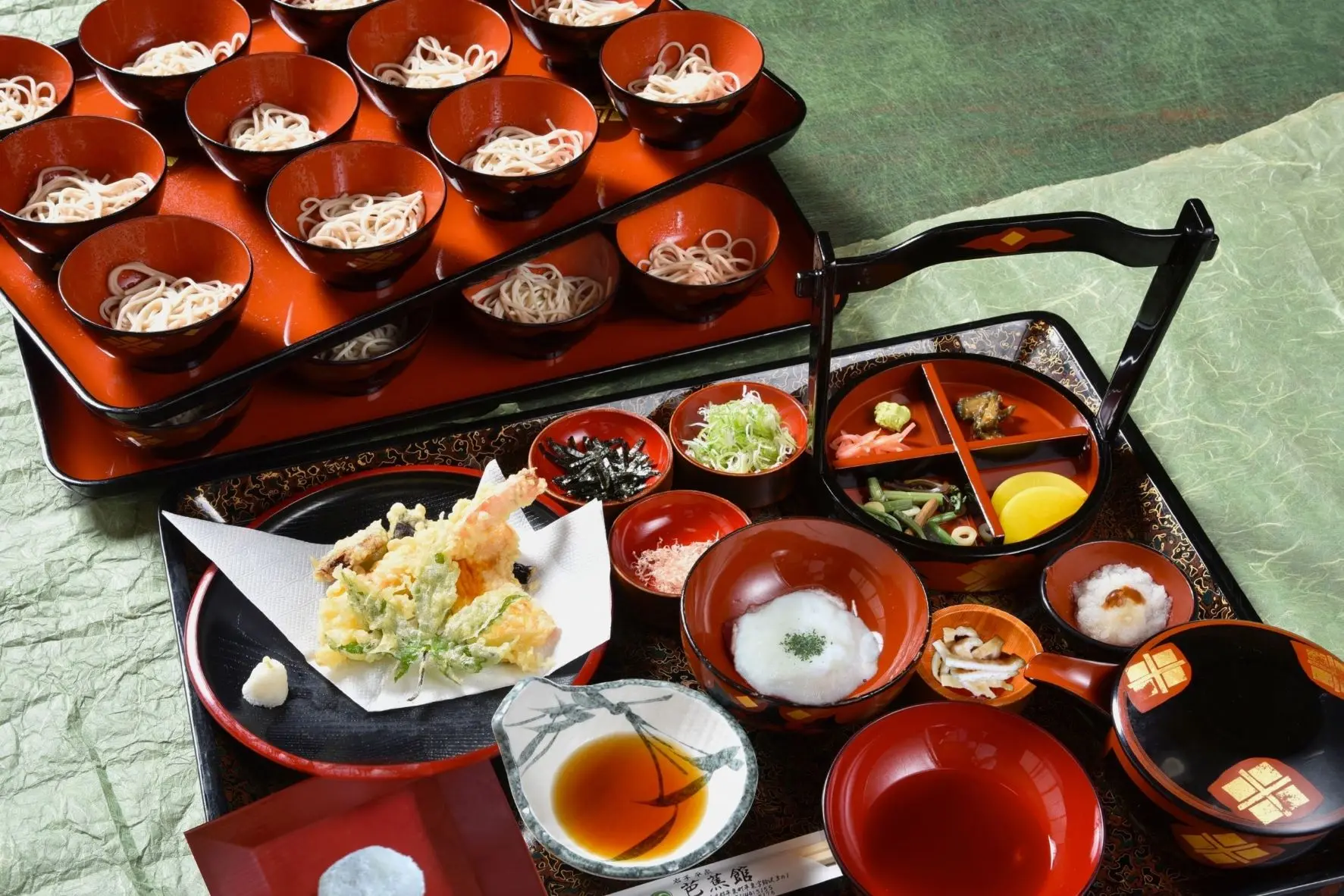
11:20am Try Wanko Soba Near Hiraizumi Station
After enjoying Motsu-ji, walk back to Hiraizumi Station and have wanko soba for lunch.
Wanko soba is a local specialty served in a unique style, with one bite of soba continuously added to your bowl one serving at a time.
If you want to try wanko soba, Bashokan, located right by Hiraizumi Station, is recommended.
The wanko soba at Bashokan is carefully made using selected ingredients.
They pride themselves on house-made noodles using sarashina soba suited to wanko soba and a slightly sweet broth that has remained unchanged since the restaurant was founded 100 years ago.
Enjoy the deliciousness of wanko soba at this famous restaurant.
2:30pm Learn More About Kenji Miyazawa at the Kenji Miyazawa Memorial Museum
After filling up on wanko soba, take the JR Tohoku Main Line from Hiraizumi Station to Kitakami Station.
Transfer at Kitakami Station to the JR Tohoku Shinkansen and get off at Shin-Hanamaki Station. From there, it is Approx. 20 minutes on foot to the Kenji Miyazawa Memorial Museum.
At the Kenji Miyazawa Memorial Museum, you can learn about Kenji Miyazawa from many angles, including his works, research, personality, and ideas throughout his life.
The museum is broadly divided into four areas: the Permanent Exhibition Room, the Special Exhibition Room, the Observation Lounge, and the Kenji Salon.
In the Permanent Exhibition Room, screen videos and related materials are classified into five fields, science, art, cosmos, agriculture, and prayer, and you can enjoy displays explaining his creative process leading to his works and the results of research so far.

3:10pm Soak In the World and Atmosphere of the Kenji Miyazawa Ihatov Center
The next spot after the Kenji Miyazawa Memorial Museum, the Kenji Miyazawa Ihatov Center, is Approx. 10 minutes away on foot.
Ihatov is a word coined by Kenji Miyazawa meaning an ideal land.
This is a spot where you can enjoy the atmosphere of Kenji Miyazawa’s works more deeply and fully.
Books about Kenji Miyazawa, research papers, and various other art works related to him are on display, and animations of his works are shown in the hall.
Not only fans but also those who are not very familiar with him can immerse themselves in the world of Kenji Miyazawa.
At the shop, you can buy books such as collections of his works and research books, as well as related goods.
There is also a glass-walled cafe corner, where you can take a tea break in the world of Ihatov.
4:10pm Fully Immerse Yourself in the World of Fairy Tales at Kenji Miyazawa Fairy Tale Village
After the Kenji Miyazawa Ihatov Center, head to Kenji Miyazawa Fairy Tale Village, an interactive facility themed around Kenji Miyazawa’s fairy tales. It is also Approx. 10 minutes away on foot.
Kenji Miyazawa Fairy Tale Village includes Galaxy Station, Sky Plaza, Kenji’s Classroom, Fairy Path, Owl Path, Wildflower Garden, and Kenji’s School, all designed with imaginative and fantastical touches.
The main attraction is Kenji’s School, which is divided into five zones, Fantasy Hall, Space, Sky, Earth, and Water, where you can experience a slightly unusual world.

5:25pm Stay at Yamanokami Onsen Yukoen in the Hanamaki South Onsen Gorge
After enjoying Kenji Miyazawa Fairy Tale Village, head back to Shin-Hanamaki Station, about 20 minutes away on foot.
Take the free shuttle bus departing at 5:10pm from Shin-Hanamaki Station to the Hanamaki South Onsen Gorge, where your accommodation for the first night is located.
Of the 12 hot spring areas collectively known as the Hanamaki Onsenkyo, the eight hot spring areas along the gorge in western Hanamaki City are called the Hanamaki South Onsen Gorge.
The oldest of them are said to have opened 300 to 400 years ago, and the area offers a wide variety of accommodations, from traditional therapeutic bath inns and large family-friendly hotels to luxury inns where all rooms have open-air baths.
For the first night, stay at Yamanokami Onsen Yukoen in the Hanamaki South Onsen Gorge.
This quiet inn is surrounded by nature, and the guest rooms offer sweeping mountain views.
Soak in four types of hot springs to ease the fatigue of the first day: a large open-air bath spanning 50 tatami mats where the starry sky feels close at hand, an indoor bath with large windows overlooking the grand natural scenery of the Toyosawa River, and a new open-air bath that is lit up at night to create a magical atmosphere.

Day 2: Enjoy Nature and Gourmet Food in the Central Iwate Area
Day 2 is a journey through the Central Iwate Area, where you can experience Iwate’s dynamic natural beauty.
You will visit grand and unforgettable sights found nowhere else, including a vast farm, the dramatic scenery of Jodogahama with its rugged ria coastline, and the romantic Blue Cave.
8:00am Start from JR Hanamaki Station
Day 2 starts from JR Hanamaki Station.
Take the JR Tohoku Main Line to Morioka Station. From Morioka Station, board the bus bound for Koiwai Farm Makibaen and get off at the Koiwai Farm Makibaen bus stop.
From the bus stop, the next destination, Koiwai Farm, is just a short walk away.

9:40am Enjoy Nature, Activities, and Gourmet Food at Koiwai Farm
Koiwai Farm is a vast farm at the foot of Mt. Iwate, spanning Shizukuishi Town and Takizawa City.
The area open to tourists is Makibaen, located in the center of the farm and covering Approx. 40 hectares.
In lush natural surroundings with Mt. Iwate directly in front of you, you can enjoy farm-style experiences, activities, and gourmet food.
A popular activity is the Farm Tractor Ride, where you can feel the breeze as you tour the forest, pastureland, and the No. 1 scenic spot in Makibaen, the 100-year Cedar Forest Road.
If you get hungry after all the fun, try the famous local specialty, jingisukan.

4:10pm Take In the Spectacular Views of Jodogahama, One of Japan’s Representative Scenic Spots
After enjoying Koiwai Farm, take the bus back to Morioka Station.
At Morioka Station, transfer to a bus bound for Miyako Ekimae and go to Miyako Station. At Miyako Station, transfer again to a bus bound for Oku-Jodogahama. After getting off at Oku-Jodogahama, you will arrive at Jodogahama.
Jodogahama is a rocky beach cove on the Sanriku Coast and is one of Japan’s representative scenic spots.
The complex-shaped coastline created by the dynamic movement of the sea and land has overwhelming power and lets you feel the greatness of nature’s force.
The many oddly shaped rocks formed Approx. 52 million years ago create numerous spectacular viewpoints, and each one has its own name.
Among them, the most popular is the Blue Cave.
This blue space, created by sunlight and highly transparent seawater, lets you feel a mysterious natural energy. Take a sightseeing boat and explore the Blue Cave.

5:40pm Eat Bindon at JR Miyako Station
After enjoying the spectacular views of Jodogahama, walk to the bus stop at Jodogahama Visitor Center and take a bus bound for Miyako Station.
After getting off at Miyako Station, try bindon to wrap up the model course.
There are several restaurants near Miyako Station where you can eat bindon, but Kappo Okame is recommended.
Bindon is a new kind of seafood rice bowl born from the local custom of storing freshly caught sea urchin in milk bottles.
It is visually fun as well, as you pour the ingredients from the bottle over your rice yourself.
Another charm is that the ingredients and serving style differ from restaurant to restaurant. At Kappo Okame, the bindon includes scallops, octopus, tuna, amberjack, and Ryusendo eggs.
It is not a limited item and is served year-round regardless of the season, so it is nice that you can enjoy it whenever you visit.

3 Local Dishes You Should Try in Iwate
Iwate is rich in seafood and produce from the mountains, and new local specialties keep appearing.
Here, we introduce a carefully selected few from among Iwate Prefecture’s many local dishes.
If you visit Iwate, be sure to try the dishes introduced below.
1. Morioka Jajamen
A local specialty of Morioka, this dish uses distinctive flat noodles like udon rather than Chinese noodles, topped with special meat miso, cucumber, and green onion, then eaten with condiments such as ginger and garlic, plus seasonings like chili oil and vinegar to taste.
Along with wanko soba and reimen, it is counted as one of the Three Great Noodles of Morioka.
Jajamen was created by the owner of the original restaurant, Pairon, who repeatedly adapted the Chinese dish zhajiangmian to suit the tastes of people in Morioka.
After finishing the noodles, the traditional way is to crack in an egg, add meat miso, pour in noodle-boiling water, and mix it into a soup called chi-tan.
With its thick noodles and rich meat miso, it is satisfying to eat and is beloved by everyone from children to the elderly as Morioka’s soul food.

2. Morioka Reimen
When you think of noodle dishes, you may picture piping hot soup, but Morioka reimen, as the name suggests, is a noodle dish served in cold soup.
The cold, rich broth combines with firm, springy noodles, while the spiciness of the generous kimchi and the sweet-tart flavor of seasonal fruits such as apple, watermelon, and pear create an exquisite harmony.
Rich and spicy yet refreshing, it is a dish with an addictive flavor once you try it.
It is often served at yakiniku restaurants as a finishing dish, but many people visit specifically to eat reimen. It is a Morioka specialty that is perfect for summer.

3. Wanko Soba
Wanko soba, a traditional dish of Morioka City and Hanamaki City passed down for 400 years, is distinctive for its serving style.
Your bowl contains only one bite of soba at a time. Each time you finish a bite, the server adds the next one. This one-bite-at-a-time style is how wanko soba is eaten.
As the server rhythmically calls out phrases like “Hai, dondon” and “Hai, janjan,” they keep adding soba at just the right moment.
Before you know it, you may end up eating dozens of bowls. Some people eat more than 100 bowls, and there are even competitions to see how many bowls participants can eat.
Of course, the smooth, easy-to-slurp soba and gentle broth are absolutely delicious as well.

Must-Visit Cherry Blossom Spots for a Spring Trip to Iwate
If you visit Iwate in spring, add famous cherry blossom spots to your travel plan as well.
Iwate has many well-known sakura spots, so you can encounter spectacular scenery unique to spring.
At Morioka Castle Ruins Park in central Morioka, stone walls that retain the atmosphere of the samurai era and Approx. 250 Somei Yoshino cherry trees create a distinctly Japanese landscape.
At Koiwai Farm, where cherry blossoms in full bloom and cowsheds create a pastoral atmosphere, not only the 90 cherry trees but also the single standing Ipponzakura tree blooming in the green pasture are must-sees.
Its姿 rooted in the green pasture with Mt. Iwate still capped with snow in the background is striking.
At Kitakami Tenshochi Park, about 10,000 cherry trees of various varieties, including beni-yamazakura, bloom throughout the spacious park, including an Approx. 2 km cherry tree-lined path along the Kitakami River. Sightseeing horse carriages also run during cherry blossom season.
Please refer to the table below for the cherry blossom blooming season in Iwate.
The usual blooming period is as shown below, but it may shift slightly depending on the year’s weather and the spot you visit, so be sure to check that year’s blooming information before your trip.
- Blooming Date
- April 18
- Full Bloom Date
- April 24
- Best Time to View Cherry Blossoms
- April 24–April 30
Reference: Japan Meteorological Agency Cherry Blossom Blooming Status
Reference: Japan Meteorological Agency Cherry Blossom Full Bloom Status


Autumn Foliage Spots That Color Iwate in Fall
If you visit Iwate in fall, add famous autumn foliage spots to your travel plan as well.
Iwate has many places where autumn colors pair beautifully with the scenery, from dramatic gorges to historic temples.
At Geibikei Gorge, a valley surrounded by cliffs Approx. 100 m high, the contrast between the white limestone rock faces and the changing leaves creates a powerful and spectacular view.
At Chuson-ji, also registered as a World Heritage site, trees turning color along the approach enhance the solemn atmosphere of the historic temple.
At Genbikei Gorge, the oddly shaped rocks and strange stone formations created by nature over many years, together with emerald-green flowing water, create a special autumn-only landscape alongside the red leaves.
The usual best time to see autumn leaves is from early October to early November, but the timing can vary depending on the year’s climate, temperatures, and the specific spot, so checking before your trip will give you peace of mind.


FAQ about Traveling in Iwate
Q
What is the best season to travel to Iwate?
Spring, when the cherry blossoms are beautiful, or fall, when the autumn leaves make the scenic spots feel even more majestic, is recommended.
Q
What sightseeing spot in Iwate is recommended for a parent-child trip?
Koiwai Farm is recommended, where you can enjoy nature, a wide range of activities, and great food on a spacious farm.
Summary
We have introduced the charms of Iwate and its local gourmet food, along with specific model courses and useful tips for enjoying them.
In Iwate, unforgettable experiences await you, from grand and dynamic scenery and the world of fairy tales to addictive local food you will want to eat again after just one bite.
If Iwate has caught your interest, be sure to also read the article below introducing classic sightseeing spots in Iwate.