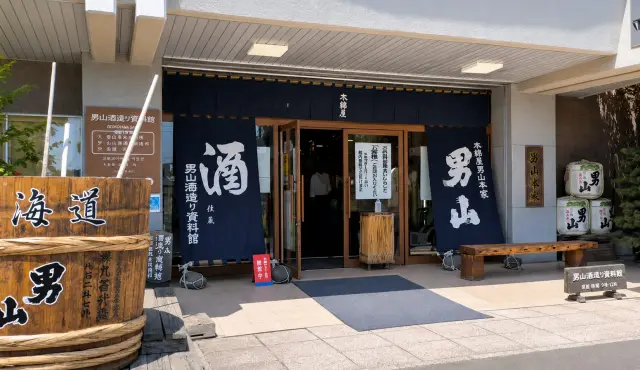
While in Asahikawa, I made a special trip to the Otokoyama Sake Brewing Museum. Otokoyama is a sake brand with more than 350 years of history. Inside, you can see exhibits related to traditional sake brewing and learn about the brewing culture Otokoyama has developed over the years. The entire place is very clean and comfortable to walk around. Of course, I was most looking forward to the tasting. There are quite a few Otokoyama varieties available to sample, so you can take your time comparing the different flavors.
Besides sake, there's another interesting experience here: you can drink the natural water used for brewing. The water is clean and slightly sweet, and very pleasant to drink. I also tried their specialty frozen treat, flavored with rice syrup. It had a very distinctive taste, completely different from the usual frozen desserts.
It's not just a place to drink sake—you can also learn about its history and brewing culture. If you like sake or are interested in traditional Japanese culture, this is worth adding to your Asahikawa itinerary!
Otokoyama sake brewery museum | Review by 楊雅雯
Other Reviews by 楊雅雯
-

Wakato Bridge
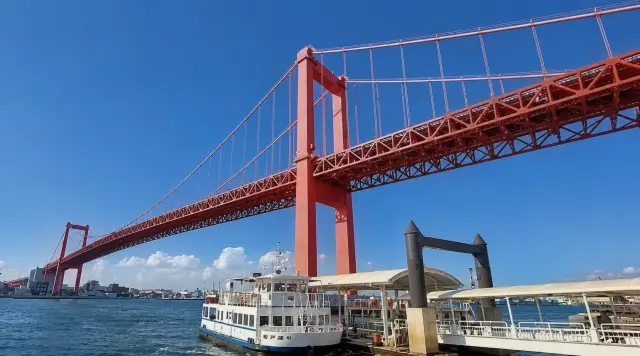
Spanning Dokai Bay, Wakato Bridge is a large suspension bridge forming part of a general roadway with a total length of about 2 kilometers, including a 627-meter suspension span. Built as Japan’s first full-scale long suspension bridge, it opened in 1962. Its iconic red structure connects the Wakamatsu and Tobata districts of Kitakyushu and has become a symbol of the area. In 2022, it was designated an Important Cultural Property of Japan. The illuminated bridge at night is also recognized as a Japan Nightscape Heritage site.
When I arrived in Kitakyushu, this bright red bridge immediately caught my eye! Against the deep blue sky and sea, the red bridge really stands out, and it looks impressive from every angle.
Wakato Bridge spans Dokai Bay, connecting Kitakyushu’s Tobata and Wakamatsu districts. It officially opened to traffic in 1962 and has a total length of 627 meters. When it was completed, it was the longest suspension bridge in East Asia and played an important role in the history of Kitakyushu’s industrial development.
This bridge is more than just transportation infrastructure. It also carries memories of Japan’s rapid economic growth at the time, and in 2022, it was designated an Important Cultural Property of Japan.
Viewed from beside the bay, the rugged steel structure and vivid red color give the harbor scenery so much character, with ferries coming and going in the distance.
I especially loved the scenery here—the red bridge, blue sea, and white ferries make such a beautiful color combination! I originally thought I would just stop by for a quick look, but this unexpectedly became one of the most memorable stops on my trip.
-
-
Quasi-National Park, Hiraodai
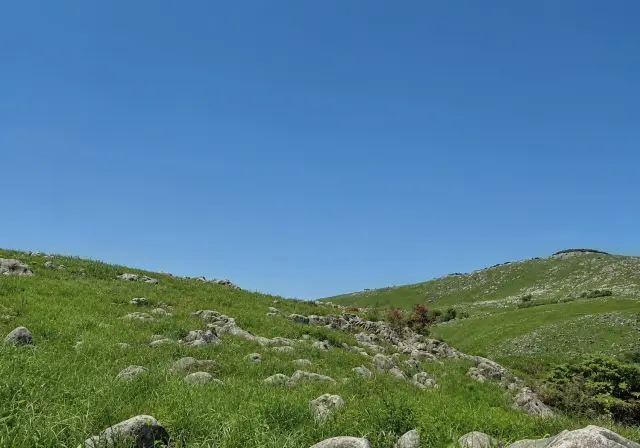
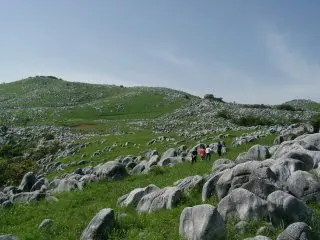
This nature park is one of Japan’s three greatest karsts. The plateau at 350 - 600m above sea stretches 6km north and south and 2km east and west. The limestone, looking like a flock of sheep, is a curious sight.
Hiraodai truly lives up to its reputation! It’s one of Japan’s three great karst landscapes. As far as the eye can see, grayish-white limestone rocks are scattered across the vast green plateau. From a distance, they look like a flock of sheep leisurely playing in the grass. It’s a truly distinctive sight!
It was my first time seeing this kind of landscape, and it felt so novel, completely different from the mountain scenery I usually imagine. The blue sky, green grass, and limestone rocks of all sizes come together to create a vast and soothing beauty.
Standing on this plateau, feeling the natural breeze and admiring the unique scenery before me, I couldn’t help but stay a little longer and take some photos.
-
-
Katsuyama Park
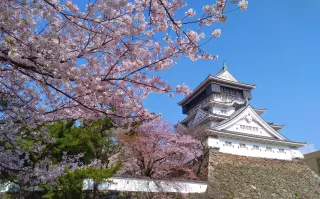
Located in downtown Kokura in central Kitakyushu, this urban oasis brings together culture, nature, and recreation around Kokura Castle. The park features a spacious lawn, a waterfront area along the Murasaki River, and a children’s play area, attracting both local residents and tourists. In spring, approximately 300 cherry trees fill the park with color, creating a spectacular scene with Kokura Castle.
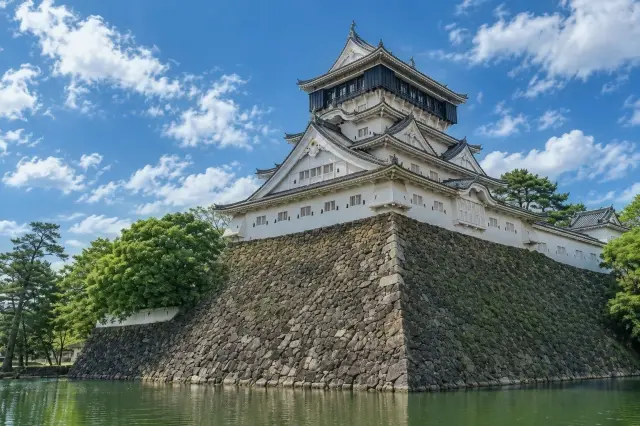
On this trip to Kokura Castle in Kitakyushu, Japan, of course I couldn't miss nearby Katsuyama Park! Katsuyama Park is right in downtown Kokura and extends outward from Kokura Castle. Kokura Garden is also nearby, and the entire area combines historic sites, a Japanese garden, and natural scenery, making it a great place for a leisurely walk.
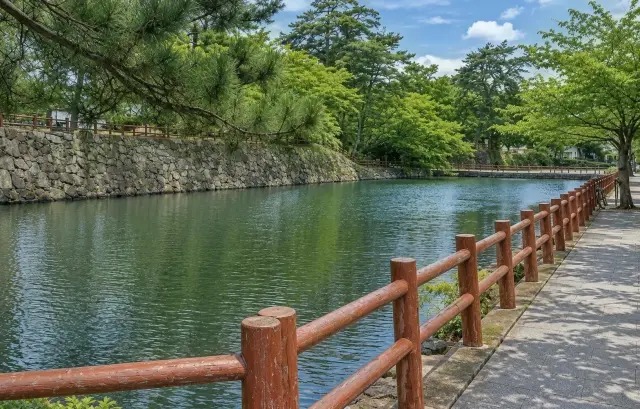
I really liked the surroundings here. Even though it's in the bustling downtown area, stepping into the park feels like getting away from the noise. Walking slowly along the waterfront and taking in the green trees on both sides, the calm water, and the historic-looking Kokura Castle made for a really pleasant atmosphere.
In particular, seeing the historic architecture of Kokura Castle together with the surrounding stone walls and moat really makes you feel like you've traveled back in time to the era of feudal lords in ancient Japan.
I heard that Katsuyama Park is also a well-known cherry blossom viewing spot among locals, and it must be beautiful when the cherry blossoms are in full bloom every spring! Unfortunately, I visited in the summer this time, so I didn't get to see them.
But I think Katsuyama Park has a different kind of beauty in the summer! The weather was very nice that day, with bright sunshine and a deep blue sky. The trees throughout the park were lush and green, and paired with the white exterior of Kokura Castle, they looked really beautiful in photos. Especially while walking along the moat, seeing the surrounding trees reflected on the water made me stop and take a few more pictures.
You don't need to plan any special activities here. Just walking slowly and enjoying the scenery feels very relaxing. Although I missed the most beautiful cherry blossom season, I still think it was well worth seeing the summer scenery of Kokura Castle and Katsuyama Park in such nice weather!
-