

Not Just Lake Biwa! 17 Must-Visit Spots to Make the Most of Shiga
Shiga Prefecture is home to Japan’s largest lake, Lake Biwa, which covers about one-sixth of the prefecture.
When people think of Shiga sightseeing, Lake Biwa and the attractions around it often come to mind, but Shiga’s appeal goes far beyond the lake.
You’ll also find many underrated gems, from historic shrines and temples such as the UNESCO-listed Enryaku-ji Temple on Mt. Hiei to local favorites like Omi beef.
In this article, we’ll introduce not only Lake Biwa and nearby attractions, but also other sights, food, and accommodations across Shiga.
What is Shiga Like?
Shiga Prefecture sits almost in the center of Japan.
About one-sixth of its land is covered by Lake Biwa, Japan’s largest lake, and about half of the remaining area is mountainous, making it rich in nature.
That’s why you can enjoy dramatic, varied scenery, including the “Eight Views of Lake Biwa” and the “Eight Views of Omi.”
Shiga has also long prospered as a key transportation hub, with historic sites and atmospheric townscapes.
Its deep food culture includes lake fish cuisine and many local specialties you can only try in Shiga.

When is the best season to visit Shiga?
Shiga is beautiful year-round, with distinct seasonal scenery.
If you want to fully enjoy the outdoors, April to May (less rain) and August (after the rainy season) are especially recommended.
What to wear in Shiga by season
- Spring (March - May): Light jacket and a thin sweater
- Summer (June - August): Light clothing, short sleeves
- Autumn (September - November): Light jacket, coat
- Winter (December - February): Coat, thick sweater or jacket
How do you get to Shiga?
Shiga is easy to reach from major cities: Approx. 2.5 hours by shinkansen from Tokyo, 40 minutes from Osaka via the Kyoto Special Rapid, and 27 minutes by shinkansen from Nagoya.
Shiga has no airport, but nearby prefectures do, including Kansai International Airport and Itami Airport (Osaka), Chubu Centrair International Airport (Aichi), and Kobe Airport (Hyogo), making Shiga convenient for international travelers as well.
Main transportation in Shiga sightseeing
Public transportation is well developed, and you can get around Lake Biwa attractions smoothly by using JR trains and Kogen Line buses.
A Quick Guide to Shiga’s Best: 17 Handpicked Attractions
Shiga is packed with standout sights, including Lake Biwa, Japan’s largest lake, as well as major landmarks like Hikone Castle (a National Treasure) and Enryaku-ji Temple on Mt. Hiei (a UNESCO World Heritage Site).
Here are must-visit attractions you should add to your itinerary.
1. Lake Biwa
Located in central Shiga and part of the Yodo River system, Lake Biwa covers about 670 km², roughly one-sixth of the prefecture. Fed by rivers from surrounding mountain ranges such as Mt. Ibuki, the Suzuka Mountains, and the Hira Mountains (many over 1,000 m), it holds an enormous 27.5 billion tons of water, making it Japan’s largest in both area and storage volume.
It’s also one of the world’s few known ancient lakes.

2. Chikubu Island
Chikubu Island is a small island about 2 km around, floating about 6 km offshore in northern Lake Biwa. It’s home to Hogon-ji Temple, one of Japan’s three great Benzaiten temples, and Tsukubusuma Shrine.
Long revered as an island where gods dwell, it’s also popular today as a spiritual power spot.

3. Hikone Castle Ruins (Special Historic Site)
Also known as Konki Castle, Hikone Castle is famous as a “recycled castle,” built using materials such as timber and stones from nearby castles, including Otsu Castle (Otsu), Sawayama Castle (Hikone), Azuchi Castle (Omihachiman), and Nagahama Castle (Nagahama). Its three-story, three-tier keep was relocated from Otsu Castle.
The keep on Mt. Hikone is one of only 12 original castles remaining in Japan, and in 1952 it was designated a National Treasure along with structures such as attached turrets and tamon-yagura corridors.

4. Enryaku-ji Temple on Mt. Hiei, Head Temple of the Tendai Sect
Founded in 788 by Saicho, who established the Tendai sect, Enryaku-ji is a vast temple complex that spans the Mt. Hiei area at an elevation of 848 m. It was once burned down by Oda Nobunaga, who was in conflict with Mt. Hiei, destroying halls and buildings on the mountain as well as Sakamoto satobo lodgings, but it was later restored and rebuilt by figures such as Senshun of Kannon-ji, Zensho of Seyaku-in, and the high priest Tenkai.
Often called the “Mother Mountain of Japanese Buddhism,” it served as a comprehensive Buddhist center of learning and has deeply influenced Japanese history. It was registered as a UNESCO World Cultural Heritage Site in 1994.

5. Shirahige Shrine
Standing on the northwest side of Lake Biwa, Japan’s largest lake, Shirahige Shrine is said to be over 2,000 years old and is the oldest grand shrine in Omi. A vermilion torii gate rises from the lake across National Route 161, creating a scene reminiscent of Itsukushima Shrine in Miyajima, Hiroshima, which is why it’s also called the “Itsukushima of Omi.”
It is the head shrine of the many Shirahige Shrines across Japan and enshrines Sarutahiko-no-Okami. True to its name “Shirahige” (white beard), it has long been revered as a deity of longevity and is believed to bring blessings for long life.

6. Taga Taisha Shrine
Known as the foremost grand shrine of Omi Province, Taga Taisha draws worship from across Japan as a “parent deity of life,” believed to bring blessings for recovery from illness, longevity, matchmaking, and protection from misfortune.
It was also revered by warlords, with Takeda Shingen praying for protection and Toyotomi Hideyoshi praying for his mother’s long life. Affectionately called “Otagasan,” it still welcomes around 1.7 million visitors each year.

7. Former Toyosato Elementary School Buildings
The former Toyosato Elementary School buildings were designed by the Vories Architectural Office, which was based in Omihachiman, Shiga, and worked across Japan from around 1908.

8. MIHO MUSEUM
Set in the lush mountains of Shigaraki in southern Shiga, this museum houses about 3,000 works, including ancient art from Egypt, Greece, Rome, West Asia, South Asia, and China, along with Japanese art such as Buddhist art and tea ceremony-related works.
The architecture was designed by I.M. Pei, known for the glass pyramid of the Louvre in Paris and the East Building of the National Gallery of Art in Washington, D.C.

9. Koka Ninja Village
Surrounded by the natural beauty of the Suzuka foothills, Koka is a quiet mountain area known both as a historic Tokaido post town and as the birthplace of Koka ninjutsu.
Together with neighboring Iga, it’s recognized as Japan Heritage under the name “Shinobi no Sato: Iga and Koka,” a legendary ninja homeland.
The area is dotted with cultural assets such as fortifications, residences, and training grounds.

10. Sagawa Art Museum
A private museum opened in 1998 by Sagawa Express Co., Ltd. as part of its 40th anniversary projects.
One of its defining features is the water garden that covers much of the site. Ripples stirred by breezes from Lake Biwa and shimmering reflections of sunlight create a beautiful scene. Three buildings stand as if floating above the water.

11. Ishiyama-dera Temple
A major Shingon Buddhist temple on the banks of the Seta River, which flows from Lake Biwa. Striking rock formations rise throughout the grounds, including a massive rock towering in front of the main hall.
These rocks are wollastonite, a rare natural monument, and the temple’s name, Ishiyama-dera, comes from being built atop a “stone mountain.”
It was founded in 747 during the Nara period (710–794).

12. Omi Ohashi Bridge
A bridge crossing Lake Biwa, connecting Marunouchi-cho in Otsu and Shinhamacho in Kusatsu. Opened in 1974, it was originally a toll road but became free in 2013. Lake Biwa has two bridges: Omi Ohashi and Biwako Ohashi, which connects Otsu and Moriyama.
The bridge is 1,290 m long and about 12 m above the lake surface, offering a close view of the water. Its gentle arch blends into the lakeside scenery, creating a beautiful landscape with the surrounding greenery. The view at dusk, when the bridge silhouette stands out against the sunset, is especially stunning.

13. Yabase Kihan Island Park
A park built on the man-made island of Yabase Kihan, floating in Lake Biwa. It features free facilities for casual play, such as athletic equipment, and paid facilities including camping, ground golf, and pools. With plenty of greenery, it’s also great for a relaxed stroll.
The free “Children’s Plaza” has a variety of playground equipment. Highlights include a 10 m-tall jungle gym, a roller slide, trampolines, and a Tarzan rope. Nearby, the open “Big Lawn Plaza” is perfect for picnics, making it ideal for families.

14. Biwako Flower Fountain
Otsu Port is a lively Lake Biwa sightseeing hub, with piers and terminals for large cruise ships and smaller boats. Located on a breakwater about 180 m offshore, the Biwako Flower Fountain is a free attraction.
There are 66 fountains lined up along a stretch of about 440 m, making it one of the world’s largest. The water jets can reach up to about 40 m high, roughly the height of a 10-story building. Computer control changes the volume and angle of the water, creating a variety of patterns.

15. Takashima Blueberry Farm
A blueberry picking farm on the nature-rich northern side of Lake Biwa, on the border between Makino and Imazu in Takashima City.
At the foot of Mt. Hakodate, you can enjoy delicious blueberries grown with rich natural water to your heart’s content.
Blueberries are packed with antioxidants, often linked to anti-aging, and recent research has even dubbed them a “king of superfruits.”
Open for about two months from late June to the end of August.
The large farm has around 660 bushes and more than 20 varieties, so you can compare their different sweetness, tartness, and textures.

16. Fruit Park Yohei
Fruit Park Yohei is a fruit orchard that continues cultivating with organic fertilizers and low pesticides across a roughly 10,000 m² property.
From early August to mid-October, it offers pear picking, where you can enjoy sweet, juicy pears as much as you like with no time limit.

17. Hakusan Shrine
A guardian shrine of the ancient temple Chojyu-ji, one of the Konan Sanzan temples and a National Treasure, located on higher ground just west of Chojyu-ji.
Its founding is said to date to the Jogan era of the Heian period (859-877). Though it declined for a time, it was revived in 1183 (Juei 2) by Minamoto no Yoritomo together with Chojyu-ji.
The grounds are surrounded by trees and are especially beautiful during autumn foliage season.

Enjoy a Cruise in Shiga! 2 Popular Experiences
In Shiga, you can enjoy cruises on Lake Biwa and the canals flowing from it.
Take in Lake Biwa’s grand views and the atmosphere of castle towns that still define Shiga, all from the water.
1. Biwako Kisen Chikubu Island Cruise
Chikubu Island, a small island about 2 km around in northern Lake Biwa, has long drawn worship as a spiritual power spot.
Since you can’t reach the island by train or on foot, the best way is by comfortable cruise ship. The “Chikubu Island Cruise” departs from Nagahama Port on the east side of the lake and Imazu Port on the west side. The area around Imazu Port retains the feel of an old post town, while Nagahama Port still has the atmosphere of a historic castle town, making sightseeing around both ports fun, too.

2. Omihachiman Canal Cruise
Omihachiman began when Toyotomi Hideyoshi ordered his nephew Hidetsugu to build Hachimanyama Castle as a replacement for Azuchi Castle, making it the center of Omi Province. By drawing boats traveling on Lake Biwa into Hachiman-bori, the castle’s inner moat, the area became an economic hub and later the birthplace of the Omi merchants.
The Omihachiman canal cruise is said to have started about 400 years ago, when Hidetsugu hosted elegant poetry gatherings on boats, inspired by aristocratic boat outings at the imperial court. Skilled boatmen expertly handle the oars and poles as you glide leisurely through the picturesque waterways.

3 Popular Restaurants in Shiga
Shiga has countless specialties, from lake fish dishes to duck hot pot.
But if there’s one Shiga gourmet you can’t miss, it’s Omi beef.
Here are popular restaurants where you can enjoy Omi beef, plus a historic spot serving Shiga’s soul food.
1. Champontei Sohonke Hikone Ekimae Honten
A specialty restaurant for Omi champon that carries on the flavors of “Menrui o Kabe,” founded in 1963. With around 70 locations across Japan, it helped make Omi champon known nationwide. Omi champon is Shiga’s soul food: a Japanese-style golden broth loaded with vegetables like cabbage, bean sprouts, and wood ear mushrooms, plus plenty of pork.

2. Omi Beef Morishima Omihachiman Honten
Omi beef is one of Japan’s three great wagyu brands.
What sets this restaurant apart is that it uses Omi beef raised carefully over about 2.5 years at its own farm. The beautifully marbled beef looks stunning, and once you take a bite, it melts on the tongue, releasing sweet juices the more you chew, a truly unforgettable treat.

3. Restaurant Sennaritei
Founded in 1957 in Hashimoto-cho, Hikone, the birthplace of Omi beef, Sennaritei.
It was established with the hope of letting more people enjoy Omi beef and passing that tradition on to the next generation.


3 Handpicked Shopping Areas in Shiga
After soaking in Shiga’s grand nature and deep history, make time for shopping, too.
Shiga also has plenty of shopping malls, so hunt for local specialties and items you can only find here.
1. Kurokabe Square
From the 1960s to early 1980s, the city center declined due to urban hollowing-out, but it was revitalized through a town revival centered on glass art.
A third-sector company, Kurokabe Co., Ltd., founded to support regional revitalization and preserve traditional architecture, led the restoration of historic buildings in the central area.
Today, the Kurokabe Square area features glass shops, hands-on workshops, and restaurants, and attracts around two million visitors a year.

2. Mitsui Outlet Park Shiga Ryuo
A large-scale outlet mall, one of the biggest in the Kansai region, conveniently located just off the Ryuo IC on the Meishin Expressway.

3. Ekimachi Terrace Nagahama
A shopping mall directly connected to JR Nagahama Station, with 24 tenants including restaurants. It features a curated lineup produced by the Nagahama Lifestyle & Culture Institute, focusing on “things you can only find in Nagahama” and “things only this person can make.” Highlights include Nagahama Kurashi Note Store, a museum-like shop showcasing local life, and QUON Chocolate Nagahama, which sells chocolate made by welfare organizations from across Japan.

Where to Stay in Shiga: 3 Recommended Accommodations
Since Shiga sightseeing often centers around Lake Biwa, staying near the lake makes getting around easier.
Here are carefully selected hotels around Lake Biwa, including properties with panoramic lake views and places where you can enjoy hot springs.
1. Lake Biwa Otsu Prince Hotel
A 38-story high-rise hotel designed by architect Kenzo Tange. It also features one of Japan’s largest convention halls, used for events, exhibitions, and international conferences.
Guest rooms are spread across three floors, EIZAN Floor, Sky Floor, and Lake Floor, and every room offers relaxing views of Lake Biwa and mountain ranges such as the Hira Mountains.

2. Setre Marina Biwako
A resort hotel on the Lake Biwa shore, with lake views not only from guest rooms but from throughout the property.
Its theme, “Born in Shiga,” can be felt everywhere, especially through its food, and it’s popular for a luxurious stay that helps you forget the everyday.

3. Biwako Hotel
A resort hotel on the Lake Biwa waterfront, just a short walk from Keihan Biwako-Hamaotsu Station, offering lake views throughout the building.
It has five room types, and every room overlooks Lake Biwa. Both the open-air bath and indoor bath feature large windows, so you can soak while enjoying the lake.

3 Classic, Popular Shiga Souvenirs
After enjoying Shiga sightseeing, bring home some Shiga gourmet treats for friends, family, or yourself. If you don’t want to miss, go with these classic, popular picks.
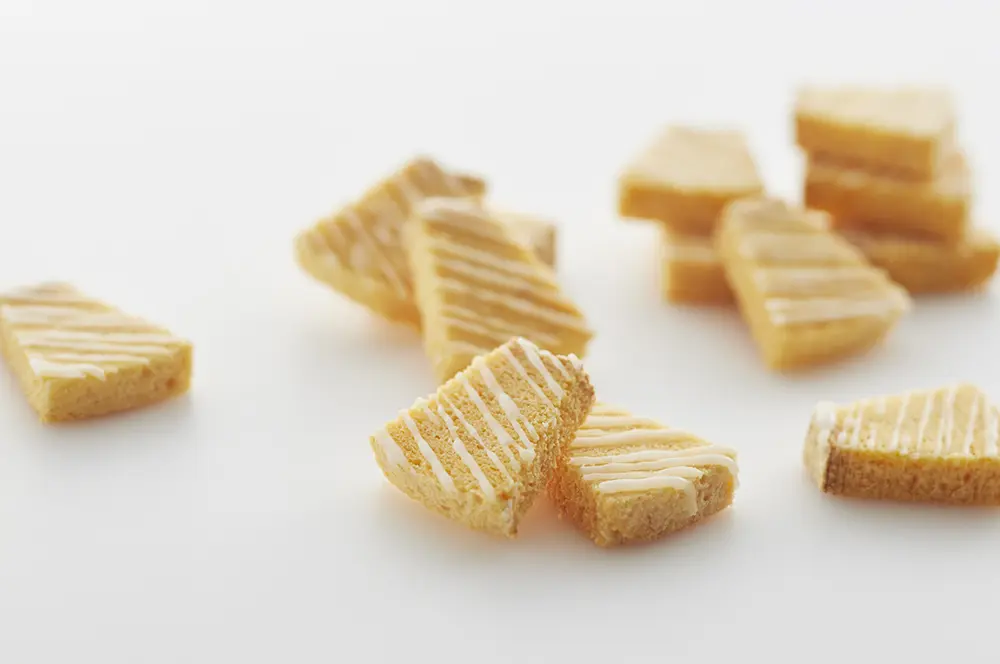
1. Club Harie “Dry Baum”
Dry Baum is one of the popular items from Club Harie, a Western-style sweets brand known for baumkuchen and operated by Taneya, a long-established Japanese confectionery founded in 1872 in Omihachiman, Shiga.
Artisans carefully bake baumkuchen layer by layer, slice it thin, coat it with sweet fondant, then bake it again until crisp.
2. Uoji “Funazushi Honzuke”
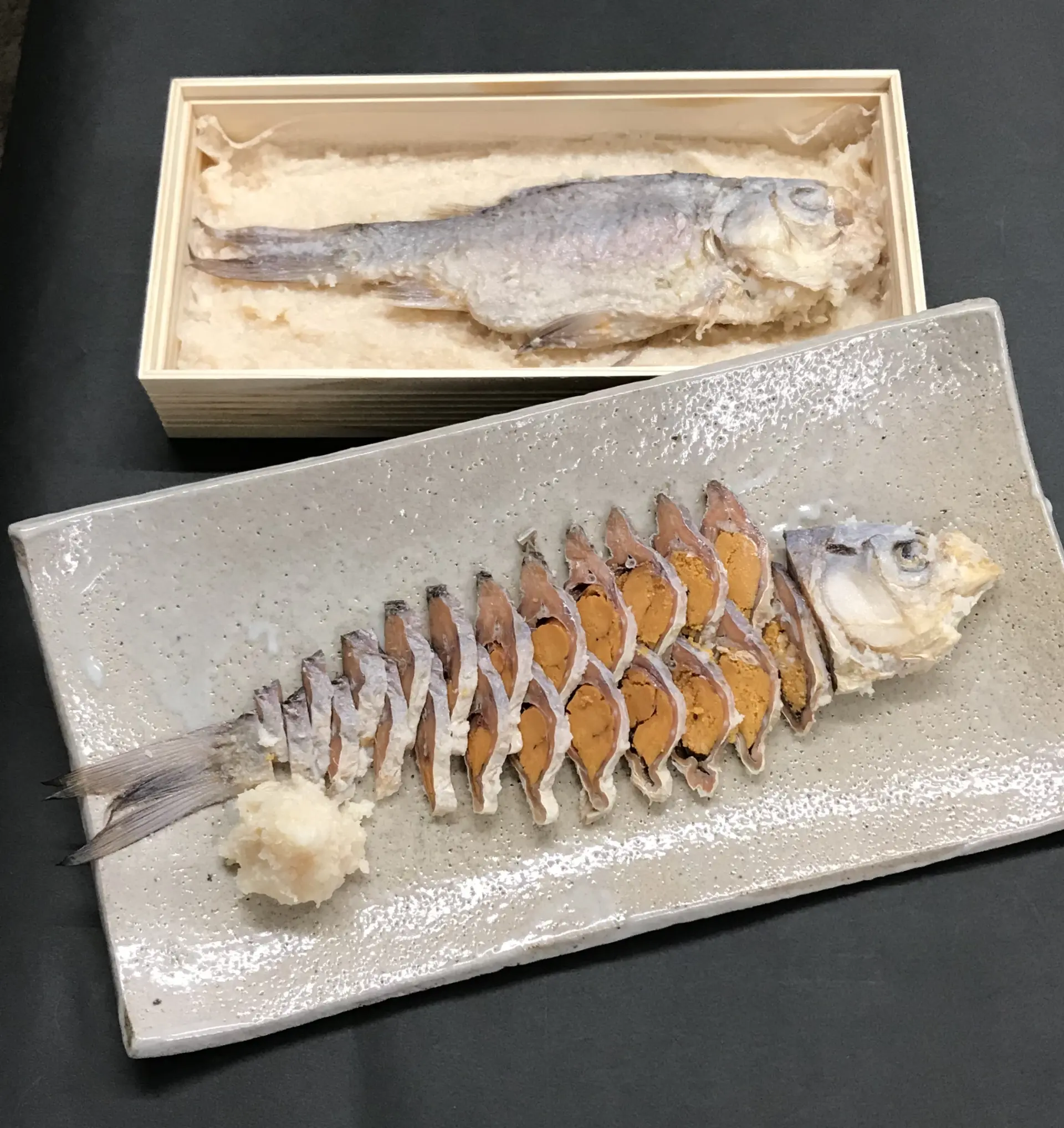
A signature product from a long-established shop that began as a fish seller in 1784.
From February to May, they carefully select well-shaped nigorobuna (crucian carp) heavy with roe and begin making funazushi the same day.
After salting for three months, the fish is packed with rice around midsummer, when lactic acid bacteria become most active, then patiently matured for nearly two years.
3. Norimatsu Shokuhin Yoshii Shoten “Seasoned Hachiman Konnyaku”
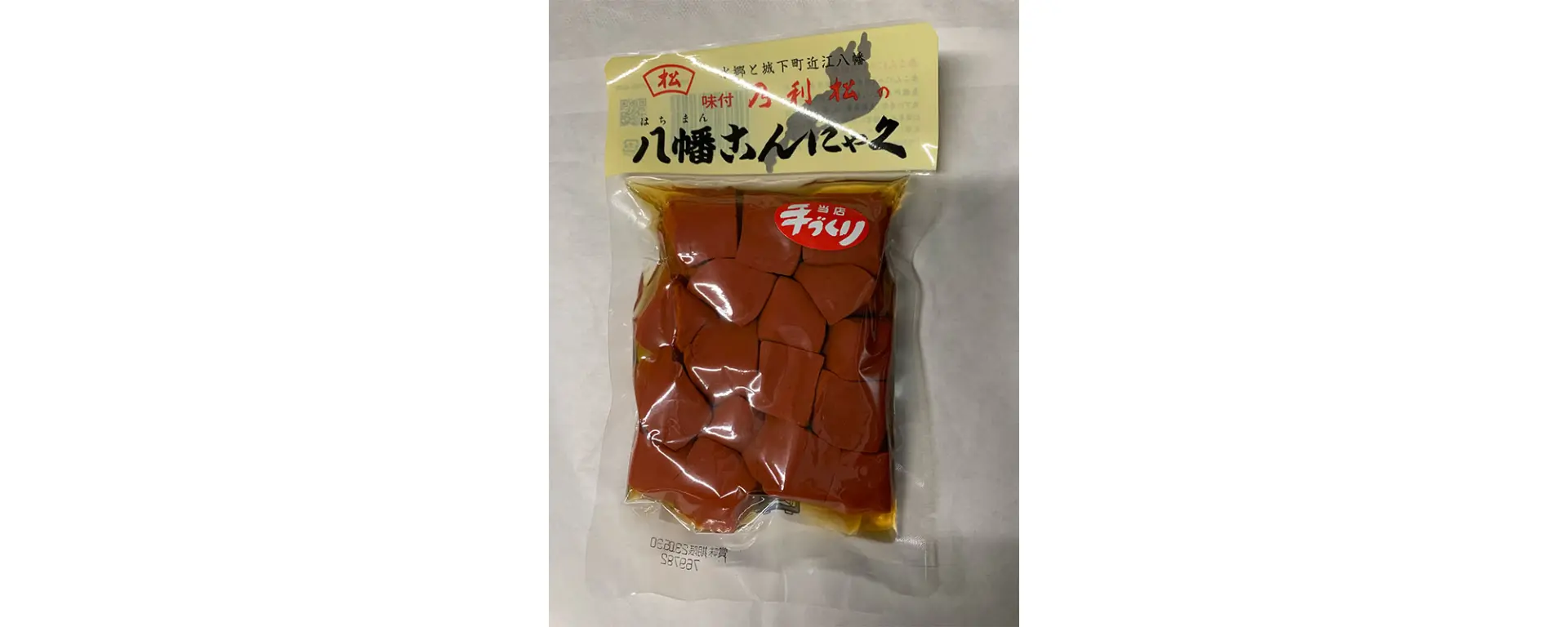
A specialty made by a long-established shop founded in 1891, using Shiga’s famous red konnyaku.
Finely textured, pleasantly soft house-made red konnyaku is slowly simmered in a soy sauce-based seasoning with a bonito flavor.
Ready to serve as-is, it’s great with rice or as a palate cleanser when you want one more dish.
Coat and fry it for a satisfying bite-size tempura.
3 Events You Shouldn’t Miss in Shiga
Shiga also hosts many seasonal events and festivals where you can experience traditional culture. If your travel dates line up, be sure to join one of these.
1. Otsu Festival
One of the “Three Great Festivals of the Lake Country,” this beloved tradition signals the arrival of autumn in Shiga.
It is the annual festival of Tenson Shrine in central Otsu City, located in southwestern Lake Biwa, and is designated an Important Intangible Folk Cultural Property of Japan.
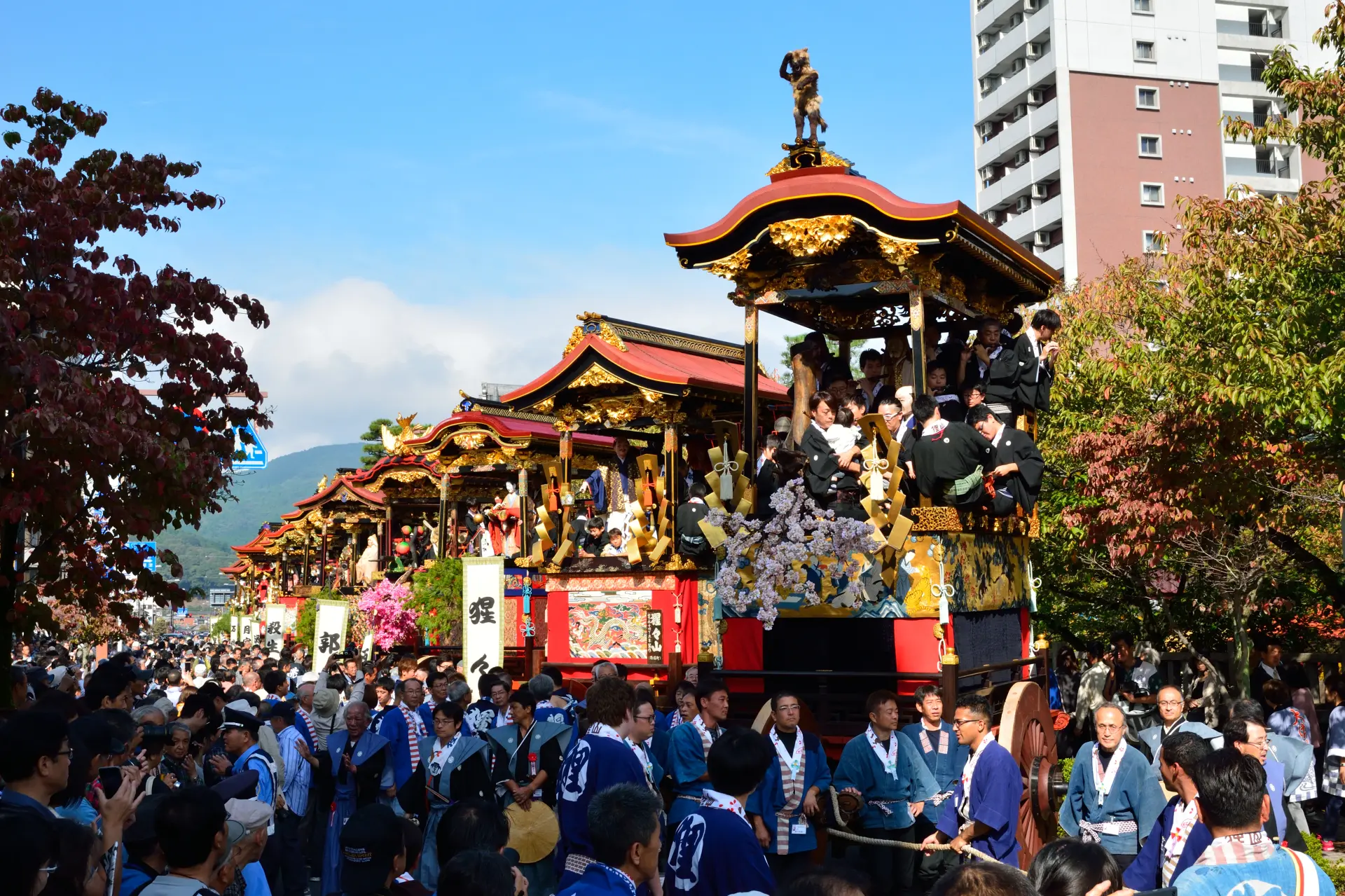
The main highlight is the bold, gorgeous parade of 13 hikiyama floats crafted in the Edo period.
Each float is about 6 m tall, roughly 3 m wide, and about 5.2 m long, decorated with unique carvings and ornaments that captivate spectators.
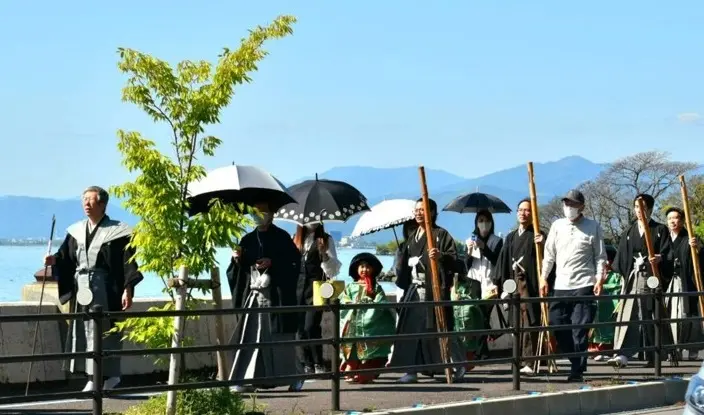
2. Nabekan-muri Festival
At Chikuma Shrine on the shores of Lake Biwa, Japan’s largest lake, the Nabekan-muri Festival is held every year on May 3 to welcome spring.
It’s famous as one of Japan’s “Three Strangest Festivals,” alongside the Uji no Agata Festival (Kyoto) and Ecchu Torisaka no Shiri Tataki (Toyama). It’s also designated an Intangible Folk Cultural Property of Maibara City, Shiga Prefecture.
3. Nagahama Hikiyama Festival
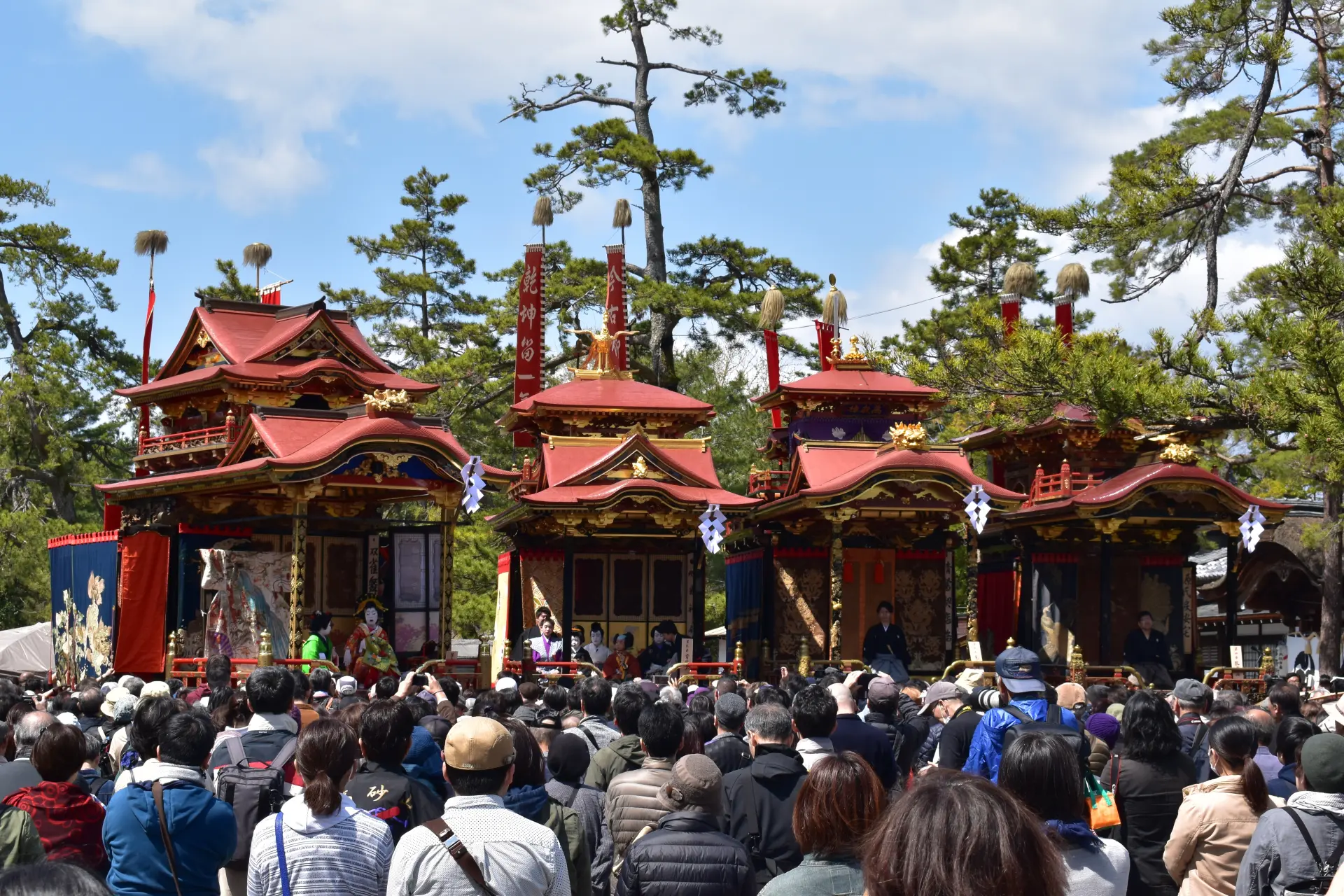
With about 450 years of history, the Nagahama Hikiyama Festival is one of Japan’s three major float festivals and is designated an Important Intangible Folk Cultural Property of Japan. Held across Nagahama from April 9 to 17 each year, it entertains visitors with many events, including the young men’s hadaka-mairi pilgrimage.
Summary
We’ve introduced Shiga’s many charms beyond Lake Biwa and its immediate surroundings.
If you’re sightseeing in Shiga, be sure to visit the spots featured here.
Also, from Shiga you can reach major cities like Osaka and Nagoya in about 30–40 minutes by train.
After enjoying nature and history, why not head to Osaka or Nagoya and experience the excitement of big-city Japan?