

Enjoy Wakayama’s Diverse Attractions Efficiently! A Wakayama Travel Guide
Wakayama is known for spectacular natural scenery and relaxing hot springs.
But that’s not all, it’s also a fascinating destination packed with historic landmarks and leisure facilities for visitors of all ages.
Because Wakayama stretches a long way from north to south, getting around can be challenging, so choosing the right transportation for each destination and planning an efficient itinerary are essential.
This article mainly introduces a 2-day, 1-night model course for enjoying Wakayama, along with popular sightseeing spots, their highlights, and access information.
It brings together the key information you need for a trip to Wakayama, so read on and use it as a helpful guide.
Wakayama, a destination full of varied sightseeing spots and deep cultural appeal
Located in the Kansai region, Wakayama Prefecture is nearly 80% mountainous terrain centered around the Kii Mountain Range.
Blessed with rich natural surroundings of sea, mountains, and rivers, it is dotted with beautiful seasonal scenery and historic hot springs.
With famous sightseeing spots such as Wakayama Castle and Adventure World, it is a popular travel destination that attracts many visitors from Japan and abroad.
It is also home to places such as Koyasan and the Kumano Sanzan, where you can gain insight into traditional Japanese culture and spirituality, offering a deep world you cannot experience in the cities.

Average temperatures in Wakayama and what to wear
Wakayama stretches a long way from north to south, and although the climate varies by area, with less rainfall in the north and mild weather year-round in the south, it is generally a comfortable place to visit.
Average monthly temperatures in Wakayama
| - | January | February | March | April | May | June | July | August | September | October | November | December |
|---|---|---|---|---|---|---|---|---|---|---|---|---|
| Average temperature (°C) | 6.2 | 6.7 | 9.9 | 15.1 | 19.7 | 23.2 | 27.2 | 28.4 | 24.9 | 19.3 | 13.8 | 8.6 |
Seasonal clothing examples for Wakayama
- Spring (March - May): Light jacket and thin sweater
- Summer (June - August): Light clothing, short sleeves
- Fall (September - November): Light jacket, coat
- Winter (December - February): Coat, thick sweater or jacket
Access to Wakayama
Since Wakayama does not have international flights, getting there usually means traveling via Kansai International Airport or Haneda Airport.
It is easy to access from Osaka and Kyoto, so combining it with a Kansai trip is also recommended.
Also note that in Wakayama, the best starting point depends on which sightseeing spot you want to visit.
Here, we will introduce how to get to Wakayama Station, which many travelers use when visiting Wakayama, from Osaka Station, Kyoto Station, and Tokyo (Haneda Airport).

Access to Wakayama from Osaka
Access from Osaka Station to Wakayama Station is as follows.
Osaka, which can be reached without any transfers, can be said to offer the best access.
There are also relatively many trains, making it easy to adjust to a flexible schedule.
Although trains run about once per hour, you can arrive in as little as 57 minutes by taking the JR Limited Express Kuroshio.
If you want to keep fares down, a rapid train or highway bus is recommended.
- Route
-
Take a JR limited express or rapid train from JR Osaka Station and get off at JR Wakayama Station
*Travel time differs by Approx. 30 minutes depending on the train - Required time
- Approx. 1 hour 10 minutes
Access to Wakayama from Kyoto
Access to Wakayama Station from Kyoto Station is as follows.
Since the route is similar to the one from Osaka, choose the method that works best for you based on time and fare.
If you are heading to the Koyasan area, use the direct highway bus for a comfortable trip.
- Route
-
1. Take the JR Shinkansen from JR Kyoto Station and get off at Shin-Osaka Station
2. Take the JR Limited Express Kuroshio from Shin-Osaka Station and get off at Wakayama Station
*Travel time varies depending on the train - Required time
- Approx. 1 hour 40 minutes
Access to Wakayama from Tokyo
If you are coming from Tokyo, the best option is to fly from Haneda Airport to Nanki-Shirahama Airport as shown below.
However, since there are only a few flights per day, be sure to check the timetable and seat availability in advance.
If your destination is the Shirahama/Kushimoto area, you can access nearby spots from Shirahama Station.
Also, the Kumano area (Kumano Sanzan) can be reached directly from Nanki-Shirahama Airport by airport limousine bus, so depending on your sightseeing plans, you may not need to go all the way to Wakayama Station.
- Route
-
1. Board a JAL flight bound for Nanki-Shirahama from Haneda Airport and head to Nanki-Shirahama Airport
2. Walk from Nanki-Shirahama Airport to the Nanki-Shirahama Airport bus stop
3. Take the Meiko Bus from the Nanki-Shirahama Airport bus stop, get off at the Shirahama bus stop, and walk to Shirahama Station
4. Take the JR Limited Express Kuroshio from Shirahama Station and get off at Wakayama Station - Required time
- Approx. 3 hours 40 minutes
Main transportation options in Wakayama
The main transportation options for traveling in Wakayama are three types: JR local lines (the Wakayama Line and Hanwa Line), private railways (the Nankai Main Line), and route buses.
Choosing trains and route buses based on your starting point and destination will make getting around more efficient.
However, since there are a great many route buses operating in the prefecture, be careful not to get on the wrong one.
The route bus companies you are most likely to use in each area are briefly categorized below for reference.
For places such as hotels and ryokan that are difficult to access directly, taxis are also recommended for smooth and comfortable travel.
Main route buses by area
- Wakayama City and nearby area
- Wakayama Bus, Limousine Bus
- Koyasan area
- Nankai Rinkai Bus, Koya Marine Liner (weekends and holidays only + limited seasonal service)
- Arita/Hidaka area
- Aritetsu Bus
- Shirahama/Kushimoto area
- Meiko Bus
- Kumano area
- Kumano Kotsu Bus, Meiko Bus

Discount transportation passes you should use when traveling in Wakayama
If you want to keep transportation costs down on your Wakayama trip, here are some useful passes worth knowing about.
They can make travel more comfortable and may also save you money, so be sure to take advantage of them.
Wakayama Sightseeing Ticket
The Wakayama Sightseeing Ticket sold by Nankai Railway (2,080 yen for adults, 1,040 yen for children) is convenient because it combines a discounted round-trip train ticket and a one-day unlimited bus pass.
The train portion is valid from the stations where it is sold (Namba, Shin-Imamiya, Tengachaya, Sumiyoshitaisha, and Sakai) to Wakayamashi Station.
The bus portion covers all Wakayama Bus and Wakayama Bus Naga routes (excluding some routes such as highway buses and limousine buses).

Five areas of Wakayama to know before planning your trip
Including the city and nearby urban areas, Wakayama can be divided into five distinct areas with different characteristics.
Here we introduce the appeal of each area and popular sightseeing spots nearby.
Because the regions are far apart, it is difficult to see them all in one trip.
Plan your trip around the area that interests you most.
The Wakayama City and nearby area, full of diverse attractions
Located in northern Wakayama, the Wakayama City and nearby area borders Osaka Prefecture and offers excellent access to the Kansai region as well as destinations in Japan and abroad.
It has by far the largest population in the prefecture and can be called the central area of Wakayama, bustling with both locals and travelers.
Centered around its symbol, Wakayama Castle, the whole city has a relaxed atmosphere and pace, with a distinctive blend of urban and rural charm.
The peaceful rural scenery also adds to the feeling of travel.
Since the city has five beaches, including Kada Beach, marine sports such as surfing and yachting are popular, and fresh seafood is plentiful.
There are also many local specialties and wholesome foods unique to Wakayama, making it a great choice for food lovers.
In addition, there are many spots where you can enjoy natural beauty, such as Negoroji Temple and scenic places celebrated in the Manyoshu poetry anthology.
The local Kishi River Line, guided by the cat stationmaster Tama, is also one of the highlights.


The Koyasan area, where Buddhist culture and Japanese tradition live on
Located next to the Wakayama City and nearby area in northeastern Wakayama, the Koyasan area has a solemn atmosphere filled with temples, shrines, and historic sites.
With abundant nature and spiritual spots that bring peace and tranquility to visitors, it is a fascinating area where Buddhist culture and Japanese tradition live on.
At its center is Koyasan, a sacred site of Shingon Esoteric Buddhism founded by Kobo Daishi Kukai more than 1,200 years ago.
Its vast grounds, which are part of the World Heritage Site Sacred Sites and Pilgrimage Routes in the Kii Mountain Range, contain 117 closely gathered temples where monks still train today.
Danjo Garan and Okunoin, revered as two major sacred sites, are must-visit spiritual places.
If you can stay overnight, it is also recommended to experience temple and shrine culture firsthand at a shukubo (lodging built within temple or shrine grounds).
Through practices such as sutra copying and zazen meditation, you can gain a sense of spiritual fulfillment.
You should also try traditional shojin ryori, vegetarian cuisine centered on vegetables and beans without meat, fish, or seafood.


The Arita/Hidaka area, where you can enjoy historic charm and scenic views
Located in central Wakayama, the Arita/Hidaka area is a scenic place blessed by nature.
The landscapes where you can feel the changing seasons are well worth a visit.
The area is also full of local specialties such as Arita mandarins and Nanko plums, and fruit picking for grapes, pears, and more is popular as well.
Each part of the area has its own appeal, and in Hidaka, Shirasaki Ocean Park offers spectacular views created by the contrast between giant white limestone formations and the deep blue sea.
The coastline visible from this park, said to have formed Approx. 250 million years ago, is also called the Aegean Sea of Japan, and it is a recommended sightseeing spot where you can enjoy auto camping and diving.
Also, the streets of Yuasa in Arita are the only Important Preservation District for Groups of Traditional Buildings in the prefecture, lined with historic buildings from the early modern to modern periods.
It is also famous as the birthplace of soy sauce, and its old-fashioned streets are perfect for a stroll.
Another must-see popular spot is Aragi Island, the area’s symbolic landmark.
Be sure to take in its beautiful form, designated as an Important Cultural Landscape of Japan.


The Shirahama/Kushimoto area, packed with nature, leisure, and hot springs
Covering southern Wakayama, the Shirahama/Kushimoto area is one of the Kansai region’s leading resort destinations, where you can enjoy beautiful seas, rivers, and hot springs.
The arch-shaped Shirarahama Beach, stretching Approx. 640 meters, is known for its pure white, soft sand and is a signature spot that recalls Waikiki Beach.
Parasols made from leaves add to the atmosphere, and events such as fireworks and lantern festivals are also held in summer.
The surrounding area is also well equipped with hot spring facilities, making it a pleasure to relax and unwind at night.
Shirahama Onsen, one of Japan’s three oldest hot springs, and Ryujin Onsen, known for its beautifying waters, are especially popular and highly recommended.
Adventure World also has aquarium and amusement park zones, making it fun for both adults and children.
In addition, scenic spots such as Hashigui-iwa, the famous sunset spot Engetsuto Island, and the dramatic cliffs of Senjojiki are scattered throughout the area.
With so many scenic places created by nature, there is no shortage of things to see.


The Kumano area, where you can feel Japan’s deep history
Stretching from central to southwestern Wakayama, the Kumano area is a region wrapped in timeless history and surrounded by mystical natural beauty.
Above all, the Kumano Kodo (Kumano Sanzan), supported by deep faith since ancient times and registered as a World Cultural Heritage site, stands out with a truly exceptional presence.
The pilgrimage routes, once walked by retired emperors and aristocrats during the Heian period (794-1185), are sacred paths that continue to attract many pilgrims.
They also draw attention as spiritual spots believed to bring various blessings.
At Kumano Hayatama Taisha, one of the three grand shrines, you can see the giant sacred nagi tree, a natural monument over 1,000 years old, within the shrine grounds.
Also, at Kumano Hongu Taisha, with its especially ancient and dignified atmosphere, the cedar-lined paths and cypress bark-roofed shrine buildings let you feel the weight of history.
Popular with international visitors as well, the area welcomes travelers from around the world and has a well-developed system for receiving overseas guests, including multilingual support and English signage.
There are also hands-on travel plans that let you experience the appeal of Kumano, so they are worth trying if you have the chance.

How many days you need to fully enjoy Wakayama
As introduced above, Wakayama has attractive sightseeing spots scattered across its different areas, and many of them take time to reach.
Also, because of their size and the number of things to see, quite a few spots require a good amount of time for sightseeing.
For that reason, if you want to fully enjoy the charm of each area, make sure to allow at least 3 days and 2 nights.
Still, some travelers may not be able to set aside that much time for a trip to Wakayama.
If you want to enjoy Wakayama in a short period, be sure to use the model course introduced below as a reference.

A 2-day, 1-night model course to enjoy Wakayama’s highlights in a short trip
Here is a 2-day, 1-night model course that takes you around Wakayama’s popular sightseeing spots.
It is designed so you can fully enjoy the appeal of Wakayama through popular attractions in the Shirahama/Kushimoto area and the Kumano area.
Since these places are far from Wakayama Station and the city center, be careful when choosing your starting point.
If you are unsure how to plan your trip, use the following itinerary as a guide.
Day 1: Relax with scenic views and hot springs in the Shirahama/Kushimoto area
On the first day of this model course, head to the Shirahama/Kushimoto area and fully enjoy spectacular scenery created by nature and relaxing hot springs.
The schedule starts with a uniquely special hot spring and ends with another one, offering an extraordinary experience throughout the day.
Along the way, you will also visit Adventure World, where you can enjoy roller coasters and dolphin and sea lion shows, so there is plenty of fun activity as well.
The scenery and streets along the way are also part of the appeal, making this a full and rewarding day from morning to night.
7:50am Start from JR Shirahama Station
Day 1 starts from JR Shirahama Station.
First, take the Meiko Bus to the Shin-Yuzaki bus stop, then head to Shirahama Onsen Saki-no-Yu, a 5-minute walk away.

8:30am Enjoy a morning bath at Shirahama Onsen Saki-no-Yu, a hot spring with an unbeatable location
Mentioned in both Nihon Shoki, Japan’s oldest historical chronicle, and Manyoshu, Japan’s oldest poetry anthology, the historic hot spring Shirahama Onsen Saki-no-Yu is a precious bath with deep historical roots.
Its open-air bath overlooking the Pacific Ocean is its defining feature, and the powerful sight of waves crashing right before your eyes is sure to impress.
Soaking in the bath formed by natural rocks, you can enjoy the sound of the waves, the sea breeze, and the scent of the ocean, creating an incredible sense of openness.
The spring quality, said to be effective for neuralgia and gynecological conditions, is also excellent.
To protect the sea, soap and similar products cannot be used, so please keep that in mind.

9:40am Experience the beauty and power of nature at Sandanbeki
After enjoying the spectacular views at the hot spring, take the Meiko Bus again from Shin-Yuzaki and head to Sandanbeki. (Get off at Sandanbeki and walk a few minutes)
Sandanbeki is a scenic spot where natural beauty and history come alive, with cliffs rising about 50 meters high.
The sight of the rough Kuroshio Current crashing endlessly along the Approx. 2-kilometer stretch is simply breathtaking.
Near the observation deck, certified as a Lover’s Sanctuary, there is a heart-shaped monument, making it perfect for couples looking to create special memories.

11:20am Meet adorable animals at Adventure World
After being amazed by the views at Sandanbeki, head to Adventure World by Meiko Bus. (Approx. 15 minutes)
Adventure World is a theme park combining a zoo, aquarium, and amusement park, making it enjoyable for all ages.
There you can meet 1,400 adorable animals from 140 species, including popular dolphins and penguins.

2:40pm View Hashigui-iwa from the Limited Express Kuroshio
After enjoying Adventure World, return to JR Shirahama Station by bus (Approx. 10 minutes) and board the Limited Express Kuroshio departing at 2:43pm.
It takes about 1 hour 30 minutes to Kii-Katsuura Station, the nearest station to your next destination, Nanki-Katsuura Onsen.
You can relax or chat during the ride, but do not miss Hashigui-iwa near Kushimoto Station (there will be an announcement from the conductor).
Enjoy Hashigui-iwa from the train window, a true work of natural art formed by wave erosion and lined up in a row.

4:20pm Enjoy a stroll and local food in Nanki-Katsuura Onsen
Nanki-Katsuura Onsen, located near Nachi Taisha, one of the Kumano Sanzan shrines, is one of Wakayama’s leading hot spring areas, with more than 100 spring sources.
One of its greatest attractions is being able to soak in the hot springs while enjoying spectacular views of oddly shaped rocks, reefs, and islands floating in the coves of the ria coast.
You may also enjoy visiting public baths and footbaths while taking a stroll and looking back on the day’s journey.
Nachi-Katsuura Town is also known for having one of Japan’s highest tuna catches.
Be sure to try fresh tuna dishes at the nearby restaurants and markets.

7:00pm Relax in the cave hot springs at Hotel Urashima
There are many places to stay in Nanki-Katsuura Onsen, but for your first night, Hotel Urashima is highly recommended.
One of Japan’s largest hot spring hotels, its biggest attraction is the one-of-a-kind bathing experience in natural cave baths.
Among its five cave hot springs, Boki-do, which overlooks the vast Pacific Ocean, and Genbu-do, where you can feel the rock surface up close, are especially impressive.
Other highlights worth visiting include the hotel’s spiritual spot, Urashima Inari Shrine, and the observation deck with 360-degree views.

Day 2: Experience Japanese history and culture in the Kumano area
Day 2 of the model course takes you around the Kumano area, where you can experience Japan’s traditional culture and nature.
You will visit the Kumano Sanzan, the leading symbols of Kumano faith that create this unique worldview, and receive their mystical power and blessings in sequence.
The day ends by soothing your fatigue in a hot spring used by Kumano pilgrims and enjoying a historic hot spring town, making for a fulfilling itinerary.
Since the schedule starts early in the morning and involves a long distance of travel and a lot of walking, be sure to go to bed early the night before and save your energy.
7:20am Start from JR Kii-Katsuura Station
Day 2 begins from JR Kii-Katsuura Station after returning there.
Take the Nankai Bus and head to Kumano Nachi Taisha.

8:00am Explore Kumano Nachi Taisha, packed with highlights
Kumano Nachi Taisha, one of the Kumano Sanzan with a history of more than 1,700 years, flourished as a center of shinbutsu shugo, the syncretic belief that regarded Shinto deities and Buddhas as one.
Its main enshrined deity, Kumano Fusumi no Okami, is worshipped as a god of matchmaking.
The main shrine, made up of six buildings, is full of highlights, including Karasuishi, said to be the transformed form of the sacred Yatagarasu crow.
Other notable sights include Furigasebashi Bridge, marking the boundary between the secular world and the sacred realm, and the Approx. 800-year-old Meoto Cedar trees on the stone steps called Daimonzaka leading to the main shrine.

8:30am Feel the power of nature at Nachi Falls, Japan’s tallest waterfall
While visiting Kumano Nachi Taisha, do not forget to stop by Nachi Falls, a famous scenic spot within the sacred grounds and worshipped as the shrine’s sacred object.
With a height of 133 meters, a width of 13 meters at the top, a basin depth of over 10 meters, and a water flow of about 1 ton per second, it boasts the greatest drop in Japan, and its scale is truly overwhelming.
The best viewing point is the Otaki Worship Platform, where you can see the waterfall head-on and get close enough to feel the spray.
You should also try the sacred waterfall basin water, which has long been said to bring the blessing of long life. (300 yen)

11:20am Enjoy the unique atmosphere and world of Kumano Hayatama Taisha
After seeing Nachi Falls, transfer between Nankai buses and head to either Hayatama Taisha-mae or Shinkin-mae.
After walking a few minutes from the bus stop, Kumano Hayatama Taisha, one of the Kumano Sanzan, comes into view.
As you pass through the bright vermilion torii gate and enter the shrine grounds, the sacred atmosphere and unique worldview will likely bring a sense of calm.
It houses more than 1,200 ancient sacred treasures, including maki-e lacquerware boxes and braided cords, which is another sign of its great historical value.
The harmony with nature is also beautiful, especially the sacred giant nagi tree surrounded by lush greenery.

1:20pm Feel timeless history at Kumano Hongu Taisha
After visiting Kumano Nachi Taisha and Kumano Hayatama Taisha, head to Kumano Hongu Taisha, the head shrine of Kumano shrines across Japan.
After boarding the Nankai Bus, get off at Hongu Taisha-mae and arrive after a short walk.
Climb the 158 stone steps leading to the main shrine and step into the grounds, and you will feel a sense of timeless history in the peaceful atmosphere.
While there, look for the three-legged Yatagarasu, known as a guiding deity.
It is also recommended to receive a prayer blessing at this great sacred site of ancient times. *Offering fee from 5,000 yen

5:00pm Soothe your travel fatigue at Yunomine Onsen, Japan’s oldest hot spring
After visiting Kumano Hongu Taisha and completing your pilgrimage to the Kumano Sanzan, head to Yunomine Onsen to relax after the day’s journey.
It is also easy to access, taking around 20 minutes by Nara Kotsu bus from Hongu Taisha-mae.
Yunomine Onsen is known as Japan’s oldest hot spring, with a history spanning Approx. 1,800 years.
It is a famous hot spring where Kumano pilgrims once purified themselves, and even today it still retains the atmosphere of a traditional hot spring town.
In particular, be sure to enjoy Tsuboyu, the only public bath in a World Heritage site, said to change color as many as seven times a day.

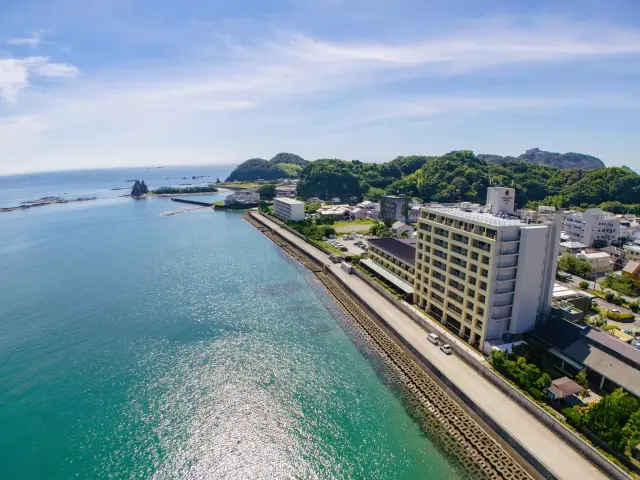
Walk the Kumano Kodo for an authentic journey into Japanese history, culture, and spirituality
If the Kumano area interests you, consider visiting the Kumano Kodo as well.
The Kumano Kodo (also known as the Kumano Sankeido) is the collective name for the pilgrimage routes leading to the three shrines of the Kumano Sanzan: Kumano Hayatama Taisha, Kumano Nachi Taisha, and Kumano Hongu Taisha.
Stretching across five prefectures, Wakayama, Nara, Mie, Osaka, and Kyoto, it is an extremely long route with a total length of 1,000 kilometers.
In 2004, it was registered as part of the World Heritage Site Sacred Sites and Pilgrimage Routes in the Kii Mountain Range.
The Kumano pilgrimage (visiting the Kumano Sanzan) is said to be the origin of travel for Japanese people, and even today many visitors come to follow the thoughts and paths of those who came before them.
Praised as a place “worth traveling out of your way for,” the Kumano Kodo offers not only a mystical atmosphere and spectacular natural scenery, but also the chance to reflect inwardly and cleanse your spirit.
Kumano Kodo routes and ways to enjoy them
The Kumano Kodo is broadly divided into six main routes: Kii-ji, Kohechi, Nakahechi, Ohechi, Iseji, and Omine Okugakemichi.
The required time and difficulty differ, but completing the full route takes at least 4 to 5 days.
For that reason, one way to enjoy it is by trekking only part of the route.
There is also a long history of accepting diversity and welcoming everyone, and you are free to choose how you walk it.
It is also recommended to create your own original trip by combining the Kumano area model course with a route on the Kumano Kodo.


3 local dishes you should try in Wakayama
Here are three carefully selected local dishes from Wakayama.
Known as a region where fruit cultivation thrives, Wakayama is also full of traditional local cuisine and excellent regional specialties.
We have picked out some of Wakayama’s most representative popular dishes, so be sure to try them when you visit.
1. Mehari-zushi
A local dish from Wakayama Prefecture, especially the Kumano region, mehari-zushi is a bale-shaped rice ball wrapped in lightly pickled takana mustard greens leaves.
Originally it was made with barley rice, but today white rice is generally used, and the stem part of the takana is commonly added as a filling (along with pickles and other ingredients).
There are various theories about the origin of the name, such as “so delicious it makes your eyes open wide” or “so big you open your mouth wide,” but it has long been loved by local people as a boxed meal.
Even today it is made in ordinary households and has also been designated as a recommended quality souvenir of Wakayama Prefecture, making it a dish you should try on your trip.
It is mainly made with rice and takana pickles, familiar ingredients for Japanese people, and seasoned with a soy sauce-based sauce.
Its somewhat nostalgic flavor is one of its charms, and while simple, it is a deeply satisfying dish where you can enjoy the aroma of takana and the crisp texture of the stems.

2. Wakayama Ramen
Wakayama Ramen is Wakayama’s local ramen, known locally as chuka soba.
In addition to common toppings such as chashu pork, bamboo shoots, and green onions, it also includes kamaboko fish cake.
Its biggest feature is that it is broadly divided into two main styles based on the soup that defines the flavor: the “Shako-mae style” and the “Ide style.”
The Shako-mae style has a clear soy sauce-based soup with a light taste.
By contrast, the Ide style has a cloudy pork bone and soy sauce broth that is rich yet leaves a clean finish.
Both styles remain deeply popular, so it is also recommended to compare the two traditional flavors.
Also, boiled eggs and hayanarezushi are often placed on the table as side items.
Eating these while you wait is part of the Wakayama Ramen style, so keep that in mind.

3. Kue hot pot
Kue, known as a phantom fish, is a saltwater fish in the grouper family and an ultra-premium catch, with only a few caught each month.
Some grow to over 2 meters in length, and their firm, precious white flesh is said to be as delicious as fugu.
Among the many ways to prepare it, such as deep-frying and charcoal grilling, the dish that brings out the full flavor of kue is kue hot pot.
Cooking it in a hot pot lets the right amount of fat melt away, and when you eat the richly flavored, sweet fish with ponzu soy sauce, you will not be able to stop using your chopsticks.
Another appeal is the springy gelatinous texture of the skin, and its rich collagen and protein content also makes it a great choice for a girls’ trip.
The broth is also rich and delicious, making not only the vegetables cooked with the fish but also the final rice porridge or udon especially tasty.
Enjoy this top-quality delicacy, loved even by gourmet diners, in Wakayama.

Cherry blossom spots to visit on a spring trip to Wakayama
If you are traveling to Wakayama in spring, consider planning a visit to some famous cherry blossom spots as well.
Negoroji Temple, selected as one of Japan’s 100 Best Cherry Blossom Spots, offers scenery so beautiful that you will want to photograph the harmony of cherry blossoms with National Treasures and Important Cultural Properties.
The atmospheric cherry blossoms at night are also recommended, showing a different side from the daytime view.
The Somei Yoshino cherry trees at Kimiidera Temple, known for having some of the earliest blooming cherry blossoms in Kansai, create a vibrant atmosphere alongside its vermilion pagoda and temple gate.
Wakayama Castle, the area’s symbol, is also planted with about 500 cherry trees, and during blooming season it becomes lively with food stalls and events.
All of these are famous spots in the Wakayama City and nearby area, but there are also many others scattered across different regions, so be sure to add them to your travel plans.
Many spots usually reach their best viewing season in early April, although timing may vary depending on the climate and area.
Autumn foliage spots that color Wakayama in fall
Wakayama is known not only for cherry blossoms, but also for many famous autumn foliage spots.
Negoroji Temple, a popular cherry blossom viewing spot, is also famous for autumn leaves, creating atmospheric scenery centered on vivid red maples from late November to early December.
The temple grounds with its National Treasure pagoda and the riverside walking path are especially excellent spots to enjoy them.
Koyasan, the sacred site of Shingon Esoteric Buddhism, is also one of the world-famous places for autumn foliage.
With a rich variety of trees such as maple, ginkgo, and beech, the contrast of yellow, orange, and red is beautiful.
At night, illuminations create a brilliant appearance, and the dreamlike scenery is deeply moving.
Fukusada no Oicho, a giant ginkgo tree said to be 400 years old, is also a breathtaking sight.
If you are traveling to Wakayama in autumn, be sure to add these spots to your itinerary.
Many places usually reach their best viewing season from late October to early November, although timing may vary depending on the climate and area.
For that reason, it is recommended to check the foliage conditions at your destination before visiting.
FAQ about Wakayama travel
Q
What is the best season to travel to Wakayama?
September to early November is an especially easy time to enjoy a trip, as the peak heat and crowds begin to ease and the autumn leaves reach their best season.
Q
What sightseeing spots in Wakayama are recommended for a family trip with children?
Adventure World, which combines a zoo, aquarium, and amusement park, and Porto Europa, where you can immerse yourself in a medieval European atmosphere, are both recommended spots.
Summary
This article has introduced a model course for Wakayama travel along with the highlights of each area, popular sightseeing spots, and discount tickets.
Blessed with nature, Wakayama’s great appeal is that you can enjoy scenic landscapes, local food, and historic landmarks all in one trip.
It is also easily accessible from Kyoto and Osaka, so you may want to include it in a broader Kansai travel plan.
For more ideas, check out the following article, which also covers useful information for enjoying a Wakayama trip, including recommended souvenirs and places to stay.