

Tokyo Fall Foliage Guide: Best Viewing Times and Places to Visit
Many people visiting Tokyo in the fall hope to see beautiful fall foliage.
Tokyo is actually home to many excellent foliage spots, so you can take in the season’s scenery without venturing beyond the city.
Use this guide to discover what makes fall foliage in Tokyo special and explore the city in autumn.
Enjoy Tokyo’s Fall Foliage in a Variety of Settings
Tokyo may be best known for urban districts such as Shinjuku and Shibuya, but it also has many green spaces and excellent places to see fall foliage.
In addition to distinctly urban scenes that pair colorful leaves with clusters of skyscrapers, you can also find mountains covered in autumn colors and vividly colored valleys.
Tokyo’s many spots for viewing golden ginkgo trees are another highlight of the season.

Typical Fall Foliage Season in Tokyo
Fall foliage in Tokyo is generally at its best from late November to early December.
However, the timing varies slightly by location depending on climate conditions, hours of sunlight, and tree species.
The typical viewing periods for the foliage spots featured in this article are listed below to help you plan your trip.
- Meiji Jingu Gaien
- Mid-November to early December
- Shinjuku Gyoen National Garden
- Mid-November to mid-December
- Yoyogi Park
- Early November to mid-December
- Imperial Palace East Gardens
- Mid-November to mid-December
- Hibiya Park
- Late November to early December
- Hama-rikyu Gardens
- Late November to early December
- Shiba Park
- Late November to early December
- Tokyo Metropolitan Teien Art Museum
- Late November to mid-December
- Ueno Park
- Late November to mid-December
- Koishikawa Korakuen Gardens
- Late November to early December
- Kiyosumi Gardens
- Late November to early December
- Mizumoto Park
- Mid-November to mid-December
- Rikugien Gardens
- Late November to early December
- Kyu-Furukawa Gardens
- Mid-November to early December
- Asukayama Park
- Mid-November to early December
- Mejiro Garden
- Late November to early December
- Hikarigaoka Park
- Late November
- Otaguro Park
- Late November to early December
- Inokashira Park
- Mid-November to early December
- Jindai Botanical Gardens
- Late November to early December
- Fuchu City Kyodonomori Museum
- Mid- to late November
- Showa Kinen Park
- Late October to late November
- Mt. Takao
- Mid-November to early December
- Mitake Gorge
- Mid- to late November
- Akigawa Valley
- Mid- to late November
- Lake Okutama
- Late October to mid-November
2026 Fall Foliage Forecast for Tokyo
According to a forecast released in November 2026 by the Japan Weather Association, fall foliage in Tokyo is expected to be at its best around November 30. The timing is forecast to be close to the annual average.
However, the best viewing period may shift depending on the location and upcoming temperatures.
Source: Japan Weather Association
26 Fall Foliage Spots to Add to Your Tokyo Itinerary
Tokyo offers a wide variety of fall foliage, from historic gardens and ginkgo-lined avenues to mountains and valleys rich in nature. This article introduces them by dividing the city into six areas. The season moves from the mountains toward central Tokyo and generally lasts from late October to around mid-December. Find an autumn scene that suits the timing of your trip and where you are staying.
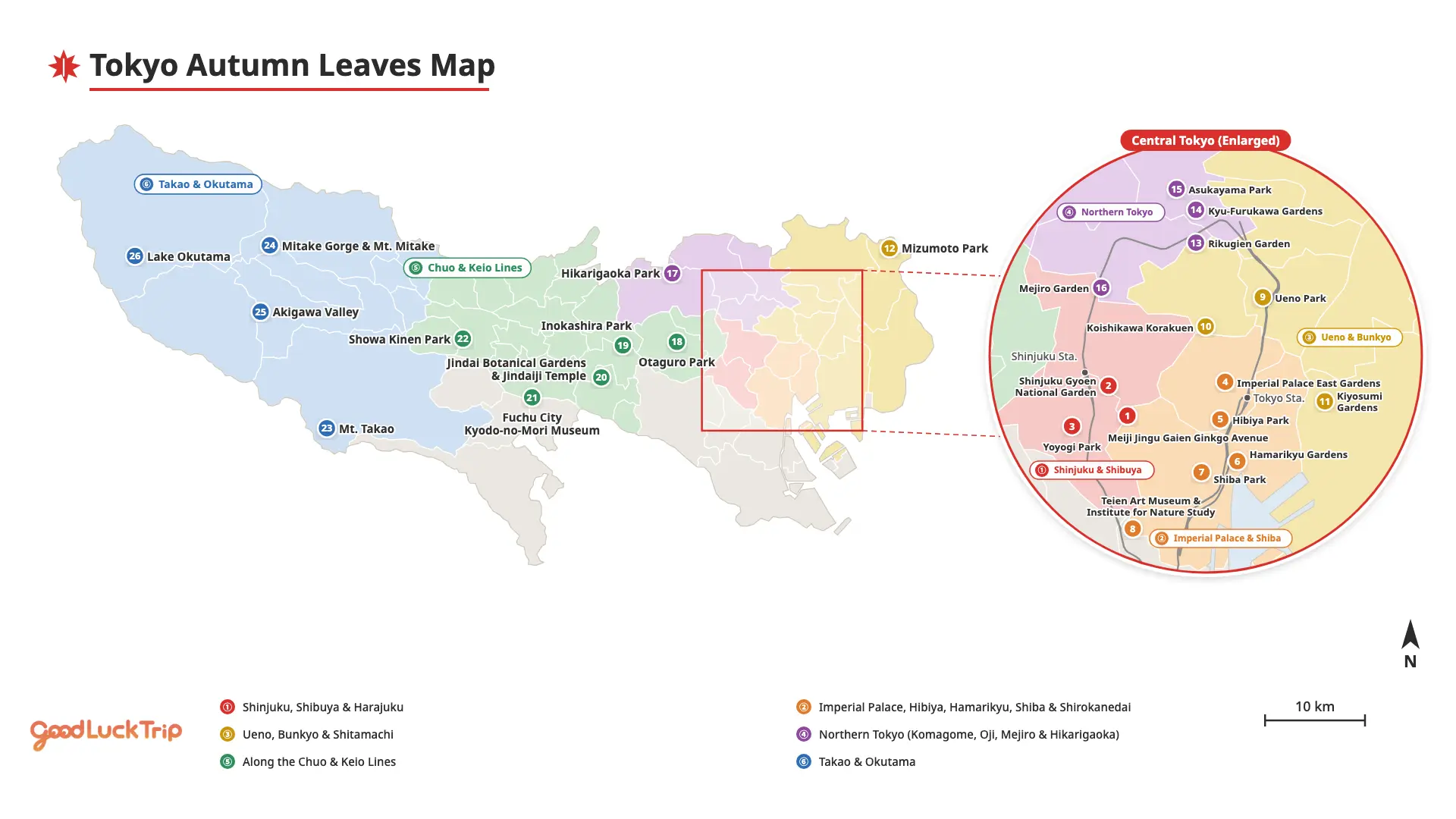
Shinjuku, Shibuya, and Harajuku: 3 Fall Foliage Spots to Visit While Exploring the City
Even the lively neighborhoods around Shinjuku, Shibuya, and Harajuku have places to appreciate the colors of fall. Ginkgo-lined avenues, expansive gardens, and green forests offer a variety of scenery in the heart of the city. Stop by between shopping and meals to experience autumn in central Tokyo.
1. Meiji Jingu Gaien
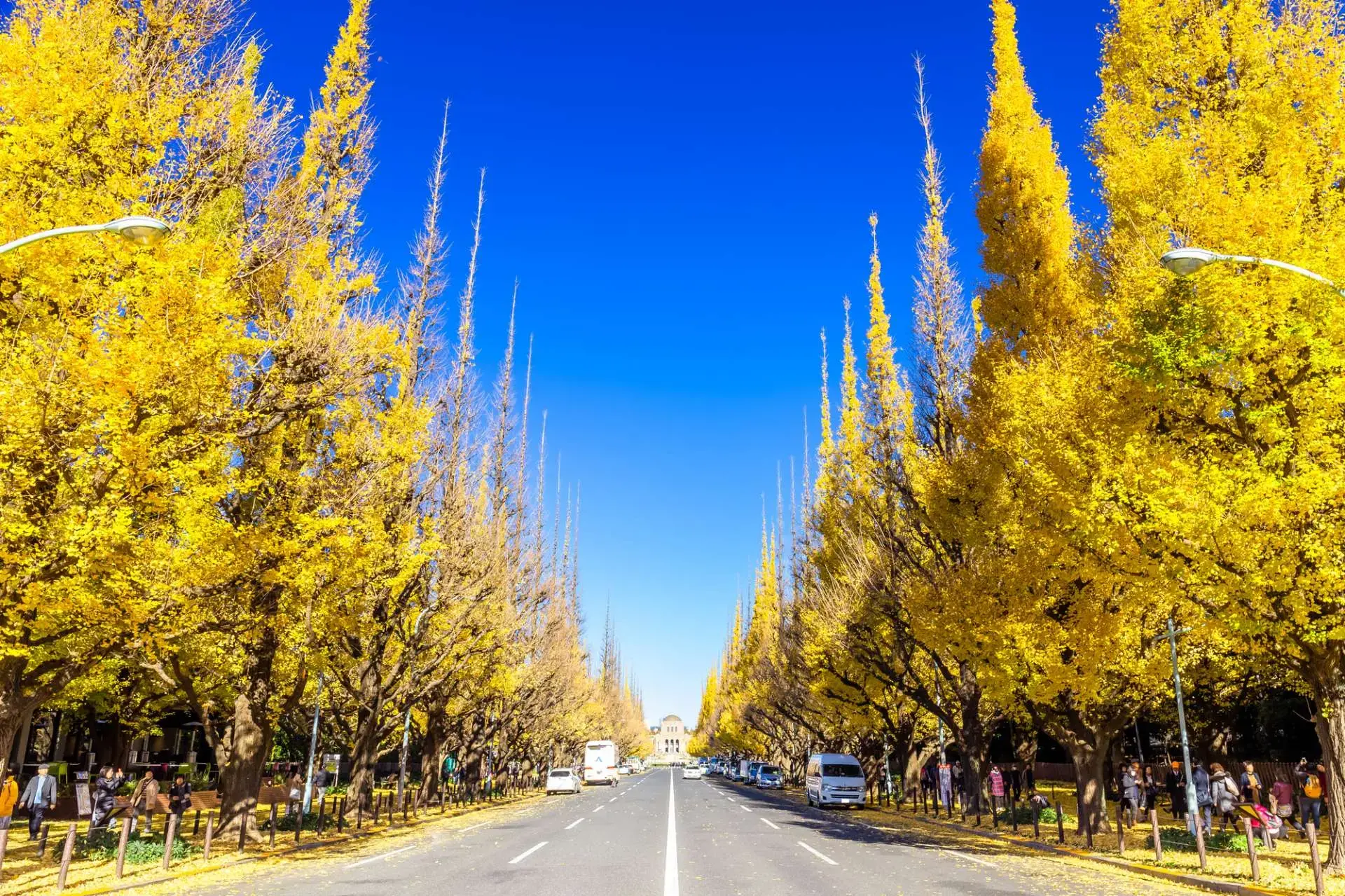
Meiji Jingu Gaien is the outer precinct of Meiji Jingu, established in 1926. Centered around the Meiji Memorial Picture Gallery, the grounds include Meiji Jingu Stadium, various other sports facilities, and seasonal natural scenery. The approximately 300-meter ginkgo avenue running from Aoyama-dori Avenue to the gallery is particularly famous, forming a striking golden tunnel in autumn.
When the foliage reaches its peak, the Jingu Gaien Ginkgo Festival is held, offering food from across Japan alongside views of the trees. The avenue is also illuminated, making it a good place to visit at night.
- Typical fall foliage season
- Mid-November to early December
- Name in Japanese
- 明治神宮外苑
- Postal Code
- 160-0013
- Address
-
1-1 Kasumigaoka-machi, Shinjuku-ku, Tokyo
Google Maps - Telephone
- 03-3401-0312
- Closed
- Depend on facilities
- Hours
- Depend on facilities
- Admission
- Free (charges apply for using facilities)
- Access
-
(1) JR Chuo/Sobu Line at Shinanomachi Station or Sendagaya Station
(2) Tokyo Metro Ginza Line at Gaiemmae Station or Aoyama-itchome Station
(3) Tokyo Metro Hanzomon Line at Aoyama-itchome Station
(4) Toei Oedo Line at Kokuritsu-Kyogijo Station or Aoyama-itchome Station
*For the nearest station to each facility, please check the information of the facility you plan to visit. - Official Website
- Official Website (English)
2. Shinjuku Gyoen National Garden
Shinjuku Gyoen National Garden traces its roots to the grounds of a samurai residence during the Edo period. It became an imperial garden in 1906 and was later opened to the public. Its expansive grounds feature three distinct styles: a traditional Japanese garden, a formal garden, and a landscape garden. It is regarded as one of Japan’s finest modern Western-style gardens.
In autumn, each garden is colored by fall foliage and offers a different seasonal view. The formal garden’s avenue of plane trees is especially popular for photographs, with golden trees rising above a carpet of fallen leaves.
- Typical fall foliage season
- Mid-November to mid-December

- Name in Japanese
- 新宿御苑
- Postal Code
- 160-0014
- Address
-
11 Naito-machi, Shinjuku-ku, Tokyo
Google Maps - Telephone
- 03-3350-0151
- Admission
- Adults 500 yen, seniors (65 and over) and students (high school students and above) 250 yen *ID required, children (junior high school students and under/15 and under) free
- Closed
-
Every Monday (or following weekday if Monday falls on a holiday), New Year’s holiday (December 29th-January 3rd)
※Gardens open even on Mondays from March 25th-April 24th and November 1st-15th - Hours
-
October 1st-March 14th 9:00am-4:00pm (Gates close: 4:30pm),
March 15th-September 30th 9:00am-5:30pm (Gates close: 6:00pm), *Except for the following periods
July 1st-August 20th 9:00am-6:30pm (Gates close: 7:00pm) - Access
-
(1) About 5 minutes on foot from Exit 1 of Shinjuku-gyoemmae station on the Tokyo Metro Marunouchi Line
(2) About 10 minutes on foot from the South Exit of Shinjuku station on the JR, Keio, and Odakyu lines - Official Website
- Official Website (English)
3. Yoyogi Park
Covering 544,711.27 square meters, Yoyogi Park offers abundant greenery and waterside scenery that feels far removed from central Tokyo. The park is divided by a road into a wooded park area to the north and a southern plaza area with an outdoor stage and athletic facilities.
Approximately 1,300 broadleaf trees from six species, including zelkova and ginkgo, grow throughout the park, making it ideal for an autumn walk. The sight of golden ginkgo trees rising above a carpet of fallen leaves is particularly memorable.
- Typical fall foliage season
- Early November to mid-December

- Name in Japanese
- 代々木公園
- Postal Code
- 151-0052
- Address
-
2-1 Yoyogikamizonocho, Shibuya-ku, Tokyo
Google Maps - Telephone
- 03-3469-6081
- Admission
- Free
- Closed
- No holidays
- Hours
- Open all day
- Access
-
1) About a 3-minute walk from the JR Yamanote Line’s Harajuku Station
2) About a 3-minute walk from the Tokyo Metro Chiyoda Line’s Yoyogi-koen Station - Official Website
- Official Website(Japanese)
Imperial Palace, Hibiya, and Hamarikyu: 5 Fall Foliage Spots Set Against Central Tokyo
Combine fall foliage viewing with sightseeing around Tokyo Station, Ginza, and Tokyo Tower. Colorful trees decorate historic places such as the former grounds of Edo Castle, feudal lord gardens, and early Showa-period Western-style buildings. The contrast between fall foliage and skyscrapers creates distinctly Tokyo scenery.
1. Imperial Palace East Gardens
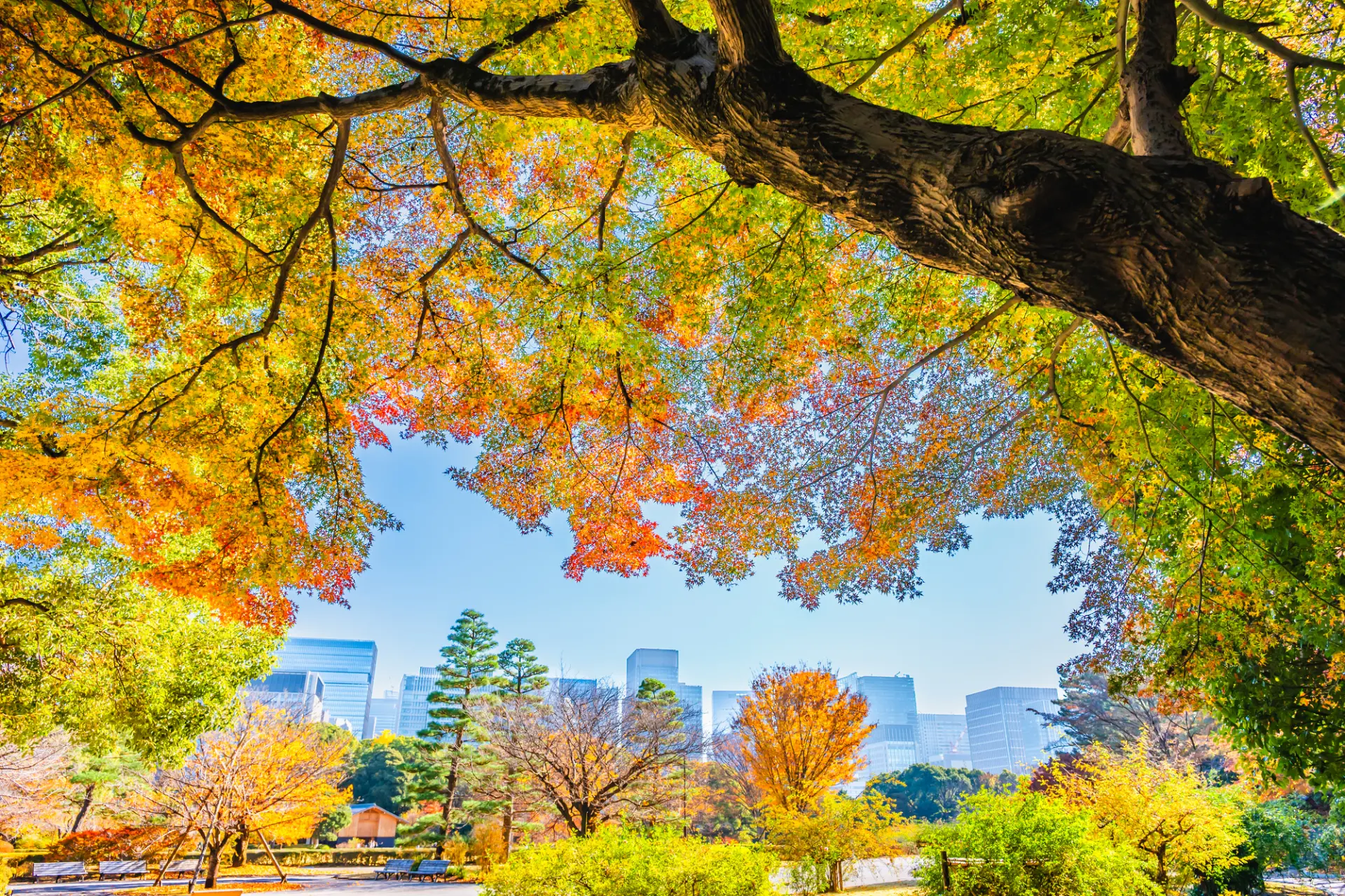
Located beside Marunouchi’s business district, the Imperial Palace East Gardens offer traces of Edo history alongside the autumn scenery of Musashino. Visitors can explore the former Edo Castle grounds, where stone walls and guardhouses remain, free of charge.
The main attraction in fall is the woodland in the Ninomaru area. Yellow konara oak and sawtooth oak leaves overlap with red maples, creating a simple beauty reminiscent of a rural woodland. In the neighboring Ninomaru Garden, look for colorful leaves reflected in the pond. The trees gradually change color from mid-November to mid-December each year.
Continue to Kitanomaru Park for a half-day walk through castle ruins and fall foliage.
- Typical fall foliage season
- Mid-November to mid-December
- Name in Japanese
- 皇居東御苑
- Postal Code
- 100-8111
- Address
-
1-1 Chiyoda, Chiyoda-ku, Tokyo
Google Maps - Closed on
- Mondays and Fridays (open on national holidays except the Emperor’s Birthday; closed on Tuesday if Monday is open), December 28-January 3; may be closed for events and other reasons
- Hours
- March 1-April 14, September 1-September 30: 9:00 am-5:00 pm (Last admission at 4:30 pm); April 15-August 31: 9:00 am-6:00 pm (Last admission at 5:30 pm); October 1-October 31: 9:00 am-4:30 pm (Last admission at 4:00 pm); November 1-end of February: 9:00 am-4:00 pm (Last admission at 3:30 pm)
- Admission
- Free
- Access
- 5-minute walk from Otemachi Station on various Tokyo Metro lines *Varies by gate
- Official website
- Official website (English)
2. Hibiya Park
Opened in 1903, Hibiya Park is Japan’s oldest Western-style park. Its spacious 16-hectare grounds are filled with trees, lawns, and colorful flowers, making it a popular place to relax within the business district.
The Large Fountain and Fountain Plaza are currently closed for renovation, but visitors can still enjoy seasonal scenery around the Head-Hanging Ginkgo and Kumogata Pond. The park contains many deciduous trees, including ginkgo and maple, which add color throughout the grounds in autumn.
Atmospheric seasonal views can be found around Kumogata Pond and Japan’s third-oldest fountain.
- Typical fall foliage season
- Late November to early December

- Name in Japanese
- 日比谷公園
- Postal Code
- 100-0012
- Address
-
1-6 Hibiyakoen, Chiyoda-ku, Tokyo
Google Maps - Telephone
- 03-3501-6428
- Closed
-
No holidays
※The service center and facilities are closed over the New Year’s holiday. - Hours
- Open all day
- Admission
- Free
- Access
-
(1) About a 1-minute walk from exit B2 of the Tokyo Metro Hibiya Line, Marunouchi Line, and Chiyoda Line’s Kasumigaseki Station
(2) About a 1-minute walk from exits A10 and A14 of the Tokyo Metro Hibiya Line, Chiyoda Line, and Toei Subway Mita Line’s Hibiya Station - Official Website
- Official Website(Japanese)
3. Hama-rikyu Gardens
During the Edo period, Hama-rikyu Gardens was known as Hama Goten and served as a villa of the Tokugawa shogun’s family. It later became an imperial detached palace before being granted to the Tokyo Metropolitan Government and opened to the public in 1945.
The seawater pond changes in appearance as the tide rises and falls. A teahouse stands within the pond, where visitors can enjoy matcha in a traditional setting.
In autumn, the colorful garden can also be viewed from the teahouse.
- Typical fall foliage season
- Late November to early December

- Name in Japanese
- 浜離宮恩賜庭園
- Postal Code
- 104-0046
- Address
-
1-1 Hama-Rikyu-Teien, Chuo-ku, Tokyo
Google Maps - Telephone
- 03-3541-0200
- Closed
- End and beginning of the year (December 29th-January 1st)
- Hours
-
9:00am - 5:00pm (Admission allowed until 4:30pm)
※Hours may change due to events and other factors. - Admission
-
General admission 300 yen, 65 years or older 150 yen (elementary school students and younger free)
※Free Admission Days: May 4th, October 1st - Access
- About a 7-minute walk from the Toei Oedo Line and Yurikamome’s Shiodome Station
- Official Website
- Official Website(Japanese)
4. Shiba Park
Shiba Park was one of the first places designated as a public park in Japan in 1873.
Its main autumn attraction is the scenery created by colorful maple and ginkgo trees with Tokyo Tower in the background. Throughout the park, red and yellow trees blend with historic temples, shrines, and green spaces, creating a peaceful atmosphere that feels removed from the city.
The artificial ravine known as Momiji Valley is particularly impressive, with rocky scenery, trees, and a waterfall that make it ideal for a walk.
- Typical fall foliage season
- Late November to early December

- Name in Japanese
- 都立芝公園
- Postal Code
- 105-0011
- Address
-
4-10-17 Shibakoen, Minato-ku, Tokyo
Google Maps - Telephone
- 03-3431-4359
- Closed
-
No holidays
※The service center and facilities are closed over the New Year’s holiday. (December 31st to January 3rd) - Hours
- Open all day
- Admission
-
Free
※Some facilities require a fee (tennis courts, baseball field) - Access
-
(1) About 2 minutes on foot from Shibakoen Station and Onarimonon Station on the Toei Mita Line
(2) About 2 minutes on foot from Akabanebashi Station on the Toei Oedo Line
(3) About 12 minutes on foot from Hamamatsuchō Station on the JR Yamanote Line - Official Website
- Official Website(Japanese)

5. Tokyo Metropolitan Teien Art Museum and the Institute for Nature Study
Walk from the garden of a Western-style residence into a forest carpeted with fallen leaves. Located next to each other in Shirokanedai, the Tokyo Metropolitan Teien Art Museum and the Institute for Nature Study offer contrasting autumn scenery within walking distance.
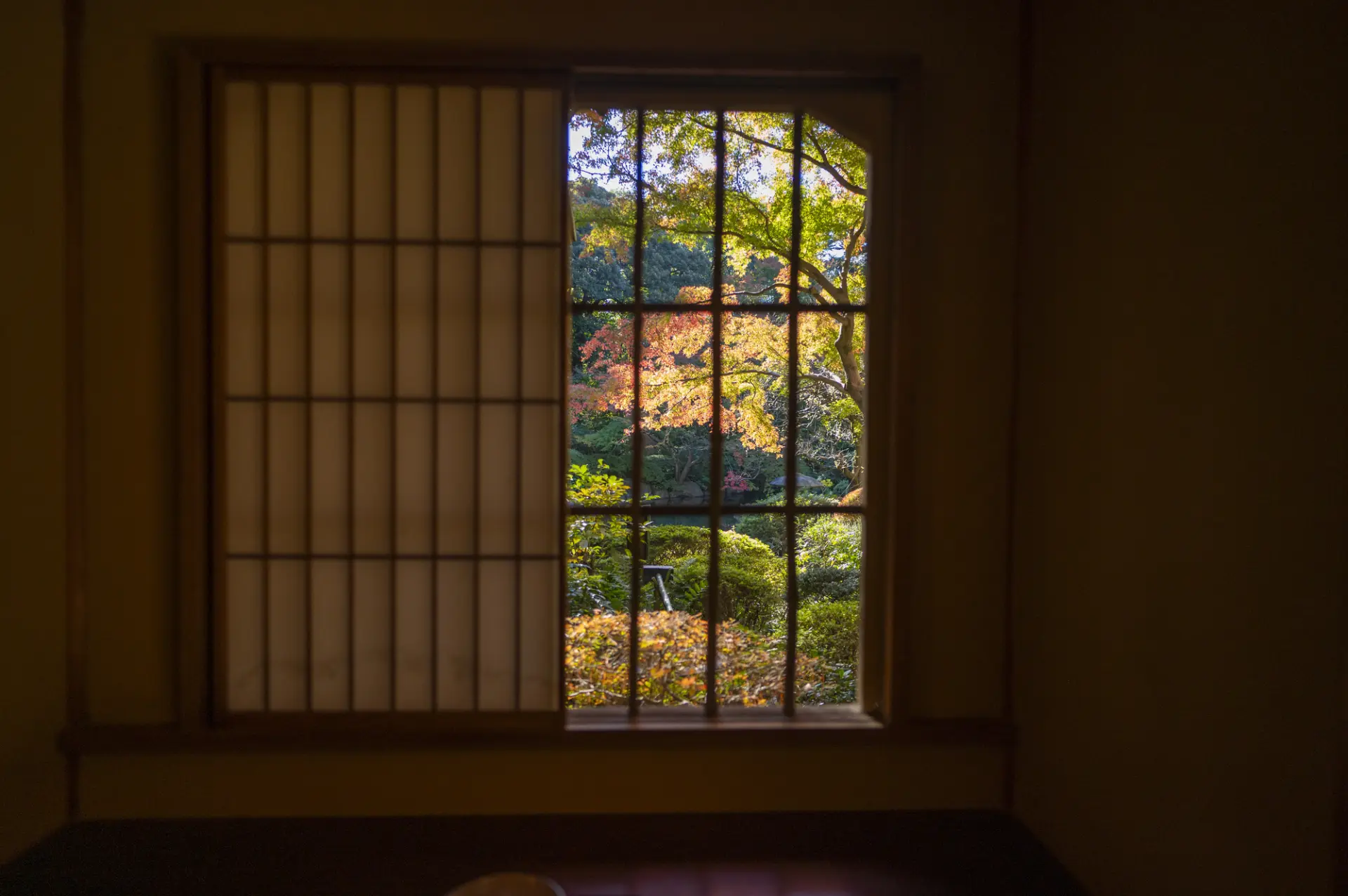
At the museum, the garden surrounding the former residence of Prince Asaka, built in the Art Deco style, takes on autumn colors. The maples around the Koka teahouse are also worth seeing, and garden-only admission is available. The foliage is generally at its best from late November to early December. The Institute for Nature Study, meanwhile, contains approximately 20 hectares of forest. Maples and konara oaks change color in succession, with autumn scenery lasting until around mid-December. Following the paths through the fallen leaves gradually leaves the noise of central Tokyo behind.
- Typical fall foliage season
- Late November to mid-December
- Name in Japanese
- 東京都庭園美術館
- Postal Code
- 108-0071
- Address
-
5-21-9 Shirokanedai, Minato-ku, Tokyo
Google Maps - Telephone
- 050-5541-8600 (Hello Dial Service)
- Closed
- Mondays(Open on national holidays but closed the next day), New Year’s holiday period.
- Business Hours
- 10:00am - 6:00pm(Admission allowed until 5:30pm)
- Admission
- Exhibition admission varies. Garden admission: adults 200 yen; university and vocational school students 160 yen; high school students and visitors aged 65 or older 100 yen; junior high school students and younger free
- Access
-
(1) A 7-minute walk from JR Yamanote Line and Tokyu Meguro Line Meguro Station.
(2) A 6-minute walk from Shirokanedai Station on the Toei Mita Line and Tokyo Metro Namboku Line. - Official Website
- Official Website (English)
Ueno, Bunkyo, and Old Tokyo: 4 Fall Foliage Spots in Historic Parks and Gardens
This area is ideal for combining museum visits with fall foliage in parks and gardens.
Explore culture and history on a walk through Ueno and Bunkyo, or pair a garden visit with a stroll through the traditional streets of Kiyosumi-Shirakawa. At Mizumoto Park, colorful dawn redwoods create expansive autumn views beside the water.
1. Ueno Park
Located in Tokyo’s Taito City, Ueno Park is officially known as Ueno Onshi Park. Managed by the Tokyo Metropolitan Government’s Bureau of Construction, this historic park covers 530,000 square meters. Made up of the Ueno hill area and Shinobazu Pond, it features diverse greenery and waterside scenery, creating an urban oasis.
It is one of Tokyo’s leading sightseeing destinations and attracts visitors from Japan and abroad for its cherry blossoms in spring. It is also known for fall foliage, with colorful trees complementing the park’s many attractions.
- Typical fall foliage season
- Late November to mid-December

- Name in Japanese
- 上野恩賜公園(上野公園)
- Postal Code
- 110-0007
- Address
-
5-20 Uenokoen, Taito-ku, Tokyo
Google Maps - Telephone
- 03-3828-5644
- Closed
- No holidays (Office Closed: December 29th-January 3rd)
- Hours
- 5:00am-11:00pm
- Admission
- Free
- Access
-
(1) About a 2-minute walk from the JR Yamanote Line, JR Keihin Tohoku Line, Tokyo Metro Ginza Line, and Hibiya Line’s Ueno Station
(2) About a 1-minute walk from the Keisei Line’s Keisei Ueno Station - Official Website
- Official Website (Japanese)
2. Koishikawa Korakuen Gardens
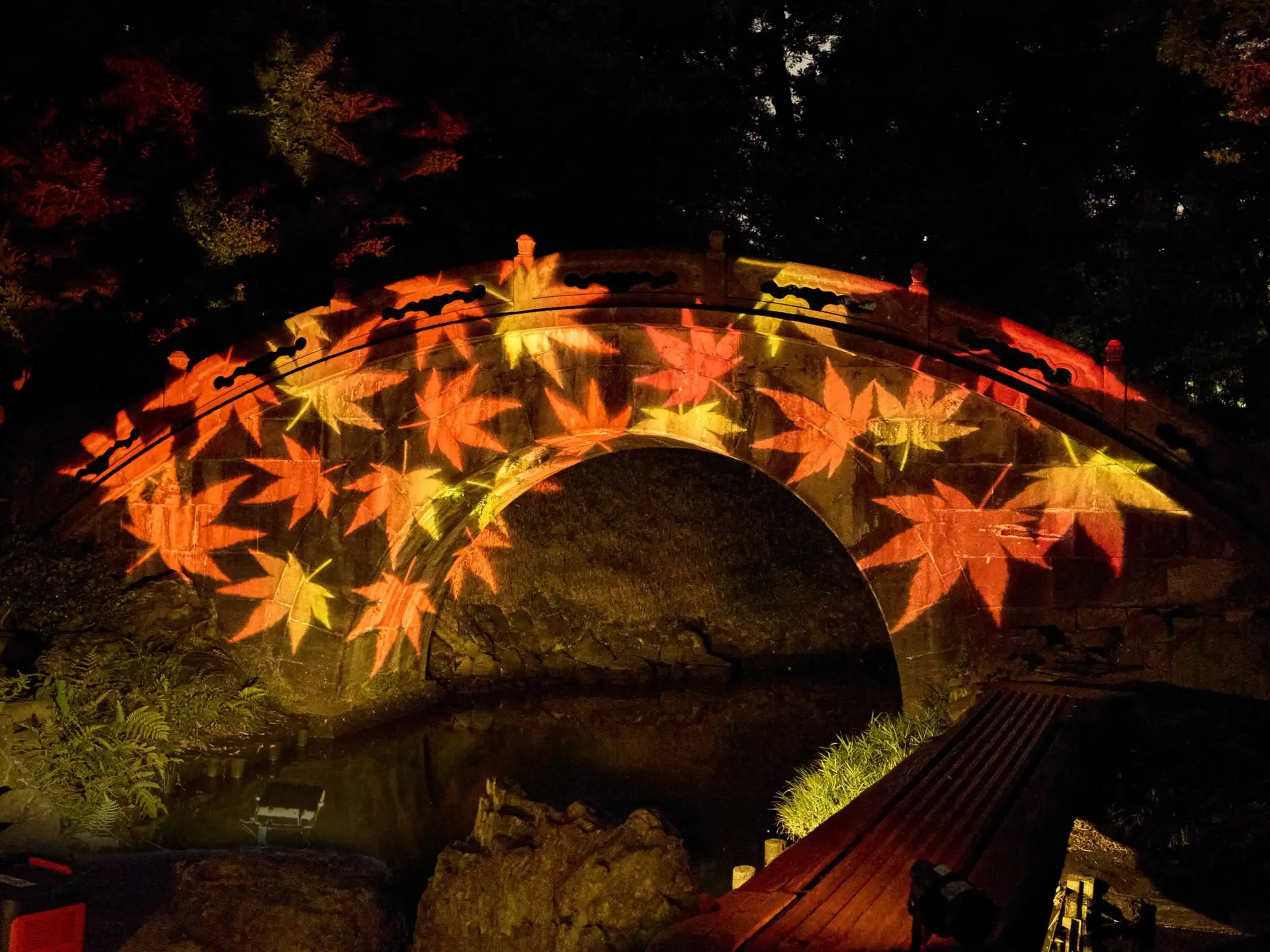
Located in the Korakuen area of Bunkyo City, this is a circuit-style garden centered around a pond, with artificial hills and springs. The grounds represent four types of scenery: the sea, mountains, rivers, and countryside, revealing changing views with every step. Chinese landscapes and design elements, including the Engetsukyo Bridge and Seiko Embankment, are also incorporated, creating a harmonious blend of Japanese and Chinese aesthetics.
In autumn, colorful Japanese maples and zelkova trees add vivid accents to this elegant setting.
- Typical fall foliage season
- Late November to early December
- Name in Japanese
- 小石川後楽園
- Postal Code
- 112-0004
- Address
-
1-6-6 Koraku, Bunkyo City, Tokyo
Google Maps - Phone
- 03-3811-3015
- Closed on
- Year-end and New Year holidays (December 29-January 1)
- Hours
- 9:00 a.m.-5:00 p.m. (last admission at 4:30 p.m.)
- Admission
-
Adults: ¥300; ages 65 and older: ¥150 (free for elementary school students and younger, and junior high school students who live in or attend school in Tokyo)
Free admission days: May 4 and October 1 - Access
-
1) About a 3-minute walk from Iidabashi Station on the Toei Oedo Line
2) About an 8-minute walk from Iidabashi Station on the JR Sobu Line or the Tokyo Metro Tozai, Yurakucho, or Namboku Line
3) About an 8-minute walk from Suidobashi Station on the JR Sobu Line
4) About an 8-minute walk from Korakuen Station on the Tokyo Metro Marunouchi or Namboku Line - Credit Cards
- Accepted
- Official website
- Official website (Japanese)
3. Kiyosumi Gardens
Kiyosumi Gardens is a circuit-style landscape garden centered on a pond, artificial hills, and dry landscape elements.
One of its main autumn attractions is the sight of maple and ginkgo trees reflected on the water, a scene characteristic of a pond-centered circuit garden. Around the large pond in particular, red and yellow leaves harmonize with stone arrangements and old trees to create atmospheric seasonal scenery. Walking slowly through the grounds reveals a different expression of autumn from each viewpoint.
- Typical fall foliage season
- Late November to early December

- Name in Japanese
- 清澄庭園
- Postal Code
- 135-0024
- Address
-
3-3-9 Kiyosumi, Koto City, Tokyo
Google Maps - Phone
- 03-3641-5892 (Kiyosumi Gardens Office)
- Closed
- Year-end and New Year holidays (December 29–January 1)
- Admission
-
General: ¥150; ages 65 and over: ¥70
Free for elementary school students and younger; middle school students who live in or attend school in Tokyo; holders of a Physical Disability Certificate, Ai no Techo, Mental Disability Certificate, or Rehabilitation Certificate; and one accompanying caregiver - Access
- 3 minutes on foot from Kiyosumi-shirakawa Station on the Toei Oedo Line and Tokyo Metro Hanzomon Line
- Credit Cards
- Accepted
- Official website
- Official website (Japanese)
4. Mizumoto Park
Mizumoto Park was developed along the Koaidame reservoir and features picturesque waterside scenery. Its spacious grounds cover approximately 96 hectares and include a poplar avenue and a forest of dawn redwoods, making it well suited to leisurely walks among the trees.
In autumn, visitors can sit on a bench and take in the waterside scenery lined with colorful trees. It is a good choice for anyone looking for a relaxed foliage walk.
- Typical fall foliage season
- Mid-November to mid-December

- Name in Japanese
- 水元公園
- Postal Code
- 125-0034
- Address
-
3-2 Mizumotokoen, Katsushika-ku, Tokyo
Google Maps - Telephone
- 03-3607-8321
- Closed
-
No holidays
※The service center and facilities are closed over the New Year’s holiday. - Hours
- Open all day
- Admission
-
Free
※Certain facilities require fees - Access
- Take a bus from the South Exit No. 4 of Kanamachi Station on the JR Joban Line or the Tokyo Metro Chiyoda Line, get off at the 'Mizumoto Park' bus stop, and it's about a 7-minute walk.
- Official Website
- Official Website(Japanese)
Komagome, Oji, and Mejiro: 5 Fall Foliage Spots for a Relaxing Tour of Gardens and Parks
This area offers destinations to suit different preferences, from celebrated gardens such as Rikugien and Kyu-Furukawa Gardens to the expansive grounds of Hikarigaoka Park.
Tour two gardens on foot in Komagome, then appreciate atmospheric garden scenery in Oji or Mejiro. Set aside time for a leisurely walk while viewing the foliage.
1. Rikugien Gardens
Rikugien Gardens is a circuit-style garden with artificial hills and a pond, created over seven years beginning in 1695. Designated a Special Place of Scenic Beauty, it is regarded alongside Koishikawa Korakuen Gardens as one of the two great gardens of Edo.
At the height of the foliage season, approximately 560 Japanese maples, ginkgo trees, and other trees change color throughout the grounds, decorating the stately Japanese garden. Walking through the elegant autumn scenery may feel like stepping back in time. At night, the garden is illuminated, revealing a different side of its beauty.
- Typical fall foliage season
- Late November to early December
- 2026 illumination
-
Special nighttime viewing will be held from November 25 to December 6, 6:00 p.m. to 8:30 p.m.
The garden closes once at 5:00 p.m., and a special nighttime viewing ticket is required.

- Name in Japanese
- 六義園
- Postal Code
- 113-0021
- Address
-
6-16-3 Honkomagome, Bunkyo City, Tokyo
Google Maps - Phone
- 03-3941-2222
- Closed on
- Year-end and New Year holidays (December 29 through January 1)
- Hours
-
9:00 AM-5:00 PM (last admission at 4:30 PM)
For details on special nighttime viewings, please check the official website. - Admission
-
Adults: ¥300; ages 65 and older: ¥150 (free for elementary school students and younger)
Free admission days: May 4 and October 1 - Access
-
(1) About a 7-minute walk from Komagome Station on the JR Yamanote Line and Tokyo Metro Namboku Line
(2) About a 10-minute walk from Sengoku Station on the Toei Mita Line - Official website
- Official website (Japanese)
2. Kyu-Furukawa Gardens
This garden was created as the residence of Toranosuke Furukawa, the third head of the Furukawa business family. Its design takes advantage of its location on the slope of the Musashino Plateau, with a Western-style residence on a hill to the north, a Western garden on the slope, and a Japanese garden on the lower ground.
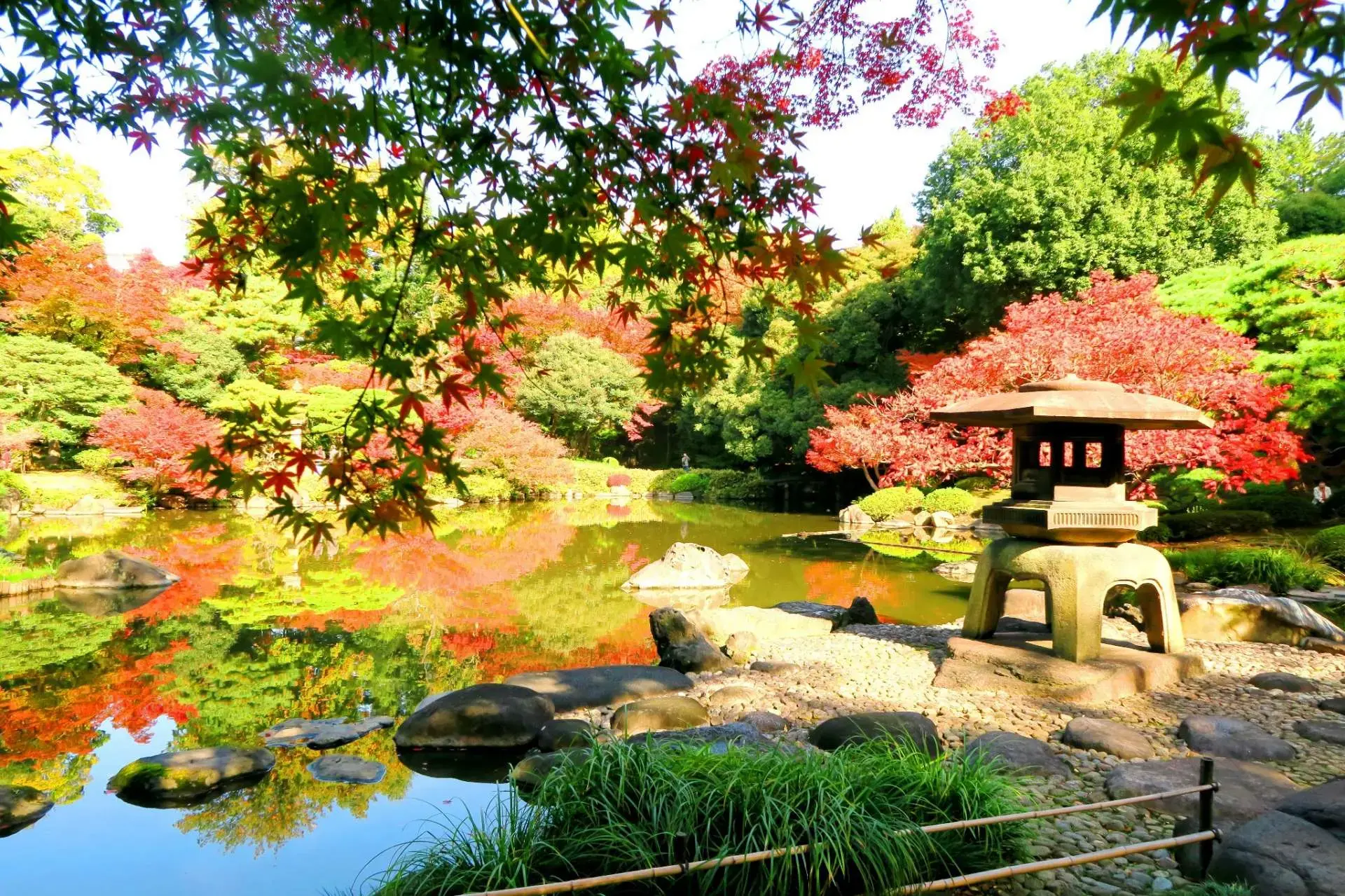
The Japanese garden is the main attraction during the foliage season. Japanese maples, wax trees, and ginkgo trees surround the Shinji Pond, while the tea garden in front of the teahouse and the area around the stone water basin offer photogenic contrasts between green moss and red fallen leaves.
- Typical fall foliage season
- Mid-November to early December
- Name in Japanese
- 旧古河庭園
- Postal Code
- 114-0024
- Address
-
1 Nishigahara, Kita-ku, Tokyo
Google Maps - Telephone
-
03-3910-0394 (Garden: Former Furukawa Gardens service center),
03-3910-8440 (Western-style mansion: Otani Art Museum) - Holiday
- December 29 to January 1 *The Western-style mansion is also closed on the other days.
- Hours
-
9:00am - 5:00pm(Admission allowed until 4:30pm)
*The Western-style mansion has different opening hours. - Admission
-
Adults 150yen, Seniors 65 and over 70yen, Elementary school students and younger and junior high school students who are residing or attending school in Tokyo free of charge.
*An additional fee is required for the Western-style mansion. - Directions
- 7 min. walk from Kaminakazato Stn. on the JR Keihin Tohoku Line, or 7 min. walk from Nishigahara Stn. on the Tokyo Metro Namboku Line.
- Credit Cards
- Accepted
- Website
-
Garden (Japanese)
Western-style mansion /Tea Room (Japanese)
3. Asukayama Park
Asukayama Park spreads across a hill in front of Oji Station. Tokugawa Yoshimune developed it as a cherry blossom destination, making it a recreation area with ties to the Edo period. Riding the free Asukargo monorail up the hill is part of the experience.
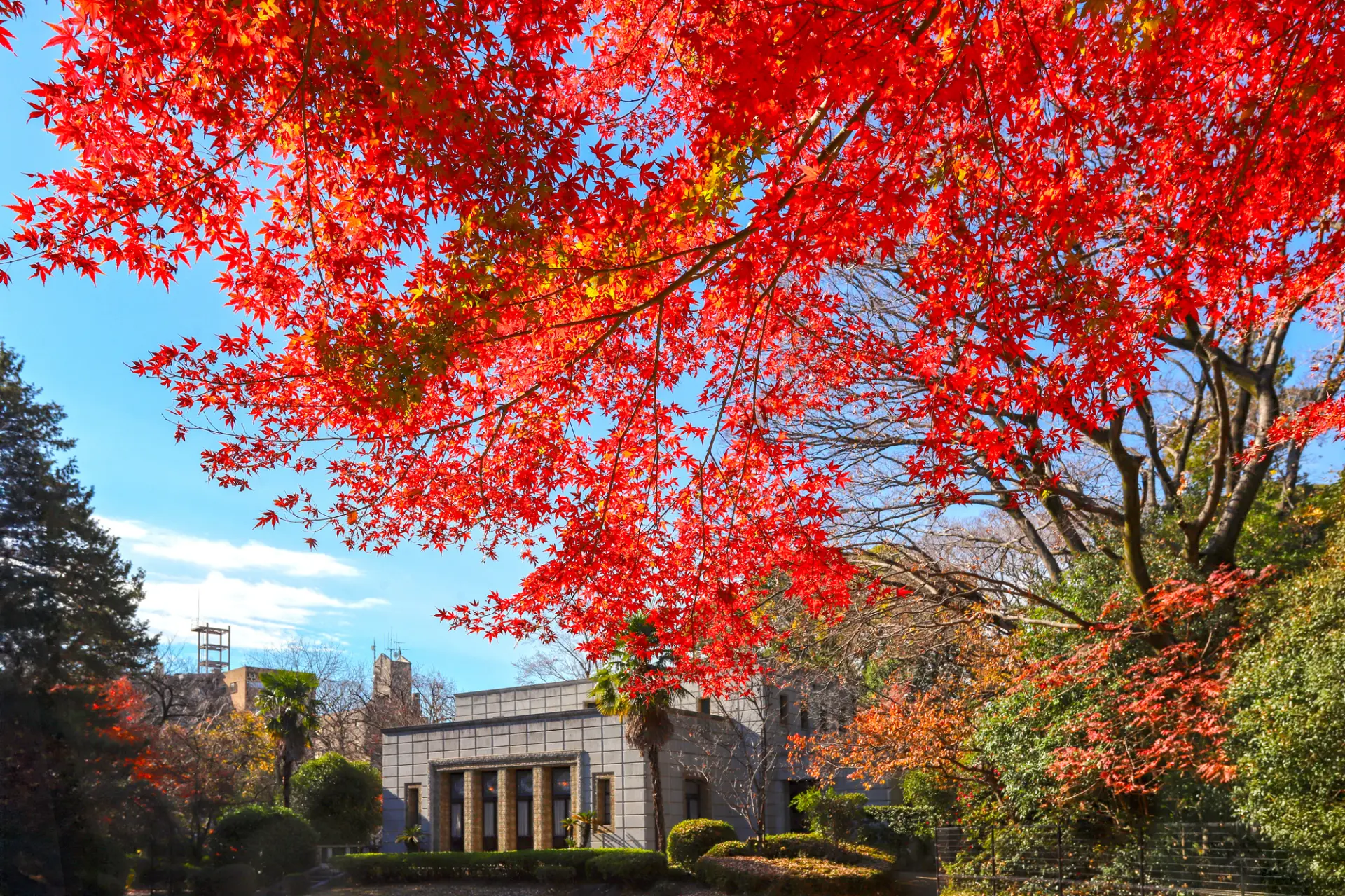
In autumn, maples and trident maples change color. Take a leisurely walk along the hillside paths and view the foliage alongside passing streetcars. Bankoro and the Seien Bunko Library, both associated with Eiichi Shibusawa, are designated Important Cultural Properties of Japan. Surrounded by colorful leaves, these Taisho-period buildings add historical character to an autumn walk. The park’s three museums also offer opportunities to explore local history and culture.
- Typical fall foliage season
- Mid-November to early December
- Name in Japanese
- 飛鳥山公園
- Postal Code
- 114-0002
- Address
-
1-1-3 Oji, Kita-ku, Tokyo
Google Maps - Tel
- 03-5980-9210 (Asukayama Park Management Office)
- Admission
- Free
- Closed
- Never
- Hours
-
Open all day
※Water play facilities are open from 10:00 to 16:00. Please check our website for periods when water play is available and for cleaning days.
Asuka Park Rail Hours of Operation: 10:00am-4:00pm
※Not in Operation: 1st Thursday of every month (morning of the 3rd Thursday in April, as well as all day on the 1st Thursday in July), December 29th-January 3rd, and in case of inclement weather. - Access
-
(1) A 1-minute walk from the JR Keihin Tohoku Line’s Oji Station
(2) A 1-minute walk from the Asukayama stop of the Tokyo Sakura Tram (Toden Arakawa Line)
(3) About a 3-minute walk from the Tokyo Metro Namboku Line’s Oji Station - Official Website
- Official Website (Japanese)
4. Mejiro Garden
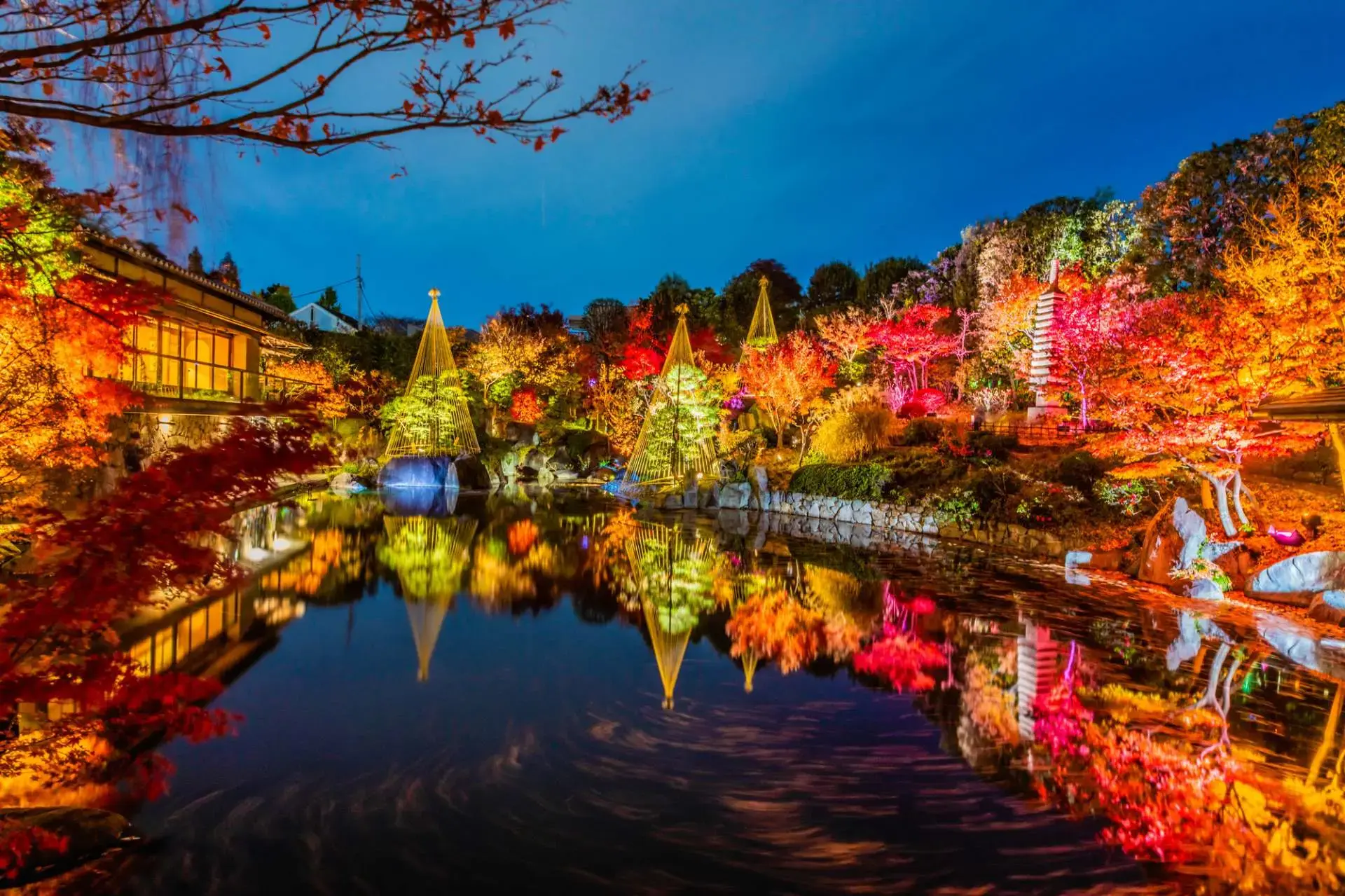
Mejiro Garden is about a five-minute walk through a residential neighborhood from Mejiro Station. Hidden behind a wall, this small Japanese garden features maples surrounding a pond, a waterfall, and buildings constructed in the traditional sukiya style. On calm days, the colorful trees are reflected on the water, creating an inverted foliage view. Walk slowly around the pond to appreciate how the garden changes from different angles.
Daytime admission is free. A paid nighttime illumination is also generally held in autumn, when the lighting highlights the foliage and its reflections on the water. Check the official website for dates and admission details before visiting.
- Typical fall foliage season
- Late November to early December
- 2026 illumination
-
November 21 to December 6, 5:30 p.m. to 9:00 p.m. (last admission at 8:30 p.m.)
Admission: 500 yen for adults, 300 yen for elementary school students, and free for preschool children
- Name in Japanese
- 豊島区立目白庭園
- Postal Code
- 171-0031
- Address
-
3-20-18 Mejiro, Toshima-ku, Tokyo
Google Maps - Telephone
- 03-5996-4810
- Closed
-
2nd and 4th Monday of every month (if Monday falls on a national holiday, closed the following day)
New Year’s holiday (December 29th-January 3rd) - Hours
-
9:00am - 5:00pm
※9:00am - 7:00pm during July and August
※Subject to change during events - Admission
-
Free
※Subject to change during events - Access
- About a 5-minute walk from the JR Yamanote Line’s Mejiro Station
- Official Website
- Official Website (Japanese)
5. Hikarigaoka Park
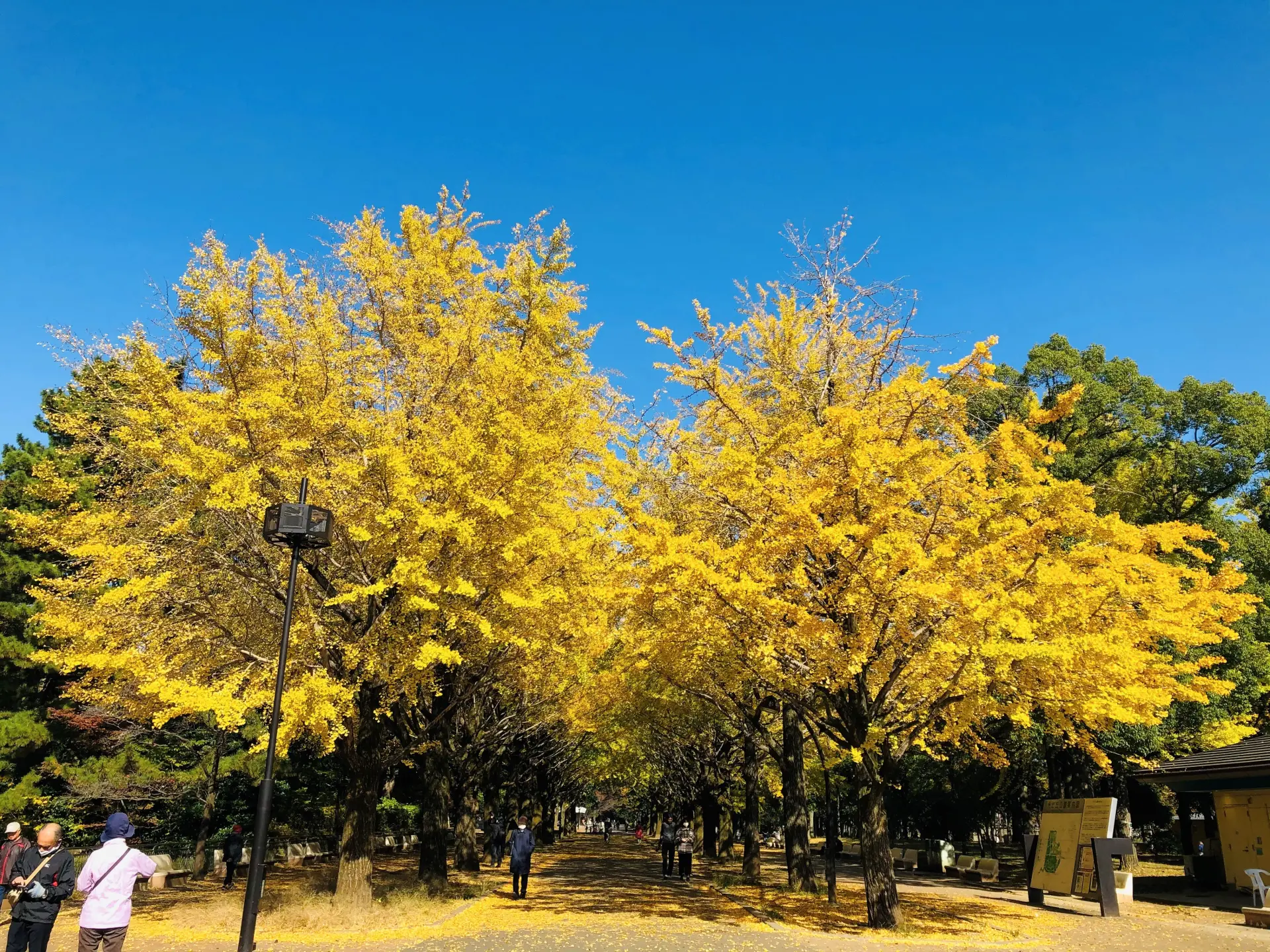
Featuring broad lawns and a wild bird sanctuary, Hikarigaoka Park is home to an approximately 200-meter ginkgo avenue that turns golden in autumn.
The foliage is generally at its best from mid- to late November. Fallen leaves cover the ground beneath the straight avenue, surrounding visitors in yellow from overhead to underfoot. Another highlight is the ginkgo trees along Fureai-no-Michi, which are over 100 years old and were transplanted from the former Tokyo Metropolitan Government building.
Admission is free. Visitors can take photographs along the avenue or relax on the lawn beneath the open sky. Allow plenty of time to explore this spacious park at a leisurely pace.
- Typical fall foliage season
- Mid- to late November
- Name in Japanese
- 光が丘公園
- Postal Code
- 179-0072
- Address
-
4-1-1 Hikarigaoka, Nerima-ku, Tokyo
Google Maps - Telephone
- 03-3977-7638
- Closed
-
No holidays
※Excludes certain facilities - Hours
-
Open all day
※Excludes certain facilities - Admission
-
Free
※Excludes certain facilities - Access
- About an 8-minute walk from the Toei Subway Oedo Line’s Hikarigaoka Station
- Official Website
- Official Website(Japanese)
Along the Chuo and Keio Lines: 5 Suburban Fall Foliage Spots to Combine with Local Sightseeing
Travel west from Shinjuku on the Chuo or Keio Line to find spacious parks and historic temples. Appreciate the colorful trees in Inokashira Park and Showa Kinen Park, or view foliage alongside old buildings at Jindaiji Temple and the Kyodonomori Museum. Combine these destinations with a walk around the surrounding neighborhoods for a half-day or full-day outing.
1. Otaguro Park
Otaguro Park is about a 10-minute walk from the south exit of Ogikubo Station, served by JR and the Tokyo Metro Marunouchi Line. Suginami City developed the former residence of music critic Motoo Otaguro into a circuit-style Japanese garden and opened it as a public park. In addition to the garden, the grounds include a teahouse that can host tea gatherings and a memorial hall housed in the Western-style building that once served as Otaguro’s study.
The park is also known for its fall foliage and attracts many visitors during the peak season. Particularly popular areas include the pond near the arbor and the avenue of large ginkgo trees said to be over 100 years old. At night, the foliage is illuminated, creating an atmospheric scene reflected on the pond.
- Typical fall foliage season
- Late November to early December

- Name in Japanese
- 大田黒公園
- Postal Code
- 167-0051
- Address
-
3-33-12 Ogikubo, Suginami-ku, Tokyo
Google Maps - Telephone
- 03-3398-5814
- ClosedWednesday,
- New Year’s holiday period.(From December 29 to January 1)
- Business Hours
-
9:00am - 5:00pm(Admission allowed until 4:30pm), Memorial Museum -4:00pm
※During the illuminated period(End of November to early December)5:00pm - 8:00pm(Admission allowed until 7:45pm), Fridays and Weekends -9:00pm(Admission allowed until 8:30pm) - Admission
-
Free
(There's a charge for the evening illumination during the foliage season). - Access
- About 10 minutes on foot from South Exit of Ogikubo Station on JR lines and Tokyo Metro Marunouchi Line
- Official Website
- Official Website (Japanese)
2. Inokashira Park
Spanning the cities of Musashino and Mitaka in Tokyo, Inokashira Park opened in 1917 as Japan’s first imperial gift park and celebrated its 100th anniversary in 2017. Covering approximately 430,000 square meters, or about nine times the area of Tokyo Dome, the expansive park is divided into four areas: Inokashira Pond, Gotenyama, the West Garden, and the Second Park. It includes a baseball field, outdoor stage, boating area, and the Ghibli Museum, Mitaka, attracting many visitors for events and sightseeing.
In autumn, colorful Japanese maples, ginkgo trees, and zelkova trees are reflected on the surface of Inokashira Pond.
- Typical fall foliage season
- Mid-November to early December

- Name in Japanese
- 井の頭恩賜公園
- Postal Code
- 180-0005
- Address
-
1-18-31 Gotenyama, Musashino City, Tokyo
Google Maps - Telephone
- 0422-47-6900
- Closed
-
No holidays
※Information desk and facilities are closed over New Year’s holiday - Hours
-
Open all day
※Facilities in the park have their own hours - Admission
-
Free
※Certain facilities require paid admission - Access
-
(1) About a 5-minute walk from the JR Chuo Line and Keio Inokashira Line’s Kichijoji Station
(2) About a 1-minute walk from the Keio Inokashira Line’s Inokashira-koen Station - Official Website
- Official Website (Japanese)
3. Jindai Botanical Gardens and Jindaiji Temple
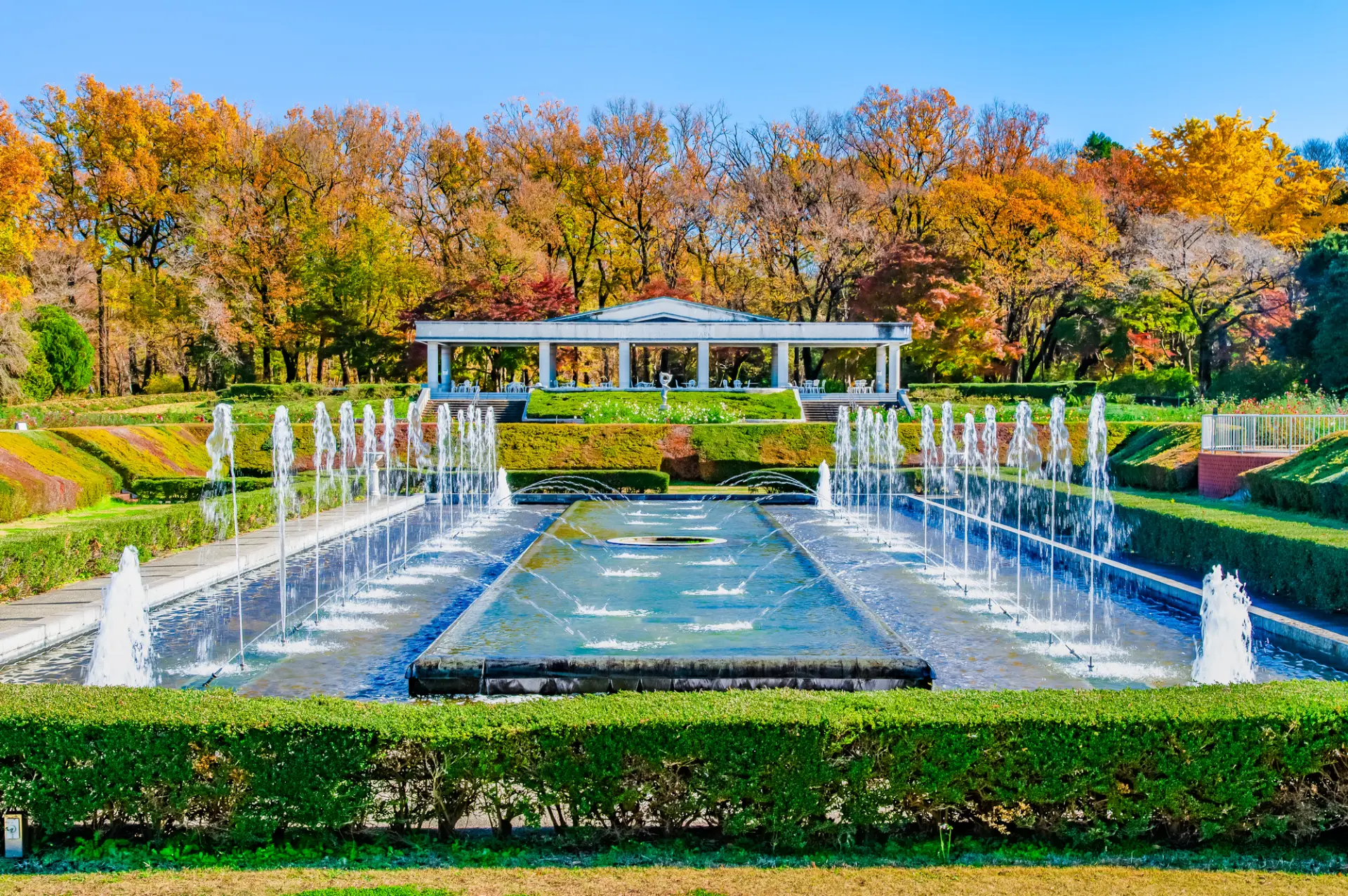
Jindai Botanical Gardens and the neighboring Jindaiji Temple are about 15 minutes by bus from Chofu Station on the Keio Line. Together, they offer an autumn outing that combines a foliage walk, a visit to an ancient temple, and the area’s famous soba noodles. A highlight of the botanical gardens is the Maple Garden, which contains a variety of maple species. The leaves generally reach their peak from late November to early December, overlapping in layers of red and yellow. The woodland and areas beside the pond also change color, revealing different autumn views as you walk.
After exploring the gardens, continue to Jindaiji Temple, said to have been founded in 733. Pass through the maple-framed temple gate to worship, then try Jindaiji soba at one of the restaurants near the entrance. Allow half a day to explore the natural scenery and historic temple at a leisurely pace.
- Typical fall foliage season
- Late November to early December
- Name in Japanese
- 神代植物公園
- Address
-
2-chome・5-chome Jindaijimotomachi , 1-chome・2-chome Jindaijikitamachi, 4-chome・5-chome Jindaijiminamimachi, Chofu City, Tokyo
Google Maps - Telephone
- 042-483-2300
- Closed
-
Mondays (closed the following day if Monday is a national holiday, substitute holiday, or Tokyo Citizen’s Day)
New Year’s holiday period (From December 29th to January 1st) - Business Hours
- 9:30am - 5:00pm(Admission allowed until 4:00pm)
- Admission
- Adults 500yen, Ages 65 and older 250yen, Junior high school students 200yen, Free for elementary school students and younger
- Access
- Take a bus from Keio Line Chofu Station and get off at “Jindai Botanical Gardens” (Keio Bus) or “Jindai Botanical Gardens Mae” (Odakyu Bus), then walk a short distance.
- Official Website
- Official Website (Japanese)
4. Fuchu City Kyodonomori Museum
This museum introduces the history, folk culture, and natural environment of Fuchu in western Tokyo. Its approximately 140,000-square-meter grounds contain the main museum building as well as traditional farmhouses, townhouses, and other historic structures. The spacious grounds are filled with trees and flowers, including many broadleaf species that turn vivid shades of red and yellow in autumn.
Momiji Falls, where countless maple trees surround a waterfall, is an especially good place for photographs. After viewing the foliage, stop at the teahouse for a break. Visitors can experience matcha in a traditional Japanese sukiya-style building. Sipping tea while looking out at the colorful trees makes for a relaxing moment.
- Fall foliage season
- Mid- to late November

- Postal Code
- 183-0026
- Address
-
6-32 Minamicho, Fuchu City, Tokyo
Google Maps - Telephone
- 042-368-7921
- Admission
-
300 yen, junior high school students and younger 150 yen, children under 4 years of age free
※Additional admission fee required for planetarium - Closed
- Mondays (The following day if Monday is a holiday), Dec. 29th to Jan. 3rd
- Business Hours
- 9:00am-5:00pm (Admission allowed until 4:00pm)
- Access
-
(1) About a 20-minute walk from the JR Musashino Line and JR Nambu Line’s Fuchuhommachi Station
(2) About a 20-minute walk from the Keio Line and JR Nambu Line’s Bubaigawara Station
(3) About 6 minutes by bus from the JR Nambu Line’s Bubaigawara Station, getting off at the Kyodo-no-Mori main gate stop - Official Website
- Official Website (Japanese)

5. Showa Kinen Park
Across grounds approximately 40 times the area of Tokyo Dome, visitors will find lawns, fountains, sports courts, gardens with seasonal flowers, and ponds where waterside plants can be observed. The park also has various facilities where visitors can learn about coexistence with plants and nature, along with numerous events and hands-on programs.
There are two notable places to view golden foliage: the approximately 300-meter Katarai Ginkgo Avenue lined with 98 trees and the approximately 200-meter avenue along the canal lined with 106 trees. Each forms a golden tunnel with a different atmosphere for visitors to explore at a leisurely pace.
- Typical fall foliage season
- Late October to late November

- Name in Japanese
- 国営昭和記念公園
- Postal Code
- 190-0014
- Address
-
3173 Midoricho, Tachikawa, Tokyo
Google Maps - Phone
- 042-528-1751
- Admission
-
Adults (ages 15 and older): ¥450; children (elementary and junior high school students): free; seniors (ages 65 and older): ¥210
Additional fees apply for the use of certain facilities.
Free admission days are available; see the official website for details. - Parking
- Available, ¥900
- Closed
- New Year holidays and Monday through Friday of the third week of January
- Hours
-
March–October: 9:30 a.m.–5:00 p.m.
November–February: 9:30 a.m.–4:30 p.m.
Saturdays, Sundays, and national holidays from April–September: 9:30 a.m.–6:00 p.m.
The Green Cultural Zone, a free area, opens at 8:30 a.m. From the spring equinox through March 31, it closes at 5:30 p.m.
Opening hours are subject to change.
Opening and closing hours vary by facility. - Access
-
(1)About a 10-minute walk from JR Tachikawa Station on the Chuo Line to Akebono Entrance, or about a 15-minute walk to Tachikawa Gate
(2)About an 8-minute walk from Tachikawa-Kita Station on the Tama Monorail to Akebono Entrance, or about a 13-minute walk to Tachikawa Gate
(3)About a 2-minute walk from JR Nishi-Tachikawa Station on the Ome Line to Nishi-Tachikawa Gate
(4)About a 10-minute walk from JR Higashi-Nakagami Station on the Ome Line to Akishima Gate
(5)About a 25-minute walk from Musashi-Sunagawa Station on the Seibu Haijima Line to Tamagawa Josui Gate, or about a 20-minute walk to Sunagawa Gate - Official website
- Official website (Japanese)
Takao and Okutama: 4 Mountain and Valley Foliage Spots for a Day Trip
Farther west in Tokyo, the season brings expansive views of colorful mountains and deep valleys. Choose an outing suited to your fitness level and schedule, from a walk using the Mt. Takao cable car to trails along the valleys of Okutama. Wear clothing and footwear appropriate for the route and spend the day surrounded by autumn scenery.
1. Mt. Takao
Mt. Takao is a 599-meter mountain in Hachioji, Tokyo. With convenient access and trails suitable for a casual sightseeing hike, it is popular with a wide range of visitors, from families with small children to older adults. Approximately three million people visit each year, and it is also known as the world’s most-climbed mountain.
Mt. Takao is one of Tokyo’s best-known foliage destinations. In autumn, the mountain is covered in a mixture of red, yellow, and green. Easier routes are available, allowing beginners to take in the foliage while hiking.
- Typical fall foliage season
- Mid-November to early December

- Name in Japanese
- 高尾山
- Postal Code
- 193-0844
- Address
-
Takao-machi, Hachioji City, Tokyo
Google Maps - Telephone
- 042-664-7872
- Closed
- No holidays
- Hours
- Open 24 hours
- Access
- The trail entrance is about 5 minutes on foot from Takaosanguchi Station on the Keio Line
- Official Website
- Official Website (Japanese)
2. Mitake Gorge and Mt. Mitake
Located in Ome, Tokyo, Mitake Gorge was formed by the upper reaches of the Tama River. Its clear water, selected as one of Japan’s 100 Remarkable Waters, combines with distinctive rocks and surrounding trees to create impressive valley scenery.
The approximately 4-kilometer Mitake Gorge Promenade begins near JR Mitake Station, providing an accessible way to see the gorge while also visiting the Gyokudo Art Museum and Ozawa Shuzo, known for its Sawanoi sake. The scenery becomes even more vivid in autumn, when both banks of the river are colored by maples, ginkgo trees, and zelkovas.
- Fall foliage season
- Mid- to late November

- Name in Japanese
- 御岳渓谷
- Postal Code
- 198-0172
- Address
-
Mitake to Sawai, Ome City, Tokyo
Google Maps - Phone
- 0428-24-2481 (Ome City Tourism Association)
- Closed on
- No closures
- Hours
- Open at all times
- Admission
- Free
- Access
- About a 1-minute walk from JR Mitake Station
- Official website
- Official website (Japanese)
3. Akigawa Valley
Akigawa Valley extends for approximately 20 kilometers from Akiruno City to Hinohara Village. Located about an hour west of central Tokyo, it offers an abundance of nature that feels far removed from the city. Walking trails, barbecue areas, and accommodations make it a popular and accessible outdoor destination.
In autumn, the trees take on vivid colors, covering the valley in shades of red and yellow. The view of the colorful valley from Ishibune Bridge, a symbol of the area, is particularly impressive.
- Fall foliage season
- Mid- to late November

- Name in Japanese
- 秋川渓谷
- Address
-
Akiruno, Tokyo
Google Maps - Closed on
- Open year-round for walking
- Hours
- Open at all times for walking
- Admission
- Free
- Access
-
1) Ishibune Bridge, Akigawa Valley Seoto-no-Yu, and Otsu Hana-no-Sato (along Akigawa Valley): From JR Musashi-Itsukaichi Station, take a bus from stop 1 bound for Kazuma, Hossawa-no-Taki Iriguchi, or Fujikura.
Note: Akigawa Valley Seoto-no-Yu can also be reached by taking a bus bound for Kamiyozawa via Seoto-no-Yu and getting off at Seoto-no-Yu.
2) Tokuzoin Temple and the Yozawa area: From JR Musashi-Itsukaichi Station, take a bus from stop 1 bound for Kamiyozawa.
3) Tokyo Metropolitan Komine Park area: From JR Musashi-Itsukaichi Station, take a bus from stop 3 toward the Mt. Imakuma Trailhead or bound for Keio-Hachioji. - Inquiries
-
Akiruno City Tourism and Community Development Promotion Division: 042-558-1111
Postal code: 190-0164
Address: 411 Itsukaichi, Akiruno, Tokyo - Official website
- Official website (Japanese)
4. Lake Okutama
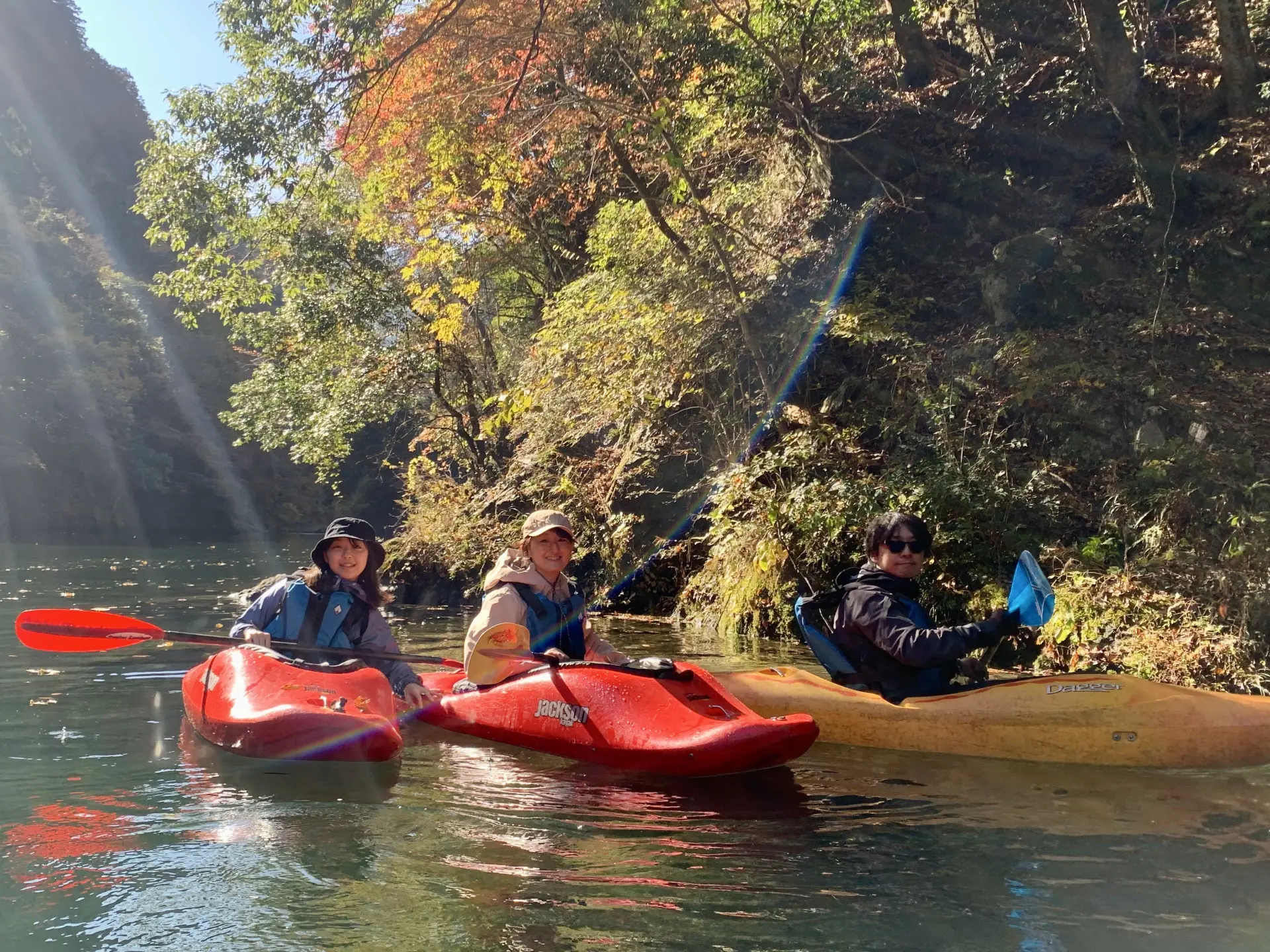
Lake Okutama straddles Tokyo and Yamanashi. This artificial lake was created by damming the upper Tama River and has one of Japan’s largest storage capacities among reservoirs used exclusively for water supply. The area surrounding the lake is part of Chichibu-Tama-Kai National Park and is enclosed by mountains and expansive natural scenery.
In autumn, the surrounding mountains change color, creating picturesque reflections on the lake. The different appearance of each mountain is another highlight.
With a variety of activity facilities and hot springs nearby, the area offers an autumn getaway about two hours from central Tokyo.
- Fall foliage season
- Late October to mid-November
- Name in Japanese
- 奥多摩湖
- Postal Code
- 198-0223
- Address
-
Hara, Okutamamachi, Nishitamagun, Tokyo
Google Maps - Telephone
- 0428-83-2152(Okutama Tourism Association)
- Closed
- Free to walk
- Business Hours
- Walk anytime
- Admission
- Free
- Access
- 18 minutes by bus from Okutama Station on the JR Ome Line, get off at the "Okutama Lake" bus stop.
- Official Website
- Official Website (Japanese)
A Day Trip from Tokyo to See Temple, Shrine, and Lakeside Foliage in Nikko, One of Japan’s Three Great Fall Foliage Destinations
If you are planning a longer excursion from Tokyo, consider Nikko. Known as one of Japan’s three great fall foliage destinations, it offers numerous places to see colorful leaves. These include Irohazaka, where foliage spreads across the mountain slopes beside the road; Lake Chuzenji, one of the Kanto region’s leading foliage spots; and Nikko Toshogu Shrine, where visitors can walk among the leaves in a stately setting.
On a day trip, combine the autumn scenery with visits to the shrines and temples or a walk along the lakeshore.
Nikko also has many hot spring areas, making an overnight stay at a ryokan with an open-air bath overlooking the foliage another appealing option.

- Name in Japanese
- いろは坂
- Postal Code
- 321-1661
- Address
-
Chugushi, Nikko City, Tochigi
Google Maps - Telephone
- 0288-22-1525 (Nikko City Tourism Association)
- Closed
- Always open to traffic.
- Hours
- Open 24 hours.
- Fees
- Roadway is free.
- Access
-
To Akechidaira:
From JR Nikko Station or Tobu Nikko Station, take a bus bound for Yumoto Onsen or Chuzenji Lake Onsen. The ride takes approximately 40 minutes. Get off at the "Akechidaira" bus stop, and it's just a short walk from there. - Official Website
- Official Website(English)

Frequently Asked Questions About Fall Foliage in Tokyo
Q
When is the best time to see fall foliage in Tokyo?
The season generally begins in mountainous areas in late October, while central Tokyo is usually at its best from late November to early December. Some locations remain colorful until mid-December.
Q
Which foliage spots are within walking distance of major stations in central Tokyo?
Shinjuku Gyoen National Garden is within walking distance of Shinjuku Station, Yoyogi Park is accessible from Harajuku Station, and the Imperial Palace East Gardens can be reached on foot from Tokyo Station. For the ginkgo avenue at Meiji Jingu Gaien, Gaienmae Station and Aoyama-itchome Station are convenient.
Q
Where can I see illuminated fall foliage at night?
Notable locations include Rikugien Gardens, Mejiro Garden, and Otaguro Park. Check the dates, ticket requirements, and admission restrictions before visiting.
Q
Where can I see fall foliage for free?
Many well-known locations are free, including the Imperial Palace East Gardens, Yoyogi Park, Hibiya Park, Ueno Park, and Hikarigaoka Park. Paid gardens can generally be visited for around 500 yen.
Q
Where can I see mountain foliage in Tokyo?
Options include Mt. Takao and Mt. Mitake, which have cable cars, and Lake Okutama, known for its colorful mountains and lake scenery.
Summary
This article has introduced what makes fall foliage in Tokyo special, along with some of the city’s most popular viewing spots.
You may be surprised by how many foliage destinations Tokyo has to offer.
Another advantage is the convenient transportation and relatively short distances between locations, allowing you to visit several in a single day. Use this guide to explore Tokyo in autumn.

Author
Writers & Editors
GOOD LUCK TRIP Editors
Sharing lesser-known ways to experience Japan with the world!